Slashdot Mirror
Domain: studentsoftheworld.info
Stories and comments across the archive that link to studentsoftheworld.info.
Comments · 12
-
Fair to call this obscene wealth?
His single-day profit (which, if spread out over a year, would amount to > $27 million per day) exceeded the GNP of 123 separate nations, and his estimated total wealth exceeds the GNP of 174 nations.
http://www.studentsoftheworld.info/infopays/rank/PNB2.html/ -
Re:Cue the MP/RIAA
A terabyte, according to RIAA estimates, is about $2.7million which is about 16 years of Cuba's total GNP.
Please check your math: Cuba's GNP in 2005 was $11.2 billion and I think it went up since.
-
All this fighting...
-
Re:What about
Here in Sweden a lot of mining is done in Kiruna:
City(?):
http://www.strangeharvest.com/mt/archive/kiruna3.jpg
http://www.mynewsdesk.com/files/e1ec5f78a79c345d4a3fcf3c86177f0f/resources/ResourceWebImage/thumbnails/flygbild_kiruna_november_2007_large.jpg?1238409989They are even moving the whole city afaik because they have mined so much underneath it or if it's that they want to mine underneath it so it has to be moved.
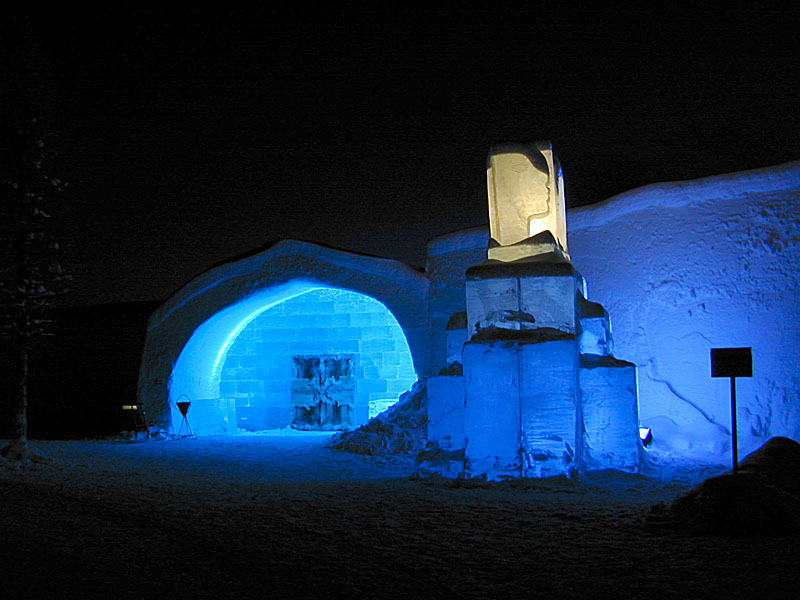
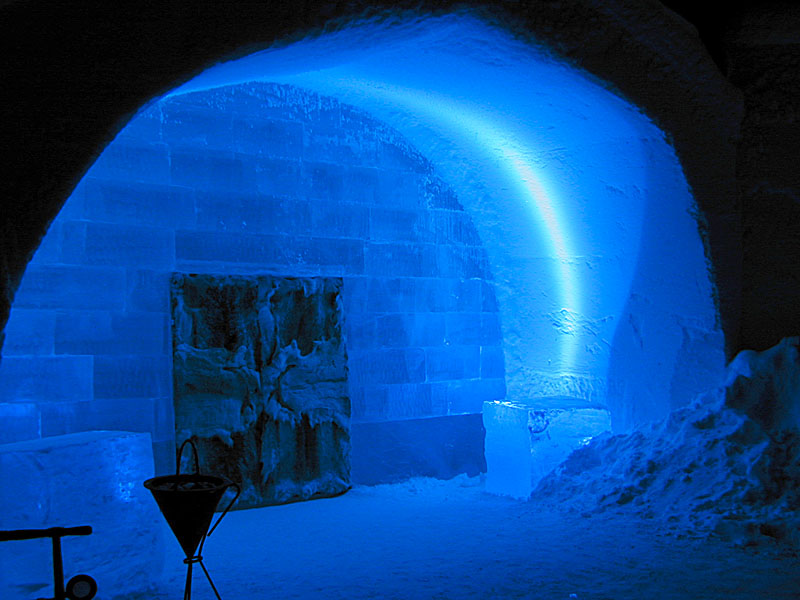
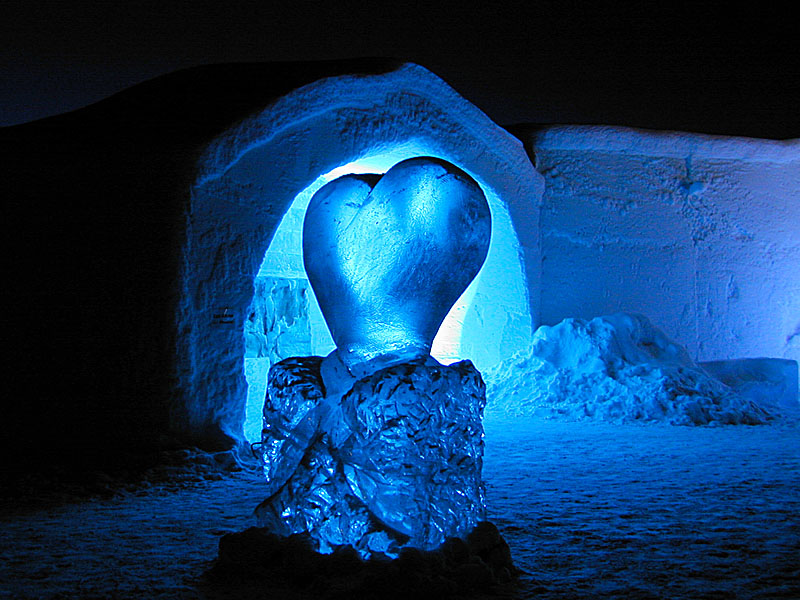
The ice hotel (Jukkasjärvi):
http://www.qedata.se/bilder/gallerier/ishotellet/ishotell-ingang-natt.jpg
http://www.qedata.se/bilder/gallerier/ishotellet/ishotell-rum-japan.jpg
http://www.qedata.se/bilder/gallerier/ishotellet/ishotell-ingang2-natt.jpg
http://www.qedata.se/bilder/gallerier/ishotellet/ishotell-ute-hjerta.jpg
http://www.kirunabuss.se/taxibestallning-ishotellet/282FCFC53F4D46B483E98F34D627F045
http://fjellfotografen.se/albums/uta/sverige/lappland/Miniatyr_Iskyrka%20och%20Ishotell,%20Jukkasj%E4rvi%20%A9%20uta-bg1044.jpg
http://cache.virtualtourist.com/1323606-A_reindeer_fur_covered_bed_in_the_Ice_Hotel-Kiruna.jpgAurora:
http://www.ltu.se/polopoly_fs/1.36982!terassen_kiruna_aurora.jpg
http://www.wired.com/images_blogs/autopia/images/2008/04/24/kiruna.jpghttp://www.wintercities.kiruna.se/nytt/kiruna6.gif
Kiruna on a map: http://homepage.swissonline.ch/Christener/Kiruna/Bilder/Kiruna.jpg
Esrange space center is close by to.
Kiruna location: 675118N, 201331O
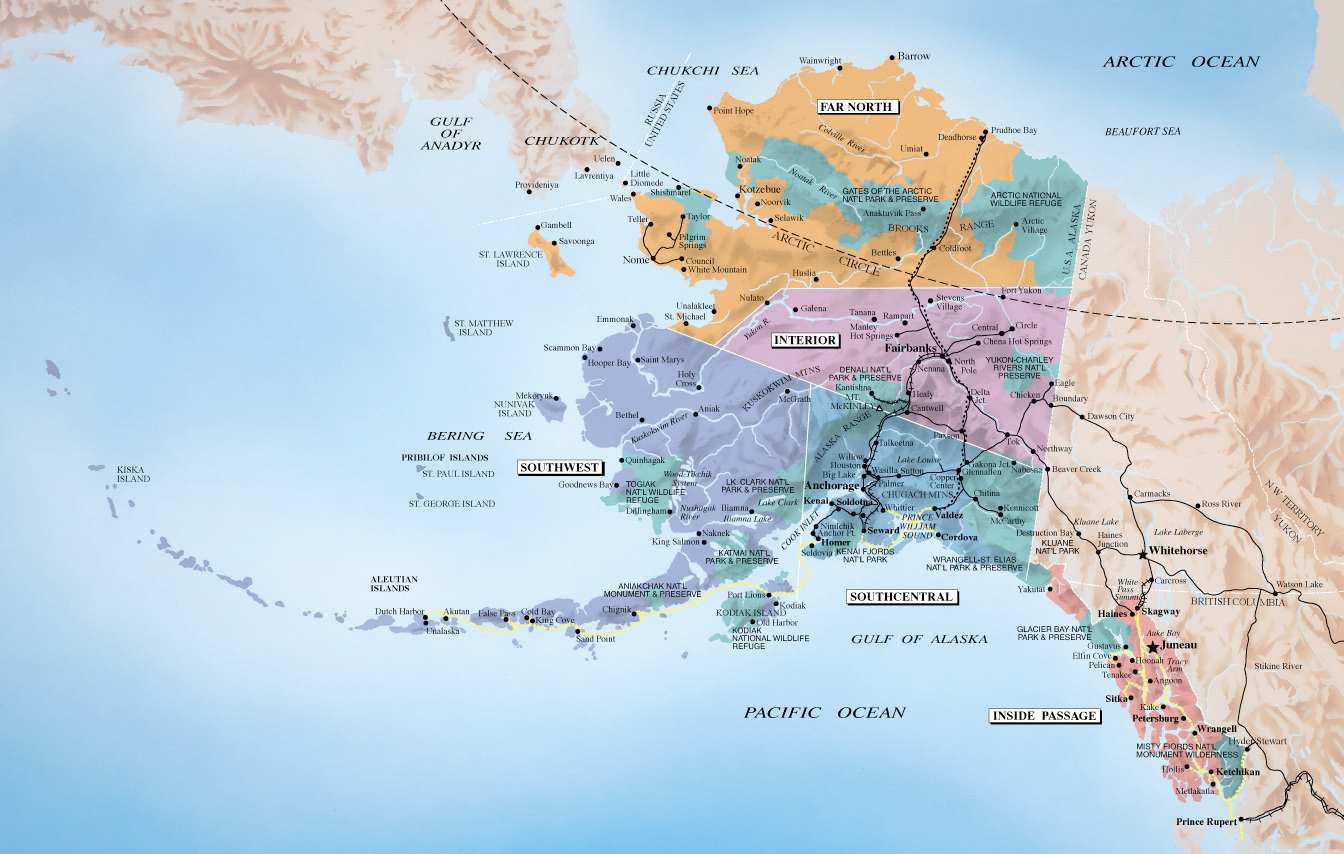
Alaska: 5440'N - 7150'N, 130W - 173EI don't know how much the gulf stream (eventually quite a bit?) help but if people can mine there I assume they can mine in Alaska to, why shouldn't they be able to? Heck I live in Örebro at around the same latitude as Stockholm and the location of this city is 5916N 1513O, so even that is more north than the southern parts of Alaska.
Arctic circle:
World: http://www.athropolis.com/map2.htm
Alaska: http://www.studentsoftheworld.info/sites/country/img/15000_AlaskaMap.jpg -
Re:And....
"it could mean that Canada is going into more debt for health care than the United States."
Canada is spending less per capita, and might somehow be going into more debt? Um, no. I suppose it is possible if Canada did not tax their population enough, but they seem to be doing so - through most of the 1990s and early 2000s Canada's debt was actually falling. Today it seems to be at about $13,800 per person (Canadian dollars are worth something like $0.84 according to http://www.xe.com/ so that comes out to about $11,560 US per person ) while the US debt seems to be about $36,600 per person. They are both growing, but since the Canadian one is less than 1/3 of the US one, I think Canada is clearly in a better position to the US from a national debt point of view.
I do not know about dept per GNP, but the GNP per capita of the US seems to be $43,743, while Canada is $32,546 according to http://www.studentsoftheworld.info/infopays/rank/PNBH2.html so the US is ahead by a factor of 1.344036, so dept per GNP (the "per capitas" will cancel out) of the US is ($36,600/$43,743 =) 0.8367053 and for Canada it is ($11,560/$32,546 =) 0.3551895.
The US national dept: http://www.brillig.com/debt_clock/
The Canadian national dept: http://www.debtclock.ca/Here is a Wikipedia entry that lists Canada as ahead of the US, but not by as much as my numbers above - maybe their numbers are a bit older?
http://en.wikipedia.org/wiki/List_of_countries_by_public_debt
-
Re:Telecomm
Population densities: (people/km^2)
Denmark: 125.8
USA: 30.8
Sweden: 20.1
Finland: 15.5
Norway: 14.2
Iceland: 2.8
Denmark is indeed more densly populated than the US, as is Singapore, the Netherlands and what-not. The other nordic countries are very sparsely settled, yet they all have excellent broadband and rank highly on this list. Time to find a new excuse for the excreable broadband situation in the US...
-
Re:Perfectly legitimate...You left out the remaining two paragraphs from the section you quoted...
A number of advocates of Taiwan independence argue that the Instrument of Surrender of Japan was merely an armistice, a Modus Vivendi in nature, which served as a temporary or provisional agreement and always would be replaced with a peace treaty afterwards. Thus Instrument of Surrender of Japan did not transfer title of Taiwan. It was when Japan renounced sovereignty of Taiwan in the Treaty of San Francisco in 1951 did the sovereignty of Taiwan return to the people of Taiwan, based on the principle of self-determination provided by the UN Charter. Moreover, some people believe this Treaty made an undetermined cession of Taiwan which put Taiwan sovereignty in trust by the Allied power until today. It makes interpretation of Taiwan's political status more complicated.
Because wikipedia is written with a western poitn of view, I would tend to believe it's more of an unbiased source... Taiwan's argument that it is a sovereign nation is legitimate. They have had free elections with multiple candidates from multiple parties with differing views. That's about as democratic as you can get. If unifying with China is a good idea, the people of Taiwan will freely choose to do so. In addition to keeping its own provinces in line, China would probably like to control Taiwan's wealth, which in the end is what justifies political conflict 2002 GDP and 2003 GNP
Although these interpretations of international law challenged the legitimacy of the Republic of China before the 1990s, the introduction of popular elections in Taiwan means that except for the most extreme Taiwan independence supporters, supporters of the popular sovereignty theory no longer see a conflict between this theory of sovereignty and the ROC position of the R.O.C. being the sovereign government of Taiwan, Kinmen, Penghu and Matsu. In fact, Chen Shui-bian has often promote the popular sovereignty theory by emphasizing it in his speeches.
China is trying to veil its posturing behind historical significance. But, I doubt this is fooling any astute diplomat who understands the history. Maybe we should ask Americans and Australians if they want to get back with England? -
Re:Perfectly legitimate...You left out the remaining two paragraphs from the section you quoted...
A number of advocates of Taiwan independence argue that the Instrument of Surrender of Japan was merely an armistice, a Modus Vivendi in nature, which served as a temporary or provisional agreement and always would be replaced with a peace treaty afterwards. Thus Instrument of Surrender of Japan did not transfer title of Taiwan. It was when Japan renounced sovereignty of Taiwan in the Treaty of San Francisco in 1951 did the sovereignty of Taiwan return to the people of Taiwan, based on the principle of self-determination provided by the UN Charter. Moreover, some people believe this Treaty made an undetermined cession of Taiwan which put Taiwan sovereignty in trust by the Allied power until today. It makes interpretation of Taiwan's political status more complicated.
Because wikipedia is written with a western poitn of view, I would tend to believe it's more of an unbiased source... Taiwan's argument that it is a sovereign nation is legitimate. They have had free elections with multiple candidates from multiple parties with differing views. That's about as democratic as you can get. If unifying with China is a good idea, the people of Taiwan will freely choose to do so. In addition to keeping its own provinces in line, China would probably like to control Taiwan's wealth, which in the end is what justifies political conflict 2002 GDP and 2003 GNP
Although these interpretations of international law challenged the legitimacy of the Republic of China before the 1990s, the introduction of popular elections in Taiwan means that except for the most extreme Taiwan independence supporters, supporters of the popular sovereignty theory no longer see a conflict between this theory of sovereignty and the ROC position of the R.O.C. being the sovereign government of Taiwan, Kinmen, Penghu and Matsu. In fact, Chen Shui-bian has often promote the popular sovereignty theory by emphasizing it in his speeches.
China is trying to veil its posturing behind historical significance. But, I doubt this is fooling any astute diplomat who understands the history. Maybe we should ask Americans and Australians if they want to get back with England? -
Population distrubutions and broadband
Population in Canada is actually much more concentrated in cities than US. They are all squeezed along the southern border where its warmer.
That is actually false. According to census data http://www.studentsoftheworld.info/infopays/rank/p opvil2.html just under 80 percent of Canadians live in urban centres....which is nearly the SAME as the US. The only difference is that in the US the population is coastal and around the great lakes instead of along the border. Despite that, broadband use is double in Canada. The difference isn't because of population density at all. It is because despite media content being somewhat over-regulated, internet access was never mired in government/monopoly regulation to the degree it was in the US. Furthermore, broadband in Canada for the longest time was 30% to 50% cheaper than in the US so it was more accessible to its residents.
In regards to the latitude of settlement, one of the four biggest population centres of Canada--the Calgary-Edmonton corridor with over 2 million people--does not border the US and in fact runs perpendicular from the border. Despite Edmonton being one of the most northern major cities (pop. over 500,000) in the world its residents could get boradbant internet before pretty much everyone in the US. Another interesting factoid: The first commercial use of long-distance fibre-optic cable in the world was in Canada, and the longest functioning fibre optic cable in the world in around 1980 was in the Calgary area. The population might be "concentrated" but it is only compressed north-south in most places--it is still very long east-west, so communication technology in Canada became advanced out of necessity. -
Re:I wonder...
Maybe that explains it?
and maybe it doesn't. as you can see from here, china is 66th on the list of population density, which is about 70th percentile. So while it's more dense than most, it's certainly no singapore. Germany, Italy and the UK are all more dense. and furthermore, given the enormous deserts in the west, the nation certainly does not lack uninhabited areas.
-
Re:Depressing trendWhat does America produce anymore?
America produces a HUGE amount of goods. So much so that the U.S. is the #1 exporter in the world.
-
Re:What have the Americans done for us ?
As far as the EU, I believe that Japan has a bigger economy than Europe. Even after the EU adds members to make 25 the US economy will still be larger. Growth by acquisition may temporarily give the EU higher numbers in total growth when that occurs. But in the long run that will only hurt the EU's long term growth potential as these new member states are generally very under developed in terms of infrastructure, education, and economic development as well as other less tangible but very important assets like a sense of democratization and entrepreneurship.
Thank you for those links at the end of your post. If you play the adding up game, they prove my point nicely.
Adding up the current 15 EU members, you get a total GDP of $9'630 billion. That's 93% of the US's $10'400 billion, and 2.7 times larger than Japan's GDP.
Considering there's just 7% inbetween the US and the EU in 2003, I fail to see why you think the US is so fantastically far ahead.
Furthermore, if you add the GDPs for the countries set to join the EU-25, you get an EU GDP of $10'471 billion. A slight bit larger than the US GDP, no?
Of course, that small gap is likely to be a bit more. I found this link for the GDPs for world countries in 2002. Check out the difference between the GDPs of the new EU-25 countries from 2002 to 2003.
Hungary had $64 billion in 2002, but $134.7 billion in 2003. Poland had $189 billion in 2002, but $386.1 billion in 2003. The Czech Republic had $70.1 billion in 2002, but $155.9 billion in 2003.
Meanwhile, the US had $10'450 in 2002, and $10'400 in 2003.
Notice that the rate of growth in eastern Europe is amazingly high. It will level off, of course, but low living costs and close proximity to markets in the EU will mean that in the mean time, these countries are booming.
So no, Japan does not have a larger economy than the EU, and there is not that much difference between the EU and US markets. And, as I said before, baring any abrupt change in the economic climate, the EU-25 will be a larger market than the EU.
The new 10 members will probably impact upon the growth of established members, such as France, Germany and Britain, who will have to compete on an equal playing field, but taking the EU as a whole, market growth will probably increase.
I'm not belittling the rest of the world. But rightfully I am claiming that the US has done more to bring the world forward in terms of discovery, development, and freedom that any other. period.
Oh, probably. Britain and other similar countries could probably give the US a close run, but whilst the UK has probably devised more important inventions, the US capatilises on them better.
So yep, I'll agree with you there. As a country, the US has done a lot that it should rightly be proud of.