Slashdot Mirror
Domain: wikimedia.org
Stories and comments across the archive that link to wikimedia.org.
Stories · 150
-
Ogg Theora In Firefox, With Wikimedia Support
An anonymous reader writes "Ogg Theora support for the HTML5 <video> tag is in the Firefox 3.1 nightlies. Theora is the only video format allowed on Wikimedia Commons, so Wikimedia people are pushing Wikipedia readers to download a nightly and try it out. Break it, crash it, report bugs, get it into good shape and nullify Apple and Nokia's FUD the best way possible. They may have gotten the words 'Vorbis' and 'Theora' removed from the HTML5 spec, but the market will tell them when their browsers are sucking." -
Ogg Theora In Firefox, With Wikimedia Support
An anonymous reader writes "Ogg Theora support for the HTML5 <video> tag is in the Firefox 3.1 nightlies. Theora is the only video format allowed on Wikimedia Commons, so Wikimedia people are pushing Wikipedia readers to download a nightly and try it out. Break it, crash it, report bugs, get it into good shape and nullify Apple and Nokia's FUD the best way possible. They may have gotten the words 'Vorbis' and 'Theora' removed from the HTML5 spec, but the market will tell them when their browsers are sucking." -
NASA Turns 50
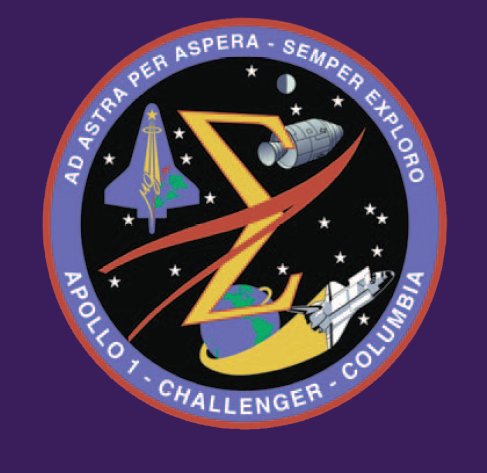
phobos13013 writes "Fifty years ago yesterday, in 1958, President Eisenhower signed the United States Public Law 85-568, National Aeronautics and Space Act to create NASA. In the fifty years since its creation, NASA has made manned missions landing on the Moon, put a space station in orbit, launched numerous unmanned missions to the Moon, Mars, the solar system, and beyond, as well as launching reusable manned spacecraft in orbit. Some of the failures included the loss of two manned spacecraft and their crews as well as the loss of the Apollo 1 crew during a training mission. Although the future of the organization is in question, Americans, and the world, are looking forward to another fifty years of progress including a return trip to the Moon and an eventual manned mission to Mars." -
IBM Patents Putting Handprints On Laptops
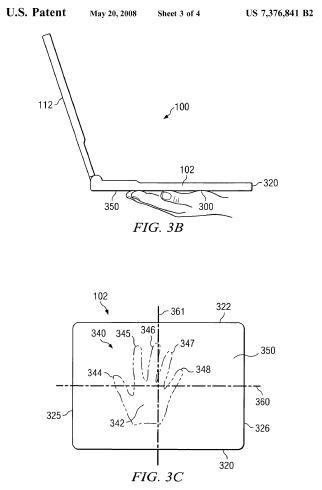
theodp writes "You can still leave your handprint in cement at Grauman's Chinese Theater. But as of Tuesday, you best not do the same on a laptop, lest you infringe on IBM's new patent for the Portable Computer with a Hand Impression, an 'invention' that Big Blue explains makes balancing the portable computer on a user's hand easier." -
Yahoo Becomes Apache Platinum Sponsor
jschauma writes "Yahoo published a press release announcing that it has become a platinum sponsor of the Apache Software Foundation. In their company blog, Yahoo points out their particular interest in the Apache projects Lucene and Hadoop, and that they have hired Doug Cutting, creator of both projects and VP at Apache. (Lucene powers the search on Wikipedia; Yahoo also provides hosting capacity to Wikimedia.)" -
Has Wikipedia Peaked?
An anonymous reader writes "After more than a year with no official statistics, an independent analysis reported Wednesday showed that activity in Wikipedia's community has been declining over the last six months. Editing is down 20% and new account creation is down 30%. After six years of rapid growth and more than 2 million articles, is Wikipedia's development now past its peak? Are Wikipedians simply running out of things to write about, or is the community collapsing under the weight of external vandalism and internal conflicts? A new collection of charts and graphs help to tell the tale." -
Has Wikipedia Peaked?
An anonymous reader writes "After more than a year with no official statistics, an independent analysis reported Wednesday showed that activity in Wikipedia's community has been declining over the last six months. Editing is down 20% and new account creation is down 30%. After six years of rapid growth and more than 2 million articles, is Wikipedia's development now past its peak? Are Wikipedians simply running out of things to write about, or is the community collapsing under the weight of external vandalism and internal conflicts? A new collection of charts and graphs help to tell the tale." -
Mike Godwin hired by Wikimedia Foundation
Raul654 writes "Mike Godwin, first legal counsel for the EFF who is best known for coining Godwin's law, has been hired as the legal counsel for the Wikimedia Foundation." -
Wikipedia and the Politics of Verification
Slashdot regular contributor Bennett Haselton writes "The reports of Sinbad's death become greatly exaggerated. A Wikipedia contributor is unmasked as a fraud, raising questions about why he wasn't called out earlier. NBC airs a piece about how anybody can edit any article on Wikipedia, and errors creep in as a result. (Duh.) But what's most frustrating about all these controversies surrounding Wikipedia is that news reports describe these incidents as if they are a permanent, unsolvable problem with any type of community-built encyclopedia, when in fact there seems to be a straightforward solution." More words follow. Just click the link.In its simplest form, couldn't a person's academic credentials be verified by sending a confirmation link to their .edu e-mail? (Which could be identified as a faculty address either by a domain name like "faculty.schoolname.edu", or by a Web page in the faculty section of the school's Web site identifying the person's e-mail address?) And then once the user's bona fides have been verified in this or some other way, couldn't they put their seal of approval on any article whose contents need to be considered reliable, or that readers want to cite as an authoritative source? In this way, with only a few minutes of effort and without changing a single word of the article, its value is increased many times -- surely one of the best possible trade-offs in terms of effort versus reward. (As for the question of "What experts would do this?", the answer is, presumably the same people who contribute to sites like Wikipedia currently. If their motives are altruistic in the first place, hopefully they would be willing to take this extra step if they knew it would increase the article's usefulness.)
Something like this model is planned by the operators of Citizendium.org, a Wikipedia alternative (I balk at using the word "rival" although it is inevitable that people will see them that way). The last time I wrote about Citizendium, some thought it sounded like such a valentine to the project that they wondered if I was a shill; actually, sometimes a project just comes along that aligns almost exactly with what I would have done if I could have re-done a popular project like Wikipedia with a few design changes, and when that happens, I just say so. Some others may have wondered if I was sucking up for a board position or something. No, that would be, like, work. But I think they have some good ideas that will make them a more useful alternative in some cases, unless Wikipedia copies back some of their ideas in order to serve both needs at once, which would also be a good thing.
Consider the two major issues on which Citizendium is planning to take a different approach from Wikipedia: (1) user verification, and (2) putting published articles into an "approved" state under the stewardship of a credentialed editor, who has to sign off on any future changes to the article. The issue of user verification can be further divided into two sub-issues: (a) verifying users for the purpose of ascertaining their credentials, and (b) verifying users for the purpose of limiting the amount of vandalism committed by new users under pseudonyms. (While editorial control on Citizendium means that it is not possible to vandalize the public-facing version of an article after it has gone into an "approved" state, users can still vandalize an article while it is a "work in progress" being built up towards the first milestone where it can be approved. Citizendium founder Larry Sanger says that such vandals are surprisingly, pathetically motivated even though their work is only seen by a small audience.)
On the first issue, the one of verifying user credentials, I think the verification of .edu addresses especially would be a cheap and easy way to increase the value of every article that that user writes, or signs off on. I don't think, however, it's necessary to go as far as Citizendium is currently planning on going, by requiring real names and biographies of all users. My thinking is that if an article is synthesized by 100 monkeys with typewriters but the finished product is giving the blessing of a credentialed professor of physics, it's pretty much just as reliable as if the professor had written it themselves. And if the same article gets the blessing of multiple credentialed experts, it could justifiably be considered more reliable than many printed sources written by a single author. The point is that the credentials that matter, are those of the people who stake their reputation on the accuracy of the article, not necessarily those of the people who contribute to it. So on this front, I think that while Wikipedia asks too little of users' backgrounds, Citizendium's current plan would ask too much, because as long as you have the credentials of one person who has signed off on an article, collecting non-verifiable bios of the article's other contributors doesn't actually gain anything.
The other side of verifying credentials is the use of credentials to prevent vandalism. In this situation it's not necessary to verify that the user actually is who they say they are; the system only needs to ensure that the same user is not signing up over and over again after previous accounts get banned for abuse. (You could ban users by IP address, but tools like Tor make it easy for users to connect from what appears to be a different IP address every time.) A blog post from Citizendium founder Larry Sanger lists three possible approaches instead: (a) requiring existing user X to vouch for new user Z before Z can join; (b) requiring new user Z to provide a link to a "credible" Web page establishing their identity; or (c) requiring new user Z to provide a link to a "credible" Web page of some person X who can vouch for Z's identity. I don't know how quickly a system could grow by referrals only -- after all, I was surprised that GMail took off so quickly during the period when you could only join with an "invite" from an existing user. Then again, GMail was giving away something for free that almost everyone could use, so most people who wanted it, would find themselves closely linked to someone else who had it. Citizendium, on the other hand, asks not what they can do for you but what you can do for them, and so might not achieve enough penetration to spread by referrals only.
I suggested that one alternative would be to send a postcard to each new user's physical address with a unique six-digit number, which they would have to enter in order to complete their registration, in order to verify that new users really were unique. The problem here, apart from the privacy concerns, is the delay that users would incur before their registration was complete, which would take away the "instant gratification" that they could get from starting to contribute right away. (You could let users edit before their address is verified, but that would just enable the same person to keep re-creating new accounts with unique but fake addresses, and use them to commit vandalism before the account was found out.)
Another idea would be that for new users, their first, say, three edits would go into a queue to be reviewed by verified users, and once the first three edits have been approved, the user is able to make edits in real time. (Since anybody would be able to review a new user's edits to make sure they were not spam, the new user's edits could be reviewed very quickly, since any Citizendium volunteer who was online, could review the latest entries in the edit queue and approve them.) It's true that a user could game this system by, for example, submitting three minor improvements, and then using their unblocked account to vandalize articles while they're being worked on. However, even in this case, the "vandal" would probably end up having a positive contribution to the site, because of the three small improvements that they'd already made. If a legitimate Citizendium volunteer would have to spend more effort making those three small improvements, than it would take to let a new user make those constructive changes and then ban them and revert their destructive changes once the user is caught committing vandalism (and the latter wouldn't take much effort at all), then Citizendium has actually gotten a good deal out of the "vandal"! (To make this work, a user's first contributions could not be "neutral" changes like replacing one word with a synonym; they would have to be actual improvements, even small ones, thus ensuring that the net effect of a potential "vandal" is positive.) There may be other possible solutions. These are just alternatives in case the model of referral by trusted users turns out not to work.
Now switching to the other side of the reliability issue: Whether the default article that is displayed to the public for a given topic, should be the latest "stable" version approved by credentialed users, or the very latest version incorporating all edits submitted by any user whatsoever. Having talked with members of the Citizendium and Wikipedia communities in their respective forums, there appear to be three schools of thought on the article stability issue. The first is that the whole idea of putting articles into an "approved" state and moderating all changes going forward, goes against the "spirit" of wikis in general and Wikipedia in particular. The second, suggested on the Wikipedia discussion list by Sheldon Rampton, is that it would be a useful feature if credentialed users could select certain page versions in the page history and "sign off" on the accuracy of one of those past versions; the page displayed by default would be the bleeding-edge latest one (with all of the possible vandalism and inaccuracies that entails), but users who wanted a reliable, citable source could look in the history. The third school of thought is that reliability is so valuable, that the default page displayed to the public and carrying the stamp of the project, should be the latest version approved by credentialed editors -- the model that Citizendium currently has in mind.
I'm not really partial to the first view, since I think the success of the project should be defined by how it achieves its goals (whatever you define those goals to be) and not in whether it kept with its original "spirit". Since Wikipedia has far more readers than contributors, if your motivations for contributing to or maintaining Wikipedia are at all oriented towards doing good for other people, presumably meeting the needs of readers is more important than keeping the party going for contributors (provided, of course, that the environment for contributors is at least pleasant enough to keep them contributing). The choice between the second and third points of view is more interesting. There's no obvious best-of-both-worlds choice here, because what motivates many contributors (the fact that their changes go live to the entire world, right away) is also what motivates vandals.
On the other hand, the problem doesn't sound unsolvable. You could go with the Citizendium model of editor-approved changes but create a prioritized system for "urgent" updates, in the case of changes to an article made to incorporate current events. Suppose users (who have been verified using one or more of the methods above) are each issued a certain number of "credits" that they can use to mark a proposed update as an urgent, breaking change. (Misusing these credits to mark changes as "urgent", that really aren't, would be considered abuse tantamount to spamming or vandalism.) Then let's say, for example, Anna Nicole Smith dies. A user could submit this change to the Anna Nicole Smith article, along with a link to a reliable news source (e.g. a wire service story) and a credit marking the change as "urgent". Since an editor would not need any particular expertise to view the article and verify that the change was accurate, any editor could review the "urgent request queue" and approve that particular change for publication, ensuring that the queue was checked frequently throughout the day and urgent updates would get pushed through quickly. Thus the site could keep pace with breaking current events without the kind of inaccuracies that plagued Kenneth Lay's Wikipedia entry when he died.
So there's a trade-off there, between displaying all the latest changes by default and motivating people to contribute but also running the risk of vandalism, versus displaying only the latest editor-approved page. Where there is not a trade-off, that I can see, is in the option of simply having an editor-approved version of a given page -- whether it's displayed by default, or only stored in the version history where people can look for it. To me, both of these steps seem to consist of pure gain for relatively little effort:
- Verify credentials of academic professionals by poking their .edu address.
- Allow them to give their "blessing" to certain versions of a page in the page history, so that users can rely on those specific page versions and even cite them as sources where appropriate.
So I hope that Citizendium will help bring more prominence to the idea, and that something similar might get incorporated back into Wikipedia. The approval of an identity-verified expert can improve an article's value so much, for such comparitively little extra effort, that it makes no sense not to have that option.
-
A Wikipedia WIthout Graffiti
Frequent Slashdot Contributor Bennett Haselton writes "I'm a Wikipedia junkie. There's nothing more fun than switching back and forth between reading about the history of human evolution, and following the latest speculation about the identity of the mysterious R.A.B. in the Harry Potter books, and Wikipedia is the best site to find it all in one place. But as a fan, it's always been frustrating for me knowing that Wikipedia could never improve beyond a certain point -- as it becomes more popular, it becomes more tempting to vandalize, and in turn becomes less reliable, a point that many have made already. That's why I'm excited that sites like Citizendium are approaching the same problem with a different model, one that could enable them to become what Wikipedia almost was, but which its intrinsic nature kept it from being: a central, reliable source of freely redistributable information about almost anything. The main difference is that Citizendium articles, after initially being built up through the same collaborative process that Wikipedia uses, will go into an editor-approved stage, at which point an editor (publicly identifiable on the article's history page) signs off on the accuracy of the article, and further edits also have to be approved by an editor."Editor control over articles is controversial within the "radical collaboration" community; the Wikimedia foundation lists five "foundation issues that are essentially beyond debate", which includes "Ability of anyone to edit articles without registering". (In practice there are some safeguards in place to protect articles that are frequent targets of vandalism, like the George W. Bush entry.) But I'm fanatically results-oriented in my thinking, and I always ask: What are the purposes of this project, and how does this feature help achieve those purposes? It seems to me that a free online encyclopedia fills four main needs:
- A source of information about pop culture that can be fun to read even without being 100% sure that it's accurate (like who R.A.B. is)
- A source of information that can be freely and legally redistributed, e.g. by printing out copies for a class to read
- A source of information on subjects where you need to be close to 100% certain that the information is reliable -- at least as certain, say, as you would be if you read the same fact in several books
- A source of information that you can cite in a school paper as being reasonably authoritative and reliable
For the reliability problem, I can't improve on this priceless sentence from Wikipedia's own "Citing Wikipedia" page:
For many purposes, but particularly in academia, Wikipedia may not be considered an acceptable source. [ citation needed ]
Wikipedia has actually done much better than I would have expected -- a study done in 2005 found that Wikipedia averaged about 4 errors per article compared to Britannica's 3, which is pretty good for a site where anybody can write that Columbus sailed to the New World in ships named the Ninja, the Pinto, and the Santa Fe. But for a site that harnesses the efforts of volunteers all over the world, I think the goal should be to surpass what has been done before, not just to tie with Britannica. And even if Wikipedia's error rate someday beats Britannica's, under its current model Wikipedia can never have the key property that Britannica has, which is that you can cite it as an authoritative source without sounding silly.Citizendium's model of editor-approved articles, and editor approval of further edits to those articles, can help to achieve the benefits of collaboration, harnessing the efforts of volunteers, without falling into Wikipedia's traps. Assuming you can verify an editor's credentials (and we'll get to this in a minute), having an editor manage an article means two things: (a) you know the page wasn't vandalized in the last five minutes, and (b) you ought to be able to cite the work as a reference in a paper if your teacher isn't a total Luddite and you can explain to them how Citizendium works. Meanwhile, volunteers can still contribute without their own credentials being checked out; they can write as much as they want for an editor-approved article, as long as it's approved by the editor before going live.
There are still loopholes, of course. Currently Citizendium asks people to edit under their real name, but says that "we will use the honor principle to begin with", so anyone could claim to be a professor or a lunar astronaut. But the key words are "to begin with"; the difference between Wikipedia and Citizendium is that Citizendium views this as a loophole and not an intrinsic "community value", and loopholes can be fixed. To make the reliability as airtight as possible, I hope that Citizendium will eventually implement some sort of verification system, such as checking a professor's contact information on a Web page in the "faculty" section of an .edu Web server. I'm not instinctively thrilled by the thought of checking out volunteers' contact information, but it seems like the only way to achieve goals #3 and #4 above, so if it's as simple as sending a verification e-mail to an .edu address, that's a lot of gain for little effort. (Remember, this only has to be done for editors who sign off on articles, not for all volunteers. A non-editor volunteer could still ask to have their credentials checked out, so that they can be cited by their real name in the "end credits" of an article that lists volunteer contributors. But impersonation among regular volunteers is not likely to be a problem, since the editorial approval process ensures that only value-adding edits will be allowed, and it's unlikely that Alice would pretend to be Bob so that Bob can take all the glory of Alice's contributions to the project!)
Besides verifying authors' credentials, the one change that I hope Citizendium considers in the future is to give authors and editors credit at the top of each article -- or, for articles with many contributors, perhaps editors would be listed at the top and the "end credits" would list all contributors, on a separate page if necessary. This is because credited authorship for an article can help improve the article's usefulness in two ways -- the article can be cited as a reliable source, and the "name up in lights" factor rewards people for contributing more and better articles. Having authors listed only on the history page of an article, as they are in the current model, achieves the credibility benefit but not the "name up in lights" benefit. Larry Sanger suggested that having authors listed at the top of each article might put off readers from submitting edits -- if an article is perceived as being "owned", then others might feel like it's rude for them to change it. For me personally, this could go either way -- on the one hand, I might not realize that I was welcome to edit an article, but on the other hand, I think I might be more inclined to submit edits if I knew there was an editor in charge to keep someone else from frivolously overwriting my edits later. But in any case, to address this problem, each article could carry a banner at the top saying "Readers are encouraged to submit edits and other suggestions", and each paragraph could be accompanied by an "Edit" link, similar to Wikipedia (except that edits would go into a queue to be reviewed by the editor instead of going live). This would address the ownership-intimidation problem without taking away from the "name up in lights" factor. Sanger says that the Digital Universe Encyclopedia -- comprising the Encyclopedia of Earth and an Encyclopedia of the Cosmos, under development -- has plans to join with Citizendium and will use the credited-author model on their version of the site.
You might say that editors having their "name up in lights" would be an ego thing for editors, and I think you'd be right -- but I don't think this would be a bad thing, inasmuch as ego would motivate more people to become editors and do their best work. Perhaps I'd be wrong about this. Maybe a limited experiment could be carried out with two sites that are similar in every respect except that one allows editors and authors to take credit for their work, as might turn out to be the case with Citizendium and Encyclopedia of Earth. The point is that I don't think such a suggestion should be judged by whether it goes against the "spirit" of the project (as it certainly does in the case of Wikipedia!), but rather whether it helps to achieve the projects goals, such as goals #1 through #4 listed above.
There are still some problems that Citizendium's differences from Wikipedia won't solve. Many schools discourage citing Wikipedia not because it's written anonymously or because it contains errors, but because it's an encyclopedia. Yale's guidelines for citing Wikipedia state:
As an encyclopedia, Wikipedia is written for a common readership. But students in Yale courses are already consulting primary materials and learning from experts in the discipline. In this context, to rely on Wikipedia -- even when the material is accurate -- is to position your work as inexpert and immature.
Presumably many academics would have the same objections to a student citing Citizendium. I understand what these teachers mean, but I think this is a case of not thinking in terms of results. If the purpose of an assignment is to collect and present information, then any means of accomplishing that goal should be valid, including the easiest method of looking up the information in an encyclopedia. To make a student look beyond the encyclopedia, an assignment can simply require depth of research that goes beyond what the encyclopedia would provide. (Students, if you're worried that your teacher will take this to heart and make your assignments harder, just be happy that your teacher is hip enough to be reading this in the first place.) Some things are hard, but they should only be hard if they're intrinsically hard, not because you handicapped yourself with arbitrary rules.But there is another, more permanent problem -- even with verification of authors' credentials, how do we know that the information in Citizendium articles is accurate? How do we know the author didn't make a mistake, or lie? This gets into deeper issues because these problems exist no matter what source you're consulting. There are books in print that deny the Holocaust or the possibility of evolution, and they're printed on real paper, with ISBN numbers and everything. Some of them even make it into libraries. How skeptical should we be of we read in books? In January two advocacy groups presented a report to Congress in which many government scientists said they felt pressured by the Bush administration to downplay the global warming threat in their statements. Does that mean statements from government scientists are inherently suspect?
And almost anyone who has had more than two articles written about them, knows the feeling of reading the article and reacting, "Wow, I had no idea that I was a transgendered NRA member who volunteers with the Moonies!" The New York Times is hosting an article about me from 2000 claiming that I was fired from Microsoft, when I actually quit. I showed them a copy of my personnel file with "Voluntary resignation" printed on it, but they have still refused to change the article. (When I first wrote to the paper's "Public Editor" about the matter, created to restore "reader credibility" after the Jayson Blair scandal, they replied that they wouldn't change the error because it never appeared in the print version of the paper. Huh?) I put up my own webpage to tell my side of the story, but if you were a Wikipedia or Citizendium editor and you had conflicting information from different sources, who would you believe, the New York Times, or a Web site called PublicEditorMyAss.com?
And yet, I freely admit that even today, I would trust a fact from the New York Times more than a fact from Bob's Bait And Tackle Shop And Technology Blog. We instinctively trust sources because of their reputation; we figure that they must have gotten their reputation somehow. This is not a great algorithm for deciding trustworthiness, but it may be the best that we can do -- in a world where we can't verify every fact firsthand, what choice do we have but to rely on sources that have provided mostly-reliable information in the past? (Wikipedia vandals are able to hack this mental algorithm because we think of Wikipedia as "one source" with a high average reliability, when it's really comprised of many sources, some of whom are deliberately less reliable than others.)
So, I think the Citizendium model is a move in the right direction -- taking into account the limits of what we can know from third-party sources, and doing the best we can within those limits. The least we can do is to know who has signed off on the accuracy of an article, so we can factor that into our decision to trust it. Last month Citizendium released their first editor-approved article, a single article about Biology. It may not look like anything revolutionary right now, but the difference between that and the Wikipedia entry is that you can't change the title of the Citizendium article to LARRY SANGER IS A BUTT BRAIN HA HA. You have to go through an editor for that.
-
Wikipedia's $100 Million Dream
An anonymous reader writes "Jimmy Wales recently asked the Wikipedia community to suggest useful, 'works that could in theory be purchased and freed' assuming a 'budget of $100 million to purchase copyrights.' He went on to say that he has spoken with a person 'who is potentially in a position to make this happen.' Ideas are being collected at the meta-wiki. Some early suggestions include, satellite imagery, textbooks, scientific journals and photo archives." So how about it? What works would you like to see wikified? -
Wikimania'06 Kicks Off Next Week
Vivek writes "Following on the heels of its first international conference, the Wikimedia Foundation is ready to kick off the second Wikimania 2006 International Conference next week (August 4-6) in Cambridge, MA. Last-minute Registration is still open and volunteer positions are available. Among the prominent speakers this year are Jimmy Wales and Lawrence Lessig. Other conference events include hack fests, parties, film festivals, field trips and more!" -
Wikimania'06 Kicks Off Next Week
Vivek writes "Following on the heels of its first international conference, the Wikimedia Foundation is ready to kick off the second Wikimania 2006 International Conference next week (August 4-6) in Cambridge, MA. Last-minute Registration is still open and volunteer positions are available. Among the prominent speakers this year are Jimmy Wales and Lawrence Lessig. Other conference events include hack fests, parties, film festivals, field trips and more!" -
Wikimania'06 Kicks Off Next Week
Vivek writes "Following on the heels of its first international conference, the Wikimedia Foundation is ready to kick off the second Wikimania 2006 International Conference next week (August 4-6) in Cambridge, MA. Last-minute Registration is still open and volunteer positions are available. Among the prominent speakers this year are Jimmy Wales and Lawrence Lessig. Other conference events include hack fests, parties, film festivals, field trips and more!" -
Wikimania'06 Kicks Off Next Week
Vivek writes "Following on the heels of its first international conference, the Wikimedia Foundation is ready to kick off the second Wikimania 2006 International Conference next week (August 4-6) in Cambridge, MA. Last-minute Registration is still open and volunteer positions are available. Among the prominent speakers this year are Jimmy Wales and Lawrence Lessig. Other conference events include hack fests, parties, film festivals, field trips and more!" -
Wikimania'06 Kicks Off Next Week
Vivek writes "Following on the heels of its first international conference, the Wikimedia Foundation is ready to kick off the second Wikimania 2006 International Conference next week (August 4-6) in Cambridge, MA. Last-minute Registration is still open and volunteer positions are available. Among the prominent speakers this year are Jimmy Wales and Lawrence Lessig. Other conference events include hack fests, parties, film festivals, field trips and more!" -
Wikimania'06 Kicks Off Next Week
Vivek writes "Following on the heels of its first international conference, the Wikimedia Foundation is ready to kick off the second Wikimania 2006 International Conference next week (August 4-6) in Cambridge, MA. Last-minute Registration is still open and volunteer positions are available. Among the prominent speakers this year are Jimmy Wales and Lawrence Lessig. Other conference events include hack fests, parties, film festivals, field trips and more!" -
Wikimania'06 Kicks Off Next Week
Vivek writes "Following on the heels of its first international conference, the Wikimedia Foundation is ready to kick off the second Wikimania 2006 International Conference next week (August 4-6) in Cambridge, MA. Last-minute Registration is still open and volunteer positions are available. Among the prominent speakers this year are Jimmy Wales and Lawrence Lessig. Other conference events include hack fests, parties, film festivals, field trips and more!" -
Wikimania'06 Kicks Off Next Week
Vivek writes "Following on the heels of its first international conference, the Wikimedia Foundation is ready to kick off the second Wikimania 2006 International Conference next week (August 4-6) in Cambridge, MA. Last-minute Registration is still open and volunteer positions are available. Among the prominent speakers this year are Jimmy Wales and Lawrence Lessig. Other conference events include hack fests, parties, film festivals, field trips and more!" -
Wikimania'06 Kicks Off Next Week
Vivek writes "Following on the heels of its first international conference, the Wikimedia Foundation is ready to kick off the second Wikimania 2006 International Conference next week (August 4-6) in Cambridge, MA. Last-minute Registration is still open and volunteer positions are available. Among the prominent speakers this year are Jimmy Wales and Lawrence Lessig. Other conference events include hack fests, parties, film festivals, field trips and more!" -
Wikimania'06 Kicks Off Next Week
Vivek writes "Following on the heels of its first international conference, the Wikimedia Foundation is ready to kick off the second Wikimania 2006 International Conference next week (August 4-6) in Cambridge, MA. Last-minute Registration is still open and volunteer positions are available. Among the prominent speakers this year are Jimmy Wales and Lawrence Lessig. Other conference events include hack fests, parties, film festivals, field trips and more!" -
Wikimania'06 Kicks Off Next Week
Vivek writes "Following on the heels of its first international conference, the Wikimedia Foundation is ready to kick off the second Wikimania 2006 International Conference next week (August 4-6) in Cambridge, MA. Last-minute Registration is still open and volunteer positions are available. Among the prominent speakers this year are Jimmy Wales and Lawrence Lessig. Other conference events include hack fests, parties, film festivals, field trips and more!" -
Wikimedia Commons reaches 400,000 Files
Brushen writes "Wikimedia Commons, a website built to be a repository of free, public domain, or GFDL images, sounds, and animations, has reached 400,000 files this week. Launched in September 2004 by the Wikimedia Foundation, the creators of Wikipedia, the organization intended for it to be a source of images that could be used in the rest of the organization's projects. As well, recently they've had a best picture comeptition." -
Wikimedia Commons reaches 400,000 Files
Brushen writes "Wikimedia Commons, a website built to be a repository of free, public domain, or GFDL images, sounds, and animations, has reached 400,000 files this week. Launched in September 2004 by the Wikimedia Foundation, the creators of Wikipedia, the organization intended for it to be a source of images that could be used in the rest of the organization's projects. As well, recently they've had a best picture comeptition." -
Wikipedia Founder Releases Personal Appeal
brian0918 writes "In an apparent reply to the low turnout for their fourth quarter fundraiser, Wikipedia founder Jimbo Wales has just released a personal appeal for donations to the Wikimedia Foundation. 'Wikipedia is soon to enter our 6th year online, and I want to take a moment to ask you for your help in continuing our mission. Wikipedia is facing new challenges and encountering new opportunities, and both are going to require major funds.'" The fund drive will run until Friday, January 6th. -
Scaling Server Setup for Sharp Traffic Growth?
Ronin asks: "We are a young startup developing a yet another collaborative platform for academic users. Our platform (a) requires users to log-on to the website for extended period of time, and (b) is content intensive - stuff like courses, quizzes and assignments gets posted regularly. We're using a LAMP setup on a 1 GB P4 server. Our user base is small (about 1,200 users, 5-7% connected at any given time) but we expect it to grow rapidly. We expect sharp traffic growth, and are working to scale our server software & hardware setup linearly. What kind of server setup plan should we go for keeping in mind our content heavy application and that we may have to scale up rapidly. Can anyone share his/her experience with LAMP in dealing with scalability of high-traffic sites? Taking clues from the Wikimedia servers, we understand that the final configuration involves proxy caching for content, database masters/slave servers and NFS servers. We of course don't have such a high traffic, but it will be interesting to note what kind of server config you'd go for." -
Wikipedia Announces Tighter Editorial Control
Daedalus_ wrote to mention a Reuters article reporting from Wikimania. "Wikipedia, the Web encyclopaedia written and edited by Internet users from all over the world, plans to impose stricter editorial rules to prevent vandalism of its content, founder Jimmy Wales was quoted as saying Friday." (Update: 08/06 23:45 GMT by J : But see his response here!) Meanwhile, kyelewis writes "WikiMania, the First International WikiMedia Conference is open in Germany, but if you couldn't gather the money or the courage to fly over, you can listen online in Ogg Vorbis format, or if you miss the talks, you can download them later. The WikiMania Broadcast page has more information, and the WikiMania Programme is also available, so jump in and learn more about the mysterious technology that is the wiki." -
Wikipedia Announces Tighter Editorial Control
Daedalus_ wrote to mention a Reuters article reporting from Wikimania. "Wikipedia, the Web encyclopaedia written and edited by Internet users from all over the world, plans to impose stricter editorial rules to prevent vandalism of its content, founder Jimmy Wales was quoted as saying Friday." (Update: 08/06 23:45 GMT by J : But see his response here!) Meanwhile, kyelewis writes "WikiMania, the First International WikiMedia Conference is open in Germany, but if you couldn't gather the money or the courage to fly over, you can listen online in Ogg Vorbis format, or if you miss the talks, you can download them later. The WikiMania Broadcast page has more information, and the WikiMania Programme is also available, so jump in and learn more about the mysterious technology that is the wiki." -
Wikimedia to Hold First International Conference
teslatug writes "The Wikimedia Foundation will be holding its first international conference, Wikimania, in Frankfurt am Main, Germany from August 4, 2005 to August 8, 2005. Featured speakers will include Jimmy Wales, Ross Mayfield, Ward Cunningham, and Richard Stallman. It will be the largest gathering of Wiki[pm]edians to date." -
Wikimedia to Hold First International Conference
teslatug writes "The Wikimedia Foundation will be holding its first international conference, Wikimania, in Frankfurt am Main, Germany from August 4, 2005 to August 8, 2005. Featured speakers will include Jimmy Wales, Ross Mayfield, Ward Cunningham, and Richard Stallman. It will be the largest gathering of Wiki[pm]edians to date." -
Yahoo! Orders Wikipedia Hardware
Edit This Page writes "Jimmy Wales announced today that Yahoo! has ordered 23 HP servers for the Wikimedia Foundation. The three database servers are model DL 385, and will come with dual Athlons, 8GB of RAM, and 6x 146GB 15K RPM drives each. They will also provide rackspace and bandwidth. The announcement comes four months after Google's announcement of support, and two months after Yahoo's own. Google has not yet made their intentions clear. You can read more about the specifications of what will soon be a 100+ server cluster at the Wikimedia Servers wiki article." -
Yahoo! Orders Wikipedia Hardware
Edit This Page writes "Jimmy Wales announced today that Yahoo! has ordered 23 HP servers for the Wikimedia Foundation. The three database servers are model DL 385, and will come with dual Athlons, 8GB of RAM, and 6x 146GB 15K RPM drives each. They will also provide rackspace and bandwidth. The announcement comes four months after Google's announcement of support, and two months after Yahoo's own. Google has not yet made their intentions clear. You can read more about the specifications of what will soon be a 100+ server cluster at the Wikimedia Servers wiki article." -
Wikimedia and KDE Cooperation Announced
eean writes "As reported by KDE Dot News, today Jimmy Wales, chairman of the Wikimedia Foundation, announced the beginning of a cooperation between Wikimedia and the KDE project at LinuxTag in Karlsruhe, Germany. As the first applications, like the media player amaroK, start to integrate Wikipedia content the idea is to create a webservice API to access the information from Wikimedia projects such as Wikipedia or Wiktionary." -
Wikimedia and KDE Cooperation Announced
eean writes "As reported by KDE Dot News, today Jimmy Wales, chairman of the Wikimedia Foundation, announced the beginning of a cooperation between Wikimedia and the KDE project at LinuxTag in Karlsruhe, Germany. As the first applications, like the media player amaroK, start to integrate Wikipedia content the idea is to create a webservice API to access the information from Wikimedia projects such as Wikipedia or Wiktionary." -
The Early History of Nupedia and Wikipedia, Part II
Today, read the continuation of Larry Sanger's account of the early history of Nupedia and Wikipedia (below), in which Sanger talks about the difficulties of governance in a large, free-wheeling project, some final attempts to save Nupedia, and how he came to resign from the organization. (And if you missed it, you might want to start with yesterday's installment.)Contents:
Why Wikipedia started working
A series of controversies
The governance challenge
My resignation and final few months with the project
Some final attempts to save Nupedia
ConclusionsWhy Wikipedia started working
This is a good place to explain why Wikipedia actually got started and why it worked (and still does work, at least as well as it does). The explanation involves a combination of quite a few factors, some borrowed from the open source movement, some borrowed from wiki software and culture, and some more idiosyncratic:
- Open content license. We promised contributors that their work would always remain free for others to read. This, as is well known, motivates people to work for the good of the world--and for the many people who would like to teach the whole world, that's a pretty strong motivation.
- Focus on the encyclopedia. We said that we were creating an encyclopedia, not a dictionary, etc., and we encouraged people to stick to creating the encyclopedia and not use the project as a debate forum.
- Openness. Anyone could contribute. Everyone was specifically made to feel welcome. (E.g., we encouraged the habit of writing on new contributors' user pages, "Welcome to Wikipedia!" etc.) There was no sense that someone would be turned away for not being bright enough, or not being a good enough writer, or whatever.
- Ease of editing. Wikis are pretty easy for most people to figure out. In other collaborative systems (like Nupedia), you have to learn all about the system first. Wikipedia had an almost flat learning curve.
- Collaborate radically; don't sign articles. Radical collaboration, in which (in principle) anyone can edit any part of anyone else's work, is one of the great innovations of the open source software movement. On Wikipedia, radical collaboration made it possible for work to move forward on all fronts at the same time, to avoid the big bottleneck that is the individual author, and to burnish articles on popular topics to a fine luster.
- Offer unedited, unapproved content for further development. This is required if one wishes to collaborate radically. We encouraged putting up their unfinished drafts--as long as they were at least roughly correct--with the idea that they can only improve if there are others collaborating. This is a classic principle of open source software. It helped get Wikipedia started and helped keep it moving. This is why so many original drafts of Wikipedia articles were basically garbage (no offense to anyone--some of my own drafts were sometimes garbage), and also why it is surprising to the uninitiated that many articles have turned out very well indeed.
- Neutrality. A firm neutrality policy made it possible for people of widely divergent opinions to work together, without constantly fighting. It's a way to keep the peace.
- Start with a core of good people. I think it was essential that we began the project with a core group of intelligent good writers who understood what an encyclopedia should look like, and who were basically decent human beings.
- Enjoy the Google effect. We had little to do with this, but had Google not sent us an increasing amount of traffic each time they spidered the growing website, we would not have grown nearly as fast as we did. (See below.)
That's pretty much it. The focus on the encyclopedia provided the task and the open content license provided a natural motivation: people work hard if they believe they are teaching the world stuff. Openness and ease of editing made it easy for new people to join in and get to work. Collaboration helped move work forward quickly and efficiently, and posting unedited drafts made collaboration possible. The fact that we started with a core of good people from Nupedia meant that the project could develop a functional, cooperative community. Neutrality made it easy for people to work together with relatively little conflict. And the Google effect provided a steady supply of "fresh blood"--who in turn supplied increasing amounts of content.
Probably, all or nearly all other project rules were either optional, or straightforward applications of these principles. The project probably would still have succeeded nicely even if it had moderated or tweaked some of the above principles. For instance, radical openness, that is, being open even to those who brazenly flouted and disrespected the project's mission, was surely not necessary; after all, without them, the project would have been more welcoming to the many people who felt they could not work with such difficult people. And if we had required people to sign in, that would not have made very much difference (although it probably would have made some in the beginning; the project wouldn't have grown as fast). Of course we didn't have to use the GNU FDL for the license. Certainly, we did not need to set the community up initially as an anarchy governed by some vague consensus: instead, we could have adopted a charter from the very start. The project could have been managed quite differently; there could have been specially-designated and well-qualified editors. The project could have officially encouraged and deferred to experts. An article approval process could have been adopted without threatening the principle of posting unedited content for collaboration. Certainly, many of the later bells and whistles--the arbitration committee, a three-revert rule, having administrators with the particular configuration of rights they have, etc.--were not absolutely necessary to adopt in the precise forms they took. These differences would not have threatened the basic principles that made the project work, listed above.
So the basic principles that explain why Wikipedia could start working--and still does work--are relatively simple, few in number, and above all general. The more specific principles that Wikipedia wound up with was a matter of historical accident. There was a great deal of "wiggle room." Those intent on studying or replicating the Wikipedia model would do well to bear that in mind.
A series of controversies
So much for the very early history of Wikipedia; the next phase involved rapid growth and some serious internal controversies over policy and authority. If Wikipedia's basic policy was settled upon in the first nine months, its culture was solidified into something closer to its present form in the next nine.
The project continued to grow. We had 6000 articles by July 8; 8000 by August 7; 11,200 by September 9; and 13,000 by October 4. Consulting the website logs, we noted a Google effect: each time Google spidered the website, more pages would be indexed; the greater the number of pages indexed, the more people arrived at the project; the more people involved in the project, the more pages there were to index. In addition to this source of new contributors, Wikipedia was Slashdotted several times, and had large influxes of new users particularly after two articles I wrote for Kuro5hin were posted on Slashdot: "Britannica or Nupedia? The Future of Free Encyclopedias (July 25, 2001) and Wikipedia is wide open. Why is it growing so fast? Why isn't it full of nonsense? (September 24, 2001).
This growth brought difficult challenges, challenges that perhaps I did not sufficiently anticipate and plan for. Some of our earliest contributors were academics and other highly-qualified people, and it seems to me that they were slowly worn down and driven away by having to deal with difficult people on the project. I hope they will not mind that I mention their names, but the two that stick in my mind are J. Hoffman Kemp and Michael Tinkler, a couple of Ph.D. historians. They helped to set what I think was a good precedent for the project in that they wrote about their own areas of expertise, and they contributed under their own, real names. The latter has the salutary effect of making the contributor more serious and more apt to take responsibility for his or her contributions. They are also very nice people, but did not "suffer fools gladly," as the phrase goes. Consequently, they wound up in some pretty silly disputes that would have driven less patient people away instantly. So there was a growing problem: persistent and difficult contributors tend to drive away many better, more valuable contributors; Kemp and Tinkler were only two examples. There were many more who quietly came and quietly left. Short of removing the problem contributors altogether--which we did only in the very worst cases--there was no easy solution, under the system as we had set it up. And I am sorry to have to admit that those aspects of the system that led to this problem were as much my responsibility as anyone else's. Obviously, I would not design the system the same way if given the chance again.
As a result, I grew both more protective of the project and increasingly sensitive to abuse of the system. As I tried to exercise what little authority I claimed, as a corrective to such abuse, many newer arrivals on the scene made great sport of challenging my authority. One of the earliest challenges happened in late summer, 2001. The front page of Wikipedia--then open to anyone to edit, like any other page on the project--was occasionally vandalized with infantile graffiti. Someone then tried to make an archive of the vandalism that had been done to the front page of Wikipedia. I maintained that to make such an archive would be to encourage such vandalism, so I deleted the archive. This occasioned much debate. Then a user made the archive a "subpage" of his own user page--and user pages were generally held to be the bailiwick of the user. Consequently I deleted that subpage, which occasioned a further hue and cry that, perhaps, I was abusing my authority. The vandalism-enshrining user in question proceeded to create a "deleted pages" page, on which the deleted vandalism archives were listed, as if to accuse me of trying to act without public scrutiny; but this was, of course, perfectly acceptable to me. At the time, I thought that this controversy was just as silly as it will sound to most people reading this; I thought that I needed only to "put my foot down" a little harder and, as had happened for the first six months of the project, participants would fall into line. What I did not realize was that this was to be only the first in a long series of controversies, the ultimate upshot of which was to undermine my own moral authority over the project and to make the project as safe as possible for the most abusive and contentious contributors.
Throughout this and other early controversies, much of the debate about project policy was conducted on the wiki itself. Other debates were conducted on mailing lists, Wikipedia-L and then later, for the English language project, WikiEN-L. In addition, people had taken to putting their own essays on Wikipedia, as subpages of their user pages. These too were occasioning debate. It seemed to me, and many other contributors, that this debate was distracting the community from our main goal: to create an encyclopedia. Consequently I proposed that we move the debate to another wiki that was to be created specifically for that purpose--what became known as the "meta wiki." This proposal was very widely supported, so we set it up.
As it happened, the meta-wiki became even more uncontrolled than Wikipedia itself, and for many months was continually infested with contributions by people that can only be called "trolls." That epithet came to be discouraged, however, for reasons soon to be explained. The existence of trolls was a problem we felt we should tolerate--and deal with only verbally, not with harsh penalties--for the sake of encouraging the broadest amount of participation. In the first years, only the worst trolls were ever expelled from the project. I do not know whether this policy has been changed as a result of the operation of the much-later installed Arbitration Committee.
The reasons the meta-wiki became (at least temporarily) more uncontrolled are not far to seek. First, it had no specific purpose, other than to host project debate and essays that do not belong on the main wiki--which was not enough to make anyone care very much about it. Second, because many people did not care what happened on the meta-wiki, they did not do the very necessary weeding that takes place on Wikipedia; besides, as the meta-wiki was a repository of opinion, people felt less comfortable editing or deleting what was, after all, only opinion.
What happened was that project policy discussions moved almost exclusively to the project mailing lists. There is a reason why this was a superior solution to having much debate on an uncontrolled, "unmoderated" wiki. On a wiki, contributions exist in perpetuity, as it were, or until they are deleted or radically changed; consequently, anyone new to a discussion sees the first contribution first. So whoever starts a new page for discussion also, to a great extent, sets the tone and agenda of the discussion. Moreover, nasty, heated exchanges live on forever on a wiki, festering like an open wound, unless deliberately toned down afterwards; if the same exchange takes place on a mailing list, it slips mercifully and quietly into the archives.
At about the same time that we decided to start the meta-wiki, and soon after the vandalism archive affair, I was thinking a great deal about Wikipedia's apparent anarchy, and I wrote an essay titled, "Is Wikipedia an experiment in anarchy?" This and the discussion that ensued tended to ossify positions with regard to the authority issue: I and a few others agreed that Jimmy and I should have special authority within the system, to settle policy issues that needed settling. Jimmy was relatively quiet about this issue; this, I think, was probably because his authority was generally not in question, but mine was, because I was "in the trenches" and continuing to encourage good habits and solidify policy positions.
By November or December of 2001, Wikipedia was growing so fast and the subject of regular news reporting, even by the likes of The New York Times and MIT's Technology Review; after the two major Slashdottings earlier in the year, we knew that large influxes of members could have a tendency to change the nature of the project, and not necessarily for the better. If there were some major news coverage--an evening news story in the U.S., for example--there might be many new people who would need to be taught about Wikipedia's standards and positive cultural aspects. So I proposed what I thought was a humorously-named "Wikipedia Militia" which would manage new (and very welcome) "invasions" by new contributors. By this time, however, there was a small core group of people who were constantly on the watch for anything that smacked the least bit of authoritarianism; consequently, the name, and various aspects of how the proposal was presented, were vigorously debated. Eventually, we switched to "The Wikipedia Welcoming Committee" and finally, the "Volunteer Fire Department"--which eventually, it seems, fell into disuse.
The governance challenge
After the September Slashdotting, I composed a page originally called "Our Replies to Our Critics" (and now called "Replies to Common Objections"), in which I addressed the problem that "cranks and partisans" might abuse the system:
Moreover--and this is something that you might not be able to understand very well if you haven't actually experienced it--there is a fair bit of (mostly friendly) peer pressure, and community standards are constantly being reinforced. The cranks and partisans, etc., are not simply outgunned. They also receive considerable opprobrium if they abuse the system.
This reflects very well the conception I had in September 2001 of Wikipedia's culture; the reply above was as much hopeful and prescriptive as descriptive. But it turned out to be only partly true. As difficult users began to have more of a "run of the place," in late 2001 and 2002, opprobrium was in fact meted out only piecemeal and inconsistently. It seemed that participation in the community was becoming increasingly a struggle over principles, rather than a shared effort toward shared goals. Any attempt to enforce what should have been set policy--neutrality, no original research, and no wholesale deletion without explanation--was frequently if not usually met with resistance. It was difficult to claim the moral high ground in a dispute, because the basic project principles were constantly coming under attack. Consequently, Wikipedia's environment was not cooperative but instead competitive, and the competition often concerned what sort of community Wikipedia should be: radically anarchical and uncontrolled, or instead more singlemindedly devoted to building an encyclopedia. Sadly, few among those who would love to work on Wikipedia could thrive in such a protean environment.
It is one thing to lack any equivalent to "police" and "courts" that can quickly and effectively eliminate abuse; such enforcement systems were rarely entertained in Wikipedia's early years, because according to the wiki ideal, users can effectively police each other. It is another thing altogether to lack a community ethos that is unified in its commitment to its basic ideals, so that the community's champions could claim a moral high ground. So why was there no such unified community ethos and no uncontroversial "moral high ground"? I think it was a simple consequence of the fact that the community was to be largely self-organizing and to set its own policy by consensus. Any loud minority, even a persistent minority of one person, can remove the appearance of consensus. In fact, I recall that (in October 2002, after I resigned) I felt compelled by ongoing controversies to request that Jimmy declare that certain policies were in fact non-negotiable, which he did. Unfortunately, this declaration was too little, too late, in my opinion.
By late 2001, I had gained both friends and detractors. I think I had become, within the project, a symbol of opposition to anarchism, of the enforcement of standards, and consequently of the exercise of authority in a radically open project. But I was still trying to manage the project as I always had--by force of personality and "moral" authority. So when people arrived who clearly and openly disrespected established policy, I was, in my frustration, very short with them; and when the project continued to try to establish new policies, my role in articulating those policies and actually establishing them (attempting to express a "consensus") was challenged. This undermined what moral authority I had. I felt my job was on the line, and the project continued in turmoil day in and day out; from my point of view, fires were spreading everywhere, and as I had become a somewhat controversial figure, I did not have quite enough allies to help me put them out. Consequently I was rather too peremptory and short with some users. This, however, exacerbated the problem, because the attitude could not be backed up by punishment; harsh words from a leader are empty threats if unenforceable; I thereby handed my anti-authoritarian "wiki-anarchist" opponents an advantage, because--ironically--they were able to portray me as dictatorial, when I was anything but. I came to the view, finally and belatedly, that it would be better to "ignore the trolls." But as it turns out, this is particularly hard to do on a wiki, because, again, unlike on an e-mail list, trollish contributions do not just disappear into the archives; they sit out in the open, as available as the first day they appeared, and "festering." Attempts to delete or radically edit such contributions were often met by reposting the earlier, problem version: the ability to do that is a necessary feature of collaboration. Persistent trolls could, thus, be a serious problem, particularly if they were able to draw a sympathetic audience. And there was often an audience of sympathizers: contributors who philosophically were opposed to nearly any exercise of authority, but who were not trolls themselves.
It is surely very ironic that it was I personally who (initially) so strongly supported the lack any enforceable rules in the community. Some legal theorists would maintain that a community that lacks enforceable rules lacks any law at all. In retrospect it is clear that there was a fundamental problem with my role in the system: to have real authority, I needed both to be able to enforce the rules and, for both fairness and the perception of fairness, there needed to be clear rules from the beginning. But, by my own design, I had very early on rejected the label "editor-in-chief" and much real enforcement authority; a year into the game, it would have been difficult if not impossible to claim enforcement authority over active but problem users. Moreover, I was the author of the "ignore all rules" rule. My early rejection of any enforcement authority, my attempt to portray myself and behave as just another user who happened to have some special moral authority in the project, and my rejection of rules--these were all clearly mistakes on my part. They did, I think, help the project get off the ground; but I really needed a more subtle and forward-looking understanding of how an extremely open, decentralized project might work.
In retrospect, I wish I had taken Teddy Roosevelt's advice: "Speak softly and carry a big stick." Since my "stick" was very small, I suppose I felt compelled to "speak loudly," which I regret. (This was not such a problem, by the way, on Nupedia; partly, that was because there were not nearly as many problem users on Nupedia, but partly it was because there was clear enforcement authority.) As it turns out, it was Jimmy who spoke softly and carried the big stick; he first exercised "enforcement authority." Since he was relatively silent throughout these controversies, he was the "good cop," and I was the "bad cop": that, in fact, is precisely how he (privately) described our relationship. Eventually, I became sick of this arrangement. Because Jimmy had remained relatively toward the background in the early days of the project, and showed that he was willing to exercise enforcement authority upon occasion, he was never so ripe for attack as I was.
Perhaps the root cause of the governance problem was that we did not realize well enough that a community would form, nor did we think carefully about what this entailed. For months I denied that Wikipedia was a community, claiming that it was, instead, only an encyclopedia project, and that there should not be any serious governance problems if people would simply stick to the task of making an encyclopedia. This was strictly wishful thinking. In fact, Wikipedia was from the beginning and is both a community and an encyclopedia project. And for a community attempting to achieve something, to be serious, effective, and fair, a charter seems necessary. In short, a collaborative community would do well to think of itself as a polity with everything that that entails: a representative legislative, a competent and fair judiciary, and an effective executive, all defined in advance by a charter. There are special requirements of nearly every serious community, however, best served by relevant experts; and so I think a prominent role for the relevant experts should be written into the charter. I would recommend all of this to anyone launching a serious online community. But indeed, in January 2001, we were in both "uncharted" and "unchartered" territory. The world, I think, will be able to benefit from this and our other initial mistakes.
But in fairness to ourselves, it was a good idea to allow the community to decide by experience and consensus what article content rules to endorse. This allowed us to generate a very sensible set of article content rules. To be clear, I think it was not such a good idea to apply the same thinking to the organization of the community itself; we should have acknowledged that a community would form, that it would have certain persistent and difficult issues that would need to be solved, and that a lack of any effective founding community charter might result in chaos.
My resignation and final few months with the project
Throughout the governance controversy, I was preparing for my wedding, which happened December 1, 2001. A few days after I arrived back from my honeymoon, I was informed that I should probably start looking for another job, because Bomis was having to lay off most of its workers; they had 10-12 workers at the end of 2000, and by the beginning of 2002 they were back to their original 4-5. My salary was reduced in December and then halved in January. This seemed inevitable because Wikipedia was not bringing in any money at all for Bomis, even if Wikipedia was becoming even more of a publicly-recognized, if still modest success. Our first anniversary came just before we announced having 20,000 articles, and I was invited to talk about the project at Stanford on January 16 (text here; you might notice that I was still plugging the notion of using Nupedia to vet Wikipedia articles, as an answer to the objection that Wikipedia articles are unreliable).
I was officially laid off at the beginning of February, which I announced a few weeks later. I had continued on as a volunteer; Wikipedia and Nupedia were, after all, volunteer projects. But I was laboring in the aftermath of the governance controversies of the previous fall and winter, which promised to make the job of a volunteer project leader even more difficult. Moreover, I had to look for a real job. So throughout the month of February I considered resigning altogether.
But Jimmy had told me the previous December that Bomis would start trying to sell ads on Wikipedia in order to pay for my job. Even in that horrible market for Internet advertising, there were already enough pageviews on Wikipedia that advertising proceeds might have provided me a very meager living. We knew that this would be extremely controversial, because so many of the people who are involved in open source and open content projects absolutely hate the idea of advertising on the web pages of free projects, even to support project organizers. In fact, when this advertising plan was announced, in late February of 2002, the Spanish Wikipedia was forked (something I urged them not to do).
Bomis was not successful in selling any ads for Wikipedia anyway--you might recall that early 2002 was at about the very bottom of the market for Internet advertising. I also had some hope that we might, finally, set up the project's managing nonprofit, which we had discussed doing for a long time (and which eventually did come into being: Wikimedia). The job of setting up the nonprofit was left to me, but ongoing controversies seemed to eat up any time I had for Wikipedia, and frankly I had no idea where to begin. So, after a month without pay, I announced my general resignation; I completely stayed away from the project for a few months.
Just by the way, Wikipedia's offshoot projects--a dictionary, a textbook project, a quotation project, a public domain book repository, etc.--were all started in 2002 or later, and I cannot claim any credit for them. I did supply the name "Wiktionary" in April 2001, more or less on a whim. I quickly disavowed any responsibility for leading any such project, and it seems the Wiktionary project did not start up for another year and a half (December 12, 2002). My view now is that Webster's and the OED are quite good enough as far as English dictionaries go, and there will always be excellent free dictionaries in every language online. To try to develop a dictionary by collaboration among random Internet users, particularly in a completely uncontrolled wiki format, now strikes me as a nonstarter. I confess I am now puzzled why I didn't think so instantly; it was no doubt because I simply was throwing out ideas as they occurred to me, and also because we had too many dictionary definition-type entries in Wikipedia. (So why not give people a place to put their dictionary definitions?--Perhaps that's what I was thinking, but it hardly seems like a good justification for starting a project.) But Jimmy's first reaction was properly skeptical regarding the use of wikis and Ruth Ifcher made a stronger criticism very nicely. Dictionaries, even more than encyclopedias, must be extremely reliable to be even minimally usable; without direct oversight by linguists, a public dictionary project seems pointless. As to the other projects, they are mostly conducted using wikis and according to some of the basic founding principles of Wikipedia. But other sorts of project--for example, textbook projects, quotation repositories, and archives--necessarily require quite different specifications from those of an encyclopedia. For example, the fact that the wiki format works for encyclopedia development hardly means that it is appropriate for the hosting of public domain books. Since the same texts are available in many other places online, such as the wonderful Project Gutenberg, why would anyone choose to read The Iliad on a wiki, which could have been subtly changed by any random passer-by, without any oversight by someone who had access to an authoritative text? There is a fact about the way the text actually reads; so is editing via wiki software more apt to increase or reduce the number of errors over other systems, such as Project Gutenberg's? I do not mean to dismiss any such efforts. I simply think that considerable thought needs to be put into exactly how those other projects should be organized: the wiki format is not a magic pill that somehow makes all problems go away. Wiki is just one software paradigm, which must be adapted, supplemented, changed, or replaced in order to solve the unique set of problems a project faces.
In the spring, a controversy erupted. Caring as I did--and as I still do--about the future of free encyclopedias, I felt compelled to get involved. The controversy featured a troll who was putting up huge numbers of screeds on the "meta-wiki" and on Wikipedia as well. The controversy began with a discussion of what to do about, and how to react to, this particular troll. I maintained that one should not "feed the troll," and that the troll should be "outed" (it was an anonymous user, but it was not hard to use Google to determine the identity of the troll) and shamed.
There resulted a broader controversy about how to treat problem users generally. There were, as I recall, two main schools of thought. One, to which I adhered and still adhere, was that bona fide trolls should be "named and shamed" and, if they were unresponsive to shaming, they should be removed from the project (by a fair process) sooner rather than later. We held that a collaborative project requires commitment to ethical standards which are--as all ethical standards ultimately are--socially established by pointing out violations of those standards. Hence naming and shaming. A second school of thought held that all Wikipedia contributors, even the most difficult, should be treated respectfully and with so-called WikiLove. Hence trolls were not to be identified as such (since "troll" is a term of abuse), and were to be removed from the project only after a long (and painful) public discussion. For the latter school, it seemed to me, the only really egregious faux pas one could commit in the project was to suggest that there were objective standards that could be enforced via "shaming."
I felt at the time that the prevalence of the second school entailed rejection of both objective standards and rules-based authority. It is impossible to explain why one is removing some partisan screeds from the wiki without, in some way, identifying it as a partisan screed, and pointing out that such productions are inconsistent with the neutrality policy. This will necessarily be received as less than respectful and "loving," especially if one must engage the troll himself in a long, drawn-out dispute; in a very long dispute with any trollish type, it is only a matter of time before some epithet gets bandied about, since they are so darned useful (and accurate) when applied to trollish types. More generally, the very application of rules, or laws, entails a moral judgment, or what for its effectiveness must have the force of a moral judgment. I suppose I agree with those legal theorists who say that there is necessarily, in its core, a moral component to the law. Consequently, the new policy of "WikiLove" handed trolls and other difficult users a very effective weapon for purposes of combatting those who attempted to enforce rules. After all, any forthright declaration that a user is doing something that is clearly against established conventions--posting screeds, falsehoods, nonsense, personal opinion, etc.--is nearly always going to appear disrespectful, because such a declaration involves a moral accusation. The only way to avoid such an appearance of disrespect, perhaps, is to step very lightly and use much flattery and qualifications: "Now don't get me wrong, I think you're doing a good job overall, but it seems to me that in this particular case, your contribution is slightly inconsistent with the neutrality policy." Suppose the offender replies: "So what? I disagree with the neutrality policy." Or: "I disagree. What I wrote is perfectly neutral. Who do you think you are, anyway?" It is a very rare person who can practice "WikiLove" in such a case. In Wikipedia's developing culture, if anyone reacted out of frustration, or merely attempted to apply the law as a moral instrument, as laws typically are applied, he would become the problem, and a much more serious problem, than mere violations of the neutrality policy, say. The result is that, on pain of becoming persona non grata in the community, one had to treat brazen, self-conscious violators of basic policy with particular respect. It was a perfect coup for the resident wiki-anarchists. I again left the project for several months.
In fall of 2002, I had started teaching at a local community college, and with some extra time on my hands, I started editing Wikipedia a little and engaging in mailing list discussions. I think my first new post to Wikipedia-L, from September 1, 2002, was "Why the free encyclopedia movement needs to be more like the free software movement." In it I argued that the free software movement is led and dominated by highly-qualified programmers, and that the "free encyclopedia movement"--that is, Wikipedia, Nupedia, and other newer projects--needs to move in that direction. I suggested that Nupedia be redesigned to release "approved" versions of Wikipedia articles; Wikipedia itself was not to be touched. This proposal met with a very cool reception. After a few months of discussion, Jimmy himself was "intending to revive Nupedia in the near future" and "thinking very much along the lines of what is being discussed here." Unfortunately, this never happened.
By November or December, I think, I proposed, and Magnus Manske very helpfully coded, an expert-controlled approval process for Wikipedia that was in fact to be independent of both Nupedia and Wikipedia. It would not have affected the Wikipedia editorial process. It would have lived in a separate namespace or domain, as an independent add-on project for Wikipedia. Without explaining the details, expert reviewers, the recruitment of which I would organize, would examine Wikipedia articles and approve or disapprove of particular versions of those articles. We set up a mailing list, Sifter-L (archives no longer online, apparently), which for several weeks discussed policy issues.
There was not a great deal of support for the proposal on Wikipedia-L. There was little or no excitement that the new project might bring into Wikipedia a fresh crop of subject area specialists. But that was fine as far as I was concerned, since the project was to operate independently of Wikipedia. Still, I had the very distinct sense that any specialists arriving on the scene would not necessarily be met with open arms--particularly if before approving an article they wished to make whatever changes to articles that they felt necessary. There were even a few Wikipedians who made it clear that experts should not expect to be treated any differently than anyone else, even when writing about their areas of expertise.
I then considered whether the interaction between Wikipedians and the new reviewers might be a problem after all. Surely, I thought, most specialists would want to edit even very good articles before approving them (in the independent system). This would require that the reviewers interact with Wikipedians. Wikipedia's culture had become such that disrespect of expertise was tolerated, and, again, trolls were merely warned, but very politely (in keeping with the policy of WikiLove), that they please ought to stop their inflammatory behavior. Trolls would certainly find ripe targets in expert reviewers, I thought. I recalled that patient, well-educated Wikipedians like J. Hoffmann Kemp and Michael Tinkler had been driven off the project not only by trolls but by some of the more abrasive and disrespectful regulars. I then considered: could I in good conscience really ask academics, who are very busy, to engage in this activity that would probably annoy most of them and do nothing to contribute to their academic careers? Recruiting for Nupedia was very easy by comparison, and caused me no such pangs of conscience.
I believe it was this problem that finally prompted me, in I believe January of 2003, to inform Jimmy as follows (by private e-mail): I was breaking with the project altogether; the only way he could prevent this, I told him, was that he personally crack down on problem users, and make the project more officially welcoming to experts. I also told him that I did not expect this information to change his mind, and that I did not mean to issue an ultimatum. And in fact our exchange did not change his mind. I concluded that we had a fundamental philosophical disagreement about how the project should be run. I respected and still respect his view. That is where matters ended, and it was then that I broke with Wikipedia altogether.
Some final attempts to save Nupedia
Nevertheless, I was interested in pursuing Nupedia's development. It still seemed rescuable to me.
I recall two incidents in which I tried to have Nupedia revived, in 2002 or 2003, but I don't recall exactly. First, I approached Jimmy with the offer to try to find a buyer/managing organization for Nupedia. The suggestion was that, since Bomis did not have enough money to support it, and since Jimmy did not appear to have any specific intentions with the project other than to let it run on the system set up in 2000-1, I might be able to find a university or other organization that would take on the responsibility. I do not recall the details, but we did not pursue this possibility. Second, and later, I offered to buy Nupedia myself--that is, the domain name, the membership list, and whatever other proprietary material Bomis might have controlled. I wanted to start it up again as a simpler, more streamlined, but still fully peer-reviewed project; I thought, moreover, that if I owned it I might be able to give it to a suitable sponsoring educational or nonprofit institution. Jimmy seemed cool to the idea, and did not ask for any specific offers.
Perhaps it is, therefore, not entirely accurate to say that Nupedia died due to the inefficiency of its system. To some extent it was also allowed to die, even after it was clear that its former editor-in-chief expressed an interest in continuing the project under an entirely different system. The result was that, without a leader or organization that could support its mission, Nupedia died a slow death. The server it lived on had some trouble in 2003, and as a result the website went offline. For whatever reason, the website was never brought up again after that.
I obviously cannot speak for Jimmy, but I will say that, if he was worried that Nupedia would essentially fork Wikipedia--again, I don't claim that he had that concern--then it seems to me that such a concern would not have justified letting Nupedia wither untended. The projects, Wikipedia and Nupedia, were naturally complementary parts of a single, symbiotic whole. That at least is how I always regarded them, indeed, from the very founding of Wikipedia. From the founding of Wikipedia, I always thought Wikipedia without Nupedia would have been unreliable, and that Nupedia without Wikipedia would have been unproductive. Together they were to be an "unstoppable high-quality article-creation juggernaut."
It is still disappointing to me, that we made plans and promises to thousands of Nupedians, including hundreds of extremely well-qualified people, some of them leaders in their fields. We spent many thousands of person-hours, all told, on the project. I apologize to those people, and I can only hope that they will find some future open content encyclopedia project worthy of their participation, one that will show the world the potential that Nupedia had.
Conclusions
I have some advice for anyone who would like to start new projects on the model of Wikipedia.
You can learn from Wikipedia's success; so, first and most importantly, see above for considerations about why Wikipedia works.
But you can also learn from our mistakes. The following primarily concerns project governance, because governance issues are, in my opinion, the primary failing of Wikipedia. Bear in mind, also, that these are only rough guidelines, for those who are starting projects that have enough resemblance to Wikipedia. These are not perfectly general rules:
- If you intend to create a very large, complex project, establish early on that there will be some non-negotiable policy. Wikis and collaborative projects necessarily build communities, and once a community becomes large enough, it absolutely must have rules to keep order and to keep people at work on the mission of the project. "Force of personality" might be enough to make a small group of people hang together; for better or worse, however, clearly enunciated rules are needed to make larger groups of people hang together.
- There is some policy that, with forethought, can be easily predicted will be necessary. Articulate this policy as soon as possible. Indeed, consider making a project charter to make it clear from the beginning what the basic principles governing the project will be. This will help the community to run more smoothly and allow participants to self-select correctly.
- Establish any necessary authority early and clearly. Managers should not be afraid to enforce the project charter by removing people from the project; as soon as it becomes necessary, it should be done. Standards that are not enforced in any way do not exist in any robust sense. Do not tolerate deliberate disruption from those who oppose your aims; tell them to start their own project; there's a potentially infinite amount of cyberspace.
- As any disagreements among project managers are apt to be publicly visible in a collaborative project, and as this is apt to undermine the (very important) moral authority of at least one manager, make sure management is on the same page from the beginning--preferably before launch. This requires a great deal of thinking through issues together.
- In knowledge-creation projects, and perhaps many other kinds of projects, make special roles for experts from the very beginning; do not attempt to add those roles later, as an afterthought. Specialists are one of your most important resources, and it is irrational not to use them as much as you can. Preferably, design the charter so that they are included and encouraged. Moreover, make the volunteer project management a meritocracy, and not based on longevity but based on the ability to lead and contribute to the project; that is the only condition under which very many of the best qualified people will want to participate.
Another point needs more in-depth development.
Radical and untried new ideas require constant refinement and adaptation in order to succeed; the first proposal is very rarely the best, and project designers must learn from their mistakes and constantly redesign better projects. Nupedia's Advisory Board failed to admit to inherent flaws in its system, and its delay in admission shut the window of opportunity to its improvement. And it seems to me that the Wikipedia community fell into a mistake by thinking that just one or two features--the wiki feature and the neutrality policy and a few other things--explained Wikipedia's success, and that those features can thus be applied with no significant changes to new projects. But there is no substitute for constant creativity and problem-solving--nor for honesty about what problems need solving. The honesty to recognize problems and creativity in solving them are, after all, what made Wikipedia succeed in the first place.
This is a crucial point: if you use a tool or model from another project, think through very carefully how that tool or model should be adapted. Do not assume that you need to use every feature, or every aspect of the surrounding culture, that you are borrowing. Wikipedia borrowed rather too much from (1) the culture of wikis, (2) unmoderated online discussions, and (3) free-wheeling online culture generally. To be sure, Wikipedia is also a product of those cultures, and works as well as it does largely because of what it borrowed from those cultures. But it also shares some of its more serious current flaws with such cultures. Those planning new projects, or wanting to overhaul old ones, might well bear in mind that a certain cultural context, including the context that has grown up around a tool, just might not be right for that project. Let me elaborate.
(1) Consider first the culture of wikis. On the one hand, I said we wanted to determine the best rules, and experience would help us determine that; so we had no rules to begin with. On the other hand, one might add that another reason we began without rules was that we were partaking in the extremely uncontrolled, free-wheeling nature of "traditional" wikis. I think that's right. But there is an excellent reason why an encyclopedia project should not partake in that extremely uncontrolled nature of wiki culture, and why it should adopt actually enforceable rules: unlike traditional wikis, encyclopedia projects have a very specific aim, with very specific constraints, and efficient work toward that aim, within those constraints, practically requires the adoption of enforceable rules. The mere fact that most wikis, when Wikipedia was created, did not have enforceable rules hardly meant that one could not innovate further, and create one that did have rules.
(2) Moreover, Jimmy and I and most of the first participants on Wikipedia were veterans of unmoderated Internet discussion groups, and hence, naturally, we could appreciate the advantages of letting a virtual community develop in the absence of any real (enforcement) authority. In unmoderated forums there is often found a sense, among some participants, that any attempt to oust a particularly troublesome user amounts to unjustifiable censorship. The result is that the existence of many unmoderated forums online has created a small army of people militantly opposed to the slightest restriction on speech, who feel that they do and should have a right to say whatever they like, wherever they like, online. Any attempt to create and enforce rules for Internet projects, when that small army is ready to cry "censorship," will seem daring or even outrageous in many contexts online. But there is an excellent reason why such anarchy is inappropriate for many projects, including encyclopedia projects, even one that is self-policing like a wiki: there simply must be a way to enforce rules in order for rules to be effective. Given that encyclopedia project development happens almost entirely using words, nearly any rules will also be restrictions on speech. Anyone who advocates many enforceable rules on a collaborative project, in the cultural context of an Internet filled with so many unmoderated discussion groups, can be made to seem reactionary. But this is only a result of that cultural context; in any other context, the existence of rules would be perfectly natural and unobjectionable.
(3) Finally, and generally speaking, the Internet is a great leveller. Since social interaction can proceed among complete strangers who cannot so much as see each other, things that seem to matter in many "meatspace" discussions, such as age, social status, and level of education, are often dismissed as unimportant online. Many Internet forums, chatrooms, and blogs are populated by people who are identified by only a "handle," and any suggestion that communication should be restricted or in any way altered in accordance with "expertise" or "authority" is likely to be met with outrage, in most forums. But there are several excellent and obvious reasons why expertise does need special consideration in an encyclopedia project, and in other collaborative projects. First, there are many subjects that dilettantes cannot write about credibly; I, for example, could not write very credibly about astronomy or speleology, but I have a passing interest in both. If I am working only with other dilettantes, our articles are apt to remain amateurish at best; we can fill in the gaps in each other's knowledge, and do research, but the results will remain problematic until someone with more knowledge of the subject contributes. Second, there are very many specialized subjects about which no one but experts has any significant knowledge at all. Third, it is only the opinions of experts that will be trusted by most of the public as authoritative in determining whether an article is generally reliable or not. Moreover, the standards of public credibility are not likely to be changed by the widespread use of Wikipedia or by online debate about the reliability of Wikipedia. Like them or hate them, those are the facts. But if one points these facts out online, culturally "levelled" as it is, particularly in forums or projects like Wikipedia which go out of their way to ignore individual differences among people, one finds a frosty reception at best.
Consider, if you will, that it was because Wikipedia was started in the context of the ingrained cultures of wikis, of unmoderated discussion forums, and of the levelling, anti-elitist influence of the Internet at large, that it was very difficult for us to exercise the maximal amount of creativity that a maximally successful project would require. In establishing a new cultural context, we were deeply constrained by the old. Now, to be sure, I have said above and many times elsewhere that Wikipedia did not have to adopt the particular conjunction of policies that it did. But it is not surprising that it did adopt its particular conjunction of policies, considering the conjunction of influences on its development. So it would have required much more explanation and persuasion, and indeed, much more struggle, for us to, for example, have persuaded potential participants that some persons, even in a wiki environment, should have special rights that others do not. So powerful is the influence of cultural context that there are quite a few people whose lack of imagination is such that they believe I simply must not understand "why Wikipedia works" if I am willing to suggest that it does not have to work in precisely the way it does work. Constantly-reinforced cultural habits die very hard indeed, and place very strong constraints upon what can be imagined, and what bare possibilities seem even worth thinking about.
But it was our willingness to exercise our creativity and follow our imagination, and create what is, to some extent, a new kind of culture, that led to Wikipedia's success. For the overall project of creating open content encyclopedias--and indeed, for the fantastic collaborative Internet that has yet to be created--to reach its full potential, the process of identifying mistakes honestly and creatively seeking solutions must be ramped up and continued unabated.
Many thanks to Larry Sanger and to O'Reilly for this memoir. -
The Early History of Nupedia and Wikipedia, Part II
Today, read the continuation of Larry Sanger's account of the early history of Nupedia and Wikipedia (below), in which Sanger talks about the difficulties of governance in a large, free-wheeling project, some final attempts to save Nupedia, and how he came to resign from the organization. (And if you missed it, you might want to start with yesterday's installment.)Contents:
Why Wikipedia started working
A series of controversies
The governance challenge
My resignation and final few months with the project
Some final attempts to save Nupedia
ConclusionsWhy Wikipedia started working
This is a good place to explain why Wikipedia actually got started and why it worked (and still does work, at least as well as it does). The explanation involves a combination of quite a few factors, some borrowed from the open source movement, some borrowed from wiki software and culture, and some more idiosyncratic:
- Open content license. We promised contributors that their work would always remain free for others to read. This, as is well known, motivates people to work for the good of the world--and for the many people who would like to teach the whole world, that's a pretty strong motivation.
- Focus on the encyclopedia. We said that we were creating an encyclopedia, not a dictionary, etc., and we encouraged people to stick to creating the encyclopedia and not use the project as a debate forum.
- Openness. Anyone could contribute. Everyone was specifically made to feel welcome. (E.g., we encouraged the habit of writing on new contributors' user pages, "Welcome to Wikipedia!" etc.) There was no sense that someone would be turned away for not being bright enough, or not being a good enough writer, or whatever.
- Ease of editing. Wikis are pretty easy for most people to figure out. In other collaborative systems (like Nupedia), you have to learn all about the system first. Wikipedia had an almost flat learning curve.
- Collaborate radically; don't sign articles. Radical collaboration, in which (in principle) anyone can edit any part of anyone else's work, is one of the great innovations of the open source software movement. On Wikipedia, radical collaboration made it possible for work to move forward on all fronts at the same time, to avoid the big bottleneck that is the individual author, and to burnish articles on popular topics to a fine luster.
- Offer unedited, unapproved content for further development. This is required if one wishes to collaborate radically. We encouraged putting up their unfinished drafts--as long as they were at least roughly correct--with the idea that they can only improve if there are others collaborating. This is a classic principle of open source software. It helped get Wikipedia started and helped keep it moving. This is why so many original drafts of Wikipedia articles were basically garbage (no offense to anyone--some of my own drafts were sometimes garbage), and also why it is surprising to the uninitiated that many articles have turned out very well indeed.
- Neutrality. A firm neutrality policy made it possible for people of widely divergent opinions to work together, without constantly fighting. It's a way to keep the peace.
- Start with a core of good people. I think it was essential that we began the project with a core group of intelligent good writers who understood what an encyclopedia should look like, and who were basically decent human beings.
- Enjoy the Google effect. We had little to do with this, but had Google not sent us an increasing amount of traffic each time they spidered the growing website, we would not have grown nearly as fast as we did. (See below.)
That's pretty much it. The focus on the encyclopedia provided the task and the open content license provided a natural motivation: people work hard if they believe they are teaching the world stuff. Openness and ease of editing made it easy for new people to join in and get to work. Collaboration helped move work forward quickly and efficiently, and posting unedited drafts made collaboration possible. The fact that we started with a core of good people from Nupedia meant that the project could develop a functional, cooperative community. Neutrality made it easy for people to work together with relatively little conflict. And the Google effect provided a steady supply of "fresh blood"--who in turn supplied increasing amounts of content.
Probably, all or nearly all other project rules were either optional, or straightforward applications of these principles. The project probably would still have succeeded nicely even if it had moderated or tweaked some of the above principles. For instance, radical openness, that is, being open even to those who brazenly flouted and disrespected the project's mission, was surely not necessary; after all, without them, the project would have been more welcoming to the many people who felt they could not work with such difficult people. And if we had required people to sign in, that would not have made very much difference (although it probably would have made some in the beginning; the project wouldn't have grown as fast). Of course we didn't have to use the GNU FDL for the license. Certainly, we did not need to set the community up initially as an anarchy governed by some vague consensus: instead, we could have adopted a charter from the very start. The project could have been managed quite differently; there could have been specially-designated and well-qualified editors. The project could have officially encouraged and deferred to experts. An article approval process could have been adopted without threatening the principle of posting unedited content for collaboration. Certainly, many of the later bells and whistles--the arbitration committee, a three-revert rule, having administrators with the particular configuration of rights they have, etc.--were not absolutely necessary to adopt in the precise forms they took. These differences would not have threatened the basic principles that made the project work, listed above.
So the basic principles that explain why Wikipedia could start working--and still does work--are relatively simple, few in number, and above all general. The more specific principles that Wikipedia wound up with was a matter of historical accident. There was a great deal of "wiggle room." Those intent on studying or replicating the Wikipedia model would do well to bear that in mind.
A series of controversies
So much for the very early history of Wikipedia; the next phase involved rapid growth and some serious internal controversies over policy and authority. If Wikipedia's basic policy was settled upon in the first nine months, its culture was solidified into something closer to its present form in the next nine.
The project continued to grow. We had 6000 articles by July 8; 8000 by August 7; 11,200 by September 9; and 13,000 by October 4. Consulting the website logs, we noted a Google effect: each time Google spidered the website, more pages would be indexed; the greater the number of pages indexed, the more people arrived at the project; the more people involved in the project, the more pages there were to index. In addition to this source of new contributors, Wikipedia was Slashdotted several times, and had large influxes of new users particularly after two articles I wrote for Kuro5hin were posted on Slashdot: "Britannica or Nupedia? The Future of Free Encyclopedias (July 25, 2001) and Wikipedia is wide open. Why is it growing so fast? Why isn't it full of nonsense? (September 24, 2001).
This growth brought difficult challenges, challenges that perhaps I did not sufficiently anticipate and plan for. Some of our earliest contributors were academics and other highly-qualified people, and it seems to me that they were slowly worn down and driven away by having to deal with difficult people on the project. I hope they will not mind that I mention their names, but the two that stick in my mind are J. Hoffman Kemp and Michael Tinkler, a couple of Ph.D. historians. They helped to set what I think was a good precedent for the project in that they wrote about their own areas of expertise, and they contributed under their own, real names. The latter has the salutary effect of making the contributor more serious and more apt to take responsibility for his or her contributions. They are also very nice people, but did not "suffer fools gladly," as the phrase goes. Consequently, they wound up in some pretty silly disputes that would have driven less patient people away instantly. So there was a growing problem: persistent and difficult contributors tend to drive away many better, more valuable contributors; Kemp and Tinkler were only two examples. There were many more who quietly came and quietly left. Short of removing the problem contributors altogether--which we did only in the very worst cases--there was no easy solution, under the system as we had set it up. And I am sorry to have to admit that those aspects of the system that led to this problem were as much my responsibility as anyone else's. Obviously, I would not design the system the same way if given the chance again.
As a result, I grew both more protective of the project and increasingly sensitive to abuse of the system. As I tried to exercise what little authority I claimed, as a corrective to such abuse, many newer arrivals on the scene made great sport of challenging my authority. One of the earliest challenges happened in late summer, 2001. The front page of Wikipedia--then open to anyone to edit, like any other page on the project--was occasionally vandalized with infantile graffiti. Someone then tried to make an archive of the vandalism that had been done to the front page of Wikipedia. I maintained that to make such an archive would be to encourage such vandalism, so I deleted the archive. This occasioned much debate. Then a user made the archive a "subpage" of his own user page--and user pages were generally held to be the bailiwick of the user. Consequently I deleted that subpage, which occasioned a further hue and cry that, perhaps, I was abusing my authority. The vandalism-enshrining user in question proceeded to create a "deleted pages" page, on which the deleted vandalism archives were listed, as if to accuse me of trying to act without public scrutiny; but this was, of course, perfectly acceptable to me. At the time, I thought that this controversy was just as silly as it will sound to most people reading this; I thought that I needed only to "put my foot down" a little harder and, as had happened for the first six months of the project, participants would fall into line. What I did not realize was that this was to be only the first in a long series of controversies, the ultimate upshot of which was to undermine my own moral authority over the project and to make the project as safe as possible for the most abusive and contentious contributors.
Throughout this and other early controversies, much of the debate about project policy was conducted on the wiki itself. Other debates were conducted on mailing lists, Wikipedia-L and then later, for the English language project, WikiEN-L. In addition, people had taken to putting their own essays on Wikipedia, as subpages of their user pages. These too were occasioning debate. It seemed to me, and many other contributors, that this debate was distracting the community from our main goal: to create an encyclopedia. Consequently I proposed that we move the debate to another wiki that was to be created specifically for that purpose--what became known as the "meta wiki." This proposal was very widely supported, so we set it up.
As it happened, the meta-wiki became even more uncontrolled than Wikipedia itself, and for many months was continually infested with contributions by people that can only be called "trolls." That epithet came to be discouraged, however, for reasons soon to be explained. The existence of trolls was a problem we felt we should tolerate--and deal with only verbally, not with harsh penalties--for the sake of encouraging the broadest amount of participation. In the first years, only the worst trolls were ever expelled from the project. I do not know whether this policy has been changed as a result of the operation of the much-later installed Arbitration Committee.
The reasons the meta-wiki became (at least temporarily) more uncontrolled are not far to seek. First, it had no specific purpose, other than to host project debate and essays that do not belong on the main wiki--which was not enough to make anyone care very much about it. Second, because many people did not care what happened on the meta-wiki, they did not do the very necessary weeding that takes place on Wikipedia; besides, as the meta-wiki was a repository of opinion, people felt less comfortable editing or deleting what was, after all, only opinion.
What happened was that project policy discussions moved almost exclusively to the project mailing lists. There is a reason why this was a superior solution to having much debate on an uncontrolled, "unmoderated" wiki. On a wiki, contributions exist in perpetuity, as it were, or until they are deleted or radically changed; consequently, anyone new to a discussion sees the first contribution first. So whoever starts a new page for discussion also, to a great extent, sets the tone and agenda of the discussion. Moreover, nasty, heated exchanges live on forever on a wiki, festering like an open wound, unless deliberately toned down afterwards; if the same exchange takes place on a mailing list, it slips mercifully and quietly into the archives.
At about the same time that we decided to start the meta-wiki, and soon after the vandalism archive affair, I was thinking a great deal about Wikipedia's apparent anarchy, and I wrote an essay titled, "Is Wikipedia an experiment in anarchy?" This and the discussion that ensued tended to ossify positions with regard to the authority issue: I and a few others agreed that Jimmy and I should have special authority within the system, to settle policy issues that needed settling. Jimmy was relatively quiet about this issue; this, I think, was probably because his authority was generally not in question, but mine was, because I was "in the trenches" and continuing to encourage good habits and solidify policy positions.
By November or December of 2001, Wikipedia was growing so fast and the subject of regular news reporting, even by the likes of The New York Times and MIT's Technology Review; after the two major Slashdottings earlier in the year, we knew that large influxes of members could have a tendency to change the nature of the project, and not necessarily for the better. If there were some major news coverage--an evening news story in the U.S., for example--there might be many new people who would need to be taught about Wikipedia's standards and positive cultural aspects. So I proposed what I thought was a humorously-named "Wikipedia Militia" which would manage new (and very welcome) "invasions" by new contributors. By this time, however, there was a small core group of people who were constantly on the watch for anything that smacked the least bit of authoritarianism; consequently, the name, and various aspects of how the proposal was presented, were vigorously debated. Eventually, we switched to "The Wikipedia Welcoming Committee" and finally, the "Volunteer Fire Department"--which eventually, it seems, fell into disuse.
The governance challenge
After the September Slashdotting, I composed a page originally called "Our Replies to Our Critics" (and now called "Replies to Common Objections"), in which I addressed the problem that "cranks and partisans" might abuse the system:
Moreover--and this is something that you might not be able to understand very well if you haven't actually experienced it--there is a fair bit of (mostly friendly) peer pressure, and community standards are constantly being reinforced. The cranks and partisans, etc., are not simply outgunned. They also receive considerable opprobrium if they abuse the system.
This reflects very well the conception I had in September 2001 of Wikipedia's culture; the reply above was as much hopeful and prescriptive as descriptive. But it turned out to be only partly true. As difficult users began to have more of a "run of the place," in late 2001 and 2002, opprobrium was in fact meted out only piecemeal and inconsistently. It seemed that participation in the community was becoming increasingly a struggle over principles, rather than a shared effort toward shared goals. Any attempt to enforce what should have been set policy--neutrality, no original research, and no wholesale deletion without explanation--was frequently if not usually met with resistance. It was difficult to claim the moral high ground in a dispute, because the basic project principles were constantly coming under attack. Consequently, Wikipedia's environment was not cooperative but instead competitive, and the competition often concerned what sort of community Wikipedia should be: radically anarchical and uncontrolled, or instead more singlemindedly devoted to building an encyclopedia. Sadly, few among those who would love to work on Wikipedia could thrive in such a protean environment.
It is one thing to lack any equivalent to "police" and "courts" that can quickly and effectively eliminate abuse; such enforcement systems were rarely entertained in Wikipedia's early years, because according to the wiki ideal, users can effectively police each other. It is another thing altogether to lack a community ethos that is unified in its commitment to its basic ideals, so that the community's champions could claim a moral high ground. So why was there no such unified community ethos and no uncontroversial "moral high ground"? I think it was a simple consequence of the fact that the community was to be largely self-organizing and to set its own policy by consensus. Any loud minority, even a persistent minority of one person, can remove the appearance of consensus. In fact, I recall that (in October 2002, after I resigned) I felt compelled by ongoing controversies to request that Jimmy declare that certain policies were in fact non-negotiable, which he did. Unfortunately, this declaration was too little, too late, in my opinion.
By late 2001, I had gained both friends and detractors. I think I had become, within the project, a symbol of opposition to anarchism, of the enforcement of standards, and consequently of the exercise of authority in a radically open project. But I was still trying to manage the project as I always had--by force of personality and "moral" authority. So when people arrived who clearly and openly disrespected established policy, I was, in my frustration, very short with them; and when the project continued to try to establish new policies, my role in articulating those policies and actually establishing them (attempting to express a "consensus") was challenged. This undermined what moral authority I had. I felt my job was on the line, and the project continued in turmoil day in and day out; from my point of view, fires were spreading everywhere, and as I had become a somewhat controversial figure, I did not have quite enough allies to help me put them out. Consequently I was rather too peremptory and short with some users. This, however, exacerbated the problem, because the attitude could not be backed up by punishment; harsh words from a leader are empty threats if unenforceable; I thereby handed my anti-authoritarian "wiki-anarchist" opponents an advantage, because--ironically--they were able to portray me as dictatorial, when I was anything but. I came to the view, finally and belatedly, that it would be better to "ignore the trolls." But as it turns out, this is particularly hard to do on a wiki, because, again, unlike on an e-mail list, trollish contributions do not just disappear into the archives; they sit out in the open, as available as the first day they appeared, and "festering." Attempts to delete or radically edit such contributions were often met by reposting the earlier, problem version: the ability to do that is a necessary feature of collaboration. Persistent trolls could, thus, be a serious problem, particularly if they were able to draw a sympathetic audience. And there was often an audience of sympathizers: contributors who philosophically were opposed to nearly any exercise of authority, but who were not trolls themselves.
It is surely very ironic that it was I personally who (initially) so strongly supported the lack any enforceable rules in the community. Some legal theorists would maintain that a community that lacks enforceable rules lacks any law at all. In retrospect it is clear that there was a fundamental problem with my role in the system: to have real authority, I needed both to be able to enforce the rules and, for both fairness and the perception of fairness, there needed to be clear rules from the beginning. But, by my own design, I had very early on rejected the label "editor-in-chief" and much real enforcement authority; a year into the game, it would have been difficult if not impossible to claim enforcement authority over active but problem users. Moreover, I was the author of the "ignore all rules" rule. My early rejection of any enforcement authority, my attempt to portray myself and behave as just another user who happened to have some special moral authority in the project, and my rejection of rules--these were all clearly mistakes on my part. They did, I think, help the project get off the ground; but I really needed a more subtle and forward-looking understanding of how an extremely open, decentralized project might work.
In retrospect, I wish I had taken Teddy Roosevelt's advice: "Speak softly and carry a big stick." Since my "stick" was very small, I suppose I felt compelled to "speak loudly," which I regret. (This was not such a problem, by the way, on Nupedia; partly, that was because there were not nearly as many problem users on Nupedia, but partly it was because there was clear enforcement authority.) As it turns out, it was Jimmy who spoke softly and carried the big stick; he first exercised "enforcement authority." Since he was relatively silent throughout these controversies, he was the "good cop," and I was the "bad cop": that, in fact, is precisely how he (privately) described our relationship. Eventually, I became sick of this arrangement. Because Jimmy had remained relatively toward the background in the early days of the project, and showed that he was willing to exercise enforcement authority upon occasion, he was never so ripe for attack as I was.
Perhaps the root cause of the governance problem was that we did not realize well enough that a community would form, nor did we think carefully about what this entailed. For months I denied that Wikipedia was a community, claiming that it was, instead, only an encyclopedia project, and that there should not be any serious governance problems if people would simply stick to the task of making an encyclopedia. This was strictly wishful thinking. In fact, Wikipedia was from the beginning and is both a community and an encyclopedia project. And for a community attempting to achieve something, to be serious, effective, and fair, a charter seems necessary. In short, a collaborative community would do well to think of itself as a polity with everything that that entails: a representative legislative, a competent and fair judiciary, and an effective executive, all defined in advance by a charter. There are special requirements of nearly every serious community, however, best served by relevant experts; and so I think a prominent role for the relevant experts should be written into the charter. I would recommend all of this to anyone launching a serious online community. But indeed, in January 2001, we were in both "uncharted" and "unchartered" territory. The world, I think, will be able to benefit from this and our other initial mistakes.
But in fairness to ourselves, it was a good idea to allow the community to decide by experience and consensus what article content rules to endorse. This allowed us to generate a very sensible set of article content rules. To be clear, I think it was not such a good idea to apply the same thinking to the organization of the community itself; we should have acknowledged that a community would form, that it would have certain persistent and difficult issues that would need to be solved, and that a lack of any effective founding community charter might result in chaos.
My resignation and final few months with the project
Throughout the governance controversy, I was preparing for my wedding, which happened December 1, 2001. A few days after I arrived back from my honeymoon, I was informed that I should probably start looking for another job, because Bomis was having to lay off most of its workers; they had 10-12 workers at the end of 2000, and by the beginning of 2002 they were back to their original 4-5. My salary was reduced in December and then halved in January. This seemed inevitable because Wikipedia was not bringing in any money at all for Bomis, even if Wikipedia was becoming even more of a publicly-recognized, if still modest success. Our first anniversary came just before we announced having 20,000 articles, and I was invited to talk about the project at Stanford on January 16 (text here; you might notice that I was still plugging the notion of using Nupedia to vet Wikipedia articles, as an answer to the objection that Wikipedia articles are unreliable).
I was officially laid off at the beginning of February, which I announced a few weeks later. I had continued on as a volunteer; Wikipedia and Nupedia were, after all, volunteer projects. But I was laboring in the aftermath of the governance controversies of the previous fall and winter, which promised to make the job of a volunteer project leader even more difficult. Moreover, I had to look for a real job. So throughout the month of February I considered resigning altogether.
But Jimmy had told me the previous December that Bomis would start trying to sell ads on Wikipedia in order to pay for my job. Even in that horrible market for Internet advertising, there were already enough pageviews on Wikipedia that advertising proceeds might have provided me a very meager living. We knew that this would be extremely controversial, because so many of the people who are involved in open source and open content projects absolutely hate the idea of advertising on the web pages of free projects, even to support project organizers. In fact, when this advertising plan was announced, in late February of 2002, the Spanish Wikipedia was forked (something I urged them not to do).
Bomis was not successful in selling any ads for Wikipedia anyway--you might recall that early 2002 was at about the very bottom of the market for Internet advertising. I also had some hope that we might, finally, set up the project's managing nonprofit, which we had discussed doing for a long time (and which eventually did come into being: Wikimedia). The job of setting up the nonprofit was left to me, but ongoing controversies seemed to eat up any time I had for Wikipedia, and frankly I had no idea where to begin. So, after a month without pay, I announced my general resignation; I completely stayed away from the project for a few months.
Just by the way, Wikipedia's offshoot projects--a dictionary, a textbook project, a quotation project, a public domain book repository, etc.--were all started in 2002 or later, and I cannot claim any credit for them. I did supply the name "Wiktionary" in April 2001, more or less on a whim. I quickly disavowed any responsibility for leading any such project, and it seems the Wiktionary project did not start up for another year and a half (December 12, 2002). My view now is that Webster's and the OED are quite good enough as far as English dictionaries go, and there will always be excellent free dictionaries in every language online. To try to develop a dictionary by collaboration among random Internet users, particularly in a completely uncontrolled wiki format, now strikes me as a nonstarter. I confess I am now puzzled why I didn't think so instantly; it was no doubt because I simply was throwing out ideas as they occurred to me, and also because we had too many dictionary definition-type entries in Wikipedia. (So why not give people a place to put their dictionary definitions?--Perhaps that's what I was thinking, but it hardly seems like a good justification for starting a project.) But Jimmy's first reaction was properly skeptical regarding the use of wikis and Ruth Ifcher made a stronger criticism very nicely. Dictionaries, even more than encyclopedias, must be extremely reliable to be even minimally usable; without direct oversight by linguists, a public dictionary project seems pointless. As to the other projects, they are mostly conducted using wikis and according to some of the basic founding principles of Wikipedia. But other sorts of project--for example, textbook projects, quotation repositories, and archives--necessarily require quite different specifications from those of an encyclopedia. For example, the fact that the wiki format works for encyclopedia development hardly means that it is appropriate for the hosting of public domain books. Since the same texts are available in many other places online, such as the wonderful Project Gutenberg, why would anyone choose to read The Iliad on a wiki, which could have been subtly changed by any random passer-by, without any oversight by someone who had access to an authoritative text? There is a fact about the way the text actually reads; so is editing via wiki software more apt to increase or reduce the number of errors over other systems, such as Project Gutenberg's? I do not mean to dismiss any such efforts. I simply think that considerable thought needs to be put into exactly how those other projects should be organized: the wiki format is not a magic pill that somehow makes all problems go away. Wiki is just one software paradigm, which must be adapted, supplemented, changed, or replaced in order to solve the unique set of problems a project faces.
In the spring, a controversy erupted. Caring as I did--and as I still do--about the future of free encyclopedias, I felt compelled to get involved. The controversy featured a troll who was putting up huge numbers of screeds on the "meta-wiki" and on Wikipedia as well. The controversy began with a discussion of what to do about, and how to react to, this particular troll. I maintained that one should not "feed the troll," and that the troll should be "outed" (it was an anonymous user, but it was not hard to use Google to determine the identity of the troll) and shamed.
There resulted a broader controversy about how to treat problem users generally. There were, as I recall, two main schools of thought. One, to which I adhered and still adhere, was that bona fide trolls should be "named and shamed" and, if they were unresponsive to shaming, they should be removed from the project (by a fair process) sooner rather than later. We held that a collaborative project requires commitment to ethical standards which are--as all ethical standards ultimately are--socially established by pointing out violations of those standards. Hence naming and shaming. A second school of thought held that all Wikipedia contributors, even the most difficult, should be treated respectfully and with so-called WikiLove. Hence trolls were not to be identified as such (since "troll" is a term of abuse), and were to be removed from the project only after a long (and painful) public discussion. For the latter school, it seemed to me, the only really egregious faux pas one could commit in the project was to suggest that there were objective standards that could be enforced via "shaming."
I felt at the time that the prevalence of the second school entailed rejection of both objective standards and rules-based authority. It is impossible to explain why one is removing some partisan screeds from the wiki without, in some way, identifying it as a partisan screed, and pointing out that such productions are inconsistent with the neutrality policy. This will necessarily be received as less than respectful and "loving," especially if one must engage the troll himself in a long, drawn-out dispute; in a very long dispute with any trollish type, it is only a matter of time before some epithet gets bandied about, since they are so darned useful (and accurate) when applied to trollish types. More generally, the very application of rules, or laws, entails a moral judgment, or what for its effectiveness must have the force of a moral judgment. I suppose I agree with those legal theorists who say that there is necessarily, in its core, a moral component to the law. Consequently, the new policy of "WikiLove" handed trolls and other difficult users a very effective weapon for purposes of combatting those who attempted to enforce rules. After all, any forthright declaration that a user is doing something that is clearly against established conventions--posting screeds, falsehoods, nonsense, personal opinion, etc.--is nearly always going to appear disrespectful, because such a declaration involves a moral accusation. The only way to avoid such an appearance of disrespect, perhaps, is to step very lightly and use much flattery and qualifications: "Now don't get me wrong, I think you're doing a good job overall, but it seems to me that in this particular case, your contribution is slightly inconsistent with the neutrality policy." Suppose the offender replies: "So what? I disagree with the neutrality policy." Or: "I disagree. What I wrote is perfectly neutral. Who do you think you are, anyway?" It is a very rare person who can practice "WikiLove" in such a case. In Wikipedia's developing culture, if anyone reacted out of frustration, or merely attempted to apply the law as a moral instrument, as laws typically are applied, he would become the problem, and a much more serious problem, than mere violations of the neutrality policy, say. The result is that, on pain of becoming persona non grata in the community, one had to treat brazen, self-conscious violators of basic policy with particular respect. It was a perfect coup for the resident wiki-anarchists. I again left the project for several months.
In fall of 2002, I had started teaching at a local community college, and with some extra time on my hands, I started editing Wikipedia a little and engaging in mailing list discussions. I think my first new post to Wikipedia-L, from September 1, 2002, was "Why the free encyclopedia movement needs to be more like the free software movement." In it I argued that the free software movement is led and dominated by highly-qualified programmers, and that the "free encyclopedia movement"--that is, Wikipedia, Nupedia, and other newer projects--needs to move in that direction. I suggested that Nupedia be redesigned to release "approved" versions of Wikipedia articles; Wikipedia itself was not to be touched. This proposal met with a very cool reception. After a few months of discussion, Jimmy himself was "intending to revive Nupedia in the near future" and "thinking very much along the lines of what is being discussed here." Unfortunately, this never happened.
By November or December, I think, I proposed, and Magnus Manske very helpfully coded, an expert-controlled approval process for Wikipedia that was in fact to be independent of both Nupedia and Wikipedia. It would not have affected the Wikipedia editorial process. It would have lived in a separate namespace or domain, as an independent add-on project for Wikipedia. Without explaining the details, expert reviewers, the recruitment of which I would organize, would examine Wikipedia articles and approve or disapprove of particular versions of those articles. We set up a mailing list, Sifter-L (archives no longer online, apparently), which for several weeks discussed policy issues.
There was not a great deal of support for the proposal on Wikipedia-L. There was little or no excitement that the new project might bring into Wikipedia a fresh crop of subject area specialists. But that was fine as far as I was concerned, since the project was to operate independently of Wikipedia. Still, I had the very distinct sense that any specialists arriving on the scene would not necessarily be met with open arms--particularly if before approving an article they wished to make whatever changes to articles that they felt necessary. There were even a few Wikipedians who made it clear that experts should not expect to be treated any differently than anyone else, even when writing about their areas of expertise.
I then considered whether the interaction between Wikipedians and the new reviewers might be a problem after all. Surely, I thought, most specialists would want to edit even very good articles before approving them (in the independent system). This would require that the reviewers interact with Wikipedians. Wikipedia's culture had become such that disrespect of expertise was tolerated, and, again, trolls were merely warned, but very politely (in keeping with the policy of WikiLove), that they please ought to stop their inflammatory behavior. Trolls would certainly find ripe targets in expert reviewers, I thought. I recalled that patient, well-educated Wikipedians like J. Hoffmann Kemp and Michael Tinkler had been driven off the project not only by trolls but by some of the more abrasive and disrespectful regulars. I then considered: could I in good conscience really ask academics, who are very busy, to engage in this activity that would probably annoy most of them and do nothing to contribute to their academic careers? Recruiting for Nupedia was very easy by comparison, and caused me no such pangs of conscience.
I believe it was this problem that finally prompted me, in I believe January of 2003, to inform Jimmy as follows (by private e-mail): I was breaking with the project altogether; the only way he could prevent this, I told him, was that he personally crack down on problem users, and make the project more officially welcoming to experts. I also told him that I did not expect this information to change his mind, and that I did not mean to issue an ultimatum. And in fact our exchange did not change his mind. I concluded that we had a fundamental philosophical disagreement about how the project should be run. I respected and still respect his view. That is where matters ended, and it was then that I broke with Wikipedia altogether.
Some final attempts to save Nupedia
Nevertheless, I was interested in pursuing Nupedia's development. It still seemed rescuable to me.
I recall two incidents in which I tried to have Nupedia revived, in 2002 or 2003, but I don't recall exactly. First, I approached Jimmy with the offer to try to find a buyer/managing organization for Nupedia. The suggestion was that, since Bomis did not have enough money to support it, and since Jimmy did not appear to have any specific intentions with the project other than to let it run on the system set up in 2000-1, I might be able to find a university or other organization that would take on the responsibility. I do not recall the details, but we did not pursue this possibility. Second, and later, I offered to buy Nupedia myself--that is, the domain name, the membership list, and whatever other proprietary material Bomis might have controlled. I wanted to start it up again as a simpler, more streamlined, but still fully peer-reviewed project; I thought, moreover, that if I owned it I might be able to give it to a suitable sponsoring educational or nonprofit institution. Jimmy seemed cool to the idea, and did not ask for any specific offers.
Perhaps it is, therefore, not entirely accurate to say that Nupedia died due to the inefficiency of its system. To some extent it was also allowed to die, even after it was clear that its former editor-in-chief expressed an interest in continuing the project under an entirely different system. The result was that, without a leader or organization that could support its mission, Nupedia died a slow death. The server it lived on had some trouble in 2003, and as a result the website went offline. For whatever reason, the website was never brought up again after that.
I obviously cannot speak for Jimmy, but I will say that, if he was worried that Nupedia would essentially fork Wikipedia--again, I don't claim that he had that concern--then it seems to me that such a concern would not have justified letting Nupedia wither untended. The projects, Wikipedia and Nupedia, were naturally complementary parts of a single, symbiotic whole. That at least is how I always regarded them, indeed, from the very founding of Wikipedia. From the founding of Wikipedia, I always thought Wikipedia without Nupedia would have been unreliable, and that Nupedia without Wikipedia would have been unproductive. Together they were to be an "unstoppable high-quality article-creation juggernaut."
It is still disappointing to me, that we made plans and promises to thousands of Nupedians, including hundreds of extremely well-qualified people, some of them leaders in their fields. We spent many thousands of person-hours, all told, on the project. I apologize to those people, and I can only hope that they will find some future open content encyclopedia project worthy of their participation, one that will show the world the potential that Nupedia had.
Conclusions
I have some advice for anyone who would like to start new projects on the model of Wikipedia.
You can learn from Wikipedia's success; so, first and most importantly, see above for considerations about why Wikipedia works.
But you can also learn from our mistakes. The following primarily concerns project governance, because governance issues are, in my opinion, the primary failing of Wikipedia. Bear in mind, also, that these are only rough guidelines, for those who are starting projects that have enough resemblance to Wikipedia. These are not perfectly general rules:
- If you intend to create a very large, complex project, establish early on that there will be some non-negotiable policy. Wikis and collaborative projects necessarily build communities, and once a community becomes large enough, it absolutely must have rules to keep order and to keep people at work on the mission of the project. "Force of personality" might be enough to make a small group of people hang together; for better or worse, however, clearly enunciated rules are needed to make larger groups of people hang together.
- There is some policy that, with forethought, can be easily predicted will be necessary. Articulate this policy as soon as possible. Indeed, consider making a project charter to make it clear from the beginning what the basic principles governing the project will be. This will help the community to run more smoothly and allow participants to self-select correctly.
- Establish any necessary authority early and clearly. Managers should not be afraid to enforce the project charter by removing people from the project; as soon as it becomes necessary, it should be done. Standards that are not enforced in any way do not exist in any robust sense. Do not tolerate deliberate disruption from those who oppose your aims; tell them to start their own project; there's a potentially infinite amount of cyberspace.
- As any disagreements among project managers are apt to be publicly visible in a collaborative project, and as this is apt to undermine the (very important) moral authority of at least one manager, make sure management is on the same page from the beginning--preferably before launch. This requires a great deal of thinking through issues together.
- In knowledge-creation projects, and perhaps many other kinds of projects, make special roles for experts from the very beginning; do not attempt to add those roles later, as an afterthought. Specialists are one of your most important resources, and it is irrational not to use them as much as you can. Preferably, design the charter so that they are included and encouraged. Moreover, make the volunteer project management a meritocracy, and not based on longevity but based on the ability to lead and contribute to the project; that is the only condition under which very many of the best qualified people will want to participate.
Another point needs more in-depth development.
Radical and untried new ideas require constant refinement and adaptation in order to succeed; the first proposal is very rarely the best, and project designers must learn from their mistakes and constantly redesign better projects. Nupedia's Advisory Board failed to admit to inherent flaws in its system, and its delay in admission shut the window of opportunity to its improvement. And it seems to me that the Wikipedia community fell into a mistake by thinking that just one or two features--the wiki feature and the neutrality policy and a few other things--explained Wikipedia's success, and that those features can thus be applied with no significant changes to new projects. But there is no substitute for constant creativity and problem-solving--nor for honesty about what problems need solving. The honesty to recognize problems and creativity in solving them are, after all, what made Wikipedia succeed in the first place.
This is a crucial point: if you use a tool or model from another project, think through very carefully how that tool or model should be adapted. Do not assume that you need to use every feature, or every aspect of the surrounding culture, that you are borrowing. Wikipedia borrowed rather too much from (1) the culture of wikis, (2) unmoderated online discussions, and (3) free-wheeling online culture generally. To be sure, Wikipedia is also a product of those cultures, and works as well as it does largely because of what it borrowed from those cultures. But it also shares some of its more serious current flaws with such cultures. Those planning new projects, or wanting to overhaul old ones, might well bear in mind that a certain cultural context, including the context that has grown up around a tool, just might not be right for that project. Let me elaborate.
(1) Consider first the culture of wikis. On the one hand, I said we wanted to determine the best rules, and experience would help us determine that; so we had no rules to begin with. On the other hand, one might add that another reason we began without rules was that we were partaking in the extremely uncontrolled, free-wheeling nature of "traditional" wikis. I think that's right. But there is an excellent reason why an encyclopedia project should not partake in that extremely uncontrolled nature of wiki culture, and why it should adopt actually enforceable rules: unlike traditional wikis, encyclopedia projects have a very specific aim, with very specific constraints, and efficient work toward that aim, within those constraints, practically requires the adoption of enforceable rules. The mere fact that most wikis, when Wikipedia was created, did not have enforceable rules hardly meant that one could not innovate further, and create one that did have rules.
(2) Moreover, Jimmy and I and most of the first participants on Wikipedia were veterans of unmoderated Internet discussion groups, and hence, naturally, we could appreciate the advantages of letting a virtual community develop in the absence of any real (enforcement) authority. In unmoderated forums there is often found a sense, among some participants, that any attempt to oust a particularly troublesome user amounts to unjustifiable censorship. The result is that the existence of many unmoderated forums online has created a small army of people militantly opposed to the slightest restriction on speech, who feel that they do and should have a right to say whatever they like, wherever they like, online. Any attempt to create and enforce rules for Internet projects, when that small army is ready to cry "censorship," will seem daring or even outrageous in many contexts online. But there is an excellent reason why such anarchy is inappropriate for many projects, including encyclopedia projects, even one that is self-policing like a wiki: there simply must be a way to enforce rules in order for rules to be effective. Given that encyclopedia project development happens almost entirely using words, nearly any rules will also be restrictions on speech. Anyone who advocates many enforceable rules on a collaborative project, in the cultural context of an Internet filled with so many unmoderated discussion groups, can be made to seem reactionary. But this is only a result of that cultural context; in any other context, the existence of rules would be perfectly natural and unobjectionable.
(3) Finally, and generally speaking, the Internet is a great leveller. Since social interaction can proceed among complete strangers who cannot so much as see each other, things that seem to matter in many "meatspace" discussions, such as age, social status, and level of education, are often dismissed as unimportant online. Many Internet forums, chatrooms, and blogs are populated by people who are identified by only a "handle," and any suggestion that communication should be restricted or in any way altered in accordance with "expertise" or "authority" is likely to be met with outrage, in most forums. But there are several excellent and obvious reasons why expertise does need special consideration in an encyclopedia project, and in other collaborative projects. First, there are many subjects that dilettantes cannot write about credibly; I, for example, could not write very credibly about astronomy or speleology, but I have a passing interest in both. If I am working only with other dilettantes, our articles are apt to remain amateurish at best; we can fill in the gaps in each other's knowledge, and do research, but the results will remain problematic until someone with more knowledge of the subject contributes. Second, there are very many specialized subjects about which no one but experts has any significant knowledge at all. Third, it is only the opinions of experts that will be trusted by most of the public as authoritative in determining whether an article is generally reliable or not. Moreover, the standards of public credibility are not likely to be changed by the widespread use of Wikipedia or by online debate about the reliability of Wikipedia. Like them or hate them, those are the facts. But if one points these facts out online, culturally "levelled" as it is, particularly in forums or projects like Wikipedia which go out of their way to ignore individual differences among people, one finds a frosty reception at best.
Consider, if you will, that it was because Wikipedia was started in the context of the ingrained cultures of wikis, of unmoderated discussion forums, and of the levelling, anti-elitist influence of the Internet at large, that it was very difficult for us to exercise the maximal amount of creativity that a maximally successful project would require. In establishing a new cultural context, we were deeply constrained by the old. Now, to be sure, I have said above and many times elsewhere that Wikipedia did not have to adopt the particular conjunction of policies that it did. But it is not surprising that it did adopt its particular conjunction of policies, considering the conjunction of influences on its development. So it would have required much more explanation and persuasion, and indeed, much more struggle, for us to, for example, have persuaded potential participants that some persons, even in a wiki environment, should have special rights that others do not. So powerful is the influence of cultural context that there are quite a few people whose lack of imagination is such that they believe I simply must not understand "why Wikipedia works" if I am willing to suggest that it does not have to work in precisely the way it does work. Constantly-reinforced cultural habits die very hard indeed, and place very strong constraints upon what can be imagined, and what bare possibilities seem even worth thinking about.
But it was our willingness to exercise our creativity and follow our imagination, and create what is, to some extent, a new kind of culture, that led to Wikipedia's success. For the overall project of creating open content encyclopedias--and indeed, for the fantastic collaborative Internet that has yet to be created--to reach its full potential, the process of identifying mistakes honestly and creatively seeking solutions must be ramped up and continued unabated.
Many thanks to Larry Sanger and to O'Reilly for this memoir. -
The Early History of Nupedia and Wikipedia, Part II
Today, read the continuation of Larry Sanger's account of the early history of Nupedia and Wikipedia (below), in which Sanger talks about the difficulties of governance in a large, free-wheeling project, some final attempts to save Nupedia, and how he came to resign from the organization. (And if you missed it, you might want to start with yesterday's installment.)Contents:
Why Wikipedia started working
A series of controversies
The governance challenge
My resignation and final few months with the project
Some final attempts to save Nupedia
ConclusionsWhy Wikipedia started working
This is a good place to explain why Wikipedia actually got started and why it worked (and still does work, at least as well as it does). The explanation involves a combination of quite a few factors, some borrowed from the open source movement, some borrowed from wiki software and culture, and some more idiosyncratic:
- Open content license. We promised contributors that their work would always remain free for others to read. This, as is well known, motivates people to work for the good of the world--and for the many people who would like to teach the whole world, that's a pretty strong motivation.
- Focus on the encyclopedia. We said that we were creating an encyclopedia, not a dictionary, etc., and we encouraged people to stick to creating the encyclopedia and not use the project as a debate forum.
- Openness. Anyone could contribute. Everyone was specifically made to feel welcome. (E.g., we encouraged the habit of writing on new contributors' user pages, "Welcome to Wikipedia!" etc.) There was no sense that someone would be turned away for not being bright enough, or not being a good enough writer, or whatever.
- Ease of editing. Wikis are pretty easy for most people to figure out. In other collaborative systems (like Nupedia), you have to learn all about the system first. Wikipedia had an almost flat learning curve.
- Collaborate radically; don't sign articles. Radical collaboration, in which (in principle) anyone can edit any part of anyone else's work, is one of the great innovations of the open source software movement. On Wikipedia, radical collaboration made it possible for work to move forward on all fronts at the same time, to avoid the big bottleneck that is the individual author, and to burnish articles on popular topics to a fine luster.
- Offer unedited, unapproved content for further development. This is required if one wishes to collaborate radically. We encouraged putting up their unfinished drafts--as long as they were at least roughly correct--with the idea that they can only improve if there are others collaborating. This is a classic principle of open source software. It helped get Wikipedia started and helped keep it moving. This is why so many original drafts of Wikipedia articles were basically garbage (no offense to anyone--some of my own drafts were sometimes garbage), and also why it is surprising to the uninitiated that many articles have turned out very well indeed.
- Neutrality. A firm neutrality policy made it possible for people of widely divergent opinions to work together, without constantly fighting. It's a way to keep the peace.
- Start with a core of good people. I think it was essential that we began the project with a core group of intelligent good writers who understood what an encyclopedia should look like, and who were basically decent human beings.
- Enjoy the Google effect. We had little to do with this, but had Google not sent us an increasing amount of traffic each time they spidered the growing website, we would not have grown nearly as fast as we did. (See below.)
That's pretty much it. The focus on the encyclopedia provided the task and the open content license provided a natural motivation: people work hard if they believe they are teaching the world stuff. Openness and ease of editing made it easy for new people to join in and get to work. Collaboration helped move work forward quickly and efficiently, and posting unedited drafts made collaboration possible. The fact that we started with a core of good people from Nupedia meant that the project could develop a functional, cooperative community. Neutrality made it easy for people to work together with relatively little conflict. And the Google effect provided a steady supply of "fresh blood"--who in turn supplied increasing amounts of content.
Probably, all or nearly all other project rules were either optional, or straightforward applications of these principles. The project probably would still have succeeded nicely even if it had moderated or tweaked some of the above principles. For instance, radical openness, that is, being open even to those who brazenly flouted and disrespected the project's mission, was surely not necessary; after all, without them, the project would have been more welcoming to the many people who felt they could not work with such difficult people. And if we had required people to sign in, that would not have made very much difference (although it probably would have made some in the beginning; the project wouldn't have grown as fast). Of course we didn't have to use the GNU FDL for the license. Certainly, we did not need to set the community up initially as an anarchy governed by some vague consensus: instead, we could have adopted a charter from the very start. The project could have been managed quite differently; there could have been specially-designated and well-qualified editors. The project could have officially encouraged and deferred to experts. An article approval process could have been adopted without threatening the principle of posting unedited content for collaboration. Certainly, many of the later bells and whistles--the arbitration committee, a three-revert rule, having administrators with the particular configuration of rights they have, etc.--were not absolutely necessary to adopt in the precise forms they took. These differences would not have threatened the basic principles that made the project work, listed above.
So the basic principles that explain why Wikipedia could start working--and still does work--are relatively simple, few in number, and above all general. The more specific principles that Wikipedia wound up with was a matter of historical accident. There was a great deal of "wiggle room." Those intent on studying or replicating the Wikipedia model would do well to bear that in mind.
A series of controversies
So much for the very early history of Wikipedia; the next phase involved rapid growth and some serious internal controversies over policy and authority. If Wikipedia's basic policy was settled upon in the first nine months, its culture was solidified into something closer to its present form in the next nine.
The project continued to grow. We had 6000 articles by July 8; 8000 by August 7; 11,200 by September 9; and 13,000 by October 4. Consulting the website logs, we noted a Google effect: each time Google spidered the website, more pages would be indexed; the greater the number of pages indexed, the more people arrived at the project; the more people involved in the project, the more pages there were to index. In addition to this source of new contributors, Wikipedia was Slashdotted several times, and had large influxes of new users particularly after two articles I wrote for Kuro5hin were posted on Slashdot: "Britannica or Nupedia? The Future of Free Encyclopedias (July 25, 2001) and Wikipedia is wide open. Why is it growing so fast? Why isn't it full of nonsense? (September 24, 2001).
This growth brought difficult challenges, challenges that perhaps I did not sufficiently anticipate and plan for. Some of our earliest contributors were academics and other highly-qualified people, and it seems to me that they were slowly worn down and driven away by having to deal with difficult people on the project. I hope they will not mind that I mention their names, but the two that stick in my mind are J. Hoffman Kemp and Michael Tinkler, a couple of Ph.D. historians. They helped to set what I think was a good precedent for the project in that they wrote about their own areas of expertise, and they contributed under their own, real names. The latter has the salutary effect of making the contributor more serious and more apt to take responsibility for his or her contributions. They are also very nice people, but did not "suffer fools gladly," as the phrase goes. Consequently, they wound up in some pretty silly disputes that would have driven less patient people away instantly. So there was a growing problem: persistent and difficult contributors tend to drive away many better, more valuable contributors; Kemp and Tinkler were only two examples. There were many more who quietly came and quietly left. Short of removing the problem contributors altogether--which we did only in the very worst cases--there was no easy solution, under the system as we had set it up. And I am sorry to have to admit that those aspects of the system that led to this problem were as much my responsibility as anyone else's. Obviously, I would not design the system the same way if given the chance again.
As a result, I grew both more protective of the project and increasingly sensitive to abuse of the system. As I tried to exercise what little authority I claimed, as a corrective to such abuse, many newer arrivals on the scene made great sport of challenging my authority. One of the earliest challenges happened in late summer, 2001. The front page of Wikipedia--then open to anyone to edit, like any other page on the project--was occasionally vandalized with infantile graffiti. Someone then tried to make an archive of the vandalism that had been done to the front page of Wikipedia. I maintained that to make such an archive would be to encourage such vandalism, so I deleted the archive. This occasioned much debate. Then a user made the archive a "subpage" of his own user page--and user pages were generally held to be the bailiwick of the user. Consequently I deleted that subpage, which occasioned a further hue and cry that, perhaps, I was abusing my authority. The vandalism-enshrining user in question proceeded to create a "deleted pages" page, on which the deleted vandalism archives were listed, as if to accuse me of trying to act without public scrutiny; but this was, of course, perfectly acceptable to me. At the time, I thought that this controversy was just as silly as it will sound to most people reading this; I thought that I needed only to "put my foot down" a little harder and, as had happened for the first six months of the project, participants would fall into line. What I did not realize was that this was to be only the first in a long series of controversies, the ultimate upshot of which was to undermine my own moral authority over the project and to make the project as safe as possible for the most abusive and contentious contributors.
Throughout this and other early controversies, much of the debate about project policy was conducted on the wiki itself. Other debates were conducted on mailing lists, Wikipedia-L and then later, for the English language project, WikiEN-L. In addition, people had taken to putting their own essays on Wikipedia, as subpages of their user pages. These too were occasioning debate. It seemed to me, and many other contributors, that this debate was distracting the community from our main goal: to create an encyclopedia. Consequently I proposed that we move the debate to another wiki that was to be created specifically for that purpose--what became known as the "meta wiki." This proposal was very widely supported, so we set it up.
As it happened, the meta-wiki became even more uncontrolled than Wikipedia itself, and for many months was continually infested with contributions by people that can only be called "trolls." That epithet came to be discouraged, however, for reasons soon to be explained. The existence of trolls was a problem we felt we should tolerate--and deal with only verbally, not with harsh penalties--for the sake of encouraging the broadest amount of participation. In the first years, only the worst trolls were ever expelled from the project. I do not know whether this policy has been changed as a result of the operation of the much-later installed Arbitration Committee.
The reasons the meta-wiki became (at least temporarily) more uncontrolled are not far to seek. First, it had no specific purpose, other than to host project debate and essays that do not belong on the main wiki--which was not enough to make anyone care very much about it. Second, because many people did not care what happened on the meta-wiki, they did not do the very necessary weeding that takes place on Wikipedia; besides, as the meta-wiki was a repository of opinion, people felt less comfortable editing or deleting what was, after all, only opinion.
What happened was that project policy discussions moved almost exclusively to the project mailing lists. There is a reason why this was a superior solution to having much debate on an uncontrolled, "unmoderated" wiki. On a wiki, contributions exist in perpetuity, as it were, or until they are deleted or radically changed; consequently, anyone new to a discussion sees the first contribution first. So whoever starts a new page for discussion also, to a great extent, sets the tone and agenda of the discussion. Moreover, nasty, heated exchanges live on forever on a wiki, festering like an open wound, unless deliberately toned down afterwards; if the same exchange takes place on a mailing list, it slips mercifully and quietly into the archives.
At about the same time that we decided to start the meta-wiki, and soon after the vandalism archive affair, I was thinking a great deal about Wikipedia's apparent anarchy, and I wrote an essay titled, "Is Wikipedia an experiment in anarchy?" This and the discussion that ensued tended to ossify positions with regard to the authority issue: I and a few others agreed that Jimmy and I should have special authority within the system, to settle policy issues that needed settling. Jimmy was relatively quiet about this issue; this, I think, was probably because his authority was generally not in question, but mine was, because I was "in the trenches" and continuing to encourage good habits and solidify policy positions.
By November or December of 2001, Wikipedia was growing so fast and the subject of regular news reporting, even by the likes of The New York Times and MIT's Technology Review; after the two major Slashdottings earlier in the year, we knew that large influxes of members could have a tendency to change the nature of the project, and not necessarily for the better. If there were some major news coverage--an evening news story in the U.S., for example--there might be many new people who would need to be taught about Wikipedia's standards and positive cultural aspects. So I proposed what I thought was a humorously-named "Wikipedia Militia" which would manage new (and very welcome) "invasions" by new contributors. By this time, however, there was a small core group of people who were constantly on the watch for anything that smacked the least bit of authoritarianism; consequently, the name, and various aspects of how the proposal was presented, were vigorously debated. Eventually, we switched to "The Wikipedia Welcoming Committee" and finally, the "Volunteer Fire Department"--which eventually, it seems, fell into disuse.
The governance challenge
After the September Slashdotting, I composed a page originally called "Our Replies to Our Critics" (and now called "Replies to Common Objections"), in which I addressed the problem that "cranks and partisans" might abuse the system:
Moreover--and this is something that you might not be able to understand very well if you haven't actually experienced it--there is a fair bit of (mostly friendly) peer pressure, and community standards are constantly being reinforced. The cranks and partisans, etc., are not simply outgunned. They also receive considerable opprobrium if they abuse the system.
This reflects very well the conception I had in September 2001 of Wikipedia's culture; the reply above was as much hopeful and prescriptive as descriptive. But it turned out to be only partly true. As difficult users began to have more of a "run of the place," in late 2001 and 2002, opprobrium was in fact meted out only piecemeal and inconsistently. It seemed that participation in the community was becoming increasingly a struggle over principles, rather than a shared effort toward shared goals. Any attempt to enforce what should have been set policy--neutrality, no original research, and no wholesale deletion without explanation--was frequently if not usually met with resistance. It was difficult to claim the moral high ground in a dispute, because the basic project principles were constantly coming under attack. Consequently, Wikipedia's environment was not cooperative but instead competitive, and the competition often concerned what sort of community Wikipedia should be: radically anarchical and uncontrolled, or instead more singlemindedly devoted to building an encyclopedia. Sadly, few among those who would love to work on Wikipedia could thrive in such a protean environment.
It is one thing to lack any equivalent to "police" and "courts" that can quickly and effectively eliminate abuse; such enforcement systems were rarely entertained in Wikipedia's early years, because according to the wiki ideal, users can effectively police each other. It is another thing altogether to lack a community ethos that is unified in its commitment to its basic ideals, so that the community's champions could claim a moral high ground. So why was there no such unified community ethos and no uncontroversial "moral high ground"? I think it was a simple consequence of the fact that the community was to be largely self-organizing and to set its own policy by consensus. Any loud minority, even a persistent minority of one person, can remove the appearance of consensus. In fact, I recall that (in October 2002, after I resigned) I felt compelled by ongoing controversies to request that Jimmy declare that certain policies were in fact non-negotiable, which he did. Unfortunately, this declaration was too little, too late, in my opinion.
By late 2001, I had gained both friends and detractors. I think I had become, within the project, a symbol of opposition to anarchism, of the enforcement of standards, and consequently of the exercise of authority in a radically open project. But I was still trying to manage the project as I always had--by force of personality and "moral" authority. So when people arrived who clearly and openly disrespected established policy, I was, in my frustration, very short with them; and when the project continued to try to establish new policies, my role in articulating those policies and actually establishing them (attempting to express a "consensus") was challenged. This undermined what moral authority I had. I felt my job was on the line, and the project continued in turmoil day in and day out; from my point of view, fires were spreading everywhere, and as I had become a somewhat controversial figure, I did not have quite enough allies to help me put them out. Consequently I was rather too peremptory and short with some users. This, however, exacerbated the problem, because the attitude could not be backed up by punishment; harsh words from a leader are empty threats if unenforceable; I thereby handed my anti-authoritarian "wiki-anarchist" opponents an advantage, because--ironically--they were able to portray me as dictatorial, when I was anything but. I came to the view, finally and belatedly, that it would be better to "ignore the trolls." But as it turns out, this is particularly hard to do on a wiki, because, again, unlike on an e-mail list, trollish contributions do not just disappear into the archives; they sit out in the open, as available as the first day they appeared, and "festering." Attempts to delete or radically edit such contributions were often met by reposting the earlier, problem version: the ability to do that is a necessary feature of collaboration. Persistent trolls could, thus, be a serious problem, particularly if they were able to draw a sympathetic audience. And there was often an audience of sympathizers: contributors who philosophically were opposed to nearly any exercise of authority, but who were not trolls themselves.
It is surely very ironic that it was I personally who (initially) so strongly supported the lack any enforceable rules in the community. Some legal theorists would maintain that a community that lacks enforceable rules lacks any law at all. In retrospect it is clear that there was a fundamental problem with my role in the system: to have real authority, I needed both to be able to enforce the rules and, for both fairness and the perception of fairness, there needed to be clear rules from the beginning. But, by my own design, I had very early on rejected the label "editor-in-chief" and much real enforcement authority; a year into the game, it would have been difficult if not impossible to claim enforcement authority over active but problem users. Moreover, I was the author of the "ignore all rules" rule. My early rejection of any enforcement authority, my attempt to portray myself and behave as just another user who happened to have some special moral authority in the project, and my rejection of rules--these were all clearly mistakes on my part. They did, I think, help the project get off the ground; but I really needed a more subtle and forward-looking understanding of how an extremely open, decentralized project might work.
In retrospect, I wish I had taken Teddy Roosevelt's advice: "Speak softly and carry a big stick." Since my "stick" was very small, I suppose I felt compelled to "speak loudly," which I regret. (This was not such a problem, by the way, on Nupedia; partly, that was because there were not nearly as many problem users on Nupedia, but partly it was because there was clear enforcement authority.) As it turns out, it was Jimmy who spoke softly and carried the big stick; he first exercised "enforcement authority." Since he was relatively silent throughout these controversies, he was the "good cop," and I was the "bad cop": that, in fact, is precisely how he (privately) described our relationship. Eventually, I became sick of this arrangement. Because Jimmy had remained relatively toward the background in the early days of the project, and showed that he was willing to exercise enforcement authority upon occasion, he was never so ripe for attack as I was.
Perhaps the root cause of the governance problem was that we did not realize well enough that a community would form, nor did we think carefully about what this entailed. For months I denied that Wikipedia was a community, claiming that it was, instead, only an encyclopedia project, and that there should not be any serious governance problems if people would simply stick to the task of making an encyclopedia. This was strictly wishful thinking. In fact, Wikipedia was from the beginning and is both a community and an encyclopedia project. And for a community attempting to achieve something, to be serious, effective, and fair, a charter seems necessary. In short, a collaborative community would do well to think of itself as a polity with everything that that entails: a representative legislative, a competent and fair judiciary, and an effective executive, all defined in advance by a charter. There are special requirements of nearly every serious community, however, best served by relevant experts; and so I think a prominent role for the relevant experts should be written into the charter. I would recommend all of this to anyone launching a serious online community. But indeed, in January 2001, we were in both "uncharted" and "unchartered" territory. The world, I think, will be able to benefit from this and our other initial mistakes.
But in fairness to ourselves, it was a good idea to allow the community to decide by experience and consensus what article content rules to endorse. This allowed us to generate a very sensible set of article content rules. To be clear, I think it was not such a good idea to apply the same thinking to the organization of the community itself; we should have acknowledged that a community would form, that it would have certain persistent and difficult issues that would need to be solved, and that a lack of any effective founding community charter might result in chaos.
My resignation and final few months with the project
Throughout the governance controversy, I was preparing for my wedding, which happened December 1, 2001. A few days after I arrived back from my honeymoon, I was informed that I should probably start looking for another job, because Bomis was having to lay off most of its workers; they had 10-12 workers at the end of 2000, and by the beginning of 2002 they were back to their original 4-5. My salary was reduced in December and then halved in January. This seemed inevitable because Wikipedia was not bringing in any money at all for Bomis, even if Wikipedia was becoming even more of a publicly-recognized, if still modest success. Our first anniversary came just before we announced having 20,000 articles, and I was invited to talk about the project at Stanford on January 16 (text here; you might notice that I was still plugging the notion of using Nupedia to vet Wikipedia articles, as an answer to the objection that Wikipedia articles are unreliable).
I was officially laid off at the beginning of February, which I announced a few weeks later. I had continued on as a volunteer; Wikipedia and Nupedia were, after all, volunteer projects. But I was laboring in the aftermath of the governance controversies of the previous fall and winter, which promised to make the job of a volunteer project leader even more difficult. Moreover, I had to look for a real job. So throughout the month of February I considered resigning altogether.
But Jimmy had told me the previous December that Bomis would start trying to sell ads on Wikipedia in order to pay for my job. Even in that horrible market for Internet advertising, there were already enough pageviews on Wikipedia that advertising proceeds might have provided me a very meager living. We knew that this would be extremely controversial, because so many of the people who are involved in open source and open content projects absolutely hate the idea of advertising on the web pages of free projects, even to support project organizers. In fact, when this advertising plan was announced, in late February of 2002, the Spanish Wikipedia was forked (something I urged them not to do).
Bomis was not successful in selling any ads for Wikipedia anyway--you might recall that early 2002 was at about the very bottom of the market for Internet advertising. I also had some hope that we might, finally, set up the project's managing nonprofit, which we had discussed doing for a long time (and which eventually did come into being: Wikimedia). The job of setting up the nonprofit was left to me, but ongoing controversies seemed to eat up any time I had for Wikipedia, and frankly I had no idea where to begin. So, after a month without pay, I announced my general resignation; I completely stayed away from the project for a few months.
Just by the way, Wikipedia's offshoot projects--a dictionary, a textbook project, a quotation project, a public domain book repository, etc.--were all started in 2002 or later, and I cannot claim any credit for them. I did supply the name "Wiktionary" in April 2001, more or less on a whim. I quickly disavowed any responsibility for leading any such project, and it seems the Wiktionary project did not start up for another year and a half (December 12, 2002). My view now is that Webster's and the OED are quite good enough as far as English dictionaries go, and there will always be excellent free dictionaries in every language online. To try to develop a dictionary by collaboration among random Internet users, particularly in a completely uncontrolled wiki format, now strikes me as a nonstarter. I confess I am now puzzled why I didn't think so instantly; it was no doubt because I simply was throwing out ideas as they occurred to me, and also because we had too many dictionary definition-type entries in Wikipedia. (So why not give people a place to put their dictionary definitions?--Perhaps that's what I was thinking, but it hardly seems like a good justification for starting a project.) But Jimmy's first reaction was properly skeptical regarding the use of wikis and Ruth Ifcher made a stronger criticism very nicely. Dictionaries, even more than encyclopedias, must be extremely reliable to be even minimally usable; without direct oversight by linguists, a public dictionary project seems pointless. As to the other projects, they are mostly conducted using wikis and according to some of the basic founding principles of Wikipedia. But other sorts of project--for example, textbook projects, quotation repositories, and archives--necessarily require quite different specifications from those of an encyclopedia. For example, the fact that the wiki format works for encyclopedia development hardly means that it is appropriate for the hosting of public domain books. Since the same texts are available in many other places online, such as the wonderful Project Gutenberg, why would anyone choose to read The Iliad on a wiki, which could have been subtly changed by any random passer-by, without any oversight by someone who had access to an authoritative text? There is a fact about the way the text actually reads; so is editing via wiki software more apt to increase or reduce the number of errors over other systems, such as Project Gutenberg's? I do not mean to dismiss any such efforts. I simply think that considerable thought needs to be put into exactly how those other projects should be organized: the wiki format is not a magic pill that somehow makes all problems go away. Wiki is just one software paradigm, which must be adapted, supplemented, changed, or replaced in order to solve the unique set of problems a project faces.
In the spring, a controversy erupted. Caring as I did--and as I still do--about the future of free encyclopedias, I felt compelled to get involved. The controversy featured a troll who was putting up huge numbers of screeds on the "meta-wiki" and on Wikipedia as well. The controversy began with a discussion of what to do about, and how to react to, this particular troll. I maintained that one should not "feed the troll," and that the troll should be "outed" (it was an anonymous user, but it was not hard to use Google to determine the identity of the troll) and shamed.
There resulted a broader controversy about how to treat problem users generally. There were, as I recall, two main schools of thought. One, to which I adhered and still adhere, was that bona fide trolls should be "named and shamed" and, if they were unresponsive to shaming, they should be removed from the project (by a fair process) sooner rather than later. We held that a collaborative project requires commitment to ethical standards which are--as all ethical standards ultimately are--socially established by pointing out violations of those standards. Hence naming and shaming. A second school of thought held that all Wikipedia contributors, even the most difficult, should be treated respectfully and with so-called WikiLove. Hence trolls were not to be identified as such (since "troll" is a term of abuse), and were to be removed from the project only after a long (and painful) public discussion. For the latter school, it seemed to me, the only really egregious faux pas one could commit in the project was to suggest that there were objective standards that could be enforced via "shaming."
I felt at the time that the prevalence of the second school entailed rejection of both objective standards and rules-based authority. It is impossible to explain why one is removing some partisan screeds from the wiki without, in some way, identifying it as a partisan screed, and pointing out that such productions are inconsistent with the neutrality policy. This will necessarily be received as less than respectful and "loving," especially if one must engage the troll himself in a long, drawn-out dispute; in a very long dispute with any trollish type, it is only a matter of time before some epithet gets bandied about, since they are so darned useful (and accurate) when applied to trollish types. More generally, the very application of rules, or laws, entails a moral judgment, or what for its effectiveness must have the force of a moral judgment. I suppose I agree with those legal theorists who say that there is necessarily, in its core, a moral component to the law. Consequently, the new policy of "WikiLove" handed trolls and other difficult users a very effective weapon for purposes of combatting those who attempted to enforce rules. After all, any forthright declaration that a user is doing something that is clearly against established conventions--posting screeds, falsehoods, nonsense, personal opinion, etc.--is nearly always going to appear disrespectful, because such a declaration involves a moral accusation. The only way to avoid such an appearance of disrespect, perhaps, is to step very lightly and use much flattery and qualifications: "Now don't get me wrong, I think you're doing a good job overall, but it seems to me that in this particular case, your contribution is slightly inconsistent with the neutrality policy." Suppose the offender replies: "So what? I disagree with the neutrality policy." Or: "I disagree. What I wrote is perfectly neutral. Who do you think you are, anyway?" It is a very rare person who can practice "WikiLove" in such a case. In Wikipedia's developing culture, if anyone reacted out of frustration, or merely attempted to apply the law as a moral instrument, as laws typically are applied, he would become the problem, and a much more serious problem, than mere violations of the neutrality policy, say. The result is that, on pain of becoming persona non grata in the community, one had to treat brazen, self-conscious violators of basic policy with particular respect. It was a perfect coup for the resident wiki-anarchists. I again left the project for several months.
In fall of 2002, I had started teaching at a local community college, and with some extra time on my hands, I started editing Wikipedia a little and engaging in mailing list discussions. I think my first new post to Wikipedia-L, from September 1, 2002, was "Why the free encyclopedia movement needs to be more like the free software movement." In it I argued that the free software movement is led and dominated by highly-qualified programmers, and that the "free encyclopedia movement"--that is, Wikipedia, Nupedia, and other newer projects--needs to move in that direction. I suggested that Nupedia be redesigned to release "approved" versions of Wikipedia articles; Wikipedia itself was not to be touched. This proposal met with a very cool reception. After a few months of discussion, Jimmy himself was "intending to revive Nupedia in the near future" and "thinking very much along the lines of what is being discussed here." Unfortunately, this never happened.
By November or December, I think, I proposed, and Magnus Manske very helpfully coded, an expert-controlled approval process for Wikipedia that was in fact to be independent of both Nupedia and Wikipedia. It would not have affected the Wikipedia editorial process. It would have lived in a separate namespace or domain, as an independent add-on project for Wikipedia. Without explaining the details, expert reviewers, the recruitment of which I would organize, would examine Wikipedia articles and approve or disapprove of particular versions of those articles. We set up a mailing list, Sifter-L (archives no longer online, apparently), which for several weeks discussed policy issues.
There was not a great deal of support for the proposal on Wikipedia-L. There was little or no excitement that the new project might bring into Wikipedia a fresh crop of subject area specialists. But that was fine as far as I was concerned, since the project was to operate independently of Wikipedia. Still, I had the very distinct sense that any specialists arriving on the scene would not necessarily be met with open arms--particularly if before approving an article they wished to make whatever changes to articles that they felt necessary. There were even a few Wikipedians who made it clear that experts should not expect to be treated any differently than anyone else, even when writing about their areas of expertise.
I then considered whether the interaction between Wikipedians and the new reviewers might be a problem after all. Surely, I thought, most specialists would want to edit even very good articles before approving them (in the independent system). This would require that the reviewers interact with Wikipedians. Wikipedia's culture had become such that disrespect of expertise was tolerated, and, again, trolls were merely warned, but very politely (in keeping with the policy of WikiLove), that they please ought to stop their inflammatory behavior. Trolls would certainly find ripe targets in expert reviewers, I thought. I recalled that patient, well-educated Wikipedians like J. Hoffmann Kemp and Michael Tinkler had been driven off the project not only by trolls but by some of the more abrasive and disrespectful regulars. I then considered: could I in good conscience really ask academics, who are very busy, to engage in this activity that would probably annoy most of them and do nothing to contribute to their academic careers? Recruiting for Nupedia was very easy by comparison, and caused me no such pangs of conscience.
I believe it was this problem that finally prompted me, in I believe January of 2003, to inform Jimmy as follows (by private e-mail): I was breaking with the project altogether; the only way he could prevent this, I told him, was that he personally crack down on problem users, and make the project more officially welcoming to experts. I also told him that I did not expect this information to change his mind, and that I did not mean to issue an ultimatum. And in fact our exchange did not change his mind. I concluded that we had a fundamental philosophical disagreement about how the project should be run. I respected and still respect his view. That is where matters ended, and it was then that I broke with Wikipedia altogether.
Some final attempts to save Nupedia
Nevertheless, I was interested in pursuing Nupedia's development. It still seemed rescuable to me.
I recall two incidents in which I tried to have Nupedia revived, in 2002 or 2003, but I don't recall exactly. First, I approached Jimmy with the offer to try to find a buyer/managing organization for Nupedia. The suggestion was that, since Bomis did not have enough money to support it, and since Jimmy did not appear to have any specific intentions with the project other than to let it run on the system set up in 2000-1, I might be able to find a university or other organization that would take on the responsibility. I do not recall the details, but we did not pursue this possibility. Second, and later, I offered to buy Nupedia myself--that is, the domain name, the membership list, and whatever other proprietary material Bomis might have controlled. I wanted to start it up again as a simpler, more streamlined, but still fully peer-reviewed project; I thought, moreover, that if I owned it I might be able to give it to a suitable sponsoring educational or nonprofit institution. Jimmy seemed cool to the idea, and did not ask for any specific offers.
Perhaps it is, therefore, not entirely accurate to say that Nupedia died due to the inefficiency of its system. To some extent it was also allowed to die, even after it was clear that its former editor-in-chief expressed an interest in continuing the project under an entirely different system. The result was that, without a leader or organization that could support its mission, Nupedia died a slow death. The server it lived on had some trouble in 2003, and as a result the website went offline. For whatever reason, the website was never brought up again after that.
I obviously cannot speak for Jimmy, but I will say that, if he was worried that Nupedia would essentially fork Wikipedia--again, I don't claim that he had that concern--then it seems to me that such a concern would not have justified letting Nupedia wither untended. The projects, Wikipedia and Nupedia, were naturally complementary parts of a single, symbiotic whole. That at least is how I always regarded them, indeed, from the very founding of Wikipedia. From the founding of Wikipedia, I always thought Wikipedia without Nupedia would have been unreliable, and that Nupedia without Wikipedia would have been unproductive. Together they were to be an "unstoppable high-quality article-creation juggernaut."
It is still disappointing to me, that we made plans and promises to thousands of Nupedians, including hundreds of extremely well-qualified people, some of them leaders in their fields. We spent many thousands of person-hours, all told, on the project. I apologize to those people, and I can only hope that they will find some future open content encyclopedia project worthy of their participation, one that will show the world the potential that Nupedia had.
Conclusions
I have some advice for anyone who would like to start new projects on the model of Wikipedia.
You can learn from Wikipedia's success; so, first and most importantly, see above for considerations about why Wikipedia works.
But you can also learn from our mistakes. The following primarily concerns project governance, because governance issues are, in my opinion, the primary failing of Wikipedia. Bear in mind, also, that these are only rough guidelines, for those who are starting projects that have enough resemblance to Wikipedia. These are not perfectly general rules:
- If you intend to create a very large, complex project, establish early on that there will be some non-negotiable policy. Wikis and collaborative projects necessarily build communities, and once a community becomes large enough, it absolutely must have rules to keep order and to keep people at work on the mission of the project. "Force of personality" might be enough to make a small group of people hang together; for better or worse, however, clearly enunciated rules are needed to make larger groups of people hang together.
- There is some policy that, with forethought, can be easily predicted will be necessary. Articulate this policy as soon as possible. Indeed, consider making a project charter to make it clear from the beginning what the basic principles governing the project will be. This will help the community to run more smoothly and allow participants to self-select correctly.
- Establish any necessary authority early and clearly. Managers should not be afraid to enforce the project charter by removing people from the project; as soon as it becomes necessary, it should be done. Standards that are not enforced in any way do not exist in any robust sense. Do not tolerate deliberate disruption from those who oppose your aims; tell them to start their own project; there's a potentially infinite amount of cyberspace.
- As any disagreements among project managers are apt to be publicly visible in a collaborative project, and as this is apt to undermine the (very important) moral authority of at least one manager, make sure management is on the same page from the beginning--preferably before launch. This requires a great deal of thinking through issues together.
- In knowledge-creation projects, and perhaps many other kinds of projects, make special roles for experts from the very beginning; do not attempt to add those roles later, as an afterthought. Specialists are one of your most important resources, and it is irrational not to use them as much as you can. Preferably, design the charter so that they are included and encouraged. Moreover, make the volunteer project management a meritocracy, and not based on longevity but based on the ability to lead and contribute to the project; that is the only condition under which very many of the best qualified people will want to participate.
Another point needs more in-depth development.
Radical and untried new ideas require constant refinement and adaptation in order to succeed; the first proposal is very rarely the best, and project designers must learn from their mistakes and constantly redesign better projects. Nupedia's Advisory Board failed to admit to inherent flaws in its system, and its delay in admission shut the window of opportunity to its improvement. And it seems to me that the Wikipedia community fell into a mistake by thinking that just one or two features--the wiki feature and the neutrality policy and a few other things--explained Wikipedia's success, and that those features can thus be applied with no significant changes to new projects. But there is no substitute for constant creativity and problem-solving--nor for honesty about what problems need solving. The honesty to recognize problems and creativity in solving them are, after all, what made Wikipedia succeed in the first place.
This is a crucial point: if you use a tool or model from another project, think through very carefully how that tool or model should be adapted. Do not assume that you need to use every feature, or every aspect of the surrounding culture, that you are borrowing. Wikipedia borrowed rather too much from (1) the culture of wikis, (2) unmoderated online discussions, and (3) free-wheeling online culture generally. To be sure, Wikipedia is also a product of those cultures, and works as well as it does largely because of what it borrowed from those cultures. But it also shares some of its more serious current flaws with such cultures. Those planning new projects, or wanting to overhaul old ones, might well bear in mind that a certain cultural context, including the context that has grown up around a tool, just might not be right for that project. Let me elaborate.
(1) Consider first the culture of wikis. On the one hand, I said we wanted to determine the best rules, and experience would help us determine that; so we had no rules to begin with. On the other hand, one might add that another reason we began without rules was that we were partaking in the extremely uncontrolled, free-wheeling nature of "traditional" wikis. I think that's right. But there is an excellent reason why an encyclopedia project should not partake in that extremely uncontrolled nature of wiki culture, and why it should adopt actually enforceable rules: unlike traditional wikis, encyclopedia projects have a very specific aim, with very specific constraints, and efficient work toward that aim, within those constraints, practically requires the adoption of enforceable rules. The mere fact that most wikis, when Wikipedia was created, did not have enforceable rules hardly meant that one could not innovate further, and create one that did have rules.
(2) Moreover, Jimmy and I and most of the first participants on Wikipedia were veterans of unmoderated Internet discussion groups, and hence, naturally, we could appreciate the advantages of letting a virtual community develop in the absence of any real (enforcement) authority. In unmoderated forums there is often found a sense, among some participants, that any attempt to oust a particularly troublesome user amounts to unjustifiable censorship. The result is that the existence of many unmoderated forums online has created a small army of people militantly opposed to the slightest restriction on speech, who feel that they do and should have a right to say whatever they like, wherever they like, online. Any attempt to create and enforce rules for Internet projects, when that small army is ready to cry "censorship," will seem daring or even outrageous in many contexts online. But there is an excellent reason why such anarchy is inappropriate for many projects, including encyclopedia projects, even one that is self-policing like a wiki: there simply must be a way to enforce rules in order for rules to be effective. Given that encyclopedia project development happens almost entirely using words, nearly any rules will also be restrictions on speech. Anyone who advocates many enforceable rules on a collaborative project, in the cultural context of an Internet filled with so many unmoderated discussion groups, can be made to seem reactionary. But this is only a result of that cultural context; in any other context, the existence of rules would be perfectly natural and unobjectionable.
(3) Finally, and generally speaking, the Internet is a great leveller. Since social interaction can proceed among complete strangers who cannot so much as see each other, things that seem to matter in many "meatspace" discussions, such as age, social status, and level of education, are often dismissed as unimportant online. Many Internet forums, chatrooms, and blogs are populated by people who are identified by only a "handle," and any suggestion that communication should be restricted or in any way altered in accordance with "expertise" or "authority" is likely to be met with outrage, in most forums. But there are several excellent and obvious reasons why expertise does need special consideration in an encyclopedia project, and in other collaborative projects. First, there are many subjects that dilettantes cannot write about credibly; I, for example, could not write very credibly about astronomy or speleology, but I have a passing interest in both. If I am working only with other dilettantes, our articles are apt to remain amateurish at best; we can fill in the gaps in each other's knowledge, and do research, but the results will remain problematic until someone with more knowledge of the subject contributes. Second, there are very many specialized subjects about which no one but experts has any significant knowledge at all. Third, it is only the opinions of experts that will be trusted by most of the public as authoritative in determining whether an article is generally reliable or not. Moreover, the standards of public credibility are not likely to be changed by the widespread use of Wikipedia or by online debate about the reliability of Wikipedia. Like them or hate them, those are the facts. But if one points these facts out online, culturally "levelled" as it is, particularly in forums or projects like Wikipedia which go out of their way to ignore individual differences among people, one finds a frosty reception at best.
Consider, if you will, that it was because Wikipedia was started in the context of the ingrained cultures of wikis, of unmoderated discussion forums, and of the levelling, anti-elitist influence of the Internet at large, that it was very difficult for us to exercise the maximal amount of creativity that a maximally successful project would require. In establishing a new cultural context, we were deeply constrained by the old. Now, to be sure, I have said above and many times elsewhere that Wikipedia did not have to adopt the particular conjunction of policies that it did. But it is not surprising that it did adopt its particular conjunction of policies, considering the conjunction of influences on its development. So it would have required much more explanation and persuasion, and indeed, much more struggle, for us to, for example, have persuaded potential participants that some persons, even in a wiki environment, should have special rights that others do not. So powerful is the influence of cultural context that there are quite a few people whose lack of imagination is such that they believe I simply must not understand "why Wikipedia works" if I am willing to suggest that it does not have to work in precisely the way it does work. Constantly-reinforced cultural habits die very hard indeed, and place very strong constraints upon what can be imagined, and what bare possibilities seem even worth thinking about.
But it was our willingness to exercise our creativity and follow our imagination, and create what is, to some extent, a new kind of culture, that led to Wikipedia's success. For the overall project of creating open content encyclopedias--and indeed, for the fantastic collaborative Internet that has yet to be created--to reach its full potential, the process of identifying mistakes honestly and creatively seeking solutions must be ramped up and continued unabated.
Many thanks to Larry Sanger and to O'Reilly for this memoir. -
The Early History of Nupedia and Wikipedia, Part II
Today, read the continuation of Larry Sanger's account of the early history of Nupedia and Wikipedia (below), in which Sanger talks about the difficulties of governance in a large, free-wheeling project, some final attempts to save Nupedia, and how he came to resign from the organization. (And if you missed it, you might want to start with yesterday's installment.)Contents:
Why Wikipedia started working
A series of controversies
The governance challenge
My resignation and final few months with the project
Some final attempts to save Nupedia
ConclusionsWhy Wikipedia started working
This is a good place to explain why Wikipedia actually got started and why it worked (and still does work, at least as well as it does). The explanation involves a combination of quite a few factors, some borrowed from the open source movement, some borrowed from wiki software and culture, and some more idiosyncratic:
- Open content license. We promised contributors that their work would always remain free for others to read. This, as is well known, motivates people to work for the good of the world--and for the many people who would like to teach the whole world, that's a pretty strong motivation.
- Focus on the encyclopedia. We said that we were creating an encyclopedia, not a dictionary, etc., and we encouraged people to stick to creating the encyclopedia and not use the project as a debate forum.
- Openness. Anyone could contribute. Everyone was specifically made to feel welcome. (E.g., we encouraged the habit of writing on new contributors' user pages, "Welcome to Wikipedia!" etc.) There was no sense that someone would be turned away for not being bright enough, or not being a good enough writer, or whatever.
- Ease of editing. Wikis are pretty easy for most people to figure out. In other collaborative systems (like Nupedia), you have to learn all about the system first. Wikipedia had an almost flat learning curve.
- Collaborate radically; don't sign articles. Radical collaboration, in which (in principle) anyone can edit any part of anyone else's work, is one of the great innovations of the open source software movement. On Wikipedia, radical collaboration made it possible for work to move forward on all fronts at the same time, to avoid the big bottleneck that is the individual author, and to burnish articles on popular topics to a fine luster.
- Offer unedited, unapproved content for further development. This is required if one wishes to collaborate radically. We encouraged putting up their unfinished drafts--as long as they were at least roughly correct--with the idea that they can only improve if there are others collaborating. This is a classic principle of open source software. It helped get Wikipedia started and helped keep it moving. This is why so many original drafts of Wikipedia articles were basically garbage (no offense to anyone--some of my own drafts were sometimes garbage), and also why it is surprising to the uninitiated that many articles have turned out very well indeed.
- Neutrality. A firm neutrality policy made it possible for people of widely divergent opinions to work together, without constantly fighting. It's a way to keep the peace.
- Start with a core of good people. I think it was essential that we began the project with a core group of intelligent good writers who understood what an encyclopedia should look like, and who were basically decent human beings.
- Enjoy the Google effect. We had little to do with this, but had Google not sent us an increasing amount of traffic each time they spidered the growing website, we would not have grown nearly as fast as we did. (See below.)
That's pretty much it. The focus on the encyclopedia provided the task and the open content license provided a natural motivation: people work hard if they believe they are teaching the world stuff. Openness and ease of editing made it easy for new people to join in and get to work. Collaboration helped move work forward quickly and efficiently, and posting unedited drafts made collaboration possible. The fact that we started with a core of good people from Nupedia meant that the project could develop a functional, cooperative community. Neutrality made it easy for people to work together with relatively little conflict. And the Google effect provided a steady supply of "fresh blood"--who in turn supplied increasing amounts of content.
Probably, all or nearly all other project rules were either optional, or straightforward applications of these principles. The project probably would still have succeeded nicely even if it had moderated or tweaked some of the above principles. For instance, radical openness, that is, being open even to those who brazenly flouted and disrespected the project's mission, was surely not necessary; after all, without them, the project would have been more welcoming to the many people who felt they could not work with such difficult people. And if we had required people to sign in, that would not have made very much difference (although it probably would have made some in the beginning; the project wouldn't have grown as fast). Of course we didn't have to use the GNU FDL for the license. Certainly, we did not need to set the community up initially as an anarchy governed by some vague consensus: instead, we could have adopted a charter from the very start. The project could have been managed quite differently; there could have been specially-designated and well-qualified editors. The project could have officially encouraged and deferred to experts. An article approval process could have been adopted without threatening the principle of posting unedited content for collaboration. Certainly, many of the later bells and whistles--the arbitration committee, a three-revert rule, having administrators with the particular configuration of rights they have, etc.--were not absolutely necessary to adopt in the precise forms they took. These differences would not have threatened the basic principles that made the project work, listed above.
So the basic principles that explain why Wikipedia could start working--and still does work--are relatively simple, few in number, and above all general. The more specific principles that Wikipedia wound up with was a matter of historical accident. There was a great deal of "wiggle room." Those intent on studying or replicating the Wikipedia model would do well to bear that in mind.
A series of controversies
So much for the very early history of Wikipedia; the next phase involved rapid growth and some serious internal controversies over policy and authority. If Wikipedia's basic policy was settled upon in the first nine months, its culture was solidified into something closer to its present form in the next nine.
The project continued to grow. We had 6000 articles by July 8; 8000 by August 7; 11,200 by September 9; and 13,000 by October 4. Consulting the website logs, we noted a Google effect: each time Google spidered the website, more pages would be indexed; the greater the number of pages indexed, the more people arrived at the project; the more people involved in the project, the more pages there were to index. In addition to this source of new contributors, Wikipedia was Slashdotted several times, and had large influxes of new users particularly after two articles I wrote for Kuro5hin were posted on Slashdot: "Britannica or Nupedia? The Future of Free Encyclopedias (July 25, 2001) and Wikipedia is wide open. Why is it growing so fast? Why isn't it full of nonsense? (September 24, 2001).
This growth brought difficult challenges, challenges that perhaps I did not sufficiently anticipate and plan for. Some of our earliest contributors were academics and other highly-qualified people, and it seems to me that they were slowly worn down and driven away by having to deal with difficult people on the project. I hope they will not mind that I mention their names, but the two that stick in my mind are J. Hoffman Kemp and Michael Tinkler, a couple of Ph.D. historians. They helped to set what I think was a good precedent for the project in that they wrote about their own areas of expertise, and they contributed under their own, real names. The latter has the salutary effect of making the contributor more serious and more apt to take responsibility for his or her contributions. They are also very nice people, but did not "suffer fools gladly," as the phrase goes. Consequently, they wound up in some pretty silly disputes that would have driven less patient people away instantly. So there was a growing problem: persistent and difficult contributors tend to drive away many better, more valuable contributors; Kemp and Tinkler were only two examples. There were many more who quietly came and quietly left. Short of removing the problem contributors altogether--which we did only in the very worst cases--there was no easy solution, under the system as we had set it up. And I am sorry to have to admit that those aspects of the system that led to this problem were as much my responsibility as anyone else's. Obviously, I would not design the system the same way if given the chance again.
As a result, I grew both more protective of the project and increasingly sensitive to abuse of the system. As I tried to exercise what little authority I claimed, as a corrective to such abuse, many newer arrivals on the scene made great sport of challenging my authority. One of the earliest challenges happened in late summer, 2001. The front page of Wikipedia--then open to anyone to edit, like any other page on the project--was occasionally vandalized with infantile graffiti. Someone then tried to make an archive of the vandalism that had been done to the front page of Wikipedia. I maintained that to make such an archive would be to encourage such vandalism, so I deleted the archive. This occasioned much debate. Then a user made the archive a "subpage" of his own user page--and user pages were generally held to be the bailiwick of the user. Consequently I deleted that subpage, which occasioned a further hue and cry that, perhaps, I was abusing my authority. The vandalism-enshrining user in question proceeded to create a "deleted pages" page, on which the deleted vandalism archives were listed, as if to accuse me of trying to act without public scrutiny; but this was, of course, perfectly acceptable to me. At the time, I thought that this controversy was just as silly as it will sound to most people reading this; I thought that I needed only to "put my foot down" a little harder and, as had happened for the first six months of the project, participants would fall into line. What I did not realize was that this was to be only the first in a long series of controversies, the ultimate upshot of which was to undermine my own moral authority over the project and to make the project as safe as possible for the most abusive and contentious contributors.
Throughout this and other early controversies, much of the debate about project policy was conducted on the wiki itself. Other debates were conducted on mailing lists, Wikipedia-L and then later, for the English language project, WikiEN-L. In addition, people had taken to putting their own essays on Wikipedia, as subpages of their user pages. These too were occasioning debate. It seemed to me, and many other contributors, that this debate was distracting the community from our main goal: to create an encyclopedia. Consequently I proposed that we move the debate to another wiki that was to be created specifically for that purpose--what became known as the "meta wiki." This proposal was very widely supported, so we set it up.
As it happened, the meta-wiki became even more uncontrolled than Wikipedia itself, and for many months was continually infested with contributions by people that can only be called "trolls." That epithet came to be discouraged, however, for reasons soon to be explained. The existence of trolls was a problem we felt we should tolerate--and deal with only verbally, not with harsh penalties--for the sake of encouraging the broadest amount of participation. In the first years, only the worst trolls were ever expelled from the project. I do not know whether this policy has been changed as a result of the operation of the much-later installed Arbitration Committee.
The reasons the meta-wiki became (at least temporarily) more uncontrolled are not far to seek. First, it had no specific purpose, other than to host project debate and essays that do not belong on the main wiki--which was not enough to make anyone care very much about it. Second, because many people did not care what happened on the meta-wiki, they did not do the very necessary weeding that takes place on Wikipedia; besides, as the meta-wiki was a repository of opinion, people felt less comfortable editing or deleting what was, after all, only opinion.
What happened was that project policy discussions moved almost exclusively to the project mailing lists. There is a reason why this was a superior solution to having much debate on an uncontrolled, "unmoderated" wiki. On a wiki, contributions exist in perpetuity, as it were, or until they are deleted or radically changed; consequently, anyone new to a discussion sees the first contribution first. So whoever starts a new page for discussion also, to a great extent, sets the tone and agenda of the discussion. Moreover, nasty, heated exchanges live on forever on a wiki, festering like an open wound, unless deliberately toned down afterwards; if the same exchange takes place on a mailing list, it slips mercifully and quietly into the archives.
At about the same time that we decided to start the meta-wiki, and soon after the vandalism archive affair, I was thinking a great deal about Wikipedia's apparent anarchy, and I wrote an essay titled, "Is Wikipedia an experiment in anarchy?" This and the discussion that ensued tended to ossify positions with regard to the authority issue: I and a few others agreed that Jimmy and I should have special authority within the system, to settle policy issues that needed settling. Jimmy was relatively quiet about this issue; this, I think, was probably because his authority was generally not in question, but mine was, because I was "in the trenches" and continuing to encourage good habits and solidify policy positions.
By November or December of 2001, Wikipedia was growing so fast and the subject of regular news reporting, even by the likes of The New York Times and MIT's Technology Review; after the two major Slashdottings earlier in the year, we knew that large influxes of members could have a tendency to change the nature of the project, and not necessarily for the better. If there were some major news coverage--an evening news story in the U.S., for example--there might be many new people who would need to be taught about Wikipedia's standards and positive cultural aspects. So I proposed what I thought was a humorously-named "Wikipedia Militia" which would manage new (and very welcome) "invasions" by new contributors. By this time, however, there was a small core group of people who were constantly on the watch for anything that smacked the least bit of authoritarianism; consequently, the name, and various aspects of how the proposal was presented, were vigorously debated. Eventually, we switched to "The Wikipedia Welcoming Committee" and finally, the "Volunteer Fire Department"--which eventually, it seems, fell into disuse.
The governance challenge
After the September Slashdotting, I composed a page originally called "Our Replies to Our Critics" (and now called "Replies to Common Objections"), in which I addressed the problem that "cranks and partisans" might abuse the system:
Moreover--and this is something that you might not be able to understand very well if you haven't actually experienced it--there is a fair bit of (mostly friendly) peer pressure, and community standards are constantly being reinforced. The cranks and partisans, etc., are not simply outgunned. They also receive considerable opprobrium if they abuse the system.
This reflects very well the conception I had in September 2001 of Wikipedia's culture; the reply above was as much hopeful and prescriptive as descriptive. But it turned out to be only partly true. As difficult users began to have more of a "run of the place," in late 2001 and 2002, opprobrium was in fact meted out only piecemeal and inconsistently. It seemed that participation in the community was becoming increasingly a struggle over principles, rather than a shared effort toward shared goals. Any attempt to enforce what should have been set policy--neutrality, no original research, and no wholesale deletion without explanation--was frequently if not usually met with resistance. It was difficult to claim the moral high ground in a dispute, because the basic project principles were constantly coming under attack. Consequently, Wikipedia's environment was not cooperative but instead competitive, and the competition often concerned what sort of community Wikipedia should be: radically anarchical and uncontrolled, or instead more singlemindedly devoted to building an encyclopedia. Sadly, few among those who would love to work on Wikipedia could thrive in such a protean environment.
It is one thing to lack any equivalent to "police" and "courts" that can quickly and effectively eliminate abuse; such enforcement systems were rarely entertained in Wikipedia's early years, because according to the wiki ideal, users can effectively police each other. It is another thing altogether to lack a community ethos that is unified in its commitment to its basic ideals, so that the community's champions could claim a moral high ground. So why was there no such unified community ethos and no uncontroversial "moral high ground"? I think it was a simple consequence of the fact that the community was to be largely self-organizing and to set its own policy by consensus. Any loud minority, even a persistent minority of one person, can remove the appearance of consensus. In fact, I recall that (in October 2002, after I resigned) I felt compelled by ongoing controversies to request that Jimmy declare that certain policies were in fact non-negotiable, which he did. Unfortunately, this declaration was too little, too late, in my opinion.
By late 2001, I had gained both friends and detractors. I think I had become, within the project, a symbol of opposition to anarchism, of the enforcement of standards, and consequently of the exercise of authority in a radically open project. But I was still trying to manage the project as I always had--by force of personality and "moral" authority. So when people arrived who clearly and openly disrespected established policy, I was, in my frustration, very short with them; and when the project continued to try to establish new policies, my role in articulating those policies and actually establishing them (attempting to express a "consensus") was challenged. This undermined what moral authority I had. I felt my job was on the line, and the project continued in turmoil day in and day out; from my point of view, fires were spreading everywhere, and as I had become a somewhat controversial figure, I did not have quite enough allies to help me put them out. Consequently I was rather too peremptory and short with some users. This, however, exacerbated the problem, because the attitude could not be backed up by punishment; harsh words from a leader are empty threats if unenforceable; I thereby handed my anti-authoritarian "wiki-anarchist" opponents an advantage, because--ironically--they were able to portray me as dictatorial, when I was anything but. I came to the view, finally and belatedly, that it would be better to "ignore the trolls." But as it turns out, this is particularly hard to do on a wiki, because, again, unlike on an e-mail list, trollish contributions do not just disappear into the archives; they sit out in the open, as available as the first day they appeared, and "festering." Attempts to delete or radically edit such contributions were often met by reposting the earlier, problem version: the ability to do that is a necessary feature of collaboration. Persistent trolls could, thus, be a serious problem, particularly if they were able to draw a sympathetic audience. And there was often an audience of sympathizers: contributors who philosophically were opposed to nearly any exercise of authority, but who were not trolls themselves.
It is surely very ironic that it was I personally who (initially) so strongly supported the lack any enforceable rules in the community. Some legal theorists would maintain that a community that lacks enforceable rules lacks any law at all. In retrospect it is clear that there was a fundamental problem with my role in the system: to have real authority, I needed both to be able to enforce the rules and, for both fairness and the perception of fairness, there needed to be clear rules from the beginning. But, by my own design, I had very early on rejected the label "editor-in-chief" and much real enforcement authority; a year into the game, it would have been difficult if not impossible to claim enforcement authority over active but problem users. Moreover, I was the author of the "ignore all rules" rule. My early rejection of any enforcement authority, my attempt to portray myself and behave as just another user who happened to have some special moral authority in the project, and my rejection of rules--these were all clearly mistakes on my part. They did, I think, help the project get off the ground; but I really needed a more subtle and forward-looking understanding of how an extremely open, decentralized project might work.
In retrospect, I wish I had taken Teddy Roosevelt's advice: "Speak softly and carry a big stick." Since my "stick" was very small, I suppose I felt compelled to "speak loudly," which I regret. (This was not such a problem, by the way, on Nupedia; partly, that was because there were not nearly as many problem users on Nupedia, but partly it was because there was clear enforcement authority.) As it turns out, it was Jimmy who spoke softly and carried the big stick; he first exercised "enforcement authority." Since he was relatively silent throughout these controversies, he was the "good cop," and I was the "bad cop": that, in fact, is precisely how he (privately) described our relationship. Eventually, I became sick of this arrangement. Because Jimmy had remained relatively toward the background in the early days of the project, and showed that he was willing to exercise enforcement authority upon occasion, he was never so ripe for attack as I was.
Perhaps the root cause of the governance problem was that we did not realize well enough that a community would form, nor did we think carefully about what this entailed. For months I denied that Wikipedia was a community, claiming that it was, instead, only an encyclopedia project, and that there should not be any serious governance problems if people would simply stick to the task of making an encyclopedia. This was strictly wishful thinking. In fact, Wikipedia was from the beginning and is both a community and an encyclopedia project. And for a community attempting to achieve something, to be serious, effective, and fair, a charter seems necessary. In short, a collaborative community would do well to think of itself as a polity with everything that that entails: a representative legislative, a competent and fair judiciary, and an effective executive, all defined in advance by a charter. There are special requirements of nearly every serious community, however, best served by relevant experts; and so I think a prominent role for the relevant experts should be written into the charter. I would recommend all of this to anyone launching a serious online community. But indeed, in January 2001, we were in both "uncharted" and "unchartered" territory. The world, I think, will be able to benefit from this and our other initial mistakes.
But in fairness to ourselves, it was a good idea to allow the community to decide by experience and consensus what article content rules to endorse. This allowed us to generate a very sensible set of article content rules. To be clear, I think it was not such a good idea to apply the same thinking to the organization of the community itself; we should have acknowledged that a community would form, that it would have certain persistent and difficult issues that would need to be solved, and that a lack of any effective founding community charter might result in chaos.
My resignation and final few months with the project
Throughout the governance controversy, I was preparing for my wedding, which happened December 1, 2001. A few days after I arrived back from my honeymoon, I was informed that I should probably start looking for another job, because Bomis was having to lay off most of its workers; they had 10-12 workers at the end of 2000, and by the beginning of 2002 they were back to their original 4-5. My salary was reduced in December and then halved in January. This seemed inevitable because Wikipedia was not bringing in any money at all for Bomis, even if Wikipedia was becoming even more of a publicly-recognized, if still modest success. Our first anniversary came just before we announced having 20,000 articles, and I was invited to talk about the project at Stanford on January 16 (text here; you might notice that I was still plugging the notion of using Nupedia to vet Wikipedia articles, as an answer to the objection that Wikipedia articles are unreliable).
I was officially laid off at the beginning of February, which I announced a few weeks later. I had continued on as a volunteer; Wikipedia and Nupedia were, after all, volunteer projects. But I was laboring in the aftermath of the governance controversies of the previous fall and winter, which promised to make the job of a volunteer project leader even more difficult. Moreover, I had to look for a real job. So throughout the month of February I considered resigning altogether.
But Jimmy had told me the previous December that Bomis would start trying to sell ads on Wikipedia in order to pay for my job. Even in that horrible market for Internet advertising, there were already enough pageviews on Wikipedia that advertising proceeds might have provided me a very meager living. We knew that this would be extremely controversial, because so many of the people who are involved in open source and open content projects absolutely hate the idea of advertising on the web pages of free projects, even to support project organizers. In fact, when this advertising plan was announced, in late February of 2002, the Spanish Wikipedia was forked (something I urged them not to do).
Bomis was not successful in selling any ads for Wikipedia anyway--you might recall that early 2002 was at about the very bottom of the market for Internet advertising. I also had some hope that we might, finally, set up the project's managing nonprofit, which we had discussed doing for a long time (and which eventually did come into being: Wikimedia). The job of setting up the nonprofit was left to me, but ongoing controversies seemed to eat up any time I had for Wikipedia, and frankly I had no idea where to begin. So, after a month without pay, I announced my general resignation; I completely stayed away from the project for a few months.
Just by the way, Wikipedia's offshoot projects--a dictionary, a textbook project, a quotation project, a public domain book repository, etc.--were all started in 2002 or later, and I cannot claim any credit for them. I did supply the name "Wiktionary" in April 2001, more or less on a whim. I quickly disavowed any responsibility for leading any such project, and it seems the Wiktionary project did not start up for another year and a half (December 12, 2002). My view now is that Webster's and the OED are quite good enough as far as English dictionaries go, and there will always be excellent free dictionaries in every language online. To try to develop a dictionary by collaboration among random Internet users, particularly in a completely uncontrolled wiki format, now strikes me as a nonstarter. I confess I am now puzzled why I didn't think so instantly; it was no doubt because I simply was throwing out ideas as they occurred to me, and also because we had too many dictionary definition-type entries in Wikipedia. (So why not give people a place to put their dictionary definitions?--Perhaps that's what I was thinking, but it hardly seems like a good justification for starting a project.) But Jimmy's first reaction was properly skeptical regarding the use of wikis and Ruth Ifcher made a stronger criticism very nicely. Dictionaries, even more than encyclopedias, must be extremely reliable to be even minimally usable; without direct oversight by linguists, a public dictionary project seems pointless. As to the other projects, they are mostly conducted using wikis and according to some of the basic founding principles of Wikipedia. But other sorts of project--for example, textbook projects, quotation repositories, and archives--necessarily require quite different specifications from those of an encyclopedia. For example, the fact that the wiki format works for encyclopedia development hardly means that it is appropriate for the hosting of public domain books. Since the same texts are available in many other places online, such as the wonderful Project Gutenberg, why would anyone choose to read The Iliad on a wiki, which could have been subtly changed by any random passer-by, without any oversight by someone who had access to an authoritative text? There is a fact about the way the text actually reads; so is editing via wiki software more apt to increase or reduce the number of errors over other systems, such as Project Gutenberg's? I do not mean to dismiss any such efforts. I simply think that considerable thought needs to be put into exactly how those other projects should be organized: the wiki format is not a magic pill that somehow makes all problems go away. Wiki is just one software paradigm, which must be adapted, supplemented, changed, or replaced in order to solve the unique set of problems a project faces.
In the spring, a controversy erupted. Caring as I did--and as I still do--about the future of free encyclopedias, I felt compelled to get involved. The controversy featured a troll who was putting up huge numbers of screeds on the "meta-wiki" and on Wikipedia as well. The controversy began with a discussion of what to do about, and how to react to, this particular troll. I maintained that one should not "feed the troll," and that the troll should be "outed" (it was an anonymous user, but it was not hard to use Google to determine the identity of the troll) and shamed.
There resulted a broader controversy about how to treat problem users generally. There were, as I recall, two main schools of thought. One, to which I adhered and still adhere, was that bona fide trolls should be "named and shamed" and, if they were unresponsive to shaming, they should be removed from the project (by a fair process) sooner rather than later. We held that a collaborative project requires commitment to ethical standards which are--as all ethical standards ultimately are--socially established by pointing out violations of those standards. Hence naming and shaming. A second school of thought held that all Wikipedia contributors, even the most difficult, should be treated respectfully and with so-called WikiLove. Hence trolls were not to be identified as such (since "troll" is a term of abuse), and were to be removed from the project only after a long (and painful) public discussion. For the latter school, it seemed to me, the only really egregious faux pas one could commit in the project was to suggest that there were objective standards that could be enforced via "shaming."
I felt at the time that the prevalence of the second school entailed rejection of both objective standards and rules-based authority. It is impossible to explain why one is removing some partisan screeds from the wiki without, in some way, identifying it as a partisan screed, and pointing out that such productions are inconsistent with the neutrality policy. This will necessarily be received as less than respectful and "loving," especially if one must engage the troll himself in a long, drawn-out dispute; in a very long dispute with any trollish type, it is only a matter of time before some epithet gets bandied about, since they are so darned useful (and accurate) when applied to trollish types. More generally, the very application of rules, or laws, entails a moral judgment, or what for its effectiveness must have the force of a moral judgment. I suppose I agree with those legal theorists who say that there is necessarily, in its core, a moral component to the law. Consequently, the new policy of "WikiLove" handed trolls and other difficult users a very effective weapon for purposes of combatting those who attempted to enforce rules. After all, any forthright declaration that a user is doing something that is clearly against established conventions--posting screeds, falsehoods, nonsense, personal opinion, etc.--is nearly always going to appear disrespectful, because such a declaration involves a moral accusation. The only way to avoid such an appearance of disrespect, perhaps, is to step very lightly and use much flattery and qualifications: "Now don't get me wrong, I think you're doing a good job overall, but it seems to me that in this particular case, your contribution is slightly inconsistent with the neutrality policy." Suppose the offender replies: "So what? I disagree with the neutrality policy." Or: "I disagree. What I wrote is perfectly neutral. Who do you think you are, anyway?" It is a very rare person who can practice "WikiLove" in such a case. In Wikipedia's developing culture, if anyone reacted out of frustration, or merely attempted to apply the law as a moral instrument, as laws typically are applied, he would become the problem, and a much more serious problem, than mere violations of the neutrality policy, say. The result is that, on pain of becoming persona non grata in the community, one had to treat brazen, self-conscious violators of basic policy with particular respect. It was a perfect coup for the resident wiki-anarchists. I again left the project for several months.
In fall of 2002, I had started teaching at a local community college, and with some extra time on my hands, I started editing Wikipedia a little and engaging in mailing list discussions. I think my first new post to Wikipedia-L, from September 1, 2002, was "Why the free encyclopedia movement needs to be more like the free software movement." In it I argued that the free software movement is led and dominated by highly-qualified programmers, and that the "free encyclopedia movement"--that is, Wikipedia, Nupedia, and other newer projects--needs to move in that direction. I suggested that Nupedia be redesigned to release "approved" versions of Wikipedia articles; Wikipedia itself was not to be touched. This proposal met with a very cool reception. After a few months of discussion, Jimmy himself was "intending to revive Nupedia in the near future" and "thinking very much along the lines of what is being discussed here." Unfortunately, this never happened.
By November or December, I think, I proposed, and Magnus Manske very helpfully coded, an expert-controlled approval process for Wikipedia that was in fact to be independent of both Nupedia and Wikipedia. It would not have affected the Wikipedia editorial process. It would have lived in a separate namespace or domain, as an independent add-on project for Wikipedia. Without explaining the details, expert reviewers, the recruitment of which I would organize, would examine Wikipedia articles and approve or disapprove of particular versions of those articles. We set up a mailing list, Sifter-L (archives no longer online, apparently), which for several weeks discussed policy issues.
There was not a great deal of support for the proposal on Wikipedia-L. There was little or no excitement that the new project might bring into Wikipedia a fresh crop of subject area specialists. But that was fine as far as I was concerned, since the project was to operate independently of Wikipedia. Still, I had the very distinct sense that any specialists arriving on the scene would not necessarily be met with open arms--particularly if before approving an article they wished to make whatever changes to articles that they felt necessary. There were even a few Wikipedians who made it clear that experts should not expect to be treated any differently than anyone else, even when writing about their areas of expertise.
I then considered whether the interaction between Wikipedians and the new reviewers might be a problem after all. Surely, I thought, most specialists would want to edit even very good articles before approving them (in the independent system). This would require that the reviewers interact with Wikipedians. Wikipedia's culture had become such that disrespect of expertise was tolerated, and, again, trolls were merely warned, but very politely (in keeping with the policy of WikiLove), that they please ought to stop their inflammatory behavior. Trolls would certainly find ripe targets in expert reviewers, I thought. I recalled that patient, well-educated Wikipedians like J. Hoffmann Kemp and Michael Tinkler had been driven off the project not only by trolls but by some of the more abrasive and disrespectful regulars. I then considered: could I in good conscience really ask academics, who are very busy, to engage in this activity that would probably annoy most of them and do nothing to contribute to their academic careers? Recruiting for Nupedia was very easy by comparison, and caused me no such pangs of conscience.
I believe it was this problem that finally prompted me, in I believe January of 2003, to inform Jimmy as follows (by private e-mail): I was breaking with the project altogether; the only way he could prevent this, I told him, was that he personally crack down on problem users, and make the project more officially welcoming to experts. I also told him that I did not expect this information to change his mind, and that I did not mean to issue an ultimatum. And in fact our exchange did not change his mind. I concluded that we had a fundamental philosophical disagreement about how the project should be run. I respected and still respect his view. That is where matters ended, and it was then that I broke with Wikipedia altogether.
Some final attempts to save Nupedia
Nevertheless, I was interested in pursuing Nupedia's development. It still seemed rescuable to me.
I recall two incidents in which I tried to have Nupedia revived, in 2002 or 2003, but I don't recall exactly. First, I approached Jimmy with the offer to try to find a buyer/managing organization for Nupedia. The suggestion was that, since Bomis did not have enough money to support it, and since Jimmy did not appear to have any specific intentions with the project other than to let it run on the system set up in 2000-1, I might be able to find a university or other organization that would take on the responsibility. I do not recall the details, but we did not pursue this possibility. Second, and later, I offered to buy Nupedia myself--that is, the domain name, the membership list, and whatever other proprietary material Bomis might have controlled. I wanted to start it up again as a simpler, more streamlined, but still fully peer-reviewed project; I thought, moreover, that if I owned it I might be able to give it to a suitable sponsoring educational or nonprofit institution. Jimmy seemed cool to the idea, and did not ask for any specific offers.
Perhaps it is, therefore, not entirely accurate to say that Nupedia died due to the inefficiency of its system. To some extent it was also allowed to die, even after it was clear that its former editor-in-chief expressed an interest in continuing the project under an entirely different system. The result was that, without a leader or organization that could support its mission, Nupedia died a slow death. The server it lived on had some trouble in 2003, and as a result the website went offline. For whatever reason, the website was never brought up again after that.
I obviously cannot speak for Jimmy, but I will say that, if he was worried that Nupedia would essentially fork Wikipedia--again, I don't claim that he had that concern--then it seems to me that such a concern would not have justified letting Nupedia wither untended. The projects, Wikipedia and Nupedia, were naturally complementary parts of a single, symbiotic whole. That at least is how I always regarded them, indeed, from the very founding of Wikipedia. From the founding of Wikipedia, I always thought Wikipedia without Nupedia would have been unreliable, and that Nupedia without Wikipedia would have been unproductive. Together they were to be an "unstoppable high-quality article-creation juggernaut."
It is still disappointing to me, that we made plans and promises to thousands of Nupedians, including hundreds of extremely well-qualified people, some of them leaders in their fields. We spent many thousands of person-hours, all told, on the project. I apologize to those people, and I can only hope that they will find some future open content encyclopedia project worthy of their participation, one that will show the world the potential that Nupedia had.
Conclusions
I have some advice for anyone who would like to start new projects on the model of Wikipedia.
You can learn from Wikipedia's success; so, first and most importantly, see above for considerations about why Wikipedia works.
But you can also learn from our mistakes. The following primarily concerns project governance, because governance issues are, in my opinion, the primary failing of Wikipedia. Bear in mind, also, that these are only rough guidelines, for those who are starting projects that have enough resemblance to Wikipedia. These are not perfectly general rules:
- If you intend to create a very large, complex project, establish early on that there will be some non-negotiable policy. Wikis and collaborative projects necessarily build communities, and once a community becomes large enough, it absolutely must have rules to keep order and to keep people at work on the mission of the project. "Force of personality" might be enough to make a small group of people hang together; for better or worse, however, clearly enunciated rules are needed to make larger groups of people hang together.
- There is some policy that, with forethought, can be easily predicted will be necessary. Articulate this policy as soon as possible. Indeed, consider making a project charter to make it clear from the beginning what the basic principles governing the project will be. This will help the community to run more smoothly and allow participants to self-select correctly.
- Establish any necessary authority early and clearly. Managers should not be afraid to enforce the project charter by removing people from the project; as soon as it becomes necessary, it should be done. Standards that are not enforced in any way do not exist in any robust sense. Do not tolerate deliberate disruption from those who oppose your aims; tell them to start their own project; there's a potentially infinite amount of cyberspace.
- As any disagreements among project managers are apt to be publicly visible in a collaborative project, and as this is apt to undermine the (very important) moral authority of at least one manager, make sure management is on the same page from the beginning--preferably before launch. This requires a great deal of thinking through issues together.
- In knowledge-creation projects, and perhaps many other kinds of projects, make special roles for experts from the very beginning; do not attempt to add those roles later, as an afterthought. Specialists are one of your most important resources, and it is irrational not to use them as much as you can. Preferably, design the charter so that they are included and encouraged. Moreover, make the volunteer project management a meritocracy, and not based on longevity but based on the ability to lead and contribute to the project; that is the only condition under which very many of the best qualified people will want to participate.
Another point needs more in-depth development.
Radical and untried new ideas require constant refinement and adaptation in order to succeed; the first proposal is very rarely the best, and project designers must learn from their mistakes and constantly redesign better projects. Nupedia's Advisory Board failed to admit to inherent flaws in its system, and its delay in admission shut the window of opportunity to its improvement. And it seems to me that the Wikipedia community fell into a mistake by thinking that just one or two features--the wiki feature and the neutrality policy and a few other things--explained Wikipedia's success, and that those features can thus be applied with no significant changes to new projects. But there is no substitute for constant creativity and problem-solving--nor for honesty about what problems need solving. The honesty to recognize problems and creativity in solving them are, after all, what made Wikipedia succeed in the first place.
This is a crucial point: if you use a tool or model from another project, think through very carefully how that tool or model should be adapted. Do not assume that you need to use every feature, or every aspect of the surrounding culture, that you are borrowing. Wikipedia borrowed rather too much from (1) the culture of wikis, (2) unmoderated online discussions, and (3) free-wheeling online culture generally. To be sure, Wikipedia is also a product of those cultures, and works as well as it does largely because of what it borrowed from those cultures. But it also shares some of its more serious current flaws with such cultures. Those planning new projects, or wanting to overhaul old ones, might well bear in mind that a certain cultural context, including the context that has grown up around a tool, just might not be right for that project. Let me elaborate.
(1) Consider first the culture of wikis. On the one hand, I said we wanted to determine the best rules, and experience would help us determine that; so we had no rules to begin with. On the other hand, one might add that another reason we began without rules was that we were partaking in the extremely uncontrolled, free-wheeling nature of "traditional" wikis. I think that's right. But there is an excellent reason why an encyclopedia project should not partake in that extremely uncontrolled nature of wiki culture, and why it should adopt actually enforceable rules: unlike traditional wikis, encyclopedia projects have a very specific aim, with very specific constraints, and efficient work toward that aim, within those constraints, practically requires the adoption of enforceable rules. The mere fact that most wikis, when Wikipedia was created, did not have enforceable rules hardly meant that one could not innovate further, and create one that did have rules.
(2) Moreover, Jimmy and I and most of the first participants on Wikipedia were veterans of unmoderated Internet discussion groups, and hence, naturally, we could appreciate the advantages of letting a virtual community develop in the absence of any real (enforcement) authority. In unmoderated forums there is often found a sense, among some participants, that any attempt to oust a particularly troublesome user amounts to unjustifiable censorship. The result is that the existence of many unmoderated forums online has created a small army of people militantly opposed to the slightest restriction on speech, who feel that they do and should have a right to say whatever they like, wherever they like, online. Any attempt to create and enforce rules for Internet projects, when that small army is ready to cry "censorship," will seem daring or even outrageous in many contexts online. But there is an excellent reason why such anarchy is inappropriate for many projects, including encyclopedia projects, even one that is self-policing like a wiki: there simply must be a way to enforce rules in order for rules to be effective. Given that encyclopedia project development happens almost entirely using words, nearly any rules will also be restrictions on speech. Anyone who advocates many enforceable rules on a collaborative project, in the cultural context of an Internet filled with so many unmoderated discussion groups, can be made to seem reactionary. But this is only a result of that cultural context; in any other context, the existence of rules would be perfectly natural and unobjectionable.
(3) Finally, and generally speaking, the Internet is a great leveller. Since social interaction can proceed among complete strangers who cannot so much as see each other, things that seem to matter in many "meatspace" discussions, such as age, social status, and level of education, are often dismissed as unimportant online. Many Internet forums, chatrooms, and blogs are populated by people who are identified by only a "handle," and any suggestion that communication should be restricted or in any way altered in accordance with "expertise" or "authority" is likely to be met with outrage, in most forums. But there are several excellent and obvious reasons why expertise does need special consideration in an encyclopedia project, and in other collaborative projects. First, there are many subjects that dilettantes cannot write about credibly; I, for example, could not write very credibly about astronomy or speleology, but I have a passing interest in both. If I am working only with other dilettantes, our articles are apt to remain amateurish at best; we can fill in the gaps in each other's knowledge, and do research, but the results will remain problematic until someone with more knowledge of the subject contributes. Second, there are very many specialized subjects about which no one but experts has any significant knowledge at all. Third, it is only the opinions of experts that will be trusted by most of the public as authoritative in determining whether an article is generally reliable or not. Moreover, the standards of public credibility are not likely to be changed by the widespread use of Wikipedia or by online debate about the reliability of Wikipedia. Like them or hate them, those are the facts. But if one points these facts out online, culturally "levelled" as it is, particularly in forums or projects like Wikipedia which go out of their way to ignore individual differences among people, one finds a frosty reception at best.
Consider, if you will, that it was because Wikipedia was started in the context of the ingrained cultures of wikis, of unmoderated discussion forums, and of the levelling, anti-elitist influence of the Internet at large, that it was very difficult for us to exercise the maximal amount of creativity that a maximally successful project would require. In establishing a new cultural context, we were deeply constrained by the old. Now, to be sure, I have said above and many times elsewhere that Wikipedia did not have to adopt the particular conjunction of policies that it did. But it is not surprising that it did adopt its particular conjunction of policies, considering the conjunction of influences on its development. So it would have required much more explanation and persuasion, and indeed, much more struggle, for us to, for example, have persuaded potential participants that some persons, even in a wiki environment, should have special rights that others do not. So powerful is the influence of cultural context that there are quite a few people whose lack of imagination is such that they believe I simply must not understand "why Wikipedia works" if I am willing to suggest that it does not have to work in precisely the way it does work. Constantly-reinforced cultural habits die very hard indeed, and place very strong constraints upon what can be imagined, and what bare possibilities seem even worth thinking about.
But it was our willingness to exercise our creativity and follow our imagination, and create what is, to some extent, a new kind of culture, that led to Wikipedia's success. For the overall project of creating open content encyclopedias--and indeed, for the fantastic collaborative Internet that has yet to be created--to reach its full potential, the process of identifying mistakes honestly and creatively seeking solutions must be ramped up and continued unabated.
Many thanks to Larry Sanger and to O'Reilly for this memoir. -
The Early History of Nupedia and Wikipedia, Part II
Today, read the continuation of Larry Sanger's account of the early history of Nupedia and Wikipedia (below), in which Sanger talks about the difficulties of governance in a large, free-wheeling project, some final attempts to save Nupedia, and how he came to resign from the organization. (And if you missed it, you might want to start with yesterday's installment.)Contents:
Why Wikipedia started working
A series of controversies
The governance challenge
My resignation and final few months with the project
Some final attempts to save Nupedia
ConclusionsWhy Wikipedia started working
This is a good place to explain why Wikipedia actually got started and why it worked (and still does work, at least as well as it does). The explanation involves a combination of quite a few factors, some borrowed from the open source movement, some borrowed from wiki software and culture, and some more idiosyncratic:
- Open content license. We promised contributors that their work would always remain free for others to read. This, as is well known, motivates people to work for the good of the world--and for the many people who would like to teach the whole world, that's a pretty strong motivation.
- Focus on the encyclopedia. We said that we were creating an encyclopedia, not a dictionary, etc., and we encouraged people to stick to creating the encyclopedia and not use the project as a debate forum.
- Openness. Anyone could contribute. Everyone was specifically made to feel welcome. (E.g., we encouraged the habit of writing on new contributors' user pages, "Welcome to Wikipedia!" etc.) There was no sense that someone would be turned away for not being bright enough, or not being a good enough writer, or whatever.
- Ease of editing. Wikis are pretty easy for most people to figure out. In other collaborative systems (like Nupedia), you have to learn all about the system first. Wikipedia had an almost flat learning curve.
- Collaborate radically; don't sign articles. Radical collaboration, in which (in principle) anyone can edit any part of anyone else's work, is one of the great innovations of the open source software movement. On Wikipedia, radical collaboration made it possible for work to move forward on all fronts at the same time, to avoid the big bottleneck that is the individual author, and to burnish articles on popular topics to a fine luster.
- Offer unedited, unapproved content for further development. This is required if one wishes to collaborate radically. We encouraged putting up their unfinished drafts--as long as they were at least roughly correct--with the idea that they can only improve if there are others collaborating. This is a classic principle of open source software. It helped get Wikipedia started and helped keep it moving. This is why so many original drafts of Wikipedia articles were basically garbage (no offense to anyone--some of my own drafts were sometimes garbage), and also why it is surprising to the uninitiated that many articles have turned out very well indeed.
- Neutrality. A firm neutrality policy made it possible for people of widely divergent opinions to work together, without constantly fighting. It's a way to keep the peace.
- Start with a core of good people. I think it was essential that we began the project with a core group of intelligent good writers who understood what an encyclopedia should look like, and who were basically decent human beings.
- Enjoy the Google effect. We had little to do with this, but had Google not sent us an increasing amount of traffic each time they spidered the growing website, we would not have grown nearly as fast as we did. (See below.)
That's pretty much it. The focus on the encyclopedia provided the task and the open content license provided a natural motivation: people work hard if they believe they are teaching the world stuff. Openness and ease of editing made it easy for new people to join in and get to work. Collaboration helped move work forward quickly and efficiently, and posting unedited drafts made collaboration possible. The fact that we started with a core of good people from Nupedia meant that the project could develop a functional, cooperative community. Neutrality made it easy for people to work together with relatively little conflict. And the Google effect provided a steady supply of "fresh blood"--who in turn supplied increasing amounts of content.
Probably, all or nearly all other project rules were either optional, or straightforward applications of these principles. The project probably would still have succeeded nicely even if it had moderated or tweaked some of the above principles. For instance, radical openness, that is, being open even to those who brazenly flouted and disrespected the project's mission, was surely not necessary; after all, without them, the project would have been more welcoming to the many people who felt they could not work with such difficult people. And if we had required people to sign in, that would not have made very much difference (although it probably would have made some in the beginning; the project wouldn't have grown as fast). Of course we didn't have to use the GNU FDL for the license. Certainly, we did not need to set the community up initially as an anarchy governed by some vague consensus: instead, we could have adopted a charter from the very start. The project could have been managed quite differently; there could have been specially-designated and well-qualified editors. The project could have officially encouraged and deferred to experts. An article approval process could have been adopted without threatening the principle of posting unedited content for collaboration. Certainly, many of the later bells and whistles--the arbitration committee, a three-revert rule, having administrators with the particular configuration of rights they have, etc.--were not absolutely necessary to adopt in the precise forms they took. These differences would not have threatened the basic principles that made the project work, listed above.
So the basic principles that explain why Wikipedia could start working--and still does work--are relatively simple, few in number, and above all general. The more specific principles that Wikipedia wound up with was a matter of historical accident. There was a great deal of "wiggle room." Those intent on studying or replicating the Wikipedia model would do well to bear that in mind.
A series of controversies
So much for the very early history of Wikipedia; the next phase involved rapid growth and some serious internal controversies over policy and authority. If Wikipedia's basic policy was settled upon in the first nine months, its culture was solidified into something closer to its present form in the next nine.
The project continued to grow. We had 6000 articles by July 8; 8000 by August 7; 11,200 by September 9; and 13,000 by October 4. Consulting the website logs, we noted a Google effect: each time Google spidered the website, more pages would be indexed; the greater the number of pages indexed, the more people arrived at the project; the more people involved in the project, the more pages there were to index. In addition to this source of new contributors, Wikipedia was Slashdotted several times, and had large influxes of new users particularly after two articles I wrote for Kuro5hin were posted on Slashdot: "Britannica or Nupedia? The Future of Free Encyclopedias (July 25, 2001) and Wikipedia is wide open. Why is it growing so fast? Why isn't it full of nonsense? (September 24, 2001).
This growth brought difficult challenges, challenges that perhaps I did not sufficiently anticipate and plan for. Some of our earliest contributors were academics and other highly-qualified people, and it seems to me that they were slowly worn down and driven away by having to deal with difficult people on the project. I hope they will not mind that I mention their names, but the two that stick in my mind are J. Hoffman Kemp and Michael Tinkler, a couple of Ph.D. historians. They helped to set what I think was a good precedent for the project in that they wrote about their own areas of expertise, and they contributed under their own, real names. The latter has the salutary effect of making the contributor more serious and more apt to take responsibility for his or her contributions. They are also very nice people, but did not "suffer fools gladly," as the phrase goes. Consequently, they wound up in some pretty silly disputes that would have driven less patient people away instantly. So there was a growing problem: persistent and difficult contributors tend to drive away many better, more valuable contributors; Kemp and Tinkler were only two examples. There were many more who quietly came and quietly left. Short of removing the problem contributors altogether--which we did only in the very worst cases--there was no easy solution, under the system as we had set it up. And I am sorry to have to admit that those aspects of the system that led to this problem were as much my responsibility as anyone else's. Obviously, I would not design the system the same way if given the chance again.
As a result, I grew both more protective of the project and increasingly sensitive to abuse of the system. As I tried to exercise what little authority I claimed, as a corrective to such abuse, many newer arrivals on the scene made great sport of challenging my authority. One of the earliest challenges happened in late summer, 2001. The front page of Wikipedia--then open to anyone to edit, like any other page on the project--was occasionally vandalized with infantile graffiti. Someone then tried to make an archive of the vandalism that had been done to the front page of Wikipedia. I maintained that to make such an archive would be to encourage such vandalism, so I deleted the archive. This occasioned much debate. Then a user made the archive a "subpage" of his own user page--and user pages were generally held to be the bailiwick of the user. Consequently I deleted that subpage, which occasioned a further hue and cry that, perhaps, I was abusing my authority. The vandalism-enshrining user in question proceeded to create a "deleted pages" page, on which the deleted vandalism archives were listed, as if to accuse me of trying to act without public scrutiny; but this was, of course, perfectly acceptable to me. At the time, I thought that this controversy was just as silly as it will sound to most people reading this; I thought that I needed only to "put my foot down" a little harder and, as had happened for the first six months of the project, participants would fall into line. What I did not realize was that this was to be only the first in a long series of controversies, the ultimate upshot of which was to undermine my own moral authority over the project and to make the project as safe as possible for the most abusive and contentious contributors.
Throughout this and other early controversies, much of the debate about project policy was conducted on the wiki itself. Other debates were conducted on mailing lists, Wikipedia-L and then later, for the English language project, WikiEN-L. In addition, people had taken to putting their own essays on Wikipedia, as subpages of their user pages. These too were occasioning debate. It seemed to me, and many other contributors, that this debate was distracting the community from our main goal: to create an encyclopedia. Consequently I proposed that we move the debate to another wiki that was to be created specifically for that purpose--what became known as the "meta wiki." This proposal was very widely supported, so we set it up.
As it happened, the meta-wiki became even more uncontrolled than Wikipedia itself, and for many months was continually infested with contributions by people that can only be called "trolls." That epithet came to be discouraged, however, for reasons soon to be explained. The existence of trolls was a problem we felt we should tolerate--and deal with only verbally, not with harsh penalties--for the sake of encouraging the broadest amount of participation. In the first years, only the worst trolls were ever expelled from the project. I do not know whether this policy has been changed as a result of the operation of the much-later installed Arbitration Committee.
The reasons the meta-wiki became (at least temporarily) more uncontrolled are not far to seek. First, it had no specific purpose, other than to host project debate and essays that do not belong on the main wiki--which was not enough to make anyone care very much about it. Second, because many people did not care what happened on the meta-wiki, they did not do the very necessary weeding that takes place on Wikipedia; besides, as the meta-wiki was a repository of opinion, people felt less comfortable editing or deleting what was, after all, only opinion.
What happened was that project policy discussions moved almost exclusively to the project mailing lists. There is a reason why this was a superior solution to having much debate on an uncontrolled, "unmoderated" wiki. On a wiki, contributions exist in perpetuity, as it were, or until they are deleted or radically changed; consequently, anyone new to a discussion sees the first contribution first. So whoever starts a new page for discussion also, to a great extent, sets the tone and agenda of the discussion. Moreover, nasty, heated exchanges live on forever on a wiki, festering like an open wound, unless deliberately toned down afterwards; if the same exchange takes place on a mailing list, it slips mercifully and quietly into the archives.
At about the same time that we decided to start the meta-wiki, and soon after the vandalism archive affair, I was thinking a great deal about Wikipedia's apparent anarchy, and I wrote an essay titled, "Is Wikipedia an experiment in anarchy?" This and the discussion that ensued tended to ossify positions with regard to the authority issue: I and a few others agreed that Jimmy and I should have special authority within the system, to settle policy issues that needed settling. Jimmy was relatively quiet about this issue; this, I think, was probably because his authority was generally not in question, but mine was, because I was "in the trenches" and continuing to encourage good habits and solidify policy positions.
By November or December of 2001, Wikipedia was growing so fast and the subject of regular news reporting, even by the likes of The New York Times and MIT's Technology Review; after the two major Slashdottings earlier in the year, we knew that large influxes of members could have a tendency to change the nature of the project, and not necessarily for the better. If there were some major news coverage--an evening news story in the U.S., for example--there might be many new people who would need to be taught about Wikipedia's standards and positive cultural aspects. So I proposed what I thought was a humorously-named "Wikipedia Militia" which would manage new (and very welcome) "invasions" by new contributors. By this time, however, there was a small core group of people who were constantly on the watch for anything that smacked the least bit of authoritarianism; consequently, the name, and various aspects of how the proposal was presented, were vigorously debated. Eventually, we switched to "The Wikipedia Welcoming Committee" and finally, the "Volunteer Fire Department"--which eventually, it seems, fell into disuse.
The governance challenge
After the September Slashdotting, I composed a page originally called "Our Replies to Our Critics" (and now called "Replies to Common Objections"), in which I addressed the problem that "cranks and partisans" might abuse the system:
Moreover--and this is something that you might not be able to understand very well if you haven't actually experienced it--there is a fair bit of (mostly friendly) peer pressure, and community standards are constantly being reinforced. The cranks and partisans, etc., are not simply outgunned. They also receive considerable opprobrium if they abuse the system.
This reflects very well the conception I had in September 2001 of Wikipedia's culture; the reply above was as much hopeful and prescriptive as descriptive. But it turned out to be only partly true. As difficult users began to have more of a "run of the place," in late 2001 and 2002, opprobrium was in fact meted out only piecemeal and inconsistently. It seemed that participation in the community was becoming increasingly a struggle over principles, rather than a shared effort toward shared goals. Any attempt to enforce what should have been set policy--neutrality, no original research, and no wholesale deletion without explanation--was frequently if not usually met with resistance. It was difficult to claim the moral high ground in a dispute, because the basic project principles were constantly coming under attack. Consequently, Wikipedia's environment was not cooperative but instead competitive, and the competition often concerned what sort of community Wikipedia should be: radically anarchical and uncontrolled, or instead more singlemindedly devoted to building an encyclopedia. Sadly, few among those who would love to work on Wikipedia could thrive in such a protean environment.
It is one thing to lack any equivalent to "police" and "courts" that can quickly and effectively eliminate abuse; such enforcement systems were rarely entertained in Wikipedia's early years, because according to the wiki ideal, users can effectively police each other. It is another thing altogether to lack a community ethos that is unified in its commitment to its basic ideals, so that the community's champions could claim a moral high ground. So why was there no such unified community ethos and no uncontroversial "moral high ground"? I think it was a simple consequence of the fact that the community was to be largely self-organizing and to set its own policy by consensus. Any loud minority, even a persistent minority of one person, can remove the appearance of consensus. In fact, I recall that (in October 2002, after I resigned) I felt compelled by ongoing controversies to request that Jimmy declare that certain policies were in fact non-negotiable, which he did. Unfortunately, this declaration was too little, too late, in my opinion.
By late 2001, I had gained both friends and detractors. I think I had become, within the project, a symbol of opposition to anarchism, of the enforcement of standards, and consequently of the exercise of authority in a radically open project. But I was still trying to manage the project as I always had--by force of personality and "moral" authority. So when people arrived who clearly and openly disrespected established policy, I was, in my frustration, very short with them; and when the project continued to try to establish new policies, my role in articulating those policies and actually establishing them (attempting to express a "consensus") was challenged. This undermined what moral authority I had. I felt my job was on the line, and the project continued in turmoil day in and day out; from my point of view, fires were spreading everywhere, and as I had become a somewhat controversial figure, I did not have quite enough allies to help me put them out. Consequently I was rather too peremptory and short with some users. This, however, exacerbated the problem, because the attitude could not be backed up by punishment; harsh words from a leader are empty threats if unenforceable; I thereby handed my anti-authoritarian "wiki-anarchist" opponents an advantage, because--ironically--they were able to portray me as dictatorial, when I was anything but. I came to the view, finally and belatedly, that it would be better to "ignore the trolls." But as it turns out, this is particularly hard to do on a wiki, because, again, unlike on an e-mail list, trollish contributions do not just disappear into the archives; they sit out in the open, as available as the first day they appeared, and "festering." Attempts to delete or radically edit such contributions were often met by reposting the earlier, problem version: the ability to do that is a necessary feature of collaboration. Persistent trolls could, thus, be a serious problem, particularly if they were able to draw a sympathetic audience. And there was often an audience of sympathizers: contributors who philosophically were opposed to nearly any exercise of authority, but who were not trolls themselves.
It is surely very ironic that it was I personally who (initially) so strongly supported the lack any enforceable rules in the community. Some legal theorists would maintain that a community that lacks enforceable rules lacks any law at all. In retrospect it is clear that there was a fundamental problem with my role in the system: to have real authority, I needed both to be able to enforce the rules and, for both fairness and the perception of fairness, there needed to be clear rules from the beginning. But, by my own design, I had very early on rejected the label "editor-in-chief" and much real enforcement authority; a year into the game, it would have been difficult if not impossible to claim enforcement authority over active but problem users. Moreover, I was the author of the "ignore all rules" rule. My early rejection of any enforcement authority, my attempt to portray myself and behave as just another user who happened to have some special moral authority in the project, and my rejection of rules--these were all clearly mistakes on my part. They did, I think, help the project get off the ground; but I really needed a more subtle and forward-looking understanding of how an extremely open, decentralized project might work.
In retrospect, I wish I had taken Teddy Roosevelt's advice: "Speak softly and carry a big stick." Since my "stick" was very small, I suppose I felt compelled to "speak loudly," which I regret. (This was not such a problem, by the way, on Nupedia; partly, that was because there were not nearly as many problem users on Nupedia, but partly it was because there was clear enforcement authority.) As it turns out, it was Jimmy who spoke softly and carried the big stick; he first exercised "enforcement authority." Since he was relatively silent throughout these controversies, he was the "good cop," and I was the "bad cop": that, in fact, is precisely how he (privately) described our relationship. Eventually, I became sick of this arrangement. Because Jimmy had remained relatively toward the background in the early days of the project, and showed that he was willing to exercise enforcement authority upon occasion, he was never so ripe for attack as I was.
Perhaps the root cause of the governance problem was that we did not realize well enough that a community would form, nor did we think carefully about what this entailed. For months I denied that Wikipedia was a community, claiming that it was, instead, only an encyclopedia project, and that there should not be any serious governance problems if people would simply stick to the task of making an encyclopedia. This was strictly wishful thinking. In fact, Wikipedia was from the beginning and is both a community and an encyclopedia project. And for a community attempting to achieve something, to be serious, effective, and fair, a charter seems necessary. In short, a collaborative community would do well to think of itself as a polity with everything that that entails: a representative legislative, a competent and fair judiciary, and an effective executive, all defined in advance by a charter. There are special requirements of nearly every serious community, however, best served by relevant experts; and so I think a prominent role for the relevant experts should be written into the charter. I would recommend all of this to anyone launching a serious online community. But indeed, in January 2001, we were in both "uncharted" and "unchartered" territory. The world, I think, will be able to benefit from this and our other initial mistakes.
But in fairness to ourselves, it was a good idea to allow the community to decide by experience and consensus what article content rules to endorse. This allowed us to generate a very sensible set of article content rules. To be clear, I think it was not such a good idea to apply the same thinking to the organization of the community itself; we should have acknowledged that a community would form, that it would have certain persistent and difficult issues that would need to be solved, and that a lack of any effective founding community charter might result in chaos.
My resignation and final few months with the project
Throughout the governance controversy, I was preparing for my wedding, which happened December 1, 2001. A few days after I arrived back from my honeymoon, I was informed that I should probably start looking for another job, because Bomis was having to lay off most of its workers; they had 10-12 workers at the end of 2000, and by the beginning of 2002 they were back to their original 4-5. My salary was reduced in December and then halved in January. This seemed inevitable because Wikipedia was not bringing in any money at all for Bomis, even if Wikipedia was becoming even more of a publicly-recognized, if still modest success. Our first anniversary came just before we announced having 20,000 articles, and I was invited to talk about the project at Stanford on January 16 (text here; you might notice that I was still plugging the notion of using Nupedia to vet Wikipedia articles, as an answer to the objection that Wikipedia articles are unreliable).
I was officially laid off at the beginning of February, which I announced a few weeks later. I had continued on as a volunteer; Wikipedia and Nupedia were, after all, volunteer projects. But I was laboring in the aftermath of the governance controversies of the previous fall and winter, which promised to make the job of a volunteer project leader even more difficult. Moreover, I had to look for a real job. So throughout the month of February I considered resigning altogether.
But Jimmy had told me the previous December that Bomis would start trying to sell ads on Wikipedia in order to pay for my job. Even in that horrible market for Internet advertising, there were already enough pageviews on Wikipedia that advertising proceeds might have provided me a very meager living. We knew that this would be extremely controversial, because so many of the people who are involved in open source and open content projects absolutely hate the idea of advertising on the web pages of free projects, even to support project organizers. In fact, when this advertising plan was announced, in late February of 2002, the Spanish Wikipedia was forked (something I urged them not to do).
Bomis was not successful in selling any ads for Wikipedia anyway--you might recall that early 2002 was at about the very bottom of the market for Internet advertising. I also had some hope that we might, finally, set up the project's managing nonprofit, which we had discussed doing for a long time (and which eventually did come into being: Wikimedia). The job of setting up the nonprofit was left to me, but ongoing controversies seemed to eat up any time I had for Wikipedia, and frankly I had no idea where to begin. So, after a month without pay, I announced my general resignation; I completely stayed away from the project for a few months.
Just by the way, Wikipedia's offshoot projects--a dictionary, a textbook project, a quotation project, a public domain book repository, etc.--were all started in 2002 or later, and I cannot claim any credit for them. I did supply the name "Wiktionary" in April 2001, more or less on a whim. I quickly disavowed any responsibility for leading any such project, and it seems the Wiktionary project did not start up for another year and a half (December 12, 2002). My view now is that Webster's and the OED are quite good enough as far as English dictionaries go, and there will always be excellent free dictionaries in every language online. To try to develop a dictionary by collaboration among random Internet users, particularly in a completely uncontrolled wiki format, now strikes me as a nonstarter. I confess I am now puzzled why I didn't think so instantly; it was no doubt because I simply was throwing out ideas as they occurred to me, and also because we had too many dictionary definition-type entries in Wikipedia. (So why not give people a place to put their dictionary definitions?--Perhaps that's what I was thinking, but it hardly seems like a good justification for starting a project.) But Jimmy's first reaction was properly skeptical regarding the use of wikis and Ruth Ifcher made a stronger criticism very nicely. Dictionaries, even more than encyclopedias, must be extremely reliable to be even minimally usable; without direct oversight by linguists, a public dictionary project seems pointless. As to the other projects, they are mostly conducted using wikis and according to some of the basic founding principles of Wikipedia. But other sorts of project--for example, textbook projects, quotation repositories, and archives--necessarily require quite different specifications from those of an encyclopedia. For example, the fact that the wiki format works for encyclopedia development hardly means that it is appropriate for the hosting of public domain books. Since the same texts are available in many other places online, such as the wonderful Project Gutenberg, why would anyone choose to read The Iliad on a wiki, which could have been subtly changed by any random passer-by, without any oversight by someone who had access to an authoritative text? There is a fact about the way the text actually reads; so is editing via wiki software more apt to increase or reduce the number of errors over other systems, such as Project Gutenberg's? I do not mean to dismiss any such efforts. I simply think that considerable thought needs to be put into exactly how those other projects should be organized: the wiki format is not a magic pill that somehow makes all problems go away. Wiki is just one software paradigm, which must be adapted, supplemented, changed, or replaced in order to solve the unique set of problems a project faces.
In the spring, a controversy erupted. Caring as I did--and as I still do--about the future of free encyclopedias, I felt compelled to get involved. The controversy featured a troll who was putting up huge numbers of screeds on the "meta-wiki" and on Wikipedia as well. The controversy began with a discussion of what to do about, and how to react to, this particular troll. I maintained that one should not "feed the troll," and that the troll should be "outed" (it was an anonymous user, but it was not hard to use Google to determine the identity of the troll) and shamed.
There resulted a broader controversy about how to treat problem users generally. There were, as I recall, two main schools of thought. One, to which I adhered and still adhere, was that bona fide trolls should be "named and shamed" and, if they were unresponsive to shaming, they should be removed from the project (by a fair process) sooner rather than later. We held that a collaborative project requires commitment to ethical standards which are--as all ethical standards ultimately are--socially established by pointing out violations of those standards. Hence naming and shaming. A second school of thought held that all Wikipedia contributors, even the most difficult, should be treated respectfully and with so-called WikiLove. Hence trolls were not to be identified as such (since "troll" is a term of abuse), and were to be removed from the project only after a long (and painful) public discussion. For the latter school, it seemed to me, the only really egregious faux pas one could commit in the project was to suggest that there were objective standards that could be enforced via "shaming."
I felt at the time that the prevalence of the second school entailed rejection of both objective standards and rules-based authority. It is impossible to explain why one is removing some partisan screeds from the wiki without, in some way, identifying it as a partisan screed, and pointing out that such productions are inconsistent with the neutrality policy. This will necessarily be received as less than respectful and "loving," especially if one must engage the troll himself in a long, drawn-out dispute; in a very long dispute with any trollish type, it is only a matter of time before some epithet gets bandied about, since they are so darned useful (and accurate) when applied to trollish types. More generally, the very application of rules, or laws, entails a moral judgment, or what for its effectiveness must have the force of a moral judgment. I suppose I agree with those legal theorists who say that there is necessarily, in its core, a moral component to the law. Consequently, the new policy of "WikiLove" handed trolls and other difficult users a very effective weapon for purposes of combatting those who attempted to enforce rules. After all, any forthright declaration that a user is doing something that is clearly against established conventions--posting screeds, falsehoods, nonsense, personal opinion, etc.--is nearly always going to appear disrespectful, because such a declaration involves a moral accusation. The only way to avoid such an appearance of disrespect, perhaps, is to step very lightly and use much flattery and qualifications: "Now don't get me wrong, I think you're doing a good job overall, but it seems to me that in this particular case, your contribution is slightly inconsistent with the neutrality policy." Suppose the offender replies: "So what? I disagree with the neutrality policy." Or: "I disagree. What I wrote is perfectly neutral. Who do you think you are, anyway?" It is a very rare person who can practice "WikiLove" in such a case. In Wikipedia's developing culture, if anyone reacted out of frustration, or merely attempted to apply the law as a moral instrument, as laws typically are applied, he would become the problem, and a much more serious problem, than mere violations of the neutrality policy, say. The result is that, on pain of becoming persona non grata in the community, one had to treat brazen, self-conscious violators of basic policy with particular respect. It was a perfect coup for the resident wiki-anarchists. I again left the project for several months.
In fall of 2002, I had started teaching at a local community college, and with some extra time on my hands, I started editing Wikipedia a little and engaging in mailing list discussions. I think my first new post to Wikipedia-L, from September 1, 2002, was "Why the free encyclopedia movement needs to be more like the free software movement." In it I argued that the free software movement is led and dominated by highly-qualified programmers, and that the "free encyclopedia movement"--that is, Wikipedia, Nupedia, and other newer projects--needs to move in that direction. I suggested that Nupedia be redesigned to release "approved" versions of Wikipedia articles; Wikipedia itself was not to be touched. This proposal met with a very cool reception. After a few months of discussion, Jimmy himself was "intending to revive Nupedia in the near future" and "thinking very much along the lines of what is being discussed here." Unfortunately, this never happened.
By November or December, I think, I proposed, and Magnus Manske very helpfully coded, an expert-controlled approval process for Wikipedia that was in fact to be independent of both Nupedia and Wikipedia. It would not have affected the Wikipedia editorial process. It would have lived in a separate namespace or domain, as an independent add-on project for Wikipedia. Without explaining the details, expert reviewers, the recruitment of which I would organize, would examine Wikipedia articles and approve or disapprove of particular versions of those articles. We set up a mailing list, Sifter-L (archives no longer online, apparently), which for several weeks discussed policy issues.
There was not a great deal of support for the proposal on Wikipedia-L. There was little or no excitement that the new project might bring into Wikipedia a fresh crop of subject area specialists. But that was fine as far as I was concerned, since the project was to operate independently of Wikipedia. Still, I had the very distinct sense that any specialists arriving on the scene would not necessarily be met with open arms--particularly if before approving an article they wished to make whatever changes to articles that they felt necessary. There were even a few Wikipedians who made it clear that experts should not expect to be treated any differently than anyone else, even when writing about their areas of expertise.
I then considered whether the interaction between Wikipedians and the new reviewers might be a problem after all. Surely, I thought, most specialists would want to edit even very good articles before approving them (in the independent system). This would require that the reviewers interact with Wikipedians. Wikipedia's culture had become such that disrespect of expertise was tolerated, and, again, trolls were merely warned, but very politely (in keeping with the policy of WikiLove), that they please ought to stop their inflammatory behavior. Trolls would certainly find ripe targets in expert reviewers, I thought. I recalled that patient, well-educated Wikipedians like J. Hoffmann Kemp and Michael Tinkler had been driven off the project not only by trolls but by some of the more abrasive and disrespectful regulars. I then considered: could I in good conscience really ask academics, who are very busy, to engage in this activity that would probably annoy most of them and do nothing to contribute to their academic careers? Recruiting for Nupedia was very easy by comparison, and caused me no such pangs of conscience.
I believe it was this problem that finally prompted me, in I believe January of 2003, to inform Jimmy as follows (by private e-mail): I was breaking with the project altogether; the only way he could prevent this, I told him, was that he personally crack down on problem users, and make the project more officially welcoming to experts. I also told him that I did not expect this information to change his mind, and that I did not mean to issue an ultimatum. And in fact our exchange did not change his mind. I concluded that we had a fundamental philosophical disagreement about how the project should be run. I respected and still respect his view. That is where matters ended, and it was then that I broke with Wikipedia altogether.
Some final attempts to save Nupedia
Nevertheless, I was interested in pursuing Nupedia's development. It still seemed rescuable to me.
I recall two incidents in which I tried to have Nupedia revived, in 2002 or 2003, but I don't recall exactly. First, I approached Jimmy with the offer to try to find a buyer/managing organization for Nupedia. The suggestion was that, since Bomis did not have enough money to support it, and since Jimmy did not appear to have any specific intentions with the project other than to let it run on the system set up in 2000-1, I might be able to find a university or other organization that would take on the responsibility. I do not recall the details, but we did not pursue this possibility. Second, and later, I offered to buy Nupedia myself--that is, the domain name, the membership list, and whatever other proprietary material Bomis might have controlled. I wanted to start it up again as a simpler, more streamlined, but still fully peer-reviewed project; I thought, moreover, that if I owned it I might be able to give it to a suitable sponsoring educational or nonprofit institution. Jimmy seemed cool to the idea, and did not ask for any specific offers.
Perhaps it is, therefore, not entirely accurate to say that Nupedia died due to the inefficiency of its system. To some extent it was also allowed to die, even after it was clear that its former editor-in-chief expressed an interest in continuing the project under an entirely different system. The result was that, without a leader or organization that could support its mission, Nupedia died a slow death. The server it lived on had some trouble in 2003, and as a result the website went offline. For whatever reason, the website was never brought up again after that.
I obviously cannot speak for Jimmy, but I will say that, if he was worried that Nupedia would essentially fork Wikipedia--again, I don't claim that he had that concern--then it seems to me that such a concern would not have justified letting Nupedia wither untended. The projects, Wikipedia and Nupedia, were naturally complementary parts of a single, symbiotic whole. That at least is how I always regarded them, indeed, from the very founding of Wikipedia. From the founding of Wikipedia, I always thought Wikipedia without Nupedia would have been unreliable, and that Nupedia without Wikipedia would have been unproductive. Together they were to be an "unstoppable high-quality article-creation juggernaut."
It is still disappointing to me, that we made plans and promises to thousands of Nupedians, including hundreds of extremely well-qualified people, some of them leaders in their fields. We spent many thousands of person-hours, all told, on the project. I apologize to those people, and I can only hope that they will find some future open content encyclopedia project worthy of their participation, one that will show the world the potential that Nupedia had.
Conclusions
I have some advice for anyone who would like to start new projects on the model of Wikipedia.
You can learn from Wikipedia's success; so, first and most importantly, see above for considerations about why Wikipedia works.
But you can also learn from our mistakes. The following primarily concerns project governance, because governance issues are, in my opinion, the primary failing of Wikipedia. Bear in mind, also, that these are only rough guidelines, for those who are starting projects that have enough resemblance to Wikipedia. These are not perfectly general rules:
- If you intend to create a very large, complex project, establish early on that there will be some non-negotiable policy. Wikis and collaborative projects necessarily build communities, and once a community becomes large enough, it absolutely must have rules to keep order and to keep people at work on the mission of the project. "Force of personality" might be enough to make a small group of people hang together; for better or worse, however, clearly enunciated rules are needed to make larger groups of people hang together.
- There is some policy that, with forethought, can be easily predicted will be necessary. Articulate this policy as soon as possible. Indeed, consider making a project charter to make it clear from the beginning what the basic principles governing the project will be. This will help the community to run more smoothly and allow participants to self-select correctly.
- Establish any necessary authority early and clearly. Managers should not be afraid to enforce the project charter by removing people from the project; as soon as it becomes necessary, it should be done. Standards that are not enforced in any way do not exist in any robust sense. Do not tolerate deliberate disruption from those who oppose your aims; tell them to start their own project; there's a potentially infinite amount of cyberspace.
- As any disagreements among project managers are apt to be publicly visible in a collaborative project, and as this is apt to undermine the (very important) moral authority of at least one manager, make sure management is on the same page from the beginning--preferably before launch. This requires a great deal of thinking through issues together.
- In knowledge-creation projects, and perhaps many other kinds of projects, make special roles for experts from the very beginning; do not attempt to add those roles later, as an afterthought. Specialists are one of your most important resources, and it is irrational not to use them as much as you can. Preferably, design the charter so that they are included and encouraged. Moreover, make the volunteer project management a meritocracy, and not based on longevity but based on the ability to lead and contribute to the project; that is the only condition under which very many of the best qualified people will want to participate.
Another point needs more in-depth development.
Radical and untried new ideas require constant refinement and adaptation in order to succeed; the first proposal is very rarely the best, and project designers must learn from their mistakes and constantly redesign better projects. Nupedia's Advisory Board failed to admit to inherent flaws in its system, and its delay in admission shut the window of opportunity to its improvement. And it seems to me that the Wikipedia community fell into a mistake by thinking that just one or two features--the wiki feature and the neutrality policy and a few other things--explained Wikipedia's success, and that those features can thus be applied with no significant changes to new projects. But there is no substitute for constant creativity and problem-solving--nor for honesty about what problems need solving. The honesty to recognize problems and creativity in solving them are, after all, what made Wikipedia succeed in the first place.
This is a crucial point: if you use a tool or model from another project, think through very carefully how that tool or model should be adapted. Do not assume that you need to use every feature, or every aspect of the surrounding culture, that you are borrowing. Wikipedia borrowed rather too much from (1) the culture of wikis, (2) unmoderated online discussions, and (3) free-wheeling online culture generally. To be sure, Wikipedia is also a product of those cultures, and works as well as it does largely because of what it borrowed from those cultures. But it also shares some of its more serious current flaws with such cultures. Those planning new projects, or wanting to overhaul old ones, might well bear in mind that a certain cultural context, including the context that has grown up around a tool, just might not be right for that project. Let me elaborate.
(1) Consider first the culture of wikis. On the one hand, I said we wanted to determine the best rules, and experience would help us determine that; so we had no rules to begin with. On the other hand, one might add that another reason we began without rules was that we were partaking in the extremely uncontrolled, free-wheeling nature of "traditional" wikis. I think that's right. But there is an excellent reason why an encyclopedia project should not partake in that extremely uncontrolled nature of wiki culture, and why it should adopt actually enforceable rules: unlike traditional wikis, encyclopedia projects have a very specific aim, with very specific constraints, and efficient work toward that aim, within those constraints, practically requires the adoption of enforceable rules. The mere fact that most wikis, when Wikipedia was created, did not have enforceable rules hardly meant that one could not innovate further, and create one that did have rules.
(2) Moreover, Jimmy and I and most of the first participants on Wikipedia were veterans of unmoderated Internet discussion groups, and hence, naturally, we could appreciate the advantages of letting a virtual community develop in the absence of any real (enforcement) authority. In unmoderated forums there is often found a sense, among some participants, that any attempt to oust a particularly troublesome user amounts to unjustifiable censorship. The result is that the existence of many unmoderated forums online has created a small army of people militantly opposed to the slightest restriction on speech, who feel that they do and should have a right to say whatever they like, wherever they like, online. Any attempt to create and enforce rules for Internet projects, when that small army is ready to cry "censorship," will seem daring or even outrageous in many contexts online. But there is an excellent reason why such anarchy is inappropriate for many projects, including encyclopedia projects, even one that is self-policing like a wiki: there simply must be a way to enforce rules in order for rules to be effective. Given that encyclopedia project development happens almost entirely using words, nearly any rules will also be restrictions on speech. Anyone who advocates many enforceable rules on a collaborative project, in the cultural context of an Internet filled with so many unmoderated discussion groups, can be made to seem reactionary. But this is only a result of that cultural context; in any other context, the existence of rules would be perfectly natural and unobjectionable.
(3) Finally, and generally speaking, the Internet is a great leveller. Since social interaction can proceed among complete strangers who cannot so much as see each other, things that seem to matter in many "meatspace" discussions, such as age, social status, and level of education, are often dismissed as unimportant online. Many Internet forums, chatrooms, and blogs are populated by people who are identified by only a "handle," and any suggestion that communication should be restricted or in any way altered in accordance with "expertise" or "authority" is likely to be met with outrage, in most forums. But there are several excellent and obvious reasons why expertise does need special consideration in an encyclopedia project, and in other collaborative projects. First, there are many subjects that dilettantes cannot write about credibly; I, for example, could not write very credibly about astronomy or speleology, but I have a passing interest in both. If I am working only with other dilettantes, our articles are apt to remain amateurish at best; we can fill in the gaps in each other's knowledge, and do research, but the results will remain problematic until someone with more knowledge of the subject contributes. Second, there are very many specialized subjects about which no one but experts has any significant knowledge at all. Third, it is only the opinions of experts that will be trusted by most of the public as authoritative in determining whether an article is generally reliable or not. Moreover, the standards of public credibility are not likely to be changed by the widespread use of Wikipedia or by online debate about the reliability of Wikipedia. Like them or hate them, those are the facts. But if one points these facts out online, culturally "levelled" as it is, particularly in forums or projects like Wikipedia which go out of their way to ignore individual differences among people, one finds a frosty reception at best.
Consider, if you will, that it was because Wikipedia was started in the context of the ingrained cultures of wikis, of unmoderated discussion forums, and of the levelling, anti-elitist influence of the Internet at large, that it was very difficult for us to exercise the maximal amount of creativity that a maximally successful project would require. In establishing a new cultural context, we were deeply constrained by the old. Now, to be sure, I have said above and many times elsewhere that Wikipedia did not have to adopt the particular conjunction of policies that it did. But it is not surprising that it did adopt its particular conjunction of policies, considering the conjunction of influences on its development. So it would have required much more explanation and persuasion, and indeed, much more struggle, for us to, for example, have persuaded potential participants that some persons, even in a wiki environment, should have special rights that others do not. So powerful is the influence of cultural context that there are quite a few people whose lack of imagination is such that they believe I simply must not understand "why Wikipedia works" if I am willing to suggest that it does not have to work in precisely the way it does work. Constantly-reinforced cultural habits die very hard indeed, and place very strong constraints upon what can be imagined, and what bare possibilities seem even worth thinking about.
But it was our willingness to exercise our creativity and follow our imagination, and create what is, to some extent, a new kind of culture, that led to Wikipedia's success. For the overall project of creating open content encyclopedias--and indeed, for the fantastic collaborative Internet that has yet to be created--to reach its full potential, the process of identifying mistakes honestly and creatively seeking solutions must be ramped up and continued unabated.
Many thanks to Larry Sanger and to O'Reilly for this memoir. -
The Early History of Nupedia and Wikipedia, Part II
Today, read the continuation of Larry Sanger's account of the early history of Nupedia and Wikipedia (below), in which Sanger talks about the difficulties of governance in a large, free-wheeling project, some final attempts to save Nupedia, and how he came to resign from the organization. (And if you missed it, you might want to start with yesterday's installment.)Contents:
Why Wikipedia started working
A series of controversies
The governance challenge
My resignation and final few months with the project
Some final attempts to save Nupedia
ConclusionsWhy Wikipedia started working
This is a good place to explain why Wikipedia actually got started and why it worked (and still does work, at least as well as it does). The explanation involves a combination of quite a few factors, some borrowed from the open source movement, some borrowed from wiki software and culture, and some more idiosyncratic:
- Open content license. We promised contributors that their work would always remain free for others to read. This, as is well known, motivates people to work for the good of the world--and for the many people who would like to teach the whole world, that's a pretty strong motivation.
- Focus on the encyclopedia. We said that we were creating an encyclopedia, not a dictionary, etc., and we encouraged people to stick to creating the encyclopedia and not use the project as a debate forum.
- Openness. Anyone could contribute. Everyone was specifically made to feel welcome. (E.g., we encouraged the habit of writing on new contributors' user pages, "Welcome to Wikipedia!" etc.) There was no sense that someone would be turned away for not being bright enough, or not being a good enough writer, or whatever.
- Ease of editing. Wikis are pretty easy for most people to figure out. In other collaborative systems (like Nupedia), you have to learn all about the system first. Wikipedia had an almost flat learning curve.
- Collaborate radically; don't sign articles. Radical collaboration, in which (in principle) anyone can edit any part of anyone else's work, is one of the great innovations of the open source software movement. On Wikipedia, radical collaboration made it possible for work to move forward on all fronts at the same time, to avoid the big bottleneck that is the individual author, and to burnish articles on popular topics to a fine luster.
- Offer unedited, unapproved content for further development. This is required if one wishes to collaborate radically. We encouraged putting up their unfinished drafts--as long as they were at least roughly correct--with the idea that they can only improve if there are others collaborating. This is a classic principle of open source software. It helped get Wikipedia started and helped keep it moving. This is why so many original drafts of Wikipedia articles were basically garbage (no offense to anyone--some of my own drafts were sometimes garbage), and also why it is surprising to the uninitiated that many articles have turned out very well indeed.
- Neutrality. A firm neutrality policy made it possible for people of widely divergent opinions to work together, without constantly fighting. It's a way to keep the peace.
- Start with a core of good people. I think it was essential that we began the project with a core group of intelligent good writers who understood what an encyclopedia should look like, and who were basically decent human beings.
- Enjoy the Google effect. We had little to do with this, but had Google not sent us an increasing amount of traffic each time they spidered the growing website, we would not have grown nearly as fast as we did. (See below.)
That's pretty much it. The focus on the encyclopedia provided the task and the open content license provided a natural motivation: people work hard if they believe they are teaching the world stuff. Openness and ease of editing made it easy for new people to join in and get to work. Collaboration helped move work forward quickly and efficiently, and posting unedited drafts made collaboration possible. The fact that we started with a core of good people from Nupedia meant that the project could develop a functional, cooperative community. Neutrality made it easy for people to work together with relatively little conflict. And the Google effect provided a steady supply of "fresh blood"--who in turn supplied increasing amounts of content.
Probably, all or nearly all other project rules were either optional, or straightforward applications of these principles. The project probably would still have succeeded nicely even if it had moderated or tweaked some of the above principles. For instance, radical openness, that is, being open even to those who brazenly flouted and disrespected the project's mission, was surely not necessary; after all, without them, the project would have been more welcoming to the many people who felt they could not work with such difficult people. And if we had required people to sign in, that would not have made very much difference (although it probably would have made some in the beginning; the project wouldn't have grown as fast). Of course we didn't have to use the GNU FDL for the license. Certainly, we did not need to set the community up initially as an anarchy governed by some vague consensus: instead, we could have adopted a charter from the very start. The project could have been managed quite differently; there could have been specially-designated and well-qualified editors. The project could have officially encouraged and deferred to experts. An article approval process could have been adopted without threatening the principle of posting unedited content for collaboration. Certainly, many of the later bells and whistles--the arbitration committee, a three-revert rule, having administrators with the particular configuration of rights they have, etc.--were not absolutely necessary to adopt in the precise forms they took. These differences would not have threatened the basic principles that made the project work, listed above.
So the basic principles that explain why Wikipedia could start working--and still does work--are relatively simple, few in number, and above all general. The more specific principles that Wikipedia wound up with was a matter of historical accident. There was a great deal of "wiggle room." Those intent on studying or replicating the Wikipedia model would do well to bear that in mind.
A series of controversies
So much for the very early history of Wikipedia; the next phase involved rapid growth and some serious internal controversies over policy and authority. If Wikipedia's basic policy was settled upon in the first nine months, its culture was solidified into something closer to its present form in the next nine.
The project continued to grow. We had 6000 articles by July 8; 8000 by August 7; 11,200 by September 9; and 13,000 by October 4. Consulting the website logs, we noted a Google effect: each time Google spidered the website, more pages would be indexed; the greater the number of pages indexed, the more people arrived at the project; the more people involved in the project, the more pages there were to index. In addition to this source of new contributors, Wikipedia was Slashdotted several times, and had large influxes of new users particularly after two articles I wrote for Kuro5hin were posted on Slashdot: "Britannica or Nupedia? The Future of Free Encyclopedias (July 25, 2001) and Wikipedia is wide open. Why is it growing so fast? Why isn't it full of nonsense? (September 24, 2001).
This growth brought difficult challenges, challenges that perhaps I did not sufficiently anticipate and plan for. Some of our earliest contributors were academics and other highly-qualified people, and it seems to me that they were slowly worn down and driven away by having to deal with difficult people on the project. I hope they will not mind that I mention their names, but the two that stick in my mind are J. Hoffman Kemp and Michael Tinkler, a couple of Ph.D. historians. They helped to set what I think was a good precedent for the project in that they wrote about their own areas of expertise, and they contributed under their own, real names. The latter has the salutary effect of making the contributor more serious and more apt to take responsibility for his or her contributions. They are also very nice people, but did not "suffer fools gladly," as the phrase goes. Consequently, they wound up in some pretty silly disputes that would have driven less patient people away instantly. So there was a growing problem: persistent and difficult contributors tend to drive away many better, more valuable contributors; Kemp and Tinkler were only two examples. There were many more who quietly came and quietly left. Short of removing the problem contributors altogether--which we did only in the very worst cases--there was no easy solution, under the system as we had set it up. And I am sorry to have to admit that those aspects of the system that led to this problem were as much my responsibility as anyone else's. Obviously, I would not design the system the same way if given the chance again.
As a result, I grew both more protective of the project and increasingly sensitive to abuse of the system. As I tried to exercise what little authority I claimed, as a corrective to such abuse, many newer arrivals on the scene made great sport of challenging my authority. One of the earliest challenges happened in late summer, 2001. The front page of Wikipedia--then open to anyone to edit, like any other page on the project--was occasionally vandalized with infantile graffiti. Someone then tried to make an archive of the vandalism that had been done to the front page of Wikipedia. I maintained that to make such an archive would be to encourage such vandalism, so I deleted the archive. This occasioned much debate. Then a user made the archive a "subpage" of his own user page--and user pages were generally held to be the bailiwick of the user. Consequently I deleted that subpage, which occasioned a further hue and cry that, perhaps, I was abusing my authority. The vandalism-enshrining user in question proceeded to create a "deleted pages" page, on which the deleted vandalism archives were listed, as if to accuse me of trying to act without public scrutiny; but this was, of course, perfectly acceptable to me. At the time, I thought that this controversy was just as silly as it will sound to most people reading this; I thought that I needed only to "put my foot down" a little harder and, as had happened for the first six months of the project, participants would fall into line. What I did not realize was that this was to be only the first in a long series of controversies, the ultimate upshot of which was to undermine my own moral authority over the project and to make the project as safe as possible for the most abusive and contentious contributors.
Throughout this and other early controversies, much of the debate about project policy was conducted on the wiki itself. Other debates were conducted on mailing lists, Wikipedia-L and then later, for the English language project, WikiEN-L. In addition, people had taken to putting their own essays on Wikipedia, as subpages of their user pages. These too were occasioning debate. It seemed to me, and many other contributors, that this debate was distracting the community from our main goal: to create an encyclopedia. Consequently I proposed that we move the debate to another wiki that was to be created specifically for that purpose--what became known as the "meta wiki." This proposal was very widely supported, so we set it up.
As it happened, the meta-wiki became even more uncontrolled than Wikipedia itself, and for many months was continually infested with contributions by people that can only be called "trolls." That epithet came to be discouraged, however, for reasons soon to be explained. The existence of trolls was a problem we felt we should tolerate--and deal with only verbally, not with harsh penalties--for the sake of encouraging the broadest amount of participation. In the first years, only the worst trolls were ever expelled from the project. I do not know whether this policy has been changed as a result of the operation of the much-later installed Arbitration Committee.
The reasons the meta-wiki became (at least temporarily) more uncontrolled are not far to seek. First, it had no specific purpose, other than to host project debate and essays that do not belong on the main wiki--which was not enough to make anyone care very much about it. Second, because many people did not care what happened on the meta-wiki, they did not do the very necessary weeding that takes place on Wikipedia; besides, as the meta-wiki was a repository of opinion, people felt less comfortable editing or deleting what was, after all, only opinion.
What happened was that project policy discussions moved almost exclusively to the project mailing lists. There is a reason why this was a superior solution to having much debate on an uncontrolled, "unmoderated" wiki. On a wiki, contributions exist in perpetuity, as it were, or until they are deleted or radically changed; consequently, anyone new to a discussion sees the first contribution first. So whoever starts a new page for discussion also, to a great extent, sets the tone and agenda of the discussion. Moreover, nasty, heated exchanges live on forever on a wiki, festering like an open wound, unless deliberately toned down afterwards; if the same exchange takes place on a mailing list, it slips mercifully and quietly into the archives.
At about the same time that we decided to start the meta-wiki, and soon after the vandalism archive affair, I was thinking a great deal about Wikipedia's apparent anarchy, and I wrote an essay titled, "Is Wikipedia an experiment in anarchy?" This and the discussion that ensued tended to ossify positions with regard to the authority issue: I and a few others agreed that Jimmy and I should have special authority within the system, to settle policy issues that needed settling. Jimmy was relatively quiet about this issue; this, I think, was probably because his authority was generally not in question, but mine was, because I was "in the trenches" and continuing to encourage good habits and solidify policy positions.
By November or December of 2001, Wikipedia was growing so fast and the subject of regular news reporting, even by the likes of The New York Times and MIT's Technology Review; after the two major Slashdottings earlier in the year, we knew that large influxes of members could have a tendency to change the nature of the project, and not necessarily for the better. If there were some major news coverage--an evening news story in the U.S., for example--there might be many new people who would need to be taught about Wikipedia's standards and positive cultural aspects. So I proposed what I thought was a humorously-named "Wikipedia Militia" which would manage new (and very welcome) "invasions" by new contributors. By this time, however, there was a small core group of people who were constantly on the watch for anything that smacked the least bit of authoritarianism; consequently, the name, and various aspects of how the proposal was presented, were vigorously debated. Eventually, we switched to "The Wikipedia Welcoming Committee" and finally, the "Volunteer Fire Department"--which eventually, it seems, fell into disuse.
The governance challenge
After the September Slashdotting, I composed a page originally called "Our Replies to Our Critics" (and now called "Replies to Common Objections"), in which I addressed the problem that "cranks and partisans" might abuse the system:
Moreover--and this is something that you might not be able to understand very well if you haven't actually experienced it--there is a fair bit of (mostly friendly) peer pressure, and community standards are constantly being reinforced. The cranks and partisans, etc., are not simply outgunned. They also receive considerable opprobrium if they abuse the system.
This reflects very well the conception I had in September 2001 of Wikipedia's culture; the reply above was as much hopeful and prescriptive as descriptive. But it turned out to be only partly true. As difficult users began to have more of a "run of the place," in late 2001 and 2002, opprobrium was in fact meted out only piecemeal and inconsistently. It seemed that participation in the community was becoming increasingly a struggle over principles, rather than a shared effort toward shared goals. Any attempt to enforce what should have been set policy--neutrality, no original research, and no wholesale deletion without explanation--was frequently if not usually met with resistance. It was difficult to claim the moral high ground in a dispute, because the basic project principles were constantly coming under attack. Consequently, Wikipedia's environment was not cooperative but instead competitive, and the competition often concerned what sort of community Wikipedia should be: radically anarchical and uncontrolled, or instead more singlemindedly devoted to building an encyclopedia. Sadly, few among those who would love to work on Wikipedia could thrive in such a protean environment.
It is one thing to lack any equivalent to "police" and "courts" that can quickly and effectively eliminate abuse; such enforcement systems were rarely entertained in Wikipedia's early years, because according to the wiki ideal, users can effectively police each other. It is another thing altogether to lack a community ethos that is unified in its commitment to its basic ideals, so that the community's champions could claim a moral high ground. So why was there no such unified community ethos and no uncontroversial "moral high ground"? I think it was a simple consequence of the fact that the community was to be largely self-organizing and to set its own policy by consensus. Any loud minority, even a persistent minority of one person, can remove the appearance of consensus. In fact, I recall that (in October 2002, after I resigned) I felt compelled by ongoing controversies to request that Jimmy declare that certain policies were in fact non-negotiable, which he did. Unfortunately, this declaration was too little, too late, in my opinion.
By late 2001, I had gained both friends and detractors. I think I had become, within the project, a symbol of opposition to anarchism, of the enforcement of standards, and consequently of the exercise of authority in a radically open project. But I was still trying to manage the project as I always had--by force of personality and "moral" authority. So when people arrived who clearly and openly disrespected established policy, I was, in my frustration, very short with them; and when the project continued to try to establish new policies, my role in articulating those policies and actually establishing them (attempting to express a "consensus") was challenged. This undermined what moral authority I had. I felt my job was on the line, and the project continued in turmoil day in and day out; from my point of view, fires were spreading everywhere, and as I had become a somewhat controversial figure, I did not have quite enough allies to help me put them out. Consequently I was rather too peremptory and short with some users. This, however, exacerbated the problem, because the attitude could not be backed up by punishment; harsh words from a leader are empty threats if unenforceable; I thereby handed my anti-authoritarian "wiki-anarchist" opponents an advantage, because--ironically--they were able to portray me as dictatorial, when I was anything but. I came to the view, finally and belatedly, that it would be better to "ignore the trolls." But as it turns out, this is particularly hard to do on a wiki, because, again, unlike on an e-mail list, trollish contributions do not just disappear into the archives; they sit out in the open, as available as the first day they appeared, and "festering." Attempts to delete or radically edit such contributions were often met by reposting the earlier, problem version: the ability to do that is a necessary feature of collaboration. Persistent trolls could, thus, be a serious problem, particularly if they were able to draw a sympathetic audience. And there was often an audience of sympathizers: contributors who philosophically were opposed to nearly any exercise of authority, but who were not trolls themselves.
It is surely very ironic that it was I personally who (initially) so strongly supported the lack any enforceable rules in the community. Some legal theorists would maintain that a community that lacks enforceable rules lacks any law at all. In retrospect it is clear that there was a fundamental problem with my role in the system: to have real authority, I needed both to be able to enforce the rules and, for both fairness and the perception of fairness, there needed to be clear rules from the beginning. But, by my own design, I had very early on rejected the label "editor-in-chief" and much real enforcement authority; a year into the game, it would have been difficult if not impossible to claim enforcement authority over active but problem users. Moreover, I was the author of the "ignore all rules" rule. My early rejection of any enforcement authority, my attempt to portray myself and behave as just another user who happened to have some special moral authority in the project, and my rejection of rules--these were all clearly mistakes on my part. They did, I think, help the project get off the ground; but I really needed a more subtle and forward-looking understanding of how an extremely open, decentralized project might work.
In retrospect, I wish I had taken Teddy Roosevelt's advice: "Speak softly and carry a big stick." Since my "stick" was very small, I suppose I felt compelled to "speak loudly," which I regret. (This was not such a problem, by the way, on Nupedia; partly, that was because there were not nearly as many problem users on Nupedia, but partly it was because there was clear enforcement authority.) As it turns out, it was Jimmy who spoke softly and carried the big stick; he first exercised "enforcement authority." Since he was relatively silent throughout these controversies, he was the "good cop," and I was the "bad cop": that, in fact, is precisely how he (privately) described our relationship. Eventually, I became sick of this arrangement. Because Jimmy had remained relatively toward the background in the early days of the project, and showed that he was willing to exercise enforcement authority upon occasion, he was never so ripe for attack as I was.
Perhaps the root cause of the governance problem was that we did not realize well enough that a community would form, nor did we think carefully about what this entailed. For months I denied that Wikipedia was a community, claiming that it was, instead, only an encyclopedia project, and that there should not be any serious governance problems if people would simply stick to the task of making an encyclopedia. This was strictly wishful thinking. In fact, Wikipedia was from the beginning and is both a community and an encyclopedia project. And for a community attempting to achieve something, to be serious, effective, and fair, a charter seems necessary. In short, a collaborative community would do well to think of itself as a polity with everything that that entails: a representative legislative, a competent and fair judiciary, and an effective executive, all defined in advance by a charter. There are special requirements of nearly every serious community, however, best served by relevant experts; and so I think a prominent role for the relevant experts should be written into the charter. I would recommend all of this to anyone launching a serious online community. But indeed, in January 2001, we were in both "uncharted" and "unchartered" territory. The world, I think, will be able to benefit from this and our other initial mistakes.
But in fairness to ourselves, it was a good idea to allow the community to decide by experience and consensus what article content rules to endorse. This allowed us to generate a very sensible set of article content rules. To be clear, I think it was not such a good idea to apply the same thinking to the organization of the community itself; we should have acknowledged that a community would form, that it would have certain persistent and difficult issues that would need to be solved, and that a lack of any effective founding community charter might result in chaos.
My resignation and final few months with the project
Throughout the governance controversy, I was preparing for my wedding, which happened December 1, 2001. A few days after I arrived back from my honeymoon, I was informed that I should probably start looking for another job, because Bomis was having to lay off most of its workers; they had 10-12 workers at the end of 2000, and by the beginning of 2002 they were back to their original 4-5. My salary was reduced in December and then halved in January. This seemed inevitable because Wikipedia was not bringing in any money at all for Bomis, even if Wikipedia was becoming even more of a publicly-recognized, if still modest success. Our first anniversary came just before we announced having 20,000 articles, and I was invited to talk about the project at Stanford on January 16 (text here; you might notice that I was still plugging the notion of using Nupedia to vet Wikipedia articles, as an answer to the objection that Wikipedia articles are unreliable).
I was officially laid off at the beginning of February, which I announced a few weeks later. I had continued on as a volunteer; Wikipedia and Nupedia were, after all, volunteer projects. But I was laboring in the aftermath of the governance controversies of the previous fall and winter, which promised to make the job of a volunteer project leader even more difficult. Moreover, I had to look for a real job. So throughout the month of February I considered resigning altogether.
But Jimmy had told me the previous December that Bomis would start trying to sell ads on Wikipedia in order to pay for my job. Even in that horrible market for Internet advertising, there were already enough pageviews on Wikipedia that advertising proceeds might have provided me a very meager living. We knew that this would be extremely controversial, because so many of the people who are involved in open source and open content projects absolutely hate the idea of advertising on the web pages of free projects, even to support project organizers. In fact, when this advertising plan was announced, in late February of 2002, the Spanish Wikipedia was forked (something I urged them not to do).
Bomis was not successful in selling any ads for Wikipedia anyway--you might recall that early 2002 was at about the very bottom of the market for Internet advertising. I also had some hope that we might, finally, set up the project's managing nonprofit, which we had discussed doing for a long time (and which eventually did come into being: Wikimedia). The job of setting up the nonprofit was left to me, but ongoing controversies seemed to eat up any time I had for Wikipedia, and frankly I had no idea where to begin. So, after a month without pay, I announced my general resignation; I completely stayed away from the project for a few months.
Just by the way, Wikipedia's offshoot projects--a dictionary, a textbook project, a quotation project, a public domain book repository, etc.--were all started in 2002 or later, and I cannot claim any credit for them. I did supply the name "Wiktionary" in April 2001, more or less on a whim. I quickly disavowed any responsibility for leading any such project, and it seems the Wiktionary project did not start up for another year and a half (December 12, 2002). My view now is that Webster's and the OED are quite good enough as far as English dictionaries go, and there will always be excellent free dictionaries in every language online. To try to develop a dictionary by collaboration among random Internet users, particularly in a completely uncontrolled wiki format, now strikes me as a nonstarter. I confess I am now puzzled why I didn't think so instantly; it was no doubt because I simply was throwing out ideas as they occurred to me, and also because we had too many dictionary definition-type entries in Wikipedia. (So why not give people a place to put their dictionary definitions?--Perhaps that's what I was thinking, but it hardly seems like a good justification for starting a project.) But Jimmy's first reaction was properly skeptical regarding the use of wikis and Ruth Ifcher made a stronger criticism very nicely. Dictionaries, even more than encyclopedias, must be extremely reliable to be even minimally usable; without direct oversight by linguists, a public dictionary project seems pointless. As to the other projects, they are mostly conducted using wikis and according to some of the basic founding principles of Wikipedia. But other sorts of project--for example, textbook projects, quotation repositories, and archives--necessarily require quite different specifications from those of an encyclopedia. For example, the fact that the wiki format works for encyclopedia development hardly means that it is appropriate for the hosting of public domain books. Since the same texts are available in many other places online, such as the wonderful Project Gutenberg, why would anyone choose to read The Iliad on a wiki, which could have been subtly changed by any random passer-by, without any oversight by someone who had access to an authoritative text? There is a fact about the way the text actually reads; so is editing via wiki software more apt to increase or reduce the number of errors over other systems, such as Project Gutenberg's? I do not mean to dismiss any such efforts. I simply think that considerable thought needs to be put into exactly how those other projects should be organized: the wiki format is not a magic pill that somehow makes all problems go away. Wiki is just one software paradigm, which must be adapted, supplemented, changed, or replaced in order to solve the unique set of problems a project faces.
In the spring, a controversy erupted. Caring as I did--and as I still do--about the future of free encyclopedias, I felt compelled to get involved. The controversy featured a troll who was putting up huge numbers of screeds on the "meta-wiki" and on Wikipedia as well. The controversy began with a discussion of what to do about, and how to react to, this particular troll. I maintained that one should not "feed the troll," and that the troll should be "outed" (it was an anonymous user, but it was not hard to use Google to determine the identity of the troll) and shamed.
There resulted a broader controversy about how to treat problem users generally. There were, as I recall, two main schools of thought. One, to which I adhered and still adhere, was that bona fide trolls should be "named and shamed" and, if they were unresponsive to shaming, they should be removed from the project (by a fair process) sooner rather than later. We held that a collaborative project requires commitment to ethical standards which are--as all ethical standards ultimately are--socially established by pointing out violations of those standards. Hence naming and shaming. A second school of thought held that all Wikipedia contributors, even the most difficult, should be treated respectfully and with so-called WikiLove. Hence trolls were not to be identified as such (since "troll" is a term of abuse), and were to be removed from the project only after a long (and painful) public discussion. For the latter school, it seemed to me, the only really egregious faux pas one could commit in the project was to suggest that there were objective standards that could be enforced via "shaming."
I felt at the time that the prevalence of the second school entailed rejection of both objective standards and rules-based authority. It is impossible to explain why one is removing some partisan screeds from the wiki without, in some way, identifying it as a partisan screed, and pointing out that such productions are inconsistent with the neutrality policy. This will necessarily be received as less than respectful and "loving," especially if one must engage the troll himself in a long, drawn-out dispute; in a very long dispute with any trollish type, it is only a matter of time before some epithet gets bandied about, since they are so darned useful (and accurate) when applied to trollish types. More generally, the very application of rules, or laws, entails a moral judgment, or what for its effectiveness must have the force of a moral judgment. I suppose I agree with those legal theorists who say that there is necessarily, in its core, a moral component to the law. Consequently, the new policy of "WikiLove" handed trolls and other difficult users a very effective weapon for purposes of combatting those who attempted to enforce rules. After all, any forthright declaration that a user is doing something that is clearly against established conventions--posting screeds, falsehoods, nonsense, personal opinion, etc.--is nearly always going to appear disrespectful, because such a declaration involves a moral accusation. The only way to avoid such an appearance of disrespect, perhaps, is to step very lightly and use much flattery and qualifications: "Now don't get me wrong, I think you're doing a good job overall, but it seems to me that in this particular case, your contribution is slightly inconsistent with the neutrality policy." Suppose the offender replies: "So what? I disagree with the neutrality policy." Or: "I disagree. What I wrote is perfectly neutral. Who do you think you are, anyway?" It is a very rare person who can practice "WikiLove" in such a case. In Wikipedia's developing culture, if anyone reacted out of frustration, or merely attempted to apply the law as a moral instrument, as laws typically are applied, he would become the problem, and a much more serious problem, than mere violations of the neutrality policy, say. The result is that, on pain of becoming persona non grata in the community, one had to treat brazen, self-conscious violators of basic policy with particular respect. It was a perfect coup for the resident wiki-anarchists. I again left the project for several months.
In fall of 2002, I had started teaching at a local community college, and with some extra time on my hands, I started editing Wikipedia a little and engaging in mailing list discussions. I think my first new post to Wikipedia-L, from September 1, 2002, was "Why the free encyclopedia movement needs to be more like the free software movement." In it I argued that the free software movement is led and dominated by highly-qualified programmers, and that the "free encyclopedia movement"--that is, Wikipedia, Nupedia, and other newer projects--needs to move in that direction. I suggested that Nupedia be redesigned to release "approved" versions of Wikipedia articles; Wikipedia itself was not to be touched. This proposal met with a very cool reception. After a few months of discussion, Jimmy himself was "intending to revive Nupedia in the near future" and "thinking very much along the lines of what is being discussed here." Unfortunately, this never happened.
By November or December, I think, I proposed, and Magnus Manske very helpfully coded, an expert-controlled approval process for Wikipedia that was in fact to be independent of both Nupedia and Wikipedia. It would not have affected the Wikipedia editorial process. It would have lived in a separate namespace or domain, as an independent add-on project for Wikipedia. Without explaining the details, expert reviewers, the recruitment of which I would organize, would examine Wikipedia articles and approve or disapprove of particular versions of those articles. We set up a mailing list, Sifter-L (archives no longer online, apparently), which for several weeks discussed policy issues.
There was not a great deal of support for the proposal on Wikipedia-L. There was little or no excitement that the new project might bring into Wikipedia a fresh crop of subject area specialists. But that was fine as far as I was concerned, since the project was to operate independently of Wikipedia. Still, I had the very distinct sense that any specialists arriving on the scene would not necessarily be met with open arms--particularly if before approving an article they wished to make whatever changes to articles that they felt necessary. There were even a few Wikipedians who made it clear that experts should not expect to be treated any differently than anyone else, even when writing about their areas of expertise.
I then considered whether the interaction between Wikipedians and the new reviewers might be a problem after all. Surely, I thought, most specialists would want to edit even very good articles before approving them (in the independent system). This would require that the reviewers interact with Wikipedians. Wikipedia's culture had become such that disrespect of expertise was tolerated, and, again, trolls were merely warned, but very politely (in keeping with the policy of WikiLove), that they please ought to stop their inflammatory behavior. Trolls would certainly find ripe targets in expert reviewers, I thought. I recalled that patient, well-educated Wikipedians like J. Hoffmann Kemp and Michael Tinkler had been driven off the project not only by trolls but by some of the more abrasive and disrespectful regulars. I then considered: could I in good conscience really ask academics, who are very busy, to engage in this activity that would probably annoy most of them and do nothing to contribute to their academic careers? Recruiting for Nupedia was very easy by comparison, and caused me no such pangs of conscience.
I believe it was this problem that finally prompted me, in I believe January of 2003, to inform Jimmy as follows (by private e-mail): I was breaking with the project altogether; the only way he could prevent this, I told him, was that he personally crack down on problem users, and make the project more officially welcoming to experts. I also told him that I did not expect this information to change his mind, and that I did not mean to issue an ultimatum. And in fact our exchange did not change his mind. I concluded that we had a fundamental philosophical disagreement about how the project should be run. I respected and still respect his view. That is where matters ended, and it was then that I broke with Wikipedia altogether.
Some final attempts to save Nupedia
Nevertheless, I was interested in pursuing Nupedia's development. It still seemed rescuable to me.
I recall two incidents in which I tried to have Nupedia revived, in 2002 or 2003, but I don't recall exactly. First, I approached Jimmy with the offer to try to find a buyer/managing organization for Nupedia. The suggestion was that, since Bomis did not have enough money to support it, and since Jimmy did not appear to have any specific intentions with the project other than to let it run on the system set up in 2000-1, I might be able to find a university or other organization that would take on the responsibility. I do not recall the details, but we did not pursue this possibility. Second, and later, I offered to buy Nupedia myself--that is, the domain name, the membership list, and whatever other proprietary material Bomis might have controlled. I wanted to start it up again as a simpler, more streamlined, but still fully peer-reviewed project; I thought, moreover, that if I owned it I might be able to give it to a suitable sponsoring educational or nonprofit institution. Jimmy seemed cool to the idea, and did not ask for any specific offers.
Perhaps it is, therefore, not entirely accurate to say that Nupedia died due to the inefficiency of its system. To some extent it was also allowed to die, even after it was clear that its former editor-in-chief expressed an interest in continuing the project under an entirely different system. The result was that, without a leader or organization that could support its mission, Nupedia died a slow death. The server it lived on had some trouble in 2003, and as a result the website went offline. For whatever reason, the website was never brought up again after that.
I obviously cannot speak for Jimmy, but I will say that, if he was worried that Nupedia would essentially fork Wikipedia--again, I don't claim that he had that concern--then it seems to me that such a concern would not have justified letting Nupedia wither untended. The projects, Wikipedia and Nupedia, were naturally complementary parts of a single, symbiotic whole. That at least is how I always regarded them, indeed, from the very founding of Wikipedia. From the founding of Wikipedia, I always thought Wikipedia without Nupedia would have been unreliable, and that Nupedia without Wikipedia would have been unproductive. Together they were to be an "unstoppable high-quality article-creation juggernaut."
It is still disappointing to me, that we made plans and promises to thousands of Nupedians, including hundreds of extremely well-qualified people, some of them leaders in their fields. We spent many thousands of person-hours, all told, on the project. I apologize to those people, and I can only hope that they will find some future open content encyclopedia project worthy of their participation, one that will show the world the potential that Nupedia had.
Conclusions
I have some advice for anyone who would like to start new projects on the model of Wikipedia.
You can learn from Wikipedia's success; so, first and most importantly, see above for considerations about why Wikipedia works.
But you can also learn from our mistakes. The following primarily concerns project governance, because governance issues are, in my opinion, the primary failing of Wikipedia. Bear in mind, also, that these are only rough guidelines, for those who are starting projects that have enough resemblance to Wikipedia. These are not perfectly general rules:
- If you intend to create a very large, complex project, establish early on that there will be some non-negotiable policy. Wikis and collaborative projects necessarily build communities, and once a community becomes large enough, it absolutely must have rules to keep order and to keep people at work on the mission of the project. "Force of personality" might be enough to make a small group of people hang together; for better or worse, however, clearly enunciated rules are needed to make larger groups of people hang together.
- There is some policy that, with forethought, can be easily predicted will be necessary. Articulate this policy as soon as possible. Indeed, consider making a project charter to make it clear from the beginning what the basic principles governing the project will be. This will help the community to run more smoothly and allow participants to self-select correctly.
- Establish any necessary authority early and clearly. Managers should not be afraid to enforce the project charter by removing people from the project; as soon as it becomes necessary, it should be done. Standards that are not enforced in any way do not exist in any robust sense. Do not tolerate deliberate disruption from those who oppose your aims; tell them to start their own project; there's a potentially infinite amount of cyberspace.
- As any disagreements among project managers are apt to be publicly visible in a collaborative project, and as this is apt to undermine the (very important) moral authority of at least one manager, make sure management is on the same page from the beginning--preferably before launch. This requires a great deal of thinking through issues together.
- In knowledge-creation projects, and perhaps many other kinds of projects, make special roles for experts from the very beginning; do not attempt to add those roles later, as an afterthought. Specialists are one of your most important resources, and it is irrational not to use them as much as you can. Preferably, design the charter so that they are included and encouraged. Moreover, make the volunteer project management a meritocracy, and not based on longevity but based on the ability to lead and contribute to the project; that is the only condition under which very many of the best qualified people will want to participate.
Another point needs more in-depth development.
Radical and untried new ideas require constant refinement and adaptation in order to succeed; the first proposal is very rarely the best, and project designers must learn from their mistakes and constantly redesign better projects. Nupedia's Advisory Board failed to admit to inherent flaws in its system, and its delay in admission shut the window of opportunity to its improvement. And it seems to me that the Wikipedia community fell into a mistake by thinking that just one or two features--the wiki feature and the neutrality policy and a few other things--explained Wikipedia's success, and that those features can thus be applied with no significant changes to new projects. But there is no substitute for constant creativity and problem-solving--nor for honesty about what problems need solving. The honesty to recognize problems and creativity in solving them are, after all, what made Wikipedia succeed in the first place.
This is a crucial point: if you use a tool or model from another project, think through very carefully how that tool or model should be adapted. Do not assume that you need to use every feature, or every aspect of the surrounding culture, that you are borrowing. Wikipedia borrowed rather too much from (1) the culture of wikis, (2) unmoderated online discussions, and (3) free-wheeling online culture generally. To be sure, Wikipedia is also a product of those cultures, and works as well as it does largely because of what it borrowed from those cultures. But it also shares some of its more serious current flaws with such cultures. Those planning new projects, or wanting to overhaul old ones, might well bear in mind that a certain cultural context, including the context that has grown up around a tool, just might not be right for that project. Let me elaborate.
(1) Consider first the culture of wikis. On the one hand, I said we wanted to determine the best rules, and experience would help us determine that; so we had no rules to begin with. On the other hand, one might add that another reason we began without rules was that we were partaking in the extremely uncontrolled, free-wheeling nature of "traditional" wikis. I think that's right. But there is an excellent reason why an encyclopedia project should not partake in that extremely uncontrolled nature of wiki culture, and why it should adopt actually enforceable rules: unlike traditional wikis, encyclopedia projects have a very specific aim, with very specific constraints, and efficient work toward that aim, within those constraints, practically requires the adoption of enforceable rules. The mere fact that most wikis, when Wikipedia was created, did not have enforceable rules hardly meant that one could not innovate further, and create one that did have rules.
(2) Moreover, Jimmy and I and most of the first participants on Wikipedia were veterans of unmoderated Internet discussion groups, and hence, naturally, we could appreciate the advantages of letting a virtual community develop in the absence of any real (enforcement) authority. In unmoderated forums there is often found a sense, among some participants, that any attempt to oust a particularly troublesome user amounts to unjustifiable censorship. The result is that the existence of many unmoderated forums online has created a small army of people militantly opposed to the slightest restriction on speech, who feel that they do and should have a right to say whatever they like, wherever they like, online. Any attempt to create and enforce rules for Internet projects, when that small army is ready to cry "censorship," will seem daring or even outrageous in many contexts online. But there is an excellent reason why such anarchy is inappropriate for many projects, including encyclopedia projects, even one that is self-policing like a wiki: there simply must be a way to enforce rules in order for rules to be effective. Given that encyclopedia project development happens almost entirely using words, nearly any rules will also be restrictions on speech. Anyone who advocates many enforceable rules on a collaborative project, in the cultural context of an Internet filled with so many unmoderated discussion groups, can be made to seem reactionary. But this is only a result of that cultural context; in any other context, the existence of rules would be perfectly natural and unobjectionable.
(3) Finally, and generally speaking, the Internet is a great leveller. Since social interaction can proceed among complete strangers who cannot so much as see each other, things that seem to matter in many "meatspace" discussions, such as age, social status, and level of education, are often dismissed as unimportant online. Many Internet forums, chatrooms, and blogs are populated by people who are identified by only a "handle," and any suggestion that communication should be restricted or in any way altered in accordance with "expertise" or "authority" is likely to be met with outrage, in most forums. But there are several excellent and obvious reasons why expertise does need special consideration in an encyclopedia project, and in other collaborative projects. First, there are many subjects that dilettantes cannot write about credibly; I, for example, could not write very credibly about astronomy or speleology, but I have a passing interest in both. If I am working only with other dilettantes, our articles are apt to remain amateurish at best; we can fill in the gaps in each other's knowledge, and do research, but the results will remain problematic until someone with more knowledge of the subject contributes. Second, there are very many specialized subjects about which no one but experts has any significant knowledge at all. Third, it is only the opinions of experts that will be trusted by most of the public as authoritative in determining whether an article is generally reliable or not. Moreover, the standards of public credibility are not likely to be changed by the widespread use of Wikipedia or by online debate about the reliability of Wikipedia. Like them or hate them, those are the facts. But if one points these facts out online, culturally "levelled" as it is, particularly in forums or projects like Wikipedia which go out of their way to ignore individual differences among people, one finds a frosty reception at best.
Consider, if you will, that it was because Wikipedia was started in the context of the ingrained cultures of wikis, of unmoderated discussion forums, and of the levelling, anti-elitist influence of the Internet at large, that it was very difficult for us to exercise the maximal amount of creativity that a maximally successful project would require. In establishing a new cultural context, we were deeply constrained by the old. Now, to be sure, I have said above and many times elsewhere that Wikipedia did not have to adopt the particular conjunction of policies that it did. But it is not surprising that it did adopt its particular conjunction of policies, considering the conjunction of influences on its development. So it would have required much more explanation and persuasion, and indeed, much more struggle, for us to, for example, have persuaded potential participants that some persons, even in a wiki environment, should have special rights that others do not. So powerful is the influence of cultural context that there are quite a few people whose lack of imagination is such that they believe I simply must not understand "why Wikipedia works" if I am willing to suggest that it does not have to work in precisely the way it does work. Constantly-reinforced cultural habits die very hard indeed, and place very strong constraints upon what can be imagined, and what bare possibilities seem even worth thinking about.
But it was our willingness to exercise our creativity and follow our imagination, and create what is, to some extent, a new kind of culture, that led to Wikipedia's success. For the overall project of creating open content encyclopedias--and indeed, for the fantastic collaborative Internet that has yet to be created--to reach its full potential, the process of identifying mistakes honestly and creatively seeking solutions must be ramped up and continued unabated.
Many thanks to Larry Sanger and to O'Reilly for this memoir. -
The Early History of Nupedia and Wikipedia, Part II
Today, read the continuation of Larry Sanger's account of the early history of Nupedia and Wikipedia (below), in which Sanger talks about the difficulties of governance in a large, free-wheeling project, some final attempts to save Nupedia, and how he came to resign from the organization. (And if you missed it, you might want to start with yesterday's installment.)Contents:
Why Wikipedia started working
A series of controversies
The governance challenge
My resignation and final few months with the project
Some final attempts to save Nupedia
ConclusionsWhy Wikipedia started working
This is a good place to explain why Wikipedia actually got started and why it worked (and still does work, at least as well as it does). The explanation involves a combination of quite a few factors, some borrowed from the open source movement, some borrowed from wiki software and culture, and some more idiosyncratic:
- Open content license. We promised contributors that their work would always remain free for others to read. This, as is well known, motivates people to work for the good of the world--and for the many people who would like to teach the whole world, that's a pretty strong motivation.
- Focus on the encyclopedia. We said that we were creating an encyclopedia, not a dictionary, etc., and we encouraged people to stick to creating the encyclopedia and not use the project as a debate forum.
- Openness. Anyone could contribute. Everyone was specifically made to feel welcome. (E.g., we encouraged the habit of writing on new contributors' user pages, "Welcome to Wikipedia!" etc.) There was no sense that someone would be turned away for not being bright enough, or not being a good enough writer, or whatever.
- Ease of editing. Wikis are pretty easy for most people to figure out. In other collaborative systems (like Nupedia), you have to learn all about the system first. Wikipedia had an almost flat learning curve.
- Collaborate radically; don't sign articles. Radical collaboration, in which (in principle) anyone can edit any part of anyone else's work, is one of the great innovations of the open source software movement. On Wikipedia, radical collaboration made it possible for work to move forward on all fronts at the same time, to avoid the big bottleneck that is the individual author, and to burnish articles on popular topics to a fine luster.
- Offer unedited, unapproved content for further development. This is required if one wishes to collaborate radically. We encouraged putting up their unfinished drafts--as long as they were at least roughly correct--with the idea that they can only improve if there are others collaborating. This is a classic principle of open source software. It helped get Wikipedia started and helped keep it moving. This is why so many original drafts of Wikipedia articles were basically garbage (no offense to anyone--some of my own drafts were sometimes garbage), and also why it is surprising to the uninitiated that many articles have turned out very well indeed.
- Neutrality. A firm neutrality policy made it possible for people of widely divergent opinions to work together, without constantly fighting. It's a way to keep the peace.
- Start with a core of good people. I think it was essential that we began the project with a core group of intelligent good writers who understood what an encyclopedia should look like, and who were basically decent human beings.
- Enjoy the Google effect. We had little to do with this, but had Google not sent us an increasing amount of traffic each time they spidered the growing website, we would not have grown nearly as fast as we did. (See below.)
That's pretty much it. The focus on the encyclopedia provided the task and the open content license provided a natural motivation: people work hard if they believe they are teaching the world stuff. Openness and ease of editing made it easy for new people to join in and get to work. Collaboration helped move work forward quickly and efficiently, and posting unedited drafts made collaboration possible. The fact that we started with a core of good people from Nupedia meant that the project could develop a functional, cooperative community. Neutrality made it easy for people to work together with relatively little conflict. And the Google effect provided a steady supply of "fresh blood"--who in turn supplied increasing amounts of content.
Probably, all or nearly all other project rules were either optional, or straightforward applications of these principles. The project probably would still have succeeded nicely even if it had moderated or tweaked some of the above principles. For instance, radical openness, that is, being open even to those who brazenly flouted and disrespected the project's mission, was surely not necessary; after all, without them, the project would have been more welcoming to the many people who felt they could not work with such difficult people. And if we had required people to sign in, that would not have made very much difference (although it probably would have made some in the beginning; the project wouldn't have grown as fast). Of course we didn't have to use the GNU FDL for the license. Certainly, we did not need to set the community up initially as an anarchy governed by some vague consensus: instead, we could have adopted a charter from the very start. The project could have been managed quite differently; there could have been specially-designated and well-qualified editors. The project could have officially encouraged and deferred to experts. An article approval process could have been adopted without threatening the principle of posting unedited content for collaboration. Certainly, many of the later bells and whistles--the arbitration committee, a three-revert rule, having administrators with the particular configuration of rights they have, etc.--were not absolutely necessary to adopt in the precise forms they took. These differences would not have threatened the basic principles that made the project work, listed above.
So the basic principles that explain why Wikipedia could start working--and still does work--are relatively simple, few in number, and above all general. The more specific principles that Wikipedia wound up with was a matter of historical accident. There was a great deal of "wiggle room." Those intent on studying or replicating the Wikipedia model would do well to bear that in mind.
A series of controversies
So much for the very early history of Wikipedia; the next phase involved rapid growth and some serious internal controversies over policy and authority. If Wikipedia's basic policy was settled upon in the first nine months, its culture was solidified into something closer to its present form in the next nine.
The project continued to grow. We had 6000 articles by July 8; 8000 by August 7; 11,200 by September 9; and 13,000 by October 4. Consulting the website logs, we noted a Google effect: each time Google spidered the website, more pages would be indexed; the greater the number of pages indexed, the more people arrived at the project; the more people involved in the project, the more pages there were to index. In addition to this source of new contributors, Wikipedia was Slashdotted several times, and had large influxes of new users particularly after two articles I wrote for Kuro5hin were posted on Slashdot: "Britannica or Nupedia? The Future of Free Encyclopedias (July 25, 2001) and Wikipedia is wide open. Why is it growing so fast? Why isn't it full of nonsense? (September 24, 2001).
This growth brought difficult challenges, challenges that perhaps I did not sufficiently anticipate and plan for. Some of our earliest contributors were academics and other highly-qualified people, and it seems to me that they were slowly worn down and driven away by having to deal with difficult people on the project. I hope they will not mind that I mention their names, but the two that stick in my mind are J. Hoffman Kemp and Michael Tinkler, a couple of Ph.D. historians. They helped to set what I think was a good precedent for the project in that they wrote about their own areas of expertise, and they contributed under their own, real names. The latter has the salutary effect of making the contributor more serious and more apt to take responsibility for his or her contributions. They are also very nice people, but did not "suffer fools gladly," as the phrase goes. Consequently, they wound up in some pretty silly disputes that would have driven less patient people away instantly. So there was a growing problem: persistent and difficult contributors tend to drive away many better, more valuable contributors; Kemp and Tinkler were only two examples. There were many more who quietly came and quietly left. Short of removing the problem contributors altogether--which we did only in the very worst cases--there was no easy solution, under the system as we had set it up. And I am sorry to have to admit that those aspects of the system that led to this problem were as much my responsibility as anyone else's. Obviously, I would not design the system the same way if given the chance again.
As a result, I grew both more protective of the project and increasingly sensitive to abuse of the system. As I tried to exercise what little authority I claimed, as a corrective to such abuse, many newer arrivals on the scene made great sport of challenging my authority. One of the earliest challenges happened in late summer, 2001. The front page of Wikipedia--then open to anyone to edit, like any other page on the project--was occasionally vandalized with infantile graffiti. Someone then tried to make an archive of the vandalism that had been done to the front page of Wikipedia. I maintained that to make such an archive would be to encourage such vandalism, so I deleted the archive. This occasioned much debate. Then a user made the archive a "subpage" of his own user page--and user pages were generally held to be the bailiwick of the user. Consequently I deleted that subpage, which occasioned a further hue and cry that, perhaps, I was abusing my authority. The vandalism-enshrining user in question proceeded to create a "deleted pages" page, on which the deleted vandalism archives were listed, as if to accuse me of trying to act without public scrutiny; but this was, of course, perfectly acceptable to me. At the time, I thought that this controversy was just as silly as it will sound to most people reading this; I thought that I needed only to "put my foot down" a little harder and, as had happened for the first six months of the project, participants would fall into line. What I did not realize was that this was to be only the first in a long series of controversies, the ultimate upshot of which was to undermine my own moral authority over the project and to make the project as safe as possible for the most abusive and contentious contributors.
Throughout this and other early controversies, much of the debate about project policy was conducted on the wiki itself. Other debates were conducted on mailing lists, Wikipedia-L and then later, for the English language project, WikiEN-L. In addition, people had taken to putting their own essays on Wikipedia, as subpages of their user pages. These too were occasioning debate. It seemed to me, and many other contributors, that this debate was distracting the community from our main goal: to create an encyclopedia. Consequently I proposed that we move the debate to another wiki that was to be created specifically for that purpose--what became known as the "meta wiki." This proposal was very widely supported, so we set it up.
As it happened, the meta-wiki became even more uncontrolled than Wikipedia itself, and for many months was continually infested with contributions by people that can only be called "trolls." That epithet came to be discouraged, however, for reasons soon to be explained. The existence of trolls was a problem we felt we should tolerate--and deal with only verbally, not with harsh penalties--for the sake of encouraging the broadest amount of participation. In the first years, only the worst trolls were ever expelled from the project. I do not know whether this policy has been changed as a result of the operation of the much-later installed Arbitration Committee.
The reasons the meta-wiki became (at least temporarily) more uncontrolled are not far to seek. First, it had no specific purpose, other than to host project debate and essays that do not belong on the main wiki--which was not enough to make anyone care very much about it. Second, because many people did not care what happened on the meta-wiki, they did not do the very necessary weeding that takes place on Wikipedia; besides, as the meta-wiki was a repository of opinion, people felt less comfortable editing or deleting what was, after all, only opinion.
What happened was that project policy discussions moved almost exclusively to the project mailing lists. There is a reason why this was a superior solution to having much debate on an uncontrolled, "unmoderated" wiki. On a wiki, contributions exist in perpetuity, as it were, or until they are deleted or radically changed; consequently, anyone new to a discussion sees the first contribution first. So whoever starts a new page for discussion also, to a great extent, sets the tone and agenda of the discussion. Moreover, nasty, heated exchanges live on forever on a wiki, festering like an open wound, unless deliberately toned down afterwards; if the same exchange takes place on a mailing list, it slips mercifully and quietly into the archives.
At about the same time that we decided to start the meta-wiki, and soon after the vandalism archive affair, I was thinking a great deal about Wikipedia's apparent anarchy, and I wrote an essay titled, "Is Wikipedia an experiment in anarchy?" This and the discussion that ensued tended to ossify positions with regard to the authority issue: I and a few others agreed that Jimmy and I should have special authority within the system, to settle policy issues that needed settling. Jimmy was relatively quiet about this issue; this, I think, was probably because his authority was generally not in question, but mine was, because I was "in the trenches" and continuing to encourage good habits and solidify policy positions.
By November or December of 2001, Wikipedia was growing so fast and the subject of regular news reporting, even by the likes of The New York Times and MIT's Technology Review; after the two major Slashdottings earlier in the year, we knew that large influxes of members could have a tendency to change the nature of the project, and not necessarily for the better. If there were some major news coverage--an evening news story in the U.S., for example--there might be many new people who would need to be taught about Wikipedia's standards and positive cultural aspects. So I proposed what I thought was a humorously-named "Wikipedia Militia" which would manage new (and very welcome) "invasions" by new contributors. By this time, however, there was a small core group of people who were constantly on the watch for anything that smacked the least bit of authoritarianism; consequently, the name, and various aspects of how the proposal was presented, were vigorously debated. Eventually, we switched to "The Wikipedia Welcoming Committee" and finally, the "Volunteer Fire Department"--which eventually, it seems, fell into disuse.
The governance challenge
After the September Slashdotting, I composed a page originally called "Our Replies to Our Critics" (and now called "Replies to Common Objections"), in which I addressed the problem that "cranks and partisans" might abuse the system:
Moreover--and this is something that you might not be able to understand very well if you haven't actually experienced it--there is a fair bit of (mostly friendly) peer pressure, and community standards are constantly being reinforced. The cranks and partisans, etc., are not simply outgunned. They also receive considerable opprobrium if they abuse the system.
This reflects very well the conception I had in September 2001 of Wikipedia's culture; the reply above was as much hopeful and prescriptive as descriptive. But it turned out to be only partly true. As difficult users began to have more of a "run of the place," in late 2001 and 2002, opprobrium was in fact meted out only piecemeal and inconsistently. It seemed that participation in the community was becoming increasingly a struggle over principles, rather than a shared effort toward shared goals. Any attempt to enforce what should have been set policy--neutrality, no original research, and no wholesale deletion without explanation--was frequently if not usually met with resistance. It was difficult to claim the moral high ground in a dispute, because the basic project principles were constantly coming under attack. Consequently, Wikipedia's environment was not cooperative but instead competitive, and the competition often concerned what sort of community Wikipedia should be: radically anarchical and uncontrolled, or instead more singlemindedly devoted to building an encyclopedia. Sadly, few among those who would love to work on Wikipedia could thrive in such a protean environment.
It is one thing to lack any equivalent to "police" and "courts" that can quickly and effectively eliminate abuse; such enforcement systems were rarely entertained in Wikipedia's early years, because according to the wiki ideal, users can effectively police each other. It is another thing altogether to lack a community ethos that is unified in its commitment to its basic ideals, so that the community's champions could claim a moral high ground. So why was there no such unified community ethos and no uncontroversial "moral high ground"? I think it was a simple consequence of the fact that the community was to be largely self-organizing and to set its own policy by consensus. Any loud minority, even a persistent minority of one person, can remove the appearance of consensus. In fact, I recall that (in October 2002, after I resigned) I felt compelled by ongoing controversies to request that Jimmy declare that certain policies were in fact non-negotiable, which he did. Unfortunately, this declaration was too little, too late, in my opinion.
By late 2001, I had gained both friends and detractors. I think I had become, within the project, a symbol of opposition to anarchism, of the enforcement of standards, and consequently of the exercise of authority in a radically open project. But I was still trying to manage the project as I always had--by force of personality and "moral" authority. So when people arrived who clearly and openly disrespected established policy, I was, in my frustration, very short with them; and when the project continued to try to establish new policies, my role in articulating those policies and actually establishing them (attempting to express a "consensus") was challenged. This undermined what moral authority I had. I felt my job was on the line, and the project continued in turmoil day in and day out; from my point of view, fires were spreading everywhere, and as I had become a somewhat controversial figure, I did not have quite enough allies to help me put them out. Consequently I was rather too peremptory and short with some users. This, however, exacerbated the problem, because the attitude could not be backed up by punishment; harsh words from a leader are empty threats if unenforceable; I thereby handed my anti-authoritarian "wiki-anarchist" opponents an advantage, because--ironically--they were able to portray me as dictatorial, when I was anything but. I came to the view, finally and belatedly, that it would be better to "ignore the trolls." But as it turns out, this is particularly hard to do on a wiki, because, again, unlike on an e-mail list, trollish contributions do not just disappear into the archives; they sit out in the open, as available as the first day they appeared, and "festering." Attempts to delete or radically edit such contributions were often met by reposting the earlier, problem version: the ability to do that is a necessary feature of collaboration. Persistent trolls could, thus, be a serious problem, particularly if they were able to draw a sympathetic audience. And there was often an audience of sympathizers: contributors who philosophically were opposed to nearly any exercise of authority, but who were not trolls themselves.
It is surely very ironic that it was I personally who (initially) so strongly supported the lack any enforceable rules in the community. Some legal theorists would maintain that a community that lacks enforceable rules lacks any law at all. In retrospect it is clear that there was a fundamental problem with my role in the system: to have real authority, I needed both to be able to enforce the rules and, for both fairness and the perception of fairness, there needed to be clear rules from the beginning. But, by my own design, I had very early on rejected the label "editor-in-chief" and much real enforcement authority; a year into the game, it would have been difficult if not impossible to claim enforcement authority over active but problem users. Moreover, I was the author of the "ignore all rules" rule. My early rejection of any enforcement authority, my attempt to portray myself and behave as just another user who happened to have some special moral authority in the project, and my rejection of rules--these were all clearly mistakes on my part. They did, I think, help the project get off the ground; but I really needed a more subtle and forward-looking understanding of how an extremely open, decentralized project might work.
In retrospect, I wish I had taken Teddy Roosevelt's advice: "Speak softly and carry a big stick." Since my "stick" was very small, I suppose I felt compelled to "speak loudly," which I regret. (This was not such a problem, by the way, on Nupedia; partly, that was because there were not nearly as many problem users on Nupedia, but partly it was because there was clear enforcement authority.) As it turns out, it was Jimmy who spoke softly and carried the big stick; he first exercised "enforcement authority." Since he was relatively silent throughout these controversies, he was the "good cop," and I was the "bad cop": that, in fact, is precisely how he (privately) described our relationship. Eventually, I became sick of this arrangement. Because Jimmy had remained relatively toward the background in the early days of the project, and showed that he was willing to exercise enforcement authority upon occasion, he was never so ripe for attack as I was.
Perhaps the root cause of the governance problem was that we did not realize well enough that a community would form, nor did we think carefully about what this entailed. For months I denied that Wikipedia was a community, claiming that it was, instead, only an encyclopedia project, and that there should not be any serious governance problems if people would simply stick to the task of making an encyclopedia. This was strictly wishful thinking. In fact, Wikipedia was from the beginning and is both a community and an encyclopedia project. And for a community attempting to achieve something, to be serious, effective, and fair, a charter seems necessary. In short, a collaborative community would do well to think of itself as a polity with everything that that entails: a representative legislative, a competent and fair judiciary, and an effective executive, all defined in advance by a charter. There are special requirements of nearly every serious community, however, best served by relevant experts; and so I think a prominent role for the relevant experts should be written into the charter. I would recommend all of this to anyone launching a serious online community. But indeed, in January 2001, we were in both "uncharted" and "unchartered" territory. The world, I think, will be able to benefit from this and our other initial mistakes.
But in fairness to ourselves, it was a good idea to allow the community to decide by experience and consensus what article content rules to endorse. This allowed us to generate a very sensible set of article content rules. To be clear, I think it was not such a good idea to apply the same thinking to the organization of the community itself; we should have acknowledged that a community would form, that it would have certain persistent and difficult issues that would need to be solved, and that a lack of any effective founding community charter might result in chaos.
My resignation and final few months with the project
Throughout the governance controversy, I was preparing for my wedding, which happened December 1, 2001. A few days after I arrived back from my honeymoon, I was informed that I should probably start looking for another job, because Bomis was having to lay off most of its workers; they had 10-12 workers at the end of 2000, and by the beginning of 2002 they were back to their original 4-5. My salary was reduced in December and then halved in January. This seemed inevitable because Wikipedia was not bringing in any money at all for Bomis, even if Wikipedia was becoming even more of a publicly-recognized, if still modest success. Our first anniversary came just before we announced having 20,000 articles, and I was invited to talk about the project at Stanford on January 16 (text here; you might notice that I was still plugging the notion of using Nupedia to vet Wikipedia articles, as an answer to the objection that Wikipedia articles are unreliable).
I was officially laid off at the beginning of February, which I announced a few weeks later. I had continued on as a volunteer; Wikipedia and Nupedia were, after all, volunteer projects. But I was laboring in the aftermath of the governance controversies of the previous fall and winter, which promised to make the job of a volunteer project leader even more difficult. Moreover, I had to look for a real job. So throughout the month of February I considered resigning altogether.
But Jimmy had told me the previous December that Bomis would start trying to sell ads on Wikipedia in order to pay for my job. Even in that horrible market for Internet advertising, there were already enough pageviews on Wikipedia that advertising proceeds might have provided me a very meager living. We knew that this would be extremely controversial, because so many of the people who are involved in open source and open content projects absolutely hate the idea of advertising on the web pages of free projects, even to support project organizers. In fact, when this advertising plan was announced, in late February of 2002, the Spanish Wikipedia was forked (something I urged them not to do).
Bomis was not successful in selling any ads for Wikipedia anyway--you might recall that early 2002 was at about the very bottom of the market for Internet advertising. I also had some hope that we might, finally, set up the project's managing nonprofit, which we had discussed doing for a long time (and which eventually did come into being: Wikimedia). The job of setting up the nonprofit was left to me, but ongoing controversies seemed to eat up any time I had for Wikipedia, and frankly I had no idea where to begin. So, after a month without pay, I announced my general resignation; I completely stayed away from the project for a few months.
Just by the way, Wikipedia's offshoot projects--a dictionary, a textbook project, a quotation project, a public domain book repository, etc.--were all started in 2002 or later, and I cannot claim any credit for them. I did supply the name "Wiktionary" in April 2001, more or less on a whim. I quickly disavowed any responsibility for leading any such project, and it seems the Wiktionary project did not start up for another year and a half (December 12, 2002). My view now is that Webster's and the OED are quite good enough as far as English dictionaries go, and there will always be excellent free dictionaries in every language online. To try to develop a dictionary by collaboration among random Internet users, particularly in a completely uncontrolled wiki format, now strikes me as a nonstarter. I confess I am now puzzled why I didn't think so instantly; it was no doubt because I simply was throwing out ideas as they occurred to me, and also because we had too many dictionary definition-type entries in Wikipedia. (So why not give people a place to put their dictionary definitions?--Perhaps that's what I was thinking, but it hardly seems like a good justification for starting a project.) But Jimmy's first reaction was properly skeptical regarding the use of wikis and Ruth Ifcher made a stronger criticism very nicely. Dictionaries, even more than encyclopedias, must be extremely reliable to be even minimally usable; without direct oversight by linguists, a public dictionary project seems pointless. As to the other projects, they are mostly conducted using wikis and according to some of the basic founding principles of Wikipedia. But other sorts of project--for example, textbook projects, quotation repositories, and archives--necessarily require quite different specifications from those of an encyclopedia. For example, the fact that the wiki format works for encyclopedia development hardly means that it is appropriate for the hosting of public domain books. Since the same texts are available in many other places online, such as the wonderful Project Gutenberg, why would anyone choose to read The Iliad on a wiki, which could have been subtly changed by any random passer-by, without any oversight by someone who had access to an authoritative text? There is a fact about the way the text actually reads; so is editing via wiki software more apt to increase or reduce the number of errors over other systems, such as Project Gutenberg's? I do not mean to dismiss any such efforts. I simply think that considerable thought needs to be put into exactly how those other projects should be organized: the wiki format is not a magic pill that somehow makes all problems go away. Wiki is just one software paradigm, which must be adapted, supplemented, changed, or replaced in order to solve the unique set of problems a project faces.
In the spring, a controversy erupted. Caring as I did--and as I still do--about the future of free encyclopedias, I felt compelled to get involved. The controversy featured a troll who was putting up huge numbers of screeds on the "meta-wiki" and on Wikipedia as well. The controversy began with a discussion of what to do about, and how to react to, this particular troll. I maintained that one should not "feed the troll," and that the troll should be "outed" (it was an anonymous user, but it was not hard to use Google to determine the identity of the troll) and shamed.
There resulted a broader controversy about how to treat problem users generally. There were, as I recall, two main schools of thought. One, to which I adhered and still adhere, was that bona fide trolls should be "named and shamed" and, if they were unresponsive to shaming, they should be removed from the project (by a fair process) sooner rather than later. We held that a collaborative project requires commitment to ethical standards which are--as all ethical standards ultimately are--socially established by pointing out violations of those standards. Hence naming and shaming. A second school of thought held that all Wikipedia contributors, even the most difficult, should be treated respectfully and with so-called WikiLove. Hence trolls were not to be identified as such (since "troll" is a term of abuse), and were to be removed from the project only after a long (and painful) public discussion. For the latter school, it seemed to me, the only really egregious faux pas one could commit in the project was to suggest that there were objective standards that could be enforced via "shaming."
I felt at the time that the prevalence of the second school entailed rejection of both objective standards and rules-based authority. It is impossible to explain why one is removing some partisan screeds from the wiki without, in some way, identifying it as a partisan screed, and pointing out that such productions are inconsistent with the neutrality policy. This will necessarily be received as less than respectful and "loving," especially if one must engage the troll himself in a long, drawn-out dispute; in a very long dispute with any trollish type, it is only a matter of time before some epithet gets bandied about, since they are so darned useful (and accurate) when applied to trollish types. More generally, the very application of rules, or laws, entails a moral judgment, or what for its effectiveness must have the force of a moral judgment. I suppose I agree with those legal theorists who say that there is necessarily, in its core, a moral component to the law. Consequently, the new policy of "WikiLove" handed trolls and other difficult users a very effective weapon for purposes of combatting those who attempted to enforce rules. After all, any forthright declaration that a user is doing something that is clearly against established conventions--posting screeds, falsehoods, nonsense, personal opinion, etc.--is nearly always going to appear disrespectful, because such a declaration involves a moral accusation. The only way to avoid such an appearance of disrespect, perhaps, is to step very lightly and use much flattery and qualifications: "Now don't get me wrong, I think you're doing a good job overall, but it seems to me that in this particular case, your contribution is slightly inconsistent with the neutrality policy." Suppose the offender replies: "So what? I disagree with the neutrality policy." Or: "I disagree. What I wrote is perfectly neutral. Who do you think you are, anyway?" It is a very rare person who can practice "WikiLove" in such a case. In Wikipedia's developing culture, if anyone reacted out of frustration, or merely attempted to apply the law as a moral instrument, as laws typically are applied, he would become the problem, and a much more serious problem, than mere violations of the neutrality policy, say. The result is that, on pain of becoming persona non grata in the community, one had to treat brazen, self-conscious violators of basic policy with particular respect. It was a perfect coup for the resident wiki-anarchists. I again left the project for several months.
In fall of 2002, I had started teaching at a local community college, and with some extra time on my hands, I started editing Wikipedia a little and engaging in mailing list discussions. I think my first new post to Wikipedia-L, from September 1, 2002, was "Why the free encyclopedia movement needs to be more like the free software movement." In it I argued that the free software movement is led and dominated by highly-qualified programmers, and that the "free encyclopedia movement"--that is, Wikipedia, Nupedia, and other newer projects--needs to move in that direction. I suggested that Nupedia be redesigned to release "approved" versions of Wikipedia articles; Wikipedia itself was not to be touched. This proposal met with a very cool reception. After a few months of discussion, Jimmy himself was "intending to revive Nupedia in the near future" and "thinking very much along the lines of what is being discussed here." Unfortunately, this never happened.
By November or December, I think, I proposed, and Magnus Manske very helpfully coded, an expert-controlled approval process for Wikipedia that was in fact to be independent of both Nupedia and Wikipedia. It would not have affected the Wikipedia editorial process. It would have lived in a separate namespace or domain, as an independent add-on project for Wikipedia. Without explaining the details, expert reviewers, the recruitment of which I would organize, would examine Wikipedia articles and approve or disapprove of particular versions of those articles. We set up a mailing list, Sifter-L (archives no longer online, apparently), which for several weeks discussed policy issues.
There was not a great deal of support for the proposal on Wikipedia-L. There was little or no excitement that the new project might bring into Wikipedia a fresh crop of subject area specialists. But that was fine as far as I was concerned, since the project was to operate independently of Wikipedia. Still, I had the very distinct sense that any specialists arriving on the scene would not necessarily be met with open arms--particularly if before approving an article they wished to make whatever changes to articles that they felt necessary. There were even a few Wikipedians who made it clear that experts should not expect to be treated any differently than anyone else, even when writing about their areas of expertise.
I then considered whether the interaction between Wikipedians and the new reviewers might be a problem after all. Surely, I thought, most specialists would want to edit even very good articles before approving them (in the independent system). This would require that the reviewers interact with Wikipedians. Wikipedia's culture had become such that disrespect of expertise was tolerated, and, again, trolls were merely warned, but very politely (in keeping with the policy of WikiLove), that they please ought to stop their inflammatory behavior. Trolls would certainly find ripe targets in expert reviewers, I thought. I recalled that patient, well-educated Wikipedians like J. Hoffmann Kemp and Michael Tinkler had been driven off the project not only by trolls but by some of the more abrasive and disrespectful regulars. I then considered: could I in good conscience really ask academics, who are very busy, to engage in this activity that would probably annoy most of them and do nothing to contribute to their academic careers? Recruiting for Nupedia was very easy by comparison, and caused me no such pangs of conscience.
I believe it was this problem that finally prompted me, in I believe January of 2003, to inform Jimmy as follows (by private e-mail): I was breaking with the project altogether; the only way he could prevent this, I told him, was that he personally crack down on problem users, and make the project more officially welcoming to experts. I also told him that I did not expect this information to change his mind, and that I did not mean to issue an ultimatum. And in fact our exchange did not change his mind. I concluded that we had a fundamental philosophical disagreement about how the project should be run. I respected and still respect his view. That is where matters ended, and it was then that I broke with Wikipedia altogether.
Some final attempts to save Nupedia
Nevertheless, I was interested in pursuing Nupedia's development. It still seemed rescuable to me.
I recall two incidents in which I tried to have Nupedia revived, in 2002 or 2003, but I don't recall exactly. First, I approached Jimmy with the offer to try to find a buyer/managing organization for Nupedia. The suggestion was that, since Bomis did not have enough money to support it, and since Jimmy did not appear to have any specific intentions with the project other than to let it run on the system set up in 2000-1, I might be able to find a university or other organization that would take on the responsibility. I do not recall the details, but we did not pursue this possibility. Second, and later, I offered to buy Nupedia myself--that is, the domain name, the membership list, and whatever other proprietary material Bomis might have controlled. I wanted to start it up again as a simpler, more streamlined, but still fully peer-reviewed project; I thought, moreover, that if I owned it I might be able to give it to a suitable sponsoring educational or nonprofit institution. Jimmy seemed cool to the idea, and did not ask for any specific offers.
Perhaps it is, therefore, not entirely accurate to say that Nupedia died due to the inefficiency of its system. To some extent it was also allowed to die, even after it was clear that its former editor-in-chief expressed an interest in continuing the project under an entirely different system. The result was that, without a leader or organization that could support its mission, Nupedia died a slow death. The server it lived on had some trouble in 2003, and as a result the website went offline. For whatever reason, the website was never brought up again after that.
I obviously cannot speak for Jimmy, but I will say that, if he was worried that Nupedia would essentially fork Wikipedia--again, I don't claim that he had that concern--then it seems to me that such a concern would not have justified letting Nupedia wither untended. The projects, Wikipedia and Nupedia, were naturally complementary parts of a single, symbiotic whole. That at least is how I always regarded them, indeed, from the very founding of Wikipedia. From the founding of Wikipedia, I always thought Wikipedia without Nupedia would have been unreliable, and that Nupedia without Wikipedia would have been unproductive. Together they were to be an "unstoppable high-quality article-creation juggernaut."
It is still disappointing to me, that we made plans and promises to thousands of Nupedians, including hundreds of extremely well-qualified people, some of them leaders in their fields. We spent many thousands of person-hours, all told, on the project. I apologize to those people, and I can only hope that they will find some future open content encyclopedia project worthy of their participation, one that will show the world the potential that Nupedia had.
Conclusions
I have some advice for anyone who would like to start new projects on the model of Wikipedia.
You can learn from Wikipedia's success; so, first and most importantly, see above for considerations about why Wikipedia works.
But you can also learn from our mistakes. The following primarily concerns project governance, because governance issues are, in my opinion, the primary failing of Wikipedia. Bear in mind, also, that these are only rough guidelines, for those who are starting projects that have enough resemblance to Wikipedia. These are not perfectly general rules:
- If you intend to create a very large, complex project, establish early on that there will be some non-negotiable policy. Wikis and collaborative projects necessarily build communities, and once a community becomes large enough, it absolutely must have rules to keep order and to keep people at work on the mission of the project. "Force of personality" might be enough to make a small group of people hang together; for better or worse, however, clearly enunciated rules are needed to make larger groups of people hang together.
- There is some policy that, with forethought, can be easily predicted will be necessary. Articulate this policy as soon as possible. Indeed, consider making a project charter to make it clear from the beginning what the basic principles governing the project will be. This will help the community to run more smoothly and allow participants to self-select correctly.
- Establish any necessary authority early and clearly. Managers should not be afraid to enforce the project charter by removing people from the project; as soon as it becomes necessary, it should be done. Standards that are not enforced in any way do not exist in any robust sense. Do not tolerate deliberate disruption from those who oppose your aims; tell them to start their own project; there's a potentially infinite amount of cyberspace.
- As any disagreements among project managers are apt to be publicly visible in a collaborative project, and as this is apt to undermine the (very important) moral authority of at least one manager, make sure management is on the same page from the beginning--preferably before launch. This requires a great deal of thinking through issues together.
- In knowledge-creation projects, and perhaps many other kinds of projects, make special roles for experts from the very beginning; do not attempt to add those roles later, as an afterthought. Specialists are one of your most important resources, and it is irrational not to use them as much as you can. Preferably, design the charter so that they are included and encouraged. Moreover, make the volunteer project management a meritocracy, and not based on longevity but based on the ability to lead and contribute to the project; that is the only condition under which very many of the best qualified people will want to participate.
Another point needs more in-depth development.
Radical and untried new ideas require constant refinement and adaptation in order to succeed; the first proposal is very rarely the best, and project designers must learn from their mistakes and constantly redesign better projects. Nupedia's Advisory Board failed to admit to inherent flaws in its system, and its delay in admission shut the window of opportunity to its improvement. And it seems to me that the Wikipedia community fell into a mistake by thinking that just one or two features--the wiki feature and the neutrality policy and a few other things--explained Wikipedia's success, and that those features can thus be applied with no significant changes to new projects. But there is no substitute for constant creativity and problem-solving--nor for honesty about what problems need solving. The honesty to recognize problems and creativity in solving them are, after all, what made Wikipedia succeed in the first place.
This is a crucial point: if you use a tool or model from another project, think through very carefully how that tool or model should be adapted. Do not assume that you need to use every feature, or every aspect of the surrounding culture, that you are borrowing. Wikipedia borrowed rather too much from (1) the culture of wikis, (2) unmoderated online discussions, and (3) free-wheeling online culture generally. To be sure, Wikipedia is also a product of those cultures, and works as well as it does largely because of what it borrowed from those cultures. But it also shares some of its more serious current flaws with such cultures. Those planning new projects, or wanting to overhaul old ones, might well bear in mind that a certain cultural context, including the context that has grown up around a tool, just might not be right for that project. Let me elaborate.
(1) Consider first the culture of wikis. On the one hand, I said we wanted to determine the best rules, and experience would help us determine that; so we had no rules to begin with. On the other hand, one might add that another reason we began without rules was that we were partaking in the extremely uncontrolled, free-wheeling nature of "traditional" wikis. I think that's right. But there is an excellent reason why an encyclopedia project should not partake in that extremely uncontrolled nature of wiki culture, and why it should adopt actually enforceable rules: unlike traditional wikis, encyclopedia projects have a very specific aim, with very specific constraints, and efficient work toward that aim, within those constraints, practically requires the adoption of enforceable rules. The mere fact that most wikis, when Wikipedia was created, did not have enforceable rules hardly meant that one could not innovate further, and create one that did have rules.
(2) Moreover, Jimmy and I and most of the first participants on Wikipedia were veterans of unmoderated Internet discussion groups, and hence, naturally, we could appreciate the advantages of letting a virtual community develop in the absence of any real (enforcement) authority. In unmoderated forums there is often found a sense, among some participants, that any attempt to oust a particularly troublesome user amounts to unjustifiable censorship. The result is that the existence of many unmoderated forums online has created a small army of people militantly opposed to the slightest restriction on speech, who feel that they do and should have a right to say whatever they like, wherever they like, online. Any attempt to create and enforce rules for Internet projects, when that small army is ready to cry "censorship," will seem daring or even outrageous in many contexts online. But there is an excellent reason why such anarchy is inappropriate for many projects, including encyclopedia projects, even one that is self-policing like a wiki: there simply must be a way to enforce rules in order for rules to be effective. Given that encyclopedia project development happens almost entirely using words, nearly any rules will also be restrictions on speech. Anyone who advocates many enforceable rules on a collaborative project, in the cultural context of an Internet filled with so many unmoderated discussion groups, can be made to seem reactionary. But this is only a result of that cultural context; in any other context, the existence of rules would be perfectly natural and unobjectionable.
(3) Finally, and generally speaking, the Internet is a great leveller. Since social interaction can proceed among complete strangers who cannot so much as see each other, things that seem to matter in many "meatspace" discussions, such as age, social status, and level of education, are often dismissed as unimportant online. Many Internet forums, chatrooms, and blogs are populated by people who are identified by only a "handle," and any suggestion that communication should be restricted or in any way altered in accordance with "expertise" or "authority" is likely to be met with outrage, in most forums. But there are several excellent and obvious reasons why expertise does need special consideration in an encyclopedia project, and in other collaborative projects. First, there are many subjects that dilettantes cannot write about credibly; I, for example, could not write very credibly about astronomy or speleology, but I have a passing interest in both. If I am working only with other dilettantes, our articles are apt to remain amateurish at best; we can fill in the gaps in each other's knowledge, and do research, but the results will remain problematic until someone with more knowledge of the subject contributes. Second, there are very many specialized subjects about which no one but experts has any significant knowledge at all. Third, it is only the opinions of experts that will be trusted by most of the public as authoritative in determining whether an article is generally reliable or not. Moreover, the standards of public credibility are not likely to be changed by the widespread use of Wikipedia or by online debate about the reliability of Wikipedia. Like them or hate them, those are the facts. But if one points these facts out online, culturally "levelled" as it is, particularly in forums or projects like Wikipedia which go out of their way to ignore individual differences among people, one finds a frosty reception at best.
Consider, if you will, that it was because Wikipedia was started in the context of the ingrained cultures of wikis, of unmoderated discussion forums, and of the levelling, anti-elitist influence of the Internet at large, that it was very difficult for us to exercise the maximal amount of creativity that a maximally successful project would require. In establishing a new cultural context, we were deeply constrained by the old. Now, to be sure, I have said above and many times elsewhere that Wikipedia did not have to adopt the particular conjunction of policies that it did. But it is not surprising that it did adopt its particular conjunction of policies, considering the conjunction of influences on its development. So it would have required much more explanation and persuasion, and indeed, much more struggle, for us to, for example, have persuaded potential participants that some persons, even in a wiki environment, should have special rights that others do not. So powerful is the influence of cultural context that there are quite a few people whose lack of imagination is such that they believe I simply must not understand "why Wikipedia works" if I am willing to suggest that it does not have to work in precisely the way it does work. Constantly-reinforced cultural habits die very hard indeed, and place very strong constraints upon what can be imagined, and what bare possibilities seem even worth thinking about.
But it was our willingness to exercise our creativity and follow our imagination, and create what is, to some extent, a new kind of culture, that led to Wikipedia's success. For the overall project of creating open content encyclopedias--and indeed, for the fantastic collaborative Internet that has yet to be created--to reach its full potential, the process of identifying mistakes honestly and creatively seeking solutions must be ramped up and continued unabated.
Many thanks to Larry Sanger and to O'Reilly for this memoir. -
The Early History of Nupedia and Wikipedia, Part II
Today, read the continuation of Larry Sanger's account of the early history of Nupedia and Wikipedia (below), in which Sanger talks about the difficulties of governance in a large, free-wheeling project, some final attempts to save Nupedia, and how he came to resign from the organization. (And if you missed it, you might want to start with yesterday's installment.)Contents:
Why Wikipedia started working
A series of controversies
The governance challenge
My resignation and final few months with the project
Some final attempts to save Nupedia
ConclusionsWhy Wikipedia started working
This is a good place to explain why Wikipedia actually got started and why it worked (and still does work, at least as well as it does). The explanation involves a combination of quite a few factors, some borrowed from the open source movement, some borrowed from wiki software and culture, and some more idiosyncratic:
- Open content license. We promised contributors that their work would always remain free for others to read. This, as is well known, motivates people to work for the good of the world--and for the many people who would like to teach the whole world, that's a pretty strong motivation.
- Focus on the encyclopedia. We said that we were creating an encyclopedia, not a dictionary, etc., and we encouraged people to stick to creating the encyclopedia and not use the project as a debate forum.
- Openness. Anyone could contribute. Everyone was specifically made to feel welcome. (E.g., we encouraged the habit of writing on new contributors' user pages, "Welcome to Wikipedia!" etc.) There was no sense that someone would be turned away for not being bright enough, or not being a good enough writer, or whatever.
- Ease of editing. Wikis are pretty easy for most people to figure out. In other collaborative systems (like Nupedia), you have to learn all about the system first. Wikipedia had an almost flat learning curve.
- Collaborate radically; don't sign articles. Radical collaboration, in which (in principle) anyone can edit any part of anyone else's work, is one of the great innovations of the open source software movement. On Wikipedia, radical collaboration made it possible for work to move forward on all fronts at the same time, to avoid the big bottleneck that is the individual author, and to burnish articles on popular topics to a fine luster.
- Offer unedited, unapproved content for further development. This is required if one wishes to collaborate radically. We encouraged putting up their unfinished drafts--as long as they were at least roughly correct--with the idea that they can only improve if there are others collaborating. This is a classic principle of open source software. It helped get Wikipedia started and helped keep it moving. This is why so many original drafts of Wikipedia articles were basically garbage (no offense to anyone--some of my own drafts were sometimes garbage), and also why it is surprising to the uninitiated that many articles have turned out very well indeed.
- Neutrality. A firm neutrality policy made it possible for people of widely divergent opinions to work together, without constantly fighting. It's a way to keep the peace.
- Start with a core of good people. I think it was essential that we began the project with a core group of intelligent good writers who understood what an encyclopedia should look like, and who were basically decent human beings.
- Enjoy the Google effect. We had little to do with this, but had Google not sent us an increasing amount of traffic each time they spidered the growing website, we would not have grown nearly as fast as we did. (See below.)
That's pretty much it. The focus on the encyclopedia provided the task and the open content license provided a natural motivation: people work hard if they believe they are teaching the world stuff. Openness and ease of editing made it easy for new people to join in and get to work. Collaboration helped move work forward quickly and efficiently, and posting unedited drafts made collaboration possible. The fact that we started with a core of good people from Nupedia meant that the project could develop a functional, cooperative community. Neutrality made it easy for people to work together with relatively little conflict. And the Google effect provided a steady supply of "fresh blood"--who in turn supplied increasing amounts of content.
Probably, all or nearly all other project rules were either optional, or straightforward applications of these principles. The project probably would still have succeeded nicely even if it had moderated or tweaked some of the above principles. For instance, radical openness, that is, being open even to those who brazenly flouted and disrespected the project's mission, was surely not necessary; after all, without them, the project would have been more welcoming to the many people who felt they could not work with such difficult people. And if we had required people to sign in, that would not have made very much difference (although it probably would have made some in the beginning; the project wouldn't have grown as fast). Of course we didn't have to use the GNU FDL for the license. Certainly, we did not need to set the community up initially as an anarchy governed by some vague consensus: instead, we could have adopted a charter from the very start. The project could have been managed quite differently; there could have been specially-designated and well-qualified editors. The project could have officially encouraged and deferred to experts. An article approval process could have been adopted without threatening the principle of posting unedited content for collaboration. Certainly, many of the later bells and whistles--the arbitration committee, a three-revert rule, having administrators with the particular configuration of rights they have, etc.--were not absolutely necessary to adopt in the precise forms they took. These differences would not have threatened the basic principles that made the project work, listed above.
So the basic principles that explain why Wikipedia could start working--and still does work--are relatively simple, few in number, and above all general. The more specific principles that Wikipedia wound up with was a matter of historical accident. There was a great deal of "wiggle room." Those intent on studying or replicating the Wikipedia model would do well to bear that in mind.
A series of controversies
So much for the very early history of Wikipedia; the next phase involved rapid growth and some serious internal controversies over policy and authority. If Wikipedia's basic policy was settled upon in the first nine months, its culture was solidified into something closer to its present form in the next nine.
The project continued to grow. We had 6000 articles by July 8; 8000 by August 7; 11,200 by September 9; and 13,000 by October 4. Consulting the website logs, we noted a Google effect: each time Google spidered the website, more pages would be indexed; the greater the number of pages indexed, the more people arrived at the project; the more people involved in the project, the more pages there were to index. In addition to this source of new contributors, Wikipedia was Slashdotted several times, and had large influxes of new users particularly after two articles I wrote for Kuro5hin were posted on Slashdot: "Britannica or Nupedia? The Future of Free Encyclopedias (July 25, 2001) and Wikipedia is wide open. Why is it growing so fast? Why isn't it full of nonsense? (September 24, 2001).
This growth brought difficult challenges, challenges that perhaps I did not sufficiently anticipate and plan for. Some of our earliest contributors were academics and other highly-qualified people, and it seems to me that they were slowly worn down and driven away by having to deal with difficult people on the project. I hope they will not mind that I mention their names, but the two that stick in my mind are J. Hoffman Kemp and Michael Tinkler, a couple of Ph.D. historians. They helped to set what I think was a good precedent for the project in that they wrote about their own areas of expertise, and they contributed under their own, real names. The latter has the salutary effect of making the contributor more serious and more apt to take responsibility for his or her contributions. They are also very nice people, but did not "suffer fools gladly," as the phrase goes. Consequently, they wound up in some pretty silly disputes that would have driven less patient people away instantly. So there was a growing problem: persistent and difficult contributors tend to drive away many better, more valuable contributors; Kemp and Tinkler were only two examples. There were many more who quietly came and quietly left. Short of removing the problem contributors altogether--which we did only in the very worst cases--there was no easy solution, under the system as we had set it up. And I am sorry to have to admit that those aspects of the system that led to this problem were as much my responsibility as anyone else's. Obviously, I would not design the system the same way if given the chance again.
As a result, I grew both more protective of the project and increasingly sensitive to abuse of the system. As I tried to exercise what little authority I claimed, as a corrective to such abuse, many newer arrivals on the scene made great sport of challenging my authority. One of the earliest challenges happened in late summer, 2001. The front page of Wikipedia--then open to anyone to edit, like any other page on the project--was occasionally vandalized with infantile graffiti. Someone then tried to make an archive of the vandalism that had been done to the front page of Wikipedia. I maintained that to make such an archive would be to encourage such vandalism, so I deleted the archive. This occasioned much debate. Then a user made the archive a "subpage" of his own user page--and user pages were generally held to be the bailiwick of the user. Consequently I deleted that subpage, which occasioned a further hue and cry that, perhaps, I was abusing my authority. The vandalism-enshrining user in question proceeded to create a "deleted pages" page, on which the deleted vandalism archives were listed, as if to accuse me of trying to act without public scrutiny; but this was, of course, perfectly acceptable to me. At the time, I thought that this controversy was just as silly as it will sound to most people reading this; I thought that I needed only to "put my foot down" a little harder and, as had happened for the first six months of the project, participants would fall into line. What I did not realize was that this was to be only the first in a long series of controversies, the ultimate upshot of which was to undermine my own moral authority over the project and to make the project as safe as possible for the most abusive and contentious contributors.
Throughout this and other early controversies, much of the debate about project policy was conducted on the wiki itself. Other debates were conducted on mailing lists, Wikipedia-L and then later, for the English language project, WikiEN-L. In addition, people had taken to putting their own essays on Wikipedia, as subpages of their user pages. These too were occasioning debate. It seemed to me, and many other contributors, that this debate was distracting the community from our main goal: to create an encyclopedia. Consequently I proposed that we move the debate to another wiki that was to be created specifically for that purpose--what became known as the "meta wiki." This proposal was very widely supported, so we set it up.
As it happened, the meta-wiki became even more uncontrolled than Wikipedia itself, and for many months was continually infested with contributions by people that can only be called "trolls." That epithet came to be discouraged, however, for reasons soon to be explained. The existence of trolls was a problem we felt we should tolerate--and deal with only verbally, not with harsh penalties--for the sake of encouraging the broadest amount of participation. In the first years, only the worst trolls were ever expelled from the project. I do not know whether this policy has been changed as a result of the operation of the much-later installed Arbitration Committee.
The reasons the meta-wiki became (at least temporarily) more uncontrolled are not far to seek. First, it had no specific purpose, other than to host project debate and essays that do not belong on the main wiki--which was not enough to make anyone care very much about it. Second, because many people did not care what happened on the meta-wiki, they did not do the very necessary weeding that takes place on Wikipedia; besides, as the meta-wiki was a repository of opinion, people felt less comfortable editing or deleting what was, after all, only opinion.
What happened was that project policy discussions moved almost exclusively to the project mailing lists. There is a reason why this was a superior solution to having much debate on an uncontrolled, "unmoderated" wiki. On a wiki, contributions exist in perpetuity, as it were, or until they are deleted or radically changed; consequently, anyone new to a discussion sees the first contribution first. So whoever starts a new page for discussion also, to a great extent, sets the tone and agenda of the discussion. Moreover, nasty, heated exchanges live on forever on a wiki, festering like an open wound, unless deliberately toned down afterwards; if the same exchange takes place on a mailing list, it slips mercifully and quietly into the archives.
At about the same time that we decided to start the meta-wiki, and soon after the vandalism archive affair, I was thinking a great deal about Wikipedia's apparent anarchy, and I wrote an essay titled, "Is Wikipedia an experiment in anarchy?" This and the discussion that ensued tended to ossify positions with regard to the authority issue: I and a few others agreed that Jimmy and I should have special authority within the system, to settle policy issues that needed settling. Jimmy was relatively quiet about this issue; this, I think, was probably because his authority was generally not in question, but mine was, because I was "in the trenches" and continuing to encourage good habits and solidify policy positions.
By November or December of 2001, Wikipedia was growing so fast and the subject of regular news reporting, even by the likes of The New York Times and MIT's Technology Review; after the two major Slashdottings earlier in the year, we knew that large influxes of members could have a tendency to change the nature of the project, and not necessarily for the better. If there were some major news coverage--an evening news story in the U.S., for example--there might be many new people who would need to be taught about Wikipedia's standards and positive cultural aspects. So I proposed what I thought was a humorously-named "Wikipedia Militia" which would manage new (and very welcome) "invasions" by new contributors. By this time, however, there was a small core group of people who were constantly on the watch for anything that smacked the least bit of authoritarianism; consequently, the name, and various aspects of how the proposal was presented, were vigorously debated. Eventually, we switched to "The Wikipedia Welcoming Committee" and finally, the "Volunteer Fire Department"--which eventually, it seems, fell into disuse.
The governance challenge
After the September Slashdotting, I composed a page originally called "Our Replies to Our Critics" (and now called "Replies to Common Objections"), in which I addressed the problem that "cranks and partisans" might abuse the system:
Moreover--and this is something that you might not be able to understand very well if you haven't actually experienced it--there is a fair bit of (mostly friendly) peer pressure, and community standards are constantly being reinforced. The cranks and partisans, etc., are not simply outgunned. They also receive considerable opprobrium if they abuse the system.
This reflects very well the conception I had in September 2001 of Wikipedia's culture; the reply above was as much hopeful and prescriptive as descriptive. But it turned out to be only partly true. As difficult users began to have more of a "run of the place," in late 2001 and 2002, opprobrium was in fact meted out only piecemeal and inconsistently. It seemed that participation in the community was becoming increasingly a struggle over principles, rather than a shared effort toward shared goals. Any attempt to enforce what should have been set policy--neutrality, no original research, and no wholesale deletion without explanation--was frequently if not usually met with resistance. It was difficult to claim the moral high ground in a dispute, because the basic project principles were constantly coming under attack. Consequently, Wikipedia's environment was not cooperative but instead competitive, and the competition often concerned what sort of community Wikipedia should be: radically anarchical and uncontrolled, or instead more singlemindedly devoted to building an encyclopedia. Sadly, few among those who would love to work on Wikipedia could thrive in such a protean environment.
It is one thing to lack any equivalent to "police" and "courts" that can quickly and effectively eliminate abuse; such enforcement systems were rarely entertained in Wikipedia's early years, because according to the wiki ideal, users can effectively police each other. It is another thing altogether to lack a community ethos that is unified in its commitment to its basic ideals, so that the community's champions could claim a moral high ground. So why was there no such unified community ethos and no uncontroversial "moral high ground"? I think it was a simple consequence of the fact that the community was to be largely self-organizing and to set its own policy by consensus. Any loud minority, even a persistent minority of one person, can remove the appearance of consensus. In fact, I recall that (in October 2002, after I resigned) I felt compelled by ongoing controversies to request that Jimmy declare that certain policies were in fact non-negotiable, which he did. Unfortunately, this declaration was too little, too late, in my opinion.
By late 2001, I had gained both friends and detractors. I think I had become, within the project, a symbol of opposition to anarchism, of the enforcement of standards, and consequently of the exercise of authority in a radically open project. But I was still trying to manage the project as I always had--by force of personality and "moral" authority. So when people arrived who clearly and openly disrespected established policy, I was, in my frustration, very short with them; and when the project continued to try to establish new policies, my role in articulating those policies and actually establishing them (attempting to express a "consensus") was challenged. This undermined what moral authority I had. I felt my job was on the line, and the project continued in turmoil day in and day out; from my point of view, fires were spreading everywhere, and as I had become a somewhat controversial figure, I did not have quite enough allies to help me put them out. Consequently I was rather too peremptory and short with some users. This, however, exacerbated the problem, because the attitude could not be backed up by punishment; harsh words from a leader are empty threats if unenforceable; I thereby handed my anti-authoritarian "wiki-anarchist" opponents an advantage, because--ironically--they were able to portray me as dictatorial, when I was anything but. I came to the view, finally and belatedly, that it would be better to "ignore the trolls." But as it turns out, this is particularly hard to do on a wiki, because, again, unlike on an e-mail list, trollish contributions do not just disappear into the archives; they sit out in the open, as available as the first day they appeared, and "festering." Attempts to delete or radically edit such contributions were often met by reposting the earlier, problem version: the ability to do that is a necessary feature of collaboration. Persistent trolls could, thus, be a serious problem, particularly if they were able to draw a sympathetic audience. And there was often an audience of sympathizers: contributors who philosophically were opposed to nearly any exercise of authority, but who were not trolls themselves.
It is surely very ironic that it was I personally who (initially) so strongly supported the lack any enforceable rules in the community. Some legal theorists would maintain that a community that lacks enforceable rules lacks any law at all. In retrospect it is clear that there was a fundamental problem with my role in the system: to have real authority, I needed both to be able to enforce the rules and, for both fairness and the perception of fairness, there needed to be clear rules from the beginning. But, by my own design, I had very early on rejected the label "editor-in-chief" and much real enforcement authority; a year into the game, it would have been difficult if not impossible to claim enforcement authority over active but problem users. Moreover, I was the author of the "ignore all rules" rule. My early rejection of any enforcement authority, my attempt to portray myself and behave as just another user who happened to have some special moral authority in the project, and my rejection of rules--these were all clearly mistakes on my part. They did, I think, help the project get off the ground; but I really needed a more subtle and forward-looking understanding of how an extremely open, decentralized project might work.
In retrospect, I wish I had taken Teddy Roosevelt's advice: "Speak softly and carry a big stick." Since my "stick" was very small, I suppose I felt compelled to "speak loudly," which I regret. (This was not such a problem, by the way, on Nupedia; partly, that was because there were not nearly as many problem users on Nupedia, but partly it was because there was clear enforcement authority.) As it turns out, it was Jimmy who spoke softly and carried the big stick; he first exercised "enforcement authority." Since he was relatively silent throughout these controversies, he was the "good cop," and I was the "bad cop": that, in fact, is precisely how he (privately) described our relationship. Eventually, I became sick of this arrangement. Because Jimmy had remained relatively toward the background in the early days of the project, and showed that he was willing to exercise enforcement authority upon occasion, he was never so ripe for attack as I was.
Perhaps the root cause of the governance problem was that we did not realize well enough that a community would form, nor did we think carefully about what this entailed. For months I denied that Wikipedia was a community, claiming that it was, instead, only an encyclopedia project, and that there should not be any serious governance problems if people would simply stick to the task of making an encyclopedia. This was strictly wishful thinking. In fact, Wikipedia was from the beginning and is both a community and an encyclopedia project. And for a community attempting to achieve something, to be serious, effective, and fair, a charter seems necessary. In short, a collaborative community would do well to think of itself as a polity with everything that that entails: a representative legislative, a competent and fair judiciary, and an effective executive, all defined in advance by a charter. There are special requirements of nearly every serious community, however, best served by relevant experts; and so I think a prominent role for the relevant experts should be written into the charter. I would recommend all of this to anyone launching a serious online community. But indeed, in January 2001, we were in both "uncharted" and "unchartered" territory. The world, I think, will be able to benefit from this and our other initial mistakes.
But in fairness to ourselves, it was a good idea to allow the community to decide by experience and consensus what article content rules to endorse. This allowed us to generate a very sensible set of article content rules. To be clear, I think it was not such a good idea to apply the same thinking to the organization of the community itself; we should have acknowledged that a community would form, that it would have certain persistent and difficult issues that would need to be solved, and that a lack of any effective founding community charter might result in chaos.
My resignation and final few months with the project
Throughout the governance controversy, I was preparing for my wedding, which happened December 1, 2001. A few days after I arrived back from my honeymoon, I was informed that I should probably start looking for another job, because Bomis was having to lay off most of its workers; they had 10-12 workers at the end of 2000, and by the beginning of 2002 they were back to their original 4-5. My salary was reduced in December and then halved in January. This seemed inevitable because Wikipedia was not bringing in any money at all for Bomis, even if Wikipedia was becoming even more of a publicly-recognized, if still modest success. Our first anniversary came just before we announced having 20,000 articles, and I was invited to talk about the project at Stanford on January 16 (text here; you might notice that I was still plugging the notion of using Nupedia to vet Wikipedia articles, as an answer to the objection that Wikipedia articles are unreliable).
I was officially laid off at the beginning of February, which I announced a few weeks later. I had continued on as a volunteer; Wikipedia and Nupedia were, after all, volunteer projects. But I was laboring in the aftermath of the governance controversies of the previous fall and winter, which promised to make the job of a volunteer project leader even more difficult. Moreover, I had to look for a real job. So throughout the month of February I considered resigning altogether.
But Jimmy had told me the previous December that Bomis would start trying to sell ads on Wikipedia in order to pay for my job. Even in that horrible market for Internet advertising, there were already enough pageviews on Wikipedia that advertising proceeds might have provided me a very meager living. We knew that this would be extremely controversial, because so many of the people who are involved in open source and open content projects absolutely hate the idea of advertising on the web pages of free projects, even to support project organizers. In fact, when this advertising plan was announced, in late February of 2002, the Spanish Wikipedia was forked (something I urged them not to do).
Bomis was not successful in selling any ads for Wikipedia anyway--you might recall that early 2002 was at about the very bottom of the market for Internet advertising. I also had some hope that we might, finally, set up the project's managing nonprofit, which we had discussed doing for a long time (and which eventually did come into being: Wikimedia). The job of setting up the nonprofit was left to me, but ongoing controversies seemed to eat up any time I had for Wikipedia, and frankly I had no idea where to begin. So, after a month without pay, I announced my general resignation; I completely stayed away from the project for a few months.
Just by the way, Wikipedia's offshoot projects--a dictionary, a textbook project, a quotation project, a public domain book repository, etc.--were all started in 2002 or later, and I cannot claim any credit for them. I did supply the name "Wiktionary" in April 2001, more or less on a whim. I quickly disavowed any responsibility for leading any such project, and it seems the Wiktionary project did not start up for another year and a half (December 12, 2002). My view now is that Webster's and the OED are quite good enough as far as English dictionaries go, and there will always be excellent free dictionaries in every language online. To try to develop a dictionary by collaboration among random Internet users, particularly in a completely uncontrolled wiki format, now strikes me as a nonstarter. I confess I am now puzzled why I didn't think so instantly; it was no doubt because I simply was throwing out ideas as they occurred to me, and also because we had too many dictionary definition-type entries in Wikipedia. (So why not give people a place to put their dictionary definitions?--Perhaps that's what I was thinking, but it hardly seems like a good justification for starting a project.) But Jimmy's first reaction was properly skeptical regarding the use of wikis and Ruth Ifcher made a stronger criticism very nicely. Dictionaries, even more than encyclopedias, must be extremely reliable to be even minimally usable; without direct oversight by linguists, a public dictionary project seems pointless. As to the other projects, they are mostly conducted using wikis and according to some of the basic founding principles of Wikipedia. But other sorts of project--for example, textbook projects, quotation repositories, and archives--necessarily require quite different specifications from those of an encyclopedia. For example, the fact that the wiki format works for encyclopedia development hardly means that it is appropriate for the hosting of public domain books. Since the same texts are available in many other places online, such as the wonderful Project Gutenberg, why would anyone choose to read The Iliad on a wiki, which could have been subtly changed by any random passer-by, without any oversight by someone who had access to an authoritative text? There is a fact about the way the text actually reads; so is editing via wiki software more apt to increase or reduce the number of errors over other systems, such as Project Gutenberg's? I do not mean to dismiss any such efforts. I simply think that considerable thought needs to be put into exactly how those other projects should be organized: the wiki format is not a magic pill that somehow makes all problems go away. Wiki is just one software paradigm, which must be adapted, supplemented, changed, or replaced in order to solve the unique set of problems a project faces.
In the spring, a controversy erupted. Caring as I did--and as I still do--about the future of free encyclopedias, I felt compelled to get involved. The controversy featured a troll who was putting up huge numbers of screeds on the "meta-wiki" and on Wikipedia as well. The controversy began with a discussion of what to do about, and how to react to, this particular troll. I maintained that one should not "feed the troll," and that the troll should be "outed" (it was an anonymous user, but it was not hard to use Google to determine the identity of the troll) and shamed.
There resulted a broader controversy about how to treat problem users generally. There were, as I recall, two main schools of thought. One, to which I adhered and still adhere, was that bona fide trolls should be "named and shamed" and, if they were unresponsive to shaming, they should be removed from the project (by a fair process) sooner rather than later. We held that a collaborative project requires commitment to ethical standards which are--as all ethical standards ultimately are--socially established by pointing out violations of those standards. Hence naming and shaming. A second school of thought held that all Wikipedia contributors, even the most difficult, should be treated respectfully and with so-called WikiLove. Hence trolls were not to be identified as such (since "troll" is a term of abuse), and were to be removed from the project only after a long (and painful) public discussion. For the latter school, it seemed to me, the only really egregious faux pas one could commit in the project was to suggest that there were objective standards that could be enforced via "shaming."
I felt at the time that the prevalence of the second school entailed rejection of both objective standards and rules-based authority. It is impossible to explain why one is removing some partisan screeds from the wiki without, in some way, identifying it as a partisan screed, and pointing out that such productions are inconsistent with the neutrality policy. This will necessarily be received as less than respectful and "loving," especially if one must engage the troll himself in a long, drawn-out dispute; in a very long dispute with any trollish type, it is only a matter of time before some epithet gets bandied about, since they are so darned useful (and accurate) when applied to trollish types. More generally, the very application of rules, or laws, entails a moral judgment, or what for its effectiveness must have the force of a moral judgment. I suppose I agree with those legal theorists who say that there is necessarily, in its core, a moral component to the law. Consequently, the new policy of "WikiLove" handed trolls and other difficult users a very effective weapon for purposes of combatting those who attempted to enforce rules. After all, any forthright declaration that a user is doing something that is clearly against established conventions--posting screeds, falsehoods, nonsense, personal opinion, etc.--is nearly always going to appear disrespectful, because such a declaration involves a moral accusation. The only way to avoid such an appearance of disrespect, perhaps, is to step very lightly and use much flattery and qualifications: "Now don't get me wrong, I think you're doing a good job overall, but it seems to me that in this particular case, your contribution is slightly inconsistent with the neutrality policy." Suppose the offender replies: "So what? I disagree with the neutrality policy." Or: "I disagree. What I wrote is perfectly neutral. Who do you think you are, anyway?" It is a very rare person who can practice "WikiLove" in such a case. In Wikipedia's developing culture, if anyone reacted out of frustration, or merely attempted to apply the law as a moral instrument, as laws typically are applied, he would become the problem, and a much more serious problem, than mere violations of the neutrality policy, say. The result is that, on pain of becoming persona non grata in the community, one had to treat brazen, self-conscious violators of basic policy with particular respect. It was a perfect coup for the resident wiki-anarchists. I again left the project for several months.
In fall of 2002, I had started teaching at a local community college, and with some extra time on my hands, I started editing Wikipedia a little and engaging in mailing list discussions. I think my first new post to Wikipedia-L, from September 1, 2002, was "Why the free encyclopedia movement needs to be more like the free software movement." In it I argued that the free software movement is led and dominated by highly-qualified programmers, and that the "free encyclopedia movement"--that is, Wikipedia, Nupedia, and other newer projects--needs to move in that direction. I suggested that Nupedia be redesigned to release "approved" versions of Wikipedia articles; Wikipedia itself was not to be touched. This proposal met with a very cool reception. After a few months of discussion, Jimmy himself was "intending to revive Nupedia in the near future" and "thinking very much along the lines of what is being discussed here." Unfortunately, this never happened.
By November or December, I think, I proposed, and Magnus Manske very helpfully coded, an expert-controlled approval process for Wikipedia that was in fact to be independent of both Nupedia and Wikipedia. It would not have affected the Wikipedia editorial process. It would have lived in a separate namespace or domain, as an independent add-on project for Wikipedia. Without explaining the details, expert reviewers, the recruitment of which I would organize, would examine Wikipedia articles and approve or disapprove of particular versions of those articles. We set up a mailing list, Sifter-L (archives no longer online, apparently), which for several weeks discussed policy issues.
There was not a great deal of support for the proposal on Wikipedia-L. There was little or no excitement that the new project might bring into Wikipedia a fresh crop of subject area specialists. But that was fine as far as I was concerned, since the project was to operate independently of Wikipedia. Still, I had the very distinct sense that any specialists arriving on the scene would not necessarily be met with open arms--particularly if before approving an article they wished to make whatever changes to articles that they felt necessary. There were even a few Wikipedians who made it clear that experts should not expect to be treated any differently than anyone else, even when writing about their areas of expertise.
I then considered whether the interaction between Wikipedians and the new reviewers might be a problem after all. Surely, I thought, most specialists would want to edit even very good articles before approving them (in the independent system). This would require that the reviewers interact with Wikipedians. Wikipedia's culture had become such that disrespect of expertise was tolerated, and, again, trolls were merely warned, but very politely (in keeping with the policy of WikiLove), that they please ought to stop their inflammatory behavior. Trolls would certainly find ripe targets in expert reviewers, I thought. I recalled that patient, well-educated Wikipedians like J. Hoffmann Kemp and Michael Tinkler had been driven off the project not only by trolls but by some of the more abrasive and disrespectful regulars. I then considered: could I in good conscience really ask academics, who are very busy, to engage in this activity that would probably annoy most of them and do nothing to contribute to their academic careers? Recruiting for Nupedia was very easy by comparison, and caused me no such pangs of conscience.
I believe it was this problem that finally prompted me, in I believe January of 2003, to inform Jimmy as follows (by private e-mail): I was breaking with the project altogether; the only way he could prevent this, I told him, was that he personally crack down on problem users, and make the project more officially welcoming to experts. I also told him that I did not expect this information to change his mind, and that I did not mean to issue an ultimatum. And in fact our exchange did not change his mind. I concluded that we had a fundamental philosophical disagreement about how the project should be run. I respected and still respect his view. That is where matters ended, and it was then that I broke with Wikipedia altogether.
Some final attempts to save Nupedia
Nevertheless, I was interested in pursuing Nupedia's development. It still seemed rescuable to me.
I recall two incidents in which I tried to have Nupedia revived, in 2002 or 2003, but I don't recall exactly. First, I approached Jimmy with the offer to try to find a buyer/managing organization for Nupedia. The suggestion was that, since Bomis did not have enough money to support it, and since Jimmy did not appear to have any specific intentions with the project other than to let it run on the system set up in 2000-1, I might be able to find a university or other organization that would take on the responsibility. I do not recall the details, but we did not pursue this possibility. Second, and later, I offered to buy Nupedia myself--that is, the domain name, the membership list, and whatever other proprietary material Bomis might have controlled. I wanted to start it up again as a simpler, more streamlined, but still fully peer-reviewed project; I thought, moreover, that if I owned it I might be able to give it to a suitable sponsoring educational or nonprofit institution. Jimmy seemed cool to the idea, and did not ask for any specific offers.
Perhaps it is, therefore, not entirely accurate to say that Nupedia died due to the inefficiency of its system. To some extent it was also allowed to die, even after it was clear that its former editor-in-chief expressed an interest in continuing the project under an entirely different system. The result was that, without a leader or organization that could support its mission, Nupedia died a slow death. The server it lived on had some trouble in 2003, and as a result the website went offline. For whatever reason, the website was never brought up again after that.
I obviously cannot speak for Jimmy, but I will say that, if he was worried that Nupedia would essentially fork Wikipedia--again, I don't claim that he had that concern--then it seems to me that such a concern would not have justified letting Nupedia wither untended. The projects, Wikipedia and Nupedia, were naturally complementary parts of a single, symbiotic whole. That at least is how I always regarded them, indeed, from the very founding of Wikipedia. From the founding of Wikipedia, I always thought Wikipedia without Nupedia would have been unreliable, and that Nupedia without Wikipedia would have been unproductive. Together they were to be an "unstoppable high-quality article-creation juggernaut."
It is still disappointing to me, that we made plans and promises to thousands of Nupedians, including hundreds of extremely well-qualified people, some of them leaders in their fields. We spent many thousands of person-hours, all told, on the project. I apologize to those people, and I can only hope that they will find some future open content encyclopedia project worthy of their participation, one that will show the world the potential that Nupedia had.
Conclusions
I have some advice for anyone who would like to start new projects on the model of Wikipedia.
You can learn from Wikipedia's success; so, first and most importantly, see above for considerations about why Wikipedia works.
But you can also learn from our mistakes. The following primarily concerns project governance, because governance issues are, in my opinion, the primary failing of Wikipedia. Bear in mind, also, that these are only rough guidelines, for those who are starting projects that have enough resemblance to Wikipedia. These are not perfectly general rules:
- If you intend to create a very large, complex project, establish early on that there will be some non-negotiable policy. Wikis and collaborative projects necessarily build communities, and once a community becomes large enough, it absolutely must have rules to keep order and to keep people at work on the mission of the project. "Force of personality" might be enough to make a small group of people hang together; for better or worse, however, clearly enunciated rules are needed to make larger groups of people hang together.
- There is some policy that, with forethought, can be easily predicted will be necessary. Articulate this policy as soon as possible. Indeed, consider making a project charter to make it clear from the beginning what the basic principles governing the project will be. This will help the community to run more smoothly and allow participants to self-select correctly.
- Establish any necessary authority early and clearly. Managers should not be afraid to enforce the project charter by removing people from the project; as soon as it becomes necessary, it should be done. Standards that are not enforced in any way do not exist in any robust sense. Do not tolerate deliberate disruption from those who oppose your aims; tell them to start their own project; there's a potentially infinite amount of cyberspace.
- As any disagreements among project managers are apt to be publicly visible in a collaborative project, and as this is apt to undermine the (very important) moral authority of at least one manager, make sure management is on the same page from the beginning--preferably before launch. This requires a great deal of thinking through issues together.
- In knowledge-creation projects, and perhaps many other kinds of projects, make special roles for experts from the very beginning; do not attempt to add those roles later, as an afterthought. Specialists are one of your most important resources, and it is irrational not to use them as much as you can. Preferably, design the charter so that they are included and encouraged. Moreover, make the volunteer project management a meritocracy, and not based on longevity but based on the ability to lead and contribute to the project; that is the only condition under which very many of the best qualified people will want to participate.
Another point needs more in-depth development.
Radical and untried new ideas require constant refinement and adaptation in order to succeed; the first proposal is very rarely the best, and project designers must learn from their mistakes and constantly redesign better projects. Nupedia's Advisory Board failed to admit to inherent flaws in its system, and its delay in admission shut the window of opportunity to its improvement. And it seems to me that the Wikipedia community fell into a mistake by thinking that just one or two features--the wiki feature and the neutrality policy and a few other things--explained Wikipedia's success, and that those features can thus be applied with no significant changes to new projects. But there is no substitute for constant creativity and problem-solving--nor for honesty about what problems need solving. The honesty to recognize problems and creativity in solving them are, after all, what made Wikipedia succeed in the first place.
This is a crucial point: if you use a tool or model from another project, think through very carefully how that tool or model should be adapted. Do not assume that you need to use every feature, or every aspect of the surrounding culture, that you are borrowing. Wikipedia borrowed rather too much from (1) the culture of wikis, (2) unmoderated online discussions, and (3) free-wheeling online culture generally. To be sure, Wikipedia is also a product of those cultures, and works as well as it does largely because of what it borrowed from those cultures. But it also shares some of its more serious current flaws with such cultures. Those planning new projects, or wanting to overhaul old ones, might well bear in mind that a certain cultural context, including the context that has grown up around a tool, just might not be right for that project. Let me elaborate.
(1) Consider first the culture of wikis. On the one hand, I said we wanted to determine the best rules, and experience would help us determine that; so we had no rules to begin with. On the other hand, one might add that another reason we began without rules was that we were partaking in the extremely uncontrolled, free-wheeling nature of "traditional" wikis. I think that's right. But there is an excellent reason why an encyclopedia project should not partake in that extremely uncontrolled nature of wiki culture, and why it should adopt actually enforceable rules: unlike traditional wikis, encyclopedia projects have a very specific aim, with very specific constraints, and efficient work toward that aim, within those constraints, practically requires the adoption of enforceable rules. The mere fact that most wikis, when Wikipedia was created, did not have enforceable rules hardly meant that one could not innovate further, and create one that did have rules.
(2) Moreover, Jimmy and I and most of the first participants on Wikipedia were veterans of unmoderated Internet discussion groups, and hence, naturally, we could appreciate the advantages of letting a virtual community develop in the absence of any real (enforcement) authority. In unmoderated forums there is often found a sense, among some participants, that any attempt to oust a particularly troublesome user amounts to unjustifiable censorship. The result is that the existence of many unmoderated forums online has created a small army of people militantly opposed to the slightest restriction on speech, who feel that they do and should have a right to say whatever they like, wherever they like, online. Any attempt to create and enforce rules for Internet projects, when that small army is ready to cry "censorship," will seem daring or even outrageous in many contexts online. But there is an excellent reason why such anarchy is inappropriate for many projects, including encyclopedia projects, even one that is self-policing like a wiki: there simply must be a way to enforce rules in order for rules to be effective. Given that encyclopedia project development happens almost entirely using words, nearly any rules will also be restrictions on speech. Anyone who advocates many enforceable rules on a collaborative project, in the cultural context of an Internet filled with so many unmoderated discussion groups, can be made to seem reactionary. But this is only a result of that cultural context; in any other context, the existence of rules would be perfectly natural and unobjectionable.
(3) Finally, and generally speaking, the Internet is a great leveller. Since social interaction can proceed among complete strangers who cannot so much as see each other, things that seem to matter in many "meatspace" discussions, such as age, social status, and level of education, are often dismissed as unimportant online. Many Internet forums, chatrooms, and blogs are populated by people who are identified by only a "handle," and any suggestion that communication should be restricted or in any way altered in accordance with "expertise" or "authority" is likely to be met with outrage, in most forums. But there are several excellent and obvious reasons why expertise does need special consideration in an encyclopedia project, and in other collaborative projects. First, there are many subjects that dilettantes cannot write about credibly; I, for example, could not write very credibly about astronomy or speleology, but I have a passing interest in both. If I am working only with other dilettantes, our articles are apt to remain amateurish at best; we can fill in the gaps in each other's knowledge, and do research, but the results will remain problematic until someone with more knowledge of the subject contributes. Second, there are very many specialized subjects about which no one but experts has any significant knowledge at all. Third, it is only the opinions of experts that will be trusted by most of the public as authoritative in determining whether an article is generally reliable or not. Moreover, the standards of public credibility are not likely to be changed by the widespread use of Wikipedia or by online debate about the reliability of Wikipedia. Like them or hate them, those are the facts. But if one points these facts out online, culturally "levelled" as it is, particularly in forums or projects like Wikipedia which go out of their way to ignore individual differences among people, one finds a frosty reception at best.
Consider, if you will, that it was because Wikipedia was started in the context of the ingrained cultures of wikis, of unmoderated discussion forums, and of the levelling, anti-elitist influence of the Internet at large, that it was very difficult for us to exercise the maximal amount of creativity that a maximally successful project would require. In establishing a new cultural context, we were deeply constrained by the old. Now, to be sure, I have said above and many times elsewhere that Wikipedia did not have to adopt the particular conjunction of policies that it did. But it is not surprising that it did adopt its particular conjunction of policies, considering the conjunction of influences on its development. So it would have required much more explanation and persuasion, and indeed, much more struggle, for us to, for example, have persuaded potential participants that some persons, even in a wiki environment, should have special rights that others do not. So powerful is the influence of cultural context that there are quite a few people whose lack of imagination is such that they believe I simply must not understand "why Wikipedia works" if I am willing to suggest that it does not have to work in precisely the way it does work. Constantly-reinforced cultural habits die very hard indeed, and place very strong constraints upon what can be imagined, and what bare possibilities seem even worth thinking about.
But it was our willingness to exercise our creativity and follow our imagination, and create what is, to some extent, a new kind of culture, that led to Wikipedia's success. For the overall project of creating open content encyclopedias--and indeed, for the fantastic collaborative Internet that has yet to be created--to reach its full potential, the process of identifying mistakes honestly and creatively seeking solutions must be ramped up and continued unabated.
Many thanks to Larry Sanger and to O'Reilly for this memoir. -
The Early History of Nupedia and Wikipedia: A Memoir
Larry Sanger was one of the moving forces behind the pioneering Nupedia project. That makes him one of the people to thank for Wikipedia, which has been enjoying more and more visibility of late. Sanger has prepared a lengthy, informative account of the early history of Nupedia and Wikipedia, including some cogent observations on project management, online legitimacy, dealing with trolls, and other hazards of running a large, collaborative project over the Internet. As Sanger writes, "A virtually identical version of this memoir is due to appear this summer in Open Sources 2.0, published by O'Reilly and edited by Chris DiBona, Danese Cooper, and Mark Stone. The volume is to be a successor to Open Sources: Voices from the Open Source Revolution (1999)." Read on below for the story (continued tomorrow). Update: 04/20 19:19 GMT by T : Here's a link to the continuation of Sanger's memoir.Contents:
Preface
Some recent press reports
Nupedia
The origins of Wikipedia
Wikipedia's first few monthsPreface
An impassioned debate has been raging, particularly since about the summer of 2004, about the merits of Wikipedia and the future of free online encyclopedias. This discussion has not benefitted by much detailed, accurate consideration of the origins of Wikipedia and of its parent project, Nupedia. But it seems to me that those origins are very important -- crucial, even -- to forming a proper judgment of the current state and best future direction of free encyclopedias.
Wikipedia as it stands is a fantastic project; it has produced enormous amounts of content, thousands of excellent articles, and now, after just four years, is getting high-profile, international recognition as a new way of obtaining at least a rough and ready idea about very many topics. Its surprising success may be attributed, briefly, to its free, open, and collaborative nature.
This has been my attitude toward Wikipedia practically since its founding. But a few months ago I wrote an article critical of certain aspects of the Wikipedia project, 'Why Wikipedia Must Jettison Its Anti-Elitism', which occasioned much debate. I have also been quoted, as co-founder of Wikipedia, in many recent news articles about the project, making various other critical remarks. I am afraid I am getting an undeserved reputation as someone who is opposed to everything Wikipedia stands for. This is completely incorrect. In fact, I am one of Wikipedia's strongest supporters. I am partly responsible for bringing it into the world (as I will explain), and I still love it and want only the best for it. But if a better job can be done, a better job should be done. Wikipedia has shown fantastic potential, and it is open content--and so if the project has problems (or features) which will keep it from being the maximally authoritative, broad, and deep reference that I believe could exist, I firmly believe that the world has the right to, and should, improve upon it.
Wikipedia's predecessor, which I was also employed to organize, was Nupedia. Nupedia was to be a highly reliable, peer-reviewed resource that fully appreciated and employed the efforts of subject area experts, as well as the general public. When the more free-wheeling Wikipedia took off, Nupedia was left to wither. It might appear to have died of its own weight and complexity. But, as I will explain, it could have been redesigned and adapted--it could have, as it were, "learned from its mistakes" and from Wikipedia's successes. Thousands of people who had signed up and who wanted to contribute to the Nupedia system were left disappointed. I believe this was unfortunate and unnecessary; I always wanted Nupedia and Wikipedia working together to be not only the world's largest but also the world's most reliable encyclopedia. I hope that this memoir will help to justify this stance. Hopefully, too, I will manage to persuade some people that collaboration between an expert project and a public project is the correct approach to the overall project of creating open content encyclopedias.
I am not writing to request that Nupedia be resuscitated now, as nice as that would be. But I would like to tell the story of Nupedia and the first couple years of Wikipedia, as I remember it. A more complete history of the projects, as opposed to a memoir, must await a careful study of the Nupedia and Wikipedia archives--if early archives of them still exist (I have no idea if they do)--or else these entries from the "Wayback Machine." Interviews with many of those heavily involved in the projects would also help a great deal, so long as interviews were done of people on different side of the disputes that helped to shape the project.
By the way, the "overall project of creating open content encyclopedias" is something of which I have been writing since at least 2001. For example, in July of 2001, while still working on both Wikipedia and Nupedia, I wrote, "if some other open source project proves to be more competitive, then it should and will take the lead in creating a body of free encyclopedic knowledge." Since Wikipedia is open content and hence may be reproduced and improved upon by anyone, I have always been cognizant that it might not end up being the only or best version. My personal devotion has always been to the ideal project as I have envisioned it, not necessarily to particular incarnations of Nupedia or Wikipedia; and I think this attitude is fully consistent with the (very positive) spirit of open source collaboration generally.
This being said, let me also emphasize strongly that, throughout this discussion, I am not suggesting that Wikipedia needs to be replaced with something better. I do, however, think that it needs to be supplemented by a broader, more ambitious, and more inclusive vision of the overall project.
Some recent press reports
The following memoir seems all the more important to publish now because the early history of Nupedia and Wikipedia has been mischaracterized in the press recently. If there were only a few inaccuracies, which made no difference, I would be happy to leave well enough alone. But some of the mischaracterizations I've seen do make a difference, because they give the public the impression that Nupedia failed because it was run by snobbish experts whose standards were too high. As the following should make clear, that is not quite correct. One might also gather from some reports that the idea for Wikipedia sprang fully grown from Jimmy Wales' head. Jimmy, of course, deserves enormous credit for investing in and guiding Wikipedia. But a more refined idea of how Wikipedia originated and evolved is crucial to have, if one wants to appreciate fully why it works now, and why it has the policies that it does have.
For example, in the Nov. 1, 2004 issue of Newsweek, in "It's Like a Blog, But It's a Wiki," reporter Brad Stone writes:
[Jimmy] Wales first tried to rewrite the rules of the reference-book business five years ago with a free online encyclopedia called Nupedia. Anyone could submit articles, but they were vetted in a seven-step review process. After investing thousands of his own dollars and publishing only 24 articles, Wales reconsidered. He scrapped the review process and began using a popular kind of online Web site called a "wiki," which allows its readers to change the content.
This capsule history is, of course, very brief and so should be expected not to have every relevant detail. But some of the claims made here are not just vague, they are actually misleading, and so several clarifications are in order (all of this is elaborated below):- The article makes it sound as if Jimmy were the only person making the relevant decisions. That is incorrect; the Nupedia system (indeed, seven steps) was established via negotiation with Nupedia's volunteer Advisory Board, mostly Ph.D. volunteers, who served as editors and peer reviewers. I articulated our decisions in Nupedia's "Editorial Policy Guidelines." Jimmy started and broadly authorized it all, but as to the details, he really had little to do with them.
- Nupedia's Advisory Board might be surprised to learn that Jimmy (alone!) "scrapped the review process." Jimmy was certainly disappointed with the process (as were many people), and he did not actively support it after 2001 or so. But in fairness to the people actually working on Nupedia, the fact is that work on Nupedia gradually petered out in 2001-2. I in particular was stretched thin--in 2001, I was both chief organizer of Wikipedia and editor-in-chief of Nupedia--and my own slowing work on Nupedia was obvious to all active Nupedia contributors. It might be better to say that Nupedia withered due to neglect--which was largely due to a lack of sufficient funds for paid organizers--which was as much due to the bursting of the Internet bubble as anything else.
- Also, to the best of my knowledge, the "thousands of his own dollars" invested in these projects were, if I am not very mistaken, the dollars of Bomis.com, which is jointly owned by three partners, Jimmy, Tim Shell, and Michael Davis. (The money for Wikipedia now comes from donations.) But again, Jimmy was the prime motivating force within Bomis.
- Moreover, Nupedia had fewer than 24 articles when Wikipedia launched, being not quite a year old at that time. The idea of adapting wiki technology to the task of building an encyclopedia was mine, and my main job in 2001 was managing and developing the community and the rules according to which Wikipedia was run. Jimmy's role, at first, was one of broad vision and oversight; this was the management style he preferred, at least as long as I was involved. But, again, credit goes to Jimmy alone for getting Bomis to invest in the project, and for providing broad oversight of the fantastic and world-changing project of an open content, collaboratively-built encyclopedia. Credit also of course goes to him for overseeing its development after I left, and guiding it to the success that it is today.
A March 2005 Wired Magazine article by Daniel Pink also got a number of things wrong, despite being, in other respects, an excellent article:
With Sanger as editor in chief, Nupedia essentially replicated the One Best way model. He assembled a roster of academics to write articles. (Participants even had to fax in their degrees as proof of their expertise.) And he established a seven-stage process of editing, fact-checking, and peer review. "After 18 months and more than $250,000," Wales said, "we had 12 articles."
This too needs clarifications:Then an employee told Wales about Wiki software. On January 15, 2001, they launched a Wiki-fied version and within a month, they had 200 articles. In a year, they had 18,000. ... Sanger left the project in 2002. "In the Nupedia mode, there was room for an editor in chief," Wales says. "The Wiki model is too distributed for that."
- The "roster of academics" (the aforementioned Nupedia Advisory Board) was not limited to academics; they were experts in their fields, in any case. Moreover, they were editors and peer reviewers; the general public was able to propose and write articles on subjects about which they had some knowledge. (Consult the old assignment policy if you are interested.)
- It is incorrect to say that participants had to fax their degrees as proof of their expertise; we did verify bona fides by matching the names and e-mail addresses of editors and reviewers with a web page--often, but not always, an academic web page. Indeed there was one (but only one) case that I recall in which I asked someone, who had no web page or any other easy way to prove who he was, to fax a degree. Verifying bona fides seemed like a good idea especially when initially building what was to be an academically-respectable project.
- Again, I did not establish the editorial process alone; I had considerable assistance (for which I am still grateful) from Nupedia's excellent Advisory Board.
- And as I wrote on July 25, 2001 for Kuro5hin, "Britannica or Nupedia? The Future of Free Encyclopedias," Nupedia had "just over 20" articles--not 12--after 18 months. We always suspected that we would wind up scrapping our first attempts to design an editorial system, and that we would learn a great deal from those first attempts; and that's essentially what happened. But Nupedia could have evolved, and would have, had we continued working on it.
- The second paragraph begins, "Then an employee told Wales about Wiki software." I don't know how Jimmy first learned about wikis, but as I will explain below, I proposed to him and to the Nupedia community at large that we start a wiki-based encyclopedia.
- The context of the line "Sanger left the project in 2002"--particularly with Jimmy quoted as saying, "In the Nupedia mode there was room for an editor in chief"--makes it sound as if I were let go specifically because I was working only on Nupedia and that I was no longer needed for that. In fact, I was working on Wikipedia far more at the time than Nupedia, and the reason for my departure from both projects was that Bomis was, like virtually all dot-coms, losing money. They could not afford to pay me; I was told that I was the last of several newer Bomis employees to be laid off on account of the tech recession. But Wikipedia indeed was able to continue on without me, and I agreed even at the time that Wikipedia could survive without me, and that it had become essentially "unmanageable" (as I put it--the following memoir should make it clear what I meant by that).
Nupedia
I'm going to begin this memoir with several paragraphs about Nupedia, because the origin of Wikipedia cannot be explained except in that context. Moreover, the Nupedia project itself was very worthwhile, and I think it might have been able to survive, as I will explain. Finally, some errors regarding Nupedia have been passed around (a few examples are above), which are little better than unfounded rumors. It is unfortunate that the thousands of hours of excellent volunteer work done on Nupedia should be thus disrespected or grossly misunderstood. I personally will always be grateful to those initial contributors who believed in the project and our management, worked hard for a completely unproven idea, and laid the groundwork for the growing institution of open content projects.
In 1999, Jimmy Wales wanted to start a free, collaborative encyclopedia. I knew him from several mailing lists back in the mid-90s, and in fact we had already met in person a couple of times. In January 2000, I e-mailed Jimmy and several other Internet acquaintances to get feedback on an idea for what was to be, essentially, a blog. (It was to be a successor to "Sanger and Shannon's Review of Y2K News Reports," a Y2K news summary that I first wrote and then edited.) To my great surprise, Jimmy replied to my e-mail describing his idea of a free encyclopedia, and asking if I might be interested in leading the project. He was specifically interested in finding a philosopher to lead the project, he said. He made it a condition of my employment that I would finish my Ph.D. quickly (whereupon I would get a raise)--which I did, in June 2000. I am still grateful for the extra incentive. I thought he would be a great boss, and indeed he was.
To be clear, the idea of an open source, collaborative encyclopedia, open to contribution by ordinary people, was entirely JimmyÃââs, not mine, and the funding was entirely by Bomis. I was merely a grateful employee; I thought I was very lucky to have a job like that land in my lap. Of course, other people had had the idea; but it was Jimmy's fantastic foresight actually to invest in it. For this the world owes him a considerable debt. The actual development of this encyclopedia was the task he gave me to work on.
So I arrived in San Diego in early February, 2000, to get to work. One of the first things I asked Jimmy is how free a rein I had in designing the project. What were my constraints, and in what areas was I free to exercise my own creativity? He replied, as I clearly recall, that most of the decisions should be mine; and in most respects, as a manager, Jimmy was indeed very hands-off. Nevertheless, I always did consult with him about important decisions, and moreover, I wanted his advice. Now, Jimmy was quite clear that he wanted the project to be in principle open to everyone to develop, just as open source software is (to an extent). Beyond this, however, I believe I was given a pretty free rein. So I spent the first month or so thinking very broadly about different possibilities. I wrote quite a bit (that writing is now all lost--that will teach me not to back up my hard drives) and discussed quite a bit with both Jimmy and one of the other Bomis partners, Tim Shell.
I maintained from the start that something really could not be a credible encyclopedia without oversight by experts. I reasoned that, if the project is open to all, it would require both management by experts and an unusually rigorous process. I now think I was right about the former requirement, but wrong about the latter, which was redundant; I think that the subsequent development of Wikipedia has borne out this assessment. But I fully realize that all of this is a matter of debate. Some will claim that the experience of Wikipedia refuted my original judgment that expert oversight is necessary for a very credible encyclopedia; but I disagree with them. More on this below.
Also, I am fairly sure that one of the first policies that Jimmy and I agreed upon was a "nonbias" or neutrality policy. I know I was extremely insistent upon it from the beginning, because neutrality has been a hobby-horse of mine for a very long time, and one of my guiding principles in writing "Sanger's Review." Neutrality, we agreed, required that articles should not represent any one point of view on controversial subjects, but instead fairly represent all sides. We also agreed in rejecting an alternative that (for a time) Tim and some early Nupedians plugged for: the development, for each encyclopedia topic, of a series of different articles, each written from a different point of view.
I believed, moreover, that a strongly collaborative and open project could not survive if its contributors were not "personally invested" in the project, and that this required some input and management by its users. So I think it was very early on that I decided that Nupedia should have an Advisory Board--editors, and peer reviewers, who would together agree to project policy--and that the public should have a say in the formulation of policy.
An early incarnation of NupediaÃââs Advisory Board was in place by summer of 2000 or so. It was made up of the project's highly-qualified editors and reviewers, mostly Ph.D. professors but also a good many other highly-experienced professionals. Eventually the Advisory Board agreed to an extremely rigorous seven-step system. A lot of the details of the Nupedia policy and processes were, I think, proposed by me, but then tweaked and elaborated by others, and the policy was not published as project policy until we had a quorum of editors and peer reviewers who could fully discuss and approve of a policy statement. But I do not think that we discussed the proposal well enough, and further initial discussion could have made a difference, because, as it turned out, a clear mistake of mine and others was to assume that such a complicated system would be navigated patiently by many volunteers, even if they had clear-enough instructions. That is a mistake I doubt anyone designing volunteer content creation systems will make again; I certainly would not make it again.
I spent a huge amount of time recruiting people for Nupedia, e-mailing new arrivals, posting to mailing lists, giving interviews, etc. I had had some experience publicizing Internet projects when I worked on several philosophy discussion groups as a grad student in the 1990s (I had perpetrated an "Association for Systematic Philosophy" as well as a "Tutorial Manifesto"), and I knew that getting many willing and active participants was difficult but important. I even had an administrative assistant for six months in 2000 and 2001, Liz Campeau, whose sole job was to recruit people to work on Nupedia and then Wikipedia. I think a large part of the reason Wikipedia got off the ground so quickly and so well is that it was started by Nupedians, who were then a very large base of people who wanted to work on an encyclopedia, and who had many definite ideas about how it should be done. Maybe 2,000 Nupedia members were subscribed to the general announcement list in January of 2001, when Wikipedia launched--I forget how many but an old project news page indicates that 2,000 is about right.
We operated the system initially using e-mail and mailing lists, while planning and finalizing process details. That lasted from spring through fall 2000. I think our first article ("atonality" by Christoph Hust), that made it entirely through the system, was published in June or July of 2000. To move the system to a completely web-based one, there was, of course, a great deal of design and programming to do. So in fall of 2000 I worked a lot with a specifically-hired programmer (Toan Vo) and the Bomis sysadmin (Jason Richey) to transfer the system from a clunky mailing list system to the web. But by the time the web-based system was ready--I think December of 2000, just a month before Wikipedia got started--it had become obvious to Jimmy and me that the seven-step editorial process would move too slowly, even when managed on the web. But Magnus Manske later, in 2001, made some very nice additions to the Nupedia system.
Some institutional traditions begin easily but die hard. So, in 2001, it was only after many months and uncomfortable comparison of Nupedia with the thriving, younger Wikipedia, that Nupedia's Advisory Board was willing to consider a simpler system seriously. That was because Nupedia editors and peer reviewers had a very strong commitment to rigor and reliability, as did I. Moreover, as Wikipedia became increasingly successful in 2001, Jimmy asked me to spend more and more time on it, which I did; Nupedia suffered from neglect. But by the summer of 2001, I was able to propose, get accepted (with very lukewarm support), and install something we called the Nupedia Chalkboard, a wiki which was to be closely managed by Nupedia's staff. It was to be both a simpler way to develop encyclopedia articles for Nupedia, and a way to import articles from Wikipedia. No doubt due to lingering disdain for the wiki idea--which at the time was still very much unproven--the Chalkboard went largely unused. The general public simply used Wikipedia if they wanted to write articles in a wiki format, while perhaps most Nupedia editors and peer reviewers were not persuaded that the Chalkboard was necessary or useful.
By early winter, 2001, Nupedia had published approved versions of only about 25 articles, although there were many more (I vaguely recall over 150 drafts) at various stages in process. I was finally able to persuade the Advisory Board to move the system to a much simpler two-step process, virtually identical to that used to run many academic journals: articles would be submitted to an editor; the editor would, if the article seemed good enough, forward it to a reviewer for acceptance or rejection; if accepted, the article would be posted. We also were thinking of various ways of allowing public comment on or moderated editing of posted articles. I believe this new, simpler system would have produced thousands of articles for Nupedia very quickly. The general public on Nupedia was certainly interested and motivated, and I think it was finally becoming generally accepted by the Advisory Board that the complexity of the system was the main reason that they were not starting articles and getting them through the system.
But, unfortunately, Nupedia's new system was never adopted when it should have been--the winter of 2001-2--because at the same time, Wikipedia was demanding as much attention as I could give it, and I had little time to implement the new Nupedia system. I am quite sure we could have started the new Nupedia system in early 2002, if we had made the time. But Bomis lost the ability to pay me and, newly unemployed, I did not have the time to lead Nupedia as a volunteer. I did not entirely lose hope on Nupedia, however, as I will explain below.
The origins of Wikipedia
In the fall of 2000, Jimmy and I were very well agreed that Nupedia's slow productivity was probably going to be an ongoing problem and that there needed to be a way, moreover, in which ordinary, uncredentialed people could participate more easily. Uncredentialed people could (and did) participate in Nupedia, particularly as writers and copyeditors, but it was pretty painful for most of them to get articles through the elaborate system. So there seemed to be a huge fund of talent, motivated to work on an encyclopedia but not motivated enough to work on Nupedia, going to waste.
It was my job to solve these problems. I wrote multiple detailed proposals for a simpler, more open editing system--two or three, at least--and I ran them by Jimmy, and I think his reply to all of them was that it would require too much programming and he couldn't afford to pay more high-priced programmers (they were very high-priced at the time, you will recall, and we already had Toan and Jason working quite a bit on Nupedia's new web-based system). Now, of course, I fully realize that we could have found a way to enlist volunteers to develop the system. Jimmy and I both probably knew that at the time; I'm not sure why we didn't pursue it.
So it was while I was thinking hard about how to create a more open system, that would require minimal programming to set up, that I had dinner with an old Internet friend of mine, Ben Kovitz. Ben had moved to town for a new job and we were out at a Pacific Beach Mexican restaurant on January 2, 2001, talking about jobs, techie stuff, and philosophy, no doubt. (Ben, Jimmy, and I were all active on those philosophy mailing lists in the mid-90s and we all knew each other.) So Ben explained the idea of Ward Cunningham's WikiWikiWeb to me. Instantly I was considering whether wiki would work as a more open and simple editorial system for a free, collaborative encyclopedia, and it seemed exactly right. And the more I thought about it, without even having seen a wiki, the more it seemed obviously right. So I'm sure it was that very evening or the following morning that I wrote a proposal--unfortunately, lost now--in which I said that this might solve the problem and that we ought to try it. After he had nixed my several earlier proposals, and given that setting up a wiki would be very simple and require hiring no programmer, Jimmy could scarcely refuse. I vaguely recall that he liked the idea but was initially skeptical--properly so, as I was, despite my excitement.
Wiki advocates often used to point out (and I'm sure some still do) that Wikipedia is nonstandard as a wiki. This is partly because we began just with the very basic wiki concept and not so much of the culture. Wiki culture is very distinctive. I cannot hope to explain even the highlights briefly, so I will not try; I will simply give a few notions. Wiki pages can be started and edited by anyone, but, in "Thread Mode" (as in "the thread of this discussion") the dialogue can become complex. In that case, or when consensus is reached, or when positions have hardened, it is considered a good idea to "refactor" pages (a term borrowed from programming), i.e., to rewrite them, but honestly, taking into account the highlights of the dialogue. Then the dialogue might be represented as in "Document Mode." Opinions are very welcome on a typical wiki. There are many other collective habits that make up typical wiki culture; these are only a few.
But I denied the necessity of organizing Wikipedia according to these precise principles. To be sure, a few other participants wanted Wikipedia to adopt wiki culture wholesale, so that it would be "just another wiki," and they had some small influence over the direction of the project; but speaking for myself, I viewed wiki software as simply a tool, a way to organize people who want to collaborate. I saw no necessity whatsoever of partaking in all aspects of the idiosyncratic culture that happened to be associated with the advent of this very generally-applicable tool, since we were engaged in a very specific sort of project, with very specific requirements. This caused some consternation among some wiki advocates, who appeared to think that Wikipedia should, or inevitably would, become just another wiki, somehow necessarily partaking of typical wiki culture. Ward Cunningham's prediction, when Jimmy asked him whether wiki software "could successfully generate a useful encyclopedia," was: "Yes, but in the end it wouldn't be an encyclopedia. It would be a wiki." As I said in reply: "Wikipedia has a totally different culture from this wiki, because it's pretty singlemindedly aimed at creating an encyclopedia. It's already rather useful as an encyclopedia, and we expect it will only get better."
Typical wiki culture aside, wiki software does encourage, but does not strictly require, extreme openness and de-centralization: openness, since (as the software is typically designed) page changes are logged and publicly viewable, and (again, only typically) pages may be further changed by anyone; de-centralization, because in order for work to be done, there is no need for a person or body to assign work, but rather, work can proceed as and when people want to do it. Wiki software also discourages (or at least does not facilitate) the exercise of authority, since work proceeds at will on any page, and on any large, active wiki it would be too much work for any single overseer or limited group of overseers to keep up. These all became features of Wikipedia.
My initial idea was that the wiki would be set up as part of Nupedia; it was to be a way for the public to develop a stream of content that could be fed into the Nupedia process. I think I got some of the basic pages written--how wikis work, what our general plan was, and so forth--over the next few days. I wrote a general proposal for the Nupedia community, and the Nupedia wiki went live January 10. The first encyclopedia articles for what was to become Wikipedia were written then. It turned out, however, that a clear majority of the Nupedia Advisory Board wanted to have nothing to do with a wiki. Again, their commitment was to rigor and reliability, a concern I shared with them and continue to have. Still, perhaps some of those people are kicking themselves now. They (some of them) evidently thought that a wiki could not resemble an encyclopedia at all, that it would be too informal and unstructured, as the original WikiWikiWeb was (and is), to be associated with Nupedia. They of course were perfectly reasonable to doubt that it would turn into the fantastic source of content that it did. Who could reasonably guess that it would work? But it did work, and now the world knows better.
Wikipedia's first few months
So we decided to relaunch the wiki under its own domain name. I came up with the name "Wikipedia," a silly name for what was at first a very silly project, and the newly independent project was launched at Wikipedia.com on January 15, 2001. It was a ".com" at first because, at the time, we were contemplating selling ads to pay for me, programmers, and servers. It was easy to deprecate ".com" in favor of ".org" in 2002, after Jimmy was able to assure users that Wikipedia would never (at least I think he said, or clearly implied, "never") run ads to support the project.
I took it to be one of my main jobs to promote Wikipedia, and this resulted in a steady influx of new participants. I wrote on the Wikipedia announcement page January 24, "Wikipedia has definitely taken [on] a life of its own; new people are arriving every day and the project seems to be getting only more popular. Long live Wikipedia!" By the end of January we reportedly and approximately had 600 articles; there were 1300 in March, 2300 in April, and 3900 in May. Not only was the project growing steadily, the rate of growth was increasing.
Wikipedia started with a handful of people, many from Nupedia. The influence of Nupedians was, I think, pretty important early on; I think, especially, of the tireless Magnus Manske (who worked on the software for both projects), our resident stickler Ruth Ifcher, and the very smart poker-playing programmer Lee Daniel Crocker--to name a few. All of these people, and several other Nupedia borrowings, had a good understanding of the requirements of good encyclopedia articles, and they were good writers and very smart. The direction that Wikipedia ought to go in was pretty obvious to myself and them, in terms of what sort of content we wanted. But what we did not have worked out in advance was how the community should be organized, and (not surprisingly) that turned out to be the thorniest problem. But the facts that the project started with these good people, and that we were able to adopt, explain, and promote good habits and policies to newer people, partly accounts for why the project was able to develop a robust, functional community and eventually to succeed. As to project leadership or management, we began with me, Jimmy, and Tim Shell; but Tim stopped participating so much after the first few months.
But the many rank-and-file users did the heavy lifting, and if there had not been a reasonable consensus among them about what the project should look like, it just wouldn't have happened. In any collaborative project, it is the contributors who are responsible for the outcome. Those early adopters should feel proud of themselves, because they were absolutely instrumental in shaping a thing of beauty and usefulness.
I recall saying casually, but repeatedly, in the project's first nine months or so, that experts and specialists should be given some particular respect when writing in their areas of expertise. They should be deferred to, I thought, unless there were some clear evidence of bias. (I recall an interesting discussion with a Polish scientist, Piotr Wozniak, about this issue when we came to a small disagreement about the "sleep" article.) So, in those first months, deference to expertise was a policy that at least I usually insisted upon, but not strongly or clearly enough. It was nearly a year after the project began that I finally articulated this view reasonably clearly as a policy to consider. Perhaps this was because, indeed, most users did make a practice of deferring to experts up to that time. "This is just common sense," as I wrote, "but sometimes common sense needs to be spelled out!" What I now think is that that point of common sense needed to be spelled out quite a bit sooner and more forcefully, because in the long run, it was not adopted as official project policy, as it could have been.
Some questions have been raised about the origin of Wikipedia policies. The tale is interesting and instructive, and one of the main themes of this memoir. We began with no (or few) policies in particular and said that the community would determine--through a sort of vague consensus, based on its experience working together--what the policies would be. The very first entry on a "rules to consider" page was the "Ignore All Rules" rule (to wit: "If rules make you nervous and depressed, and not desirous of participating in the wiki, then ignore them entirely and go about your business"). This is a "rule" that, current Wikipedians might be surprised to learn, I personally proposed. The reason was that I thought we needed experience with how wikis should work, and even more importantly at that point we needed participants more than we needed rules. As the project grew and the requirements of its success became increasingly obvious, I became ambivalent about this particular "rule" and then rejected it altogether. As one participant later commented, "this rule is the essence of Wikipedia." That was certainly never my view; I always thought of the rule as being a temporary and humorous injunction to participants to add content rather than be distracted by (then) relatively inconsequential issues about how exactly articles should be formatted, etc. In a similar spirit, I proposed that contributors be bold in updating pages (the current version is much expanded, as it should be).
I also, for similar reasons, specifically disavowed any title; I was organizing the project but I did not want to present myself as editor-in-chief. I wanted people to feel comfortable adding information without having to consult anything like an editor. Participation was more important, I felt. (Others referred to me, later, as Wikipedia's editor.)
As we set it up, Wikipedia did have some minimal wiki cultural features: it was wide open, extremely decentralized, and (provisionally anyway) featured very little attempt to exercise authority. Insofar as I was able to organize it at all, I guided the project through force of personality and what "moral authority" I had as co-founder of the project. Jimmy and I agreed early on that, at least in the beginning, we should not eject anyone from the project except perhaps in the most extreme cases. Our first forcible expulsion (which Jimmy performed) did not occur for many months, despite the presence of difficult characters from nearly the beginning of the project. Again, we were learning: we wished to tolerate all sorts of contributors in order to be well-situated to adopt the wisest policies. But--and in hindsight this should have seemed perfectly predictable--this provisional "hands off" management policy had the effect of creating a difficult-to-change tradition, the tradition of making the project extremely tolerant of disruptive (uncooperative, "trolling") behavior. And as it turned out, particularly with the large waves of new contributors from the summer and fall of 2001, the project became very resistant to any changes in this policy. I suspect that the cultures of online communities generally are established pretty quickly and then very resistant to change, because they are self-selecting; that was certainly the case with Wikipedia, anyway.
So I could only attempt to shame any troublemakers into compliance; without recourse to any genuine punitive action, that was the most I could do. In about the first eight months of the project, this was usually sufficient for me to do my job. After that, however, my job got increasingly difficult, as I will explain.
So Wikipedia began as a good-natured anarchy, a sort of Rousseauian state of digital nature. I always took Wikipedia's anarchy to be provisional and purely for purposes of determining what the best rules, and the nature of its authority, should be. What I, and other Wikipedians, failed to realize is that our initial anarchy would be taken by the next wave of contributors as the very essence of the project--how Wikipedia was "meant" to be--even though Wikipedia could have become anything we the contributors chose to make it.
This point bears some emphasis: Wikipedia became what it is today because, having been seeded with great people with a fairly clear idea of what they wanted to achieve, we proceeded to make a series of free decisions that determined the policy of the project and culture of its supporting community. Wikipedia's system is neither the only way to run a wiki, nor the only way to run an open content encyclopedia. Its particular conjunction of policies is in no way natural, "organic," or necessary. It is instead artificial, a result of a series of free choices, and we could have chosen differently in many cases; and choosing differently on some issues might have led to a project better than the one that exists today.
Though it began as an anarchy, there were quite a few policies that were settled upon, more or less, within the first six months or so. This required some struggle, especially on my part, particularly because, since the project was a wiki, some participants thought that there should be no rules at all. (Enforceable rules were regarded as "anti-wiki," which was supposed to be a bad thing.) But it was made clear from the beginning that we intended Wikipedia to be an encyclopedia, and so we were able to plug for at least those rules that would help define and sustain the project as an encyclopedia.
For instance, throughout the early months, people added various content that seemed less than encyclopedic in various ways. Many people seemed to confuse encyclopedia articles with dictionary entries, and eventually I wrote a page called "Wikipedia is not a dictionary." (I am surprised to discover that this page still exists as of this writing, with a good deal of its original content.) As people found new ways not to write encyclopedia articles, I started "What Wikipedia is not": I and others would note on an article's discussion page that some certain content did not belong in an encyclopedia, and then underscored the point by adding an entry to the "What Wikipedia is not" page. To take another example, Wikipedia was not to be a place for publishing original research. In fact, this is a policy that had been settled upon and even enforced in Nupedia days; enforcing it actually led to the departure of Nupedia's erstwhile Classics editor sometime in 2001.
Many of our first controversies were over these restrictions. At the time, I had enough influence within the community to get these policies generally accepted. And if we had not decided on these restrictions, Wikipedia might well have ended up, like many wikis, as nothing in particular. But since we insisted that it was an encyclopedia, even though it was just a blank wiki and a group of people to begin with, it became an encyclopedia. There is something very profound about that. I also like to think that we helped to show the world the potential that wikis have.
Another policy that was instituted early on was the nonbias or neutrality policy. This was borrowed from the Nupedia project and made a Rule to Consider--in a very early version, the policy was put this way:
Avoid bias: Since this is an encyclopedia, after a fashion, it would be best if you represented your controversial views either (1) not at all, (2) on *Debate, *Talk, or *Discussion pages linked from the bottom of the page that you're tempted to grace, or (3) represented in a fact-stating fashion, i.e., which attributes a particular opinion to a particular person or group, rather than asserting the opinion as fact. (3) is strongly preferred.
Jimmy then started a specialized policy page he called "Neutral Point of View" (here is the current version). I confess I don't much like this name as a name for the policy, because it implies that to write neutrally, or without bias, is actually to express a point of view, and, as the definite article is used, a single point of view at that. "Neutrality", "neutral", and "neutrally" are better to use for the noun, adjective, and adverb. But the acronym "NPOV" came to be used for all three, by Wikipedians wanting to seem hip, and then the unfortunate "POV" came to be used when the perfectly good English word "biased" would do.
In addition to these, I recall suggesting a number of other rules--no doubt most matters of historical fact, along these lines, can be verified in archives. I believe I am responsible for the original formulations of a lot of the article naming conventions, as well as the conventions of bolding the title of the article, starting articles with full sentences, making article titles uncapitalized, and much else. I think these policies were just a matter of common sense for anyone who understood what a good encyclopedia should be like. And of course I was not the only person proposing conventions. Moreover, actual project policy, or community habits, succeeded in being established only by being followed and supported by a majority of participants. It was then, we said, that there was a "rough consensus" in favor of the policy. And consensus, we said, is required for a policy actually to be considered project policy. For our purposes, a "consensus" appeared to consist of (1) widespread common practice, (2) many vocal defenders, and (3) virtually no detractors.
But that way of settling upon policy proposals--viz., by alleged consensus--did not scale, in my opinion. After about nine months or so, there were so many contributors, and especially brand new contributors, that nothing like a consensus could be reached, for the simple reason that condition (3) above was never achievable: there would after that always be somebody who insisted on expressing disagreement. There was, then, a non-scaling policy adoption procedure, and a crying need to continue to adopt sensible policies. This led to some pretty serious problems in the community, which I will relate below. But first, something more positive.
It's a cliff-hanger; you'll have to wait until tomorrow to read about what made Wikipedia start to work. -
Google Goes to Answers.com
tod_miller writes "Google has changed its definitions link from dictionary.com to answers.com. A google search for juxtaposition shows the effect. What is interesting is that answers.com pulls information from wikipedia.org, which was provided bandwidth by google.com [and now Google is providing a service that will be used worldwide to pull information off Wikipedia]. Aside from having both a dictionary.com and a wikipedia.org search box in FireFox (as well as Google) the definition link on Google is still useful and I regularly check it for obscure uses or exact definitions of words. Now it uses answers.com we do not get all the different forms of the word, but we do get any medical or wikipedic information. Interestingly, answers.com does not use Google AdSense, but commission junction that looks like it. There is no announcement yet from Google of their change." This change took place several weeks ago, as players of e-scrabble and other compulsive word-checkers might have noticed. Update: 03/13 23:20 GMT by T : (Also mentioned in passing last month.) Update: 03/14 02:13 GMT by T : Brion Vibber writes: "Google does *not* provide any bandwidth to Wikipedia at this time, except in the sense that they 'use up' our bandwidth when people using their search engine come to our site. ;)" -
Public Park Designated Copyrighted Space
wiggles writes "The City of Chicago recently completed a $475 million park/civic center known as Millennium Park. One of the central features is a sculpture officially called Cloud Gate and unofficially called "The Bean". The Bean is a giant, 3 story, 110-ton hunk of highly reflective steel. Photographers taking pictures of the sculpture have been charged money by the city. The park district is claiming that pictures of the park violate the designers' and artists' copyrights. Quoth Karen Ryan, the press director for the park's project, "The copyrights for the enhancements in Millennium Park are owned by the artist who created them. As such, anyone reproducing the works, especially for commercial purposes, needs the permission of that artist." In response, Chicagoland bloggers have been posting as many pictures as they can get of The Bean." -
Google Donating Bandwidth and Servers to Wikipedia
Armstr0ng writes "According to Dirson's blog, Google plans to help Wikipedia by donating bandwidth and servers to handle part of their increasing load. In fact, there's an official page of Google's proposal to host some of the content of the Wikimedia projects." -
GlobalFlyer Aims To Go Voyager One Better
LucidBeast writes "We all remember Voyager, the first plane to fly around the world in 1986 on one tank of gas. Now Voyager pilot Steve Fossett plans to do it solo with a jet powered GlobalFlyer. See also New York Times article about it (registration required). The idea of the solo flight according to this story originated with the Voyager builder Dick Rutan." Update: 12/01 13:25 GMT by T : Note, the original submission reversed the roles of Rutan and Fossett; Fossett is the pilot, while Rutan (and his company, Scaled Composites) is the builder. -
Wikipedia Founder Jimmy Wales Responds
Wikipedia is an excellent project, and Slashdot readers' questions for Wikipedia founder Jimmy Wales were just as excellent -- as are Jimmy Wales' answers to 12 of the highest-moderated questions you submitted. 1) Donations - by southpolesammy
What's the current state of donations and what is the future of Wikipedia if fund raising without advertisements does not increase?
Jimmy Wales:
We are always in need of funds for hardware. I still cover the bandwidth and hosting charges, and will do so for the foreseeable future, but we rely on community donations for the hardware that we need to run the site.
Our growth rate continues to be staggering.
One of the reasons I was excited to be asked by Roblimo to do this interview is that the slashdot community in particular has been so generous to us in the past. This is an audience that understands the importance of what we're doing, the importance of spreading the idea of GNU-style freedom far beyond the free software community.
Anyone who would is interested in donating money to help, please visit the site to see how we use the money.
2) Advertising? - by obli
How has the word about wikipedia been spread? Has wikipedia actually paid a dime for all its publicity? I don't think I've seen any advertisement when I think about it.
Jimmy Wales:
No, we don't pay for publicity, never have and most likely never will; it hasn't been necessary, and I don't see that it will be necessary.
The key is that we're doing exciting and interesting things, showing what is possible to a community project running free software and working under a free license. Nowadays everyone knows that excellent software can be written using the principles of free licensing, and we're proving that the idea of sharing knowledge is powerful in other areas as well.
3) Complement or Competitor to Traditional Encycs by ewanrg
Was wondering if you view the Wikipedia as a competitor or an additional tool compared to a World Book or an Encyclopedia Britannica?
Jimmy Wales:
I would view them as a competitor, except that I think they will be crushed out of existence within 5 years.
Software is unique in that there are network externalities and various other mechanisms of "lock in" that make it hard for us to get people to switch to free alternatives. People are very comfortable with Microsoft products, and they fear that if they switch, they'll give up all the skills that they've learned (ctrl-alt-del!) and won't be able to share files with others.
But the things our community is producing are different. There's no cost to switching from an outdated old encyclopedia to Wikipedia -- just click and learn, and there you go. You can switch before your friends switch, but the knowledge you learn will be perfectly compatible.
4) Quality Control - by Raindance
First of all, the concept of a community-built encyclopedia, open to submissions and revisions from users, is wonderful. It's much like open-source, in fact, and Wikipedia certainly exemplifies how to reapply the OS model to other contexts.
However, the contexts of encyclopedias and software are different. Significantly so. I'm interested specifically in quality control- you know when code doesn't work when it doesn't compile or results in unexpected behavior.
In what ways can a Wiki article be bad, and how can one tell? Do you think QC is a large issue for Wikipedia, and do you have any plans to further integrate the community in the QC process (perhaps akin to the slashdot moderation/metamoderation system)?
Jimmy Wales:
Well, encyclopedia articles can be bad in a lot of obvious ways, and some subtle ways. Obvious ways include simply incorrect information, or grammatical errors, or strong bias. Subtle ways can include milder forms of bias, dull writing, etc.
Quality control is what a lot of our internal processes are all about. Every page on the site shows up on Special:Recentchanges, and individuals have 'watchlists' that they can (and do) use to keep an eye on particular articles.
I am currently working on a first draft proposal to the community for our "next phase" of review, which will involve getting serious about producing a "1.0 stable" release. The concept here is very analagous to that in the software world -- the existing site is always the cutting edge nightly build, which rocks of course, but we also need a stable release that's been reviewed and tested and found good.
I'll put out that draft in a couple of weeks, and get feedback and revisions from the community, and then we will hold a project-wide vote.
That process might involve some bits that are like the slashdot moderation/metamoderation system, but it's likely to be much more of an editing-oriented process than voting-oriented process.
5) How to balance coverage? - by mangu
Is there an effort to get articles written on specific missing topics? If one looks at a commercial encyclopedia, the full range of human knowledege is covered. On Wikipedia, OTOH, one finds several articles about slashdot trolls, for instance, while other (important) fields are still unwritten.
Jimmy Wales:
This is increasingly a solved problem. It is true that we have quite a bit of pertinent information about slashdot trolls, but we also have just about every important topic as well. Of course some areas are in greater need than others, and finding them and resolving them is an ongoing effort in the community.
I think you'd be pretty hard pressed anymore to find topics that are in Britannica that we don't cover at all. It's still not that hard, if you look around a bit, to find rare articles in Britannica that are better than our article on the same topic. But it's getting harder all the time.
So to answer your question directly, yes, there are constant efforts to get articles written on specific topics, and to flesh out areas that we haven't yet covered as well as we should.
6) The constant bickering... - by Rageon
How is (and how will) the constant bickering between differing sides of the more controversial issues (abortion, religion, etc...) be addressed? Do you expect any changes to the current system, in which it seems the same pages get edited by the same people back and forth every day?
Jimmy Wales:
In our community, we very strongly discourage that kind of bickering. One of the biggest social faux pas that one can commit is the dreaded "revert war". But humans are humans, and they will argue, and we have to understand that there will never be a process whereby we eliminate all of that.
7) Getting people involved - by Anonymous Coward
What methods have you found that work best for getting people not only involved in contributing, but also keeping them contributing to the Wiki?
Jimmy Wales:
Love. It isn't very popular in technical circles to say a lot of mushy stuff about love, but frankly it's a very very important part of what holds our project together.
I have always viewed the mission of Wikipedia to be much bigger than just creating a killer website. We're doing that of course, and having a lot of fun doing it, but a big part of what motivates us is our larger mission to affect the world in a positive way.
It is my intention to get a copy of Wikipedia to every single person on the planet in their own language. It is my intention that free textbooks from our wikibooks project will be used to revolutionize education in developing countries by radically cutting the cost of content.
Those kinds of big picture ideals make people very passionate about what we're doing. And it makes it possible for people to set aside a lot of personal differences and disputes of the kind that I talked about above, and just compromise to keep getting the work done.
I frequently counsel people who are getting frustrated about an edit war to think about someone who lives without clean drinking water, without any proper means of education, and how our work might someday help that person. It puts flamewars into some perspective, I think.
Imagine a world in which every single person on the planet is given free access to the sum of all human knowledge. That's what we're doing.
8) Advertisers, Spammers, Search Engines, oh my! - by RomSteady
I like the concept of a wiki, but I'm a bit concerned about the current implementation.
Right now, we are seeing several instances where crawlers are disrupting wikis, spammers are embedding wiki links to their sites to boost their Google rankings, and advertisers are placing ads in wikis until someone goes through and nukes them.
Do you have any thoughts as to how wikis can be modified to prevent things like this in the future?
Jimmy Wales:
Sure, I think it's pretty simple to solve problems like that. One of the first tricks I would try is to parse the wiki text that someone inputs to see if it contains an external link. If so, then only in those cases, require an answer to a captcha.
Second step, keep editing wide open for everyone, but restrict the ability to post external links to people who are trusted by that community. Make it really easy for trusted users to extend the zone of trust, because you want to encourage participation.
Basically what I think works in a wikis is to trust people to do the right thing, and trust them as much as you can possibly stand it, until it hurts your head and makes you scared for what they're going to break. Because that is what works.
People are not fundamentally bad. It only takes the smallest of correctives to take care of that tiny minority that wants to disrupt the community.
9) Webservices ? Data Formats ? - by sh0rtie
Ever thought of offering alternative data access services other than HTML ? examples of other successful community driven sites such as IMDB [imdb.com] can be queried via email (in a structured way) and a huge number of applications are now built upon these capabilities alone, ever thought of offering up the data in alternative formats (XML/SOAP/TELNET/TXT etc etc) so clever programmers can create applications that could utilise the data in new and interesting ways ?
Jimmy Wales:
Yes, yes, yes. I am 100% all for it. Join wikitech-l, the technical mailing list, and ask about specifics, and we'd be thrilled to have more developers volunteering to help us get those kinds of things implemented quickly and correctly.
10) China and Wiki - by Stargoat
How do you feel about China's blocking of Wiki, and what effect, if any, do you think it'll have on the service that Wikipedia can and cannot provide to both the Chinese and the world community?
Jimmy Wales:
The block in China only lasted for a couple of days, until some administrators in the Chinese-language wikipedia appealed the ban.
My thinking on that is two-fold. First, it's a huge embarassment for the censors if they block Wikipedia, because we are none of the things that they claim to want to censor. Censoring Wikipedia is an admission that it is unbiased factual information itself that frightens you. We are not political propaganda, we are not online gambling, we are not pr0n. We are an encyclopedia.
Second, I consider it a moral imperative for our overall mission that we will not bend our principles of freedom, of the freedom of speech, of a commitment to inclusiveness and neutrality, to meet any possible demands of any government anywhere. We are a _free_ encyclopedia, with all that entails.
11) One area Wikipedia seems to lack - by wcrowe
Other encyclopedias cite sources for their work. Wikipedia does not seem to have a facility for this, and I have yet to see sources cited in any of the articles. Am I correct in my assumptions? Why aren't sources cited? It would add credibility to the project.
Jimmy Wales:
I think you're mistaken. We do cite sources, about as much as most encyclopedias, I think. But I do agree with you that more sources is good, and there's no question that as we move forward towards a 1.0 stable release, one of our goals will be to provide more articles with more extensive information about "where to learn more", i.e. cite original research, etc., as much as we can.
12) Money issues - by Achoi77
Considering the fact that wikipedia has gotten bigger than ever, are there any real potential fears that the lack of a steady cash flow may cause the whole project to collapse? Has any (and what kind of) unfavorable contingency plans been considered (like ads) and outright rejected, only to be reconsidered again at a later time?
Jimmy Wales:
Wikipedia has gotten bigger than ever, and keeping us in enough servers to keep performance where we want it is a topic constantly on our minds.
But at the same time, I have every confidence that we'll be just fine. The thing is: everyone loves Wikipedia. When I asked the world for $20,000 last January, we raised nearly $50,000 in less than a week.
We are currently investigating the possibility of grants, and we are also asking you, here, today, to consider visiting the project to find out how you can help, if that's something you're comfortable with doing.
The question of advertising is discussed sometimes, but not really in the context of "will we need to accept ads to survive". The answer to that is clearly "no".
The discussion about advertising is really more a question that asks: with this kind of traffic, and the kind of growth we are seeing, how much good could we do as a charitable institution if we decided to accept advertising. It would be very lucrative for the Wikimedia Foundation if the community decided to do it, because our cost structure is extremely extremely low compared to any traditional website.
That money could be used to fund books and media centers in the developing world. Some of it could be used to purchase additional hardware, some could be used to support the development of free software that we use in our mission. The question that we may have to ask ourselves, from the comfort of our relatively wealthy Internet-connected world, is whether our discomfort and distaste for advertising intruding on the purity of Wikipedia is more important than that mission.
But it's more complex than that, even, because in large part, our success so far is due to the purity of what we're doing. We might find that accepting ad money would cut us off from possible grant money. It's a complex question.
But it is not a question that has to be answered for our continuing survival. We can keep going as we are now, with your help of course. :-)
Know someone *other than your favorite political candidate* who'd make a great Slashdot interview guest? Please email Roblimo with the person's name and contact information. -
Wikipedia Needs $20K
TaranRampersad writes "Wikipedia's server is crashing off and on, and Jimmy Wales has posted a letter requesting some assistance from anyone out there with a dollar burning a hole in their pocket. Let's face it, you really don't need that candybar anyway ..." -
Wikipedia Needs $20K
TaranRampersad writes "Wikipedia's server is crashing off and on, and Jimmy Wales has posted a letter requesting some assistance from anyone out there with a dollar burning a hole in their pocket. Let's face it, you really don't need that candybar anyway ..."