 Slashdot Mirror
Fighting For Privacy With Art and Words
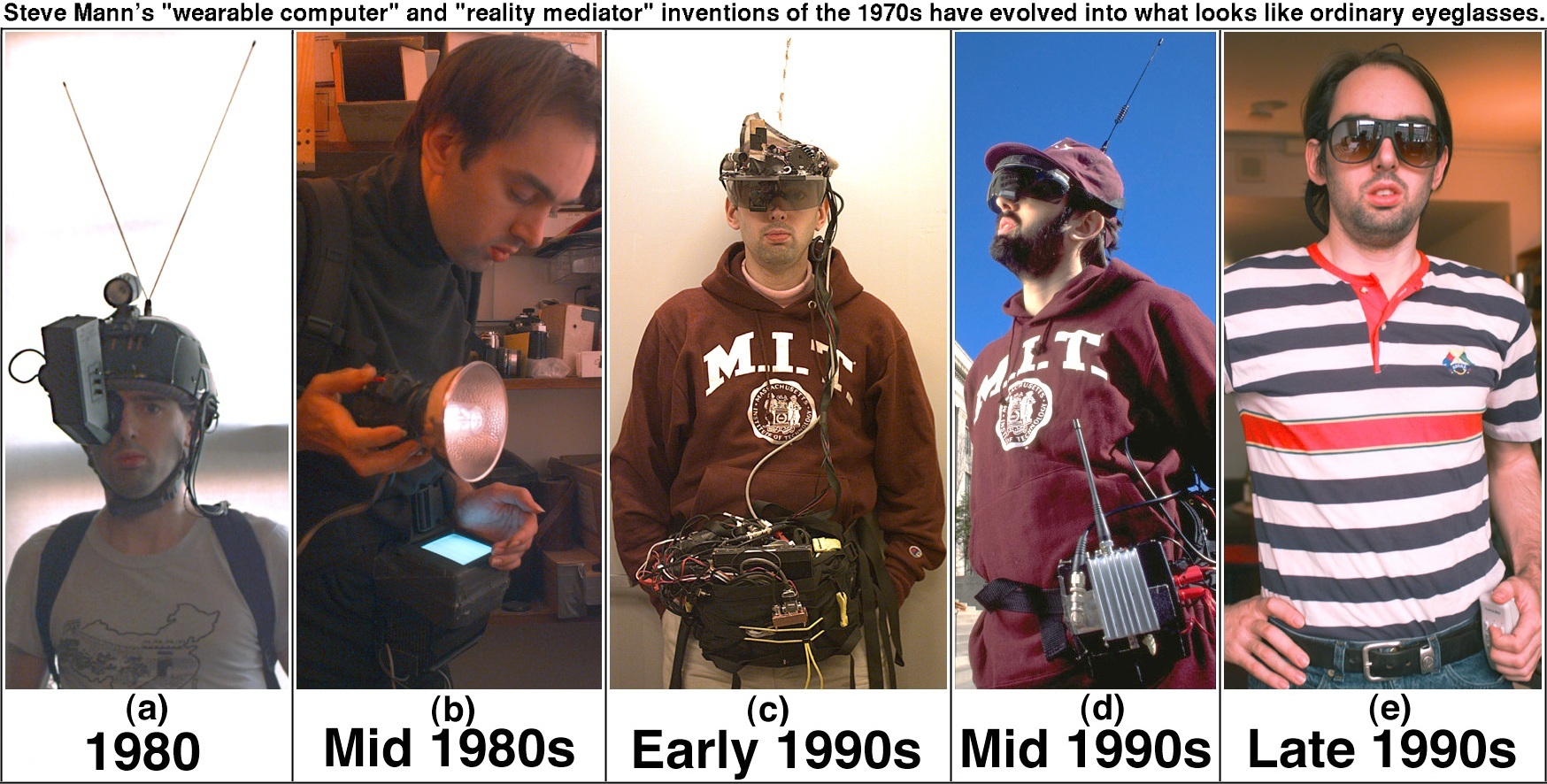
HomeSkillet writes contributes this link to an interesting NYT feature on the recent works of privacy activist, wearables pioneer and artist Steve Mann. Mann has been mentioned here a few times before, but in light of current moves to scan, monitor and track your every move by subtle and unsubtle means, it's never been more relevant. Can anyone suggest a non-registration source for this story?
check this link:s ical/25CYBO.html
http://archive.nytimes.com/2001/09/25/science/phy
along with thad, steve is one of the best known wearables pioneers. one of my favorite examples to show to people new to wearables is steve's condomwoman sequence:
in particular, the before & after photos =)
For an insight into why face recognition software is a threat to non-terrorists please take a look at this article.
In switzerland, this is also the case. When you change cantons (the subdivisions of switzerland) you have to notify the authorities. This means than moving from one city to the other implies a lot of annoying paperwork. Carrying you ID card is also mandatory.
Honnestly I don't feel that my privacy is so much threatened. The difference lies first in the policy of the state (here there are serious laws about privacy) and in what information is gathered, and how it could be used and the legal background (I have more obligations, but the are IMHO better laws to protect me).
A state needs to gather information, the problem is it should require some work. Face it, a lot can be learnt simply by watching what you do, but it requires a lot of resources (a guy trailing you). The problem is not what information can be found out (low tech surveillance can find a lot out), but how difficult it is - this is where the issue with technology lies. Having access to sensitive information a no cost is the problem.
- Where you live, the state needs to know this simply for taxing. I would be asthonished that a modern states has no idea where it's citizen live.
- Unique identifier, while it makes sense that the state assigns you one, this number should only be used by the state, and not other organisations.
- Your religion, ethnic group, etc... I don't see why the state should know this, nor any other organisation. This was one the first bad things with the Jews, I think there was some code to mark jews in official documents - bad.
- Who you are - this seems quite natural around here, also think that the information on the card is a problem only if the card is checked. This implies police-people, so it's work to collect acutal data. Having a security officer checking I am who I'm supposed to be while bording a aircraft makes sense.
I would be worried if there started to be bar-code scanner in certain places, say the entrances of restaurants, or subways. This would be very bad. For the moment, corporation seem to do much more intrusive stuff.
- Your DNA, this is linked to your medical record and should be treated as such, nobody except you doctor should have access to this.
Also remember that laws are very important. What is the penalty for breaching privacy? Most european countries have a much stricter approach than the US. And it's pointless to make a distinction betweeen corporation and state, once the info is gathered, it's to late. Strong corporation will have access to state information, and the state will be able to access corporate information.If nobody else has already linked this article. It's scarey that info gets leaked to big corps who could use it for anything.
This sig made only from recycled ASCII
I didn't see anything in the article to suggest this thing was knocked up in two weeks. Do you really believe that prior to the 11th, there were no cameras or surveillance, and everything was dandy?
A quick look at the Austin Museum of Art site confirms that the exhibition was opened July 21st, and actually closed last week. If anything you can complain about the NYT running the story, but not the original exhibit.
"don't fall into the fallacy of believing that Perl can solve social problems. Maybe Perl 6 can, but that's a ways off"
I don't know about legal issues, but most stores will try to confiscate your camera or kick you out if they catch you taking pictures.
:)
;)
I found this out recently when trying to take pictures at the mall on a photo outing... we had to switch to a discreet point-and-click and even then we ended up getting caught twice and followed around by the security guard. Most stores, for whatever reason, really dislike photos being taken, but the mall in particular. I've shot photos in grocery stores and Wal-Mart, which is a bit easier due to the size and being able to duck away from employees... but they'll still ask you to stop if they find you.
Places where I have been able to take pictures include Barnes & Noble and Starbucks; at B&N they look at you odd or just don't care, and Starbucks, as well as most restaurants/coffee shops, don't seem to mind as long as you refrain from disturbing the other customers. We usually sit at a booth against a wall, that way no "innocents" get stuck in the shots that could come back and complain about being stuck on the internet later.
We also took photos at a Pier 1 imports, where the employees actually spent more time asking questions about what we were doing, mostly because they were curious. It seems to be much, much easier to take pictures in a "stand-alone" store or a strip centre than the actual mall. There's a big taboo on the mall... not sure why, unless it's just to make you spend $5.00 on those crappy photo booths. But if you do attempt to drag your camera into JC Penny, be prepared to put up a fight with the clerks when they try to take it away.
Sorry for rambling, but it's very seldom a topic I actually know about is posted on here.
My Webcomic: Asylum on 5th Street