 Slashdot Mirror
Fighting For Privacy With Art and Words
HomeSkillet writes contributes this link to an interesting NYT feature on the recent works of privacy activist, wearables pioneer and artist Steve Mann. Mann has been mentioned here a few times before, but in light of current moves to scan, monitor and track your every move by subtle and unsubtle means, it's never been more relevant. Can anyone suggest a non-registration source for this story?
Privacy is of the utmost importance. Its the freedom we need the most. The art highlighted in these article is a relevant and valuable expression of things that have come and are to come.
The article's spiked chair being useable by cardholders/citizens only and the other link to the wearable camera is an allusion to the underpinnings of fascism.
I get worried about the direction the US government is taking towards us. Half my company is foreigners, and good ones at that. The plausibility that they will become suspect or deported is minimal, but given some of the new legislation in the mill, it is possible to deport resident aliens if they contributed to an organization that terrorizes or makes threats. That could conceivably include Greenpeace.
Expatriate resident aliens are the best people, most of the time. They are not eligible for welfare, must take care of themselves, do no vote and pay taxes. I would fight to defend the rights of my friends at work.
The advent of the Orwellian era is near, I urge everyone to go to the EFF (www.eff.org) as soon as possible and write the senators and congressmen. And if you are from the EU or Canada or some other place, write them too. I'm still in shock about Skylarov not even getting a semblance of habeas corpus, and is being tried on laws that do not apply to him or what he did. And now the SSSCA and the Anti-Terrorism (Implement Fascism) bills by Adolph Ashcroft.
I am hurt by what happened September 11th. Black ops, special ops and "surgical" retaliation is a good thing. But suspending the rights of people who aren't even Arabic, and coining new criteria for "cyber-terrorism," proposing national ID cards and indiscriminately deporting people is NOT a smart thing to do. And developing legislation with such broad and far reaching wording is dangerous to everyone the world over.
The brain drain will begin, where mega corps of the US will have expatriates arrested for violating something inane. Soon, all the people will stop coming because they are afraid. And possible the greatest nation for development with the soundest fiscal policy will become and intellectual pariah.
Remember, stay moderate. Don't jump to conclusions about things, and make sure to check out the art in these articles, its an expression of what's to come.
- Z
Legalize the constitution. Think for yourself question authority.
I love his chair and the analogies it represents. It points out the idiocy of buying something that you can only use under certain circumstances.
For the SSSCA, maybe a book that you buy that is chained to a desk. Its your book, bought and paid for. But you can only read it at the desk. If you try to take the chain off you go to prison as a terrorist. Because we all know only terrorists would want to read a book anywhere but a desk.
These laws are madness, I can only pray that they are rejected by our leaders.
-- When a fool hears of the Tao, he will laugh out loud.
A Dutch collegue mentioned that in Holland all people are required to register with the authorities wen they move into a new area. Now, this is all very good when trying to cut down on benefits fruad and all that, but it didn't do the Jewish communities much good when the German forces marched in....
No, I'm not suggesting that this is liely to happen, but I think we should think about how much ionformation we want other people to have about us. Remember, the phrase "knowledge is power"? How much power do you want the next government to have over you?
Given the recent MORI opinion poll where an alarming number of (UK) people were not only pro ID cards, but also saw nothing wrong with having Religeon and DNA data (!!) on these cards, this is certainly a hot topic. And yes, an ID card is just the first step....
Tom
Oh arse
Anyone else see the irony of a story on a privacy activist on a site that requires mandatory registration?
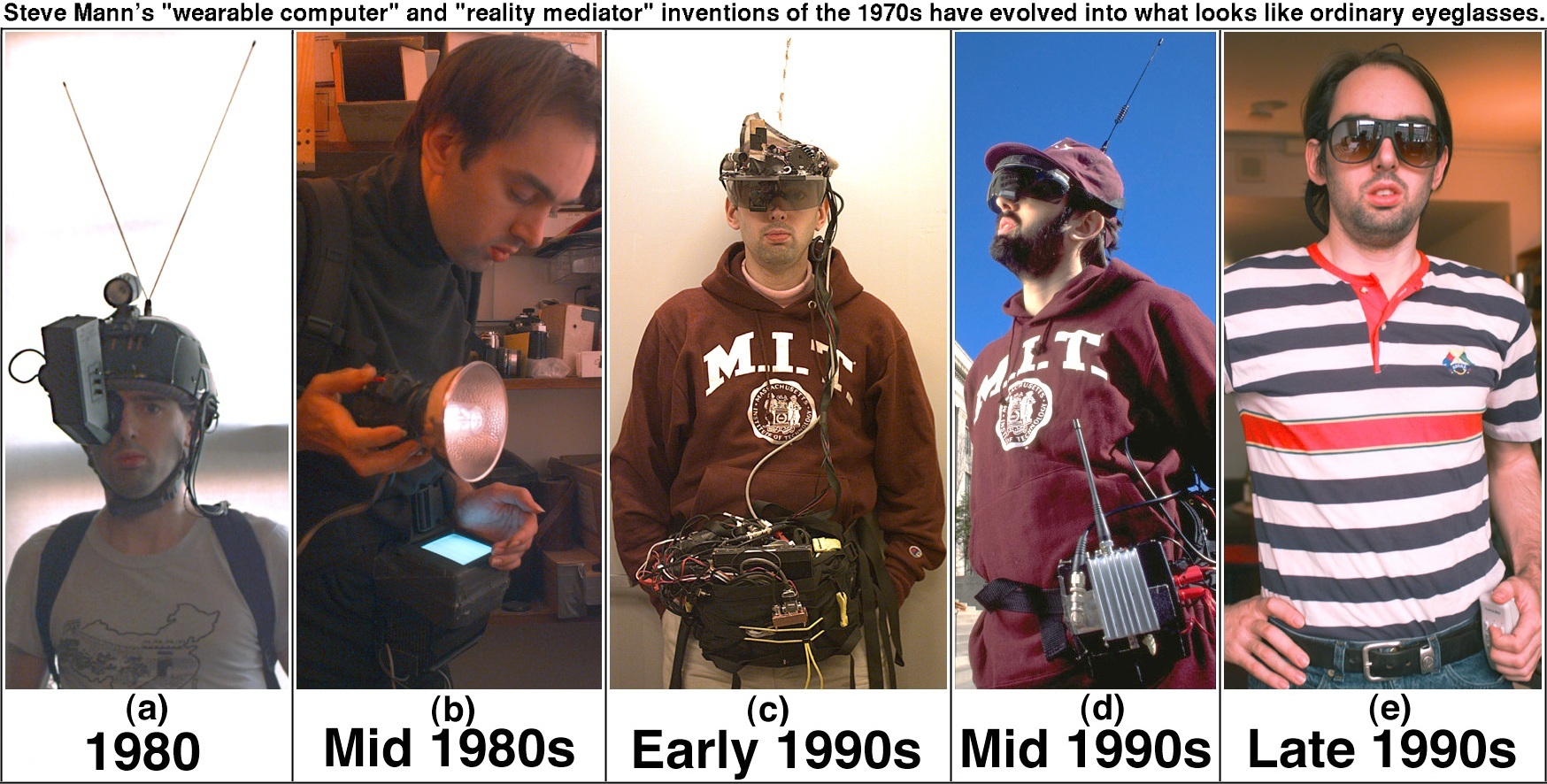
Dr. Mann fights technology with technology, wearing computers on his body and cameras in his glasses so he can "shoot back" by recording everything he sees. The billboards and advertisements posted on every public surface are a form of "attention theft," he says, so he has invented technology that replaces these messages with whatever he would like to see. When he is wearing his "eyetap" glasses, which project an image onto the retina of his eye, a condom ad in a bathroom becomes a picture of a waterfall.
"If the eye is the window of the soul," he argues, "then that window needs a shade. If the brain is a computer, then the eye is an open port, an unsecured opening against hackers."
A wireless connection provides a constant Internet link. With his wearable computer, Dr. Mann can see and hear things invisible to his visitor.
Is it just me, or does this sound a lot like something out of Snow Crash? While reading that article, I kept wondering if "Bruce Schechter" is actually a pseudonym for "Neal Stephenson". I wonder how long it'll be before long-range retinal scanners become the norm.