 Slashdot Mirror
Fighting For Privacy With Art and Words
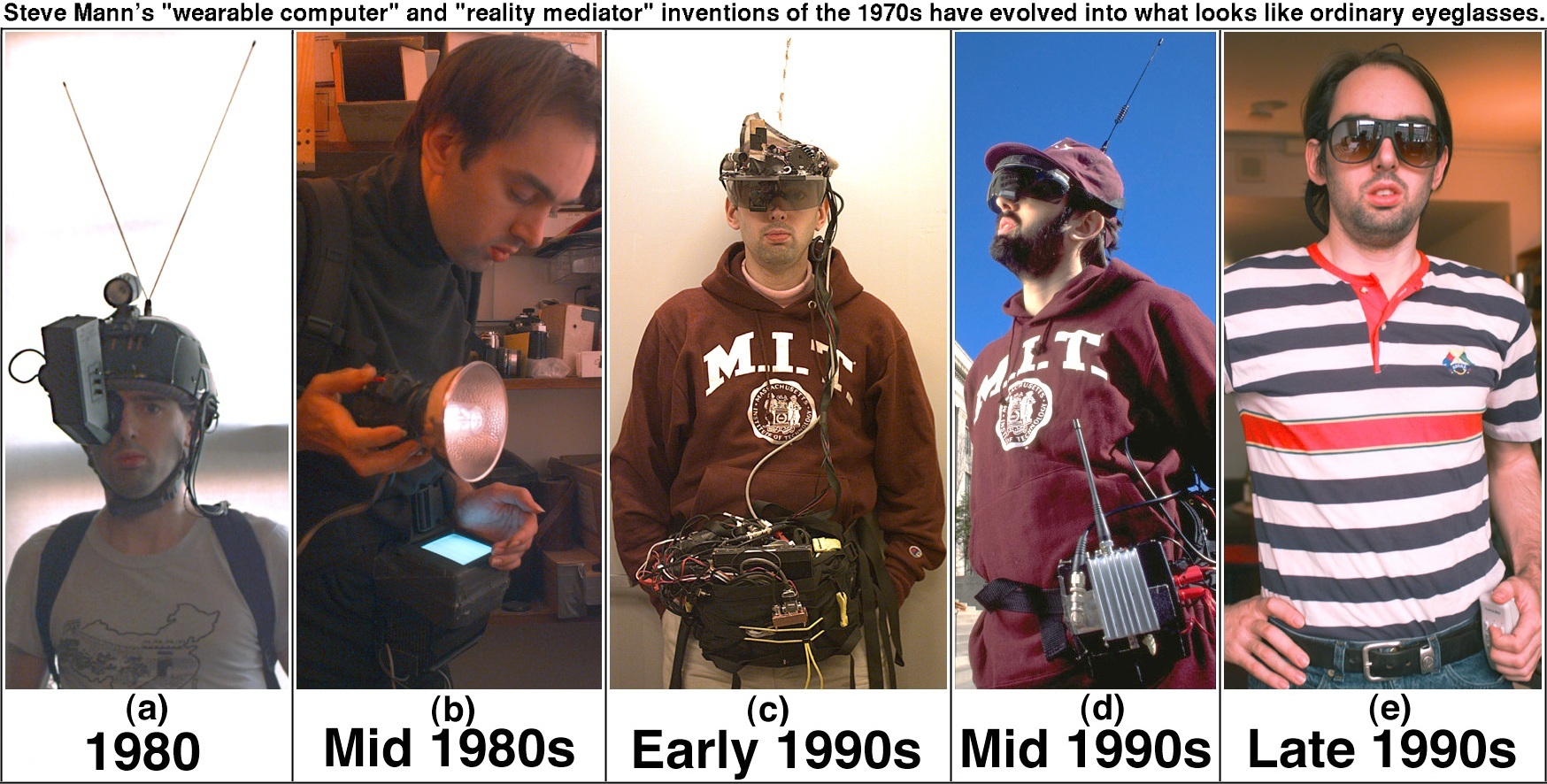
HomeSkillet writes contributes this link to an interesting NYT feature on the recent works of privacy activist, wearables pioneer and artist Steve Mann. Mann has been mentioned here a few times before, but in light of current moves to scan, monitor and track your every move by subtle and unsubtle means, it's never been more relevant. Can anyone suggest a non-registration source for this story?
check this link:s ical/25CYBO.html
http://archive.nytimes.com/2001/09/25/science/phy
along with thad, steve is one of the best known wearables pioneers. one of my favorite examples to show to people new to wearables is steve's condomwoman sequence:
in particular, the before & after photos =)
In switzerland, this is also the case. When you change cantons (the subdivisions of switzerland) you have to notify the authorities. This means than moving from one city to the other implies a lot of annoying paperwork. Carrying you ID card is also mandatory.
Honnestly I don't feel that my privacy is so much threatened. The difference lies first in the policy of the state (here there are serious laws about privacy) and in what information is gathered, and how it could be used and the legal background (I have more obligations, but the are IMHO better laws to protect me).
A state needs to gather information, the problem is it should require some work. Face it, a lot can be learnt simply by watching what you do, but it requires a lot of resources (a guy trailing you). The problem is not what information can be found out (low tech surveillance can find a lot out), but how difficult it is - this is where the issue with technology lies. Having access to sensitive information a no cost is the problem.
- Where you live, the state needs to know this simply for taxing. I would be asthonished that a modern states has no idea where it's citizen live.
- Unique identifier, while it makes sense that the state assigns you one, this number should only be used by the state, and not other organisations.
- Your religion, ethnic group, etc... I don't see why the state should know this, nor any other organisation. This was one the first bad things with the Jews, I think there was some code to mark jews in official documents - bad.
- Who you are - this seems quite natural around here, also think that the information on the card is a problem only if the card is checked. This implies police-people, so it's work to collect acutal data. Having a security officer checking I am who I'm supposed to be while bording a aircraft makes sense.
I would be worried if there started to be bar-code scanner in certain places, say the entrances of restaurants, or subways. This would be very bad. For the moment, corporation seem to do much more intrusive stuff.
- Your DNA, this is linked to your medical record and should be treated as such, nobody except you doctor should have access to this.
Also remember that laws are very important. What is the penalty for breaching privacy? Most european countries have a much stricter approach than the US. And it's pointless to make a distinction betweeen corporation and state, once the info is gathered, it's to late. Strong corporation will have access to state information, and the state will be able to access corporate information.I didn't see anything in the article to suggest this thing was knocked up in two weeks. Do you really believe that prior to the 11th, there were no cameras or surveillance, and everything was dandy?
A quick look at the Austin Museum of Art site confirms that the exhibition was opened July 21st, and actually closed last week. If anything you can complain about the NYT running the story, but not the original exhibit.
"don't fall into the fallacy of believing that Perl can solve social problems. Maybe Perl 6 can, but that's a ways off"