Slashdot Mirror


3rd Chromosome Deciphered

veeoh writes: "Another chapter in the human book of life has been published. Scientists working as part of the Human Genome Project(including some from the Wellcome Trust) have deciphered the complete genetic instructions of a third chromosome, one of the 24 bundles of DNA that carry our genetic material. The BBC has an article about the discovery"
194 comments

  1. 3rd chromosome eh? by redhairedneo · · Score: 0, Offtopic

    Maybe they can cure my muscle deficincy now?

    1. Re:3rd chromosome eh? by Anonymous Coward · · Score: 0

      Actually, your brain isn't a muscle.

  2. Comparison to mice chromosomes? by Harumuka · · Score: 4, Informative
    With the 3rd human genome chromosome completely mapped out, it's time to move on to other chromosomes such as the 17th. According to A Brief History of The Human Genome Project,
    For example the 17th chromosome in mice is homologous in large part to the 11th in human beings and of the 35 mapped loci in both organisms on these chromosomes, all but two are ordered into the same sequence.

    I wonder how similar 3rd chromosome of mice is to the 3rd chromosome of the human genome. Any research being done in this field?

    --
    What do you think of MusicCity now?
    1. Re:Comparison to mice chromosomes? by bn557 · · Score: 2, Interesting

      The problem with this type of comparison is that, for all we know, these genes could just say "make hair like this". 2 different animals could have COMPLETELY different bodies and one, or even many, identical chromosomes because it could only describe what it takes for the body to make hair, or bone, or anything common between the animals.

      Since most(all I believe, but I'll stick with most in case I'm wrong) mammals fall under the mammalia Family, there can be many upon many similarities between the genetic makeups of the animals and still have little if none of it be relevant.

      (standard disclaimer: I'm a physicist and if anything I said is blatantly wrong, oh well. Mod me down)

      Pat

      --
      Humans are slow, innaccurate, and brilliant; computers are fast, acurrate, and dumb; together they are unbeatable
    2. Re:Comparison to mice chromosomes? by barawn · · Score: 2

      Um, you may want to reread that quote- it's the 17th chromosome of *mice* that maps to the -11th- in humans, not the 17th.

      Thus there is no reason to believe that mice chromosome #3 should be similar to human chromosome #3. My guess is that the 1117 connection is probably the best one in the micehuman comparison.

      In addition, they meant "Chromosome 20 has been sequenced, making it the third human chromosome to be sequenced", not that chromosome #3 has been sequenced (which is much much larger than #20, I believe).

      Read the article to see the depiction of the numbered chromosomes.

    3. Re:Comparison to mice chromosomes? by barawn · · Score: 5, Insightful

      Actually, it's worse than that - chromosomes don't say "make hair like this" - they say "make this protein", and that's -all- they say. To paraphrase a great quote from Alpha Centuari (the game, yes) "You cannot take the gene for an elephant's trunk and put it onto a giraffe, and get a giraffe with an elephant's trunk, because there IS no gene for an elephant's trunk. What you can do with genes is chemistry, because genes code for chemicals."

      That said, you don't know HOW a particular protein will interact in a given host unless you know the rest of the chemistry for that host. Stick human growth hormone in a fish, and it won't grow - thus, if you stuck the gene that codes for HGH into a fish, it won't get bigger either.

      Then again, all of this is somewhat moot, because for the most part, they do understand a good deal of the biochemistry of animals (including mice) and it's very similar to that of humans.

    4. Re:Comparison to mice chromosomes? by bn557 · · Score: 2

      Thank you for clearing that up for me. I took a basic genetics course 3 years ago but it's sort of achieved that tofu state in my head where you know it's there, you just can't really get anything useful out of it.

      You confirmed the point I was making however, I just didn't QUITE understand the low-level working of genetics. Maybe after /. runs a few more articles about it I will.

      The greatest gift you can give anyone is to teach them something new.

      Pat

      --
      Humans are slow, innaccurate, and brilliant; computers are fast, acurrate, and dumb; together they are unbeatable
    5. Re:Comparison to mice chromosomes? by Viadd · · Score: 2
      This isn't chromosome #3, it is chromosome #20.


      There have been 2 previously mapped out chromosomes (#21 and #22), so this is the third to be mapped out.

    6. Re:Comparison to mice chromosomes? by barawn · · Score: 3, Interesting

      No problem. Actually, the main difficulty understanding genetics is to get over the problem in my previous post - DNA is not like computer instructions - all DNA does is code for protein, and then the protein interacts in the body and 'does what it is supposed to do' (hopefully). The belief that genetic engineering can end all disease, make perfect humans, etc. is a common mistake, and definitely not true - many human diseases are completely agenetic (take cancer, for instance - everyone would probably eventually develop cancer, given enough time) and more importantly, many of the mechanisms in place in living systems are simply to fix or deal with things that break (again, cancer). To make humans immune to cancer, for instance, you'd have to make a better system than nature designed - good luck. You could, however, cure it, and that's the real benefit of genetic engineering, is that it may help us cure and treat diseases better.

      The other point is that I do want to stress that the mouse/human comparison is not quite as useless as a first glance might make it seem. The fact is, if we know how a protein (and therefore a gene) behaves in a mouse, and we alter that gene, and see how that protein behaves, we've got a good guess that it will cause the same behavior in humans. It's not -guaranteed-, but it's better than doing the experiment blindly on humans (animal rights activists aside: from a purely practical standpoint, mice breed faster than humans and have a shorter lifespan, so from a completely amoral standpoint, it's better to do it on mice. It's also harder to control the environment). Wow I could still get flamed for that comment.

    7. Re:Comparison to mice chromosomes? by Quizme2000 · · Score: 3, Informative

      Actually, it's worse than that - chromosomes don't say "make hair like this" - they say "make this protein",

      IMHO, thats where the real fun starts is in protien folding. It's extremely difficult to take apart the molecules and fold them correctly back to a stable state. The best analogy i heard was from the director of the HGP, "Its like the highway system, its expensive to build, time consuming, and doesn't generate revenue directly. But it is the first step in the next generation of genetics reaserch needed for sucess."

      --
      "Get them before they get....
    8. Re:Comparison to mice chromosomes? by dillon_rinker · · Score: 2, Offtopic

      And this is where the animal rights activists do not get it...many have suggested that science has progressed to the point where test tube or computer models suffice, and animals do not need to be used. This completely ignores the fact that computers have not yet progressed to the state where we can model a single protein, and test tubes are not complete living systems.

      Though I'll grant that we don't need to pump rabbits full of mascara just to see HOW MUCH is toxic...

    9. Re:Comparison to mice chromosomes? by gorilla · · Score: 2

      There are two sorts of genes found on chromasomes, coding genes, which as described above are (eventually) transcribed to proteins, and regulatory genes, which work at a higher level, and control which proteins will be expressed and when. Regulatory genes aren't transcribed. A good description of the process is here. There is of course a third usage of the DNA, which is junk DNA, but (as far as we know) this has no purpose at all.

    10. Re:Comparison to mice chromosomes? by Otter · · Score: 3, Interesting
      I wonder how similar 3rd chromosome of mice is to the 3rd chromosome of the human genome. Any research being done in this field?

      Imagine if you took the 23 human chromosomes, broke them up into a couple of hundred chunks (I forget the exact number) and randomly reassembled them to make the 20 mouse chromosomes. That's what it looks like. So rodent and human chromosomes don't directly map to one another (that site aside) but there are large chunks containing many genes that can be directly compared.

      With the mouse genome being sequenced now, that's one of the big things going on -- regions that are similar between the mouse and human sequences are presumably imnportant enough to be conserved over hundreds of millions of years, and therefore give a clue to the location of important features like genes and regulatory elements. That's one of the major pushes in genomics right now.

    11. Re:Comparison to mice chromosomes? by afidel · · Score: 2, Interesting

      There is of course a third usage of the DNA, which is junk DNA, but (as far as we know) this has no purpose at all.

      Actually one use is very well known, it is to limit the environmental damage done to the actively coded regions of the chromosome. If every chemical or radiation source that hits the chromosome was hiting actively coded regions then mutation rates and cancer et all would be so prevelant that life would be unstable.

      --
      There are 4 boxes to use in the defense of liberty: soap, ballot, jury, ammo. Use in that order. Starting now.
    12. Re:Comparison to mice chromosomes? by Otter · · Score: 2
      2 different animals could have COMPLETELY different bodies and one, or even many, identical chromosomes because it could only describe what it takes for the body to make hair, or bone, or anything common between the animals.

      Replace "chromosomes" with "genes" and you're right. But knowing that the same gene makes hair in humans and mice, functions in the same pathway is turned on and off by the same other proteins is hardly irrelevant -- it tells what you the core elements of hair specification are and enables you to do experiments that you can't do with humans.

      I did hear a talk recently abot human-chimp comparisons, which was more like what you have in mind. Because almost all the genes are identical there, looking at the subtle differences is a powerful way to get at why we're taller, less hairy, walk on two legs and (in most cases) are smarter.

    13. Re:Comparison to mice chromosomes? by gorilla · · Score: 2
      On the other hand, if you have a smaller chromosome, then the chance of a mutagen hitting hte chromosome would correspondingly decrease.

      Some bacteria have virtually no junk DNA at all. Living in an enviroment where reproducing as fast as possible is desirable has eliminated as much junk as possible.

    14. Re:Comparison to mice chromosomes? by Anonymous Coward · · Score: 0
      >If every chemical or radiation source that hits >the chromosome was hiting actively coded >regions then mutation rates and cancer et all >would be so prevelant that life would be >unstable.


      That makes no sense. The odds of any strand of DNA receiving damage is same throughout the whole strand. What you're saying is like saying that a loaded truck is safer on highways full of empty trucks, because the full truck is less likely to be hit. Again, that's just plain silly.

      Now, if you were to argue that there were
      redundant sections of DNA, then you would be right. But that's my argument, not yours.

    15. Re:Comparison to mice chromosomes? by Anonymous Coward · · Score: 0

      Stop wondering and go to the LIBRARY

    16. Re:Comparison to mice chromosomes? by falzer · · Score: 1

      I was hoping you would link to a picture of some sort of human-mouse creature.

    17. Re:Comparison to mice chromosomes? by sketerpot · · Score: 1
      One interesting type of junk DNA is a ~1020 letter sequence that is repeated over and over. I believe the idea here is that this DNA is like a virus; it replicates itsself to different places. It makes up a double digit percent of the human DNA.

      Perhaps it actually came from viruses.

    18. Re:Comparison to mice chromosomes? by Anonymous Coward · · Score: 0

      Save yourself the trip and do a long series of searches and reading on the web.

    19. Re:Comparison to mice chromosomes? by foobar104 · · Score: 2

      Actually, it's worse than that - chromosomes don't say "make hair like this" - they say "make this protein", and that's -all- they say.

      It's much worse than you think. This site codes for protein so-n-so. So does that one over there. But this here site codes for the suppression of that same protein.

      There doesn't appear to be a simple correspondence between codons and protein expressions. Rather, it seems that the actual proteins that get expressed in the cell are the result of a complex interference pattern among the codons in the cell's genome.

      This makes DNA fairly redundant-- quite a bit has to go wrong before the cell stops working altogether. Of course, proof against accidental changes (transcription errors or whatnot) is also proof against deliberate changes (gene therapy).

      So it's a lot more complex than it appears at first glance.

    20. Re:Comparison to mice chromosomes? by Anonymous Coward · · Score: 0

      actually, I think regulatory genes are transcribed and their gene products (proteins) then go on to affect the regulation of other gene products. On the other hand there certainly are regulatory regions on the chromosome which act to regulate genes. These DNA regions are not genes though.
      martin

  3. Poor practice by SumDeusExMachina · · Score: 1, Interesting
    I'm appalled that our government would waste so much money on something that could easily be done in the private sector. In fact, the last time I heard, they were actively competing with a private sector team in order to see who would first decode the human genome.

    Come on, the only thing worse than being patented by a private corporation is being patented by your government. Either way, they'll own the rights to our genetic patterns, but in one instance I'll end up with a tax cut that gives me enough money to move to a country that ignores patent laws, while in the other my government throws away my money competing competing with the private sector. The government should never be competing with the private sector.

    --

    Is your company running tools written by ma
    1. Re:Poor practice by lavaforge · · Score: 5, Insightful

      I for one am glad that my government is competing with the private sector. This doubling of the research makes sure that it is more reliable when it is finished.

      How would you like to get a revolutionary new cancer drug, only to find out that the shotgunning method used by Celera missed a few steps? With the government and Celera both having data, errors can be found and corrected before they cost someone dearly.

    2. Re:Poor practice by Tattva · · Score: 1

      There are a couple of possible scenarios that make government involvement worth considering in the case of research as fundamental as this. Perhaps the licensing of this technology will recoup in part the costs of supporting the research. Or perhaps, if they weren't involved, the company who achieved this privately would not engage in RAND licensing practices, thus denying future health care advances and perhaps resulting in preventable deaths. (RAND == Reasonable and non-discriminatory.)

      --
      personal attacks hurt, especially when deserved
    3. Re:Poor practice by Microlith · · Score: 2, Insightful

      DUH. The government can't hold patents.

      And why shouldn't the Government compete with the private sector? Especially in cases like this, where the companies would undoubtedly make a move to restrict the information and use of it, it's good to have a group who is required to release it into the Public Domain later working on it.

      Of course, I could be totally wrong.

    4. Re:Poor practice by pubjames · · Score: 4, Insightful

      I'm appalled that our government would waste so much money on something that could easily be done in the private sector.
      [...]
      The government should never be competing with the private sector.


      Hhmm...

      This type of view is often seen on Slashdot. It seems to be a common view in America. It is much less common over here in Europe. (But then we're a bunch of liberal losers, of course...)

      Your government put a man on the Moon. Do you think that would have happened if it was left up to the private sector? Similarly with the Genome project. There is masses of work to be done, expensive work, a lot of which is not going to have any immediate financial payback. (Despite what most people think, the mapping of the genome is just a small part of the task ahead to actually understand the whole thing).

      Just as the Moon landing would never have taken place without the government, neither would the complete mapping of the Human Genome, and Mankind would be poorer for it.

      As a Slashdot reader you may appreciate another perspective. The Internet came out of US government funded work. The Web came out of the CERN project, which is funded by governments internationally. Many of the most commonly-used formats on the web (JPEG, MPEG, MP3) came from EU funded projects. If it was left up to private corporations, it might have taken another twenty years (or more?) before we had anything resembling the Web we have today.

      I know a lot of you Americans hate paying taxes and distrust your government, but don't let that blind you to the fact that governments are often the driving force behind new technologies, not corporations.

    5. Re:Poor practice by iiii · · Score: 0

      You've got it backwards.

      That we don't want our own genes patented by some company is exactly why the government should be in there competing. If the gov't makes a discovery first the discovery becomes part of the public domain, whereas if a private company discovers something first they patent it, and no one else can use it without licensing the "technology".

      --
      Light cup, beer drink, thin so chain, neck turtle fat, man I won't say it again
    6. Re:Poor practice by geekoid · · Score: 2

      buy a clue.
      The government can not patent something.

      If this is done with public funds, then it will be open to the public. If the pvt. sector does it, then they will patent it. they'll probably loose it in the long run.

      --
      The Kruger Dunning explains most post on /. http://en.wikipedia.org/wiki/Dunning%E2%80%93Kruger_effect
    7. Re:Poor practice by frenchs · · Score: 4, Informative
      Some people will see this as "a waste of money". But I would much rather the government spend money through grants and do some research itself, because they can't hold the patents on this information once they finish it. It's OUR money, so it's OUR information when they find it out.

      Chimera (unix, linux, windows) is a molecular modeling program developed by UC San Francisco, but it was funded by a government grant from the NIH, so guess what, you can download it for free provided you don't want to make money using it.

      The NIH (government orginization) has actually REQUIRED that people that use their money to come up with a protein sequence should deposit it in a freely accessable database

      Also, just a side note. If anyone wants to download the program, just grab some protiens from the protien database and load them up. Some stuff you might find interesting in the way of proteins.

      tryptophan

      hemoglobin

      Alcohol Dehydrogenase

      DNA (not a protein, but oh well)

      Insulin

      more...

      Enjoy,
      Steve

    8. Re:Poor practice by Anonymous Coward · · Score: 0
      I'm appalled that our government would waste so much money on something that could easily be done in the private sector.

      Arguably, the private sector isn't interested in decoding the entire human genome. Just those parts they can patent or use to create new drug treatments. So they might take shortcuts that pure research might not. (I'm not trying to disparage their efforts. Pure research is all well and good, but the most significant result of decoding the human genome should be the creation of new drug treatments for diseases like cancer and stuff.)


      Government funded pure research not only serves as a cross-check on privately funded research, but also should be more thorough.


      The government should never be competing with the private sector.


      The problem with private sector research today is that it is increasingly bottom-line oriented. Privately funded pure-research efforts are getting rarer and rarer. Offhand I can only name IBM as funding a significant amount of pure-research. Bell Labs, for example, is a fading memory. Although I'm a strong proponent of smaller, cheaper government, I see an increasing need for government to fund more multiple, small, pure-research projects. I don't see it as a perfect solution, but it's an imperfect world.

    9. Re:Poor practice by fatboy · · Score: 1

      I'm appalled that our government would waste so much money on something that could easily be done in the private sector. In fact, the last time I
      heard, they were actively competing with a private sector team in order to see who would first decode the human genome.


      This is pure science. The government should fund pure science. Technology is what the private sector should fund.

      --
      --fatboy
    10. Re:Poor practice by sketerpot · · Score: 2
      >Your government put a man on the Moon. Do you think that would have happened if it was left up to the private sector?

      I'll leave arguing with your main points to other people, but I'd like to give you a link to a bunch of privately funded people who just might make something of the moon: the Artemis Project.

      I wish them all the luck in the world, except for my luck. I need it myself.

    11. Re:Poor practice by kim_rutherford · · Score: 1


      I'm appalled that our government would waste so much money on something that could easily be done
      in the private sector.

      You will be pleased to learn that the your government didn't pay for the sequencing of chromosome 20. It was paid for by the Wellcome Trust which is a British charity.

    12. Re:Poor practice by Phillip2 · · Score: 2

      "I'm appalled that our government would waste so much money on something that could easily be done in the private sector."

      Firstly its not just your government spending money on this. A lot of it came from other governments. Indeed in Europe a large amount of the money came from the Welcome trust. Certainly it's this group that has spent a lot of the money going on decoding the genome, and providing base line annotation.

      Secondly its not clear that the private sector could do this. Although they have been involved late in the day, they were not when the early pioneering work which has made this possible, from Fred Sangers original work on sequencing technology, to all the mapping efforts, cloning techniques and so on. This of course includes most of the work that was done by Venter before Celera came into being.

      And third are you really suggesting that as soon as any company opens up, that the government should immediately shut down all resources that they are providing for a specific project.

      And finally of course the data which has been produced from the "public sector" (much of the funding for which has not come from your, or indeed any government), has been released freely into the public domain. In other words the rights are not owned by the government.

      Its easy to come out with a knee jerk libertarian "the free market can do anything" response to things. The reality is that it can't, and often doesn't. There is a big role for people doing things in other ways. Science in particular benefits from this. Its much easier to advance if you don't have to read pages of NDA's for every single piece of data that you need. And if the free software/open source community does not show you that, then what will.

      Phil

  4. Who owns the patent? by Anonymous Coward · · Score: 0

    And didn't Celera do the complete mapping a couple years back?

    1. Re:Who owns the patent? by Iffy+Bonzoolie · · Score: 1

      I don't understand the concept of patenting DNA. You can patent processes and inventions... Isn't DNA more of a discovery? If someone finds evidence of some new sub-atomic particle, can they patent it? They can patent the process they used to find it. In any case, seems like there's several million years of evidence of prior art.

      I can see a company not releasing their findings on the genome mappings and/or charging fees for access to that information. If they develop a drug or process from this information, then they could patent that...

      --
      Run a pencil-and-paper RPG campaign with your far-off friends: Gametable!
  5. Just wishing.... by 2Bits · · Score: 2
    "Once again, we are seeing the fruits of the two key commitments of the Human Genome Project: to make the sequence freely available and to produce a quality finished sequence."

    How long would it take for politicians to understand that? Again, this shows that innovation can only come from having information/knowledge freely available.

    Just wishing that we had more enlightened politicians..... is this just a fat dream?

  6. 24? by Byteme · · Score: 4, Funny
    I have 46. I am special.

    1. Re:24? by bats · · Score: 5, Informative

      There are 24 chromosomes. There are 46 chromosomes. Stop! You're both right.

      The average human has 46 chromosomes. There are 23 pairs of them. Of the 23 pairs, 22 pairs consist of similarly constructed mates only differing in the base pairs (AGTC) -- but the structure of the thing is the same. The other set is the XY pair (which determines sex), which are structurally different, ie different sizes, shapes.

      So there are 24 kinds of chromosomes, of which most people have 46. Girls have 23 different kinds (no Y) while guys have all 24.

    2. Re:24? by Anonymous Coward · · Score: 0

      Girls have 23 different kinds (no Y) while guys have all 24.

      Hence the natural female inferiority to males. Their irrationality and lack of intelligence can be explained by the fact that they are missing this final human chromosome. So too can their emotionality and propensity towards familial connection creation be explained by this lack. To use a somewhat apt but derogatory term, they are 'retarded'.

    3. Re:24? by Byteme · · Score: 3, Interesting
      Then there is Down, Turner's and Klinefelter's syndromes. Down has an extra 21. Turner's is a monosomy X with sexually underdeveloped females. Klinefelter's syndrome are males with extra X chromos, XXY - XXXY. There is also XXX, XXXX and XXXXX female karyotypes with mild effects as the extra X's are inactivated and converted into Barr bodies.

    4. Re:24? by mandolin · · Score: 1, Flamebait
      (IANABiologist)

      Dear troll, one of the interesting things about the Y chromo is that most of it is there just to make sure you're male. Diseases like color blindness, hemophilia etc. strike males *almost* exclusively because males have no good X chromo to cover for their screwed up one. To use a somewhat apt term, females have 'backups'.

      For example, if mental prowess were controlled by the X chromo, and you got the stupid gene, it would be nice to have a backup to bring you back up to par. Judging by the nature of your post however, I'm guessing you got good ol' "Y" instead.

    5. Re:24? by Wire+Tap · · Score: 1

      And, if you don't know what AGTC means, they are the different bases that make up DNA:

      Adenine
      Guanine
      Thimine
      Cytosine

      Adenine pairs off with Guanine, and Thimine pairs off with Cytosine. A purine with a pyrimidine. Purines (A and T) have two carbon-nitrogen rings, and pyrimidines have only one.

      There is also Uracil, which is only found in RNA.

      --

      Man is born free; and everywhere he is in chains.

    6. Re:24? by Wire+Tap · · Score: 1

      My fault, the purines are not A and T, they are C and T. And, also, A pairs off with T, and G pairs off with C. Boy, only two years after my AP Bio class and already I'm forgetting the basics.

      Sorry!

      --

      Man is born free; and everywhere he is in chains.

    7. Re:24? by Angry+Toad · · Score: 1

      Don't wanna rain on your parade here, but:

      C,T,U = pyrimidines
      A,G = purines

      And strictly speaking there's really a host of other forms of bases found in tRNAs and rRNAs (pseudouracil, methylated bases, thiouridine, isopentenyladenosine, and on and on) thought they probably don't count 'cause they're derived forms of the canonical ones...

    8. Re:24? by shokk · · Score: 1

      On the other hand, males with extra X's tend towards violent tendencies. Hence, our prison populations are chock full of people with XXY and more.

      --
      "Beware of he who would deny you access to information, for in his heart, he dreams himself your master."
    9. Re:24? by mindstrm · · Score: 4, Informative

      Actually...
      Females have 23 pairs.
      Guys have 22 pairs, plus 2 chromosomes that are not a 'pair'. (XY instead of XX).

      The useless Y chromosome, I'm told, is what makes males inferior.

    10. Re:24? by Reziac · · Score: 2
      minor addendum: there are also XYY males, who tend to suffer from testosterone poisoning. Not entirely a joke -- per a study made ca. 1970, about 1/3rd of chronically violent males in prison were XYY. (This factoid came up in one of my college biochemistry classes. Gods, I feel old :)

      --
      ~REZ~ #43301. Who'd fake being me anyway?
    11. Re:24? by Anonymous Coward · · Score: 0

      As far as I recall, XYYs are also significantly MORE mathematically, verbally and analytically intelligent than the average, on IQ tests, I think you're talking about 20 or 30 points above the male average - a not insignificant adavantage. I wouldn't be surprised if large numbers of successful "alpha" males in humans, chimps and gorillas were XYY.

    12. Re:24? by Anonymous Coward · · Score: 0

      Actually, XYY males tend to be more violent and "criminal" (according to american social values - of course, a successful criminal (i.e. one that doesn't get caught), is often known as a "businessman"). XYY males are also more intelligent, and more capable of "hannibal lecter"-style manipulation of people. The sterotypical "ciminal mastermind", "successful politician/businessman" and "military genius" are all profiles of typical XYY individuals.

    13. Re:24? by Anonymous Coward · · Score: 0

      Yeah, I like my women XXX, baby!

    14. Re:24? by johnnyd78 · · Score: 1

      The "useless" Y chromosome is not useless. In fact, it's very useful. The reason it's seen as bad is because the X and the Y chromosome DO pair up - the Y chromosome is smaller, so it matches up with less of the X chromosome.

      The way our genes work (most of you probably remember from HS biology) is that the two genes (one from each chromosome) combine to from a trait. Whether I can roll my tongue or not is a good example. Let's call the ability to roll my tongue "T" and the inability "t". I inherit either a "T" or a "t" from my mother and my father. So, if I have TT or Tt, then I can roll my tongue. If I have tt, then I can't. This means that there are "recessive" traits which are hidden - you can't tell by looking at a Tt that they have the "t" trait because they can do just as much as the TT's.

      When dealing with the X-Y pairing, certain loci (locations) on the X chromosome don't have an analog on the Y chromosome. So if there's a recessive trait (think "t") on the X chromosome and it's one of those loci that isn't paired up, then the person won't be able to roll their tongue.

      This causes problems in things like male-pattern baldness. Essentially, the recessive trait can get handed down from the mother to son (mother is "Bb" and so on one X chromosome is contained "B" and on the other is "b"). If the son gets the "b" X chromosome, then with no gene on the Y chromosome, they will exhibit male-pattern baldness.

      Back to the "useless" part: If this were true for every characteristic on the X chromosome, males would be disease-ridden, pus-infested beings. According to some, that may already be true :> . But it's important that some vital genes exist on the Y chromosome, so it's not quite useless.

      John

    15. Re:24? by Anonymous Coward · · Score: 0

      hence the tool song - 46+2 (the next evolution....)

    16. Re:24? by Trogre · · Score: 1

      "The useless Y chromosome, I'm told, is what makes males inferior."

      Sigh. Another example of social engineering gone mad.

      Move along with the rest of the herd now, that's it, case more stones at males, worship women.
      What's that? A non-man-basher? Where? Kill him!
      (/sarcasm)

      Please think for yourself, and don't believe the PC bullshit that is pushed on us today.

      --
      "Nine times out of ten, starting a fire is not the best way to solve the problem." - my wife
    17. Re:24? by Reziac · · Score: 2
      I don't remember that part but it wouldn't surprise me in that a tendency of the less-X-influence is to be quicker to analyze and act on whatever data is received, and to spend less time waffling on what to decide (more of an X trait).

      BTW these tendencies can be bred FOR or AGAINST in dogs (I've bred out the X type as much as possible in my bloodline, because dogs without X behaviour are much easier to live with), so it is likely not actually an attribute of the extra Y chromosome, but a gene on the X chromosome that is expressed more fully when YY is present.

      ALPHA isn't an acquired position -- it's inherited. Some people (or animals) can learn to emulate it, but the real thing is born, not made. Alphas do NOT exhibit "dominant" behaviour -- they exhibit what might be called "natural leadership". Other people (or animals) just assume they're the boss and NEVER argue with their position.

      What most people think of as an alpha is really a beta, ie. what's commonly called short man's complex: the need to prove how tough you are. Alphas never, ever do that. They KNOW their place in life, and they have nothing to prove. Only betas think they need to prove something. BTW betas NEVER argue with alphas, only with other betas.

      [Note: I am a professional dog trainer/breeder with 33 years experience. I deal with multiple generations of this sort of thing on a daily basis.]

      --
      ~REZ~ #43301. Who'd fake being me anyway?
  7. Chomosome by omega9 · · Score: 1

    You almost got me with "chomosome". At first I thought this was about a religious artifact.

    --
    I'm against picketing, but I don't know how to show it.
  8. Nature has the full story. by Ashran · · Score: 2, Informative

    For anyone interested in a more detailed article, visit this link

    /wave

    --

    Before you email me, remember: "There is no god!"
  9. genetic "instructions" by mrroot · · Score: 2, Funny

    ... have deciphered the complete genetic instructions of a third chromosome, one of the 24 bundles of DNA that carry our genetic material.

    Wouldnt it be cool if they found an easter-egg in the "instructions"?

    or if there was a secret message encoded in them ala the Netscape Weenies message.

    --
    I Heart Sorting Networks
    1. Re:genetic "instructions" by mrjive · · Score: 3, Funny

      News flash

      Scientists uncover code for flight simulator in 8th chromosome!

      --
      If you can't beat them, arrange to have them beaten. -George Carlin
    2. Re:genetic "instructions" by Anonymous Coward · · Score: 1, Funny

      ssa ym ssik nac ahdduB

    3. Re:genetic "instructions" by diesel_jackass · · Score: 2, Funny

      i wonder if any of the code is commented out?

    4. Re:genetic "instructions" by Anonymous Coward · · Score: 0

      Heh.

      Might I suggest "Sources for this pet project of mine can be found at nic.funet.fi (128.214.6.100)"

      "I post anonymously so you don't have to." - hermit

    5. Re:genetic "instructions" by Cacophony · · Score: 1

      chomosome?

      Maybe they can figure out what makes Slashdot editors spell so badly...

      -Al-

    6. Re:genetic "instructions" by Anonymous Coward · · Score: 0

      > i wonder if any of the code is commented out?

      As a matter of fact there is commented out DNA. They're called introns (as opposed to the code itself, called exons).

      Uncomment code, and you end up with "extra" features (like tails, feathers, wings, etc...).

    7. Re:genetic "instructions" by Anonymous Coward · · Score: 0

      Sort of. But in reality, it's more like all genes are commented _in_ by virtue of having a special region before them that initiates transcription (the initial step in making a protein out of a gene's code). This is kinda like code that would only execute if it has a // at the beginning of the line... or more appropriately in the case of genes, code that is surrounded by asterisks. Because at the end of genes, there is typically a region that tells transcription proteins to stop.

    8. Re:genetic "instructions" by ocie · · Score: 3, Funny

      There is a secret message:

      ATCGATCGATCGATCGACTGAC...
      All Your base-pair are belong to us!
      ...TCGATCGAGCTAGACGTCGTGC

      --
      JET Program: see Japan, meet intere
    9. Re:genetic "instructions" by 680x0 · · Score: 1

      Actually quite a few sections of the chromosomes
      exist which don't seem to have a function. I forget the term for this, but it's effectively
      "commented out DNA".

    10. Re:genetic "instructions" by Jburkholder · · Score: 1

      Junk DNA?, or is there a more technical term?

    11. Re:genetic "instructions" by sharkey · · Score: 2

      Wouldnt it be cool if they found an easter-egg in the "instructions"?

      There already is one in the Y chromosome. It waits until the perfect moment to mortally embarrass the teenage male, when it triggers an erection that just will not go away until it has been publically noticed.

      --

      --
      "Outlook not so good." That magic 8-ball knows everything! I'll ask about Exchange Server next.
    12. Re:genetic "instructions" by Anonymous Coward · · Score: 0

      The term in Intron. Some theories postulate that this "non-functional" DNA is archaic in nature, being a hold over from past ages. Other (myself included) have thought that while a section of the code may be 'gibberish' in one reading frame, it may have functionality in another reading frame (reading frame: point along a DNA strand where the DNA is transcribed into messenger RNA). They may also play a role in inducing variability during recombination (like in fertilization of ova). Such is seen in the production of coding for antibodies.

  10. For those interested in the ethical/moral issues.. by nikoftime · · Score: 2, Interesting

    Though most of the issues are readily apparent and most people are at least partially familiar with them, there are some that I foun to be quite interesting (especially the commercialization aspect of genetic code):

    Ethical, legal, and social issues

  11. Quantum computing will simplify this stuff by qurob · · Score: 0

    Todays 'regular' computers are of no match for this. Quantum computing will simplify this 100X

    Possibly, one day, organic computers will simply just dump their core, and we'll have our work done for us :)

    - I want SALMON!

    1. Re:Quantum computing will simplify this stuff by renehollan · · Score: 1, Offtopic
      Organic computers dump their core?

      What a stinky way to crack encryption. But, I suppose someone has to do the dirty jobs.

      OffTopic: In Czech, "shit" is "hovono" (phonetically), and "to suck" is "tzUtzit" [hard U]. The machine that cleans out septic tanks, therefore, is colloquialy called a "hovono-tzUtz".

      --
      You could've hired me.
  12. Chomo? by cliffy2000 · · Score: 1

    http://www.chebucto.ns.ca/SportFit/AKC/Zanshin/V01 I02/art07.html
    The only Chomo that Some might know.

    1. Re:Chomo? by cliffy2000 · · Score: 1

      Sorry. Bad link.
      Chomo.

  13. 3rd Chromosome by ivrcti · · Score: 2, Insightful

    As always the difference between the fool and the wiseman is knowing what to do with the information at hand....

  14. Mmmm...chomosome by Anixamander · · Score: 2

    For those who don't know, chomosome is actually the genetic code that makes one more or less like Noam Chomsky.

    --
    Do not taunt Happy Fun Ball(TM)
  15. Whoohoo! by rev_icon · · Score: 1

    Great, but can I grow that third arm I've always wanted? NO! Damn hippy scientists.

    -Matt
    digitalmeca.com

    1. Re:Whoohoo! by main() · · Score: 2, Funny


      > Great, but can I grow that third arm I've always wanted? NO! Damn hippy scientists.

      I have one for spanking the monkey and one for moving the mouse and clicking the buttons.

      What do I need a third one for?

      Si

  16. XMEN by sabinm · · Score: 2

    Intriguingly, some people (37%) have an extra chunk of DNA in chromosome 20 and could have an extra copy of a specific gene of unknown function

    Make way for homo superior

    Cant wait till my kids start manifesting the X FACTOR

    --
    http://cincyboys.blogspot.com/ Everything Cincinnati. Including the word 'Finnih'
    1. Re:XMEN by Anonymous Coward · · Score: 0

      you're a homo.

  17. If you had your way... by Jarrod+Pol · · Score: 1

    Government projects:
    NASA
    Panama Canal
    Mt. Rushmore
    Fermilab
    Manhattan Project

    The government should never be competing with the private sector.

    Get your head out of your ass and quit making stupid generalizations.

    1. Re:If you had your way... by Anonymous Coward · · Score: 0

      I defy you to name one benefit that Mt. Rushmore provides besides pissing off American Indians.

    2. Re:If you had your way... by Jarrod+Pol · · Score: 1

      By that logic, the people of the lower Nile must get a real rash everytime they see the pyramids.

    3. Re:If you had your way... by Anonymous Coward · · Score: 0

      Let us see now...The U.S. Postal Service ought not be competing with Federal Express, UPS, DHL, The messengers on bikes in downtown Manhattan, etc.

      All public highways (thank you Dwight Eisenhower) should return to their rightful status as privately owned and maintained toll roads.

      Amtrak and whatever they now call ConRail ought to be sold back to the heirs of the nineteenth century railroad tycoons so as to better compete with all of those nasty trucking companies (though perhaps the trucking companies will be forced out of existence by the tolls...)

  18. Excellent reference book by perelgut · · Score: 2, Informative
    If you are interested in reading about genomics and you want a high level view that has enough science to be interesting without being too specialized, I strongly recommend Matt Ridley's book "Genome: The Autobiography of a Species in 23 Chapters". Here's a link.

    The book has one chapter for each of the 23 chromosomes and it has some general discussion as well as some facts that are known or suspected about the sequences in that chromosome.

  19. Is he really a man, or just a tree? by KaiKaitheKai · · Score: 0, Troll

    Hmmm. Some species of trees may have 24 chromosomes, but not humans. Wait... maybe the tests are being done on Al Gore. (He is a tree, you know.)

    1. Re:Is he really a man, or just a tree? by barawn · · Score: 2

      Humans have 23 chromosomes, but there are 24 different variants of the chromosomes, since you have X and Y. If you want to sequence the entire genome, you have to sequence the 22 normal chromosomes, then sequence XX, and then sequence XY (since they're paired, that means "sequence X", "sequence Y", and double as necessary).

      All in all, you have to sequence 24 different objects. Read the article, and note the picture at the bottom, and you'll understand.

    2. Re:Is he really a man, or just a tree? by raytoler · · Score: 1

      No, no, no...

      Al Gore invented trees. Or was that just a media distortion?

      --

      --
      "Words are relative. They're only symbols. If we don't use ugly symbols, we won't have any ugliness."
  20. Are you sure you are not a Tine? by 2Bits · · Score: 2
    On the web, no one knows you are not a dog.

  21. THATS FUNNY ! Was Re:Genetic Terrorism by CDWert · · Score: 1

    Thats funny, if a "Rouge" nation had the technology in place to do this Id bet they would in fact be at the forfront on bio-genetic pharmacudicals and in no need of cash, they would be respected and would have an obviously educated populus, poverty and dispair uneducation / along with a few nuts for flavoring is the recipe for terrorism.

    --
    Sig went tro...aahemmm.....fishing........
    1. Re:THATS FUNNY ! Was Re:Genetic Terrorism by Anonymous Coward · · Score: 0

      "Rouge" nation

      I would expect them to be Communist, and thus be predisposed to expansionist policies. I'd be wary.

  22. Department by Amaranth · · Score: 2, Funny

    Shouldn't this be the "All-your-Base-Pair-are-belong-to-us" department?

    --
    "Help make the world a better place. Kill a moron."
  23. DNA Pic? by bwindle2 · · Score: 2, Funny

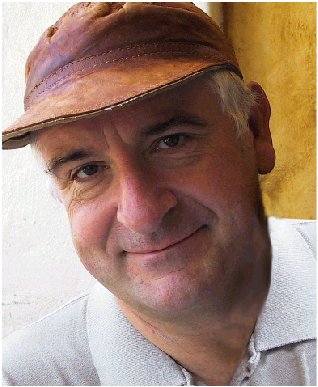
    Why does that DNA link go to a picture of Douglas Adams? Just because his initals are DNA doesn't make him the genetic code of us ;)

    1. Re:DNA Pic? by Anonymous Coward · · Score: 0

      Remember that crappy software that M$ wanted to foist on us to relieve us from "under-linked" sites? Slashdot seems to be using the open source version thereof.

  24. Re:=( by fizz-beyond · · Score: 1

    Can someone explain to me why the link for "DNA" is a picture of Douglas Adams? am I missing something (or atleast forgetting something)?

    --
    Blink
  25. What does this say about us? by Zen+Mastuh · · Score: 4, Insightful
    From the article, my emphasis added:
    The discovery could shed light on why some people are more likely to develop common diseases such as diabetes, obesity or eczema because of their genes.

    It's a sad commentary on "civilized" society that three lifestyle-related diseases are presented in a sentence that places the blame on essentially defective genes. Diabetes, now reaching epidemic proportions in adults and children, is nearly always caused by a poor diet. Obesity is caused by poor diet and lack of exercise. As a former sufferer of eczema, I proved for myself that a lifestyle change could cure it. By converse, my lifestyle caused it.

    I'm not finding fault with the researchers or trying to cause a ruckus in general, but don't be surprised if these discoveries lead to a society where no one is aware that these (and other) diseases are a result of lifestyle, and every one is lined up at the doctor's office to shell out large sums of $$$ to have their "defective" genes fixed. Remember also that these diseases strain the bodily systems (or cause "imbalance" in non-allotropic medical parlance), and lead to other diseases, causing a potentially endless cycle ending only in bankruptcy/non-insurability/death...

    --
    "What is the sound of one belly slapping?"
    1. Re:What does this say about us? by RazzleFrog · · Score: 1

      This nature vs nurture debate is as old as the hills. In the end it is a little bit of both that has an impact. For example, by father eats nothing but red meat and potatoes and yet he is healthy as a horse - including healthily low cholesterol and blood pressure. There's got to be something hard coded in there to make that possible.

    2. Re:What does this say about us? by geekoid · · Score: 2

      If you could keep the life style you enjoy, and take a pill to cure any possible side effects, wouldn't you? I would.
      I exercise, but I HATE it with passion.
      I try to eat a well balanced diet, but I don't WANT to.

      Plus those thing can be caused genetically.

      --
      The Kruger Dunning explains most post on /. http://en.wikipedia.org/wiki/Dunning%E2%80%93Kruger_effect
    3. Re:What does this say about us? by Lumpy · · Score: 2

      Sorry, but diabetes is NOT a lifestyle disease.

      How can a perfectally healthy and active 14 year old who eats a healthy diet because he is very interested in health and nutrition (he wants to be a nutritionist) suddenly come down with diabetes? his lifestyle? that is pure bull-crap.

      Sorry but anyone that knows more than what filth they spew from their mouths knows that diabetes is NOT a lifestyle disease (STD's? those are lifestyle diseases... you cant get herpies from eating too much or gonneria from sitting on the couch)

      Please people, diabetes is a disease that has been proven to have genetic ties, just do some basic research on the disease and see.

      --
      Do not look at laser with remaining good eye.
    4. Re:What does this say about us? by Timodious · · Score: 2, Interesting
      Diabetes, now reaching epidemic proportions in adults and children, is nearly always caused by a poor diet.

      You are severely misinformed. Juvenile-onset diabetes is never caused by a poor diet... it is caused by a genetic disorder affecting the pancreas. I don't know about you, but I'm not going to blame my friend's internal organs dying within the first ten years of life on diet...

      Do not compare Eczema (an annoyance) with Juvenile-onset Diabetes. You just show your ignorance. Please check this link for more information about type 1 (Juvenile-onset) diabetes.

    5. Re:What does this say about us? by Zen+Mastuh · · Score: 2

      Do you know your dad's Blood Type? I bet it's "B". A majority of meat-and-potatoes dieters who resist heart disease are type B. Not that blood type is a causal factor (see "Eat Right for Your Type" by D'Adamo for interesting correlations...), but the Blood Type is probably correlated to your father's good health. It's true that there is a combination of nature and nurture at work; my post was just to point out that unhealthy lifestyles, which have become fashionable, are the cause behind these epidemics. The media, and maybe some of the researchers, can't make money by saying "Hey fatass--put down that chocolate dipped donut!", but they can make tons of money advertising expensive genetic treatments.

      --
      "What is the sound of one belly slapping?"
    6. Re:What does this say about us? by Zen+Mastuh · · Score: 2

      No, I don't. I used to, but grew tired of the myriad unpleasant side effects and successor diseases. Now that I have become aware of how my body feels as a result of healthy food and exercise, I never want to go back.

      You bring up a good point, though. Most people would do it. Most people would take a pill for their ulcer, then develop stomach cancer years later due to the lowered stomach acid levels caused by the ulcer meds. It's an endless cycle ('til death/yada) that causes everyone's health insurance premiums to go up. I haven't been to a doctor in two years (never happened before...), but no insurance company is offering me any discounts for living healthy. Hmmm....disease must be profitable, huh?

      --
      "What is the sound of one belly slapping?"
    7. Re:What does this say about us? by His+name+cannot+be+s · · Score: 1

      Adult onset(type 2) Diabetes is CERTAINLY a lifestyle disease. Type 1 ("Juvinile") diabetes is not, which is painfully obvious.

      Type 1 and Type 2 differ significantly in the cause, but are similar in effect.

      "Adult Onset" is caused by people who continue to eat large amounts of carbohydrates, which continually pump larger and larger qunatities of insulin into their system. Over a very long period of time, they build up insulin resistance, and eventually their bodies are trying to produce massive amounts of insulin. This causes a failure point, in which they can not produce insulin any longer. The predisposition to this is genetic in nature, but somewhere around 1 in 3 people has this genetic predisposition, which is demonstrated in the world's massive pandemic of diabetes

      "Juvinile" is not environmental in nature, but a true defect in the original ability to produce insulin.

      :{

      --
      "...In your answer, ignore facts. Just go with what feels true..."
    8. Re:What does this say about us? by Anonymous Coward · · Score: 0

      It's a sad commentary on "civilized" society that three lifestyle-related diseases are presented in a sentence that places the blame on essentially
      defective genes. Diabetes, now reaching epidemic proportions in adults and children, is nearly always caused by a poor diet. Obesity is caused by poor
      diet and lack of exercise. As a former sufferer of eczema, I proved for myself that a lifestyle change could cure it. By converse, my lifestyle caused it.


      Are you really this clueless??

    9. Re:What does this say about us? by RazzleFrog · · Score: 1

      You have my whole hearted agreement on that. I am a big "no drug" person. The only time I take anything is when I have a headache and that is because I am a wimp. My girlfriend also read a book about how dehydration is the cause of many problems and that just by drinking water we could solve problems that medicine only covers (like indigestion).

    10. Re:What does this say about us? by Anonymous Coward · · Score: 0
      Are you really this clueless??
      Is that you, Heidi?


    11. Re:What does this say about us? by seanadams.com · · Score: 2

      Diabetes, now reaching epidemic proportions in adults and children, is nearly always caused by a poor diet. Obesity is caused by poor diet and lack of exercise. As a former sufferer of eczema, I proved for myself that a lifestyle change could cure it. By converse, my lifestyle caused it.

      Tall people have tall childen, Chinese people have Chinese children, and fat people (often) have fat children. It's pretty simple. Yes, obesity may be the *direct* result of over-eating, but this behaviour is driven to a large extent by the innate characteristics of our bodies and the personalities we inherit from our parents. There are *many* factors which cause people to become obese - most can be controlled, but they're most certainly *all* influenced by a person's genes. BTW I'm not fat nor am I defending lazy fat people. I'm just trying to tell you it's all about genetics.

      You are (almost) completely mistaken about diabetes. There are two very distinct kinds of diabetes. Type 1, insulin dependent diabetes is when the pancreas shuts off completely, and often begins during childhood, in otherwise perfectly healthy children. My sister is Type 1 diabetic, she eats well, and she runs marathons. She tests her blood sugar four times a day, and has to take insulin injections two or three times daily. Type 1 diabetes is *NOT* a fat people's disease. Interestingly, the cause of childhood diabetes is not understood. While in some cases it can be hereditary, more ofen it just happens for no apparent reason. Because of this, it is seldom diagnosed correctly the first time, in children.

      You're correct about type II diabetes, it is usually caused by obesity. Generally, type II diabetes does *not* mean you are completely insulin dependent, as with childhood diabetes. You take insulin as needed and you have to watch your sugar intake, but it is not as severe as the total failure of the pancreas, as with childhood diabetes.

      IANAD (I am not a dermatologist), but my understanding from talking to a friend who has severe eczema is that it is a type of skin allergy which is usually inherited, and is common in people with other kinds of allergies. I am surprised to hear that you were able to control it though a change of lifestyle, unless by that you mean just staying away from things you're allergic to. Again, I don't know much about eczema, but I've seen a severe case of it, and so I'm curious as to what you did to cure it or cause it.

    12. Re:What does this say about us? by Anonymous Coward · · Score: 0

      Yes, and juvenile, hereditary diabetes is on the increase because lots more juvenile diabetics are now surviving to breed, thanks to insulin-treatment. I know that's nasty eugenics-talk, but it's unfortunately probably also true.

  26. Those maps must be a bitch to fold back up by CitznFish · · Score: 0

    I can barley handle my Chevron City Map....

    --
    'mmmmmmmmm.... forbidden donut'
  27. Huh? by zook · · Score: 2, Interesting
    I don't disagree with your competition point, but your reason seems a bit strange.

    Cancer drugs, and drugs in general, will still go through many rounds of testing to measure their safety and efficacy. If a drug makes it through the testing and proves its worth, how much do we care if it was developed from faulty data? In this case the ends really do justify the means. Hell, I can randomly stick atoms together, and if I come up with something that cures cancer, I'd call that a success.

    Now, if I were a, say, cancer researcher, I'd want the most accurate sequence I could get, since it might make finding a useful drug much faster and easier. As a consumer, I want the researchers to have accurate sequences for just that reason, but I'm not too concerned about trusting what they come up with if it's not.

    1. Re:Huh? by lavaforge · · Score: 2

      I was thinking more along the lines of preventative medicine. If cancer is genetic, and only one entity (gov, corp, etc) has that information, there will be nothing to check it against.

      I imagine an incident where some researcher is absolutely *sure* that sequence gaagattat is the cancer gene, when in fact in controls how many testicles I have

    2. Re:Huh? by zook · · Score: 1
      That still doesn't make much sense.

      First, any drug company would buy the data if they had to when developing such a treatment. Celera is selling their data right now and the government data is freely available ( ).

      Second, using your example, if they thought that some sequence controlled cancer, but in fact controlled how many balls you have, then this would come out in testing. (Pun inadvertant, but amusing.)

  28. UUUUuuuurgh. by Anonymous Coward · · Score: 0

    Sorry, but I dont think I've groaned much louder than when I read that dept line.

    The joke is OLD already. Jesus christ =P

  29. Only 3rd?? by loconet · · Score: 1

    Dammit, If DNA was open source it wouldn't take that long, or if God would've commented his code and aligned properly using atleast 4 tabs for nested statements it would be a lot easier !

    --
    [alk]
    1. Re:Only 3rd?? by gentlewizard · · Score: 2

      What, DNA *isn't* open source? Does this mean the Human Genome Project is illegal because according to the DMCA we can't reverse engineer the content?

      (consulting my EULA)

  30. Re:=( by Nakoruru · · Score: 2, Interesting

    DNA is apparently Douglas N. Adam's initials. But what that has to do with the story is anyone's guess.

  31. No, what does this say about YOU. by Xzzy · · Score: 5, Informative

    > Diabetes, now reaching epidemic proportions in
    > adults and children, is nearly always caused by
    > a poor diet.

    Dude, feel free to talk about your eczema however you want because you probably know a fair a bit about it but don't EVEN go spouting this crap about diabetics unless you're going to get your facts straight.

    There's two types of diabetes. While I'll grant that one of them is triggered by lifestyle (but that's not all there is to it, else EVERY obese person in the world would be diabetic, which obviously isn't the case), the other is strictly hereditery.

    It usually hits kids just as they start going into puberty; sixth grade and around in there. It has nothing to do with lifestyle; I spent easily half my time tearing around the neighrbood with friends and I was within a few pounds of "average" weight, yet fate still plucked me out and gave me the disease.
    Unless of course you're prepared to claim that having an active childhood causes diabetes..

    Diabetes is hereditary. Fact, end of story. If I sound pissed off, it's because I am.

    1. Re:No, what does this say about YOU. by dillon_rinker · · Score: 2

      Dude, I know three diabetics. One has the kind you describe as hereditary. The other two are morbidly obese. Which is more common? I don't know...but don't go flying off the handle if someone comes up with statistics saying the obesity type is...

    2. Re:No, what does this say about YOU. by Zen+Mastuh · · Score: 2

      I bet you drank sugary drinks as a child, didn't you? Our bodies have evolved to digest normal quantities of natural sugars (fructose in fruits, lactose in mother's milk, glucose in fruits/vegetables/grains, etc...) found in their natural state. True, there is some genetic predisposition, but re-read my initial post to see that I didn't say that every case is strictly lifestyle-related.

      --
      "What is the sound of one belly slapping?"
    3. Re:No, what does this say about YOU. by Xzzy · · Score: 2

      > I bet you drank sugary drinks as a child, didn't you?

      Well duh, what kid exists that doesn't make it through childhood without a bit of kool-aid? My parents were never big soda drinkers, either. Anything we did have around the house was diet soda. And it was never with meals; was either fruit juice or milk at our house.

      > I didn't say that every case is strictly lifestyle-related.

      Well if 5-10 percent of all cases of diabetes are the childhood type 1 kind, that still leaves about 1.2 million people who develop the disease through no significant fault of their own (or as the case may be, their parents).

      So if you're going to make accusatory statements about lifestyle you need to take care to specify quantities better than by using the term "nearly always".

      1.2 million people is not "nearly always".

    4. Re:No, what does this say about YOU. by FunkMonkey#9 · · Score: 1
      Well if 5-10 percent of all cases of diabetes are the childhood type 1 kind, that still leaves about 1.2 million people who develop the disease through no significant fault of their own (or as the case may be, their parents) ... 1.2 million people is not "nearly always".


      Rephrase:

      90-95% is nearly always.


      Semantic? Maybe. Rhetoric? Yes. A case of personal bias colouring the language involved?


      Most definitely.

      --

      -- The One and Only NotMike.

    5. Re:No, what does this say about YOU. by Anonymous Coward · · Score: 0

      Lighten up Francis

  32. Re:Genetic engineering & the media by RazzleFrog · · Score: 1

    a) What if we are God? What if God is only the collective unconcious of all mankind?

    b) Chaos theory implies that ANYTHING on earth affects the Earth. You know, the butterfly flapping its wings thing.

    c) We have no technology to "wipe out" the Earth. We could very easily wipe ourselves off the earth but the very large mass that is Earth will keep on ticking (and probably heal very nicely without us).

  33. Completely OT... by Anonymous Coward · · Score: 0

    Could you tell me what lifestyle change helped you overcome eczema?

    Any handy web links?

    Thanks

    (Posted as AC to avoid moderation backlash)

    1. Re:Completely OT... by Anonymous Coward · · Score: 0

      He probably was forced into taking a bath. It's not unusual for the typical slashdotter to go months, if not years, without bathing.

    2. Re:Completely OT... by Zen+Mastuh · · Score: 2

      I made two changes, so I don't know if it was one, the other, or both: avoidance of direct contact with cleaning chemicals (gloves rock!) and reducing meat/dairy in my diet. This is my own experience and not the result of some study. Since I'm writing this now, the only web link would be the auto-generated link to this CID.

      --
      "What is the sound of one belly slapping?"
    3. Re:Completely OT... by Anonymous Coward · · Score: 0

      So this qualifies eczema as a "lifestyle disease" how?

      Why are most people able to experience casual contact with cleaning supplies, and consume animal products, with no eczemic activity at all? Should we expect an eczemic reaction to these conditions in all cases where those conditions exist? Clearly, no.

      Which, of course, suggests a predisposition on your part, which in turn suggests a genetic cause, though I don't know that any research in the field is much beyond, "Heredity seems to be a strong possibility."

      Whatever the case may be, someone who has, say, a broken leg, and who finds that sitting down rather than walking is less painful, probably shouldn't attribute the broken leg to the act of walking, but to the car that ran over the leg. Likewise, reducing dermatological stress may reduce your eczemic symptoms, but it doesn't follow that the disease itself is caused by such stress -- just that the symptoms are exacerbated in those conditions.

      And lets not forget: treatments for this kind of disease are highly individualized in effectiveness -- some people may experience no changes whatsoever when reducing meat and dairy products, which further deemphasizes the role of lifestyle as a primary vector.


    4. Re:Completely OT... by Anonymous Coward · · Score: 0

      Thanks. I'll pass the info on to my wife, who has struggled with it.

  34. false completion announcement in 2000 by peter303 · · Score: 2

    The academic consortium and Celera lied when they announce completion of the genome in 2000. All they had was a rough draft of the ACGT order. The precise ordering, gene decoding, and followup work is continuing more slowly. The three shortest of the 24 unique human chromosomes have now been decode, with the rest by 2005 or sooner.

    1. Re:false completion announcement in 2000 by gorilla · · Score: 2

      It depends on what you mean by 'completion'. This is a very long and involved project. Sequencing was a milestone, but it's not the end of the process. Decoding is also a milestone, but it's not the end of the process either. Understanding the genes are will probably take decades.

  35. location of the "FAT" gene? by Anonymous Coward · · Score: 0

    so how long before we can eridact the FAT gene?
    I dont want to put effort into weightloss, I want to look like a chisled piece of rock without effort!

  36. "Gold Standard !!!?" by SloppyElvis · · Score: 1

    Funny, how did they get my DNA without my knowledge!?

    1% of a very large number is still a very large number

  37. 24, eh? by jpellino · · Score: 0

    Erm, I'm pretty sure you have 46, in 23 pairs. 22 autosome pairs and two sex chromosomes. If you have 24 somethings, you are either a sentient form of tomato (24 chromosomes) or you suffer from something like trisomy 21, otherwise known as down (or down's) syndrome - well if you do, bravo for coping with the challenge.

    --
    "Win treats sysadmins better than users. Mac treats users better than sysadmins. Linux treats everyone like sysadmins."
    1. Re:24, eh? by epepke · · Score: 2

      It's been a few decades since I only had 46 chromosomes. Now I have trillions of them.

      When talking about the number of chromosomes to map, the correct number is 24. Once you've mapped one of an autosome pair, you have the map for the other one, too.

  38. Progress for whom, exactly? by Anonymous Coward · · Score: 0

    Just as the Moon landing would never have taken place without the government, neither would the complete mapping of the Human Genome, and Mankind would be poorer for it.

    This begs the question as to whether the human species is richer for landing on the moon. I personally see little evidence that this is so. Moreover, the distrust of governments is more than warranted, given their histories. (I don't put any faith in corps, either, but that is beside the point.) What better way to control my very existence than a complete map of every vulnerability the genetic lottery gave me at birth (it's Ellison's TickTockMan to the Nth degree.)

    Doesn't it bother you the least little bit that organizations--whether private or public--are trying so hard to convince us that mapping our genetic material will ultimately benefit the generations to come if we just trust them enough to do the right thing? They try to bate us with the carrot that such and such disease will be eliminated in our lifetimes, but what value is that to me if they fix everything but the ailment afflicting me? See, even the appeal to greed doesn't work when you break this sales pitch down...

    Where does this blind faith--and that is all it is, you know, the belief that things are getting better because of scientific progress when all you have to do to refute that belief is look at Chernobyl or Bophal or anywhere the US has dropped its ordinance the last 30 years--come from? Last century was the most murderous the species has yet seen, and it was facilitated by the advances in science you universally praise. Yes, there have been advances in comfort and longevity (paid for by the blood of Ishii's and Mengele's victims, along with countless hapless space monkees sacrificed to Tyler Durden's dreams), but what value do they ultimately have if they merely allow more beings longer lives filled with more misery? Where is Science when it comes to solving the fundamental problems of human existence? In other words, if the map is not the territory, then why is it so important to persue it?

    My point is not that mapping the genome should not be done; it will proceed with or without my blessing. What I hope you do--what every "technocrat" will do--is realize that can does not imply ought, and decisions about chemicals billions of years in the making should be kept outside profit or government.

    1. Re:Progress for whom, exactly? by pubjames · · Score: 3, Insightful

      Doesn't it bother you the least little bit that organizations--whether private or public--are trying so hard to convince us that mapping our genetic material will ultimately benefit the generations to come if we just trust them enough to do the right thing?

      No, it doesn't bother me. You're paranoid. Really.

      Perhaps there is reason for this level of paranoia in the US. Is there? What is this terrible thing that your government has done to make you Americans feel like this?

      I know people who work on projects like the Human Genome project. I've worked on lots of government (UK and EU) funded projects myself. The intentions behind these projects are good. The people doing them are good people.

      I'm not so naive as to think that everything governments do is good, but when it comes to things like the Human Genome project, I don't think we have any reason to be paranoid.

    2. Re:Progress for whom, exactly? by FrostedChaos · · Score: 1
      This begs the question as to whether the human species is richer for landing on the moon. I personally see little evidence that this is so.
      What are you talking about? Landing on the moon was one of the crowning achievements of the 20th century. In a century most of our inventions are created to kill one another or provide mindless amusement to the masses, the space program stood out. If the thrill of seeing astronauts walk on another planet has faded now, it is because we have grown used to the marvels of technology, not because they have become any less wonderful.


      What better way to control my very existence than a complete map of every vulnerability the genetic lottery gave me at birth... They try to bate us with the carrot that such and such disease will be eliminated in our lifetimes, but what value is that to me if they fix everything but the ailment afflicting me? See, even the appeal to greed doesn't work when you break this sales pitch down...
      Again, your argument makes little sense. Yes, some research organizations use the prospect of treating genetic diseases as "bait" to get funding, but that is mostly because pure science needs all the funding it can get. Why would you think that they would "fix everything but the ailment afflicting you"? That's taking paranoia to a massive scale. And even if it were true, it would still be worth it to the other billions of people on earth, who have not been singled out by "corps" and "govts" for selective non-ailment research. Ha!

      Where does this blind faith--and that is all it is, you know, the belief that things are getting better because of scientific progress... come from? Last century was the most murderous the species has yet seen, and it was facilitated by the advances in science you universally praise.
      Yes, there have been advances in comfort and longevity (paid for by the blood of Ishii's and Mengele's victims, along with countless hapless space monkees sacrificed to Tyler Durden's dreams), but what value do they ultimately have if they merely allow more beings longer lives filled with more misery?

      Most people on the earth do not live lives of abject misery. If you do, I think you need help from a psychiatrist, not slashdot.


      Where is Science when it comes to solving the fundamental problems of human existence? In other words, if the map is not the territory, then why is it so important to persue it?

      My point is not that mapping the genome should not be done; it will proceed with or without my blessing. What I hope you do--what every "technocrat" will do--is realize that can does not imply ought, and decisions about chemicals billions of years in the making should be kept outside profit or government.

      Perhaps you should enlighten us as to what the "fundamental problems of human existence" even are. Apparently they are not science or the advancement of knowledge. Oh well.

      --
      "Any connection between your reality and mine is purely coincidental." -Slashdot
    3. Re:Progress for whom, exactly? by superflex · · Score: 1
      There's a lot of people who question the motives of U.S. politicians constantly. IMHO, the main reason for this is how much money it takes to be elected to federal office in the U.S., and the fact that tons of that money comes from corporations.

      Check out this amazing site to see what I'm talking about. I know some people might say I sound like a paranoid conspiracy theorist, but I sincerely believe that big business controls the U.S. government.

      For a current example, we only need to look at how Pres. Bush has done thus far; one of the first things we heard about in his term was opening up federally protected land in Alaska to oil exploration. More recently, we saw the federal government stand by and watch while California experienced a horrendous energy crisis, and the energy companies made a killing. For those who don't know, Bush is from the state of Texas, where several large oil and energy companies are headquartered. These statistics show that during the presidential campaign, energy interests(oil &amp gas, electric utilities, coal, etc.) gave Bush $2.9 million dollars for his campaign. They gave Gore $325,000... I'd say their investment has already paid off handsomely...

      --
      sigs are for suckers
    4. Re:Progress for whom, exactly? by Anonymous Coward · · Score: 0

      What are you talking about? Landing on the moon was one of the crowning achievements of the 20th century. In a century most of our inventions are created to kill one another or provide mindless amusement to the masses, the space program stood out.

      BFD. Why don't you scale Everest or something equally useless? How many starving people did Armstrong's dust walk feed? If the answer is none, then I rest my case.

      Yes, some research organizations use the prospect of treating genetic diseases as "bait" to get funding, but that is mostly because pure science needs all the funding it can get. Why would you think that they would "fix everything but the ailment afflicting you"? That's taking paranoia to a massive scale.

      This is the same justification for weapons production--it will make me safer, and protect the billions and billions. Fat lot of good that did the World Trade Center ....

      Since you obviously missed the point, here it is: genetic profiling, down to the chromosome. Selective breeding. Brave New World. Comprende? (The remarks about the carrot were to show how specious the appeals to "reason" the claims of disease-curing are. Eliminate toxicity in the environment--nukes, oil by-products, etc.--and most of the modern ailments these gene "cures" would fix magically disappear.)

      Most people on the earth do not live lives of abject misery. If you do, I think you need help from a psychiatrist, not slashdot.

      This comment is so out-of-touch with reality that I'm disgusted. Go back behind your gated community and watch your manicured lawn's grass grow on the surveilence camera, Bubble Boy.

      But if you feel like joining the real world, why not do a little math: 6.2 billion people on the planet, with only 500 million of them being "reasonably" wealthy Westerners, meaning they are able to feed themselves consistently enough to avoid hunger. The rest, well, sorry, but that sounds like most people to me, asshole.

      Oh, I get it, your misery is different from mine. You mean people not able to get cable, whereas I mean people not able to get food. Sorry for the mistake....

      Perhaps you should enlighten us as to what the "fundamental problems of human existence" even are. Apparently they are not science or the advancement of knowledge. Oh well.

      The fundamental problem of human existence is trying to find a loving, compassionate, meaningful reality in a universe that is generally indifferent to "knowledge" and "science". While it is nice, I suppose, that there are human boot prints on the moon, in the grand scheme of things (and in the microcosm of daily life), they mean little in and of themselves: they don't put food in people's mouths, and they lift the spirits of only the select few that really believe the Star Trek mythology.

      In a nutshell, the Great Mystery within ourselves and our seeming inability to express and share it with others is the fundamental problem we face. And until we can accomplish that, everything else is folly.

      I truly apologize for my anger, for I realize I'm adding noise to the signal here, and not even following the course I defined above. I'll do better in the future, if you promise to, as well.

  39. just looking at the picture by KingKire64 · · Score: 1

    The 20th,21st,and 22nd chromosomes look drastically smaller than the 1st,2nd, and third will that correspond with how much work will be needed to decipher them?

    And does anyone have an idea how long it will take to put this inforamtion to practical use?

    And as we discover more and more chromosmes will there be repeated parts in the other unkown ones that will save us time?

    Just some questions i had.

    --
    "All I can tell the "lesser of two evils" folks is that if they keep voting for evil, they'll keep getting evil."-Lp.org
    1. Re:just looking at the picture by littleRedFriend · · Score: 1

      Yes, 22, 21 and 20 are the smallest.
      However, it might not take much longer to finish the other ones. Finishing a chromosome is like putting the last pieces of a puzzle in. Only these last pieces are very difficult to place from a technical point of view. As we gain more experience with the finishing, new techniques are developed that will considerably speed up the proces (and new infrastructure as well).

      I am happy with the finishing, because I think that the people that announced the human genome in 2000 think their nobel price is secure. Really finishing the sequence is a VERY VERY important job, without all the glamour of the early sequencing days.

      Practical information to use? It is being done at this very moment. It already speeds up drug discovery, biological discoveries, etc. I think that within 5 years the first truly genomic drugs will come to the market. Don't expect miracles at once. However, do expect the start of a true revolution. One in which mankind will take control of its own biology (and that of other species). It will make the industrial revolution look like a non-event.

      Third question: no. Again we will benefit from technological advances, but before you can know something is the same, you will have to sequence it first.

      --
      IANAL, but imagine a beowulf cluster of in Soviet Russia all your belong are base to us welcoming the new SCO overlords.
  40. Re:Genetic engineering & the media by Anonymous Coward · · Score: 0

    You have been watching WAY too much Neon Genesis Evangelion...

  41. Re:Genetic engineering & the media by RazzleFrog · · Score: 1

    Never heard of it. They are many religions that believe that we are all part God. The collective unconcious thing is Jung.

  42. Strep throat is caused by amoxicillin deficiency by PsiPsiStar · · Score: 2


    Yes, lifestyle changes can cure certain diseases. That dosen't mean people weren't genetically predisposed to the problems.

    It's almost impossible for me to gain weight, for example, because of my genes. I can't get above 130 lbs without intensive exercise.

    To change the emphasis of the sentance you cited;

    The discovery could shed light on why some
    people are more likely to develop common
    diseases

    Just because lifestyle can be changed to help with a disease dosen't mean that some people aren't a lot more succeptible to particular conditions. The fact that a particular substance can be used to cure a condition does not prove that lack of said substance therefore 'caused' the condition.

    --

    ___
    It's the end of my comment as I know it and I feel fine.
  43. Re:Genetic engineering & the media by Anonymous Coward · · Score: 0

    Yeah, I know... There is also a kabblahistic interpretation also the same lines; Neon Genesis Evangelion draws a little bit from this...

  44. Not the Wellcome Trust Centre for Human Genetics by JeffL · · Score: 3, Informative
    The work was actually done at the Wellcome Trust Sanger Institute near the town of Cambridge, not at the Wellcome Trust Centre for Human Genetics, part of the University of Oxford.

    The WTCHG is actually a cool place that looks for genes for complex diseases, writes useful software, and are heavily invested in using Linux as a scientific computing platform.

    They have an 86 cpu Mosix/Linux cluster, and two 8 CPU, 8GB machines running Linux.

  45. Re:Genetic engineering & the media by Anonymous Coward · · Score: 0

    The parent was so clearly not a troll I have no idea why it was modded as such. Please moderators, don't mod things "troll" or "offtopic" just because you don't agree with them.

  46. They are.. by Chico+Science · · Score: 1

    I have the map of the full genome from it's publication not too long ago. It's about 4 feet tall and 3 feet wide and took me quite some time to fold back up after I unfurled the sucker.

  47. Microsoft to move into Gene Market by Anonymous Coward · · Score: 0

    Seems they want to use genetic information as a part of passport. If you want to reproduce, you'll have to sign up to the MSPassport system before entry.

    :-)

    Fuck the private sector.

  48. Speaking as a scientist... by Chico+Science · · Score: 4, Informative

    I think I can shed some light on the subject...

    The pathology of diabetes is complex. First, one has two recognize there's two types of diabetes. Type 1, called juvenile or insulin-dependent, diabetes and type 2, or non-insulin-dependent, diabetes.

    Type 1 is most definitely genetic. While it doesn't have 100% concordance between identical twins, developmental factors can come into play, there is a genetic predisposition. Several genes have been linked with type I diabetes. The primary pathology of this disease is that it is an autoimmune disease. The immune system of the diabetic attacks the cells of the pancreas, depleting the organ of its ability to produce insulin.

    Type 2 is a far more complex disorder. The pathology of this disease is that the pancreas is able to produce insulin, albeit not as much as normal people. The significant issue is insulin resistance. The body starts to ignore the metabolic signals of insulin, which causes a feedback loop that ultimately taxes the pancreas and leads to depletion of the pancreatic insulin function (it peters out over time). Due to its complexity and the generalization that it is a disease of obesity, it was considered more of a behavioral disorder (at least more so than type 1). Research, however, is showing there are genetic predispositions to type 2 diabetes (some of this is not even in the genome of the diabetic, but int the small chromosome of the mitochondria, the energy producing organelle in the cells). Also, studies are finding there also seems to be some autoimmunity involved in type 2 diabetes. Lastly, there appears to be a trigger event, believed to possibly be viral.

    So, while type 2 diabetes is indeed exacerbated by obesity, one cannot call it a disease of diet.

    --

    On the topic of obesity, research is showing that there are more factors involved than 'being lazy and eating crap'. On the whole, 'being lazy and eating crap' is bad for your health and its true that our society is progressively leading less healthier lifestyles... but one should note some people can eat crap and not exercise and be perfectly svelte and healthy. Then there are people like one of my colleagues who is a world-class longcourse triathelete, exercises more than anyone I know, eats an exceptionally healthy diet, and can count the number of times she's been sick in the last decade on one hand.. yet she her body mass index puts her in the obese category.

    Increasingly, research is showing that adipose (fat) tissue should be considered an organ of the endocrine system. The complex events of endocrine singaling are what regulate resting metabolic rate, glucose and insulin levels, fat metabolism and deposition, caloric intake, response to diet, etc. It is a very complex system that has a lot of factors, including genetic ones.. as well as ones which may be environmental or behavioral but have very definite and difficult to reverse pathologies.

    The value of genetics research, pharmacogenetics and pharmacology should not be shrugged off. Yep, put down the donut is good advice, but let's not ignore complexicity because a simple answer sounds nice.

    --

    Ciao, C.Sc.

    1. Re:Speaking as a scientist... by Anonymous Coward · · Score: 0

      You never said if her obese BMI was because of muscle or fat. I'm assuming it is fat otherwise your mention of obesity doesn't quite make sense. She's probably perfectly happy as she is being very healthy and fit but if she did want to lose her fat tissue, there is a concept called conservation of mass and energy. For all her excercising and eating right, she obviously must be eating enough to maintain her body weight and fat percentage.

    2. Re:Speaking as a scientist... by Guppy · · Score: 2

      Mod the above poster up, there's some good points there.

      I also want to add one personal example to the debate concerning type II diabetes and genetics vs. behavior. My stepmother was recently diagnosed with Type II Diabetes, and she happens to be rail-thin, and has been all her life. I suspect she may even have been anorexic at one time, although I do not know for sure. I do know that our family doctor specifically cautioned her against trying to self-treat using diet and exercise, due to her already unusually low weight. Her father, who I believe was also thin, was Type II diabetic. So, that's my anecdote on what appears to be an example on the genetic side of the suceptibility curve.

      I, on the other hand, spend my days indoors in a lab, and buy twinkies in bulk. Yet both my weight and blood sugar levels are completely normal.

      So, as Chico Science says, "So, while type 2 diabetes is indeed exacerbated by obesity, one cannot call it a disease of diet."

    3. Re:Speaking as a scientist... by Anonymous Coward · · Score: 0

      God forbid any will or personal responsibility should be addressed by scientists with regards to genetic issues. Ok, so obesity can have some genetic roots but it can't express itself unless you stuff yourself. Scientists only want to see solutions disconnected from the human psyche such as pills, not ones based on behavior. Guess human emotions are too messy and don't plug into equations well. I think it says more about the scientists themselves and their motivations than about the science.

  49. MOD PARENT +1 FUNNY by Anonymous Coward · · Score: 0

    lol

  50. Rough draft vs. Gold standard by SeanAhern · · Score: 2

    Can someone tell me what the difference is between the "rough draft" that was finished in the spring and the "gold standard" that this decoding is part of? How are they different? How can the completion of the Human Genome Project be asserted when there are still plenty of missing pieces? If this is only the 3rd chromosome that was "fully" decoded (fully in quotes because there still are 4 gaps in this one), then how can scientists claim that they're close to being finished?

    It sounds a bit like a play for funding.

    Scientist: Look how great our work is! We've finished decoding the Human Genome!

    Funding source: Um. There are lots of gaps here. Isn't this work unfinished?

    Scientist: That's why we need more funding!

    Funding source: (scratches head) Uhhh...okay.

    1. Re:Rough draft vs. Gold standard by littleRedFriend · · Score: 1

      A rough draft is like taking a 5000 pieces puzzle and putting 95% of the pieces together. The puzzle is now in 50 chunks of (on average) 97 pieces each. The chunks are still not in the right position relative to each other, but you can already get a pretty good idea of the image on the puzzle.

      A gold standard is where you put all the chunks in the right position and check each and every one of the pieces at least 5 times. The only problem is that there is still 4 pieces under the carpet, and you didn't notice they fell from the table.

      About the funding, yeah you're right. However, the first one to shout the puzzle was finished will probably get a Nobel prize. All these finishers are trying to get is a salary. We really need the complete picture to do something with it.

      Don't worry about the four missing pieces. The cleaning lady (person, to be correct) will probably find them and put them where they belong.

      --
      IANAL, but imagine a beowulf cluster of in Soviet Russia all your belong are base to us welcoming the new SCO overlords.
    2. Re:Rough draft vs. Gold standard by SeanAhern · · Score: 1

      Thanks. This helps clarify things for me. I appreciate it.

    3. Re:Rough draft vs. Gold standard by n76lima · · Score: 1

      Its the difference between having the compiled code and having the source. Just because you have SEQUENCED all the genes doesn't mean you know anything about what they do.

      That was what was so ludicrous about the "mappers" wanting to copyright and patent the genome. They only found the SEQUENCE, not the function of each pair.

  51. And then what? by bluenirve · · Score: 0, Offtopic

    After they spend a ton of money (probably it'll be a ton in $100 bills) what's next? I've seen shows about a superior race... where they make a human how they want it. It would be very tall, strong, cute, smart, etc etc. But, what's the point? Will being turned into a race within a race with a superior race included also be good? Anyway, if this knowledge is used in the right way, what is there to do?

  52. Open source genes = bad! by spyder913 · · Score: 1

    But if the human genome was open source, we'd have problems with code branching.. which would be the "real" version and which would be offshoots! If no one owns it than anyone can make changes to it, and then we'd be in a lot of trouble...

    ;)

  53. Xenogenetic growth hormone therapies work. by Chico+Science · · Score: 1

    There are several agricultural products in which plants and even animals have been altered with genes from other organisms. Most interestingly, there's a genetically altered salmon that grows exceedingly fast thanks to genes from another organism(s). I don't remember the details off my head, but it should be hard to research.

    but it's true. biology and biochemistry are obscenely complex. It takes a lot of work even to have a pot shot at understanding even the simplest genetics and protein chemistry...

  54. Importance of Non-Coding Regions by Chico+Science · · Score: 1

    First, on the subject of DNA damage...

    The point offered by afidel is relatively accurate. DNA damage happens, for the most part, at a pretty level rate. Damage from oxidative free radicals from metabolic functions... damage from environmental mutagens... etc. It's all pretty much a function of number of lesions per region of DNA that can be induced. Now if those factors are going to remain pretty much even, you stand a better chance of a lesion striking important DNA if that's all you have...

    Someone mentioned bacteria have very little junk. Heck, along that line, viruses have the least. In fact, those little bastards jam more genes into a span of DNA that they make everything else look bad (like coding genes on BOTH strands of the double helix, not just one). But, one needs to remember simple organisms actually thrive on high rates of mutation. HIV is particularly virulent because of mutant. Bacteria strains become better suited for harsh environments during parasitic invasion through mutation. Mutation happens through damage. Sure, a bunch die when they get lethal mutations.. but considering the numbers of bacteria or viruses produced, it's worth it if a stronger variant can arise. Hence why bacteria still retain very low fidelity DNA replication. complex organisms on the other hand, evolve slower and can't risk drastic change because of our limited ability for offspring. Keep in mind, in your mouth right now you have more bacteria than people that have ever lived. Since we can't just take pot shots at evolution like bacteria can, we've evolved to be very stringent about the condition of our DNA.

    --

    On to other uses for 'junk' DNA. A lot of it seems to hold structural functions. Even gross deletions of noncoding DNA can be deleterious. Chromosomes fold and bundle, exposing certain regions for expression... this is a function of structural gene segments. One poorly understood section is the X-control region. Originally found in mice, this determines which of the two X chromosomes in females in inactivated. Recently found a similar region in humans and it's still poorly understood but it doesn't appear to code for anything, but it is involved in important epigenetic regulation.

    hey.. there's the R word. Regulation. Huge spans of DNA upstream of genes, sometimes even downstream of genes, and often right smack dab in the middle of genes, are important in regulation. Binding sites for transcription factors.. Regions possibly involved in transcription stability.. etc. The bits of DNA that are cut out before translation are even believed to help in stability and transport.

    Stuff we just don't know yet. Yep, that's a vague answer... but almost ANYTHING someone can sit there and dream up, evolution has already come up with. Half the time that person dreaming stuff up will be considered a crackpot.. but given enough time, money and resources, chances are you'll find the crackpot is right. That was the case with prions (replicative proteins that never go through a nucleotide intermediate... cause mad cow disease). Or catalytic RNA. Etc etc.. there's so many possibilities, it's really impossible to discount *anything*.

    So, that's what I have to offer. Geneticist, signing out.

    Ciao, C.Sc.

  55. My Jeans look like #6 by ReidMaynard · · Score: 1

    ... but have holes in the knees.

    --
    -- www.globaltics.net

    Political discussion for a new world

  56. Not terribly useful though by Hoi+Polloi · · Score: 1

    Ok, so they read the code. They have no idea what it means though. Sort of like someone getting your hands on a book with a totally foreign language except this is worse, large chunks of it are gibberish (or seem to be).

    I don't see why this is something to get excited about. I'll wait until they understand what it MEANS.

    --
    It is by the juice of the coffee bean that thoughts acquire speed, the teeth acquire stains. The stains become a warning