 Slashdot Mirror
Space Pictures From Near and Far
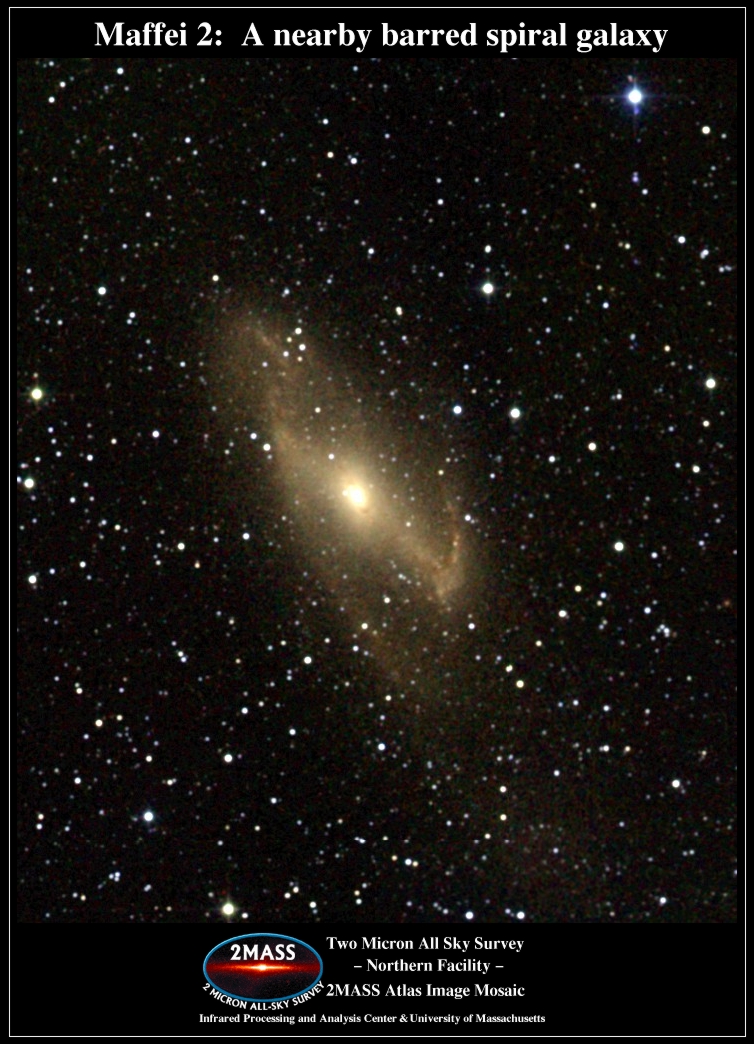
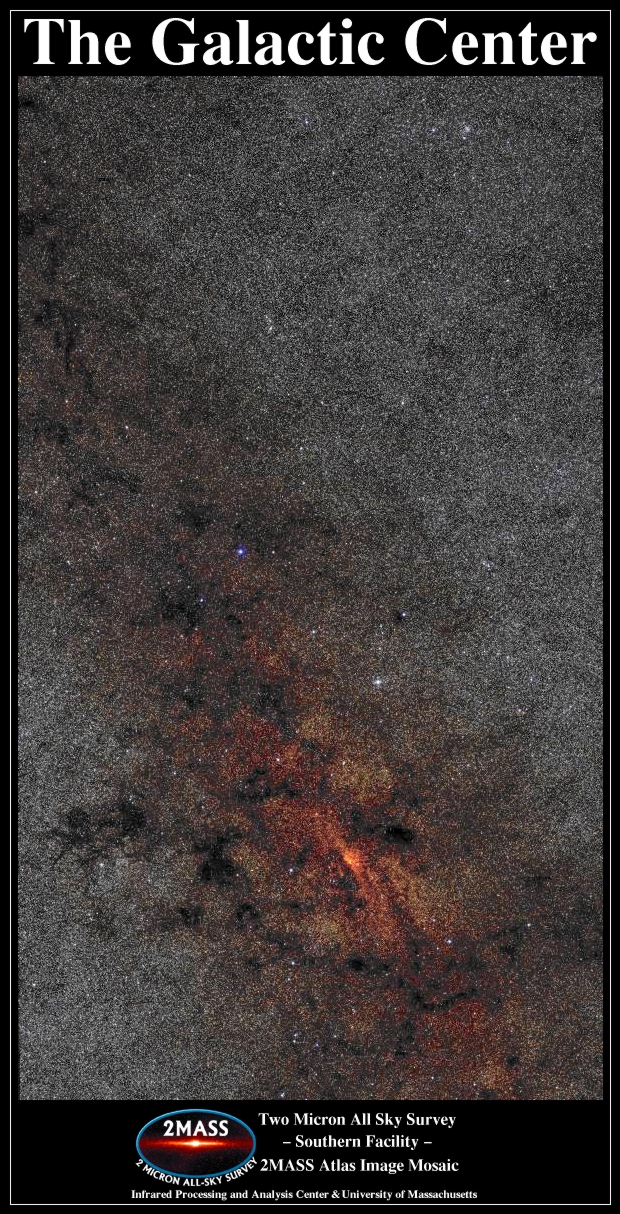
Buran writes: "The BBC News has a fine story about the how our galaxy looks from the outside according to the 2-Micron All-Sky Survey (2MASS). The article describes the shape of our galaxy (a barred spiral; all those books showing concept paintings of a regular spiral galaxy will be out of date now) and how the survey was done (near-infrared measurements of 500 million carbon stars). For the first time, we can see the center of our own Milky Way. All our worldly troubles seem so small..." That takes care of the big picture; Chris McKinstry has submitted news of much closer but just as exciting shots of Saturn -- read below for more on those.
mindpixel writes: "I was very excited when I saw this amazing shot of Saturn come up on the control room monitors of the VLT in November, and I'm even more excited that as of today the image is finally public. It is possibly the sharpest view of Saturn's ring system ever achieved from a ground-based observatory. All of us here at the observatory are quite proud of it, especially the NAOS-CONICA team."
I jumped on the space bandwagon late, and it's really only been recently that I've developed an interest at all. So I'm in a unique position of learning basic facts that others take for granted, at an age where I can appreciate the grandeur. For instance, the fact that there are truly *billions and billions* of stars *just in our galaxy*. That had me reeling for a couple of days... I don't want to ramble, but *man* is space cool. And space icecream is cool, too, I guess :-)
You know, if the United States Federal Government would get off it's duff, reform the tax system and be a little more responsable with where it spends money there would be the dollars for these things.
The EU won't foot the bill for a swarm of probes, so that leaves the US, Canada and Japan.
However, if they scaled up production of these things, the economy of scale would kick in and the overall price of these beasties would drop.
Right now, the probes are a one time knockoff and are as expensive as a Italian exotic sportscar is compared to a Lexus or Lincoln.
Take a look at that picture of the center of the galaxy again -- one of the biggest challenges to astronomy is how to catalogue every single object visible and create a rapidly searchable database. And that picture is not even 10% of the sky, in only one band! Astronomers are having to come up with new ways of loading, structuring, and searching multi-TB datasets to get incredible science out of the flood of data. The future of astronomy is in these multi-TB databases, in multiple wavelengths, which create the "National Virtual Observatory".
If you want to understand the science that these databases would make possible, imagine if your business had a searchable database of the entire population of the world, with parameters like age, height, weight, income, address, phone number, spending habits, and more, for every single person.
Have a look at this link for what some scientists think a virtual observatory will be capable of!
Well I just happen to think that science, astronomy and the quest for knowledge is a better "pet interest" than building killing devices and using them on peasants in the third world while waving the "stars and stripes" so god damn close to your face that anyone who disagrees or dares to point out US hyprocrisy is part of the imaginary "Evil Axis".
I fart in your general direction!
* * Always question "the National Interest" - 9 times out of 10 it is a cover for evil
It's a neat idea but "micropayments" are impossible/impractical with today's financial system. If there was an easy way to charge $0.001 for clicking on a link, it would have already taken the web by storm.
Too bad, it WOULD be nice for a lot of things, but we're going to have to wait.