 Slashdot Mirror
Help Solve the Mystery of the Pioneer Anomaly
deglr6328 writes "Very soon, NASA will be dismantling and scrapping its only computer left which is able to access and process the data on its ancient 7- and 9-track magnetic tapes. "Who cares", you say? Well, the Planetary Society for one and they're hoping you might care as well. The data held on these (few hundred) tapes is no ordinary forgettable data, it is the complete archive of the first 15 years of all the data returned to Earth by the Pioneer spacecraft which were sent into interstellar space. This additional and thus far unexamined data (the data after 1988 is available and has already been examined) may hold the key to solving what is considered one of the top problems in physics today, the so called Pioneer anomaly, where the observed trajectory of these spacecraft (and a couple others) deviates noticeably from our very precise expectation. The reason for the anomaly may be as mundane as uneven radiation pressure or escaping thruster fuel or it may be as groundbreaking as a clue to completely new physics, perhaps related to dark matter or dark energy. The Planetary Society is planning on recovering this data and poring over it meticulously to look for something which may have been missed or hidden from current investigations into the phenomenon. They need money to do this, about $250,000, and are asking for donations to fund the project. You do not need to be a member to donate. There are no serious proposals to send any more spin-stabilized spacecraft on solar escape trajectories any time in the near future and this is probably the only tenable method we have to directly investigate this mystery in the interim."
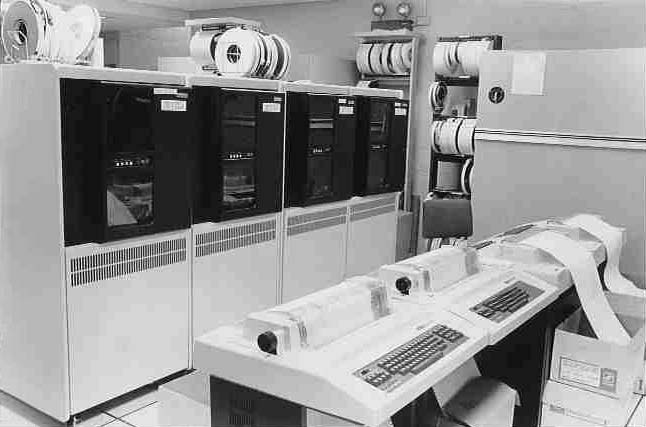
There's hardly any hardware available to read these tapes anymore. Proprietary format, ancient tape drives and undocumented data formats make this a huge problem.
To Terminate, or not to Terminate, that's the question - SCSIROB
I donated. How about you?
Will the data be made publicly available?
Yes. First, the data first must be recovered, validated, documented, and preliminary analyses must be done. After those tasks are completed (probably taking months to a year), the data will be made publicly available, including second-order data products when the raw data is processed by JPL orbit software.
I hear there's rumors on the Slashdots
from the wikipedia link:
...
"When all known forces acting on the spacecraft are taken into consideration, a very small but unexplained force remains. It causes a constant sunwards acceleration of (8.74 ± 1.33) × 10^-10 m/s2 for both spacecraft.
"Data from the Galileo and Ulysses spacecraft are also indicative of a similar effect, although for various reasons (such as their relative proximity to the Sun) firm conclusions cannot be drawn from these sources."
That's just what they're planning to do. The problem is that the current format can only be understood by a particular type of obsolete computer that NASA is about to scrap.
I had a letter somewhere that explained the problem in detail but I must have tossed it (I'm a member of the society, so I get the occasional mailing). They're planning to port the data to a modern format so it can be examined properly.
Only on
Because defense spending is a necessary and Constitutionally-justified federal espense. Space exploration is not. Since you really do not want any sort of national defense, we'll make sure to "throw you on the bayonettes" of the enemy next time any army, terrorist or otherwise, attacks us. Maybe your corpse will slow them down, and you can contribute in some way especially when you refused to pay your fair share. You've made your contempt for your own country and its people pretty clear to us.
As for the data, a lot of people here seem to be really naive about how hard it is to recover old data like this. "Just download it onto a hard disk." Well, yeah, but the trick is getting working 9-track drives (relatively easy) and 7-track drives (much harder) and going through the effort required to ensure you get the data off successfully instead of destroying it. (Remember, these tapes are very old and probably extremely fragile, and you may only get one shot at recovering the data.)
The largest part of the cost does not come from recovering the data (although that will be costly), it is from the cost to actually analyze the data and perform any necessary calculations. Despite the current economic conditions, PhD's don't work cheap, at least, not the ones with the required skill sets for this analysis. Additionally, the storage cost is going to be a bit in and of itself. I am not sure of the density and capacity of the tapes NASA used, but 15 years worth of every useful piece of data (observations, navigation, status, etc...) has got to be a lot. Just "ripping it to a hard drive" would require a bit of hard drive space, and would be a bit useless, since they would just be moving it from one aging magnetic media to a slightly newer magnetic media. They are probably hoping to either move the data to some sort of optical storage, or read it directly from the tapes.
Set the bar high, then bring a tall ladder.
Perhaps. We don't know because Voyager, like most other spacecraft, is 3-axis stabilised. That means it keeps pointed the right way using only its thrusters. Pioneer is spin stabilised, like a rifle bullet in flight, so requires much smaller pointing corrections using thrusters. The anomaly is a very slight one, so slight that it is lost in the uncertainty caused by the level of thruster activity on 3-axis stabilised craft.
Chernobyl 'not a wildlife haven' - BBC News
Spins like a rifle bullet, but a damn slight slower! Of the order of a few rpm.
Chernobyl 'not a wildlife haven' - BBC News
One thing to consider: old tape is fragile. I worked with audio tape for years, and tape older than 10 years had to be literally baked (heated & cooled again) before playing. If you didn't bake an old tape the filings from the tape would slough off onto the reading heads...you might (if you were lucky) get one play out of an unbaked tape, but the audio on the tape would definitely be destroyed.
Given the age of these tapes, getting the data off without destroying it is not as simple as just slapping it onto the machine & hitting "play."
These tapes should be readable on any midrange or mainframe. I own a Pr1me computer which should serve the purpose. Contactinformation is below: Jeffrey Bottoms, 4405 Pease #3, Houston, TX 77023
A 2400 foot reel of 6250 bpi 9-track tape contains about 160 MB, given large block size. If they're the 3490 type tapes, each cartridge can hold as much as 1600MB. Block size is important because there's an inter-block gap on the tapes that is essentially wasted space, and the more blocks, the more waste.
I'm not surprised that NASA was unable to develop funding to convert / analyze this data. After working with them for a few years, and with the 'Military Industrial Complex" for more than that, I can clearly say:
"If it isn't in the requirements document, it's not going to get done, no matter how simple or beneficial it is."
I worked on a project back in the early 80's. We were launching missles on a test range. I was responsible for the telemetry recording. We used a massive Honeywell tape drive and a bunch of telemetry circuitry to record at 1MHz. After designing the circuitry to measure and feed the data (all analog, BTW) to the drives, I asked my boss where the specs were for the circuitry to read the data back off the tapes for analysis.
I was told there wasn't any. It wasn't a requirement. And I had better leave it at that. I kind of freaked- how the hell can we spend $100K in hardware and time to record tapes that can never, ever be read ?
The answer ? It was basically butt covering. If something happened they would ask the gummint to fund a project to read the data off the tapes.
I went ahead and designd and built a playback system on the side, nights and weekends. We went ahead and launched missles. We had guidance failures. I was asked to read the tapes. I pulled out my breadboarded setup, and read the tapes. The project team was happy, problems were solved, etc.
And I was put on the next layoff list for 'failing to obey orders'. So I got a better job, and quit before the axe fell (large defense contractor axes fell sloowly back then- lots of little clerk types had to spent their quality time with each piece of paper).
The Moral ? Never underestimate the stupidity of large organizations- governmental or otherwise.
Danny Hillis of the Long Now Foundation has been pointing out these kinds of problems for years.
Most types of digital storage is not good for conserving data in the long run. Hardware changes. File formats change. Most digital media have a very limited lifetime.
As an example: We have a very good record of the letters that Greek philosophers wrote to each other 2000 years ago. On the other had there's loads of important research data from the early days of computing that's already lost forever.
siener's youtube channel
This paper reviews the current status of the anomaly and describes how the Pioneer data could help. It may be a bit math-intensive for some, but the words surrounding the sums do pull them all into focus.
boakes.org
I have been involved with the Planetary Society before and they are a group of good people. If you put a note saying this is specifically what you want your money spent on, I'm sure they would honor it.
Because that is not how taxes work! If they were going to spend the money on something you really wanted or needed, they wouldn't have to forcefully extract the money from you at gunpoint, now would they? You would give it voluntarily (like people are going to do for the Planetary Society and this project).
I have no doubt that they are a fine upstanding group with honorable intentions.
Legally speaking though, if there isn't a designation the money can be used for just about anything. I used to work for a company that did non-profit fundraising software development. It's a pretty basic requirement to allow fund designation, that's all.
People in cars cause accidents....accidents in cars cause people
I would have happily volunteered to spend a couple of days swapping disks in order to salvage all this lot, but alas, I'm the wrong side of the Atlantic. The guy in charge has recently been made redundant, and he was desperate to find someone to hand off all this to... but there's incredible beaurocracy. (I gather all the data was actually supposed to have been destroyed some years ago, but through some 'oversight' hadn't been.)
Alas, I don't have permission to publish his address, but I'll put him in touch with the Planetary Society on the off chance he doesn't know about this.
Interestingly, for years he ran the Pioneer spacecraft off a Mac Quadra 950! Check out the screen shots...
Yes. 16 bps on an 8W transmitter. At least for the pioneer 6-10 series if I read the data correctly.
Here are some links published on another group about this same topic, and all data that NASA knows about is already saved.
? sc=1972-012A&ds=*
? sc=1973-019A&ds=*
> http://nssdc.gsfc.nasa.gov/database/MasterCatalog
> http://nssdc.gsfc.nasa.gov/database/MasterCatalog
>Well, well, well...it looks like every bit of Pioneer 10 and 11 has been saved already, and can be accessed thru the proper channels (on tape, but apparently they will burn a CDROM on request).
And based on my extensive personal experience, anyone who expects a couple decades worth of knowledge that WE ALREADY HAVE in other formats (ground based stations, etc) to prove or disprove something as complicated as global climate change (and very sudden, non-linear global climate change, to boot) is going to be disappointed.
If you are interested in a history going back to at least the 50's, with extremely good resolution, just ask the NOAA for it and they will be happy to furnish you with more information than you will know what to do with.
I know the parent or grandparent are probably trolls, but this deserves a useful response.
I submitted this story last night, and it didn't get posted.
TPS is essentially lying to you when it claims the tapes haven't been read or analyzed.
I worked for the Lunar & Planetary Lab many years ago when we recieved hundreds of such tapes from Pioneer. At the time they were stored in racks in the computer room with an IBM 1130 system. Track density in those days was either 556 bpi or 800 bpi on 1 inch tape (memory) and recording technology was crude at best. Even then the fear was that the data would be irrecoverable in years. At the time, the lab was run by Dr. Sonnett who credited with the discovery that CMOS circuits were static sensitive. He came up with idea of grounding workers. This paved the way for low power electonics on some of these payloads. They were interesting days.