 Slashdot Mirror
Cassini Returns Photos of Hyperion
imipak writes "The Cassini Saturn probe has captured the previously unseen northern polar region of Saturn's moon Hyperion. Its weirdly eroded surface looks like nothing else in the solar system seen so far, demonstrating once again that when it comes to planetary exploration, "expect the unexpected" is more than just glib advice from the Hitch-hiker's Guide!"
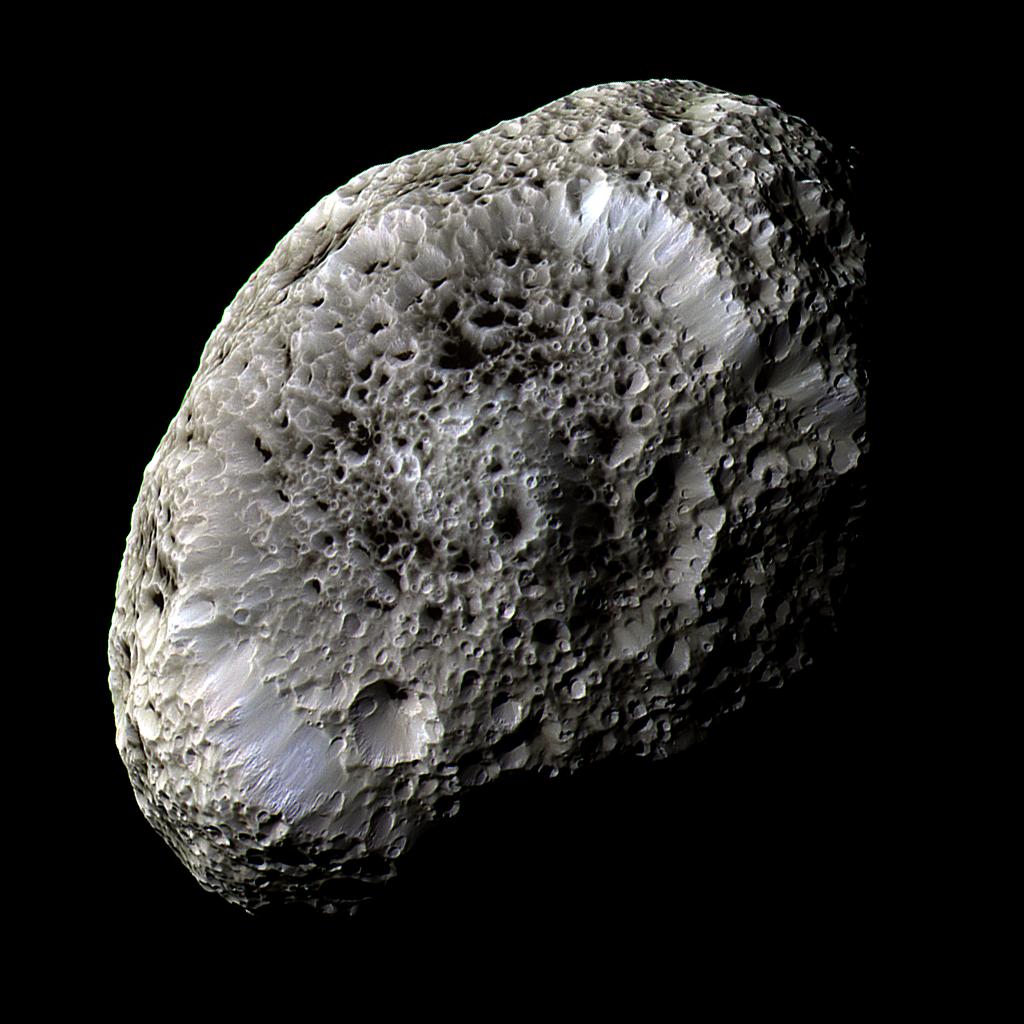

If it's a microscopic picture, I have to ask - what browser are you using to view it?
Bad jokes aside, this is what a magnified grain of salt looks like:
(it's pretty enough to make desktop wallpaper)
Actually there are a ton of reasons for such a surface.
1) Its by Saturn which has a massive gravitational pull. This causes Saturn to pull in a lot of comets, asteroids, and dust. Thus Saturn gets hit with a lot more debris then the planets in the inner solar system. This would also increase the risk of the moons getting hit with this debris as well and therefore will have more impacts then that of the planets and moons in which we know.
2) Saturn has rings filled with debris. So if the moon ever happened to swing into these rings it would go through hundreds if not thousands of impacts. That could have very well created the surface that you see. This could have happened at any time in the moons history and so is a very likely cause.
3) The moon could have some sort geological processes that are responsible for such a surface, however thats very unlikely.
Personally I would put my bet on number 2 cause it makes the most sense. If the moon went through on of Saturns rings especially when the rings might have just formed there would have been a lot of collisions leaving the surface scarred like you see in the picture.