 Slashdot Mirror
Prey Review
- Title: Prey
- Publisher: 2K Games
- Developer: Human Head Studios
- System: PC (360)
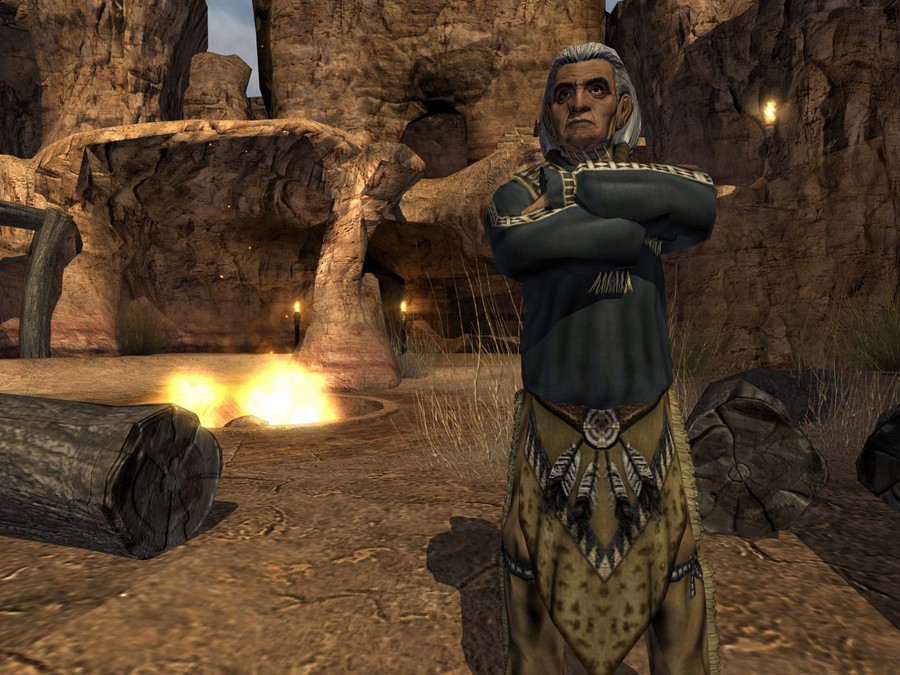
Instead of the protagonist's racial background being a footnote, or something you only find in the manual, Human Head brings a version of Native American spirituality to the fore by tying it directly into gameplay elements. Tough-guy Tommy doesn't believe in 'that crap' when the game starts, but soon enough he's leaving his body to walk about as a being of pure spirit (which comes in mighty handy around auto-turrets). This 'out of body' experience means that, for all intents and purposes, Tommy can't die. When you do deplete your health bar, instead of reloading the game you're taken to a grim-looking plateau and given the chance to fight for your life. Your spirit-bow is quite adept at taking out the bad spirits surrounding the place, and every one you destroy returns a little health or spirit energy. After a set time span, you're sucked back down and out into the living world to face your foes again. It was great not having to worry about saving and reloading, but after the third or fourth time the simple shoot-the-spirits game got a little old. It would have been great if the spirit world had become a tougher place further into the game. And while the occasional chat with your dead grandfather was enjoyable from a plot perspective, the lack of gameyness to your trips into ancient New Mexico disappointed. The designers took us on an in-game spiritual journey, but there was very little to actually 'do' as that journey progressed.
While there are spirits in the game, most of the shiny comes from alien technology. Portals are a great tweak to time and space, and already look like they're going to be a permanent fixture in FPS gaming. Opponents and some simple switches can throw open oval passageways to 'someplace else'. Not just a loading gimmick or gag, the portals physically link areas that are otherwise inaccessible. Early in the game they do a bit of showing off by walking you past a glass box with a small rock in it. You're left wondering what exactly it is, as it has no obvious purpose. Just a few moments later, though, you're stepping through a portal onto a rocky spheroid inside a glassy enclosure. It's a cheap trick, but effective at getting across the technology's potential. The gravity flipping trick is a more straightforward puzzle element, requiring you to alternate the orientation of 'down' in order to gain access to various surfaces in a room. In most cases it's fairly simple to see what's going on, but there are several great Escher-esque moments that require you to exercise your three dimensional thinking skills. The 'undying protagonist', gravity-flipping, and already adopted-portals are all great gimmicks, and I find myself actually hoping that I'll be seeing copycat game mechanics in future FPS titles.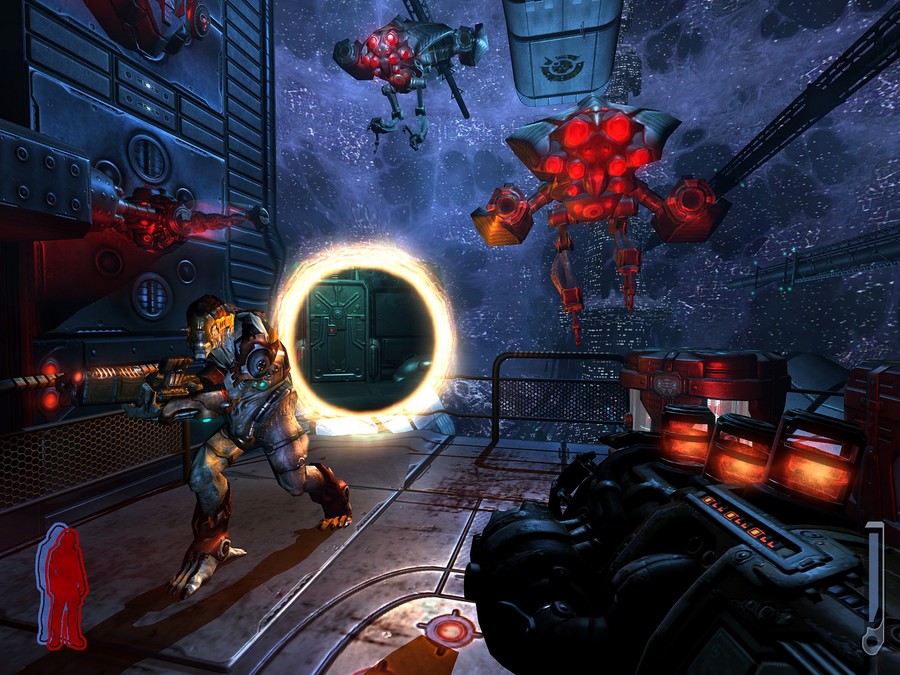
Unfortunately, the overall vision of the game falls somewhat short of the greatness it was striving for. The techno-organic (read: drawn on a trapper-keeper) motif that your surroundings and enemies display begins to look exactly like every other game made with the Doom 3 engine after you've killed your tenth identical bad guy. So far, every game we've seen made with this technology have been visually arresting, but more or less artistically bankrupt. Prey, at least, takes the gooey look to its fullest; many of your weapons are actually alive, and some were formerly pieces of enemies. As you're walking along, your weapon might hiss at you menacingly. This little touch is so clever and appreciated that it makes the boring sameness of the enemies and corridors that much more drab.
Even more frustrating is the ease with which most veteran FPS players will complete this title on 'Regular' mode. There's a solid fifteen hours or so of gameplay here, but for the first half of the game you're probably going to find yourself trying to remember what the spirit world looks like. The second half is more challenging, but only at a level the first half should have ramped up to. That said, I would far and away rather games be too easy than too hard; it's a lot of fun to finish a game and I think a lot of modern titles don't keep that in mind when gauging difficulty. The challenge level felt as though they were purposefully teaching you as you went; the integration of new elements into your knowledge of the game world was accomplished at a brisk but digestible pace. Just the same, once the game really got rocking I found myself hoping for more intelligent baddies to fight; not every bad guy can be from F.E.A.R., I guess.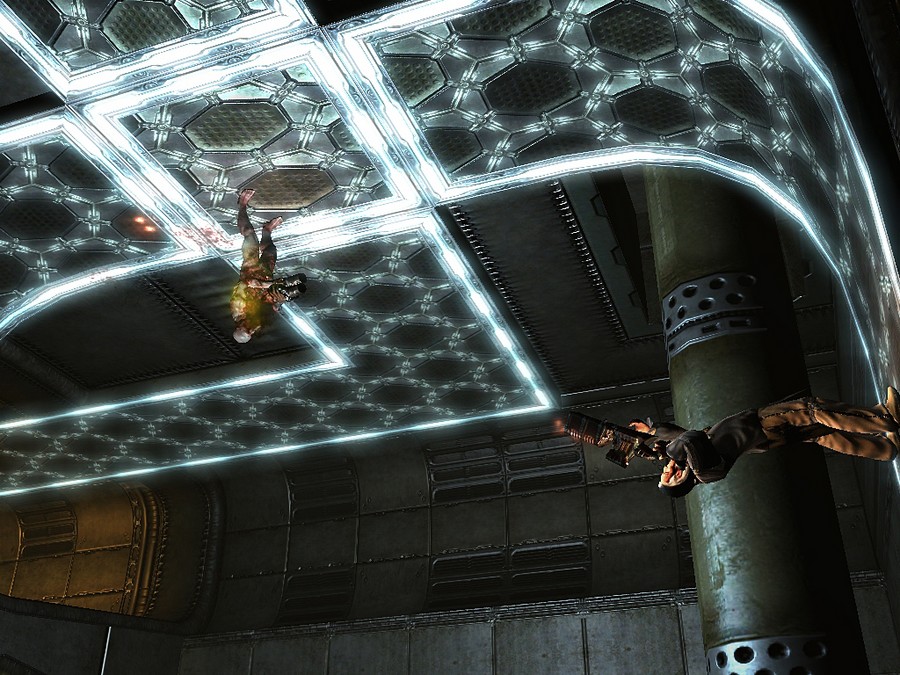
Visually, Prey acquits itself well against its contemporaries. The Doom 3 engine is still a solid platform to wrap a game around, and the dark-n-moody atmosphere it fosters was fairly appropriate considering the setting. The 'generic alien squishiness' did get old after a while, though. Even more annoyingly, the alien designs felt uninspired on first brush and just kept hanging around throughout the game. There just aren't that many types of baddies to face in this title. While I'm not looking for a menagerie to start hunting me down, I would have liked a little more variety; the ground-level grunt was particularly boring. The spiritual children, at least, were interesting from a background standpoint. Encountered in a few choice areas, their creepy appearance and haunting laughter was one of the few genuine chill-inducing elements of the game. Aurally, there wasn't much beyond those laughing children to look forward to. Forgettable music and fairly standard moans and groans from your enemies dog your steps through the game. Weapons sounds were serviceable; while not anything amazing, they did lend a passable feeling of weight and power to your arsenal. My favorite audio element was actually the occasionally overheard snippets of radio broadcasts from Earth. Quiet moments could be spent preparing for your next run by listening to (real-life radio host) Art Bell receive calls from bewildered humans experiencing the alien invasion on the ground. The only real humour in the game, the vignettes were well written and produced, and well worth the time it took to listen.
Prey, with its retro-inspired corridor shooting and tired alien antagonists, could have fallen victim to retread gameplay and genre boredom. Instead, Human Head has managed to lift the simple shooter out of mundanity by give us some new things to see and do while we're mowing down generic baddies. A serviceable plot and a spiritual twist, on top of new-tech portals and gravity flipping, is just enough to make everything old seem somehow a little bit new. The 'classic' shooter is something I'm starting to get tired of, but with Prey at least one more title has made aiming and shooting fun enough to recommend. If you're a fan of the FPS genre, especially the early work of id software, you're going to have fun with the new toys given to us by Human Head Studios.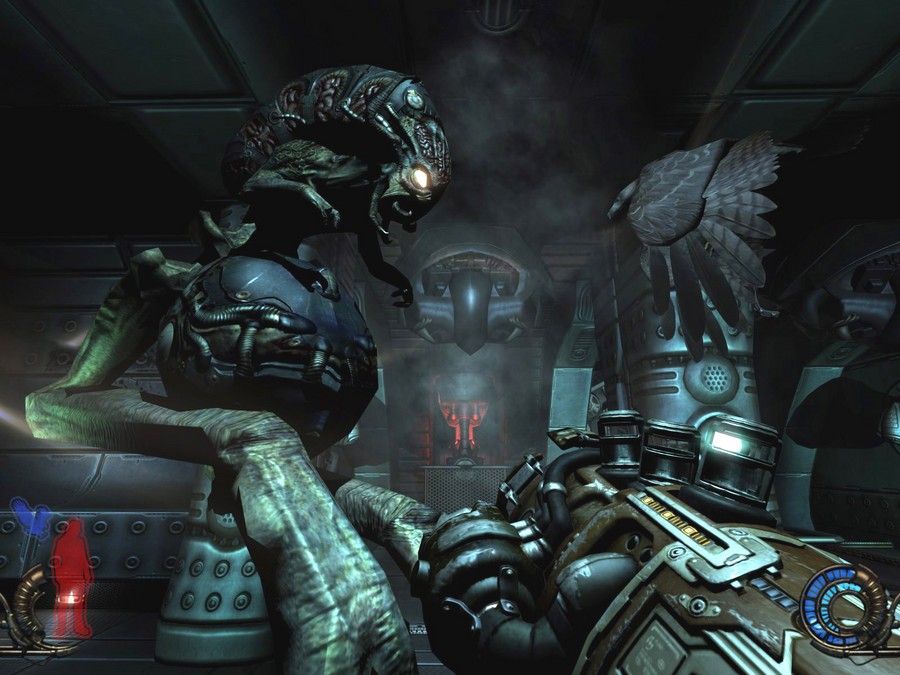
I personally prefer humorous violence. For example : WORMS!!!
What ever happened to Co-op mode? That available back in the days of Quake and DN3 and was hugely popular. It was fun battling the computer with a buddy. Then for some reason it just vanished from most titles. I say bring back co-op mode and breathe a little life back in this tired genre.
http://religiousfreaks.com/Do you have spiritual powers that allow you to see in the dark. Or do we have to download a duct-tape mod?
Abaddon: An Xbox 360 Indie game
I loved the "It's so dark, I feel like I'm doomed." :)
Much better than Doom 3, [...]
Off course. Carmacks' strength lies in designing game engines and renderers, not games. Most of ID's profits are made up of licencing engine technology to companies that know how to make games rather than the engines.
I kinda wish game reviewers would start including this information in the review. It sounds like a neat game, but I have one very simple requirement before I'll buy another PC game:
It must run without the CD in the drive.
I wish reviewers would include information on how the copy protection is on these games. If I had known that WarCraft III would find a way to kill my CD drivers, I'd never have bought it. (Seriously, I had to reinstall Windows to regain access to my CD drives.) I'm sick of putting up with video games that require the CD for no good reason, and am simply furious at the games that attempt to install driver-level code.
Can Slashdot reviews please start containing information on how the game handles copy protection? I'm willing to put up with registration keys and online activation. I'm not willing to put up with having to have the CD in the drive just to run the game.
Prey sounds like it's a game I might be interested in playing - assuming that the copy protection isn't too severe.
You are in a maze of twisty little relative jumps, all alike.
The voice acting and characterization are really strong in this game, and these elements really help to bring credibility and immersiveness to the experience. In a genre of famously mute protagonists it's really nice to BE such an expressive guy for once.
Play the demo and you'll see what I mean. You'll agree with me 110% when you hear him say "Nasty!" near the beginning!
Does it run Linux?
Yes, yes, the game has a full version of Linux in a virtual machine and on that version they've taken the liberty of preinstalling Tux Racer. You'll have just scads of fun as you pause the game to play TR whenever you want. But why stop there? You can pause the game and balance your checkbook on Linux, use OO.o to write a letter, or even develope your own high-end video game with all the included development tools.
Yes, it runs Linux, and after installing the 8th DVD you too can enjoy this beautiful operating system and just ignore this game as long as you'd like.
TW
The reason a game like this appeals to some people is that they don't have to sink 100+ hours into it. Not all of us have unlimited time to fine tune our 'skills'.
I played Prey on my PC (P4 2.6 @ 2.8, a gig of ram, and a 6600 @ GT speeds). Very smooth at max details and 4xAS in 1024x. From a technical POV, everything's fine, except for savegames. Thankfully they let you save any time you want, but the files take up quite a bit of space (about 300 megs from autosaves only) so enable the NTFS compression if you need/want. The other problem occurred when I ran out of space and it crashed while writing a quicksave. I wasn't able to load it, of course, but after deleting it even the previous saves refused to work for some reason. Maybe it is/will be fixed in the latest patch. Anyway, I'm not gonna write a whole review now, but just go over a few key points.
Maybe calling it revolutionary is a little too much, so I won't, but the game featured a huge amount of refreshing ideas (portals, gravity tricks, immortality, and somewhat the weapons, and some minor stuff) but, as Zonk said, had its weaknesses in enemy variety and behavior. So, after finishing the game, I didn't immediately want to play again through the whole thing, but I did to take a few screenshots and found it hard to stop when I got to the place I wanted.
BTW, did anyone notice the aliens changing the jukebox to JP when you return to the bar? Now a less rhetorical question: under what conditions does the Blue öyster Cult appear on the jukebox? I didn't think it was special when I took the screenshot, but it wasn't there the second time I tried.
No, not really. Prey was (wisely) shelved after the developers couldn't work the kinks out of the Portal Engine. The concept was revived years later, but running on a commecial engine (Doom 3) rather than on the original Portal Engine. What's amazing is that:
1. The game came out at all. (This just doesn't happen in this genre; DNF not withstanding.)
2. They managed to maintain a lot of the portal effects without using a Portal Engine.
Javascript + Nintendo DSi = DSiCade
Prey is one of the better FPS games to come out recently. Unfortunately that's like saying someone is the best ukelele player in Fargo.
We've seen just about every possible variation there is to the FPS theme, and the portal bit helps make Prey different, but what we don't really have is a game that really draws people in. The original Half Life did that. HL2 also did well in that regard. The problem is with the real lack of innovation in the genre - at the core the difference between Prey and every other alien shoot-em-up is a few tweaks in gameplay mechanics.
The FPS genre is starting to get played out, and while Prey is a noble effort, it just isn't enough. The AI just isn't challenging enough, and the portals and other gameplay additions keep the game from being a failure, but they're not enough to make it memorable.
I wish I had some magic solution for what would renovate the FPS genre, but I really don't. Better AI would certainly help, and more interesting art direction would also differentiate games from each other (why does every game that uses the Doom 3 engine look the same?). FPS titles seem to be losing their "spark" and maybe some creative title will create a new wave of innovation in the genre, and while Prey makes an admirable attempt to bring some new life into the genre, what makes it innovative tends to get overwhelmed by what makes it look and play like every other title in the genre.
Agreed. I'd mod you up, but I want to reply with an example.
... screw it. I have better ways to waste my time.
Halo for PC. I played it through on normal (or was it easy?) difficulty. Awesome game, excellent story. As I played, I got better, and decided to play it again on Legendary.
Wow. Big difference; lots and LOTS of reloads. It became more a game of "survive this checkpoint and reload till you get the next". I eventually got to the point where it was TOO HARD. I could NOT beat the initial fight on the Truth and Reconciliation ship (after taking the elevator up from the landing zone).
I lost count of the reloads. A large portion was luck (which doors were opened first? could I get an initial sticky grenade on the first guy? Were my teammates a bunch of retards?), but the fact is, I was unable to progress past that point in the game at that level of difficulty. In this case, harder was not completely "better". If that had been the only difficulty level, that would have been poor game design.
I don't mind 30 hours of game play. I do object when 5-10 hours are spent on the same checkpoint with no progress. (I might have reattempted it, but after patching the game, my savegames got toasted and I did not feel like slogging through that level again. *shrugs*.
Had I co-op mode available, this might have been more do-able. As is
I trust you're a big fan of NetHack, because by that standard it is possibly the perfect game. *
Harder is not in and of itself better. As Zonk notes it's not that easy is better than hard, it's that too easy is better than too hard. "Too hard" means "I have no hope of finishing it," or maybe "I've got better things to do than replaying the same 5 minutes of game for the next month until I'm good enough to move on." That's not fun, it's just frustrating. At least with the too easy option I can see the story play out and look at the pretty graphics if I'm into it. Depending on the game, I may be able to add my own limitations that make the game harder ("No grabbing health packs," "Only use the pistol," "No building tanks.") If the game is too hard, I'm just done.
Of course, ideally the game is Just Right, hard enough that I feel challenged, but easy enough that I beat it before I get pissed off and give up. Of course how difficut that is varies from person to person, making it a tough balancing act.
(* NetHack is a brilliant game, but is because of the depth of gameplay, not because it's so brutal that it's self selected to a very small community.)
Search 2010 Gen Con events
In the area, the protagonist makes the comment "Wow, it's really dark. I guess I'm doomed."
Good to see the Duke Nukem humor is still alive in FPSes :)
I disagree with some elements of the review - I thought the music was well composed, and suited the mood of the game perfectly. I found the character I was playing to be a likeable guy, with some funny comments to make as he makes his way around. Picking up the leech weapon early on in the game makes him comment, "This should rock some shit!"
I found spirit mode to be a very interesting addition to the game play and strategy. Sometimes the gravity stuff seemed gratuitiously used - used for the sake of doing it - but in other places in the game it was downright brilliant, as were some of the portal based puzzles.
Not one of the weapons is a "classic" FPS retread - no pistol, no shotgun, no chainsaw, no "nail gun". There's a rocket launcher of sorts, but interestingly it's only usable on a handful of enemies.
I did find the game to be a tad on the brief side - it definitely left me wanting more. I replayed the game immediately in "Cherokee" mode. The primary difference between "Regular" mode and "Cherokee" mode is there are no health packs or health rechargers - anywhere. This difference forced me to play far more aggressively.
Something else not mentioned in the review is that the game has a dynamic difficulty level - how well you play, and what weapons you favor has an effect on what enemies show up, how many show up, and what kind of ammo you are going to find in the ammo closets and lying around. If you think you are a tough guy, play like it, and the game will ramp up the difficulty for you. Something else that's off in the review is that the spirit world - where you fight for physical and spiritual strength when you die - does change in difficulty throughout the game, with more obstacles blocking your shots, and a tendency to not give you enough of the "kind" of spirits you need. The spirits will also attack you more frequently and rob you of strength.
I never once got lost in the game - its very linear, which is odd given is decidedly non-linear architecture and level design. You will never have to guess where to go, or what to do. Some people might not like this, and enjoy a real brain buster. This game isn't for that. I solve quite enough puzzles at work thank you - I play games to have fun. This game is fun from start to finish, and I really recommend it to people who also look for fun from their games.
[*spoiler warning*]
Maybe I am a softy, but I really felt terrible having to kill off the one person I had been fighting to protect for the first half of the game. There was an emotional intensity both to the character's devotion, and his reaction to that event that made playing the second half of the game even more fun - I was on a trail of vengeance, leaving a wake of death behind me. Having the character yelling at the aliens as he slaughters them was a great addition. Kudos to the designers for making me give a crap about what was going on in the game.
planet texture maps and more
Portal effects and Portal Engine are not the same concept. Portal Effects are merely the ability to render through a warp in space. (e.g. Create a jumpgate that shows through to the other side.) A Portal Engine, on the other hand, is built with Portal Space (4 walls and two ceilings, even if there's no physical object at that location) at its core. Portal Engines allow for things like modifiable/destructable terrain and zero-cost for invisible polygons.
Everything from Quake to Doom 3, however, is still based on the concept of pre-generating level information inside a BSP tree. If you try to modify or destroy the terrain in real-time, you run the risk of rendering objects incorrectly. Worst case, you could slow the engine to a crawl.
There's a good article on building a Portal Engine here. I think you'll find that it's stupidly easy to grasp once you understand the basics, but very difficult to build a complex engine on top of.
Javascript + Nintendo DSi = DSiCade