 Slashdot Mirror
Bezos Buries Patent Office in Paper
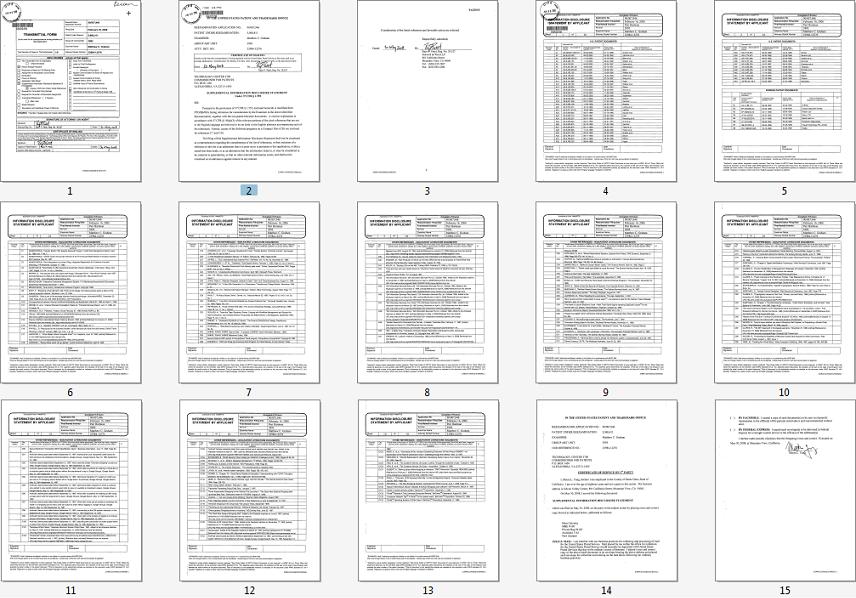
theodp writes "On June 2nd, almost two-and-half years after the USPTO initiated a reexamination of Amazon CEO Jeff Bezos' 1-Click Patent, Amazon dumped another load of documents on the USPTO Examiner assigned to the case, asking for consideration of the 185 or so listed references and 'favorable action.' Peter Calveley, the LOTR actor whose do-it-yourself legal effort prompted the reexam, notes that he was cc'ed on 20 kg of documents that Amazon sent earlier to the USPTO as it tried to stave off last October's nonfinal rejection of all but 5 of Amazon's 26 1-Click patent claims. So much for Bezos' 2000 pledge of 'less work for the overworked Patent and Trademark Office.'"
Because the Patent Office subscribed to Amazon Prime.
Under USC 382.6, article 12, subsection J, this seems to be unlawful interference. Of course, patent law isn't my specialty... can any other lawyers confirm?
This is the same guy who submits these anti-Amazon stories every other week, right? At least this time the links seem vaguely related to his grievance, although I have no idea what that Flickr picture is supposed to show.
What I'm listening to now on Pandora...
In school, I learned that an idea/concept was garbage if you couldn't convincingly explain it in 4 pages or less.
In civil cases where there is a propensity for information to be buried like a needle in a haystack, it makes sense for the prosecution to be legally required to supply the haystack because it should be the defenses burden to find the needle.
In the patent office though? They should be held to a reasonable limit (100-200 pages?). In this case, the vastness of their "supporting documentation" should be enough evidence to throw away the claim.
Of course, the alternative for the patent examiners (if it was a logical world where reason prevails) is to find an instance where the mountains of documentation is internally inconsistent and then toss the claim out the window because of Amazon's arrogance to submit contradictory claims in regards to their potential patent.
Support the 30 Hour Work Week!!!
Let me be clear. I think "Business Methods" patents are a stupid idea. However, that's the reality of things and NOTHING in this world, especially law, moves quickly or changes radically with ease. The best way, in my opinion, is to do what he is suggestions.
We SHOULD recognize that Business method patents are different from other patents. (Don't get me into software patents). There should be types of patents and each patent should have a time limit. However, there is not a SINGLE patent type I can think of that should be 17 years long. 10 years MAYBE... and that's an extreme.
I understand that companies invest a lot of time and money in research for "things". Pharmaceuticals, Engineering etc... but none of them take 17 years to fruition. It's one thing to protect a return on an investment, it's another to exploit it.
Additionally the patent system should be built to specifically fight those who would exploit it's system in a method that is SELF policing. His comment about creating a prior art database where people on the internet would be able to comment on prior art of a patent before it is approved is a TERRIFIC IDEA!
This would be like a wikipedia for patents and prior art making the jobs of the patent reviewers a thousand times easier at finding prior art. Once they are alerted of it, they can then investigate that specific instance and make an informed recommendation.
It's a start and a reasonably easy one to implement.
I think that amazon just wants to sell more kindles to UPSTO. I bet that amount of CC-ed documents was selected according to what one kindle can hold.
Einstein's theory of general relativity runs to many more pages than four. Garbage? I think not. Darwin's The Origin of the Species? More that four.
Comment removed based on user account deletion
I saw no pledge of less work for the Patent Office in that open letter. I saw instead a prediction of less work, should his recommendations for patent reform be realized.
The One Click patent is certainly a lightning rod for patent reform, but we should be more sure of what we're accusing our enemies of.
What do you mean they cut the power? How can they cut the power, man? They're animals!
I say we name this the Bezos effect. It's kinda like a slashdot effect but analog. :P
Well, there's spam egg sausage and spam, that's not got much spam in it.
Maybe Amazon is just trying to convince the Patent Office to buy Kindles instead of getting box after box of paperwork dropped on them.
You never expect irony, do you?
Want to be a professional wrestler? Visit www.iyfwrestling.com
@iyfwrestling
I'm fine mocking the guy over his hypocrisy, but if I'm not mistaken, Amazon is a publicly traded company. Amazon != Bezos anymore. He can't just shrug and not defend the company's IP (even if it's not really IP) because he owes it to the shareholders to protect the value and perceived value of the company and its properties. The company has to be seen doing due diligence in this case so that the shareholders will be confident that they will do it when it matters.
One Click to Rule them All, and in the PTO Bind them!
But how would that work? Patents can be held by individuals and licensed to corporations (which are in no shortage of individuals).
I just read Slashdot for the articles.
Whoops.
(See post topic)
They may not take 17 years to reach fruition, but the amount of time that it takes to reach profitability can be many years. A lot of focus is placed on blockbuster drugs like Viagra which made back their research costs in only a couple of years. However, there are many drugs that are for much smaller markets which may take a decade or more to reach their first profits. Because there is a time lag between patent and FDA approval, it's very possible that the time between approval and patent lapse could be three to five years less than the actual patent duration, which can affect a decision on whether to pursue a drug in the first place.
I think 17 years is a good number for patents.
You can never go home again... but I guess you can shop there.
But you can explain them to a reasonably intelligent person in less than four pages. That's what the OP (and Richard Feynman, who first said it) meant.
The patent seems to be about saving CC info so you can order one item with one click. If I send everything to a shopping cart and click "buy now", even if they remember my credit card information, that seems not to be covered under the patent. Or I can "1-Click" every purchase, and amazon has to either queue those somehow in order to ship them to me all at once (effectively having the "shopping cart" function on the back end which shouldn't be covered either), or sending me one item per box and increasing either cost to them or cost to me.
I'm struggling to really understand the benefit of this patent - it seems truly useful if I want to buy one single item. But it only saves time if I frequently buy a single item. A one-time use of the one-click method saves no time because you have to save your CC info instead of just entering it on-demand. And buying multiple items at once in order to save on shipping works very well with a shopping cart/checkout model.
Can anyone help me out here?
And don't forget your ad blocker!
It is a good thing that it is not a Double Click patent.
Excuse me, but please get off my Pennisetum Clandestinum, eh!