 Slashdot Mirror
Serious Design Failure At USAspending.gov?
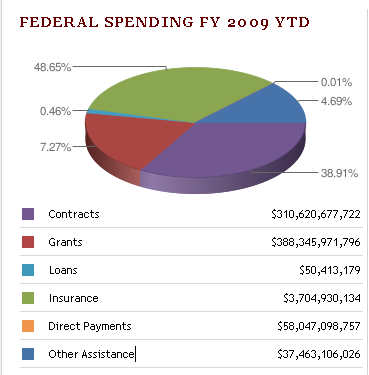
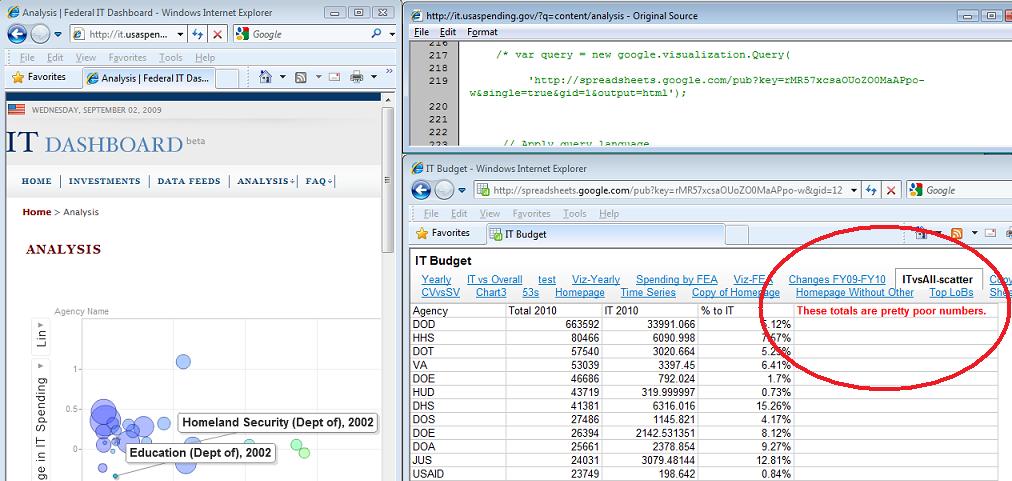
theodp writes "Over at Intelligent Enterprise, Seth Grimes declares the Federal Government's USAspending.gov website a travesty, calling it 'almost a parody of a government-transparency site.' Among the faults cited by Grimes is a botched 'Federal Spending FY 2009 YTD' pie chart that graced USAspending.gov's home page. Not only were the sizes of pie segments not in proportion to the percentage labels (due to a Google Chart API error), the colors in the pie chart didn't even match the colors and values in the table immediately below the chart. Lucky for the Feds, Grimes didn't get a chance to look behind the curtain at the Federal IT Dashboard, where they forgot to remove a (commented) reference to a Google spreadsheet that states 'These totals are pretty poor numbers' (Google workbook). Oops!"
The site's pages don't even have a proper BODY or HTML close tags..
Jeez.
Eric
Eric Aitala
www.f1m.com
I work at the Sunlight Foundation, where we're pretty familiar with the people and data systems powering USASpending.gov. I've seen a lot of comments here saying that the important thing is that the government is publishing something, and that it's understandable that their first pass might not be perfect.
But this isn't their first pass. The underlying data systems -- FAADS and FPDS -- have existed since the 90s, and have been riddled with errors throughout their existence. Instead of fixing the problems, OMB continues to slap new coats of paint on the same lousy data.
It's nice that we've got a new USASpending.gov, and I agree that it would be a mistake to put too much emphasis on a buggy visualization. But the underlying data is terrible, and so far no one is showing the will to fix it. Just look at USASpending's "data quality" tab -- it talks about the completeness of each row. Well, that's great, but it tells you nothing about the thousands upon thousands of missing rows, nor about the rows that massively under- or over-report their dollar amounts.
At Subsidyscope, the project on which I work, we've delved into these problems in more depth. Those who'd like to learn more about the shortcomings of the data systems powering USASpending can find a discussion of the relevant issues here.