 Slashdot Mirror
Wii Update 4.2 Tries (and Fails) To Block Homebrew
marcansoft writes "On September 28, Nintendo released a Wii update, titled 4.2. This update was targeted squarely at homebrew, performing sweeping changes throughout the system. It hardly achieved that goal, though, because just two days later a new version of the HackMii installer was released that brings full homebrew capabilities back to all Wii consoles, including unmodified consoles running 4.2. However, as part of their attempt to annoy homebrew users, Nintendo updated the lowest level updateable component of the Wii software stack: boot2 (part of the system bootloader chain). Homebrew users have been using BootMii to patch boot2 in order to gain low level system access and recovery functions (running Linux natively, fixing bricks, etc). The update hasn't hindered this, as users can simply reinstall BootMii after updating (it is compatible with the update). But there's a much bigger problem: Nintendo's boot2 update code is buggy."
Read on for more details.
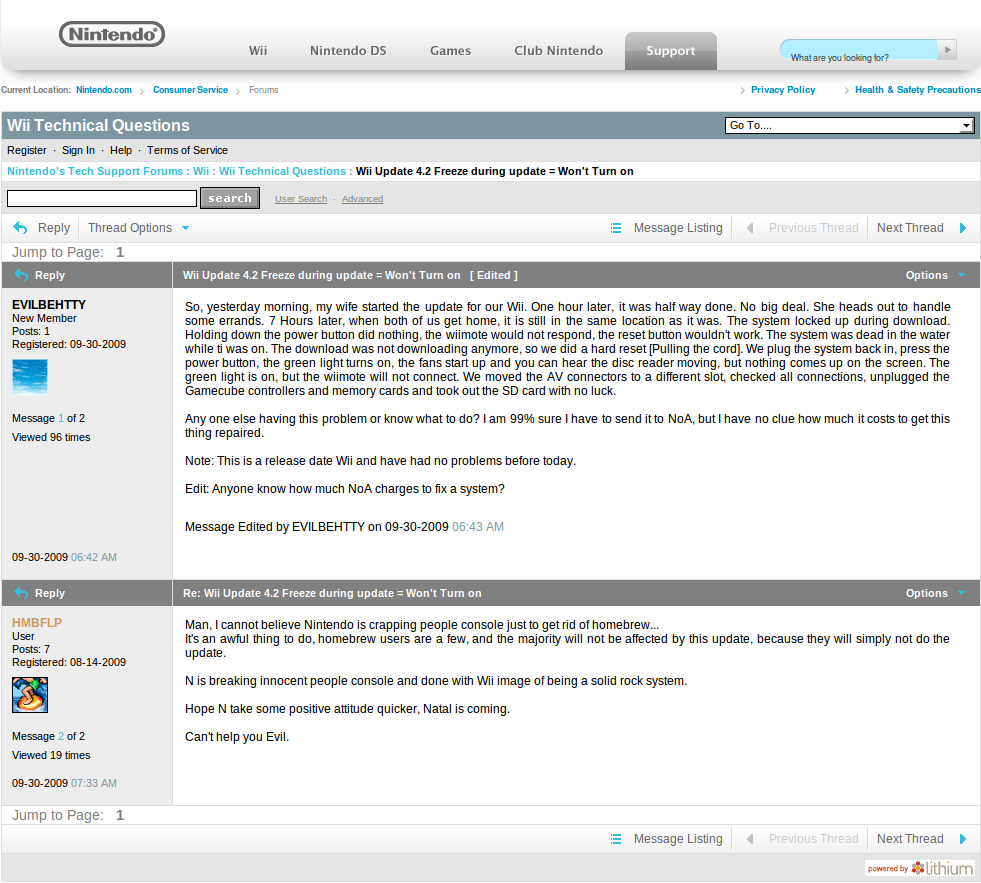
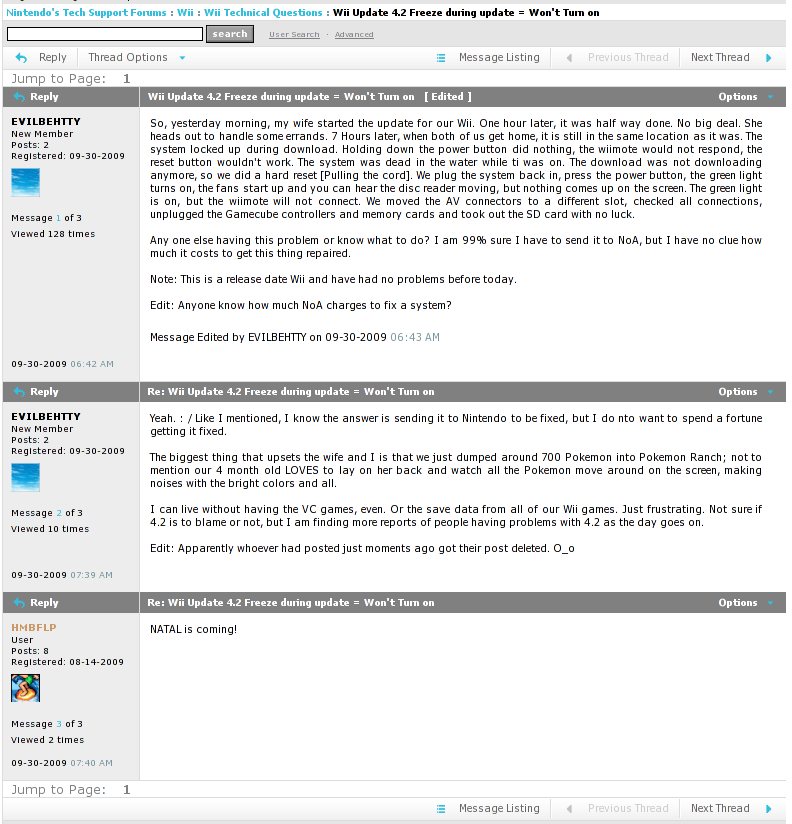
"Boot2 had never been updated in retail consoles until now. During BootMii's development, its authors noticed that Nintendo's code had critical bugs and could sometimes permanently brick a console by writing incorrect or unchecked data to flash memory, so they decided to write their own, much safer flashing code. Now, Nintendo has pushed a boot2 update to all Wii users, and the results are what was expected: users are reporting bricks after installing 4.2 on unmodified consoles. Nintendo is currently attempting to censor posts and remove references to homebrew. It is worth noting that the new boot2 does not attempt to block anything or offer any additional protection or functionality. Its sole purpose is to simply replace current versions which may or may not have been modified with BootMii. Another interesting tidbit is that Nintendo is not believed to have any method to repair this kind of brick at a factory, short of replacing the entire motherboard."
When you buy a computer, you're not buying just a device; you're also licensing software that makes that device work. So no, your first sale doctrine doesn't really apply because you're not just using a purchased item, you're buying hardware attached to a software license.
You may have trouble with that concept, the same as a vagrant has trouble with the concept of loitering or peeing in public, but the laws are there to protect business models, not to make you feel liberated from needing to pay for things other people have created.
It's one thing to take a device (iPod, PC,Wii, whatever), completely wipe the software and install Linux or your own code. It's very different to take those same devices, and use the existing software against its license to do something you want to do with it in order to violate the deal you got when you bought it.
There are plenty of people who don't think humans should be able to own private land (because they can't or don't), so you are not alone in having a purely selfish view of copyright that suits your personal needs. That does not mean you have any legal standing.
---
Why Apple is betting on Light Peak with Intel: a love story