 Slashdot Mirror
Introducing L2Ork, World's First Linux Laptop Orchestra
Agram writes "Take a netbook, Wiimotes, Nunchuks, and hemispherical speakers (which were once IKEA salad bowls), toss it up with some Ubuntu goodness and what you get is Virginia Tech's L2Ork, the world's first Linux-based laptop orchestra. With its affordable design and support from the Linux community, L2Ork hopes to bring laptop orchestras to K-12 education and beyond. So, regardless whether you wish to hear how L2Ork might sound or to learn how to build your own Linux-based *Ork infrastructure, perhaps this is a good opportunity to reopen the age-old debate: is Linux finally ready for some serious audio work?"
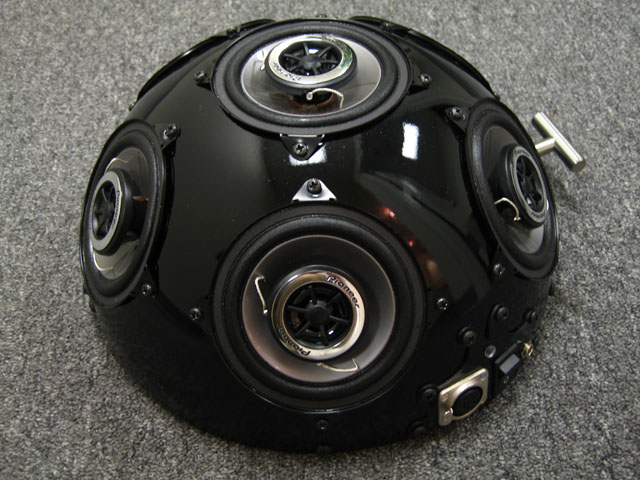
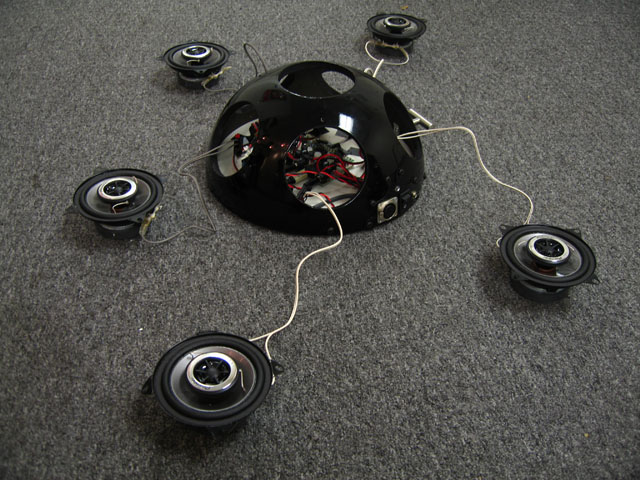
Windows has had a stranglehold on laptop orchestras for such a long time that it's really good to be reading about the world's first Linux Laptop Orchestra.
Here's a video of the "orchestra" performing:
http://www.youtube.com/watch?v=vFt4MgN7JPQ
Basically they just have a bunch of wiimotes hooked up to linux laptops running some sort of synthesizer controlled by waving the wiimote. It sounds really mindless and everyone just seems to wave their arms around in circles.
While I'm not into Laptop Orchestra's, I do use Ubuntu Studio now for MOST of my audio processing.
Only 4 years ago, I couldn't make it work. I use a Presonus Firepod to record my band, and also have some other gadgets. The only thing I am really missing is something like Gearbox for my Line 6 PodXT, there just isn't a substitute yet for Linux. No worries though, I pretty much have my board setup the way I want, so rarely even use Gearbox anymore.
Anyway, back to my point. I now use Linux as my DAW, as a sequencer, and increasing for my general computing needs. I love Jackd with Ardour and Patchage. It's gotten to the point where it's not just a suitable replacement for Cubase or Pro-Tools, but is my preferred setup. Now that my ATI drivers are finally working properly with the RT kernel in Ubuntu 9.10, I am finding the cube desktop actually useful instead of just eye candy. I can have my mixers, editors, patchage, etc. on separate workspaces and get to them easily.
Just a month ago, I had a friend of mine come over to check out my setup. He is a drummer that also wanted to start home recordings. He bought a ART Tubefire 8, and was very disappointed with the crippled Cubase LE that came with the hardware. After seeing my setup, he went out, bought a $300 computer and a firewire card and asked me to get him setup. Knowing nothing about Linux, or Ubuntu, etc, he is now using the setup to great success.. If there was ever a killer app for Linux, this is it, at least for music professionals and hobbyists.
The major drawback is hardware support still has a ways to go. But, right now there is the ability to get high end music recording equipment working very well right out of the box. I am a very satisfied "customer". And to think, 4 years ago I never thought it would get there.
The Layla 3G is a decent home studio interface, but as you say, there just isn't any software that runs natively in Linux that is remotely appropriate for professional work.
I've tried to run Cockos' Reaper under Wine, but I find jack just too much of a hassle.
However, Reaper has features that allow you to use a Linux machine to offload effects processing chores to via Ethernet and it works great. It makes my workflow much more efficient and allows me to do much more in real-time. And of course, a Linux box with a RAID array is an excellent sample server and rendering platform. Reaper is quickly becoming my favorite DAW software because of it's ability to leverage Linux machines in a professional studio environment. Someday, I hope to see a Linux port of Reaper.
Linux may not yet be ready to act as a standalone music production system, but it definitely has a place in a professional music production facility. And of course, it's a great platform for experiments like the one described in this article.
You are welcome on my lawn.