Slashdot Mirror


Microsoft: the 'Scroogled' Show Must Go On

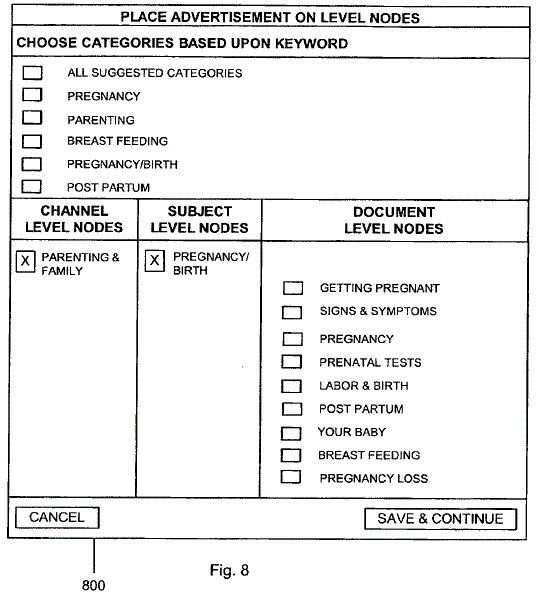
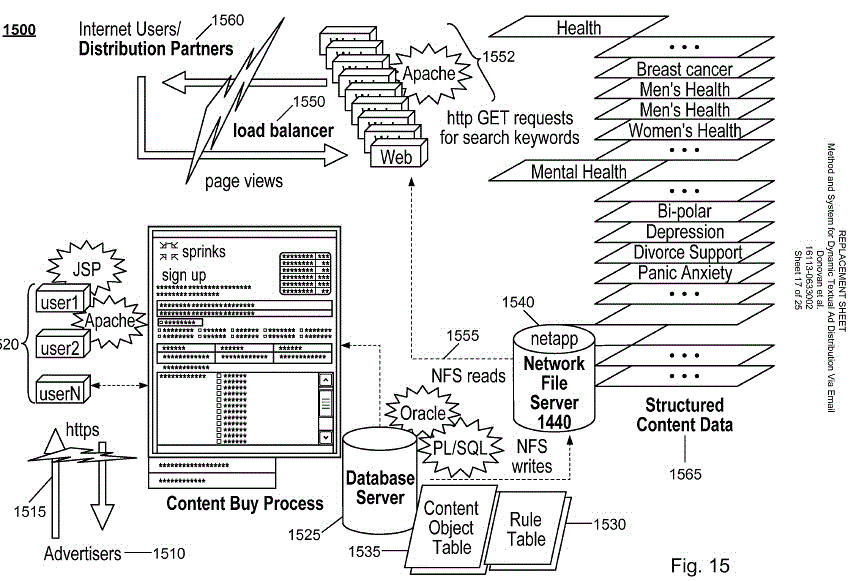
theodp writes "Microsoft says that the death of its 'Scroogled' ad campaign against Google has been greatly exaggerated. 'Scroogled will go on as long as Google keeps Scroogling people,' said a Microsoft spokesperson. 'Nearly 115,000 people signed a petition asking Google to stop going through their Gmail.' So, is Microsoft's scare campaign justified? Well, in a recently-published patent application for a Method and System for Dynamic Textual Ad Distribution Via Email, Google explains how its invention can be used to milk more money from advertisers by identifying lactating Moms, which might make some uneasy. Google also illustrates how advertisers can bid on access to those suffering from breast cancer, bi-polar disorder, depression, and panic anxiety. Hey, what could possibly go wrong?"
62 of 286 comments (clear)

  1. Reminds me of this story by jawtheshark · · Score: 5, Informative

    Google explains how its invention can be used to milk more money from advertisers by identifying lactating Moms, which might make some uneasy

    How Target Figured Out A Teen Girl Was Pregnant Before Her Father Did.

    All in all, that technology isn't all that surprising to me....

    --
    Ahhh...the great dumpster continuum. Many a free computer will be found there. -- sowth (748135)
    1. Re:Reminds me of this story by jekewa · · Score: 3, Interesting

      Didn't read the article, and don't get data intelligence. Wow, that's a tough spot to be in.

      If you RTFA you can see from the (outside of Target) analysis that it was due to increasing other purchases and not the stoppage of birth control. At the very least, I'm sure that even the most diabolical data analyzer realizes you can't dive into the protected vault of (not over-the-counter) health purchases. It was because of the purchase of certain vitamin combinations and cotton balls that set Target off.

      In hindsight it's always easy to tear apart someone's logic. It's really easy if you make up your own as you go.

      I gotta say "duh" to anyone who acts surprised that businesses that gather data use that data to improve their business. It'd be nice to be able to trust that the business is acting responsibly and in a way that they believe is in the interest of both parties; I mean, if you're pregnant, why wouldn't you want coupons for purchases you're likely to be making anyway? When you grocery shop, the receipt contains coupons for things you just bought, or things just like it, or things that complement those things. When you buy anything from Amazon, you're likely to get "you'll also like" e-mail and banner ads, even if you're not visiting an Amazon page.

      I'm sure Microsoft, for all of their "scroogle" name calling isn't avoiding reading your e-mail or Bing searches to come up with a marketing plan or to direct advertising or to refine search results.

      Of course, it's naive to think that all businesses will act in the best interest of anyone other than themselves, surely some or many will accept marketing funds from less scrupulous marketers. And it's also unfair to think that every recipient of such targeted marketing will take the offer with any care (otherwise SPAM would have stopped long ago).

      There are only a few was to avoid being scroogled by anyone. Most involve not being on the Internet, or not being truthful on the Internet, or hosting your own and forcing everyone else to participate in your service...but be careful you don't become the scroogler if you do. The key is to be mindful that scroogling is going on. it has been going on for a lot longer than most of us think; even if we limit it to just the Internet. Pretty much since the first "free" e-mail or search service was provided...and that's before most Internet users were born.

      --
      End the FUD
    2. Re:Reminds me of this story by Bill,+Shooter+of+Bul · · Score: 4, Informative

      I've linked to this in the past, but the privacy statement on the scroogled web page clearly states that they have the right to do exactly what Google is doing.

      "We use the information we collect to provide the services you request. Our services may include the display of personalized content and advertising."

      http://privacy.microsoft.com/en-us/default.mspx

      --
      Well.. maybe. Or Maybe not. But Definitely not sort of.
    3. Re:Reminds me of this story by sneakyimp · · Score: 2

      I don't think you are sufficiently concerned about the privacy issue. Perhaps you'd show more interest if you thought that insurance companies can track your purchases without your permission to extract higher premiums from you. I would agree that it's hardly surprising, but would also argue that governmental regulations to protect consumer privacy would be an option here. Given that there is now a health care mandate, it would be reasonable to contain the monstrous corporations who stand to benefit directly. My health insurance company hiked my monthly premium $50 and has yet to give me any reason why.

      Personally, I've always despised vile companies like Experian, TransUnion, etc. that profit by selling my private details to large corporations. The OP doesn't offer any explanation about where those diagrams came from, but the thought that Google is specifically selling the anxieties of its customers to the highest bidder seems pretty vile to me and they should be called out for it.

    4. Re:Reminds me of this story by samkass · · Score: 2

      I'm sure Microsoft, for all of their "scroogle" name calling isn't avoiding reading your e-mail or Bing searches to come up with a marketing plan or to direct advertising or to refine search results.

      They say their not scanning email, and their privacy policy forbids it. Same with Apple. Google's the only major player who scans your email to look for vulnerabilities to sell to advertisers I know of. On the other hand, people don't seem to care and Google makes billions at it, so why not. I think most people don't actually realize this is going on, though-- Google's privacy policy goes out of its way to obscure the fact that they allow and actually do it.

      --
      E pluribus unum
  2. Personal medical information by Grand+Facade · · Score: 2, Insightful

    That cannot be obtained from your doctor, and Google is going to sell it???!!!!!

    This is not going to end well.

    We all thought Big Brother was the Govn't, it's looking like Google is who we have to watch out for.

    --
    Rick B.
    1. Re:Personal medical information by ggraham412 · · Score: 2

      Google explains how its invention can be used to milk more money from advertisers by identifying lactating Moms, which might make some uneasy.

      Is that what Sergey Brin is looking for with his Google glasses?

    2. Re:Personal medical information by Anonymous Coward · · Score: 5, Informative

      except it isnt.. Google isnt selling you access to a persons information, they are selling you access to a target audience, the same thing MS does. There is nothing identifying about it.

    3. Re:Personal medical information by Branciforte · · Score: 3, Informative

      Google does not sell personal information to third parties. And they never have.

      At worst, they will use this as a signal to match ads to users.

    4. Re:Personal medical information by fuzzyfuzzyfungus · · Score: 2, Insightful

      Whether through malice, incompetence, or simple inertia, privacy law tends to exhibit a substantial lack of imagination in how it protects information.

      A few professions with very long histories(doctors, lawyers, sometimes priests if your jurisdiction isn't so hot on church/state separation) who necessarily have access to privileged information in order to operate tend to be covered; but historically novel entities, or those who use novel inferential methods, tend not to be.

      (In practice, I suspect that advertising sellers would also be happy to weasel-word it: "Goodness no, we don't sell consumers' medical information or records! We don't have those, and that would be wicked and naughty. We merely strive to match contextually relevant advertisements to people who might be interested in them. However, if you are interested in an ad-buy targeting customers who searched for 'how is babby formed', or 'breast cancer doctors boston ma' or 'signs of depression', please call our sales team!" That's where you are pretty doomed. When it comes right down to it, people absolutely bleed data about themselves in the course of their everyday activities, not merely when they explicitly tell their lawyer something or let their doctor conduct a test, and now we have the technology to piece together and draw inferences from all those little bits and pieces that people reveal throughout the day.)

    5. Re:Personal medical information by Kwyj1b0 · · Score: 2, Interesting

      Google does not sell personal information to third parties. And they never have.

      At worst, they will use this as a signal to match ads to users.

      So if you have a physical mail, and someone gets to read it and insert ads with it (without knowing who you are - say they aren't allowed to see the address), it would be fine?

      While I get it that Gmail is "free", I also believe that certain expectations of privacy/regulations should translate from existing laws we have (or rather had) in place. No wiretapping? Then no reading my email either. Just changing the technology shouldn't require us to enact new rules and regulations.

    6. Re:Personal medical information by Enderandrew · · Score: 4, Insightful

      Google doesn't sell your info to companies. Google delivers ads to target demographics.

      This is a very important distinction that many people (apparently yourself included) don't understand, and one that Microsoft is basically outright lying about.

      They parse your email for keywords to determine which ad to show you, just the same way your email is parsed by a computer for a spam filter. And Microsoft does the same thing. They have contextual ads on their free email service as well.

      Given that Microsoft is outright lying, they need to be called out on it.

      --
      http://blindscribblings.com - Tasty pop-culture in conceptual fashion.
    7. Re:Personal medical information by LordLimecat · · Score: 5, Interesting

      the same thing MS does

      The elephant in the room.

      Kind of amazing that microsoft has had the nerve to go after Google's privacy practices, when its own regarding Bing generally arent as good. AFAIK Bing / MS Mail (whatever its called now) has historically scanned email in the same way as google, and the whole point of Bing is to datamine for advertising.

    8. Re:Personal medical information by binarylarry · · Score: 2, Informative

      Gmail isn't some mandatory service you have to use. Granted *Microsoft*, Yahoo and everyone else does the same thing.

      If you're so paranoid, host your own email.

      --
      Mod me down, my New Earth Global Warmingist friends!
    9. Re:Personal medical information by Dr_Barnowl · · Score: 2

      The post office could read every postcard I send through the mail to figure out which junkmail I'd like best.

      Fixed that for you. Email is a postcard, not a letter. If you want electronic letters instead of postcards, you use encryption.

    10. Re:Personal medical information by Sez+Zero · · Score: 2

      The elephant in the room.

      Kind of amazing that microsoft has had the nerve to go after Google's privacy practices, when its own regarding Bing generally arent as good.

      Exactly. My favorite is the quote:

      Scroogled will go on as long as Google keeps Scroogling people,' said a Microsoft spokesperson

      You hear that splash, too? Yes, it is the sound of Microsoft jumping the shark.

    11. Re:Personal medical information by squiggleslash · · Score: 2, Insightful

      No, they're not.

      This about a computer determining what ads to show people based upon educated guesses as to what they might be interested in.

      Google is not selling this information. Nobody can go to Google and say "Here's $10, tell me if my neighbor's pregnant" or anything remotely close to it.

      The problem here is language. People use language that is similar for:

      - Describing a private detective investigating a named person

      - Describing a non-sentient computer doing textual analysis in order to provide a service whose results are only known to the person providing the text.

      In common with most people, I don't give a rat's ass whether my computer thinks I'm pregnant. If Sergey Brin thinks I'm pregnant, that might be another story, but there's no evidence he has the ability to find out (that is, the tool to find out might be possible to make, but it's unlikely he's made it or has access to it if someone has.) And I certainly would object if Google was sending lists of named, identifiable people it thinks are pregnant to Gerber. But they're not. And I'd be spitting blood and demanding Google be subject to terrorist attacks if Google were sending lists of named, identifiable people it thinks are pregnant to insurance companies. But they're not.

      Sure, it's possible this information might be abusable. Likewise, it's possible for me to abuse that 3D printable lower receiver on the Interwebs by doing the work necessary to get that receiver, get a gun anonymously, and shoot someone I don't like with it. But is the fact I could do that if I wanted to a reason to run a FUD and hate campaign against little old me?

      --
      You are not alone. This is not normal. None of this is normal.
    12. Re:Personal medical information by DerekLyons · · Score: 2

      Google does not sell personal information to third parties.

      Not directly, no. But via cookies and ad hits, they let third parties infer personal information... So why Google's hands appear clean, they're not the innocent bystander they'd like to be seen as.

    13. Re:Personal medical information by fuzzyfuzzyfungus · · Score: 2

      "Gargoyles represent the embarrassing side of the Central Intelligence Corporation. Instead of using laptops, they wear their computers on their bodies, broken up into separate modules that hang on the waist, on the back, on the headset. They serve as human surveillance devices, recording everything that happens around them. Nothing looks stupider; these getups are the modern-day equivalent of the slide-rule scabbard or the calculator pouch on the belt, marking the user as belonging to a class that is at once above and far below human society."

    14. Re:Personal medical information by interkin3tic · · Score: 2

      Kind of amazing that microsoft has had the nerve to go after Google's privacy practices, when its own regarding Bing generally arent as good.

      What's amazing about it? The public has shown itself to be remarkably stupid in terms of detecting hypocrisy. MS would have to be amazingly stupid not to look at any given political race and not realize they could do the same thing.

    15. Re:Personal medical information by Dr_Barnowl · · Score: 2

      If they don't read them, how do they deliver them?

      At the least, they have a 50% chance of looking at the side with the content on instead of the address. Are you saying that NONE of that information enters a postman's brain? Most modern postal systems also have OCR looking for postal sorting codes. They are almost certainly reading your postcards, in some fraction of the way that Google reads your Gmail. They may not act on it, but I suspect regulation is the only thing preventing them from attempting to monetize this data.

      With a letter, this information is on the inside. With a postcard or email, it's on the outside.

      If you're so comfortable that no-one at the post office reads your postcards, would you be comfortable receiving a test result from an STD clinic on the back of one? (hypothetically, your residence has no other occupants who could read the card - the only people who can lay eyes on it are the people who are involved in conveying it to you via the mail). I'm guessing no, because we draw a line where our sense of privacy outweighs our confidence in postal worker discretion.

      I make a similar judgement about using GMail. I am, so far, comfortable with the benefits I receive from my agreement with Google in exchange for the benefits they receive. In my case, I suspect I am doing better than they are out of the deal. I still wouldn't want to receive an unencrypted email with STD clinic results via their service - but that stands for ANY SMTP service. If my SMTP service was provided by a local company I would trust it even less - the local sysadmin would be far more likely to know me, far more likely to be able to blackmail me with any compromising information. With Google the worst that happens (so far) is I see more advertisements for stuff I might be interested in.

      The way I see it is that MS are exploiting the very nature of email itself to try and score points against Google. Basically everything they accuse Google of doing - they are either doing it themselves, or wish they thought of that first. If they were *really* thinking ahead, they would poison the well for ALL free webmail providers and point out that it's an intrinsic problem with the technology. And then maybe clean up selling secure mail service. Maybe they are thinking that far ahead, but I wouldn't bet on it, or their ability to capitalize on it. And they'd be killing the Golden Goose of consumer/political intelligence - the fact that people buy into the global village and perceive their communications as relatively private - even on the likes of Twitter - produces a huge reservoir of data that everyone with power wants to tap into. They'd face opposition from Google, government, and themselves as well.

      It's a conversation worth having, but the problem is not what Google are doing - everyone with a GMail account agreed to let them do it. The problem is educating people to the point where they can make that decision in an informed manner. In that respect, Microsoft might be doing people a favour - but implying that only Google do these things is disingenuous. MS do it, Amazon do it, anyone with a large online presence does it, and not just with email, with tweets, browser history, etc.

    16. Re:Personal medical information by LordLimecat · · Score: 3, Insightful

      How can Bing scan personal email?

      Perhaps I was not clear. Bing datamines; thats its entire purpose. MS owns Bing, and also owns Hotmail (now Outlook). Historically, Hotmail ALSO served email-relevant ads, as does yahoo and basically everyone. Google simply was the first to do so.

      Perhaps Outlook does not now, but that hardly changes the gross hypocrisy of it all.

    17. Re:Personal medical information by Col.+Klink+(retired) · · Score: 5, Informative

      ...MS says Outlook.com does not scan emails...

      Microsoft is very grateful that you paraphrased what they actually said. You see, they actually do scan Subject headers, but not the body itself. But they don't mention that in their campaign and they're very happy that you assumed that they weren't scanning your email at all. But they are.

      And Microsoft is certainly profiling you. Here's what they say:

      "The extraordinary profile and behavioral targeting on Hotmail, combined with customizable advertising packages and Rich Media solutions, enable you to connect with your audience at the point of influence."

      And I'd assume if you didn't want any computer (not people) scanning (not reading) your emails, I'd assume you didn't want a computer tracking your profile/search history. But that's exactly what Microsoft does.

      --

      -- Don't Tase me, bro!

    18. Re:Personal medical information by mystikkman · · Score: 3, Informative

      ...MS says Outlook.com does not scan emails...

      Microsoft is very grateful that you paraphrased what they actually said. You see, they actually do scan Subject headers, but not the body itself. But they don't mention that in their campaign and they're very happy that you assumed that they weren't scanning your email at all. But they are.

      Oh please, read your own links. Right there it says:

      Update: According to The Verge, Microsoft denies that it scans email subject lines in order to deliver ads.

    19. Re:Personal medical information by Missing.Matter · · Score: 3, Informative

      AFAIK Bing / MS Mail (whatever its called now) has historically scanned email in the same way as google

      And you would be wrong.

      Here is Microsoft's statement on what Outlook does not do:

      Outlook.com only scans the contents of your email to help protect you and display, categorize, and sort your mail appropriately. Just like the postal service sorts and scans mail and packages for dangerous explosives and biohazards, Outlook.com scans your mail to help prevent spam, gray mail, phishing scams, viruses, malware, and other dangers and annoyances. Microsoft and its email services, including Outlook.com, Hotmail, and Office 365, do not use the content of customers’ private emails, communications, or documents to target advertising.

      http://www.scroogled.com/OurPosition

      This has been Microsoft's position since at least 2010.

      Microsoft does target ads through tracking cookies, like Google, yes. But they offer, like Google, a nice way to opt out of this. This site shows all the information they have on you and a centralized way to opt out of it all: https://choice.microsoft.com/en-US

      As for Bing, one of the nicer points of its privacy policy over Google is this statement:

      We store search terms (and the cookie IDs associated with search terms) separately from any account information that directly identifies the user, such as name, e-mail address, or phone numbers. We have technological safeguards in place designed to prevent the unauthorized correlation of this data and we remove the entirety of the IP address after 6 months, cookies and other cross session identifiers, after 18 months.

      http://www.microsoft.com/privacystatement/en-us/bing/default.aspx

      I don't believe Google has a similar clause in their privacy policy.

      Finally, it's worth remembering that Google earns 96% of their revenue from advertising. They are an advertising company and thrive on delivering relevant ads to you. When it comes down to it, when the choice is between your privacy and their company, your interests will always lose.

  3. Nice catch theodp by Anonymous Coward · · Score: 5, Interesting

    Those two patent drawings are plenty scary.

    This reminds me of the late '80s, when people still identified IBM and AT&T as the big bad boys and were willing to give Microsoft (which seemed like a scrappy startup led by a shy kid with thick glasses and long hair) a pass.

    Fast forward 25 years. Microsoft is the new IBM. Oracle is the new DEC. Google, Apple, and Amazon are the new Microsoft.

    1. Re:Nice catch theodp by fuzzyfuzzyfungus · · Score: 2

      Inconveniently, while the new kids have grown up and gotten increasingly mean and creepy, that hasn't really stopped IBM and AT&T(or its larger post-breakup chunks) from still being the big bad boys. Team telco is still rent seeking, and IBM didn't build Watson to win at Jeopardy...

    2. Re:Nice catch theodp by buravirgil · · Score: 3, Funny

      Watson was built for Colossus to design next Summer's fashions. They'll have to be really smart this year. Vibrant colors shan't suffice.

      --
      Would were! Should is! Could be! And live a hundred times three.
  4. So... by fuzzyfuzzyfungus · · Score: 5, Insightful

    Is Microsoft working under the theory that (since they have other profitable areas of business, and Google basically doesn't) it will be wholly worth it if the can salt the earth under both Google and their own advertising efforts?

    Or are they making the best of a bad situation by advertising the inferiority of their analytics capabilities as a privacy feature?

    Or are they simply hoping that mutually applicable accusations will stick to whoever they are made against first?

  5. Pot, meet kettle. by El_Muerte_TDS · · Score: 4, Insightful

    And Microsoft isn't doing the same?

    I'm all for informing people on what information they give to companies, and how those companies will use it. But at least don't be hypocritical about it.
    Also, a huge part of the world doesn't care, as is obvious by their Facebook and Twitter activity.

  6. Scroogled, ha ha by tibit · · Score: 5, Insightful

    I don't know why people even believe in this shit. What, you are all seriously so naive as to think Microsoft is not doing the very same thing? That's the whole fucking reason they offer a mail service, for crying out loud! There is no money in it for them at all unless they extract information that can be monetized. If you want a usable enough service, there can't be nearly enough ads there to pay for it. Google and MS are doing the same, they just use a common tactic of pretending like they are very different. Large-scale free mail hosting is a financial loss unless you mine the data. The data doesn't even necessarily need to be sold to third parties, there are other groups within Google and Microsoft that use it. Just think of how big of a language corpus it gives both companies to develop their other tools on. Imagine you're a search engine or a translation service startup. You're at a big disadvantage to both MS and Google precisely because you don't have billions of sentences of text as your reference.

    --
    A successful API design takes a mixture of software design and pedagogy.
    1. Re:Scroogled, ha ha by DaMattster · · Score: 2

      I don't know why people even believe in this shit. What, you are all seriously so naive as to think Microsoft is not doing the very same thing? That's the whole fucking reason they offer a mail service, for crying out loud! There is no money in it for them at all unless they extract information that can be monetized. If you want a usable enough service, there can't be nearly enough ads there to pay for it. Google and MS are doing the same, they just use a common tactic of pretending like they are very different. Large-scale free mail hosting is a financial loss unless you mine the data. The data doesn't even necessarily need to be sold to third parties, there are other groups within Google and Microsoft that use it. Just think of how big of a language corpus it gives both companies to develop their other tools on. Imagine you're a search engine or a translation service startup. You're at a big disadvantage to both MS and Google precisely because you don't have billions of sentences of text as your reference.

      The funny thing is, you're correct, they are naive. Ever know anyone to read the fine print? Ever know anyone to read all of the terms of service or service agreements?

    2. Re:Scroogled, ha ha by tbannist · · Score: 2

      You wrote:

      Microsoft doesn't do personalized ads based on email contents.

      But you meant:

      Microsoft no longer does personalized ads based on email contents, as of two weeks ago. For now, they're only scanning the subject line. Microsoft still retains the right to resume serving personalized ads based on email contents at any point in the future.

      I'm underwhelmed by the supposed difference in grey here.

      --
      Fanatically anti-fanatical
  7. Message to advertisers by drapetomaniac · · Score: 5, Insightful

    If I was an advertiser and saw the Sgroogled campaign - the message to me is that Google has a better advertiser platform.

  8. So why use it? by nukenerd · · Score: 3, Insightful
    FTFA : -

    Nearly 115,000 people signed a petition asking Google to stop going through their Gmail

    So why the hell do they use Gmail? Here's a clue for them - use a proper email client.

    1. Re:So why use it? by foniksonik · · Score: 2

      Uh they aren't parsing your client, they're parsing your inbox... doesn't matter if you use gmail.com web or an app on a phone/tablet or Opera's/Mozilla's/Native pop mail client.

      You won't see ads outside of the web client but your search results on google.com are impacted and banners you see on other websites (if they are managed by google) will be impacted.

      --
      A fool throws a stone into a well and a thousand sages can not remove it.
    2. Re:So why use it? by mabhatter654 · · Score: 5, Informative

      ALL email is just POSTCARDS that anybody in the middle can read plainly. I wouldn't be surprised if the big ISPs were all doing it too. After all, it's not "private" until it passes through their servers into your assigned mailbox.

    3. Re:So why use it? by bickerdyke · · Score: 2, Insightful

      Email providers usually ADVERTISE that they're parsing and analyzing your email. They usually call it Spam-Filter or Virus-Scanner.

      Automated text analysis != reading your mails

      (please note. I'm not saying that automated text analysis never ever won't break your privacy. It may do so, but does not per se)

      --
      bickerdyke
    4. Re:So why use it? by Jason+Levine · · Score: 2

      Many ISPs were caught using deep packet inspection services, not to check for viruses or spam, but to identify what their subscribers were looking at online so the information could be sold. Your ISP is doing it, Google is doing it, and I guarantee even Microsoft is doing it. If you move into the offline world, credit agencies do it too. They accumulate tons of data on you and then sell access to that data to credit card companies and other organizations. (Thus all those "You've Been Pre-Approved" offers you get in the mail.)

      --
      My sci-fi novel, Ghost Thief, is now available from Amazon.com.
    5. Re:So why use it? by 2phar · · Score: 2

      Many ISPs were caught using deep packet inspection services, not to check for viruses or spam, but to identify what their subscribers were looking at online so the information could be sold

      Citation please? (no really, I'm interested)

  9. Hang on... by Karellen · · Score: 5, Interesting

    See also Scroogled by Cory Doctorow (translations)

    Wow, Microsoft appropriating the name of someone else's pre-existing work in a particular domain, particularly when that domain is the criticism and commentary on a near-monopolist, and the original author is one of the most vocal and prominent proponents of copyright and other IP-related reform. I think my irony meter just exploded.

    --
    Why doesn't the gene pool have a life guard?
  10. Petittion of the Living Dead by number6x · · Score: 5, Interesting

    A Microsoft sponsored petition had 115,000 signatures! That's probably more people than are using Windows 8.

    Of course, we should double check and make sure all of those signatures belong to actual living people, and not dead people. MS has a history of fake grass roots campaigns involving dead people. You should all listen to your international corporate overlords and be outraged at being scroogled, but ignore the fact that Microsoft reserves the right to examine all of the data on your sky drive.

    It shouldn't suprise us that Microsoft products are so popular among the dead. After all, Balmer is one of the most brain-dead CEO's in the tech world. They used to be such a scrappy competitive company. Then the 1990's happened.

    1. Re:Petittion of the Living Dead by theVarangian · · Score: 3, Insightful

      A Microsoft sponsored petition had 115,000 signatures! That's probably more people than are using Windows 8.

      Of course, we should double check and make sure all of those signatures belong to actual living people, and not dead people. MS has a history of fake grass roots campaigns involving dead people. You should all listen to your international corporate overlords and be outraged at being scroogled, but ignore the fact that Microsoft reserves the right to examine all of the data on your sky drive.

      It shouldn't suprise us that Microsoft products are so popular among the dead. After all, Balmer is one of the most brain-dead CEO's in the tech world. They used to be such a scrappy competitive company. Then the 1990's happened.

      Asking Google to stop rifling through their e-mail is a perfectly reasonalbe request, as long as the people making that request understand that they will then either have to pay a subscription fee or that they will be told by Google to go someplace else where that feature is on offer. GMail is free because Google can rifle through your mail, harvest your personal data and sell it in an anonymized form (or so they claim) to advertisers. You either get an e-mail service where you can pay for privacy or you sacrifice your privacy to get e-mail for free. You can't have your cake and eat it too. There is no such thing as free lunch, even freetards pay a price for 'free stuff' it just isn't always money. It's amazing how hard it is for some people to understand that (general observation, not accusing number6x personally).

    2. Re:Petittion of the Living Dead by Sepodati · · Score: 2

      GMail is free because Google can rifle through your mail, harvest your personal data and sell it in an anonymized form (or so they claim) to advertisers.

      No data is sold, as I understand it. Harvested, yes. Then the advertisers tell Google what demographic they'd like to show ads to and Google shows the ad. No list is sent to advertisers. Just info on yes, X000 ads where shown to people we (Google) think are "moms" or whatever the demographic is.

      Facebook does it the same way. If it's otherwise (minus conspiracy theory), please enlighten me.

    3. Re:Petittion of the Living Dead by Fastolfe · · Score: 2

      It's interesting that nobody is pointing out that you can opt out of Google "rifling" through your e-mail (i.e., using the e-mail to determine ad relevancy in Gmail):
      https://www.google.com/settings/u/0/ads/preferences/

  11. Fear Mongering by Anonymous Coward · · Score: 5, Insightful

    So, Google can scan through emails anonymously and target ads based on that. Nothing new here at all. There is no tie to the actual account when it does this, and nobody is "reading my email". If, however, I'm not OK with algorithms parsing the email, I can just stop using the free service. Simple. And pointing to a settlement where Google paid out because it allowed Canadian pharmacy ads that were against US federal law has NOTHING to do with whether or not they are looking at your email.

    This is just fear mongering, much like the Scroogled campaign is to begin with. There are 425 million gmail users according to wikipedia. Having 115,000 complaints is such a small percentage of their user base that it's not really worth talking about. 0.025% Bottom line is that it's an ad-supported platform, and they provide targeted ads that are more relevant. That may be beyond the comprehension of some users and it might make them feel that somehow the whole Scroogled FUD is real, in which case they can opt to use another service.

  12. free market by iSterculius · · Score: 4, Funny

    In a free market, Google is allowed to use their customer's personal information in any way they see fit, and the magical hand of the free market will punish Google if they do something wrong. So if Google finds out by reading your Gmail that you are cheating on your partner, and they extort money from you, that is just free market capitalism at work -- nothing wrong with that. By the same token, Microsoft is allowed, by the free market, to characterize Google in any way they see fit. After all, these are big corporations. The free market dictates that they can do anything they like, and so can their customers. Everybody is free, the market is free, and in the end the world is perfect and everyone is rich and happy.

    1. Re:free market by iSterculius · · Score: 3, Funny

      The free market will take care of crime, so we don't need laws, you fucking Socialist. Stop trying to impose your Big Government welfare state on the free market.

  13. 0.3% signed the petition by Branciforte · · Score: 5, Informative

    Microsoft likes to brag that 115,000 people signed the petition (if we are to believe Microsoft). They also like to brag that 3.5 million people visited the site.

    So that means the only 0.3% percent of the site visitors found Microsoft's argument compelling.

    1. Re:0.3% signed the petition by halcyon1234 · · Score: 2

      Microsoft likes to brag that 115,000 people signed the petition

      100,000 of those signees were spambots telling Microsoft that they enjoyed reading their posts and found their bloginfo very informative, and will definitely keep reading NIKE HYPERLINK!

  14. Re:The computer cannot tell what's confidential by wbr1 · · Score: 3, Insightful

    Any lawyer, doctor, or otherwise professional dealing with confidential information should use a private email service. They should also advise clients to do the same. Failure of the client to do so is thier fault. And snail mail options do still exist.

    --
    Silence is a state of mime.
  15. How is this different than a doctor's office? by Stewie241 · · Score: 4, Interesting

    How is this different from a drug company approaching a doctor and saying 'Hey, I have this medication that can help people undergoing cancer treatment with their nausea.' Then the doctor, who has the personal information of his/her patients, makes targeted suggestions. Do you think the doctor recommends that medication to people with strep throat? Probably not. It's targeted. The drug company is not given any personal information.

    Of course - there is a difference - the doctors are not allowed to accept money from the drug companies. The reason for that is because you want the medical advice given by your medical professionals to be unbiased and not slanted by money paid to them by drug companies, because you need to be able to trust that your doctor has your best interests at heart.

    Neither Google nor Microsoft have any such relationship with their clients. People do not expect Google's advertisements or Microsoft's advertisements to be sound medical advice. The relationship is pretty transparent and I'm pretty sure everybody knows at least vaguely how those ads got there. But the same situation applies - Google is not passing personal information along to drug companies - they are merely pushing the ads out to those clients that meet certain criteria. Google's advertisers are not being given the personal information.

    1. Re:How is this different than a doctor's office? by N1AK · · Score: 2

      Of course - there is a difference - the doctors are not allowed to accept money from the drug companies. The reason for that is because you want the medical advice given by your medical professionals to be unbiased and not slanted by money paid to them by drug companies, because you need to be able to trust that your doctor has your best interests at heart.

      But many are more likely to attend conferences in nice locations with decent perks etc where companies advertise their new drugs; I know people who work in this field and it is way more ethically murky than I'll ever be comfortable with.

  16. Re:No such thing as free by oodaloop · · Score: 3, Insightful

    I use my own email server so no scroogling.

    That's quite brilliant of you to never email someone with a gmail account. That must take a lot of diligence.

    --
    Tic-Tac-Toe, Global Thermonuclear War, and relationships all have the same winning move.
  17. Re:really by whoop · · Score: 2

    Is there a scroocrosoft.com domain? No. Therefore, Microsoft isn't scrooing anyone! Duh.

  18. More Accurately by Y2KDragon · · Score: 3, Insightful

    Since Google admitted they do that, Microsoft is pointing at that and saying how Google is bad for it. What Microsoft isn't telling anyone is that they are doing EXACTLY THE SAME THING (well, may not exactly, but darn near close to it), but isn't telling you they are. Thus, their results are "better" because they are sneaky about it.

  19. Re:What could go wrong? by AlphaWolf_HK · · Score: 2

    Do you even know what they said went wrong? Basically the government doesn't want Canadian pharmacies selling in the US in the name of "consumer protection". I sure hope it's worth it, because that protection makes us pay out the ass for drugs since there's no competition.

    You can thank government regulation for why we pay higher prices on drugs. Yeah, "big pharma" can lobby for it, bit ultimately it is people like you and I who vote for the politicians that tell the police to enforce it. When libertarians like myself rail against regulation, this is exactly what we're talking about.

    Is it possible that buying abroad can result in getting tainted drugs with heavy metals or other contaminants? Absolutely. However I can take it upon myself to determine who I will buy from that I know will avoid these problems while saving money in the process.

    --
    Careful with names containing L slashdot.org/~AiphaWolf_HK slashdot.org/~AlphaWoif_HK slashdot.org/~AiphaWoif_HK
  20. WRONG by oGMo · · Score: 3, Insightful

    So if you have a physical mail, and someone gets to read it and insert ads with it (without knowing who you are - say they aren't allowed to see the address), it would be fine?

    Straw man. Despite MS's claims, "someone" at Google is not reading your email. If you had said: "So, if you have a physical mail, and an algorithm generates ads from the content to help support the Post Office, and it's completely anonymous to the advertisers, it would be fine?", you might have a valid argument.

    And I disagree with other posters that email doesn't have an expectation of privacy, though that doesn't mean it is private, unless you have strong end-to-end encryption.

    --

    Don't think of it as a flame---it's more like an argument that does 3d6 fire damage

    1. Re:Wrong by Roman+Coder · · Score: 2, Insightful

      Which one is legally binding, the privacy link, or the position link?

      --
      "The future can only affect the present if there is room to write its influence off as a mistake." - Yakir Aharonov
    2. Re:Wrong by Anonymous Coward · · Score: 3, Insightful

      Do you get the difference between "they have reserved the right per their privacy policy" and "their marketing campaign says they don't do it"? Do you think what you quoted is legally binding in any way?

      If they'd care about that, they could at least give Outlook.com a separate policy stating they've restricted themselves. As it is now, it just links to common MS policy, quoted above.

  21. Standard negative political campaign tactic by DragonWriter · · Score: 4, Insightful

    Kind of amazing that microsoft has had the nerve to go after Google's privacy practices, when its own regarding Bing generally arent as good.

    Attacking your opponent, preemptively, where you are week is a fairly common tactic in political campaigns, especially for candidates that don't have a clear positive message to sell. It associates a negative which you might be vulnerable to with your opponent in the public eye, and makes it look (at least, for people who don't spend the effort to dig for the substance, but that's most of the public) like they are just engaging in "me too" attacks if they do point out your weakness.

    It is probably not even a little bit coincidental that the "Scroogled" campaign coincided with Microsoft bringing long-time political consultant/campaign manager Mark Penn onboard as an executive.

  22. Wrong by mystikkman · · Score: 5, Informative

    Here is Microsoft's statement:

    Outlook.com only scans the contents of your email to help protect you and display, categorize, and sort your mail appropriately. Just like the postal service sorts and scans mail and packages for dangerous explosives and biohazards, Outlook.com scans your mail to help prevent spam, gray mail, phishing scams, viruses, malware, and other dangers and annoyances. Microsoft and its email services, including Outlook.com, Hotmail, and Office 365, do not use the content of customers’ private emails, communications, or documents to target advertising.

    http://www.scroogled.com/OurPosition

    Please stop spreading misleading FUD for karma. Your post getting to +4 informative is what's wrong with Slashdot.