 Slashdot Mirror
Feds Attempt To Censor Parts of a New Book About the Hydrogen Bomb
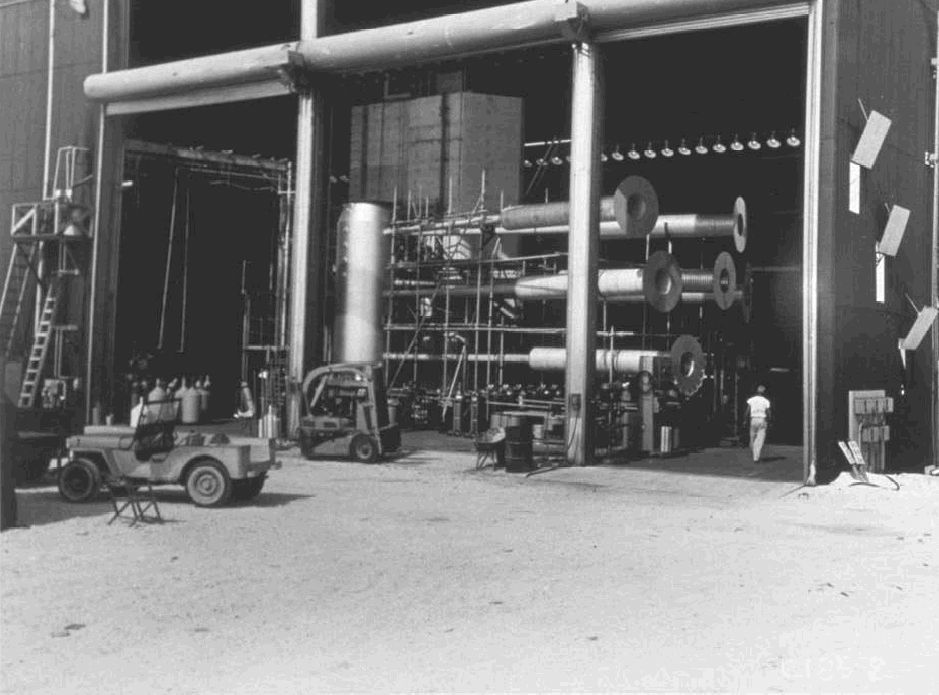
HughPickens.com writes: The atom bomb — leveler of Hiroshima and instant killer of some 80,000 people — is just a pale cousin compared to the hydrogen bomb, which easily packs the punch of a thousand Hiroshimas. That is why Washington has for decades done everything in its power to keep the details of its design out of the public domain. Now William J. Broad reports in the NY Times that Kenneth W. Ford has defied a federal order to cut material from his new book that the government says teems with thermonuclear secrets. Ford says he included the disputed material because it had already been disclosed elsewhere and helped him paint a fuller picture of an important chapter of American history. But after he volunteered the manuscript for a security review, federal officials told him to remove about 10 percent of the text, or roughly 5,000 words. "They wanted to eviscerate the book," says Ford. "My first thought was, 'This is so ridiculous I won't even respond.'" For instance, the federal agency wanted him to strike a reference to the size of the first hydrogen test device — its base was seven feet wide and 20 feet high. Dr. Ford responded that public photographs of the device, with men, jeeps and a forklift nearby, gave a scale of comparison that clearly revealed its overall dimensions.
Though difficult to make, hydrogen bombs are attractive to nations and militaries because their fuel is relatively cheap. Inside a thick metal casing, the weapon relies on a small atom bomb that works like a match to ignite the hydrogen fuel. Today, Britain, China, France, Russia and the United States are the only declared members of the thermonuclear club, each possessing hundreds or thousands of hydrogen bombs. Military experts suspect that Israel has dozens of hydrogen bombs. India, Pakistan and North Korea are seen as interested in acquiring the potent weapon. The big secret the book discusses is thermal equilibrium, the discovery that the temperature of the hydrogen fuel and the radiation could match each other during the explosion (PDF). World Scientific, a publisher in Singapore, recently made Dr. Ford's book public in electronic form, with print versions to follow. Ford remains convinced the book "contains nothing whatsoever whose dissemination could, by any stretch of the imagination, damage the United States or help a country that is trying to build a hydrogen bomb." "Were I to follow all — or even most — of your suggestions," says Ford, "it would destroy the book."
Though difficult to make, hydrogen bombs are attractive to nations and militaries because their fuel is relatively cheap. Inside a thick metal casing, the weapon relies on a small atom bomb that works like a match to ignite the hydrogen fuel. Today, Britain, China, France, Russia and the United States are the only declared members of the thermonuclear club, each possessing hundreds or thousands of hydrogen bombs. Military experts suspect that Israel has dozens of hydrogen bombs. India, Pakistan and North Korea are seen as interested in acquiring the potent weapon. The big secret the book discusses is thermal equilibrium, the discovery that the temperature of the hydrogen fuel and the radiation could match each other during the explosion (PDF). World Scientific, a publisher in Singapore, recently made Dr. Ford's book public in electronic form, with print versions to follow. Ford remains convinced the book "contains nothing whatsoever whose dissemination could, by any stretch of the imagination, damage the United States or help a country that is trying to build a hydrogen bomb." "Were I to follow all — or even most — of your suggestions," says Ford, "it would destroy the book."
when people try and censor stuff that is already public. We see it here, we see it with snowden (im not talking classified stuff) but if this person got the information without looking at classified materials, who do they think they are to tell him to not publish?
have you seen my sig? there are many others like it but none that are the same
The problem isn't the bureaucrats in question, rather the culture of fear and secrecy in which our government had steeped these last several decades. This problem needs to be addressed at its cultural roots, starting with your family and friends -- Tell them fear will do infinitely more harm than the things we're, as a society, afraid of.
If video games influenced behavior the Pac Man generation would be eating pills and running away from their problems.
they already have access to FAR better instructions than this. ISIS controls whole universities, and has chemical engineers, physics doctorates, etc in their ranks. Abu Malik may be dead, but there are many others we don't know about.
What kind of small, hateful person says "women, children, and other civilians" instead of "people" or "civilians"?
How fucked do you have to be to value the life of one person more than another because of their sex or adulthood?
So, the take away from this is... what? Any author gets to decide what information does or does not constitute a breach of national security based on what the effect of its deletion on their book sales would be? I for one would sleep more soundly knowing that that information wasn't in his book than I would knowing he was going to get a big fat royalty check.
The take away is that the first amendment exists.
No, it's not.
In addition, our Constitution lets the author make that decision, not the government. We have a whole theory concerning "prior restraint" that cannot simply be tossed away because "why make it any easier for a would-be terrorist bomb maker to find it and make use of it." You only get to challenge the author for allegedly disclosing critical secrets after they're published. That helpfully prevents the government from suppressing embarrasing, non-secret information by fiat.
"U.S murdered"
No. Killing the enemy is not murder.
Actually one seriously has to question how much Truman knew about what he was authorizing, and what was Groves and his ilk overstepping their bounds. Truman's diary has repeated mentions that he doesn't think it should be used against civilians, and people who he talked to at the time reported similar.
(Truman's first public statement after the bomb was dropped, said while the second bomb was being dropped on Nagasaki).
The next day, Truman receives the first reports and photographs related to the bombings, and the scale of what was done becomes clear.
.
One really has to question what sort of information Truman was given and what exactly he thought he was authorizing. Hiroshima was anything *but* a military base. It was one of the least militarized cities in Japan, which is why it had been so little touched by conventional bombings. Its war industries were on the periphery and were little damaged by the explosion. Groves' targeting committee prioritized it precisely for the reason that it would visibly kill so many people and because it was largely untouched thusfar; the committee ruled out purely military targets (what Truman actually wanted) as they didn't consider them to be showy enough as demonstrations of the weapon's power.
Truman's underlings were mixed on the subject of the bomb as well. Bard (undersecretary of the navy), for example, was adimant that the US should not use the bomb on cities. He thought it not only morally abhorrent, but totally unnecessary, as he and many others felt Japan was already on the verge of surrender (the post war Strategic Bombing Survey would later back him up on this point).
But, it ended as it ended.
"TAMS shouldn't be destroyed. They should just tag us before releasing us into the wild." -- Maeglin
Many feel the Japanese would have surrendered anyhow.
I call BS. Before the atomic bombs, Japan's strategy was to basically arm every citizen and make the invasion of the mainland such a bloody, costly quagmire for the Allies that they would negotiate favorable peace terms. Even the Wikipedia article on Surrender of Japan has a deeper understanding of the issue than whatever you're making up. Even after Hiroshima, the Supreme Council voted against surrender. They thought that maybe the U.S. only had one bomb, or that it lacked the will power to use it again. After Nagasaki (and the Soviet invasion), the Supreme Council still didn't want to surrender, so they tortured a captured U.S. P-51 pilot, and he told them that the U.S. had at least 100 atomic bombs (he was lying). But the cabinet still split on whether to surrender. It took the emperor basically begging the cabinet, for the sake of the millions who were about to be slaughtered, to persuade them to vote in favor of surrender.
Modern navel-gazing revisionist historians really don't appreciate how truly warlike and blood-soaked the entire Japanese culture was before 1945. They were obsessed with killing and torture. The Japanese surrender and subsequent disarmament fundamentally transformed the entire nation.
Today's Sesame Street was brought to you by the number e.
Yeah, we used the Bomb, twice, against an enemy that fought tenaciously, and far beyond any reasonable chance of victory. The death toll, while still horrific, was a tiny fraction of the alternative.
Have you ever heard of Operation Downfall? It was the planned invasion of the Japanese homeland. The basic gist was to, ultimately, march into Tokyo and dictate surrender terms to Emperor Hirohito, personally. The planned amphibious landings were double the size of D-Day, and would have extended the war well into 1946, with casualty estimates into the millions. Additionally, the Japanese defensive plan (Operation Ketsugo) called for the all-out mobilization of the civilian population.
"one of the least" != "no military component". You're absolutely correct that "There was no such thing as a non-militarized city in Japan at the time". Hiroshima had been a city that refugees had been fleeing to. It is simply true that for its size it was one of the least militarized cities in Japan at that time.
In something that's rather sickening, and one *hopes* was accidental but suspects that it wasn't, the US had been leafletting Japan in the weeks leading up to the atomic bombings, warning them to evacuate "Otaru, Akita, Hachinohe, Fukushima, Urawa, Takayama, Iwakuni, Tottori, Imabari, Yawata, Miyakonojo, and Saga" There was no mention of Hiroshima or Nagasaki. Anyone who listened to the US leaflets walked into the bomb zone.
Byrnes (claimed source of your quote) was an atomic bomb radical within the government. He wanted to threaten to bomb the Russians to get better success in the postwar negotiations too. But if you search for your quote online you'll find only half a dozen hits. It appears to be an urban legend. Claims that "The US leadership also feared the planned invasion of Japan by the Soviet Union" are somewhat true. The US had been trying for a long time to get the Soviet Union involved, but started having misgivings. Various people were concerned to varying degrees about the potential of Soviet involvement.
You're free to disagree with the US military's own postwar analysis of the Japan situation (the Strategic Bombing Survey). But that would be what most people would call "revisionist history".
The fact that there was a coup attempt after the emperor tried to surrender just drives home how little effect the atomic bombings had. The War Cabinet had steadily been shifting more to the side of the doves but was split down the middle, three-three on whether to accept an unconditional surrender. The emperor had been working in secret to negotiate an unconditional surrender, including making preparations to send his son to offer it, but had been delayed by Potsdam. After the atomic bombing of Hiroshima, there was literally no change in the view of any of the members of the War Cabinet, it remained a three-three split. The hawks considered it just another entry in the list of horrors that Japan was experiencing. The Potsdam declaration had been made just two weeks earlier. There hadn't been an imperial conference since the Potsdam Declaration to discuss it. The Imperial Conference on the 9th-10th. It was at this conference that the emperor made clear that he had wanted to accept the Potsdam terms. But it is clearly documented that he already had by that time supported accepting the Potsdam terms, even before the bombing.
"TAMS shouldn't be destroyed. They should just tag us before releasing us into the wild." -- Maeglin
Two things:
1. One night of fire bombing in Tokyo killed more people and did more damage than the atomic attack on Hiroshima did. The difference was it took an armada of bombers to do it, rather than just one plane with one package to drop off.
2. Truman wasn't just looking to end this war, but prevent the next conflict that was already brewing up - one with the Soviets. By showing Stalin that he was not only incredibly vulnerable to an attack that he couldn't bog down by throwing millions of people at like he did with the Nazis, and that the person on the other side was capable of using that kind of weapon, that war never came.
Was dropping those two bombs the right decision? Maybe, maybe not. However, it is world history, and seeing the devastation of two cities from these comparatively small weapons compared to what the 1950s and 1960s brought, it might have brought pause to anyone looking to use them later in the coldest days of the cold war.
Slashdot still doesnâ(TM)t support Unicode after it was added to the HTML standard in 1997.