 Slashdot Mirror
Code.org Disses Wolfram Language, Touts Apple's Swift Playgrounds (edsurge.com)
America is changing the way it teaches computer science. "There are now 31 states that allow CS to count towards high school graduation," according to an announcement this week by the White House, while a new Advance Placement course "will be offered in more than 2,000 U.S. classrooms this fall...the largest course launch in the history of the AP exam."
But what's the best way to teach coding? theodp reports: Tech-backed Code.org, one of the leaders of the new CSforAll Consortium that was announced at the White House on Wednesday, took to its blog Thursday to say "Thanks, Tim [Cook], for supporting the effort to give every student the opportunity to learn computer science," giving a shout out to Apple for providing "resources for teachers who want to put Swift Playgrounds in their classrooms. (A day earlier, the White House said Apple developed Swift Playgrounds "in support of the President's call to action" for CS for All).
Curiously, Code.org CEO Hadi Partovi argued Friday that "the Wolfram Language has serious shortcomings for broad educational use" in an EdSurge op-ed that was called a "response to a recent blog post by Stephen Wolfram" on Wolfram's ambitious plan to teach computational thinking in schools. Partovi's complaints? "It requires login for all but the simplest use cases, but doesn't provide any privacy safeguards for young children (required in the U.S. through legislation such as COPPA). Also, a serious user would need to pay for usage, making implementation inaccessible in most schools. Lastly, it's a bit difficult to use by students who struggle with English reading or writing, such as English language learners or early elementary school students."
The submission ultimately asks how should computer science be taught to teenagers. "Would you be inclined to embrace Wolfram's approach, Apple's Swift Playgrounds, Microsoft TEALS' Java-centric AP CS curriculum, or something else (e.g., R, Tableau, Excel+VBA)?"
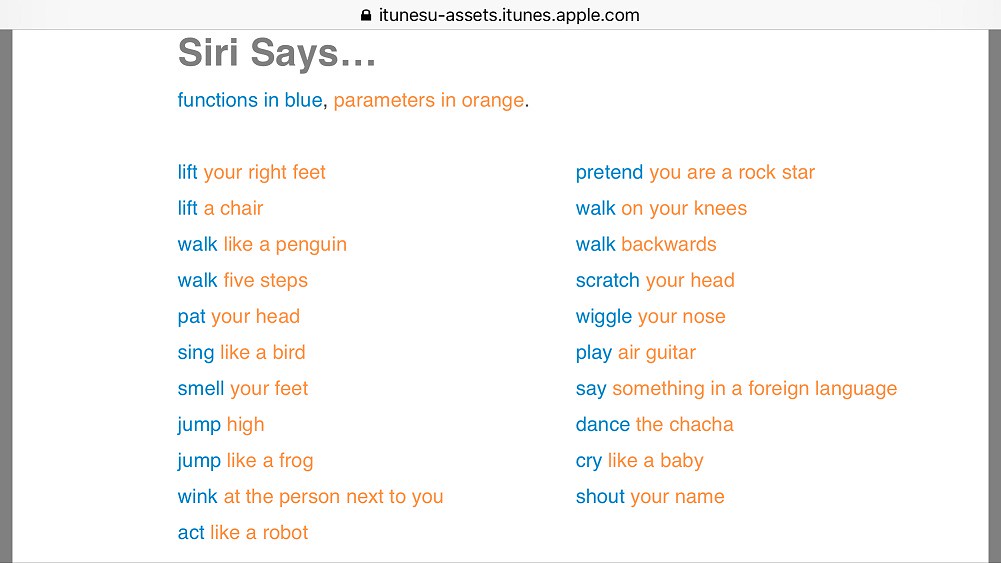
Curiously, Code.org CEO Hadi Partovi argued Friday that "the Wolfram Language has serious shortcomings for broad educational use" in an EdSurge op-ed that was called a "response to a recent blog post by Stephen Wolfram" on Wolfram's ambitious plan to teach computational thinking in schools. Partovi's complaints? "It requires login for all but the simplest use cases, but doesn't provide any privacy safeguards for young children (required in the U.S. through legislation such as COPPA). Also, a serious user would need to pay for usage, making implementation inaccessible in most schools. Lastly, it's a bit difficult to use by students who struggle with English reading or writing, such as English language learners or early elementary school students."
The submission ultimately asks how should computer science be taught to teenagers. "Would you be inclined to embrace Wolfram's approach, Apple's Swift Playgrounds, Microsoft TEALS' Java-centric AP CS curriculum, or something else (e.g., R, Tableau, Excel+VBA)?"
If you want to program in Mathematica, you have to buy it. Most use is geared towards annual fee. There is no open source version of Mathematica. This greatly limits its appeal, regardless of the languages merits.
Some coding can be, but even that should be limited to those that really want it. It is not even remotely similar to reading, writing and basic math. Most people do not need coding, will never be any good at it and trying to tech it to them is a complete waste of time. Might as well teach bridge building or how to sew up a cut to everybody. Sounds stupid? That is because it is.
Some things are jobs for specialists that have the aptitude for it, because anybody else will never be any good at it. Coding is such a thing. CS even more so.
Most ACs are not even worth the keystrokes to insult them. Be generically insulted by this and ignored otherwise.
Wolfram should not be considered as a starting language worthy of being taught to entry-level students OR considered to be a mission-critical language until there's an open source version of it. As long as the language remains a monopoly, it is useless for all intents and purposes. Having finally transitioned to a fully open architecture for apps, what LOON wants to go back to the proprietary lock-in days? Next thing you know people will be trying to run their businesses with copy-protected diskettes and God help them when they wear out.
Choose none of those named above, nor any other proprietary language or platform. It is quite incredible and irresponsible that someone would recommend bringing up children into a form of corporate mental slavery and proprietary dependency.
Give your children freedom. There is no shortage of unencumbered free and open source programming languages that will serve their educational needs very well indeed. Once they are young adults armed with some knowledge and experience, they can choose their own proprietary chains if they so wish.
"The question of whether machines can think is no more interesting than [] whether submarines can swim" - Dijkstra
I normally never answer Slashdot questions, but I feel the urge to answer this one.
What would I teach? C.
You heard me. C.
As you may have guessed, I learned to ride a bicycle without ever having training wheels. The first language I learned was C. Kids should learn C. The ones that can't should never be programmers. The ones that can will be able to handle any high level language ever invented, including whatever wankery the Apples and Googles of the world come up with next. Teach them C. At the command line. All else is puffery.
I also feel obliged to respond to the blithering idiocy of the Code.org CEO. Early elementary students? Wtf are you babbling about you drooling moron? Coding has prerequisites. A student who wishes to learn code must read and write at least one natural language well and must know not only arithmetic but also elementary algebra. A student's first coding class will teach Boolean algebra. The combination of those three things is what coding is. Written language combining Boolean logic with algebraic equations. If you're not doing that, you're not coding.
Computer science is no more about computers than astronomy is about telescopes.
-- Commonly attributed to Edsger Dijkstra.
Most people do not need coding, will never be any good at it
Actually that is very, very wrong. Most people DO need coding.
Yes they are bad at it, but look how useful just knowing how to work excel is to tons of people.
Also over time, look how many personal database products have come and gone... in their time, each of those was very, very useful to a lot of people that did no other programming.
Each of those classes of products can do amazing things even in the hands of people who stumble around computer operating systems.
That's why learning some basics of programming is a really good idea for everyone, because everyone really can benefit from knowing some simple programming concepts in conjunction with task-dedicated tools. Even just for hobby, or home finance use.
Most people will not be doing programming with general purpose languages as we know it, but on the other hand those that are good at it may never discover they enjoy it if we don't try to teach it to everyone, and the value one good coder can bring is so substantial over a lifetime it's worth testing 1000 people to find - and in the meantime the other 1000 trying it out may learn basics that help them in other ways.
"There is more worth loving than we have strength to love." - Brian Jay Stanley
No they didn't. I was around at the time and it was like being a phlebotomist or a help desk technician today. Short vocational training and they let you loose to do your job. Because all three were rote tasks and required zero creativity.
HBI's Law: Frequency of calling others Nazis is directly correlated with the likelihood of the accuser being Communist.