 Slashdot Mirror
New MH370 Analysis Again Suggests Plane Came Down Outside Search Area (theregister.co.uk)
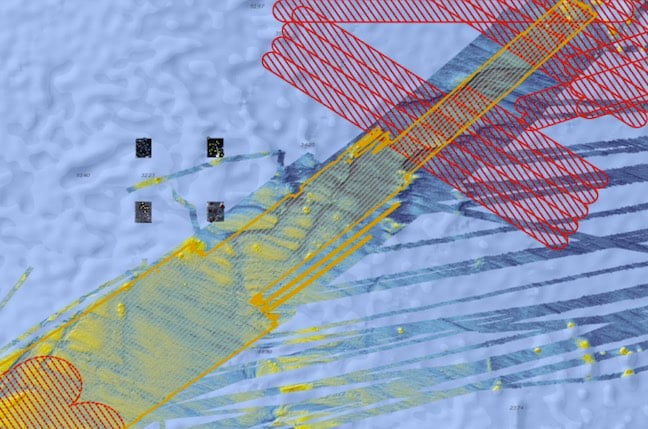
An anonymous reader shares a report: New analysis of images thought to depict wreckage from missing Malaysian Airlines flight MH 370 suggest the Boeing 777 came down to the north of the area searched during efforts to find the plane. A new document [PDF] released yesterday by Geoscience Australia (GA) detailed analysis of four images captured by the PLEIADES 1A Earth-imaging satellite on March 23rd, 2014, not long after the March 8th disappearance of the plane. The images were provided to GA by the French Ministry of Defence. The images depict an area to the north and east of the area searched by underwater survey, and in-between areas where search and rescue operations were conducted in the wake of the plane's disappearance. The image displays the areas covered by underwater survey in yellow and the search and rescue zones in red. Extensive manual analysis of the images -- there was not enough data to use machine learning -- yielded a dozen objects that researchers were happy to classify as "probably not natural." Several of those objects were clustered in the northern parts of the areas depicted in the photos. The document is at pains to point out that it is not possible to identify the objects as airplane debris. The new analysis referred back to drift pattern analysis made on debris known to have come from MH370 and released in December 2016. That analysis suggested the search area be extended by 25,000km2. More detailed drift analysis released in April 2017 also called for a new search to the north, as did a July talk by scientists from Australia's Commonwealth Scientific and Industrial Research Organisation.
I find it very surprising that the black boxes in airplanes don't communicate with a satellite in this day and age. The technology has been around for 30 years at this point.
Mike @ The Geek Pub. Let's Make Stuff!
The problem isn't that they searched in the wrong place. (They searched in the areas that were most likely where the plane came down with the info they had at the time.)
The article is about how computer analysis shows the wreckage to be potentially elsewhere but the government won't fund another search
Aside from the cost it will still be difficult to find the wreckage as the black box beacons are long dead and even if they do find the wreckage after all this time there won't be much to salvage or to reconstruct what possibly happened aside from the data recorders.
It's up to private salvage teams at this point.