Slashdot Mirror


New MH370 Analysis Again Suggests Plane Came Down Outside Search Area (theregister.co.uk)

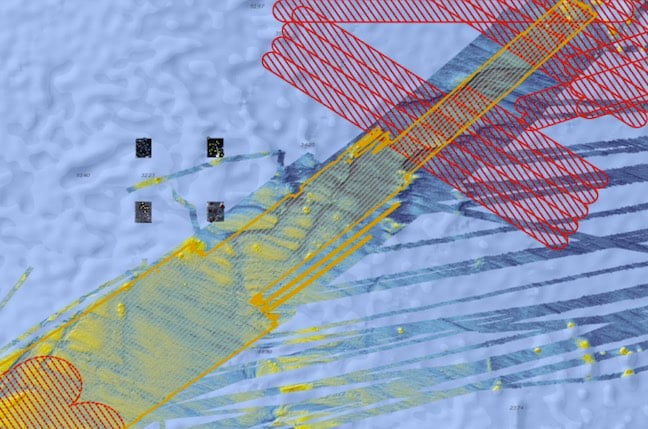
An anonymous reader shares a report: New analysis of images thought to depict wreckage from missing Malaysian Airlines flight MH 370 suggest the Boeing 777 came down to the north of the area searched during efforts to find the plane. A new document [PDF] released yesterday by Geoscience Australia (GA) detailed analysis of four images captured by the PLEIADES 1A Earth-imaging satellite on March 23rd, 2014, not long after the March 8th disappearance of the plane. The images were provided to GA by the French Ministry of Defence. The images depict an area to the north and east of the area searched by underwater survey, and in-between areas where search and rescue operations were conducted in the wake of the plane's disappearance. The image displays the areas covered by underwater survey in yellow and the search and rescue zones in red. Extensive manual analysis of the images -- there was not enough data to use machine learning -- yielded a dozen objects that researchers were happy to classify as "probably not natural." Several of those objects were clustered in the northern parts of the areas depicted in the photos. The document is at pains to point out that it is not possible to identify the objects as airplane debris. The new analysis referred back to drift pattern analysis made on debris known to have come from MH370 and released in December 2016. That analysis suggested the search area be extended by 25,000km2. More detailed drift analysis released in April 2017 also called for a new search to the north, as did a July talk by scientists from Australia's Commonwealth Scientific and Industrial Research Organisation.
53 of 88 comments (clear)

  1. Black Box satellite Links by MikeDataLink · · Score: 4, Insightful

    I find it very surprising that the black boxes in airplanes don't communicate with a satellite in this day and age. The technology has been around for 30 years at this point.

    --
    Mike @ The Geek Pub. Let's Make Stuff!
    1. Re:Black Box satellite Links by Tablizer · · Score: 1

      It just needs to try to communicate, period, whether it's with satellites or gerbils. If it kept sending a signal for long enough, then it could have been picked up.

      And a backup to that could be to gradually leak micro-beads with a distinct chemical signature that would float to the top to leave a trail. That way if the broadcasting electronics are damaged, there is a secondary way to find sunken planes.

    2. Re:Black Box satellite Links by MikeDataLink · · Score: 1

      I have a telescope and have observed numerous satellite's up to and including the International Space station. It's fun. But I don't see that's relative to the OP.

      --
      Mike @ The Geek Pub. Let's Make Stuff!
    3. Re:Black Box satellite Links by pz · · Score: 2

      We know as much as we do about the flight path and probable whereabouts of the airframe because various parts of the plane were indeed communicating via satellite.

      A secondary, and perhaps surprising (at least it was to me) issue is that satellite coverage isn't universal. There are large parts of the world, including the Indian Ocean, that have very poor coverage. It's not unlike cell phone towers which are only deployed where they are most needed.

      --

      Put my fist through my alarm clock with its ding-dong death inside my ear. - The Blackjacks.
    4. Re:Black Box satellite Links by FaxeTheCat · · Score: 2

      Satelite communication use very high frequencies, which are attenuated by pretty much everything.
      Considering that the black box most likely is not in the open air with clear path to a satelite, the chance of its signals reaching the satelite are pretty slim.
      In the case of MH370, the black box is under water, so the signal would most likely not even reach the surface.

      Historically, there are very few cases where the black boxes have not been found, so there is little reason to change how it is tracked.

    5. Re:Black Box satellite Links by MikeDataLink · · Score: 2

      Considering that the black box most likely is not in the open air with clear path to a satelite, the chance of its signals reaching the satelite are pretty slim.

      Agreed, but if the plane was transmitting GPS coordinates up until the box went under water, we'd know exactly where it was and where to look for it.

      --
      Mike @ The Geek Pub. Let's Make Stuff!
    6. Re:Black Box satellite Links by MikeDataLink · · Score: 1

      Communicating with satellites from the bottom of the sea would take a lot of power.

      Agreed, but if the plane was transmitting GPS coordinates up until the box went under water, we'd know exactly where it was and where to look for it.

      --
      Mike @ The Geek Pub. Let's Make Stuff!
    7. Re:Black Box satellite Links by Registered+Coward+v2 · · Score: 1

      I find it very surprising that the black boxes in airplanes don't communicate with a satellite in this day and age. The technology has been around for 30 years at this point.

      I would guess making a black box that could survive a crash and still have antennas that can communicate with a satelite despite being underwater or buried in debris would be a bit of a challenge.

      --
      I'm a consultant - I convert gibberish into cash-flow.
    8. Re:Black Box satellite Links by MikeDataLink · · Score: 1

      I would guess making a black box that could survive a crash and still have antennas that can communicate with a satelite despite being underwater or buried in debris would be a bit of a challenge.

      It doesn't have to. It just has to transmit them up until splashdown.

      --
      Mike @ The Geek Pub. Let's Make Stuff!
    9. Re:Black Box satellite Links by Sarten-X · · Score: 1

      Why bother with a telescope? In an area with little light pollution, you can see many satellites with the naked eye.

      --
      You do not have a moral or legal right to do absolutely anything you want.
    10. Re:Black Box satellite Links by FaxeTheCat · · Score: 1

      But that would not be done by the black box.

      There were discussions around tracking airplanes after the disappearance, and the simple answer was that while technically possible,the airlines had found it to be too expensive. As another poster has noted, satelite communication cost money.

    11. Re:Black Box satellite Links by jandrese · · Score: 2

      The service is available, but operating satellites costs money so the service costs money and cheapskate airlines don't like paying for a service they'll use only once in a blue moon. If planes were being regularly lost in the ocean this would probably be an easier case to make, but modern aircraft are so damn reliable that the expense is "wasted" most years.

      I'd definitely advocate for this system for bush pilots and other such people who operate small aircraft over rugged terrain regularly, but they tend to be even more cost conscious than big airlines.

      --

      I read the internet for the articles.
    12. Re:Black Box satellite Links by jandrese · · Score: 2

      It depends on the satellite system in question. The Inmarsat service MH370 was using has good coverage on the Indian ocean. Other services do have spotty coverage, but it's not some big dead zone. It's a shame Iridium is so damn expensive, because this would be a great use case for it. You could easily cram a position report into a SMS message and send it via Iridium every few minutes, and the Iridium antennas are small and low power so they don't impact the aircraft much.

      --

      I read the internet for the articles.
    13. Re:Black Box satellite Links by Anubis+IV · · Score: 4, Informative

      And a backup to that could be to gradually leak micro-beads with a distinct chemical signature that would float to the top to leave a trail. That way if the broadcasting electronics are damaged, there is a secondary way to find sunken planes.

      Modern black boxes are already designed to emit an ultrasonic pulse that can be picked up via acoustic locating equipment. It starts once the black box hits the water, occurs once per second for the next 30-40 days, and should be able to be picked up from 2000-3000m away under typical conditions, or even further if the conditions are good. Even so, most regulatory agencies are already bumping the battery life up, just because 30 days was viewed as too few after MH370.

      Really, when you get down to it, our society's record for locating black boxes is remarkably good. Since the 1960s when they were introduced, we've had thousands of crashes, many of which would have involved recovering the black box, yet we've only failed to do so—or took a long time to do so—in a few dozen of those cases (here's an incomplete list). As such, there hasn't been much pressure to rely on a satellite uplink or similar system, given that they're significantly more expensive to produce, much more complex (more parts that can fail), and most of them would require ongoing support and maintenance costs (e.g. something on the ground that collects the data).

      Even so, the UN's regulatory agency that covers this stuff (the ICAO) has already mandated that by 2020, all new planes are required to have some method to ensure that the black box data is recoverable in case of a crash, whether by ejecting the box before the crash (like military craft) or through continuous transmission to the ground over the course of the flight, so these sorts of issues will hopefully be things of the past in a few more years.

    14. Re:Black Box satellite Links by bobbied · · Score: 2

      Considering that the black box most likely is not in the open air with clear path to a satelite, the chance of its signals reaching the satelite are pretty slim.

      Agreed, but if the plane was transmitting GPS coordinates up until the box went under water, we'd know exactly where it was and where to look for it.

      They actually have this ability now, it's part of the maintenance system, where failures and exception logs get forwarded to the airline/manufacturer while the aircraft is in flight so the mechanics can be ready to repair the systems at it's destination. The airline though, hadn't paid the subscription fees to get the maintenance data forwarded via satellite so we don't have this data.

      --
      "File to fit, pound to insert, paint to match" - Aircraft Maintenance 101
    15. Re:Black Box satellite Links by sexconker · · Score: 1

      Even with light pollution, I can regularly see a satellite in broad daylight. Good ol' Luna.

    16. Re:Black Box satellite Links by tlhIngan · · Score: 1

      I would guess making a black box that could survive a crash and still have antennas that can communicate with a satelite despite being underwater or buried in debris would be a bit of a challenge.

      They make external black boxes - as in black boxes that affix to the fuselage. If the plane crashes into a body of water, the black box will eject from the housing, float up and then send out an emergency beacon (which these days at the universal SAR at 406MHz means SAR can get notified and GPS coordinates within minutes). It can then be retrieved and the data extracted.

      They're called deployable black boxes.

    17. Re:Black Box satellite Links by Neuronwelder · · Score: 1

      It a very great idea. But radio waves can't pass through seawater. Maybe you can devise a way to make the box itself, come up to the surface after an accident?? (if it doesn't get snagged on something.)

    18. Re:Black Box satellite Links by MikeDataLink · · Score: 1

      Again, it doesn't have to. It just has to transmit GPS coordinates up until splashdown.

      --
      Mike @ The Geek Pub. Let's Make Stuff!
    19. Re:Black Box satellite Links by Anonymous Coward · · Score: 2, Funny

      Go back to grammar school. You don't advocate "for" something. That is illiterate. You just advocate something. Same as "recommend".

      Well someone better tell the Harvard Business Review then: How Not to Advocate for a Woman at Work.

      Or, you know, language... fluid... evolve....

      Begone! Back to Charlottesville, you nazi!

    20. Re:Black Box satellite Links by bobbied · · Score: 1

      I find it very surprising that the black boxes in airplanes don't communicate with a satellite in this day and age. The technology has been around for 30 years at this point.

      The "black" orange boxes don't and likely won't ever do this, but the maintenance systems can and do transmit flight parameters and avionics faults to maintenance personal via satellite links while aircraft are in flight. This is an optional subscription service for most large commercial aircraft. It has been used in the past to help find crashed aircraft and diagnose the cause of the accident. However, in this case, the airline hadn't subscribed to the service, so the data wasn't being sent.

      Also, there is a movement to create data logging to be sent to the ground for safe keeping for both CVR and FDR data, to also include video/pictures in near real time monitoring to detect high jacking and other issues. However, most of this stuff is conceptual and requires large amounts of bandwidth and ground storage.

      --
      "File to fit, pound to insert, paint to match" - Aircraft Maintenance 101
    21. Re:Black Box satellite Links by mikael · · Score: 1

      The airplane engines did send diagnostics to the manufacturer. But the cost of maintaining an a "always on" link with a satellite was decided to be too expensive. The aircraft engines sent out messages when they start, reach cruising speed and stopped. It was only when they stopped that the final message was received and the flight path into the ocean was determined. This matched some of the flights that the pilot made with his home flight simulator.

      --
      Vintage computer adverts: http://www.vintageadbrowser.com/computers-and-software-ads
    22. Re:Black Box satellite Links by rtb61 · · Score: 1

      I find it strange that anybody would accept a passenger jet crashing in the sea and only a couple of bits are found (those bits smashed from the plane), yet nothing else, no life jackets, no oil slick, nothing, uh huh yeah sure (those couple of bits just indicative of the rest having been cleaned up, two bits that would float low and perpendicular to the surface thus very hard to see). Look around Diego Garcia and you probably have a much better chance of finding the wreckage, the stuff that wasn't cleaned up.

      --
      Chaos - everything, everywhere, everywhen
    23. Re:Black Box satellite Links by MrKaos · · Score: 1

      Communicating with satellites from the bottom of the sea would take a lot of power.

      Agreed, but if the plane was transmitting GPS coordinates up until the box went under water, we'd know exactly where it was and where to look for it.

      You've picked a really inconvenient time to use logic and reasoning as I have run out of mod points. GPS means accurate time, so that means accurate longitude and latitude could be transmitted as well. It would all fit in about 140 bytes (like a plane making a tweet) and with a frequency of 1 per minute a plane traveling at 800kph would have a search area of roughly 14kms and there is no reason a plane in distress could increase the frequency of its positional tweets to reduce the search area.

      The only question is why aren't they doing this already? Even civilian GPS was accurate to 10 metres in the 90s.

      --
      My ism, it's full of beliefs.
    24. Re:Black Box satellite Links by bongey · · Score: 1

      It exists , Navy fighters like the F-18, the black box basically ejects on impact.

    25. Re:Black Box satellite Links by Anubis+IV · · Score: 1

      I'm not sure what you were trying to disagree with in what I said, but I specifically used military craft as an example, so, yes, I know it exists. I even said so.

    26. Re:Black Box satellite Links by thegreatbob · · Score: 1

      This matched some of the flights that the pilot made with his home flight simulator.

      I had long been under the impression that this was a totally dead lead, but I guess they confirmed some time last year that someone had indeed plotted similar flights on his simulator. Interesting.

      --
      There is no XUL, only WebExtensions...
    27. Re:Black Box satellite Links by Megane · · Score: 1

      The problem is that Iridium was not designed for digital data. It even pre-dates SMS. As I understand it, you would probably have to use an analog modem to send telemetry data. The next generation Iridium is still being launched over the next year or so. But what is really going to make such telemetry cheap is when LEO internet satellites get deployed.

      --
      #naabhaprzrag, #sverubfr-000, #agi-fcbafberq, negvpyr[pynff*=' negvpyr-ary-'] { qvfcynl: abar !vzcbegnag; }
    28. Re:Black Box satellite Links by jandrese · · Score: 1

      Iridium has a pure data mode. You could even attach a serial port to the early headsets via this hilariously large connector. You did have to initiate a full "call" to send the data which makes it expensive. I've seen mention of SMS with Iridium around the web, but I'm willing to believe that it is a generation 2 feature not found on the existing constellation.

      --

      I read the internet for the articles.
  2. Misleading title by the_skywise · · Score: 4, Interesting

    The problem isn't that they searched in the wrong place. (They searched in the areas that were most likely where the plane came down with the info they had at the time.)
    The article is about how computer analysis shows the wreckage to be potentially elsewhere but the government won't fund another search
    Aside from the cost it will still be difficult to find the wreckage as the black box beacons are long dead and even if they do find the wreckage after all this time there won't be much to salvage or to reconstruct what possibly happened aside from the data recorders.
    It's up to private salvage teams at this point.

    1. Re:Misleading title by arth1 · · Score: 1

      The article is about how computer analysis shows the wreckage to be potentially elsewhere but the government won't fund another search

      Unless the wreckage is believed to be a danger to the marine environment, I don't think that's a bad thing. The amount of money spent already by Malaysian and Australian authorities probably could have saved far more lives than those lost, if spent otherwise.
      If any additional searches are planned, they should, in my opinion, be funded by the airlines and/or surviving relatives.

    2. Re:Misleading title by jandrese · · Score: 4, Insightful

      The reason to do the search is to figure out what went wrong and how to prevent it from happening in the future.

      --

      I read the internet for the articles.
    3. Re:Misleading title by DarkOx · · Score: 1

      The 777 though has one of the most reliable service records of any aircraft in use. There are so many other 777s in the air that if there was a problem characteristic of the class it would be known.

      This is a case where we can pretty much assume either a truly freak accident (most likely), or foul play of some kind. There is little to gain by locating that plane other than some peace for the victims. We are well past the cost benefit tipping point of continuing the search in terms of controlling for future risks.

      --
      Repeal the 17th Amendment TODAY! Also Please Read http://www.gnu.org/philosophy/right-to-read.html
    4. Re:Misleading title by Zontar_Thing_From_Ve · · Score: 1

      Aside from the cost it will still be difficult to find the wreckage as the black box beacons are long dead and even if they do find the wreckage after all this time there won't be much to salvage or to reconstruct what possibly happened aside from the data recorders.

      That's not necessarily true. People said the same thing about Air France flight 447 but by the time they finally found it, the black boxes were in perfect working order still and they know exactly what happened to cause the crash as a result (extremely short version - pilot error caused it).

    5. Re:Misleading title by thegarbz · · Score: 1

      That was a very good reason to start the search, not a very good reason to spend as much as they have.

  3. Simulations are guesses without data by OffTheLip · · Score: 1

    What has always been missing in the search for MH370 is enough specific data to feed the simulations. Human factors or mechanical failure aren't ideal inputs. It's really a number of "best guesses".

    1. Re:Simulations are guesses without data by raburton · · Score: 3, Funny

      What has always been missing in the search for MH370 is MH370.

      Fixed that for ya ;-)

  4. Probably not natural by 93+Escort+Wagon · · Score: 2

    Given how long we've been sailing the seven seas, and given it hasn't exactly been historically uncommon for ships to sink - or, nowadays, for containers to fall off ships - identifying objects as "probably not natural" may very well not be the big red flag the authors try to imply it is.

    --
    #DeleteChrome
    1. Re:Probably not natural by Thelasko · · Score: 1

      I believe this part of the ocean does not see much shipping traffic. That's been part of the problem. There aren't any merchant ships to report debris.

      --
      One of our competitors trademarked the term "hypothesis". From now on, we will call them "boneheaded ideas".
  5. Let's Review by old_skul · · Score: 1

    A search area was established and the plane was not found in that search area.

    I don't know if I need an analysis to tell me that the plane potentially went down outside the search area.

  6. They couldn't find a sunk cruiser by jfdavis668 · · Score: 2

    The cruiser HMS Sydney was sunk in that same area during WWII with the loss of all hands. They didn't find it until 2008. If it took them that long to find a massive warship, it's going to take a while to find bits of a crashed plane.

  7. Why not? by QuietLagoon · · Score: 1

    They've searched the current search area and found nothing. The next step is to start looking in a different search area.

    1. Re:Why not? by FaxeTheCat · · Score: 1

      One important question is how much money they should spend on a search with pretty much no chance of success.

    2. Re:Why not? by MrKaos · · Score: 1

      They've searched the current search area and found nothing. The next step is to start looking in a different search area.

      It'll probably show up on google earth one day.

      --
      My ism, it's full of beliefs.
  8. Re:May never be found by FaxeTheCat · · Score: 1

    >First off, nobody has really looked at the evidence.

    Oh yes, they ahave looked at the evidence.

    All of the evidence.

    Over and over again.

    And the evidence does not give an answer.

    >Then you have dead zones basically where even today a plane cannot be accurately tracked? Really? who believes this?

    Eveybody who knows anything about the size of the area. You do not put radar towers in the middle of the ocean.

  9. Seams like a problem of the blockbox stuck in 70's by G00F · · Score: 1

    I can't help but notice that the blackbox seams to not have evolved since the 70's. With more modern tech it can be cheaper, have better batteries, use less power, and more capabilities.

    Imagine if the black box transmitted for months and the the ping consisted of not just a PING but cordinates of last known GPS.

    They cost over $1000 each, whcih seams steap for whats actually in it.

    --
    The spirit of resistance to government is so valuable on certain occasions that I wish it to be always kept alive
  10. Re:May never be found by MikeDataLink · · Score: 1

    Maybe you're not aware that numerous parts of this plane have been located. It has indeed crashed. We just don't know the location.

    --
    Mike @ The Geek Pub. Let's Make Stuff!
  11. Strongest clue by backslashdot · · Score: 1

    Not finding it might be a indicator that you looked in the wrong place Sherlock.

  12. Re:May never be found by jafiwam · · Score: 1

    It is possible there is evidence that won't be released. Military / intelligence assets that saw it before, or parts of it after it crashed. Or maybe sonar or something.

    The people's lives and knowing what happened to the plane aren't worth revealing the capabilities so nothing will be released.

  13. Ships use them... by thegreatbob · · Score: 2

    Why are aircraft not fitted with multiple impact-resistant EPIRB-like devices designed to separate from the aircraft and float to the surface? That and/or some sort of massive dye pack. Of course, a high speed impact with the water might destroy them (blackboxes can and have been destroyed by impact too), but having multiple locators on board seems like a reasonable idea. These things obviously do nothing for those who perish in an incident, but doing everything we can to obtain data on failures allows us to be better prepared in the future.

    --
    There is no XUL, only WebExtensions...
    1. Re:Ships use them... by bongey · · Score: 1

      Fighter jets already have it . The airlines don't want to pay for retrofits. http://www.thermodyne1.com/gen...

    2. Re:Ships use them... by thegreatbob · · Score: 1

      Indeed, my proposed question was somewhat rhetorical; if airlines want to shed the image of putting cost/profit at least a little bit above safety, they'll eventually figure it out. I hope. That's also pretty slick, I don't think I had ever heard of this arrangement specifically.

      --
      There is no XUL, only WebExtensions...
  14. Re:May never be found by thegreatbob · · Score: 1

    Two the plane was taken over by terrorists and eventually dove it nose first into the water. Most likely preventing a breech of main body and preventing a lot of debris from rising to surface.

    Entering the water in any way but a very controlled ditching tends to cause an effect reminiscent of a Pringles can being stomped on by an elephant.

    --
    There is no XUL, only WebExtensions...