 Slashdot Mirror
How Fracking Companies Use Facebook Surveillance To Ban Protest (vice.com)
An anonymous reader quotes a report from Motherboard: Facebook is being used by oil and gas companies to clamp-down on protest. Three companies are currently seeking injunctions against protesters: British chemical giant INEOS, which has the largest number of shale gas drilling licenses in the UK; and small UK outfits UK Oil and Gas (UKOG), and Europa Oil and Gas. Among the thousands of pages of documents submitted to British courts by these companies are hundreds of Facebook and Twitter posts from anti-fracking protesters and campaign groups, uncovered by Motherboard in partnership with investigative journalists at DeSmog UK. They show how fracking companies are using social media surveillance carried out by a private firm to strengthen their cases in court by discrediting activists using personal information to justify banning their protests.
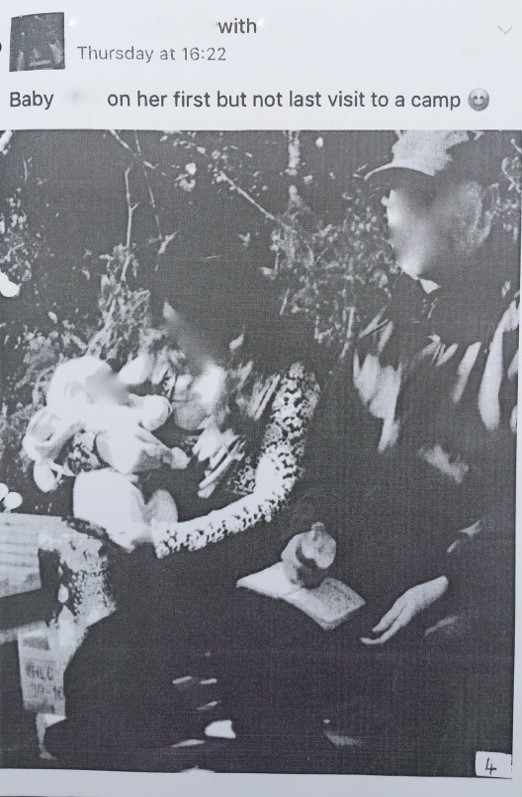
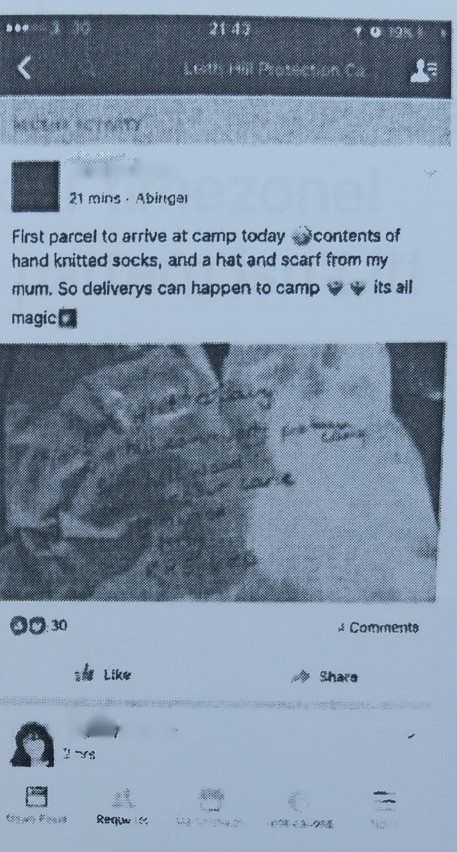
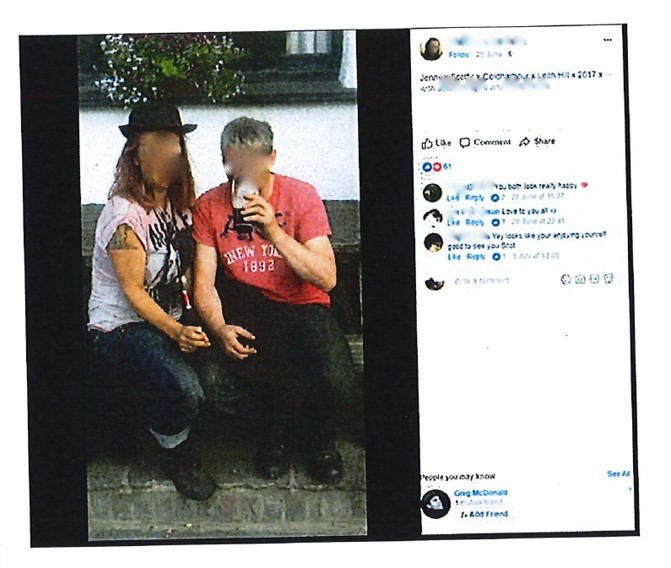
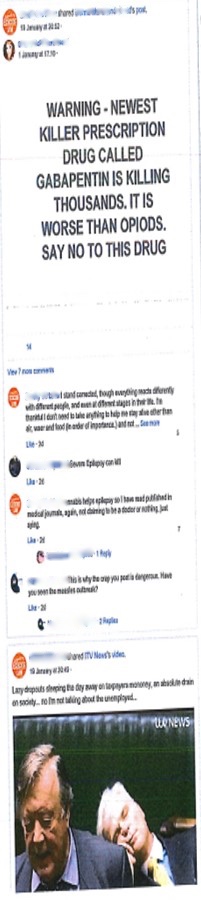
Included in the evidence supplied by the oil and gas companies to the courts are many personal or seemingly irrelevant campaigner posts. Some are from conversations on Facebook groups dedicated to particular protests or camps, while others have been captured from individuals' own profile pages. For instance, a picture of a mother with her baby at a protest was submitted as part of the Europa Oil and Gas case. Another screenshot of a post in the Europa bundle shows a hand-written note from one of the protesters' mothers accompanying a care package with hand-knitted socks that was sent to an anti-fracking camp. One post included in the UKOG hearing bundle shows two protesters sharing a pint in the sun -- not at a protest camp, nor shared on any of the campaign pages' Facebook groups. A screenshot from INEOS's hearing bundle shows posts from a protester to his own Facebook wall regarding completely unrelated issues such as prescription drugs, and a generic moan about his manager.
Included in the evidence supplied by the oil and gas companies to the courts are many personal or seemingly irrelevant campaigner posts. Some are from conversations on Facebook groups dedicated to particular protests or camps, while others have been captured from individuals' own profile pages. For instance, a picture of a mother with her baby at a protest was submitted as part of the Europa Oil and Gas case. Another screenshot of a post in the Europa bundle shows a hand-written note from one of the protesters' mothers accompanying a care package with hand-knitted socks that was sent to an anti-fracking camp. One post included in the UKOG hearing bundle shows two protesters sharing a pint in the sun -- not at a protest camp, nor shared on any of the campaign pages' Facebook groups. A screenshot from INEOS's hearing bundle shows posts from a protester to his own Facebook wall regarding completely unrelated issues such as prescription drugs, and a generic moan about his manager.
There’s a struggle going on between companies that want to drill for shale gas in the UK countryside and campaigners trying to stop them. Now, the struggle is waging online.
Revelations about how Facebook data has been used to target individuals for political ends continue to emerge. But after the Cambridge Analytica scandal of earlier this year, the story has taken an unexpected twist: Facebook is being used by oil and gas companies to clamp-down on protest.
Three companies are currently seeking injunctions against protesters: British chemical giant INEOS, which has the largest number of shale gas drilling licenses in the UK; and small UK outfits UK Oil and Gas (UKOG), and Europa Oil and Gas.
Among the thousands of pages of documents submitted to British courts by these companies are hundreds of Facebook and Twitter posts from anti-fracking protesters and campaign groups, uncovered by Motherboard in partnership with investigative journalists at DeSmog UK. They show how fracking companies are using social media surveillance carried out by a private firm to strengthen their cases in court by discrediting activists using personal information to justify banning their protests.
The material was submitted to support the companies’ case that campaigners intended to illegally disrupt their activities or trespass on their land. The companies all stress they do not seek to restrict lawful forms of protest, but argue that activists should not be allowed to unduly disrupt their lawful business activity.
Anti-fracking campaigners have described the use of injunctions to stop protest around potential fracking sites as “an unprecedented restriction on our fundamental rights.” They say the injunctions against “persons unknown” are “draconian” and “anti-democratic.”
According to the official court documents seen by Motherboard, the private security firm which conducted some of the surveillance on behalf of the oil and gas companies is Eclipse Strategic Security.
Facebook surveillance
Among the documents submitted by the oil and gas companies to the courts to justify their injunctions, there is a distinct focus on Facebook surveillance.
As a consequence of the companies including the posts in the hearing bundles, they become part of the public record, with anyone able to request access to the documents.
The documents reveal that the companies have used Facebook to engage in widespread and intrusive social media surveillance of individual campaigners and their private lives. In one witness statement on behalf of INEOS, CEO of Eclipse Raymond Fellows describes his company as having been “retained” by INEOS “to provide security services.” He tells the court that “a common tactic” by “activist individuals/organisations” is to:
“...use social media to announce a ‘call to arms’ by publicising the details of a ‘peaceful’ protest on Twitter or Facebook or their own organisation’s website.”
The resulting “mass of protestors”—many of whom are “law abiding citizens who wish to exercise their legal right to protest”—is, Fellows alleges, exploited by “a small hard core group of activists to slow the police down and to prevent them from retaining the security of a site.”
Included in the evidence supplied by the oil and gas companies to the courts are many personal or seemingly irrelevant campaigner posts.
Some are from conversations on Facebook groups dedicated to particular protests or camps, while others have been captured from individuals’ own profile pages.
For instance, a picture of a mother with her baby at a protest was submitted as part of the Europa Oil and Gas case. Another screenshot of a post in the Europa bundle shows a hand-written note from one of the protesters’ mothers accompanying a care package with hand-knitted socks that was sent to
Government and the police in 2018 now know of the "internet" and have experts who can now read along with social media.
So? How does that lead to protests being banned? TFA is just disjointed rambling that fails to identify a single protest that has been banned. I have seen 4th graders that write more coherently.
It seems to me that they are collecting data about the protesters that is not relevant to the purpose of dealing with illegal activity. This is a violation of the GDPR that says that the personal data you are processing is limited to what is necessary – you do not hold more than you need for that purpose.. It would be interesting to see the protesters make a GDPR complaint about Eclipse Strategic Security; even more interesting to see how the ICO tries to avoid doing anything about it.