 Slashdot Mirror
How Fracking Companies Use Facebook Surveillance To Ban Protest (vice.com)
An anonymous reader quotes a report from Motherboard: Facebook is being used by oil and gas companies to clamp-down on protest. Three companies are currently seeking injunctions against protesters: British chemical giant INEOS, which has the largest number of shale gas drilling licenses in the UK; and small UK outfits UK Oil and Gas (UKOG), and Europa Oil and Gas. Among the thousands of pages of documents submitted to British courts by these companies are hundreds of Facebook and Twitter posts from anti-fracking protesters and campaign groups, uncovered by Motherboard in partnership with investigative journalists at DeSmog UK. They show how fracking companies are using social media surveillance carried out by a private firm to strengthen their cases in court by discrediting activists using personal information to justify banning their protests.
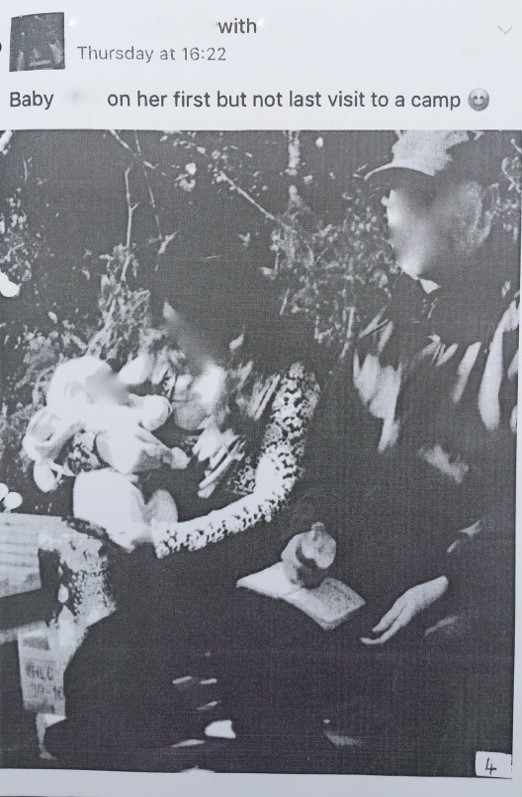
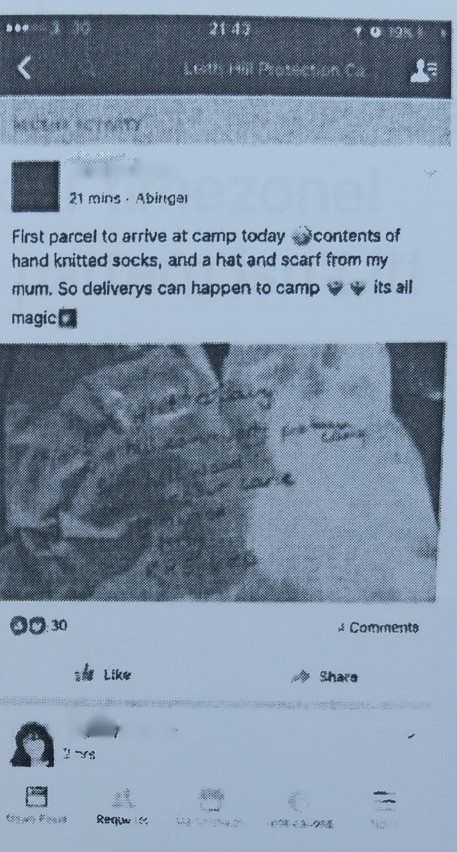
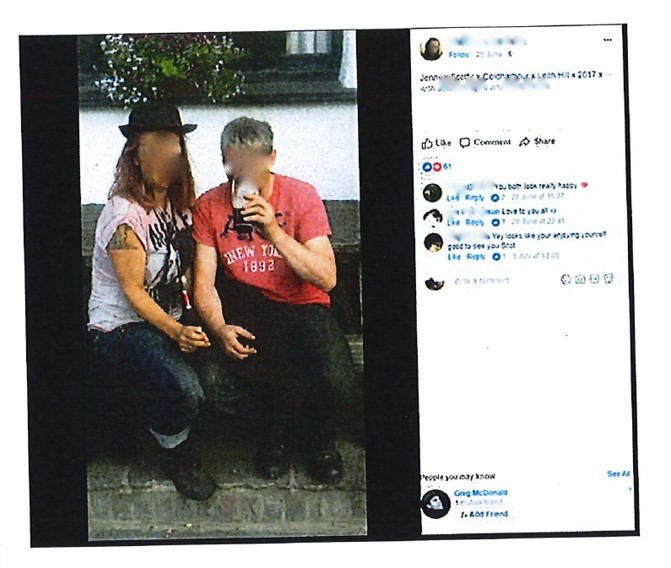
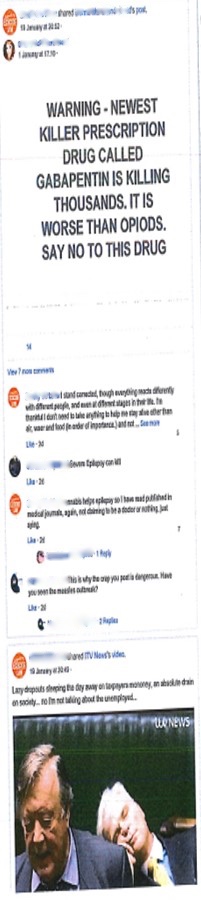
Included in the evidence supplied by the oil and gas companies to the courts are many personal or seemingly irrelevant campaigner posts. Some are from conversations on Facebook groups dedicated to particular protests or camps, while others have been captured from individuals' own profile pages. For instance, a picture of a mother with her baby at a protest was submitted as part of the Europa Oil and Gas case. Another screenshot of a post in the Europa bundle shows a hand-written note from one of the protesters' mothers accompanying a care package with hand-knitted socks that was sent to an anti-fracking camp. One post included in the UKOG hearing bundle shows two protesters sharing a pint in the sun -- not at a protest camp, nor shared on any of the campaign pages' Facebook groups. A screenshot from INEOS's hearing bundle shows posts from a protester to his own Facebook wall regarding completely unrelated issues such as prescription drugs, and a generic moan about his manager.
Included in the evidence supplied by the oil and gas companies to the courts are many personal or seemingly irrelevant campaigner posts. Some are from conversations on Facebook groups dedicated to particular protests or camps, while others have been captured from individuals' own profile pages. For instance, a picture of a mother with her baby at a protest was submitted as part of the Europa Oil and Gas case. Another screenshot of a post in the Europa bundle shows a hand-written note from one of the protesters' mothers accompanying a care package with hand-knitted socks that was sent to an anti-fracking camp. One post included in the UKOG hearing bundle shows two protesters sharing a pint in the sun -- not at a protest camp, nor shared on any of the campaign pages' Facebook groups. A screenshot from INEOS's hearing bundle shows posts from a protester to his own Facebook wall regarding completely unrelated issues such as prescription drugs, and a generic moan about his manager.
Government and the police in 2018 now know of the "internet" and have experts who can now read along with social media.
Domestic spying is now "Benign Information Gathering"
When will people learn not to share their personal information, pictures, etc on the Internet? I for one have never used the Internet, and don't plan to. Ever.
That great parts the US has about "'freedom of speech", "the right of the people peaceably to assemble", "freedom of speech", "to petition the Government" do not exist under UK tyranny.
To understand UK law study the wide and deep law changes of the 1960-90's when the UK was doing direct policing in Ireland.
Domestic spying is now "Benign Information Gathering"
There’s a struggle going on between companies that want to drill for shale gas in the UK countryside and campaigners trying to stop them. Now, the struggle is waging online.
Revelations about how Facebook data has been used to target individuals for political ends continue to emerge. But after the Cambridge Analytica scandal of earlier this year, the story has taken an unexpected twist: Facebook is being used by oil and gas companies to clamp-down on protest.
Three companies are currently seeking injunctions against protesters: British chemical giant INEOS, which has the largest number of shale gas drilling licenses in the UK; and small UK outfits UK Oil and Gas (UKOG), and Europa Oil and Gas.
Among the thousands of pages of documents submitted to British courts by these companies are hundreds of Facebook and Twitter posts from anti-fracking protesters and campaign groups, uncovered by Motherboard in partnership with investigative journalists at DeSmog UK. They show how fracking companies are using social media surveillance carried out by a private firm to strengthen their cases in court by discrediting activists using personal information to justify banning their protests.
The material was submitted to support the companies’ case that campaigners intended to illegally disrupt their activities or trespass on their land. The companies all stress they do not seek to restrict lawful forms of protest, but argue that activists should not be allowed to unduly disrupt their lawful business activity.
Anti-fracking campaigners have described the use of injunctions to stop protest around potential fracking sites as “an unprecedented restriction on our fundamental rights.” They say the injunctions against “persons unknown” are “draconian” and “anti-democratic.”
According to the official court documents seen by Motherboard, the private security firm which conducted some of the surveillance on behalf of the oil and gas companies is Eclipse Strategic Security.
Facebook surveillance
Among the documents submitted by the oil and gas companies to the courts to justify their injunctions, there is a distinct focus on Facebook surveillance.
As a consequence of the companies including the posts in the hearing bundles, they become part of the public record, with anyone able to request access to the documents.
The documents reveal that the companies have used Facebook to engage in widespread and intrusive social media surveillance of individual campaigners and their private lives. In one witness statement on behalf of INEOS, CEO of Eclipse Raymond Fellows describes his company as having been “retained” by INEOS “to provide security services.” He tells the court that “a common tactic” by “activist individuals/organisations” is to:
“...use social media to announce a ‘call to arms’ by publicising the details of a ‘peaceful’ protest on Twitter or Facebook or their own organisation’s website.”
The resulting “mass of protestors”—many of whom are “law abiding citizens who wish to exercise their legal right to protest”—is, Fellows alleges, exploited by “a small hard core group of activists to slow the police down and to prevent them from retaining the security of a site.”
Included in the evidence supplied by the oil and gas companies to the courts are many personal or seemingly irrelevant campaigner posts.
Some are from conversations on Facebook groups dedicated to particular protests or camps, while others have been captured from individuals’ own profile pages.
For instance, a picture of a mother with her baby at a protest was submitted as part of the Europa Oil and Gas case. Another screenshot of a post in the Europa bundle shows a hand-written note from one of the protesters’ mothers accompanying a care package with hand-knitted socks that was sent to
As far as I understand the problem (and the article isn't really clear), the companies collect facebook post of people in groups where protests are discussed and then files injunctions against persons unknown to stop them from trespassing private land.
This comment thread ...
... now has a second comment. Does what you wrote above still apply?
Government and the police in 2018 now know of the "internet" and have experts who can now read along with social media.
So? How does that lead to protests being banned? TFA is just disjointed rambling that fails to identify a single protest that has been banned. I have seen 4th graders that write more coherently.
how exactly are those leading to protest bans?
Basically, because many protest groups rely on skirting the law and having a large group conducting activities which are technically illegal to try to bring attention to their message, And because such a large group is involved, it is difficult to hold anyone legally responsible for the violations of the law.
The fracking operations occur on fracking sites which are located on Private Property which the Oil companies have the right to control access to, because they are plots of land owned by or leased by the company ----- Nobody has the right to protest on private property without the owner's permission, And if the owner specifically tells you ahead of time to stay off their property, and you step onto it anyways, then you've committed criminal Trespass: this is basically what they're doing to these people which is being called "banning the protest" ----- they're pre-emptively seeking a court order that says "Stay off my land,
And stay away from my driveway".
The companies claim to seek injunction because the companies believe that protestors/protest groups intend to Trespass on their property in order to hold their protestes "Around the fracking sites", Or undertake other strategies designed to disrupt their lawful business activities --- such as having pedestrians standing in or otherwise outside their property blocking, harrassing, preventing, or slowing down the ability of authorized traffic to use the property access roads or streets or driveways, Or disrupt employee/vendor/company-related trucks or other vehicles' access to their property or to harass persons/vehicles entering or leaving their private properties.
As noted in the article:
Since social media surveillance reveals the identities of many people likely to participate in such protests; the companies can go to the court and provide a List of Names and Pre-Emptively ask the courts for an Injunctive order that the named individuals Not set foot on our land, Or participate in any activity
to disrupt the business operation of one of our fracking sites.
It seems to me that they are collecting data about the protesters that is not relevant to the purpose of dealing with illegal activity. This is a violation of the GDPR that says that the personal data you are processing is limited to what is necessary – you do not hold more than you need for that purpose.. It would be interesting to see the protesters make a GDPR complaint about Eclipse Strategic Security; even more interesting to see how the ICO tries to avoid doing anything about it.
In New Zealand government departments (probably also private companies but they aren't covered by the Freedom Of Information Act) have been hiring Private Investigators to keep tabs on protest groups for ages.
This has lead to a series of embarrassing news reports about the investigation agency Thompson and Clark Investigations Limited and their links with government departments and most recently the SIS. Although I can't remember them (TCIL) specifically using Facebook, another PI did this report on how easy it was to get your Name, Age, Address, Parents, Spouse, Occupation, Children and Shopping habits using social media saying that basically money was the only limit on what information could be obtained.
I reserve the write to mangle english.
So...
A protester posts lots of information publicly on social media. Then someone else uses that to build a profile of them and to try to demonstrate that they are likely to commit trespass etc.
I fail to see why this is surprising or interesting. No-one has breached anyone's privacy. It's no different from a PI following what you do in public - like meeting your intern for a drink in a secluded wine bar - and then reporting back to parties (like your spouse) who might want to act on that information.
Hint to protesters - if you are doing something vaguely clandestine or not-entirely-legal maybe don't put your whole life on social media. Just a tip.
-----
At no time was the Army set on the Dakota Access pipeline protestors. At one point the National Guard as deputized peace officers of the state acted in a riot control operation to remove or push back the protestors. But in that role they are deputized police officers of the state not military.
There is a difference. The National Guard belongs to the State and reports to the Governor unless activated by federal orders. The Governors of the respective states can activate National Guard for various police operations and functions as was done in this case. The National Guard when operating in this role are not the Army, which is prohibited from conducting police operations inside the US.
It's the usual horseshit from Vice.
Basically the fracking companies, who to be fair are asshats, have been trying to get injunctions to stop protests. As part of this effort they have been mining the protesters' social media accounts. Their claim is that most of the people on the protest are useful idiots who were duped into attending on Facebook or something equally incoherent and ridiculous.
To establish this claim they have been submitting random memes about bad bosses and photos of people bringing their children to the (non-violent, family friendly) protests.
I think the point that Vice is trying to make is that it's both a technique favoured by trolls (quote mining, forcing the defendant to provide context and justification for posts that are edited and presented in isolation) and an attempt to confuse the famously non-tech-savvy courts. But Vice's journalism is so poor it's hard to tell, especially the ones at Motherboard.
const int one = 65536; (Silvermoon, Texture.cs)
SJW, n: "Someone I don't like, and by the way I'm a fuckwit" - AC
Since social media surveillance reveals the identities of many people likely to participate in such protests; the companies can go to the court and provide a List of Names and Pre-Emptively ask the courts for an Injunctive order that the named individuals Not set foot on our land, Or participate in any activity to disrupt the business operation of one of our fracking sites.
From TFA:
One of the most worrying things about the oil and gas companies' injunctions is that they are against "persons unknown."
That means that anyone who could reasonably expect to know about the injunctions is covered by them.
Given the wide remit of the injunctions, that could be anyone who visits the fracking sites.
This is important given Eclipse's statement to the courts that the majority of the protestors are "law abiding."
But instead of targeting alleged "hard core activists" accused of disrupting peaceful protests, the oil and gas firms' approach can justify the wholesale prohibition of protests.
INEOS has a temporary injunction in place, which is currently going through the appeal process. UKOG is due in court in early July, while Europa's injunction is currently in place.
The UK's most high profile fracking company, Cuadrilla Resources, was just granted an injunction for its site in Lancashire.
By applying for injunctions against "persons unknown," the fracking companies prevent individual protesters from being able to defend their case in court as individuals.
This potentially gives the companies a litigious advantage.
Basically, they are managing to convince the courts that though these potential protesters may be lawful, some others may be not, so let's just ban anyone from protesting right now and be done with it.
Or, to put it in American, lawyers made courts ban all guns cause while some guns may be legal, some others may not be - so let's just ban all guns and let god sort 'em out.
Mit der Dummheit kämpfen Götter selbst vergebens
Or at the most very least provide a reference to the source! Otherwise we have no clue where that lengthy rant came from, unless maybe it was linked to in the summary and any given random commentator on the slashdots happened to read the fsckn summary; otherwise, how would they know?
Vladimir is that you?
You can't be ahead of the curve, if you're stuck in a loop.
In this case it is public relations firms, private investigators and lawyers, who use what ever information is accessible to fabricate a lie about a person by selective presenting information, to scam fuckwit judges or at least give entirely corrupt judges sufficient of an excuse to let it slide on through until the next judges election time or what ever the corrupt appointment process is.
The information is shite, empty and meaningless, it is just being used by the corrupt to make claims to achieve their goals, silence the general public at all costs, so that the corruption can continue and accelerate.
Chaos - everything, everywhere, everywhen
Sort of taking the piss here but,
:)
At no time did the Russian Army invade Ukraine. At one point there were some border crossings but those people were on holiday, or had had their contracts canceled. As such they are private individuals and not members of the military.
I reserve the write to mangle english.
Actually, protests often do block people's access to their property. Some businesses give their staff time off when they know that a large demonstration is planned around their location.
There are no hard and fast rules for it. It all depends on the nature of the protest, how long the disruption lasts, how much support it has etc. Ideally you want to avoid ever having to get to the stage where people want to protest, but it's an important recourse in any democracy.
Protesting on private property tends to be seen less favourably by the law, but in this case it's mostly irrelevant anyway because they were blocking the site entrance too. They wanted them completely removed form the area, not just the private property.
const int one = 65536; (Silvermoon, Texture.cs)
SJW, n: "Someone I don't like, and by the way I'm a fuckwit" - AC
They're both groups of men with guns. Anything else is largely irrelevant, especially if you're the person the guns are pointed at.
And don't get me started about the police. Armoured personnel carriers? No, they're just enhanced protection transporters!
Confucius say, "Find worm in apple - bad. Find half a worm - worse."
Protest with your dollars. Standing around with a bunch of smelly dumb hippies or kids leads no where but a waste of time.
I object to power without constructive purpose. --Spock