Slashdot Mirror


How Fracking Companies Use Facebook Surveillance To Ban Protest (vice.com)

An anonymous reader quotes a report from Motherboard: Facebook is being used by oil and gas companies to clamp-down on protest. Three companies are currently seeking injunctions against protesters: British chemical giant INEOS, which has the largest number of shale gas drilling licenses in the UK; and small UK outfits UK Oil and Gas (UKOG), and Europa Oil and Gas. Among the thousands of pages of documents submitted to British courts by these companies are hundreds of Facebook and Twitter posts from anti-fracking protesters and campaign groups, uncovered by Motherboard in partnership with investigative journalists at DeSmog UK. They show how fracking companies are using social media surveillance carried out by a private firm to strengthen their cases in court by discrediting activists using personal information to justify banning their protests.

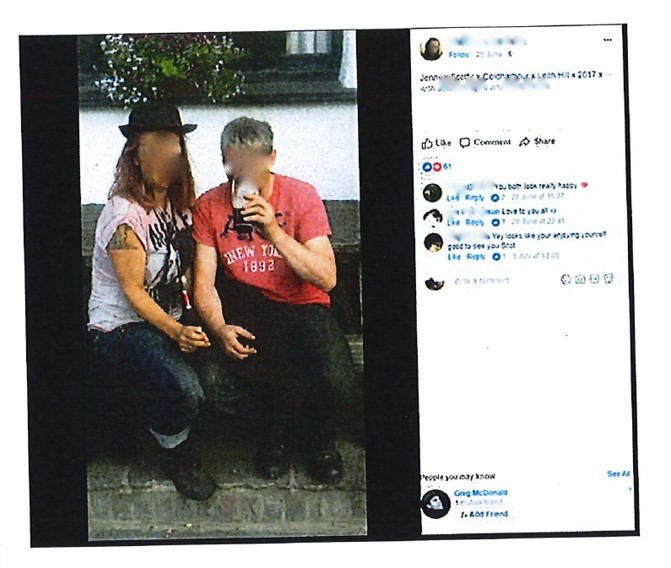
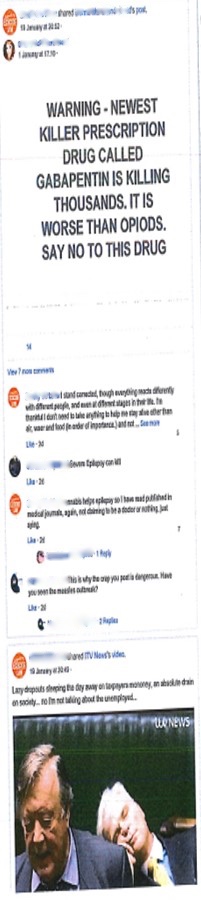
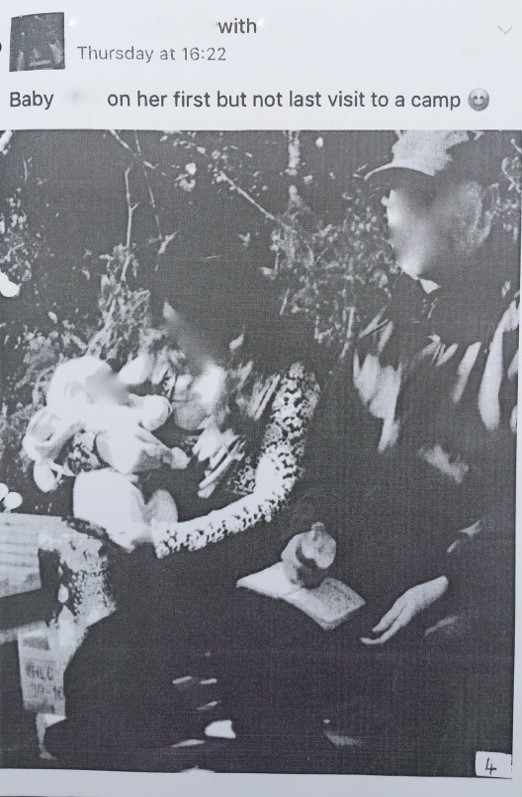
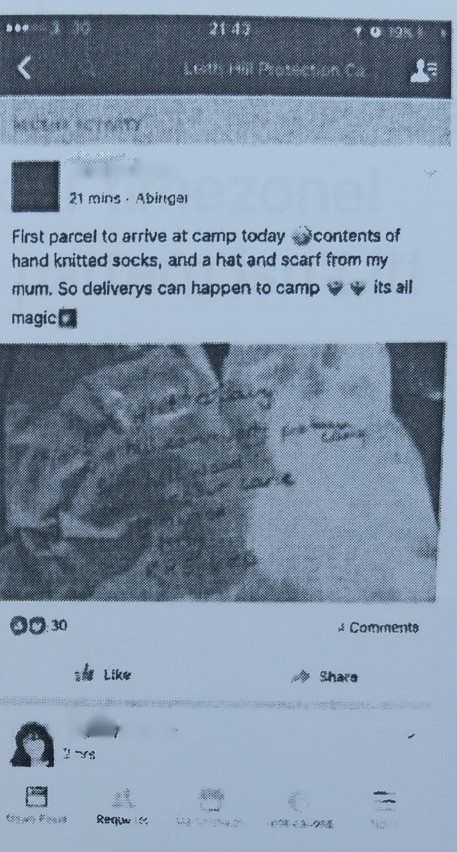
Included in the evidence supplied by the oil and gas companies to the courts are many personal or seemingly irrelevant campaigner posts. Some are from conversations on Facebook groups dedicated to particular protests or camps, while others have been captured from individuals' own profile pages. For instance, a picture of a mother with her baby at a protest was submitted as part of the Europa Oil and Gas case. Another screenshot of a post in the Europa bundle shows a hand-written note from one of the protesters' mothers accompanying a care package with hand-knitted socks that was sent to an anti-fracking camp. One post included in the UKOG hearing bundle shows two protesters sharing a pint in the sun -- not at a protest camp, nor shared on any of the campaign pages' Facebook groups. A screenshot from INEOS's hearing bundle shows posts from a protester to his own Facebook wall regarding completely unrelated issues such as prescription drugs, and a generic moan about his manager.
69 of 141 comments (clear)

  1. Ok, those weren't good examples by rsilvergun · · Score: 1, Informative

    how exactly are those leading to protest bans? I'd like to RTFA, but the first link had a spyware popup ad and the second link goes nowhere. The rest are just pictures from facebook.

    Anyone with an adblocker want to tell me if there's something here or is this just a terrible post? I've got no love of fracking (not a greenpeacer but I'm not convinced it's safe) but this isn't how you get me on your side.

    --
    Hi! I make Firefox Plug-ins. Check 'em out @ https://addons.mozilla.org/en-US/firefox/addon/youtube-mp3-podcaster/
    1. Re:Ok, those weren't good examples by AHuxley · · Score: 2, Funny

      Government and the police in 2018 now know of the "internet" and have experts who can now read along with social media.

      --
      Domestic spying is now "Benign Information Gathering"
    2. Re:Ok, those weren't good examples by Anonymous Coward · · Score: 4, Interesting

      There’s a struggle going on between companies that want to drill for shale gas in the UK countryside and campaigners trying to stop them. Now, the struggle is waging online.

      Revelations about how Facebook data has been used to target individuals for political ends continue to emerge. But after the Cambridge Analytica scandal of earlier this year, the story has taken an unexpected twist: Facebook is being used by oil and gas companies to clamp-down on protest.

      Three companies are currently seeking injunctions against protesters: British chemical giant INEOS, which has the largest number of shale gas drilling licenses in the UK; and small UK outfits UK Oil and Gas (UKOG), and Europa Oil and Gas.

      Among the thousands of pages of documents submitted to British courts by these companies are hundreds of Facebook and Twitter posts from anti-fracking protesters and campaign groups, uncovered by Motherboard in partnership with investigative journalists at DeSmog UK. They show how fracking companies are using social media surveillance carried out by a private firm to strengthen their cases in court by discrediting activists using personal information to justify banning their protests.

      The material was submitted to support the companies’ case that campaigners intended to illegally disrupt their activities or trespass on their land. The companies all stress they do not seek to restrict lawful forms of protest, but argue that activists should not be allowed to unduly disrupt their lawful business activity.

      Anti-fracking campaigners have described the use of injunctions to stop protest around potential fracking sites as “an unprecedented restriction on our fundamental rights.” They say the injunctions against “persons unknown” are “draconian” and “anti-democratic.”

      According to the official court documents seen by Motherboard, the private security firm which conducted some of the surveillance on behalf of the oil and gas companies is Eclipse Strategic Security.

      Facebook surveillance

      Among the documents submitted by the oil and gas companies to the courts to justify their injunctions, there is a distinct focus on Facebook surveillance.

      As a consequence of the companies including the posts in the hearing bundles, they become part of the public record, with anyone able to request access to the documents.

      The documents reveal that the companies have used Facebook to engage in widespread and intrusive social media surveillance of individual campaigners and their private lives. In one witness statement on behalf of INEOS, CEO of Eclipse Raymond Fellows describes his company as having been “retained” by INEOS “to provide security services.” He tells the court that “a common tactic” by “activist individuals/organisations” is to:

      “...use social media to announce a ‘call to arms’ by publicising the details of a ‘peaceful’ protest on Twitter or Facebook or their own organisation’s website.”

      The resulting “mass of protestors”—many of whom are “law abiding citizens who wish to exercise their legal right to protest”—is, Fellows alleges, exploited by “a small hard core group of activists to slow the police down and to prevent them from retaining the security of a site.”

      Included in the evidence supplied by the oil and gas companies to the courts are many personal or seemingly irrelevant campaigner posts.

      Some are from conversations on Facebook groups dedicated to particular protests or camps, while others have been captured from individuals’ own profile pages.

      For instance, a picture of a mother with her baby at a protest was submitted as part of the Europa Oil and Gas case. Another screenshot of a post in the Europa bundle shows a hand-written note from one of the protesters’ mothers accompanying a care package with hand-knitted socks that was sent to

    3. Re: Ok, those weren't good examples by ISayWeOnlyToBePolite · · Score: 2

      As far as I understand the problem (and the article isn't really clear), the companies collect facebook post of people in groups where protests are discussed and then files injunctions against persons unknown to stop them from trespassing private land.

    4. Re:Ok, those weren't good examples by ShanghaiBill · · Score: 3, Interesting

      Government and the police in 2018 now know of the "internet" and have experts who can now read along with social media.

      So? How does that lead to protests being banned? TFA is just disjointed rambling that fails to identify a single protest that has been banned. I have seen 4th graders that write more coherently.

    5. Re:Ok, those weren't good examples by mysidia · · Score: 5, Informative

      how exactly are those leading to protest bans?

      Basically, because many protest groups rely on skirting the law and having a large group conducting activities which are technically illegal to try to bring attention to their message, And because such a large group is involved, it is difficult to hold anyone legally responsible for the violations of the law.

      The fracking operations occur on fracking sites which are located on Private Property which the Oil companies have the right to control access to, because they are plots of land owned by or leased by the company ----- Nobody has the right to protest on private property without the owner's permission, And if the owner specifically tells you ahead of time to stay off their property, and you step onto it anyways, then you've committed criminal Trespass: this is basically what they're doing to these people which is being called "banning the protest" ----- they're pre-emptively seeking a court order that says "Stay off my land,
        And stay away from my driveway".

      The companies claim to seek injunction because the companies believe that protestors/protest groups intend to Trespass on their property in order to hold their protestes "Around the fracking sites", Or undertake other strategies designed to disrupt their lawful business activities --- such as having pedestrians standing in or otherwise outside their property blocking, harrassing, preventing, or slowing down the ability of authorized traffic to use the property access roads or streets or driveways, Or disrupt employee/vendor/company-related trucks or other vehicles' access to their property or to harass persons/vehicles entering or leaving their private properties.

      As noted in the article:

      The companies all stress they do not seek to restrict lawful forms of protest, but argue that activists should not be allowed to unduly disrupt their lawful business activity.

      Since social media surveillance reveals the identities of many people likely to participate in such protests; the companies can go to the court and provide a List of Names and Pre-Emptively ask the courts for an Injunctive order that the named individuals Not set foot on our land, Or participate in any activity
        to disrupt the business operation of one of our fracking sites
      .

    6. Re:Ok, those weren't good examples by Hognoxious · · Score: 1

      In the absence of specific expertise and personal experience "not convinced it's safe" seems a reasonable default position for most things.

      --
      Confucius say, "Find worm in apple - bad. Find half a worm - worse."
    7. Re:Ok, those weren't good examples by Anonymous Coward · · Score: 1

      Like ALL other activities, fracking has no absolute safety. It's OBVIOUSLY been mostly safe and just as clearly has had safety (pollution) problems both because of bad installation practices and because of the unsuitability of the ground where it was used. Shocker! I'm not clear on what you need to be "convinced" of, but you sound as if you live in a black and white, all effects are due to a single cause, world. 1. Are there practical regulations that will (if enforced) prevent most problems? 2. What is the probability of having an adverse outcome when built and operated in full compliance? 3. Is that probability acceptable?

    8. Re:Ok, those weren't good examples by Anonymous Coward · · Score: 1

      He is on the side of private ownership being respected while the only legitimate, tangible, and productive "protest" you can have is to crash the market via legal and legitimate means.
      That means instead of protesting like some monkey you go and enroll into a university or course or whatever which puts you on a path of researching and developing alternative energy source and therefore being a productive, legitimate, and tangible contributor to the advancement of society instead of being a dog that only knows how to bark but not bite.
      The problem is that people who always protest and activists are all dogs who only know how to bark, while contributing nothing because they have no time to contribute because there's always a next venue taking up their time to bark at.

    9. Re:Ok, those weren't good examples by AmiMoJo · · Score: 4, Insightful

      It's the usual horseshit from Vice.

      Basically the fracking companies, who to be fair are asshats, have been trying to get injunctions to stop protests. As part of this effort they have been mining the protesters' social media accounts. Their claim is that most of the people on the protest are useful idiots who were duped into attending on Facebook or something equally incoherent and ridiculous.

      To establish this claim they have been submitting random memes about bad bosses and photos of people bringing their children to the (non-violent, family friendly) protests.

      I think the point that Vice is trying to make is that it's both a technique favoured by trolls (quote mining, forcing the defendant to provide context and justification for posts that are edited and presented in isolation) and an attempt to confuse the famously non-tech-savvy courts. But Vice's journalism is so poor it's hard to tell, especially the ones at Motherboard.

      --
      const int one = 65536; (Silvermoon, Texture.cs)
      SJW, n: "Someone I don't like, and by the way I'm a fuckwit" - AC
    10. Re:Ok, those weren't good examples by denzacar · · Score: 1

      "how exactly are those leading to protest bans?"

      Ah... you know...

      If you give me six lines written by the hand of the most honest of men, I will find something in them which will hang him.

      Or, as it is used in the article:

      One of the activists subject to surveillance, Jon O'Houston, who has been part of the Broadford Bridge Protection Camp, said he felt it was equivalent to the phone hacking cases, which led to the Leveson review.

      "What's said in the groups is generally taken either out of context or cherry-picked", O'Houston told Motherboard.
      "When taken out of context, you can make anything look bad or good."

      And the procedure goes something like this:

      The material was submitted to support the companies' case that campaigners intended to illegally disrupt their activities or trespass on their land.
      The companies all stress they do not seek to restrict lawful forms of protest, but argue that activists should not be allowed to unduly disrupt their lawful business activity.

      ...

      In one witness statement on behalf of INEOS, CEO of Eclipse Raymond Fellows describes his company as having been "retained" by INEOS "to provide security services."
      He tells the court that "a common tactic" by "activist individuals/organisations" is to:

      "...use social media to announce a 'call to arms' by publicising the details of a 'peaceful' protest on Twitter or Facebook or their own organisation's website."

      The resulting "mass of protestors" - many of whom are "law abiding citizens who wish to exercise their legal right to protest" - is, Fellows alleges, exploited by "a small hard core group of activists... to slow the police down and to prevent them from retaining the security of a site."

      ...

      Injunction progress

      One of the most worrying things about the oil and gas companies' injunctions is that they are against "persons unknown."

      That means that anyone who could reasonably expect to know about the injunctions is covered by them.
      Given the wide remit of the injunctions, that could be anyone who visits the fracking sites.

      This is important given Eclipse's statement to the courts that the majority of the protestors are "law abiding."
      But instead of targeting alleged "hard core activists" accused of disrupting peaceful protests, the oil and gas firms' approach can justify the wholesale prohibition of protests.

      INEOS has a temporary injunction in place, which is currently going through the appeal process. UKOG is due in court in early July, while Europa's injunction is currently in place.
      The UK's most high profile fracking company, Cuadrilla Resources, was just granted an injunction for its site in Lancashire.

      By applying for injunctions against "persons unknown," the fracking companies prevent individual protesters from being able to defend their case in court as individuals.
      This potentially gives the companies a litigious advantage.

      By continuing to pursue "persons unknown" while closely surveilling individuals, the companies are potentially bypassing the protesters' democratic rights by preventing them putting across a defense in the injunction hearings. And they're using Facebook to do it.

      --
      Mit der Dummheit kämpfen Götter selbst vergebens
    11. Re: Ok, those weren't good examples by SpzToid · · Score: 2

      Or at the most very least provide a reference to the source! Otherwise we have no clue where that lengthy rant came from, unless maybe it was linked to in the summary and any given random commentator on the slashdots happened to read the fsckn summary; otherwise, how would they know?

      Vladimir is that you?

      --
      You can't be ahead of the curve, if you're stuck in a loop.
    12. Re:Ok, those weren't good examples by rtb61 · · Score: 2

      In this case it is public relations firms, private investigators and lawyers, who use what ever information is accessible to fabricate a lie about a person by selective presenting information, to scam fuckwit judges or at least give entirely corrupt judges sufficient of an excuse to let it slide on through until the next judges election time or what ever the corrupt appointment process is.

      The information is shite, empty and meaningless, it is just being used by the corrupt to make claims to achieve their goals, silence the general public at all costs, so that the corruption can continue and accelerate.

      --
      Chaos - everything, everywhere, everywhen
    13. Re:Ok, those weren't good examples by goose-incarnated · · Score: 1, Troll

      Sometimes I have to wonder if you're for real or not. What you wrote is so disingenuous I wonder if you have ever actually been part of a legal protest.

      Let's fix your comment to make it accurate, shall we?

      It's the usual horseshit from Vice.

      Basically the fracking companies, who to be fair are asshats, have been trying to get injunctions to stop trespassers. As part of this effort they have been mining the trespassers' social media accounts. Their claim is that most of the people trespassing are useful idiots who were duped into trespassing on Facebook or something equally incoherent and ridiculous.

      To establish this claim they have been submitting evidence of people bringing their children to the (non-violent, family friendly) trespassing.

      I think the point that Vice is trying to make is that it's both a technique favoured by property owners (quote mining, forcing the defendant to provide context and justification for posts that are edited and presented in isolation) and an attempt to provide evidence of trespassing to the famously non-tech-savvy courts. But Vice's journalism is so poor it's hard to tell, especially the ones at Motherboard.

      You're so unused to unbiased statements that you have no idea what they look like anymore.

      --
      I'm a minority race. Save your vitriol for white people.
    14. Re:Ok, those weren't good examples by dryeo · · Score: 1

      You have a citation for the fracking not being on public land?

      --
      https://en.wikipedia.org/wiki/Inverted_totalitarianism
    15. Re:Ok, those weren't good examples by goose-incarnated · · Score: 1

      You have a citation for the fracking not being on public land?

      It's in the article - the injunctions being sought are not to "ban protests". The injunctions specifically mention

      trespass

      . Whether the land is public or not is irrelevant if the party bringing action has standing for trespass.

      Tell you what, come back and crow a little when the courts find that the parties seeking relief doesn't have standing. Then we can say that the protestors have some sort of legal right to be there, until then there is someone complaining to the courts about trespassers.

      --
      I'm a minority race. Save your vitriol for white people.
    16. Re:Ok, those weren't good examples by tehcyder · · Score: 1

      Interestingly, there is no such thing as private land in the UK. All land ultimately belongs to the Crown.

      --
      To have a right to do a thing is not at all the same as to be right in doing it
    17. Re:Ok, those weren't good examples by AmiMoJo · · Score: 1

      A protest is basically a DoS attack on the real world. Marching down a street blocks it for other users. It creates noise that is difficult to ignore.

      If you are upset about that then you basically oppose all protesting, which is a fundamental and important part of democracy. Reminds me of the "free speech zones" and efforts to keep protests away from visiting dignitaries from China and the US, to avoid upsetting them.

      --
      const int one = 65536; (Silvermoon, Texture.cs)
      SJW, n: "Someone I don't like, and by the way I'm a fuckwit" - AC
    18. Re:Ok, those weren't good examples by mysidia · · Score: 1

      while the only legitimate, tangible, and productive "protest" you can have is to crash the market via legal and legitimate means.

      I don't say that.... I am saying get your permit and have your protest march down the most highly trafficked street in a nearby city that you can find, and that is free speech. But it stops being free speech when you surround demonstrators around a target for extended period of time. Nobody has the right to harass specific targeted property owners by standing on their soil, or idly obstructing or interfering with the small public right of ways such as road access such as to obstruct access, interfere with their business, or otherwise disturb the public orderliness.

    19. Re:Ok, those weren't good examples by AHuxley · · Score: 1

      Its not the USA. No freedom to gather for a protest in the UK. No freedom to speak in the UK. The police have the freedom to read along on social media.

      --
      Domestic spying is now "Benign Information Gathering"
    20. Re:Ok, those weren't good examples by goose-incarnated · · Score: 1, Informative

      A protest is basically a DoS attack on the real world. Marching down a street blocks it for other users. It creates noise that is difficult to ignore.

      You aren't allowed to block property owners from their property under the guise of protesting.

      If you are upset about that then you basically oppose all protesting, which is a fundamental and important part of democracy.

      You're free to protest, that doesn't mean that other people have to give you a platform. Remember your stance when it was social media blocking users? You felt that those people were free to speak, but google, et al were not obligated to give them a platform.

      Why is it only now that your stance has changed into thinking that property owners are obligated to give protestors a platform?

      --
      I'm a minority race. Save your vitriol for white people.
    21. Re:Ok, those weren't good examples by AmiMoJo · · Score: 2

      Actually, protests often do block people's access to their property. Some businesses give their staff time off when they know that a large demonstration is planned around their location.

      There are no hard and fast rules for it. It all depends on the nature of the protest, how long the disruption lasts, how much support it has etc. Ideally you want to avoid ever having to get to the stage where people want to protest, but it's an important recourse in any democracy.

      Protesting on private property tends to be seen less favourably by the law, but in this case it's mostly irrelevant anyway because they were blocking the site entrance too. They wanted them completely removed form the area, not just the private property.

      --
      const int one = 65536; (Silvermoon, Texture.cs)
      SJW, n: "Someone I don't like, and by the way I'm a fuckwit" - AC
    22. Re:Ok, those weren't good examples by dgatwood · · Score: 1

      It is important to clarify that this applies only to pure business property. Blocking access to a drilling site might be acceptable morally, but blocking a public street never is, nor is blocking access to someone's home, apartment, dormitory, etc.

      After a series of labor protests blocked access to a university campus near me, I and a few hundred other people made some fairly public comments asking why the police didn't arrest them for violation of CA vehicular code 21950(b). The four or five protests since then may have slowed traffic a bit, but they have not blocked it. When they blocked students' ability to get from their dorms to their places of employment, to get food off campus (and on-campus food was shut down for the protest), to get back to their dorms, etc., they crossed a major bright line.

      As a rule, blocking vehicular traffic on a public road is illegal, subject to citation and, if necessary to prevent continued violation, arrest. You have a right to protest, but that right ends where the bumper of someone's car begins.

      More to the point, as soon as your protest starts to negatively affect people who are not on the opposite side of the protest, it doesn't matter what your issue is or how important it might be. In the minds of those affected, you are in the wrong, which means you have lost the public's support, and your protest is effectively helping whatever you're protesting against.

      Also, IMO, as a society, we protest entirely too often. At this point, it has almost completely lost its meaning. But that's another rant for another day.

      --

      Check out my sci-fi/humor trilogy at PatriotsBooks.

    23. Re:Ok, those weren't good examples by AmiMoJo · · Score: 1

      I think there are too many protests, but only because our democracies are not working very well.

      --
      const int one = 65536; (Silvermoon, Texture.cs)
      SJW, n: "Someone I don't like, and by the way I'm a fuckwit" - AC
    24. Re:Ok, those weren't good examples by Hognoxious · · Score: 1

      More to the point, as soon as your protest starts to negatively affect people who are not on the opposite side of the protest, it doesn't matter what your issue is or how important it might be. In the minds of those affected, you are in the wrong, which means you have lost the public's support

      It might be a surprise to you, but there are people who can see the bigger picture - a scope beyond themselves, a timeframe longer than this second.

      --
      Confucius say, "Find worm in apple - bad. Find half a worm - worse."
    25. Re:Ok, those weren't good examples by liquid_schwartz · · Score: 1

      More to the point, as soon as your protest starts to negatively affect people who are not on the opposite side of the protest, it doesn't matter what your issue is or how important it might be. In the minds of those affected, you are in the wrong, which means you have lost the public's support

      It might be a surprise to you, but there are people who can see the bigger picture - a scope beyond themselves, a timeframe longer than this second.

      The OP was not wrong, you will take a lot of people who were formerly on the fence and have them hop off to join the other side if you threaten or inconvenience them. The surest way to get another 4 years of Trump is to have the Antifa goons running amok at "protests".

    26. Re:Ok, those weren't good examples by datavirtue · · Score: 2

      Protest with your dollars. Standing around with a bunch of smelly dumb hippies or kids leads no where but a waste of time.

      --
      I object to power without constructive purpose. --Spock
    27. Re:Ok, those weren't good examples by datavirtue · · Score: 1

      Protests are useless unless the protesters are organized and equipped to inflict violence and destruction. That is your litmus test. If you are not willing to go down fighting and pay with your life then your stupid little beef is meaningless. So go ahead and gather outside the ivory tower and peacfully chant demands while the masters look down on you from safety and roll their eyes.

      --
      I object to power without constructive purpose. --Spock
    28. Re:Ok, those weren't good examples by dgatwood · · Score: 1

      It might be a surprise to you, but there are people who can see the bigger picture - a scope beyond themselves, a timeframe longer than this second.

      Unfortunately, most of them don't vote.

      --

      Check out my sci-fi/humor trilogy at PatriotsBooks.

    29. Re: Ok, those weren't good examples by MoaDweeb · · Score: 1

      Remember the UK is known as the 'Mother of Parliaments' not the 'Home of Democracy.'

      --
      New Zealanders are well balanced with a chip on each shoulder. One represents Australia, the other the rest of the world
    30. Re:Ok, those weren't good examples by ShanghaiBill · · Score: 1

      CRIMINALS used an ILLEGAL TUNNELING SYSTEM to STEAL PROPERTY.

      The Underground Railroad was neither a railroad nor underground. There were no tunnels. It was a metaphoric description.

    31. Re:Ok, those weren't good examples by Local+ID10T · · Score: 1

      Actually, protests often do block people's access to their property.

      True. It is also a crime.

      It is typically tolerated, because of the bad publicity involved in having the police physically remove and arrest the protestors is worse than the disruption.

      Property owners (or their representatives) do have the legal right of access. They are within their rights to employ private security to ensure those rights, or to request police intervention.

      --
      "You want to know how to help your kids? Leave them the fuck alone." -George Carlin
    32. Re:Ok, those weren't good examples by Hognoxious · · Score: 1

      Yes he was. Plenty of people affected by the rail strikes in London last year agreed with the union that staffing levels should be kept higher for safety.

      --
      Confucius say, "Find worm in apple - bad. Find half a worm - worse."
    33. Re:Ok, those weren't good examples by RockDoctor · · Score: 1
      It's in Britain. which means it could be either in Scotland, or in England and Wales, or Northern Ireland.

      If it were in Scotland, the government of Scotland has stopped fracking (actually, it's just declined planning permission for any fracking operations - legislatively easier and quicker). Scotland does have a "right to roam" which which does allow most land to be accessed by most people, as long as the visitor's behaviour is reasonable (eg, not burglarising properties, damaging fences, crops or gates). But that's irrelevant. Otherwise, the decisions are taken by the London government. Most of the land in England, Wales and Northern Ireland is not in public ownership, and even if it is, there is not a general assumption of any right of public access except on specific defined routes called "rights of way".

      Basically, your assumption of US legal concepts applying doesn't work, because it's not America. Neither of the legal systems possibly involved follows from American precedents.

      --
      Birds are not dinosaur descendants;birds are dinosaurs, for all useful meanings of "birds", "are" and "dinosaurs"
    34. Re:Ok, those weren't good examples by goose-incarnated · · Score: 1

      Whether the land is public or not is irrelevant if the party bringing action has standing for trespass.

      You cannot, by definition, be trespassing in a public space.

      Do you know what this means:

      when the courts find that the parties seeking relief doesn't have standing

      ??? If a party has standing to bring action for trespass, then no - you don't have a right to be there.

      Because you have the right to be there.

      You might be a noise nuisance or breaching the peace or 101 other things but you are not trespassing merely by being there.

      Depending on how the owner of the land (the state) has permitted someone to use it, you might in fact be trespassing just by being there. it being a public area doesn't mean that the state didn't grant exclusive access to someone (for example, for mineral extraction).

      --
      I'm a minority race. Save your vitriol for white people.
  2. Good by 110010001000 · · Score: 4, Funny

    When will people learn not to share their personal information, pictures, etc on the Internet? I for one have never used the Internet, and don't plan to. Ever.

    1. Re:Good by Miser · · Score: 1

      Or more seriously, don't use Facebook or services where your real name is required. I've never had a Facebook account, and never will. ... and if you insist and/or must do so, for love of $diety don't get all political and announce your intentions.

  3. it's in the UK by phantomfive · · Score: 1

    Hard to make any reasonable comment on a UK case, because I don't know the laws there. The article doesn't help because their explanations are just confusing. All I can say is be careful what you put online, but everyone here knows that.

    --
    "First they came for the slanderers and i said nothing."
    1. Re:it's in the UK by AHuxley · · Score: 2, Informative

      That great parts the US has about "'freedom of speech", "the right of the people peaceably to assemble", "freedom of speech", "to petition the Government" do not exist under UK tyranny.

      To understand UK law study the wide and deep law changes of the 1960-90's when the UK was doing direct policing in Ireland.

      --
      Domestic spying is now "Benign Information Gathering"
    2. Re:it's in the UK by Hognoxious · · Score: 1

      Hard to make any reasonable comment on a UK case, because I don't know the laws there.

      Don't let that stop you. Most people round here don't.

      --
      Confucius say, "Find worm in apple - bad. Find half a worm - worse."
    3. Re:it's in the UK by Anonymous Coward · · Score: 4, Informative

      At no time was the Army set on the Dakota Access pipeline protestors. At one point the National Guard as deputized peace officers of the state acted in a riot control operation to remove or push back the protestors. But in that role they are deputized police officers of the state not military.

      There is a difference. The National Guard belongs to the State and reports to the Governor unless activated by federal orders. The Governors of the respective states can activate National Guard for various police operations and functions as was done in this case. The National Guard when operating in this role are not the Army, which is prohibited from conducting police operations inside the US.

    4. Re:it's in the UK by Maelwryth · · Score: 2

      Sort of taking the piss here but,

      At no time did the Russian Army invade Ukraine. At one point there were some border crossings but those people were on holiday, or had had their contracts canceled. As such they are private individuals and not members of the military. :)

      --
      I reserve the write to mangle english.
    5. Re:it's in the UK by Hognoxious · · Score: 2

      They're both groups of men with guns. Anything else is largely irrelevant, especially if you're the person the guns are pointed at.

      And don't get me started about the police. Armoured personnel carriers? No, they're just enhanced protection transporters!

      --
      Confucius say, "Find worm in apple - bad. Find half a worm - worse."
  4. Re:This is Why by Anonymous Coward · · Score: 2, Insightful

    This comment thread ...

    ... now has a second comment. Does what you wrote above still apply?

  5. Is this not a GDPR violation ? by Alain+Williams · · Score: 4, Interesting

    It seems to me that they are collecting data about the protesters that is not relevant to the purpose of dealing with illegal activity. This is a violation of the GDPR that says that the personal data you are processing is limited to what is necessary – you do not hold more than you need for that purpose.. It would be interesting to see the protesters make a GDPR complaint about Eclipse Strategic Security; even more interesting to see how the ICO tries to avoid doing anything about it.

    1. Re:Is this not a GDPR violation ? by GuB-42 · · Score: 1

      They are not collecting data directly. They are just searching for data protesters publish via Facebook.
      I don't know about the details of GDPR, but if you publish a picture on Facebook for everyone to see, I don't think privacy laws apply. There are other laws for data you publish, like copyright.

    2. Re:Is this not a GDPR violation ? by thegarbz · · Score: 1

      No it isn't, because they aren't collecting the data. Facebook is, and the users have consented to Facebook having the data.

    3. Re:Is this not a GDPR violation ? by AHuxley · · Score: 1

      The GDPR has an out for police and mil. The UK has very powerful police laws left from the 1990's and Ireland.

      --
      Domestic spying is now "Benign Information Gathering"
    4. Re:Is this not a GDPR violation ? by Hognoxious · · Score: 1

      You couldn't even point to Ireland on a map, so shut the fuck up, you DeVry dropout.

      --
      Confucius say, "Find worm in apple - bad. Find half a worm - worse."
  6. This happens in NZ as well by Maelwryth · · Score: 3, Informative

    In New Zealand government departments (probably also private companies but they aren't covered by the Freedom Of Information Act) have been hiring Private Investigators to keep tabs on protest groups for ages.

    This has lead to a series of embarrassing news reports about the investigation agency Thompson and Clark Investigations Limited and their links with government departments and most recently the SIS. Although I can't remember them (TCIL) specifically using Facebook, another PI did this report on how easy it was to get your Name, Age, Address, Parents, Spouse, Occupation, Children and Shopping habits using social media saying that basically money was the only limit on what information could be obtained.

    --
    I reserve the write to mangle english.
  7. Public information by Jon+Peterson · · Score: 4, Insightful

    So...

    A protester posts lots of information publicly on social media. Then someone else uses that to build a profile of them and to try to demonstrate that they are likely to commit trespass etc.

    I fail to see why this is surprising or interesting. No-one has breached anyone's privacy. It's no different from a PI following what you do in public - like meeting your intern for a drink in a secluded wine bar - and then reporting back to parties (like your spouse) who might want to act on that information.

    Hint to protesters - if you are doing something vaguely clandestine or not-entirely-legal maybe don't put your whole life on social media. Just a tip.

    --
    ----- .sig: file not found
    1. Re:Public information by Maelwryth · · Score: 1

      "It's no different from a PI following what you do in public"

      I would say it is quite different from being followed in public depending on what the persons intended audience was. If their settings were purely public then that would be OK. The photo of the mother and the baby could be considered this way unless it was posted to a not purely public group or a group where she expected it to be non public. If I post to a group called PAF "People Against Fracking" then I have an expectation that the members of the group are people who are against fracking and my posts are intended for that audience.

      Another picture shows a post "from a protester to his own Facebook wall "...same thing again, what were the settings and what were the expectations?

      And where exactly is INEOS's investigation into whether the images could be legally used before placing them in the public record?

      --
      I reserve the write to mangle english.
  8. so what by MrBrklyn · · Score: 1

    who cares. They aren't the government and are trying to prevent protest using freely available resources. if you tried to protest against me I would do the same thing

    --
    http://www.mrbrklyn.com/amsterdam.html http://www.brooklyn-living.com
  9. Heck, it doesn't even rise to that level by MikeRT · · Score: 1

    It's not even real surveillance if the PI walks into the target's office and sees a prominent calendar in the center of the office that says "Mr. CEO is having lunch with Sexy Secretary at 1PM" and just sends a photo of that to his employer.

  10. Actually... They're not... by denzacar · · Score: 3, Informative

    Since social media surveillance reveals the identities of many people likely to participate in such protests; the companies can go to the court and provide a List of Names and Pre-Emptively ask the courts for an Injunctive order that the named individuals Not set foot on our land, Or participate in any activity to disrupt the business operation of one of our fracking sites.

    From TFA:

    One of the most worrying things about the oil and gas companies' injunctions is that they are against "persons unknown."

    That means that anyone who could reasonably expect to know about the injunctions is covered by them.
    Given the wide remit of the injunctions, that could be anyone who visits the fracking sites.

    This is important given Eclipse's statement to the courts that the majority of the protestors are "law abiding."
    But instead of targeting alleged "hard core activists" accused of disrupting peaceful protests, the oil and gas firms' approach can justify the wholesale prohibition of protests.

    INEOS has a temporary injunction in place, which is currently going through the appeal process. UKOG is due in court in early July, while Europa's injunction is currently in place.
    The UK's most high profile fracking company, Cuadrilla Resources, was just granted an injunction for its site in Lancashire.

    By applying for injunctions against "persons unknown," the fracking companies prevent individual protesters from being able to defend their case in court as individuals.
    This potentially gives the companies a litigious advantage.

    Basically, they are managing to convince the courts that though these potential protesters may be lawful, some others may be not, so let's just ban anyone from protesting right now and be done with it.

    Or, to put it in American, lawyers made courts ban all guns cause while some guns may be legal, some others may not be - so let's just ban all guns and let god sort 'em out.

    --
    Mit der Dummheit kämpfen Götter selbst vergebens
    1. Re:Actually... They're not... by Anonymous Coward · · Score: 1

      Maybe protest on public land then, rather than trespassing on private property?

      They can't ban you from that, they can only tell everyone ahead of time that you'll get arrested for trespass if you go onto their private property to protest. If you think that's wrong, we'll just hold a protest in your house. You have no problem with having to go through a crowd of protesters to reach your front door, right? Or would you want to ban protests then?

      Please let us know. There's no "ban" here, just a warning to stay off of their private property. You're allowed to protest, you're not allowed to trespass. They're just warning you that you'll go to jail if you trespass on their land.

    2. Re:Actually... They're not... by mysidia · · Score: 1

      If you think that's wrong, we'll just hold a protest in your house.

      Exactly. The "right to assemble" or protest is NOT a right to start staging a demonstration anywhere the hell you want.
      In general you should do it on a private property whose owner authorizes the demonstration OR in a designated public area where demonstrations are allowable.

      Even if there happens to be some public land in close vicinity to the site where Things you object to are happening, And you would
      like to have your protest as close to them as possible to "Get in people's face" --- it is not out of the question for demonstrations of all kinds
      to be restricted in certain areas; E.G. Courtrooms publicly owned, but if you try and organize a protest inside an in-session courtroom,
      then you are going to be detained and probably arrested for breaching courtroom etiquette rules.

      E.G. There may be a public right of way in front of your house, or your neighbor's house.
       
      However, these are primarily designed for underground utilities and telephone poles, a small sidewalk for pedestrian access: sometimes a small buffer zone between the sidewalk and the street where neither vehicles nor pedestrians should be for safety purposes, and a publicly maintained road or street for vehicle access.

      These are common public spaces owned for the purpose of being able to support government infrastructure and common carrier services, including enabling travel, effective emergency services, and lawful access to adjacent properties to people who own, have been invited to, or have other lawful business on properties to require access.

      There is No right to these spaces. Depending on local laws, they may be available to demonstrations or not, but
      the local government has a right to impose restrictions on the time, place, and matter, and they can require a special permit.

      I wouldn't want anyone protesting in my house ---- My feeling is these common right of way areas surrounding private property should NOT be available places to hold a substantial meeting or demonstration. Take your assembly to a park, or another proper meeting place.

      Or apply for and pay for the permit and law enforcement presence to have road temporary closed for an hour at a pre-announced time, like any parade has to do: if you have the minimum number of demonstrators for this to be approved and want to march certain public streets in the city, But again, of course they will be limited in time, duration, and location, so the disruption to business is not significant.

    3. Re:Actually... They're not... by tehcyder · · Score: 1

      In the UK, trespass is a civil matter, not a criminal one (except in cases where the government has changed the law e.g. to make Raves illegal).

      --
      To have a right to do a thing is not at all the same as to be right in doing it
    4. Re:Actually... They're not... by mysidia · · Score: 2

      In the UK, trespass is a civil matter, not a criminal one

      That explains why they're seeking an injunction then. If the protestors trespass anyways, then they'll
      be not only trespassing but violating a court order, and contempt of court is a criminal infraction.

  11. Nothing "vaguely clandestine or not-entirely-legal by denzacar · · Score: 1

    ...about it.

    That's kinda the point.
    Personal photos and posts are cherry picked to present a narrative that cause some protests MAY turn bad, that means all protests are potentially bad.
    Thus any potential protests should be preemptively banned.

    From TFA:

    The material was submitted to support the companies' case that campaigners intended to illegally disrupt their activities or trespass on their land.
    The companies all stress they do not seek to restrict lawful forms of protest, but argue that activists should not be allowed to unduly disrupt their lawful business activity.

    He tells the court that "a common tactic" by "activist individuals/organisations" is to:
    "...use social media to announce a 'call to arms' by publicising the details of a 'peaceful' protest on Twitter or Facebook or their own organisation's website."
    The resulting "mass of protestors" - many of whom are "law abiding citizens who wish to exercise their legal right to protest" - is, Fellows alleges, exploited by "a small hard core group of activists... to slow the police down and to prevent them from retaining the security of a site."

    One of the most worrying things about the oil and gas companies' injunctions is that they are against "persons unknown."
    That means that anyone who could reasonably expect to know about the injunctions is covered by them.
    Given the wide remit of the injunctions, that could be anyone who visits the fracking sites.

    By applying for injunctions against "persons unknown," the fracking companies prevent individual protesters from being able to defend their case in court as individuals.
    This potentially gives the companies a litigious advantage.
    By continuing to pursue "persons unknown" while closely surveilling individuals, the companies are potentially bypassing the protesters' democratic rights by preventing them putting across a defense in the injunction hearings.

    --
    Mit der Dummheit kämpfen Götter selbst vergebens
  12. Great News by MrKaos · · Score: 1

    I know this looks like the kind of shitty thing that oil companies do however look at it this way. As much as many of us don't like Facebook in the past the oil company would have simply directed their advertising revenue to the television network to spin a story the way they would want it.

    They will still do that however now they recognize that the traditional media no longer has the power that it does over people so they need to use facebook to manipulate the outcomes of their activities. Sure FB could provide them with data, however the point is big media isn't as influential as it used to be.

    I thought it might be useful to point that out.

    --
    My ism, it's full of beliefs.
  13. Re: Spoilt, jobless brats by Anonymous Coward · · Score: 1

    Why do you oppose law abiding citizens who want to peacefully open carry their rifles into malls and restaurants, or even just walk around outside their parking lots which is on public property?

    Why do you want to restrict gun rights or stop people trying to protect unborn children by walking around planned parenthood sits?

    Why do you hate America?

    Or you only oppose protesters civil rights for causes that you disagree with?

  14. um, no by cascadingstylesheet · · Score: 1

    They aren't "banning protests". You can protest all you want. You just can't illegally interfere with their operations.

    You may have to actually, you know, just convince people of what you want to happen. I know that's so old and Europeany and stuff, but hey.

  15. Re:Spoilt, jobless brats by DontBeAMoran · · Score: 1

    "Tobaco is a mature and standard industry, done for decades in Canada and US."

    See what I did? There's no argument whatsoever in what you said.

    Fracturing is mature standard industry practice, done for decades in Canada and US.

    That doesn't make it safe nor healthy for us or the environment. That just means it's been done for decades.

    --
    #DeleteFacebook
  16. Re: Finally a useful Facebook by TimMD909 · · Score: 1

    Privileged individuals who are angry at other privileged people?

  17. Side-effect of society losing science literacy by Ranbot · · Score: 1

    The problem here is the experts in the fields can't speak to the public on the science, engineering, and technical side of the fracking issue. The public won't listen when the experts try to explain, and experts give up trying to engage and educate the public. The result is debate not guided by science, but a battle waged by PR campaigns and lawyers with emotional pleas, misinformation, smear tactics, insults, political lobbying, and legal machinations on both sides. There are facts buried deep in the rhetoric, but the facts can't compete with the noise. It's not an issue unique to fracking either; the same disregard of science [and anti-intellectualism, in general] echoes through issues of GMOs, vaccinations, nuclear power, climate change, flat-earthers, intelligent design/creationism, etc.

  18. ACCEPT by Mats+Svensson · · Score: 1

    We Need Your Consent
    We and our partners collect information on and off this site using cookies, in order to show you more relevant ads and measure ad effectiveness. To agree to this, please click Accept. For more information on how we use cookies, read our policy. To change your preferences, visit your Consent Options.

    Accept!
    Accept!
    Accept!
    Accept!
    Accept!
    Accept!
    Accept!
    Accept!
    Accept!
    Accept!
    Accept!
    Accept!
    Accept!
    Accept!
    Accept!
    Accept!
    Accept!
    Accept!
    Accept!
    Accept!
    Accept!
    Accept!
    Accept!
    Accept!

  19. Typical post by binkless · · Score: 1

    This is the kind of tendentious nonsense that BeauHD likes to post all the time.

    Too bad he can't be moderated down.

  20. Re:Side-effect of last mile loss. by Ranbot · · Score: 1

    So where's the breakdown...

    People do not or choose not to hear, or disregard experts/science. The experts give up. The void of facts is replaced by emotions, insults, and political/legal maneuvers on both sides.

    ...or are we still fighting the Illuminati?

    No, but thank you for providing a perfect example of the inane noise that facts have to compete with. (this was the only reason I chose to respond to an AC troll).

    FWIW, I am licensed geologist and environmental consultant who works in areas where fracking occurs. I can say a lot about fracking that would probably surprise non-professionals on both sides of the debate, but I know I won't be heard/believed and I don't need to bear the ad-hominem attacks against me for trying to educate people. It's not my problem if society collectively ignore facts and wastes time and resources in protests, Facebook mining, restraining orders, and lawyer fees as described in the original article.