Slashdot Mirror
Domain: bioone.org
Stories and comments across the archive that link to bioone.org.
Comments · 10
-
Re:When was that again?
What are you talking about? Every self-respecting nerd should know that they're still here.
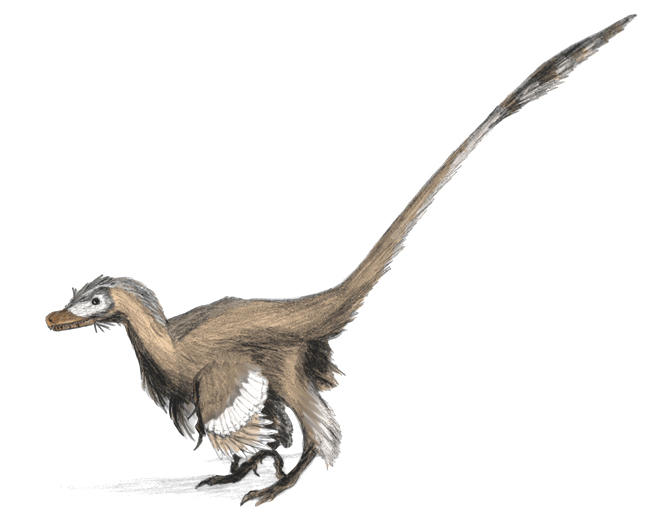
People need to stop picturing all dinosaurs as looking like some kind of leathery reptiles. I mean, we not only know now that velociraptor was feathered, but even how many secondary wing feathers it had (14). Jurassic park would have maybe not been as scary had their "raptors" looked like this.
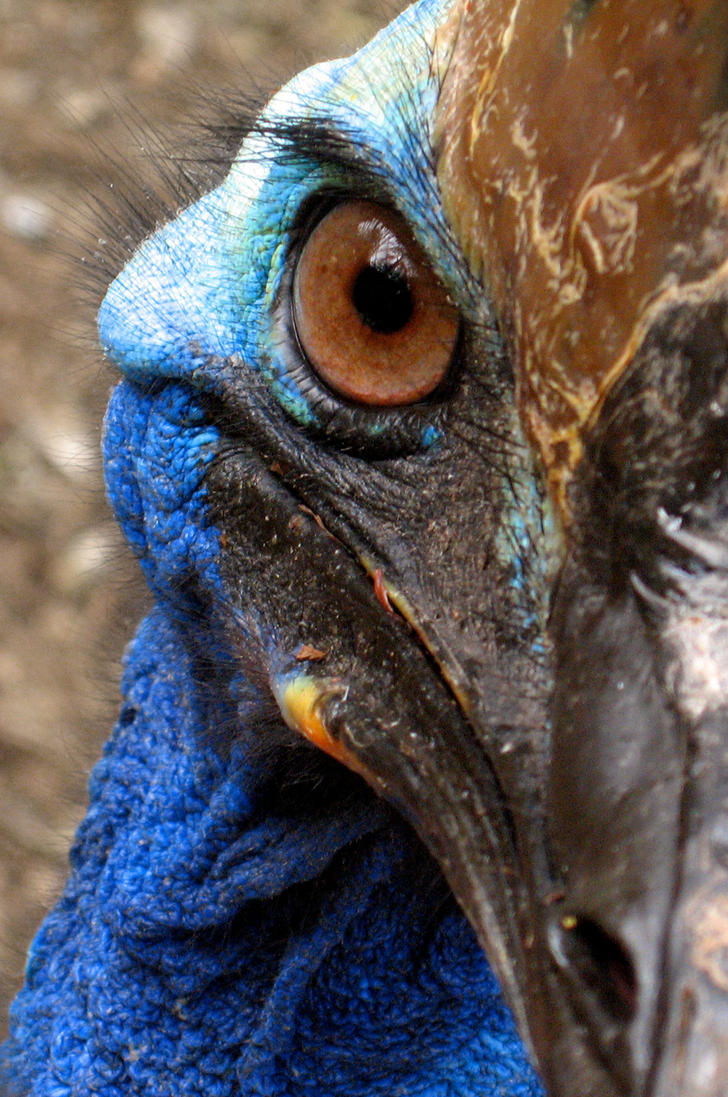
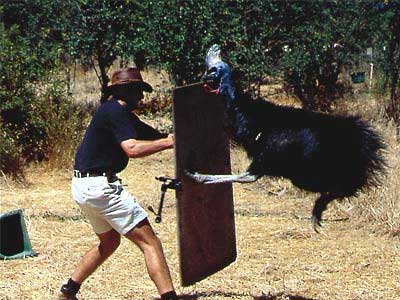
Meanwhile, some of their descendants today look like this and attack like this.
-
Re:Bipedal?
Actually, it's a guess from a very incomplete skeleton - skull fragments, a few vertebra and a femur. If, and it's an if, the hind legs were longer, other explanations can be found. However, "walked on hind legs" is sexier. no more.
The bipedal crocodile idea isn't new or just based on this one specimen. Here's a reference FTA:
http://www.bioone.org/doi/abs/...
The bipedal stem crocodilian Poposaurus gracilis: inferring function in fossils and innovation in archosaur locomotion. Bull. Peabody Mus. Nat. Hist. 52, 107–126 (2011).
-
Re:Mnsanto - hate unjustified?
How the hell did that get modded informative, that's blatantly false.
They planted Roundup-resistant plants
'They' here being farmers, do you have any idea how supply chains work?
all over while saying "the resistance will never spread to other plants" without actually bothering to check whether that was the case, as if they had never heard of plasmids.
Yes, your degree from Google University means you know more than all the scientists at Monsanto. And what the hell do plasmids have to do with anything?
Roundup-resistant weeds with the Monsanto gene in them were found IN THE NEXT FIELD BELONGING TO A DIFFERENT LANDOWNER four months after the first crops were planted
Man, if horizontal gene transfer happened that easily we'd be living in a very different world, however, that didn't happen. This is evolution 101 here; apply a strong selective pressure over a large area upon a fast reproducing species and you produce genetic shifts. If you knew anything about agriculture (you clearly don't) you would know that the first examples of herbicide resistant weeds emerged in the 70's, decades before GMOs. This is a problem systematic of agriculture, not one of GMOs. As for the Roundup resistant weeds, their mode of resistance is well understood, with mutations such as amplification of the EPSP synthase enzyme, or blocking of glyphosate translocation, or modification of the glyphosate binding site responsible, but never once has there been a single instance of the weeds uptaking the crop's genes. I'll eat my hat if you can find me a single example of the C4 EPSPS gene (the gene used in RR crops) being integrated into a weed's genome. Come on, prove me wrong, I'd love to hear about it. If Monsanto is so evil, and the hate so justified, the evidence of what you say should be abundant, and it shouldn't be hard to shut me up.
Since then, Monsanto have lied repeatedly about the spread of resistance
And here's Monsanto talking about it., Two seconds on Google is all it would have taken to find that. That news is all over the ag world, no one is covering it up, its been a topic of discussion for a long time, and if you paid attention to ag news or watched ag TV programs like on RDF-TV then you'd know that.
I really wish people who knew nothing about agriculture would stop going around saying what's what when they wouldn't know guanine from glufosinate.
-
Re:GMOs feed over a billion people
The existence of GMOs have NOT boosted production in the slightest.
Tell that to the papaya farmers in Hawaii. Virus resistant GMO papaya saved the industry. Without GMOs, there would be no papayas on the Big Island. How's that for a yield gain?
Second, you completely ignore the also prevalent Bt crops, which while they have not had much of a yield impact in developed countries (which is no surprise since insecticides are readily available there) but have had noticeable impacts in developing countries like India.
Third, why do you pretend this is all about yield? It's not. You criticize herbicide tolerant crops, yet I don't see you proposing a better idea for weed control. Would you like to go back to harsher herbicides? Or maybe tilling the hell out of the soil? Besides economic benefits, there is also the benefits of no-till and replacing harsher herbicides. It is a perfect system? Nope, but I don't hear the anti-GMO crowd volunteering to weed a few million acres by hand.
This herbicide immunity, by the way, is an immunity being acquired by other "pest" plants which were the original target of the herbicide.
The first example of an herbicide resistant weed was in the 70's, so your argument has more to do with over-reliance on a single mode of action herbicide than genetic engineering. Surprise, evolution in the weed population works the same regardless of whether or not a transgene is present. It is telling that one of the best arguments against genetic engineering is 'we might lose some of the benefits it has provided.'
GMOs do not represent a world-saving technology.
No one is saying they are, but to point that out is like saying that vaccines won't cure everything, therefore they are bad. That's an asinine argument. As the case of papaya in Hawai'i and Bt crops in Asia & South America, while they are no panacea they can indeed help.
What they represent is a danger to the world's food supply not only because it comes under control of a small collection of companies,
The consolidation of seed companies has been going on for a very long time. Just because you didn't start paying attention until GMOs showed up doesn't mean GMOs did it. Correlation, not causation.
but because it reduces the varieties of plants available. In the event a disease develops to wipe out these GMOs, there may be extreme starvation and human suffering due to the continual growth of GMO use.
Please explain how the presence of a transgene is reducing the varieties of crops out there. you are confusing the selection of genes, aka conventional breeding, with the insertion of a small number of genes. They are very different. Genetic monoculture is caused by having a lot of similar genetics, not from having a single gene inserted. Now, to be fair, over relying on a single inserted transgene can and has resulting in pests overcoming the resistance, but the same thing has happened in with conventional systems, from hessian fly overcoming the conventionally bred resistance in wheat to late blight overcoming tomato resistance, to the fall of the Gros Michael banana. You are taking a basic agricultural issue completely out of context.
Please shill for Monsanto elsewhere.
Ah, the big shill gambit. Not just for anti-vaxxers anymore!
-
Re:4 part series on antibiotics in livestock
Awesome - FINALLY a vet.
Talk to us about zoological transfer in the context of using human sewage sludge (class B or worse) on farm pasture land and allowing your cows graze immediately after application.
Talk about rebloom/growth of ecoli and other bacteria on farm fields.
Talk about molybdenum poisoning (as witnessed in Augusta GA).
Talk about the lack of source tracking when contamination does become a problem (livestock auction breaks chain of custody of poisoned/contaminated cattle).
Talk about ecoli in cookie dough and if that could be linked to sewage sludge.
Talk about bio-aersols and if the wind can carry sludge particulates off site for miles.
Talk about vector transmission of MRSA and ECOLI by birds that feast on our waste and poop on our beach.
Talk about the issue of RCRA regulations of accepting toxic waste and the potential for clean up liability to the farmer who accepts this material.
Talk about the mrsa and ecoli showing up in meat.
This is just a warm up - i've got tons more.
-
Re:Death With Dignity
Homo sapiens has had more impact on biodiversity than any other species. The Great Oxidation Event lasted hundreds of millions of years and, while we have no means of establishing a survey of taxa from that era, it was most likely the result of a very large number of species, and indeed is such a long period of time that many speciation events could readily have occurred. Further, the autotrophs that released the oxygen in the first place had no means of affecting many of the anaerobes that live deep underground—and we do.
Here are your citations for humanity's impact. Suffice it to say that many of them will still be noticeable in a few million years:
- Climate Change, Human Impacts, and the Resilience of Coral Reefs
- Consequences of changing biodiversity
- A continent transformed: Human impact on the natural vegetation of Australia, which went on for something like sixty million years before we screwed it up.
- Tropical forest recovery: legacies of human impact and natural disturbances
- The Future of Biodiversity, the abstract for which starts: "Recent extinction rates are 100 to 1000 times their pre-human levels in well-known, but taxonomically diverse groups from widely different environments. If all species currently deemed "threatened" become extinct in the next century, then future extinction rates will be 10 times recent rates. Some threatened species will survive the century, but many species not now threatened will succumb. Regions rich in species found only within them (endemics) dominate the global patterns of extinction."
- Urbanization, Biodiversity, and Conservation
- Biodiversity inventories, indicator taxa and effects of habitat modification in tropical forest (PDF)
I don't know why you then decided to compare humanity's effect on biodiversity to that of mass extinction events, but let me explain to you why they are completely different.
When an extinction event occurs, there is a single source of pressure that living organisms must accommodate, or at most a couple: the sky is darker, the air is colder, the atmosphere is now filled with water rather than ammonia, et cetera. Humans have not been exerting this kind of pressure at all. We systematically destroy ecosystems, replacing hundreds of species of plants and animals with just one or two (which are, naturally, attuned to depend on us feeding, fertilizing, irrigating, and sheltering them) and we poison the water, air and soil with thousands of chemicals and chemical cocktails (an issue which is now so bad it's affecting us.)
This is too much for evolution to handle. Especially due to chemical poisoning, many of the hardiest species most likely to survive a natural disaster have been snared by exotic and unexpected genetic vulnerabilities. DDT was found to act as a sex hormone in birds, for example, causing males to develop female genitalia. As a South African, I'm sure you're aware that it's still in use, combating Malaria, even though it has been banned in many countries.
We are whittling down biodiversity in ways that the Great Oxygen Catastrophe didn't. It selected one major branch of the tree, the organisms that depended on a reducing atmosphere, and marginalized them, creating room for the healthy and d
-
Re:Read the small print
You know, I've often wondered why we don't join some of our existing technologies together and get on with things. I know it may not be as simple as it sounds, but we have this tech already:
http://www.sciencenews.org/view/feature/id/54170/title/Let_there_be_light
(Allows for manipulation of neurons with light)http://pubs.acs.org/doi/abs/10.1021/nl051811%2B
http://nanotechweb.org/cws/article/tech/41146
(Nanoscale OLED displays)http://www.egmrs.org/EJS/PDF/vo281/1.pdf
http://www.azonano.com/news.asp?newsID=6802
(Nanoscale light detectors)http://www.bioone.org/doi/abs/10.2108/zsj.22.535?journalCode=jzoo
http://www.jove.com/index/details.stp?ID=2081
(And we can stain cells with dyes that fluoresce when the cells experience activity now)We have peanut butter, jelly and bread. Why can't we get this all together to make a sandwich? Or is this currently in the works?
Or am I missing something subtle, that someone who actually knows about this research can enlighten us about? -
Reference provided here
This is a recent paper from UC Davis on distinguishing Anopheles (the genus that spreads malaria) by spectral analysis: The “Wingbeat Hypothesis” of Reproductive Isolation Between Members of the Anopheles gambiae Complex (Diptera: Culicidae) Does Not Fly.
Note this *does* seem to imply the possibility of distinguishing genera. There is one paper I found that claims a 72% success rate in distinguishing Ae solicitans, Cx pipiens pallus and Cx pipiens quinquefasciatus, but it is not published in a biology journal. I don't find the distinguishing of Cx pipiens subspecies plausible, since where their ranges overlap they readily hybridize. That means the hypothesis of recognition by acoustic signature has no function. Also, I doubt many researchers outside the mosquito field are qualified to distinguish between the pipiens subspecies.
In any case, there's no reason to believe that mosquitoes recognize each other by anything so simple as wing beat frequency; harmonics, possibly but it doesn't have to be good enough to be an exclusive cue. There are probably behavioral cues as well.
UC Davis or Rutgers are the major research centers for mosquito biology in the US. If you want credibility, you should invite somebody there to prove you wrong, on your own dime of course.
-
Re:Land bridge vs ?
all modern humans (homo sapiens sapiens, as they're known) can be traced back to a single maternal ancestor via mitochondrial RNA. is that what you meant? do some research on 'Lucy'.
There is no proof of "Eve" out of Africa, even Mt RNA, just as there is no proof of the Multiregional hypothesis. Here's a paper on GENETICS AND RECENT HUMAN EVOLUTION discussing some flaws in studies suporting the Out of Africa hypothesis.
Falcon -
Re:density of power useI'm not an expert on birds, or wind power for that matter. We do have some turbines not a huge distance away, and it looks to me as though a smart bird won't have that much difficulty avoiding them.
"The World Wide Fund for Nature Conservation (WWF) has also published a policy statement on renewable energy in the UK, which outlines that there is no evidence that wind turbines have a measurable effect on bird mortality. The statement concludes that: "It has been shown that strikes are highly unlikely to occur during good visibility conditions and in poor visibility birds are less likely to be in the vicinity of turbines. Further it has been found that most birds tend to fly over or around the turbines"."
http://www.ecotricity.co.uk/code/popup_faq_3.htmlComparison of fatal bird injuries from collisions with towers and windows Issn: 0273-8570 Journal: Journal of Field Ornithology Volume: 76 Issue: 2 Pages: 127-133 Authors: Veltri, Carl J., Klem, Daniel Birds do fly into things...
http://www.bioone.org/bioone/?request=get-document &issn=0273-8570&volume=076&issue=02&page=0127I don't think we are going to devastate the biome with windmills. It is worth looking at what actually happens, and I think the basic science continues, but it is also worth considering what the effect of coal and oil have been on birds - not good I think.