Slashdot Mirror
Domain: circuitspecialists.com
Stories and comments across the archive that link to circuitspecialists.com.
Comments · 8
-
Re:To be fair...
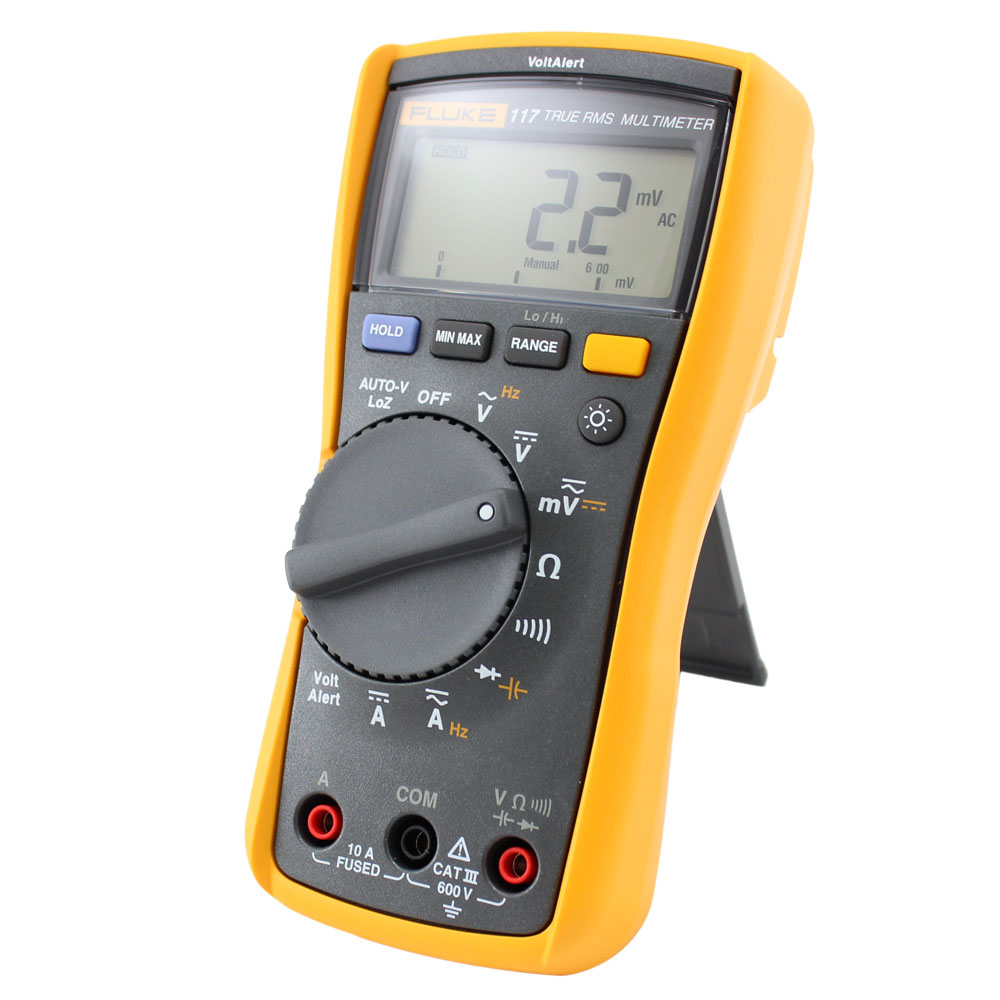
The only Fluke I see it looking sorta similar to is this one. SparkFun offered to change the color. Also it's a multimeter, how much different can it look so it doesn't look like others. That's kinda like Ford suing every auto manufacturer for making cars with 4 wheels.
-
Re:A good idea for a show...
I own a Circuit Specialists soldering station:
http://www.circuitspecialists.com/level.itml/icOid/9258I own the CSI-STATION1A which is $40. Replaceable tips. I got a needle point and a broad one and I use it at least once a month for the last year. I probably wouldn't have a problem using it 24/7. Much cheaper than weller and higher quality the cheap knockoffs. I find I get up to temp VERY quickly and it's just an all around solid product.
CSI-STATION2A has a digital temp display.
-
Re:A good idea for a show...
I own a Circuit Specialists soldering station:
http://www.circuitspecialists.com/level.itml/icOid/9258I own the CSI-STATION1A which is $40. Replaceable tips. I got a needle point and a broad one and I use it at least once a month for the last year. I probably wouldn't have a problem using it 24/7. Much cheaper than weller and higher quality the cheap knockoffs. I find I get up to temp VERY quickly and it's just an all around solid product.
CSI-STATION2A has a digital temp display.
-
Re:A good idea for a show...
I own a Circuit Specialists soldering station:
http://www.circuitspecialists.com/level.itml/icOid/9258I own the CSI-STATION1A which is $40. Replaceable tips. I got a needle point and a broad one and I use it at least once a month for the last year. I probably wouldn't have a problem using it 24/7. Much cheaper than weller and higher quality the cheap knockoffs. I find I get up to temp VERY quickly and it's just an all around solid product.
CSI-STATION2A has a digital temp display.
-
Take a class
at your local community college. Will cost you $100 (depending on your location)and be well worth it. A basic electronics class will be mostly theory and book work 90% study 10% lab. You really won't grasp it without some education.
With this, then get a book with some schematics that interest you and buy the breadboards and components online.
If you want to learn more, depending on your interests; analog or digital, take more advanced classes.
Most community colleges have night classes and can be 1 hr 3-4 times a week or 3 hours once a week. -
Re:Don't jump to conclusions
This was a common problem with some connectors, especially earlier versions of Dolphin DC1000S most places around here started replacing them with these due to the corrosion problems. I know I've seen (and fixed) countless problems with the Dolphin connectors causing intermittent connection issues. They didn't even have to be exposed to weather for it to be a problem. A few were inside, though they invariably take longer to fail when not exposed to the elements. After talking with people that work for the local telco's they saw this problem at least as often as I did.
-
Very nice...I hate "here's my blog!" posts on Slashdot as much as other people (or even the shameless MAKE plug). But there are some things on there I did like.
For example, this is neat.
A variable 40W grounded soldering iron with replaceable element and a 0.8mm tip? FOR $35?! Where do I sign up?
Maybe not for true professionals, but even this would be a nice iron for just thier home projects. I already have a dual-tempreture Radio Shack, but I want to give this to myself for Christmas.
-
Re:You can do it digital if you want
You measure the impulse response of your desired tube system
Mmmmmmm..... if I recall correctly, an impulse is theoretically "white" so the response represents the system's response to all frequencies. That's with a n infinitely narrow (time) and high (amplitude) impulse.
The problem with tube modeling is that the system is non-linear. The frequency response *changes* with amplitude. I've also heard that it changes with the blend of tones, though I take that with a grain of salt. The claim is that a strong bass note (for example) will affect the frequency response in upper registers.
I see the problem as an ignorance of the effects of inductance & reactance. RC systems are fairly easy to model digitally, but RLC systems are less well understood by digital implementors who blew through analog class without much respect.
Tube amps have giant-o-normous output transformers for matching high impedance tube outputs to low impedance speakers (I think- I'm one of those analog diss-ers trying to learn at a late age).
This causes low damping factor- the ability of the amp to deal with back EMF of the speaker and control it "tightly."
Bob Carver built some transistor amps with low damping factor as a demonstration that much of the tube "sound" was this simple property. High damping factors was something tube people always strived for so when transistor amps could do it easily, people *chose* to build amps that way.
Transformers also have problems like core saturation. Something that strikes me odd is that better (electrically, not audiophile-tweaky) transformers which might actually sound less "tubey" are valued by audiophiles.
Incidentally, tube guitar amps have an advantage of high input impedance: good when dealing with a monster coil like a guitar pickup. Bipolar transistor pre-amp stages are not a good idea, but FETs work if you want to be able to carry your amp outside on a cold night after practicing without hearing the sound of glass breaking. Anyone remember VOMs?
I'm planning on building one of these to drive a pair of these.
A very similar kit is availble from "Antique Electronics" and S5.
The build will give me a chance to bone up on my languishing soldering skills, but more importantly, I want to build a nice case like this guy did.