Slashdot Mirror
Domain: displaymate.com
Stories and comments across the archive that link to displaymate.com.
Comments · 30
-
Re: Hilarioud
The latest and greatest Samsung panels use a different pattern: https://fscl01.fonpit.de/userf...
It is standard for all OLED displays though, so yeah this lawsuit doesn't have much merit.
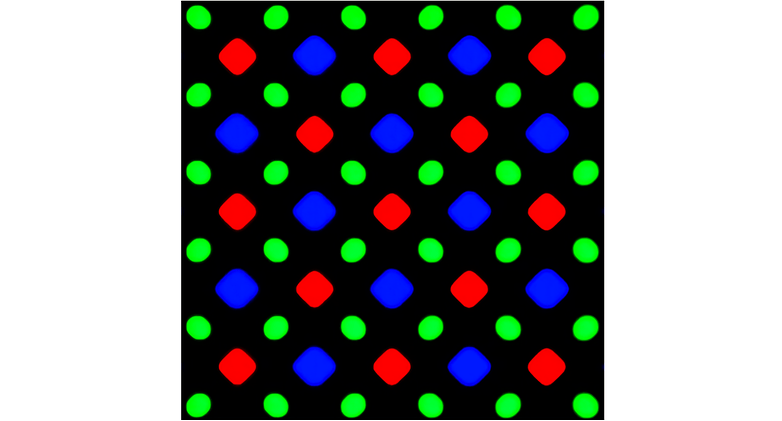
The new XS Max uses the very same DiamondTile type OLED panel as it is a Samsung display: http://www.displaymate.com/Dia...
-
Re:So basically
Also to understand that Apple doesn't exactly have an overwhelming advantage when it comes to Samsung components when competing with Samsung. I'm pretty sure Samsung Displays division isn't forced to sell their best displays only to Apple. The question then is why does Apple have the best display (made by Samsung) and why doesn't Samsung smartphones also have the same display.
Now that we have agreed that selling more high end components to apple are more profitable than just only using them on their own product, let see what Displaymate has to say:
Galaxy S7"
" the Galaxy S7 becomes the Best Performing Smartphone Display that we have ever tested"
iPhone 7
"It is by far the best performing mobile LCD display that we have ever tested". Not the best smartphone display, not even the best LCD
Galaxy S8
"So the Galaxy S8 becomes the Best Performing Smartphone Display, earning DisplayMate’s highest ever A+ grade"
Galaxy Note 8
"So the Galaxy Note8 becomes the Best Performing Smartphone Display"
iPhone X
" the iPhone X becomes the Best Performing Smartphone Display that we have ever tested, earning DisplayMate’s highest ever A+ grade"
Those best performing smartphone displays have one thing in common, Samsung made them. They have consistently improving their display from the S7, S8, Note 8, and the latest of their OLED iteration, iPhone X. So, to answer your question, Samsung has been using the best components available for their top of the line phones. What they don't do is intentionally crippling product that they sell to their competitors. What the iPhone X has is just a natural progression of their constant improvement from one generation to the newer one. -
Re:So basically
Also to understand that Apple doesn't exactly have an overwhelming advantage when it comes to Samsung components when competing with Samsung. I'm pretty sure Samsung Displays division isn't forced to sell their best displays only to Apple. The question then is why does Apple have the best display (made by Samsung) and why doesn't Samsung smartphones also have the same display.
Now that we have agreed that selling more high end components to apple are more profitable than just only using them on their own product, let see what Displaymate has to say:
Galaxy S7"
" the Galaxy S7 becomes the Best Performing Smartphone Display that we have ever tested"
iPhone 7
"It is by far the best performing mobile LCD display that we have ever tested". Not the best smartphone display, not even the best LCD
Galaxy S8
"So the Galaxy S8 becomes the Best Performing Smartphone Display, earning DisplayMate’s highest ever A+ grade"
Galaxy Note 8
"So the Galaxy Note8 becomes the Best Performing Smartphone Display"
iPhone X
" the iPhone X becomes the Best Performing Smartphone Display that we have ever tested, earning DisplayMate’s highest ever A+ grade"
Those best performing smartphone displays have one thing in common, Samsung made them. They have consistently improving their display from the S7, S8, Note 8, and the latest of their OLED iteration, iPhone X. So, to answer your question, Samsung has been using the best components available for their top of the line phones. What they don't do is intentionally crippling product that they sell to their competitors. What the iPhone X has is just a natural progression of their constant improvement from one generation to the newer one. -
Re:So basically
Also to understand that Apple doesn't exactly have an overwhelming advantage when it comes to Samsung components when competing with Samsung. I'm pretty sure Samsung Displays division isn't forced to sell their best displays only to Apple. The question then is why does Apple have the best display (made by Samsung) and why doesn't Samsung smartphones also have the same display.
Now that we have agreed that selling more high end components to apple are more profitable than just only using them on their own product, let see what Displaymate has to say:
Galaxy S7"
" the Galaxy S7 becomes the Best Performing Smartphone Display that we have ever tested"
iPhone 7
"It is by far the best performing mobile LCD display that we have ever tested". Not the best smartphone display, not even the best LCD
Galaxy S8
"So the Galaxy S8 becomes the Best Performing Smartphone Display, earning DisplayMate’s highest ever A+ grade"
Galaxy Note 8
"So the Galaxy Note8 becomes the Best Performing Smartphone Display"
iPhone X
" the iPhone X becomes the Best Performing Smartphone Display that we have ever tested, earning DisplayMate’s highest ever A+ grade"
Those best performing smartphone displays have one thing in common, Samsung made them. They have consistently improving their display from the S7, S8, Note 8, and the latest of their OLED iteration, iPhone X. So, to answer your question, Samsung has been using the best components available for their top of the line phones. What they don't do is intentionally crippling product that they sell to their competitors. What the iPhone X has is just a natural progression of their constant improvement from one generation to the newer one. -
Re:So basically
Also to understand that Apple doesn't exactly have an overwhelming advantage when it comes to Samsung components when competing with Samsung. I'm pretty sure Samsung Displays division isn't forced to sell their best displays only to Apple. The question then is why does Apple have the best display (made by Samsung) and why doesn't Samsung smartphones also have the same display.
Now that we have agreed that selling more high end components to apple are more profitable than just only using them on their own product, let see what Displaymate has to say:
Galaxy S7"
" the Galaxy S7 becomes the Best Performing Smartphone Display that we have ever tested"
iPhone 7
"It is by far the best performing mobile LCD display that we have ever tested". Not the best smartphone display, not even the best LCD
Galaxy S8
"So the Galaxy S8 becomes the Best Performing Smartphone Display, earning DisplayMate’s highest ever A+ grade"
Galaxy Note 8
"So the Galaxy Note8 becomes the Best Performing Smartphone Display"
iPhone X
" the iPhone X becomes the Best Performing Smartphone Display that we have ever tested, earning DisplayMate’s highest ever A+ grade"
Those best performing smartphone displays have one thing in common, Samsung made them. They have consistently improving their display from the S7, S8, Note 8, and the latest of their OLED iteration, iPhone X. So, to answer your question, Samsung has been using the best components available for their top of the line phones. What they don't do is intentionally crippling product that they sell to their competitors. What the iPhone X has is just a natural progression of their constant improvement from one generation to the newer one. -
Re:So basically
Also to understand that Apple doesn't exactly have an overwhelming advantage when it comes to Samsung components when competing with Samsung. I'm pretty sure Samsung Displays division isn't forced to sell their best displays only to Apple. The question then is why does Apple have the best display (made by Samsung) and why doesn't Samsung smartphones also have the same display.
Now that we have agreed that selling more high end components to apple are more profitable than just only using them on their own product, let see what Displaymate has to say:
Galaxy S7"
" the Galaxy S7 becomes the Best Performing Smartphone Display that we have ever tested"
iPhone 7
"It is by far the best performing mobile LCD display that we have ever tested". Not the best smartphone display, not even the best LCD
Galaxy S8
"So the Galaxy S8 becomes the Best Performing Smartphone Display, earning DisplayMate’s highest ever A+ grade"
Galaxy Note 8
"So the Galaxy Note8 becomes the Best Performing Smartphone Display"
iPhone X
" the iPhone X becomes the Best Performing Smartphone Display that we have ever tested, earning DisplayMate’s highest ever A+ grade"
Those best performing smartphone displays have one thing in common, Samsung made them. They have consistently improving their display from the S7, S8, Note 8, and the latest of their OLED iteration, iPhone X. So, to answer your question, Samsung has been using the best components available for their top of the line phones. What they don't do is intentionally crippling product that they sell to their competitors. What the iPhone X has is just a natural progression of their constant improvement from one generation to the newer one. -
Re:So basically
It shouldn't. Scores shouldn't be awarded on calibration. And what do you mean by "performance"?
Please read the DisplayMate test. DisplayMate tested for color accuracy. It appears Apple calibrated their phones for better accuracy. Thus it was awarded more points. That seems logical to me.
Anyways, it's the first time in years that Apple can beat Samsung according do DisplayMate.
Because this is the first OLED that Apple has used. DisplayMate can't compare LCD and OLED displays. That wouldn't be an apple to apple comparison would it?
And this is by using a Samsung display. So despite their poor color accuracy, Samsung phones had better displays for years.
You missed the point and introduce another false dichotomy. No one has said Samsung displays has poor color accuracy. What DisplayMate says is that the iPhone X currently has the best OLED display and the display was made by Samsung. I'm arguing that (and confirmed somewhat by DisplayMate) that this was due to how Apple calibrated the display. It's the same point I've made multiple times.
No. That was my point. The video card and the rest of the PC doesn't matter. It's a digital connection. If my PC tells the monitor to turn on pixel #42 with color code 1234, then the display should do so no matter which video card I use. And by default I believe it does.
I'm pretty sure if you set your PC's monitor refresh rate to 25Hz, it would affect the monitor's display. For most monitors, setting the wrong color management profile doesn't have much of an effect--unless you are going for color accuracy then it's going to be off which in the case of DisplayMate was the exact thing they were testing.
They are settings. They should be adjustable. And it should be possible to get the exact same image from two different PCs by using the same settings.
You missed the point: The iPhone X isn't exactly the same as a Note 8 or an iPhone 8. That's the difference.
-
Re:So basically
DisplayMate compared the calibrated screen in the iPhone to the uncalibrated screen in the Note 8.
Please show me in the DisplayMate analysis of the Note 8 where what you say is true. It doesn't appear in the iPhone X analysis as them comparing anything to the Note 8. In the both analyses, both phones are tested under the same calibration modes.
FTA: "What makes the iPhone X the Best Smartphone Display is the impressive Precision Display Calibration Apple developed"
Um, no. What the author actually wrote: "Apple's display is the best because of the calibration of their phones." What you read: "We cheated by calibrating the iPhone X and not the Note 8." Please read the Note 8 analysis again. What the author is talking about is probably the calibration to the standards as not all phones/manufacturers have the same settings or goals. Nowhere does the author mention they had to perform some sort of special calibration per Apple's instructions.
-
Re:So basically
DisplayMate compared the calibrated screen in the iPhone to the uncalibrated screen in the Note 8.
Please show me in the DisplayMate analysis of the Note 8 where what you say is true. It doesn't appear in the iPhone X analysis as them comparing anything to the Note 8. In the both analyses, both phones are tested under the same calibration modes.
FTA: "What makes the iPhone X the Best Smartphone Display is the impressive Precision Display Calibration Apple developed"
Um, no. What the author actually wrote: "Apple's display is the best because of the calibration of their phones." What you read: "We cheated by calibrating the iPhone X and not the Note 8." Please read the Note 8 analysis again. What the author is talking about is probably the calibration to the standards as not all phones/manufacturers have the same settings or goals. Nowhere does the author mention they had to perform some sort of special calibration per Apple's instructions.
-
Re:So basically
The best LCD. OLED is not LCD. The Galaxy S7 was "The Best Performing Smartphone Display that we have ever tested."
http://www.displaymate.com/Gal...Until they tested the exploding Note 7. Despite its battery flaws, its display was even better:
http://www.displaymate.com/Gal...
And more recently, the Galaxy S8 beat that score:
-
Re:So basically
The best LCD. OLED is not LCD. The Galaxy S7 was "The Best Performing Smartphone Display that we have ever tested."
http://www.displaymate.com/Gal...Until they tested the exploding Note 7. Despite its battery flaws, its display was even better:
http://www.displaymate.com/Gal...
And more recently, the Galaxy S8 beat that score:
-
Re:So basically
The best LCD. OLED is not LCD. The Galaxy S7 was "The Best Performing Smartphone Display that we have ever tested."
http://www.displaymate.com/Gal...Until they tested the exploding Note 7. Despite its battery flaws, its display was even better:
http://www.displaymate.com/Gal...
And more recently, the Galaxy S8 beat that score:
-
Re:So basically
They have. For years, Samsung had the best display on its own phone. It just didn't made Slashdot headlines because it wasn't Apple.
And it also gave Apple iPhone 7 the best LCD display in previous years. But you've missed my point: Why would Apple have the best Samsung display over Samsung phones?
-
Re:Oh, really?
OLED has caught up and surpassed IPS in everything: http://www.displaymate.com/Gal...
-
Re:Disposable screens for disposable products?
Color accuracy is better than any other mobile screen available. http://www.displaymate.com/Gam...
-
Re:Disposable screens for disposable products?
Hmmm... Anecdote from a random person on one side and detailed scientific analysis and comparison on the other. Wonder what to believe in.
-
Re:The whine of the flyback transformer
If you really want the best display money can buy, get an OLED TV. Those give you the perfect geometry of a flat panel (no loss of focus or distortion in the corners like a CRT), contrast ratios that can't be matched by any other technology because the persistance of the LED is near zero, and no inherent lag. (The associated electronics may have lag; that's another matter.) But for now you'll pay a high price for it, and the technology is not readily available in sizes suitable for desktop displays.
Color accuracy of small OLED displays like the ones found in cell phones is poor, but that is not a problem that is inherent to the technology. Some of the available large screen OLED TVs have outstanding color accuracy. Reference: http://www.displaymate.com/LG_...
-
Re:No end in site.
No, you are wrong. As I was talking about the iPhone (which has had 330 ppi ever since 2010), I am completely right. You suddenly include a completely different subject and then claim I was wrong. Way to go!
That chart doesn't really mean anything either, not in the least because we're talking about the low end of the spectrum here, which is near the base of that chart where it gets fuzzy. But let's have a look at something a bit more scientific, shall we.
-
Re:What no Android versione?
Medical informatics researcher here. As a medical engineer you might want to do some research before labeling a screen "crappy". Just looking at the dpi doesn't do the job. http://www.displaymate.com/Smartphone_ShootOut_2.htm
-
Re:A very MS centric blog indeed...
The other day, MS's engineering team did an AMA on reddit where they answered the question of screen resolution:
Hey this is Stevie. Screen resolution is one component of perceived detail. The true measure of resolvability of a screen called Modulation Transfer Function (MTF), not Pixels. MTF is a combination of both contrast and resolution. There are over a dozen subsystems that effect this MTF number.. Most folks just focus on one number out of dozens that effect perceived detail. Without good contrast resolution decreases. Check out contrast sensitivity of the human eye graph (http://www.telescope-optics.net/images/eye_contrast.PNG) and if you want more see the links below. Basically, as resolution/DPI increases the eye has becomes less sensitive. So as a result, the amount of light in a room and the reflections off the screen have a huge effect on the contrast of the display. In fact, a small amount of reflection can greatly reduce contrast and thus the perceived resolution of the display. With the ClearType Display technology we took a 3 pronged approach to maximize that perceived resolution and optimize for battery life, weight, and thickness. First prong, Microsoft has the best pixel rendering technology in the industry (cleartype 1.0 and 2.0)
Some more links to share if you want to know more (http://www.normankoren.com/Tutorials/MTF.html)... Also This is a great book to read if you really want to get into it: http://www.amazon.com/Contrast-Sensitivity-Effects-Quality-Monograph/dp/0819434965 or more here http://alexandria.tue.nl/extra2/9901043.pdf
So it seems that Microsoft has data that suggests that, despite the lower resolution, the Surface has greater precieved detail than the iPad. (although I find it annoying that they've muddied the waters by re-using trademarks - they've repurposed "Cleartype Display" as the MS equivalent of Apple's "Retina Display")
-
Re:I blame apple...
If it's PPI you're after, the iPhone 4/4s/5 isn't your best bet. If you're an Android user, you've got plenty of great displays to choose from.
The iPhone had, as the first smartphone, a high enough PPI that you can't distinguish between pixels - it's what they coined the phrase "retina display" for - so there's no point in going for something higher. And the iPhone 5 apparently has the best screen among smartphones today.
-
Re:Again
Some of these are not really effective as a comparison of the phones.
- The S3 has more pixels because it has a larger screen, but it has a lower resolution (PPI). Its colour management is also significantly weaker than the iPhone 5's. If you want a nice techy comparison of the screens, have a look here: http://www.displaymate.com/Smartphone_ShootOut_2.htm#Table
- What is the benefit of having twice as much RAM or a faster CPU, given that these phones have different architectures and different OSs? What matters is speed for the end user and effect on hours of use between battery charges, no?It also clearly doesn't make sense to cite the lack of an SD card slot and NFC as examples of how Apple *can't* keep up with Samsung's hardware. Apple clearly has the capability to include these things but chooses not to, just as it chose not to make a wider screen. Engineering is all about selecting the balance of compromises, after all. Many consumers will prefer Sammy's choices, but many others will prefer Apple's. There's no inherently right or wrong answer, and fetishing choice makes no sense. By analogy: if you go for a meal at the Fat Duck, you can choose between picking your own wine, or getting a matched glass for each of the courses of your meal. The former allows you more precise calibration to your budget and a wide selection; the latter gives you greater variety over the whole of the meal, and careful matching by an expert. Neither is the "wrong" thing to do.
-
Ray Soneira on 2D and 3D, active vs. passive
Uttbuggly, thanks for the question. There's a lot of information (and misinformation) flying around about the relative merits of passive and active glasses. Personally, I don't think that the interleaved issue of passive displays is important; 1080i is also interleaved, and our brains appear to stitch the images together without losing apparent resolution.
But on this subject, I will defer to Dr. Raymond Soneira of DisplayMate. Ray is a "display expert's display expert" and an uncurable empiricist. There's never been a display industry technology assumption that he has not challenged in his labs. And he performed an exhaustive series of real world tests on a set of passive and active 3D sets which he has published -- for free -- on his website at http://www.displaymate.com/3D_TV_ShootOut_1.htm. I recommend that anyone curious about this issue read Ray's report thoroughly. One of his surprising results was that small details -- such as text -- are actually much clearer on a passive set than an active one. This runs counter to the "lost resolution" argument, which is why I love empirical results (and why it's a good thing that I went into computer and display technology instead of high explosives).
And yes, he address the question of brightness specifically in his tests and his report. Comparing the sets in 2D and 3D modes, you do lose lots of light. (This is a big problem for 3D cinema as well.) You start off by losing half the light right off the bat, and then you can lose more depending on the characteristics of the glasses being used. But according to Ray's tests, you lose much more with active than you do with passive, and he explains why that is so.
Alfred Poor
HDTV Almanac -
Galaxy Tab has already been declared the winner
-
Re:no surprise
Apple's display beat Samsung's in what's certainly the most technical comparative review of mobile displays. No reason to think Apple wouldn't source a better LCD than Samsung if they were to create a TV.
-
Re:Root cause: Nexus One is a better phone
What about the display?
Ok, I give. You're right, there is no one perfect hardware for everyone. About the display, the N1 has better contrast (OLED generally gives blacker blacks), 2x the resolution (pretty useful for web browsing), and lower power consumption.
Looking around, I found a recent technical performance comparison of the N1 and iPhone 3GS displays, which is quite critical of the N1. I have both phones and I don't perceive the flaws they find in the N1's display, but I know it's hard to see many of these flaws under normal use. To an iPhone user the resolution and contrast certainly pop out at you when you see the N1 display.
-
Re:Multiple monitors, RAM, RAID array
I guess I was wrong about CRT brightness, but I was right about everything else. RAID 1 does technically give you faster reads, but it doesn't make writing any faster.
-
This device...
And it isn't cheap - but if you're doing this for a living, you should be able to write it off:
VP401
Or, the software version - Displaymate
the total solution
More:
http://www.hometheaterspot.com/htsthreads/showfl at
-
guide for size queensHere's a guide for would-be size queens.
Decide what size and resolution you want. I go for insane pixel counts (at least 1920x1440) and use Mozilla zoom and app font settings to make things visible, but if your apps are stuck at fixed pixel sizes and can't zoom (or you're too stupid to make the adjustments), it may be more trouble than it's worth and you'll be happier at 1024x768.
Then if you want higher res, figure out what refresh rate your video card can do at that resolution. Anything less than 72Hz is going to be miserable, and 85Hz is nicer. If you're willing to go with 16-bit color instead of 24-bit (thousands of colors instead of millions), you can get a higher refresh rate. Some video cards say they can do 2048x1536 at 85 Hz, but you find it's only in 8-bit color mode, which is useless these days.
Unless you have thousands to spend, your resolution quest takes you beyond LCD's, and you have to get a CRT.
All modern CRT monitors will claim they can do 2048x1536, but check the refresh rate as above. And then, check the dot pitch. Tiny pixels and big phosphor dots don't mix.
Buy your monitor, plug it in, screw in the cables to avoid interference, position your monitor away from stray electromagnetic fields. Go for the massive resolution, make sure you've got the plug'n'pray correctly identifying your monitor and letting you max out the refresh rate. Then spend quality time with all the setup controls. You need zone convergence to align the colors in each area of the screen, and full geometry controls to compensate for tilt, skew, barrel, etc. Displaymate has some nice test patterns, or you can create your own in a paint program.
Realize your video card is crap and at midnight unscrew a PHB's PC and swap your card with her 300+MHz RAMDAC 32MB model, then find you have to recalibrate all your settings.
Eventually give up on 2048x1536 because GIF images are just too damn tiny, and go for 1856x1392.
If you're going for high resolution, you have to go Sony GDM-F500R or the newer 520. To my knowledge nobody else has 0.22 mm dot pitch across the screen. I have that at work plus the GDM-F400 at home at 1600x1200. They're both fantastic and have been perfect for over three years. But again if you're happy at 1024x768 the extra money isn't worth it. The Sony E and G series are nearly as good and a lot less. You may find a PHB with a GDM series that's wasted running at 1024x768, so do the midnight monitor swap, she'll never notice. Yes occasionally the two wires on the Trinitron are right where you're looking, but it's not a big deal for me.
An LCD monitor with a DVI connection to your display card should let you bypass all the messing around with geometry and convergence, but you need to be careful. As I understand it, unless the DVI connector and your video card are engineered right with dual TMDS transmitters, you can't do super-high resolutions through the digital interface.
-
Re:pros and cons of LCDsDisplayMate has a very nice comparison chart for CRTs vs. LCDs.