Slashdot Mirror
Domain: forbesimg.com
Stories and comments across the archive that link to forbesimg.com.
Comments · 10
-
Re:Take that Karl Marx
First off, we don't have laissez-faire capitalism
But you can't deny it's a lot more laissez-faire than the Nordic model.
Second off, these problems have little to do with economics, in fact we've already tried throwing lots of money at these kinds of people, and it didn't work.
What's that? Just throwing money at a problem without actually changing the underlying socioeconomic model that caused the issue in the first place doesn't fix the problem? Who could have predicted??
It's interesting that you say this, because things have only been improving. Pick any metric you want:
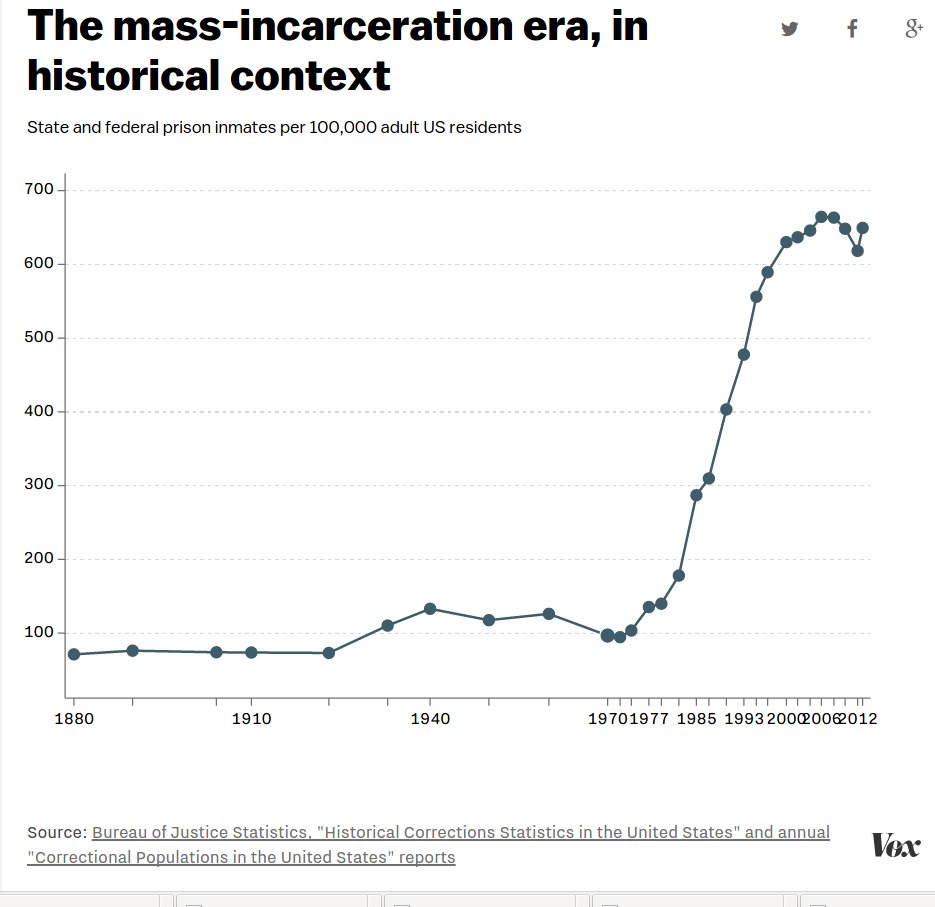
I can pick 5 things straight off the bat that haven't been improving:
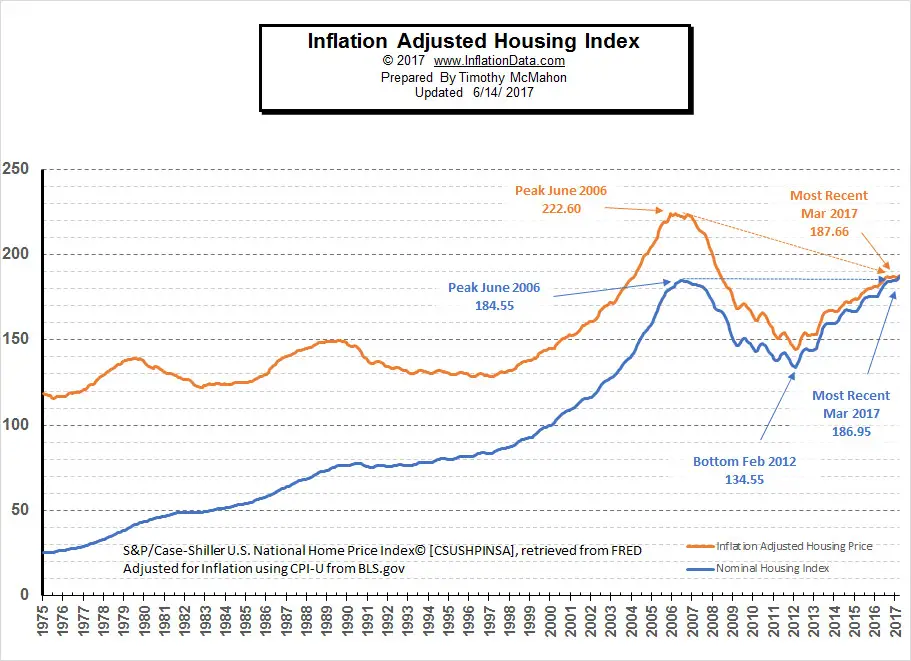
1. Cost of housing.
2. Healthcare costs.
3. Income inequality. The majority of wages have stagnated while only those at the top have seen their wages increase. Stagnant wages combined with increasing the living costs above is leaving far more lower and middle income families in a precarious position.
So if we follow your assertion, then a more unrestricted economic model is improving life for Americans. The reality is much more nuanced than that, but you're the idiot who made this statement.
Your assertion that things have been improving across the board is demonstrably wrong and there is clearly plenty of room for improvement.
-
Re:A clear preference
Good question. Looks like it's been going down.
-
Re:In the next version....
It seems that, he - that guy has learned a lesson.
PS: Impressive video. -
Re:Trouble for Marissa Mayer? How about employees?
Meanwhile employees had their remote-work privileges revoked, allowing them to watch this slow-motion trainwreck of a CEO up close. And employees were recently asked by Mayer to reup for a long-term commitment to the company. Where does this leave all of them?
At least she's easy to look at. I'd hate to go through all of this while looking at Michael Dell or someone like that.
-
Re:Don't worry!Wow, this is so rich...
As a result, the average American household receives about $277,000 less annually than it would have gotten in the absence of six decades of accumulated regulations—a median household income of $330,000 instead of the $53,000 we get now.
OK, so even if that is true, where's the guarantee that "the average American household" would actually receive such income? Considering that there was a REAL GDP growth of around 100% since the 1970s or somethign like that while median real income has stagnated, what's the reason to believe that it wouldn't be siphoned off by someone in the same way it actually happened?
Not to mention that carbon-intensive US with a median household income of $330,000 would be absolutely disastrous and we can be all glad that this hasn't happened.
-
Biggest Best Study
Here is the graph that should put this entire debate to rest. Even though the number of cell phones in use has skyrocketed since 1999 the incidence of brain cancer has not. If there was any causation one would expect an increase in brain cancer. That has not occurred. No correlation therefore no causation.
(please note that correlation can disprove causation but not prove causation)
-
Re:The Post-Modernist Terrorist Phase.
-
Re:Bitstamp hack.....
Gold is market money, it has intrinsic value first of all, before it is even money
The idea that anything has "intrinsic value" is so badly flawed I don't know why this myth persist. Gold and other metals have practical uses, which gives it some additional value yes, but assuming that gold will retain its value, or in fact have any value whatsoever, under all conditions is false.
USD used to be a meaningful reserve currency before 1971
I don't know exactly what your definition of 'meaningful' is, but approximately 60 % of the world's currency reserves are still in USD, with the Euro being the only one coming even close. I'd call that rather meaningful. So yes, the dominance of the dollar has shifted a bit (which mind you, is not an altogether negative thing either), but dollar is still the go-to reserve currency of the world.
-
Is this a article Joke
Google stock hits a record on its quarterly results...Jumping 8% in after hour trading. Its ad revenue despite what the article implies grew 17% year-over-year. That is up from its 15% growth in the second quarter.
But the reality is Googles growth is in "Other" revenue; which grew 85% thanks to sale of Apps...sound like they are monetizing Android even without advertising.
Graph showing revenue by revenue source http://b-i.forbesimg.com/roberthof/files/2013/10/Screen-shot-2013-10-17-at-1.45.11-PM.png
-
Re:Some fundamental, unchecked assumption here ?
Tabarrok seems to tacitly assume that innovation can be regulated via legislation. It seems to me that this non-proven, basic assumption has been proven wrong more than once, e.g. during the few years preceding the internet bubble of the '90s. The tip of the curve, then and there, lay completely to the left. ( Where IMHO it should be, but I am trying to separate facts from discussion from personal opinion here. )
Where in the world do you get that idea from?
From TFA, as in these lines:
So, we’ve constructed the patent system: people have a 17 year exclusive right to such public goods. That is, we’ve made them excludable by law
I am not necessarily of the "school that believes that patent protection is always bad". I am of the school that believes that patent protection is, sometimes, a necessary evil, and bad at all other times.
For the benefit of those who did not read TFA: What he is saying is that patent protection can boost innovation but if that protection is too great the patents get used as a weapon to bash competitors with the result that there is a net drop in innovation. Furthermore he is arguing that we have passed well beyond the point where patent protection is a demotivating influence on innovation so in that sense you actually agree with him. One only has to look at his curve to see this:
http://b-i.forbesimg.com/timworstall/files/2013/06/tabarrokcurve.png
In that graph, if you move too far to the left and you have no patent protection at all which stifles innovation, move too far to the right and have excessive patent protection also stifles innovation, stay somewhere in the middle and patent protection will actually boost innovation above the two extremes. You seem to be mostly arguing for the greatest innovation being achieved at a point that is very close to the left hand extreme. I'm not saying he is right in every detail but the basic idea of applying the Laffer tax revenue curve to innovation seems sound. Too much red tape around patents is just as detrimental to innovation as overtaxation is to state revenue. Likewise too little patent protection is just as likely to stifle innovation as excessive tax cuts are likely to screw up state finances.
As regards the legal system he eventually suggests that it may not be the patent system that is at fault so much as the legal system it self:
Knowledge is a public good and thus in a pure free market we think that too little of it will be produced. Too strong a protection and again too little will be produced.These are the sorts of thorny questions that we instituted government to deal with for us. Hands up everyone who thinks that our current politicians are going to get this necessary balance right? Quite: it might be that it’s not so much the patent system which is not fit for purpose as the legislative.
Basically he is hypothesising here that we can move ourselves further to the left on his Tabarrok curve mostly (though presumably not exclusively) by legal reform rather than patent reform. I am no lawyer but it seems pretty obvious to me that fixing the legal system such that patent trolling by two bit law firms in East Texas and general patent warfare by major corporations were made significantly harder than it currently is, might be a good idea. In fact the whole issue of anti-competitive and SLAPP lawsuits and the power they give people with lots of money to spend to extort less wealthy people/organisations/companies is something that needs urgent fixing.