Slashdot Mirror
Domain: gnu.org
Stories and comments across the archive that link to gnu.org.
Comments · 13,360
-
Re:Curious how he wrote it in C#.C# is not that slow for crypto stuff. I've been working on the DotGNU Portable.net VM for some time .
The Crypto api is implemented in C (for obvious reasons) and plugged into the engine. It should only have a slight degradation in performance due to the dynamic lookup of these methods. MD5's just about the same speed as one written in C (ok, maybe 97% is not 100
For the non believers have a look at MD5 Code Or Ripemd160 Or Sha512
Looking over the DeDRM code , there doesn't seem to be any places where a performance hit due to array bounds checks are there . (that's coz he's using BlockCopy).
I'd have run this on DotGNU by now (ie it builds and runs, and no todo's around the things it uses) , but I don't have something to deDRM
-
Re:Curious how he wrote it in C#.C# is not that slow for crypto stuff. I've been working on the DotGNU Portable.net VM for some time .
The Crypto api is implemented in C (for obvious reasons) and plugged into the engine. It should only have a slight degradation in performance due to the dynamic lookup of these methods. MD5's just about the same speed as one written in C (ok, maybe 97% is not 100
For the non believers have a look at MD5 Code Or Ripemd160 Or Sha512
Looking over the DeDRM code , there doesn't seem to be any places where a performance hit due to array bounds checks are there . (that's coz he's using BlockCopy).
I'd have run this on DotGNU by now (ie it builds and runs, and no todo's around the things it uses) , but I don't have something to deDRM
-
DeDRMS
"In practice, the goal of maximizing publication regardless of the cost to freedom is supported by widespread rhetoric which asserts that public copying is illegitimate, unfair, and intrinsically wrong. For instance, the publishers call people who copy "pirates," a smear term designed to equate sharing information with your neighbor with attacking a ship. (This smear term was formerly used by authors to describe publishers who found lawful ways to publish unauthorized editions; its modern use by the publishers is almost the reverse.) This rhetoric directly rejects the Constitutional basis for copyright, but presents itself as representing the unquestioned tradition of the American legal system.
The "pirate" rhetoric is typically accepted because it blankets the media so that few people realize that it is radical. It is effective because if copying by the public is fundamentally illegitimate, we can never object to the publishers' demand that we surrender our freedom to do so. In other words, when the public is challenged to show why publishers should not receive some additional power, the most important reason of all -- "We want to copy" -- is disqualified in advance.
This leaves no way to argue against increasing copyright power except using side issues. Hence opposition to stronger copyright powers today almost exclusively cites side issues, and never dares cite the freedom to distribute copies as a legitimate public value."
Misinterpreting Copyright -
Wringing petty technical issues out of discussion.
They also have fewer titles to work with, have complete source code, and have taken years longer to produce what is probably less portable code. But what's interesting is not these petty technical issues, it's what effect this software has on society. Neither MAME nor Midway's software are free software. You could help make MAME become free software or find a free software emulator and work on that. This way we could have a much improved state of affairs.
-
Time to look at what US copyright intended.
I don't know who's opinion you're attempting to summarize, but it certainly isn't mine. I look at the Midway Arcade Treasures collection as something the community did for itself long before Midway decided it would be a good idea to release this collection (or any of their other similar collections). We weren't able to get these works for many years and I don't endorse allowing the term of copyright to stay overlong or stop work to reduce it because a handful of these works come onto the market.
All copyrighted works should enter the PD without exception and in far fewer years because copyright is about incentivizing authors and publishers to publish more work not granting a perpetual ability to exclude. By the way, Dover press might differ with you about the ability to sell copies of works in the PD (virtually every publisher worth their salt has a classics line with many PD works). We need to recognize that the new comes from the old and we are losing our ability to deal in our own culture when we allow everlasting copyright (whether outright or on the installment plan). Far too much attention is paid to the proprietors looking for government to relieve them of what US copyright was meant to achieve. Far too little attention is paid to what happens when we endlessly indulge commercial interests. I encourage you to compare Mark Twain and J.D. Salinger in terms of published work--one had to publish to keep the money coming in, the other wrote a hit book and has been coasting on that for decades. The US is very grateful that Twain kept writing (Twain is often referred to as America's best writer), but he wouldn't have kept writing if he had a term of copyright that we do now.
-
Re:Copying games is worse than rapehttp://www.gnu.org/philosophy/words-to-avoid.html
# PiracyThere you are, carry on.
-
"Non-discriminatory"? Bullshit unless royalty-free
"The holders of these patent rights have assured the ISO and IEC that they are willing to negotiate licences under reasonable and non-discriminatory terms and conditions with applicants throughout the world."
So-called "reasonable and non-discriminatory" licenses, such as those that apply to MPEG technologies, tend to require a royalty per copy. This excludes any software that qualifies as free software as defined by FSF from implementing RAND-licensed standards.
-
Re:Too much space is driving me nuts!
had trouble finding out whether iPod could simply operate in "mount
It can't, not quite. You can copy files directly to the drive, but the iPod uses an index file at -
Re:What is needed..
Where I work, we can't make *outbound* connections on anything but 80 and 443 and all connections are through a "transparent" http proxy (on 80- not sure how the SSL stuff works), so my sshd at home listening on port 80 wasn't reachable.
What finally worked was using httptunnel with hts running at home on port 80, then sshd listening to localhost:arbitraryport. I can run ssh with reverse port forwarding so I can get access to work machines from home.
We run htc on a Mac w/ MacOS X sitting in a corner of the USB test lab. No one realizes that it's a unix box that we have root on. The NFS exports on the Solaris boxes are set up without authentication because you'd have to create a user matching a Solaris user on a client box. Knoppix anyone?
[yes I'm aware there are security risks in what we're doing & such hackery could be a fire-able offense. That's why I use the authorized VPN solution now that I've proven the backdoor is doable.] -
This is a really good troll.
[voice tone="priestly"]Free as in speech, not as in beer, my son[/voice]
Here, consult the book of truth , and download the One True Operating System , and you shall be enlightened.
Now seriously, besides Qt has a Free Software License (GPL), so it is Free Software, too. -
Re:Does that mean: NO GPL-style Licenses???
From another discussion I've found my way into, it looks like the FSF are happy to consider SFU 3/Interix part of the operating system for GPL purposes (see also this) even though it's supplied separately and, at one time, had an additional cost.
I'd talk to them - msvcr71 is obviously a runtime library and I'm sure they'd take the same view on that too. Good luck! -
Re:Does that mean: NO GPL-style Licenses???
From another discussion I've found my way into, it looks like the FSF are happy to consider SFU 3/Interix part of the operating system for GPL purposes (see also this) even though it's supplied separately and, at one time, had an additional cost.
I'd talk to them - msvcr71 is obviously a runtime library and I'm sure they'd take the same view on that too. Good luck! -
Re:Fixed C++ ABI ... finallyA post above contradicts this, so I may be wrong about this...but I DO think I was remembering the binary incompatibility occurring in the 3.3 series correctly in this case. (My impression is that 3.4 doesn't have too many 'new features' beyond 3.3, but had more of a focus on optimizing the compile speed of 3.3.)
Well, you are wrong in a number of ways:
1) Like you already noticed yourself, GCC doesn't have the even/odd numbered version logic of Linux. Each version number is a release version. Development versions have the next release version with a date attached to the version. The development process is formalized and is described here
2) GCC 3.4 is a regular new version with a number of new features. It is certainly not a minor version with just some compile speed tuning. I would consider the changes from 3.3 to 3.4 bigger than the previous changes from 3.2 to 3.3.
3) The real oddball in the GCC 3.x series is GCC 3.2.x. This is just a bugfix version of GCC 3.1. However as some of the bugs fixed were a major C++ ABI issue and fixing those bugs lead to incompatibility, the GCC developers decicded to exceptionally increment the version number not following the regular release scheme.
Marcel
-
Re:Copyright, Organized Crime and Schools?
But if we extend that line of reasoning, why not prosecute a library for copyright infringement?
I have no doubt that is exactly where we are heading. The logical conclusion would be that books, and all copyrighted material, would not be freely available for anyone unless they paid the copyright holder.
What would such a world look like? RMS guesses that this is what such a world would look like here. -
Re:Oh for *bleep* sake...
What I meant is something like the Right to Read, which seems somewhat prescient given today's news.
It's true that summary executions are not taking place, but the FBI, Justice department, and the government at large seems increasingly hostile torwards the citizens it's supposed to serve.
Also, don't forget that the US government helped put this man in power. -
Re:Blaming the tool again...
You know, Slashdot would be a better place if people would bother to do a bit of research before spouting off about stuff that they obviously have no clue about.
Wrong. The GPL doesn't contain any mention of "release", or "internal" or "external" use, or use inside/outside of a corporation or organization.
All it talks about is "distribution". There is no exception to allow free distribution inside one organization. If you give a modified GPL program to anyone, an employee of yours or not, you must give her permission to redistribute it freely. Otherwise, you have no right to give her a copy at all.
From the GPL FAQ:
Is making and using multiple copies within one organization or company "distribution"?
No, in that case the organization is just making the copies for itself. As a consequence, a company or other organization can develop a modified version and install that version through its own facilities, without giving the staff permission to release that modified version to outsiders.
However, when the organization transfers copies to other organizations or individuals, that is distribution. In particular, providing copies to contractors for use off-site is distribution.
And this effectively neuters your other argument, since the DOD has no need to seize a program by eminent domain. They can simply take it and use it. The GPL allows that.
-
Re:Blaming the tool again...
The only thing stopping you would be a contract which strictly prohibits it
Actually, that contract would be incompatible with the GPL. See GPL section 6 (as quoted in my adjacent response). If such a restriction were in place before the GPL was used, then the reciept of GPLed software constitutes a relaxation of that term.
If an employer gives his team modified GPL programs, but forbids them to redistribute, then this is just as illegal as ordering his staff to install one copy of Microsoft Office (Home Edition) on 35 PCs. Both are violations of copyright law. -
Re:cant see why i'd want this
Alright, I have to reply to this one.
Yes, there are p2p applications that do prevent tracing. There's MUTE, which seems to have promise, although it's not particularly well documented. There's also GNUnet , which seems to be really intelligently designed, but I have no idea how well it works in practice, I don't think it's ready for mainstream use yet. And of course, freenet with FROST , but it's as slow and unreliable as the rest of freenet.
Ultimately, I think we can all agree that anonymous internet, especially filesharing, is coming and is going to render the RIAA's efforts useless.
As far as stream ripping, however, I think the idea was just that you could leech mp3s all day long and make a collection of whatever the stream is playing, not as an anonymous way of getting specific mp3s you want. -
Doesn't get it...
How can a person have that level of familiarity with Linux and the GPL, and still not get it?
Linux is released to ANYONE, ANYWHERE to use for ANY PURPOSE. That is the GPL
From the Preamble - "the GNU General Public License is intended to guarantee your freedom to share and change free software--to make sure the software is free for all its user". Note that is does not say "for SOME of its users..." or "unless you are the United States Military in a mid-East foreign country while G.W.Bush is in Commander in Chief and the month has an 'A' in it..."
From the Terms and conditions for Copying, Distribution, and Modification: "You may not impose any further restrictions on the recipients' exercise of the rights granted herein."
How does this person reconcile their current actions with their past actions and beliefs? You don't (or, in my opinion, shouldn't) get to the position they were in without some idea of the nature and dedication to the OpenSource community. How can they say now that they didn't know that "Free as in Speech" meant everyone, not just those they agreed with?
Has this person taken the position of CFO for The SCO Group? Their stated position seemd to coincide with TSGs quite well. (ObSCO_Ref)
Reminds me of the Voltaire quote "I don't agree with what you say, but I will defend to the death your right to say it", except this person seems to be saying "I don't agree with what you say - so shut up." This person seems to be a firm believer in President Bush's stated belief that "there ought to be limits to freedom!" which is a moron oxymoron in my opinion.
Amazing the people that CAN think but DON'T, and the ones that CAN'T think that get elected... -
New FeaturesIn addition to the usual bug fixes, there are some cool new features in gcc 3.4. Here is the full list; some of the more interesting stuff:
- unit (file) at a time compilation with -funit-at-a-time; now gcc can finally do some limited global (cross-function) optimization
- profile feedback (-fprofile-generate -fprofile-use options) that allows gcc to optimize based on feedback from runtime
- precompiled header files for huge compilation speed gains
- C++ now much closer to ISO standard
- unit (file) at a time compilation with -funit-at-a-time; now gcc can finally do some limited global (cross-function) optimization
-
Re:Broken C++ ABI ... againI haven't seen that mentioned anywhere.
So go and read this very carefully:
The C++ ABI Section 3.3.3 specifications for the array construction routines __cxa_vec_new2 and __cxa_vec_new3 were changed to return NULL when the allocator argument returns NULL. These changes are incorporated into the libstdc++ runtime library.
-
Re:Serious question...
Is it possible to develop in-house using the GPL libraries and purchase an 'indie' license before publishing a game? (By in-house, I mean literally, in my house, or with a small handful of friends... nothing corporate)
As the other ACs almost said, yes. You are under no obligation from the GPL until you start distributing binaries - so as long as you keep all binaries in house, don't throw a demo up on the web, etc., you're fine.
Obviously in the interim all your internal codebases are GPL, but since you're the copyright holder you're free to relicence it as you see fit.
IANAL so you should read the GPL FAQ. -
Broken C++ ABI ... again
They broke binary compatibility in gcc 3.0, and again in 3.2, and now in 3.4.
What do you think the outlook is for binary compatibility with 3.6? -
Not officially released yet
This announcement is premature, it's still propagating to mirrors; the "announcment" is an error. The official release will be tomorrow.
-
Not officially released yet
This announcement is premature, it's still propagating to mirrors; the "announcment" is an error. The official release will be tomorrow.
-
Different author, same future.You saw 1984, I saw Right to Read. I'm afraid that Blair understood people and Stallman understood how they would get there. I'm disgusted that any large University would give an outside organization the ability to effectively expel their students. How can a student without net access do their work? We all know the MPAA never makes mistakes, right? No one would ever abuse a system like this, would they? I don't have anything to worr[link terminated]
-
as easy as the 19th century or slavery."Let us install this and we promise we won't prosecute you if we find any infringers".
The thing you and many others seem to be missing is false positives and the effect that will have. People like Stallman grasped the implications long ago. I suggest you read, The Right to Read and shudder at the fact that the MPAA has made the central premise a reality. Students without access to the network are unable to complete assignments and is equivalent to expulsion at most Universities. No reputable university would give that kind of power to any other organization.
-
Blah-blah-blah
Blah. MPAA. Blah-blah-blah. Seriously, I am not saying it's not news, but there is nothing interesting here. Nothing Stallman hasn't predicted in 1997. It all goes according to his plan^H^H^Hrediction.
People, unless you all do something, it will continue. I don't want the fucking Tycho Uprising, I want this all settled today, while it can be done peacefully. Personally I hope to make sure that two universities I have some influence in will be as open (source, access, etc.) as possible. Once this is built in into the system, adding limitations later should be much more difficult... -
Re:This is extremely bad news
I disagree.
-
Natalie Portman?!!! Oh, puh-leeeeease!
You just can't take *BSD seriously when its fronted by losers like these. Would you buy software from them? I don't think so! You BSD groupies need to find some sexy girls like her ! I mean just look at this girl ! Doesn't she excite you? I know this little hottie puts me in need of a cold shower! This guy looks like he is about to cream his pants standing next to such a fox . As you can see, no man can resist this sexy little minx . I mean are you telling me you wouldn't like to get your hands on this ass ?!
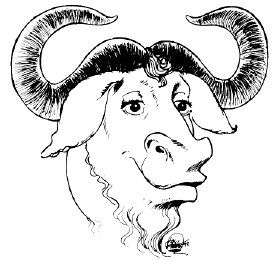
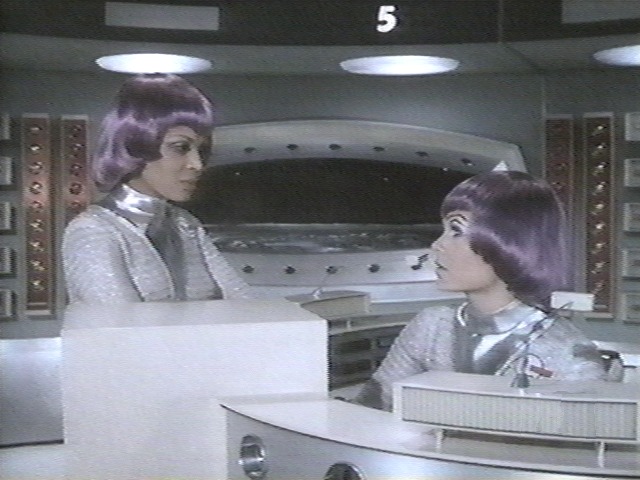
With sexy chicks like the lovely Lt. Gay Ellis you could have people queuing up to buy open source products. Could you really refuse to buy a copy of Linux if she told you to? Come on, you must admit she is better than an overweight deamon or a gay looking goat ! Don't you wish you could get one of these ? Personally I know I would give my right arm to get this close to such a divine beauty !
Join the campaign for more cute open source purple-haired moonbabes today!
-- -
Re:full C compatability?
Malloc is still ridiculously expensive compared compared to what a generational GC can do. A malloc is dozens to hundreds of instructions, while in many cases (eg: when you're following the typical functional-language allocation patterns), a generational GC can alloc in just a few instructions. And while the GC phase itself is hardly speedy, the amortized cost of the GC is much lower than the non-amortized cost of doing all those free()'s individually.
What a bunch of complete nonsense. Please put up some numbers and/or URL links to back your ridiculous claims. You obviously never heard of the ultra-high performance malloc/free memory allocator Hoard. Nevermind the fact that garbage collection schemes tough every page in memory while they mark and sweep and defeat the CPU's high speed caches. Don't believe me? Read what Linus says on the topic. -
Re:Nice to see a system language
Both Objective Caml and SML (using, say MLton) can be compiled to ELF executables for the x86.
Anyway, native-code compilation versus bytecode compilation isn't a property of a language, it's a property of an implementation. The GNU Compiler for Java exists.
These were pretty arbitrary examples: there are plenty of options for native code executables besides C/C++.
I don't mean to slight D, though!
-
Re:Windows and Linux examples, yes
-
Re:the first one makes it difficult
If a developer got a Qt/Win commercial license, can he/shethen compile an open source program and distribute the binary? I checked the license agreement for Qt/Win and didn't find anything about that...
Yes, this is allowed. Back when Qt/Mac was still non-free, I found a commercial user on the qt-interest mailinglist to maintain my Mac port. Just ensure that the person doing the compiling has the necessary rights to do so. For GPL projects, this generally means amending the license to allow linking to the commercial edition of Qt (see this question in the GPL FAQ for more information). -
Flex Link
the actual flex link is http://www.gnu.org/software/flex/manual/html_mono
/ flex.html -
Perl6 is a mistakeI've been using perl pretty much constantly since the Pink Camel, and believe me, Perl 5 is an extremely good language for quick scripting things. That's what it was designed for. Sure, you can do big projects in it, but it's not exactly ideal. Recently I've started using Ruby as well, and I intend to move my department over to it instead of wasting time with Perl 6.
One of the goals of Perl 6 is to make non-trivial projects possible. That's good. The way it's being done is bad. Perl was once a lightweight, extremely flexible language. Now it's become a huge ugly monster. People wanted OO, so a nasty hack was bolted on top to allow some semblance of it. Now this nasty hack is being expanded. Sure, the code's different, but the basic form is the same. Kludge upon kludge upon kludge; I'd much rather have a nice, clean, pure language (and not one with loads of irritating whitespace thank you very much).
The same goes for the syntax. All the switching between $, @ and % is really irritating (ask a newbie how to get at the length of the keys array of a hash inside a hash, for example), and the changes proposed for 6 are just making this worse -- it seems that Larry, in his infinite wisdom, wants to prefix every data type with a different hard-to-type character. Perl was only designed for the three data types, and adding more is a mess.
Perl 6 is a complete rewrite, but it keeps all the mess which has accumulated over the previous versions. This is not good. Sure, my const int $var = 27; may look neat (in the same way that, say, Pascal does), but $var isn't entirely constant, or entirely an integer, it's just a hack which makes it sort of behave like one. The whole thing is an exercise in pseudo-computer science masturbation with little real purpose except to please the managers who dislike the one thing that makes Perl special.
On a similar note is regexes. I'm an avid fan of regular expressions simply because a nondeterministic finite automata is far more flexible than linear code. However, Larry must have been smoking that cheap $2 crack when he wrote this. Does he want Perl 6 to be flex or something?
I won't be going on to use 6. It's a nice idea, but it's completely unnecessary. It won't make large projects any easier to manage (the language is still, at heart, an almighty hack -- an impressive one, but still a hack). It won't make OO any cleaner. It won't make development any faster. To put it bluntly, Perl scripts will still look less beautiful than our friend Mr Goatse. I'd prefer to use a language which has always been pure synthesis of science and engineering, not some half-baked imposter.
Perl 6 will be nice, but I'm guessing it will be the end of Perl. It can't do what it wants to do whilst still being based upon a nasty mess. There are now other options, which provide all of Perl's power and none of the mess. Sorry, but *BSD^H^H^H^H Perl is dying. Larry is buggering it up the ass without lubricants, just like Shoeboy is doing to Larry's daughter.
-
Re:Terminal Server
Hm, that sounds cool.
Too bad you didnt have the source for such a thing. -
It's been done already
See this or this. RMS and many others are all over it.
-
Most important software for every library
I am sure that before I have finished writing this comment many people will have already suggested GNUWin, TheOpenCD, Knoppix, Morphix, Dyne:bolic, Debian and GNU CDs but instead of jumping on the bandwagon and posting links to them (even though with no doubt those are great examples of software which every library should definitely have) I will suggest including some software which is less popular but which students might learn much more from (and in the end, is that not the whole purpose of a library?), id est: Debian GNU/Hurd, OpenBSD and EROS. Lots of useful software one can buy with a magazine, but these systems are much harder to find, while much more revolutionary and unquestionably invaluable if we want people to actually learn something important instead of only "clicking" the mouse. It is also very important to note that these systems would introduce students to real security, something which is hard to find and understand, yet even much harder to overestimate in the terrorism era and the invasion of our privacy with things like NSAKEY in Windows and NSAttributedString in Mac OS X. That is why I think that actively promoting them in every library would be the most insightful idea.
-
Re:No pie for me
-
Grace
While I'm always glad to see progress on every front, gnuplot has been sitting on the 3.* level for a long time. I had the idea that the original authors left without properly designating heirs.
The SVG device driver support is intriguing, but being a "Gnu" thing it doesn't take advantage of the extensive plotutils library that, sadly, seems to have experience strong development only up to a point.
Anyway, for people interested in doing serious xy 2D scientific plots, you owe it to yourself to checkout Grace.
Everyone always raves about 3D, volume rendering and stereoscopic movies, but so much importance science gets done in plain old 2D xy plots.
-
Re:Windows Binary Mirror
Actually as he is not selling it he can direct people back to VIA for the source code. See here.
So thanks for being a Jerk, Airlace. Once you fully understand the GPL then you may come back. -
Re:Gave Nulloft/Justin no credit
They didn't remove the copyright info, they copied it verbatim as the GPL licensing files. This is all they are required to do. The GPL does not have an advertising clause and in fact is incompatible with the "old" BSD license with the advertising clause.
-
Re:It's been said before
Even at that though, is distribution defined clearly? Does it count if a company distributes the binaries for a tool within its own company?
This is addressed in the FAQ. See "Is making and using multiple copies within one organization or company "distribution"?" -
Re:Um, Buddy...
The GPL is a LICENSE and is not copyright, copyright != license
You're quite wrong on this. The GPL, and the whole notion or copyleft, are built on top of copyright, as is explained here.
The reason the author of a program has any ability to tell you how you can use and redistribute a program is because the author has retained copyright to this program.
If the author waived copyright, the code would be public domain. Anyone could take it and use it, however they wished, and would not be bound to release the source or even mention the original author. -
Re:Hmm...a questionPlease don't use the same word to refer to robbery and murder on the high seas, and copyright violation. It's not just inaccurate, it's stupid.
Just because Richard Stallman says so doesn't make it so. I am in fact certain that I've seen the term piracy used in a very old (on the order of 100-200 years ago) transcript to describe illegal copying. Can't find a link right now, however.
In any case, using the term "Piracy" thus isn't particularly new, and it's certainly not confusing anyone.
-
Re:please explain>>Answer: Is your work a derivative of the
>>GPLed code or not? Derivative works must also be
>>GPLed. I'm inclined to think that the
>>situation you describe would be a pretty clear
>>example of a derivative work.>Then so would the binary drivers of all the
>vendors. Wrong.>If the parent's program is a binary _patch_ , it
>doesn't have to be GPLed. The recipient is free to
>download the original (unpatched) code under GPL.
This is addressed in the FAQ for the GPL: Can you distribute your changes as a diff to the original GPLed code, rather than distributing the source to the full program? No. So, wheather you are distributing your patch as a diff against the source, or as a binary patch, you must distribute all the source to what the end user runs, if you choose to distribute at all.
So, what's wrong with your logic about binary drivers? I haven't a clue. Perhaps if you explain yourself, we can figure out where you went wrong, but I'd suggest that you spend some time studying the GPL first. Try taking the quiz, too.
-
Re:please explain>>Answer: Is your work a derivative of the
>>GPLed code or not? Derivative works must also be
>>GPLed. I'm inclined to think that the
>>situation you describe would be a pretty clear
>>example of a derivative work.>Then so would the binary drivers of all the
>vendors. Wrong.>If the parent's program is a binary _patch_ , it
>doesn't have to be GPLed. The recipient is free to
>download the original (unpatched) code under GPL.
This is addressed in the FAQ for the GPL: Can you distribute your changes as a diff to the original GPLed code, rather than distributing the source to the full program? No. So, wheather you are distributing your patch as a diff against the source, or as a binary patch, you must distribute all the source to what the end user runs, if you choose to distribute at all.
So, what's wrong with your logic about binary drivers? I haven't a clue. Perhaps if you explain yourself, we can figure out where you went wrong, but I'd suggest that you spend some time studying the GPL first. Try taking the quiz, too.
-
Re:please explain>>Answer: Is your work a derivative of the
>>GPLed code or not? Derivative works must also be
>>GPLed. I'm inclined to think that the
>>situation you describe would be a pretty clear
>>example of a derivative work.>Then so would the binary drivers of all the
>vendors. Wrong.>If the parent's program is a binary _patch_ , it
>doesn't have to be GPLed. The recipient is free to
>download the original (unpatched) code under GPL.
This is addressed in the FAQ for the GPL: Can you distribute your changes as a diff to the original GPLed code, rather than distributing the source to the full program? No. So, wheather you are distributing your patch as a diff against the source, or as a binary patch, you must distribute all the source to what the end user runs, if you choose to distribute at all.
So, what's wrong with your logic about binary drivers? I haven't a clue. Perhaps if you explain yourself, we can figure out where you went wrong, but I'd suggest that you spend some time studying the GPL first. Try taking the quiz, too.
-
Re:please explain>>Answer: Is your work a derivative of the
>>GPLed code or not? Derivative works must also be
>>GPLed. I'm inclined to think that the
>>situation you describe would be a pretty clear
>>example of a derivative work.>Then so would the binary drivers of all the
>vendors. Wrong.>If the parent's program is a binary _patch_ , it
>doesn't have to be GPLed. The recipient is free to
>download the original (unpatched) code under GPL.
This is addressed in the FAQ for the GPL: Can you distribute your changes as a diff to the original GPLed code, rather than distributing the source to the full program? No. So, wheather you are distributing your patch as a diff against the source, or as a binary patch, you must distribute all the source to what the end user runs, if you choose to distribute at all.
So, what's wrong with your logic about binary drivers? I haven't a clue. Perhaps if you explain yourself, we can figure out where you went wrong, but I'd suggest that you spend some time studying the GPL first. Try taking the quiz, too.