Slashdot Mirror
Domain: granneman.com
Stories and comments across the archive that link to granneman.com.
Comments · 11
-
Re:They need exactly 63 999 employees
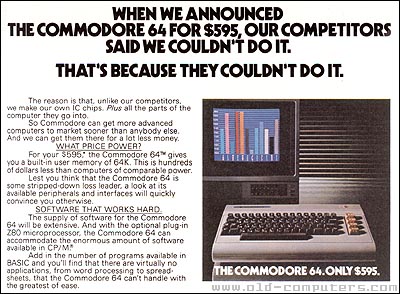
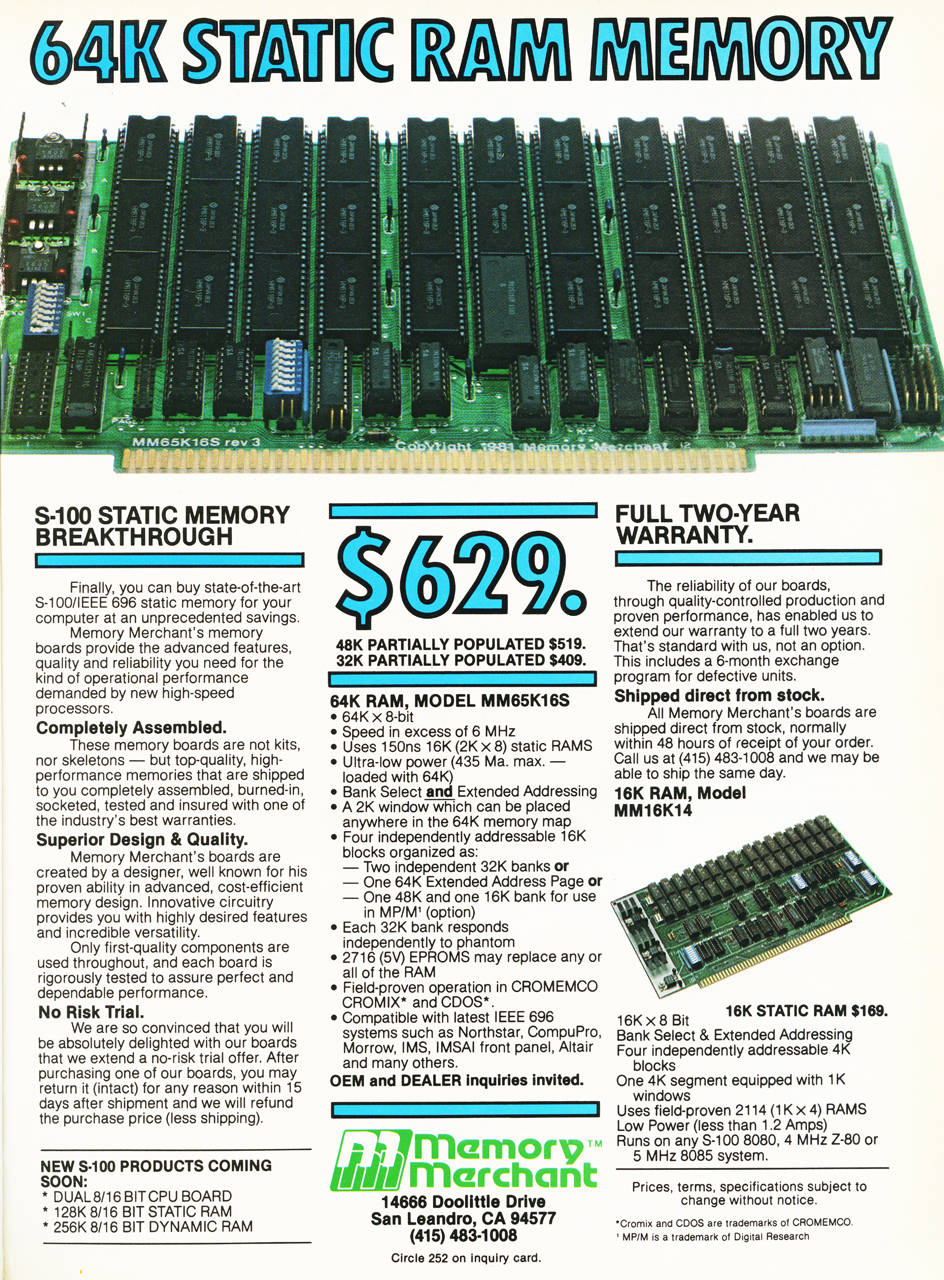
> 64K = 64,000
> In no unit of measurement is 64K(anything) = 65635.How the hell did this ignorance of computer history get modded up??
In the context of [binary] computers, 64K = 65536
In the context of Science, 64K = 64,000There were many ads showing 64K and there was never any confusion over it. Hell, Microsoft never adapted the KiB notation either.
The retarded term KiB wasn't EVEN invented until 1998!
-
Re:Records retention?
I'll just point out that most people in Manhattan do not own or drive cars. So while this surveillance system does raise serious civil rights issues, it will not affect the majority of New Yorkers.
Of course, the cops can already track us subway riders by our MetroCards.
Law enforcement likewise views privacy laws as an impediment, especially now that it has grown accustomed to accessing location data virtually at will. Take the MetroCard, the only way for New York City commuters to pay their transit fares since the elimination of tokens. Unbeknownst to the vast majority of straphangers, the humble MetroCard is essentially a floppy disk, uniquely identified by a serial number on the flip side. Each time a subway rider swipes the card, the turnstile reads the bevy of information stored on the card’s magnetic stripe, such as serial number, value, and expiration date. That data is then relayed back to the Metropolitan Transportation Authority’s central computers, which also record the passenger’s station and entry time; the stated reason is that this allows for free transfers between buses and subways. (Bus fare machines communicate with MTA computers wirelessly.) Police have been taking full advantage of this location info to confirm or destroy alibis; in 2000, The Daily News estimated that detectives were requesting that roughly 1,000 MetroCard records be checked each year.
A mere request seems sufficient for the MTA to fork over the data. The authority learned its lesson back in 1997, when it initially balked at a New York Police Department request to view the E-ZPass toll records of a murder suspect; the cops wanted to see whether or not he’d crossed the Verrazano Narrows Bridge around the time of the crime. The MTA demanded that the NYPD obtain a subpoena, but then-Justice Colleen McMahon of the State Supreme Court disagreed. She ruled that “a reasonable person holds no expectation of confidentiality” when using E-ZPass on a public highway, and an administrative subpoena – a simple OK from a police higher-up – was enough to compel the MTA to hand over the goods.
-
Some ideas
It's not directly aimed at your particular situation, but I created a list of ways for non-programmers to contribute:
- Submit bug reports
- Suggest new features and options
- Make other comments on how to improve the the quality of the program
- Help write good documentation
- Translate the documentation (and program text) into another language
- Read exisiting documentation, follow the examples, and make corrections
- Correct spelling and grammar mistakes in documentation
- Develop spelling and grammar style conventions for documentors
- Build a glossary of technical terms
- Convert documentation into more useful formats (i.e. DocBook)
- Create templates to write documentation in a WYSIWYG word processor (AbiWord, KWord) and XSLT to transform it into DocBook
- Create diagrams, screen-shots, and graphics for documentation
- Submit graphics (icons, backgrounds) to use in the program
- Help other people learn how to use the program (answer questions on mailing lists or IRC channels)
- Write an email expressing your appreciation for the programs you use
- Send the programmers post cards
- Send the programmers a virtual beer
- Write your legislators about the concerns that Open Source programmers have with recent and upcoming legislation
- Write book reviews and critiques
- Write a book
- Maintain a FAQ or HOWTO document
- Help organize LUG events, including InstallFests, BugFests, and DocFests
- Help write articles for the LUG newsletter
- Help update the LUG web site
- Help maintain a web site for an Open Source project
- Design a better user interface for your favorite program (GLADE and Qt Designer are great for mocking up a new UI)
- Run usability studies
- Create validation or regression test cases
- See how a program handles streams of random data
- Package the application for a particular Linux distro (or other OS)
- Get the program to compile on a new platform
- Create a Linux advocacy web site (probably not so easy to do right)
- Provide training to new Linux users
- Read relevant standards and make sure the program follows them
- Convince people to chose Open Source products when possible
- Write up case studies of successful Open Source implementations
- Send the programmers some money
The original list can be found here.
-
Re:Talking to the Police is a bad Idea
And we all know since there's no specification for EXIF data that someone who has a vested interest in removing it would be unable to figure it out.
I'm thinking aloud here, but - JPEG is a lossy alogrithm with all sorts of things you can tweak in terms of image quality. And image sensors on cameras never give you a perfect image - there's always a certain amount of noise. The processor on the camera generally applies some sharpening as well. I wonder if, given a JPEG image straight off the camera with EXIF information removed, it would be possible to deduce the make/model?
-
Re:Talking to the Police is a bad Idea
And we all know since there's no specification for EXIF data that someone who has a vested interest in removing it would be unable to figure it out.
-
more similarities betweeb Apple and Sun
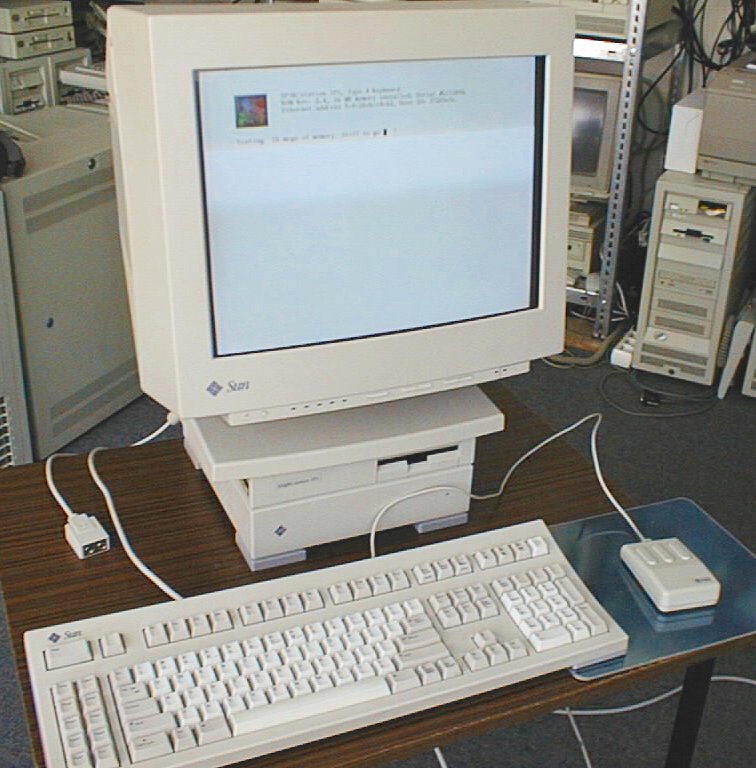
- Both companies were at one time the main producer of Unix workstations (Sun during the 90s, Apple today)
- OpenStep was the result of a collaboration of NeXT and Sun to create an object oriented API based on NeXTSTEP. It ran on NeXTs Mach/BSD OS and Solaris. After the NeXT takeover by Apple in 1996 OpenStep became what today is known as MacOS X, still running on Mach/BSD.
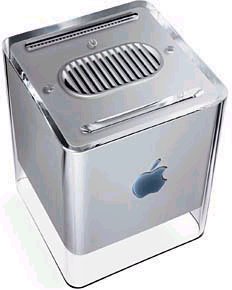
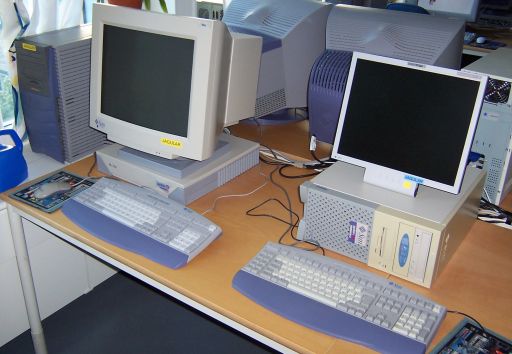
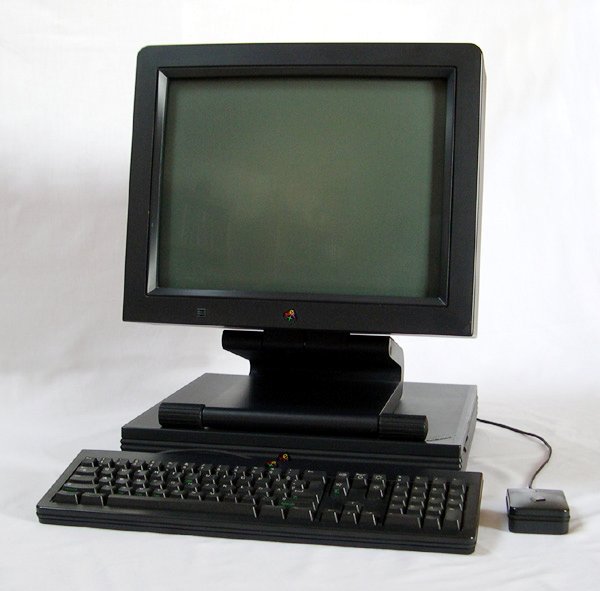
- Styling: Sun and Apple (and NeXT) released workstations in (almost) cubic (Sparcstation IPX, G4 Cube, NeXT Cube) and pizza box format (Sparcstation 20, Mac LC, NeXTstation)
- Their Unix based operating systems are open source
- Both are strong supporters of Java
- Both are based in California
- Both were founded in the context of Stanford university
- Both tried (and failed) to grab a larger peace of the desktop market
- Both were early integrators of network technology into their computers
- Both have been declared dead several times
- Both produced some of the first application servers (WebObjects, J2EE)
Chriss
--
memomo.net - brush up your German, French, Spanish or Italian - online and free -
Re:Not being trollish, but...
I can't download 8 (servers are too slow) but I can tell you that not using the features you don't like is easier said than done.
Some people like all of Opera's features, but to me, they just get in the way. The menus in Firefox are organised and small enough for me to use them effectively; in Opera, I always had to scan the menus looking for the option I wanted. See this and this as examples.
As another example, the preferences dialog box (see here. Opera, with all its options and settings, has 21 different tabs for them, compared to Firefox's five. A benefit of Firefox's extension system is that I know where all the preferences are, instead of having to hunt for them. Also, the ones hardly anyone should have to change are in about:config in Firefox.
I know everyone has their own opinion and all that, but sometimes it is not as easy as you'd think to navigate such a featureful program, and I wanted to point that out. That, and Firefox is working for me fine right now (and gestures on a touchpad = tricky), so I have no reason to use Opera.
Oh, and if your Adblock settings block things like that, they're too lenient. Try blocking ad companies, such as *googlesyndication* or *ad.doubleclick* for better results. -
Re:User-Agent cloaking
-
How to contribute to OSS without coding
I created a nice list of ways people can contribute to the Open Source projects (and thus become a part of the OSS community) without having to program. The canonical address of the list is currently here.
-
Worth a try if..
KVim works fine without this hack.
-
Re:goodbye bank account
I would add that the day it made sense to have a two-button mouse over a one-button mouse was the day that contextual menus were invented, because that was the first time that a consistent meaning was applied to the second button.
You mean 1978? That is when Xerox introduced contextual menus. Not sure if they were the first. I want to know what ever happened to click-hold. Apple seems to have largely abandoned it.