Slashdot Mirror
Domain: guidebookgallery.org
Stories and comments across the archive that link to guidebookgallery.org.
Comments · 86
-
Re:Gnome developers aren't idiots
"If they apply "widely used principles of UI design", why, for example, is the file save dialog so different (and much worse) than in Windows, OS X or KDE ?"
Do you even know what you're talking about? The GTK file dialog is almost exactly the same as the OS X file dialog. Compare these screenshots:
GTK save file dialog: http://clemens-and.nihongonauts.com/uploads/gtk2.4 _file_dialog_save_2_small.png
OS X save file dialog: http://www.uwec.edu/help/MacOSX/Images/dialog/file save.gif
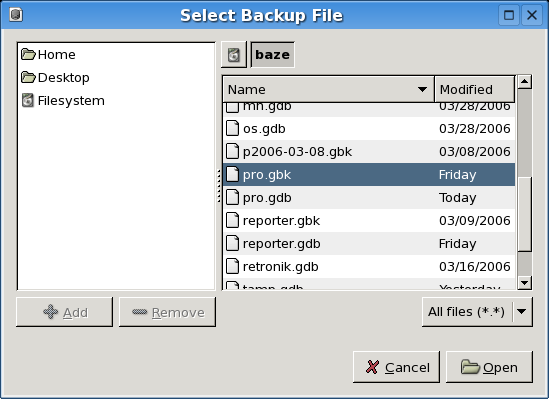
GTK open file dialog: http://www.flamerobin.org/images/screenshots/0.6.0 /gtk2/open_dialog.png
OS X open file dialog: http://www.guidebookgallery.org/pics/gui/interface /dialogs/openfile/macosx103-1-1.png
Which part of the GTK file dialog is "much worse" than the OS X one? There's almost no difference."Testing the interface on "real people" is fine, but are they exclusively doing this on people who have next-to-no computer experience ? Testing what these people find useable for their first few days of computing experience with a new environment is fine, but everyone learns things in time, learns their own preferred way of doing things, and is able to absorb more and more functionality."
How naive you are. Things don't work like that for 90% of the users, sorry. -
GUI innovation?From TFA: Let's be realistic, who came up with [the] file, edit, view, help [menu bar]? Do you want to go back to the original Mac and think about where those interface concepts came from?
What point is he trying to make here? Windows had it first? MacOS 1.1 seems to have everything but the "help" entry. Windows 1.01 is close but not quite there.
Or is he trying to make the point that Apple didn't invent the GUI? If you'd like to get technical, Bill, Xerox didn't have those specific features either.
I'd love to counter his ridiculous points, but I can't figure out which flawed point he's going for. -
GUI innovation?From TFA: Let's be realistic, who came up with [the] file, edit, view, help [menu bar]? Do you want to go back to the original Mac and think about where those interface concepts came from?
What point is he trying to make here? Windows had it first? MacOS 1.1 seems to have everything but the "help" entry. Windows 1.01 is close but not quite there.
Or is he trying to make the point that Apple didn't invent the GUI? If you'd like to get technical, Bill, Xerox didn't have those specific features either.
I'd love to counter his ridiculous points, but I can't figure out which flawed point he's going for. -
GUI innovation?From TFA: Let's be realistic, who came up with [the] file, edit, view, help [menu bar]? Do you want to go back to the original Mac and think about where those interface concepts came from?
What point is he trying to make here? Windows had it first? MacOS 1.1 seems to have everything but the "help" entry. Windows 1.01 is close but not quite there.
Or is he trying to make the point that Apple didn't invent the GUI? If you'd like to get technical, Bill, Xerox didn't have those specific features either.
I'd love to counter his ridiculous points, but I can't figure out which flawed point he's going for. -
Re:SECOND BRAIN
It was never released. Was there ever a Windows 2.0?...
D'oh! -
Re:What if it does? Seriously.
A lot of that I'm sure is safe, but I can't imagine that somewhere in there and among Microsoft's untold zillions of software patents that there isn't a (legally) reasonable case that could be made against something OSS that people would care about.
A good many GUI's existing before MS-Windows. Just as there are timelines which document how OS kernel's have evolved, there are also timelines which document how GUI's have evolved. This site documents the evolution of each and every GUI, along with every icon that each GUI has used. This is particularly important for commercial application developers who wish to avoid any lawsuits caused by using someone elses "trademarked" icon.
As an example, here is the components page, which documents the evolution of the most commonly used icons.
As long as the Linux community can prove that any feature in an application has prior art in earlier GUI's that haven't been patented or copyrighted by Microsoft, then it is pure Microsoft FUD. If MS want to sue Linux, then they will have to sue the other OS vendors as well. -
Re:What if it does? Seriously.
A lot of that I'm sure is safe, but I can't imagine that somewhere in there and among Microsoft's untold zillions of software patents that there isn't a (legally) reasonable case that could be made against something OSS that people would care about.
A good many GUI's existing before MS-Windows. Just as there are timelines which document how OS kernel's have evolved, there are also timelines which document how GUI's have evolved. This site documents the evolution of each and every GUI, along with every icon that each GUI has used. This is particularly important for commercial application developers who wish to avoid any lawsuits caused by using someone elses "trademarked" icon.
As an example, here is the components page, which documents the evolution of the most commonly used icons.
As long as the Linux community can prove that any feature in an application has prior art in earlier GUI's that haven't been patented or copyrighted by Microsoft, then it is pure Microsoft FUD. If MS want to sue Linux, then they will have to sue the other OS vendors as well. -
Re:THey also added gapless playback
But perhaps most shocking and sacrilegious: they changed the color of the music note! It is blue now! How could they destroy tradition like that!
The color of the iTunes icon has changed a few times now. IIRC, it turned green with the launch of iTunes for Windows and the ITMS. Now that they're selling movies, it's gone (back to) blue. -
Amiga timeline
theres a quick overview of the Amiga GUI timeline over at http://www.guidebookgallery.org/guis/amigaos - though I wouldnt want to slashdot any particular site...if you use a decent search engine you can easily see a multitude of screenshots that show each incarnation...there are sites dedicated to showcasing the best setups in AmigaOS desktops - usually using a multitude of eye-candy addons (doing the sort of stuff OSX and WinXP have only just got now....). I remember having an OS3.1 desktop that used an MPEG animation as my desktop background back in 1994... OS4 now has all the transparent windows/frames/icons etc built in rather than depending on the 3rd party addin hooks and API hacks.
-
Re:Better timeline
-
Re:Better timeline
-
Re:Mocking?
Thurrott just hates when Apple points out the 100% truth that Microsoft has cloned a lot of Apple-isms. Where does he think the search field in the upper-right of every Explorer window with the magnifying glass came from?
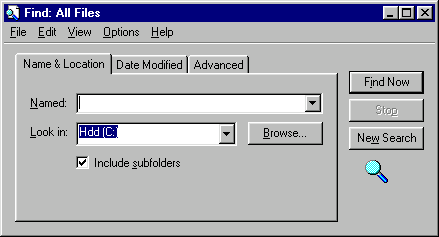
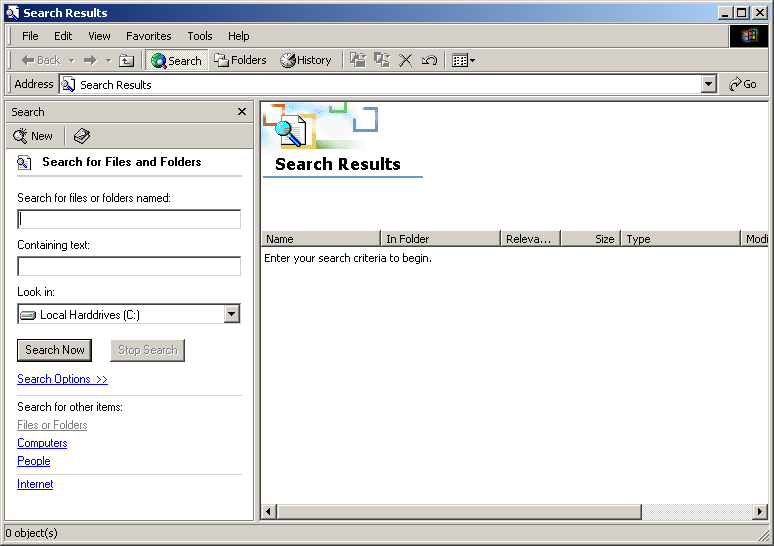
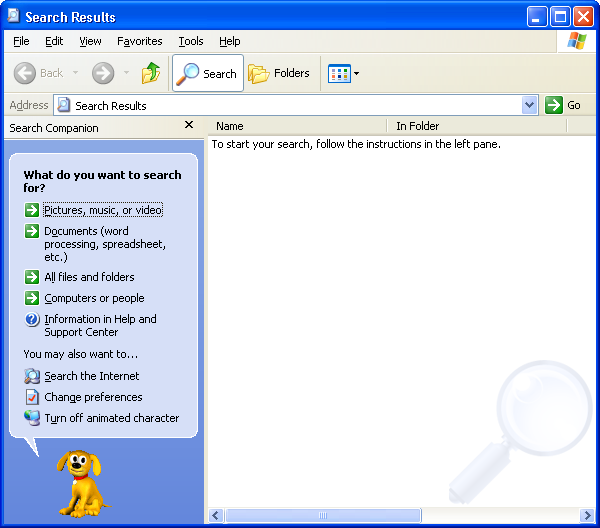
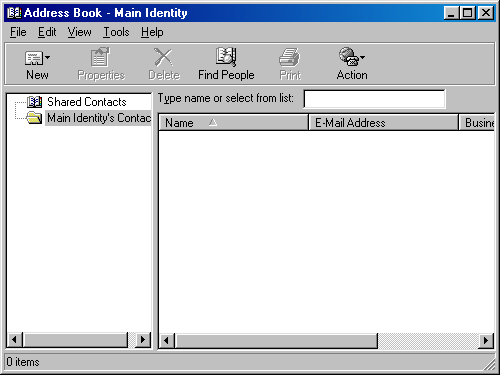
The magnifying glass came from "Find" in Windows 95 (also in Win95's Start Menu), "Search" in Windows 2000, and "Search" in Windows XP.The search field in the upper-right of Vista Explorer windows might have been adopted from Windows Address Book, which has had a search field in that general area since Windows 98. OS X probably adopted it from iTunes.
Hell, where does he think the Recycle Bin came from?
From Xerox Star (1981), where it was called the "Wastebasket." I know, Apple copied Xerox first. But the Wastebasket/Trash/Recycle Bin is not an "Apple-ism," it's a Xerox-ism.Or the new system tray icons that are blatant clones of OS X's?
Can you be more specific? Which icons? Are the "blatant clones" not obvious choices for what they represent (like a magnifying glass for "Search")? Who had a "tray" first?I'm sure Microsoft has "cloned" a lot of Apple features. However, many people incorrectly give Apple credit for things cloned from other companies (e.g. desktop metaphor).
-
Re:Mocking?
Thurrott just hates when Apple points out the 100% truth that Microsoft has cloned a lot of Apple-isms. Where does he think the search field in the upper-right of every Explorer window with the magnifying glass came from?
The magnifying glass came from "Find" in Windows 95 (also in Win95's Start Menu), "Search" in Windows 2000, and "Search" in Windows XP.The search field in the upper-right of Vista Explorer windows might have been adopted from Windows Address Book, which has had a search field in that general area since Windows 98. OS X probably adopted it from iTunes.
Hell, where does he think the Recycle Bin came from?
From Xerox Star (1981), where it was called the "Wastebasket." I know, Apple copied Xerox first. But the Wastebasket/Trash/Recycle Bin is not an "Apple-ism," it's a Xerox-ism.Or the new system tray icons that are blatant clones of OS X's?
Can you be more specific? Which icons? Are the "blatant clones" not obvious choices for what they represent (like a magnifying glass for "Search")? Who had a "tray" first?I'm sure Microsoft has "cloned" a lot of Apple features. However, many people incorrectly give Apple credit for things cloned from other companies (e.g. desktop metaphor).
-
Re:Mocking?
Thurrott just hates when Apple points out the 100% truth that Microsoft has cloned a lot of Apple-isms. Where does he think the search field in the upper-right of every Explorer window with the magnifying glass came from?
The magnifying glass came from "Find" in Windows 95 (also in Win95's Start Menu), "Search" in Windows 2000, and "Search" in Windows XP.The search field in the upper-right of Vista Explorer windows might have been adopted from Windows Address Book, which has had a search field in that general area since Windows 98. OS X probably adopted it from iTunes.
Hell, where does he think the Recycle Bin came from?
From Xerox Star (1981), where it was called the "Wastebasket." I know, Apple copied Xerox first. But the Wastebasket/Trash/Recycle Bin is not an "Apple-ism," it's a Xerox-ism.Or the new system tray icons that are blatant clones of OS X's?
Can you be more specific? Which icons? Are the "blatant clones" not obvious choices for what they represent (like a magnifying glass for "Search")? Who had a "tray" first?I'm sure Microsoft has "cloned" a lot of Apple features. However, many people incorrectly give Apple credit for things cloned from other companies (e.g. desktop metaphor).
-
Re:Mocking?
Thurrott just hates when Apple points out the 100% truth that Microsoft has cloned a lot of Apple-isms. Where does he think the search field in the upper-right of every Explorer window with the magnifying glass came from?
The magnifying glass came from "Find" in Windows 95 (also in Win95's Start Menu), "Search" in Windows 2000, and "Search" in Windows XP.The search field in the upper-right of Vista Explorer windows might have been adopted from Windows Address Book, which has had a search field in that general area since Windows 98. OS X probably adopted it from iTunes.
Hell, where does he think the Recycle Bin came from?
From Xerox Star (1981), where it was called the "Wastebasket." I know, Apple copied Xerox first. But the Wastebasket/Trash/Recycle Bin is not an "Apple-ism," it's a Xerox-ism.Or the new system tray icons that are blatant clones of OS X's?
Can you be more specific? Which icons? Are the "blatant clones" not obvious choices for what they represent (like a magnifying glass for "Search")? Who had a "tray" first?I'm sure Microsoft has "cloned" a lot of Apple features. However, many people incorrectly give Apple credit for things cloned from other companies (e.g. desktop metaphor).
-
Re:Mocking?
Thurrott just hates when Apple points out the 100% truth that Microsoft has cloned a lot of Apple-isms. Where does he think the search field in the upper-right of every Explorer window with the magnifying glass came from?
The magnifying glass came from "Find" in Windows 95 (also in Win95's Start Menu), "Search" in Windows 2000, and "Search" in Windows XP.The search field in the upper-right of Vista Explorer windows might have been adopted from Windows Address Book, which has had a search field in that general area since Windows 98. OS X probably adopted it from iTunes.
Hell, where does he think the Recycle Bin came from?
From Xerox Star (1981), where it was called the "Wastebasket." I know, Apple copied Xerox first. But the Wastebasket/Trash/Recycle Bin is not an "Apple-ism," it's a Xerox-ism.Or the new system tray icons that are blatant clones of OS X's?
Can you be more specific? Which icons? Are the "blatant clones" not obvious choices for what they represent (like a magnifying glass for "Search")? Who had a "tray" first?I'm sure Microsoft has "cloned" a lot of Apple features. However, many people incorrectly give Apple credit for things cloned from other companies (e.g. desktop metaphor).
-
Re:Mocking?
Thurrott just hates when Apple points out the 100% truth that Microsoft has cloned a lot of Apple-isms. Where does he think the search field in the upper-right of every Explorer window with the magnifying glass came from?
The magnifying glass came from "Find" in Windows 95 (also in Win95's Start Menu), "Search" in Windows 2000, and "Search" in Windows XP.The search field in the upper-right of Vista Explorer windows might have been adopted from Windows Address Book, which has had a search field in that general area since Windows 98. OS X probably adopted it from iTunes.
Hell, where does he think the Recycle Bin came from?
From Xerox Star (1981), where it was called the "Wastebasket." I know, Apple copied Xerox first. But the Wastebasket/Trash/Recycle Bin is not an "Apple-ism," it's a Xerox-ism.Or the new system tray icons that are blatant clones of OS X's?
Can you be more specific? Which icons? Are the "blatant clones" not obvious choices for what they represent (like a magnifying glass for "Search")? Who had a "tray" first?I'm sure Microsoft has "cloned" a lot of Apple features. However, many people incorrectly give Apple credit for things cloned from other companies (e.g. desktop metaphor).
-
Re:Why do people watch Apple with bated breath?
Apple is typically ahead of that "de facto standard" and tends to introduce features that end up in Microsoft's products (Vista is rife with Apple-isms, even down to the search field in the upper-right corner of Explorer windows, complete with a magnifying glass icon--straight out of OS X).
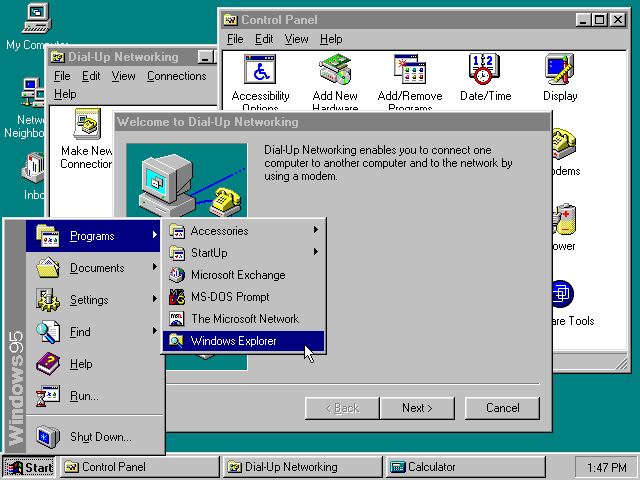
You mean that magnifying glass icon from Windows 95 (screenshots here, here, and here)? Also, the search field didn't appear in the upper-right corner of Finder windows until OS X 10.3 Panther (24 October 2003). The search field previously appeared in iTunes and Windows 98's Address Book.Calling the search field and maginifying glass icon "Apple-isms" shows your pathetic Apple-centric view of software. I'm sure Microsoft didn't do them first, but nobody claims Apple ripped off Microsoft then gets modded up.
-
Re:Why do people watch Apple with bated breath?
Apple is typically ahead of that "de facto standard" and tends to introduce features that end up in Microsoft's products (Vista is rife with Apple-isms, even down to the search field in the upper-right corner of Explorer windows, complete with a magnifying glass icon--straight out of OS X).
You mean that magnifying glass icon from Windows 95 (screenshots here, here, and here)? Also, the search field didn't appear in the upper-right corner of Finder windows until OS X 10.3 Panther (24 October 2003). The search field previously appeared in iTunes and Windows 98's Address Book.Calling the search field and maginifying glass icon "Apple-isms" shows your pathetic Apple-centric view of software. I'm sure Microsoft didn't do them first, but nobody claims Apple ripped off Microsoft then gets modded up.
-
Re:Why do people watch Apple with bated breath?
Apple is typically ahead of that "de facto standard" and tends to introduce features that end up in Microsoft's products (Vista is rife with Apple-isms, even down to the search field in the upper-right corner of Explorer windows, complete with a magnifying glass icon--straight out of OS X).
You mean that magnifying glass icon from Windows 95 (screenshots here, here, and here)? Also, the search field didn't appear in the upper-right corner of Finder windows until OS X 10.3 Panther (24 October 2003). The search field previously appeared in iTunes and Windows 98's Address Book.Calling the search field and maginifying glass icon "Apple-isms" shows your pathetic Apple-centric view of software. I'm sure Microsoft didn't do them first, but nobody claims Apple ripped off Microsoft then gets modded up.
-
Re:I did
As I said: It was an unusable ugly piece of trash.
As opposed to MacOS, which had the same ugliness, only in black and white?
What makes an OS usable are the small things, like the exponential acceleration of the mouse cursor on Macs, or the fact that a pixel is actually one pixel in size and square,
The non-square pixel was a hardware limitation, not an OS one (until the ECS chipset, square pixels meant a choice between 320x256 which was rather low, or 640x512 which had interlace flicker). Yes, annoying, though if we're comparing graphics hardware, the Amiga beat the Mac in other ways (e.g., number of colours).
Of course the small things matter, but the AmigaOS had its own small but important advantages too (e.g., I found non-proportional scrollbars annoying on the Mac). The Amiga did have a mouse acceleration option, but I don't know if it was present in AmigaOS 1.0. I don't see how it's more DOS-like than MacOS of the same time.
Thankfully I never had to use Macs for anything serious, and it certainly didn't do games well, but it was good enough for Classic Daleks at least. -
Re:I did
As I said: It was an unusable ugly piece of trash.
I suspect it was designed by robot monkeys with a serious crack habbit. What makes an OS usable are the small things, like the exponential acceleration of the mouse cursor on Macs, or the fact that a pixel is actually one pixel in size and square, or the fact that the OS doesn't look like it was written as a DOS application which was subsequently squashed horizontally because mother monkey sat on it.
Fortunately, I hardly ever had to boot into Workbench itself, as I used the Amiga mostly to play games.
-
Re:I did
As I said: It was an unusable ugly piece of trash.
I suspect it was designed by robot monkeys with a serious crack habbit. What makes an OS usable are the small things, like the exponential acceleration of the mouse cursor on Macs, or the fact that a pixel is actually one pixel in size and square, or the fact that the OS doesn't look like it was written as a DOS application which was subsequently squashed horizontally because mother monkey sat on it.
Fortunately, I hardly ever had to boot into Workbench itself, as I used the Amiga mostly to play games.
-
Re:Oh well...
you mean, something like this?
-
Microsofts biggest blunder?
As usual, Dvorak is on crack.
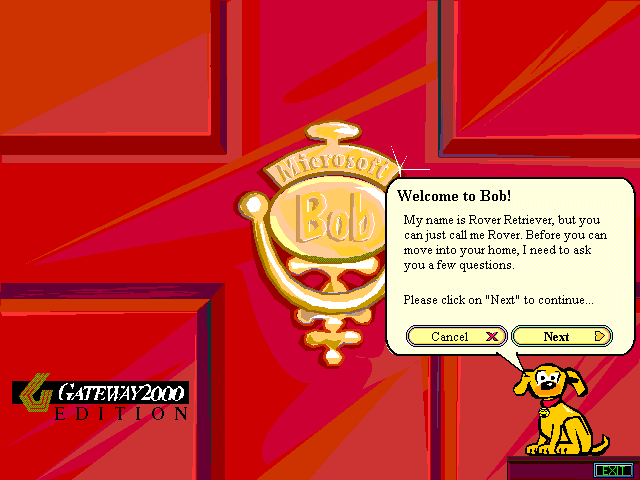
I'm not sure what he means by biggest, but microsoft's stupidist blunder was Bob and its most expensive blunder was the Cairo project (Cairo was later renamed and one of its most important element, OFS, is still nowhere in sight).
Internet exporer was not so much of a blunder as an expensive way to kill off Netscape (they were a much bigger threat then Dvorak makes out.
(the OT part) Still, at least Microsoft Bob was not a completely wasted effort - after all, you still have Rover the retriever to help you with searching in XP - and we all know that was worth waiting 10 years for... -
Microsofts biggest blunder?
As usual, Dvorak is on crack.
I'm not sure what he means by biggest, but microsoft's stupidist blunder was Bob and its most expensive blunder was the Cairo project (Cairo was later renamed and one of its most important element, OFS, is still nowhere in sight).
Internet exporer was not so much of a blunder as an expensive way to kill off Netscape (they were a much bigger threat then Dvorak makes out.
(the OT part) Still, at least Microsoft Bob was not a completely wasted effort - after all, you still have Rover the retriever to help you with searching in XP - and we all know that was worth waiting 10 years for... -
Re:Where Future?
When you compare Mac OS X v10.1 through v10.4 it is amazing how the newer ones actually look like newer versions of the older versions. If you are used to Panther or Tiger and you look at a Jaguar screenshot it is obviously Mac OS X but it just looks "old". The newer versions are tightened up in so many ways, not just look but also features, where things are. These days something like the AirPort (WiFi) system menu has a few more options on it but it looks the same and functions the same and is in the same place as it was in Jaguar. Same with the Apple menu, Dock, System Preferences, Finder (for the most part), Desktop, windows and controls, most of the included applications and utilities. Even the default desktop picture is similar but evolves slightly each release. There is a tremendous amount of user consistency in Mac OS X.
This site compares GUI's using a large library of screenshots: GUI Guidebook
For the programmer, rather than various flavors of Windows API, Mac OS X just offers you a choice of procedural API, object-oriented API, BSD API, Java API, X-Windows, Web/JavaScript, QuickTime. You use whatever API makes most sense to you for that project and you get a lot of stuff for free from the system and you can make a really polished product that runs for weeks and weeks on a stable system.
A big consistency thing is key shortcuts. From the very beginning, Apple established some sensible standards like Command+S for Save and Command+P for Print and Command+O for Open. In the intervening 22 years applications on the Mac have used these standards so they are very commonly used. Once you learn one, it pays you back in many situations in many applications. At one point, Microsoft even added the Mac shortcuts to MS Windows and that's what most Windows users use today (Control+C for Copy, Control+X for Cut, Control+V for Paste are direct from the Mac for example). There are lots of examples like this where Apple took a moment to design a functioning system and then the developer community added to and improved the already-functioning system using Apple's stuff as a sort of living guideline along with lots of documentation where Apple will actually say "do it this way (unless you have a good reason not to) and your users will already know how to work your application".
-
Re:Anyone remember...
Microsoft has never been particularly innovative. I suspect you don't perceive innovation _now_ because you are aware of the prior art. Microsoft was not more innovative back in the day. You were probably just not as aware of the copious prior art when Windows 95 appeared. For example, the Windows 95 "look" was a poor copy if the NeXTstep 1988 look... The Win 16 API was a sad copy of the Mac Toolbox. Slashdot will tell you that the only notable innovation from Microsoft was "Bob."
http://www.guidebookgallery.org/screenshots/win95
http://www120.pair.com/mccarthy/nextstep/intro.htm ld/ -
Alternate shells for Windows
In the case of the Linux desktops, you could probably hack something together that would work without those components. Arguably you could in Windows too, I guess, by having the Task Manager open (since it allows you to run programs by filename). But Windows is designed as a distribution to use IE as the main shell program. If you kill IE in Windows (go to Task Manager, find "explorer.exe", and kill it - or just crash it, there are plenty of ways to do it), you lose the desktop, the Start menu, and the taskbar. IE is the shell that most people interact with. (It's worth pointing out that "iexplore.exe" is a stub program that essentially just runs "explorer.exe".)
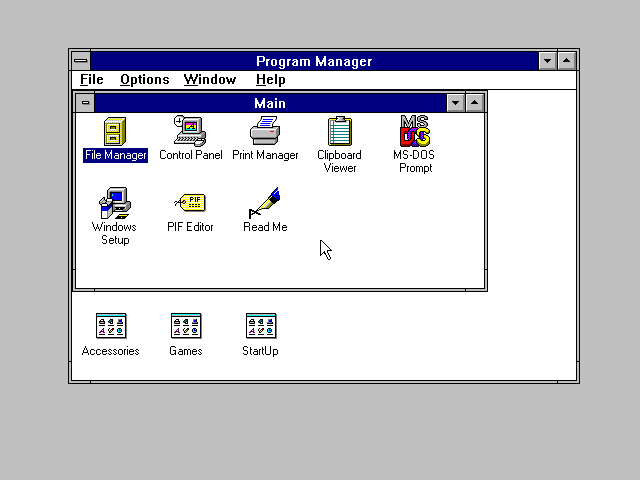
Ah, but Explorer is not the only shell for Windows, there's Litestep, Blackbox for Windows (and its offspring), and for the truly hardcore, progman.exe
-
Re:Microsoft's take
After GEM, which very obviously copied Apple, there were no new implementations of the concept until Konfabulator came along.
The fact that it was so long afterward should tell you that people had forgotten about Desktop Accessories. Most people, even MAc users, had no idea what they were until someone brought it up again in this context.
The technology, until a year or two ago when Konfabulator was ported to Windows, never existed for Windows. I've never seen it implemented in X11.
But there are similar things for X11. Even earlier window managers included very basic "mini apps" like a little clock and that moving eyes thing, and a calculator. These came along with Twm, which was created in 1987. They may even predate it, but I'm not sure. Of course, those are too liberal to fit any reasonable definition of something "widget like."
What Konfabulator brought to the table was HTML and Javascript. Beyond that, the apps it supports are barely different in functionality from those Mac OS 1 supported.
Oh, but it's the underlying architecture that makes it what it is. "Difference in functionality" is m eaningless without some unified framework to tie it all together. How those widgets interoperate with eachother is exactly what makes them widgets. A simple bunch of independent mini apps don't really qualify, as those could always be written in any language for any OS without the need for a special "widget engine."
As per your own description, you're relying on a very liberal interpretation of what it means to be a "widget engine," which suggests that it wasn't a rip off at all. They were nothing more than a hack to allow shitty multitasking in a non-multitasking OS. So in essence, it's just a multitasking driver. Other than the API necessary to multi-task, there is no unified API. You could easily make the programs look like whatever, there were no technical restricitons or designs in place to enforce it (beyond social mandate). So all they really are is independent, multitasking programs intended to look vaguely similar.
I suggest you take a look at this page for an idea of what they were like: http://www.guidebookgallery.org/articles/atourofth emacdesktop/desktopaccessories
http://en.wikipedia.org/wiki/Desk_Accessory -
Re:Since when...
-
Re:Comprehensive Lisa info at guidebookgallery.org
Yes, he does - transcribed, even: http://www.guidebookgallery.org/videos/lisachi98
-
Comprehensive Lisa info at guidebookgallery.org
Marcin Wichary has compiled a great deal of Lisa information, from screenshots, ads, brochures and articles to posters and videos, at his site GUI Gallery Guidebook. Recent postings include 17 exclusive Lisa posters for download and enjoyment, and an interview with Dan Smith that reveals "The original trash can for Apple Lisa was supposed to have been an old, beat up alley trashcan, with the lid half open, flies buzzing around it and appropriate sounds as user put something inside."
-
Comprehensive Lisa info at guidebookgallery.org
Marcin Wichary has compiled a great deal of Lisa information, from screenshots, ads, brochures and articles to posters and videos, at his site GUI Gallery Guidebook. Recent postings include 17 exclusive Lisa posters for download and enjoyment, and an interview with Dan Smith that reveals "The original trash can for Apple Lisa was supposed to have been an old, beat up alley trashcan, with the lid half open, flies buzzing around it and appropriate sounds as user put something inside."
-
Comprehensive Lisa info at guidebookgallery.org
Marcin Wichary has compiled a great deal of Lisa information, from screenshots, ads, brochures and articles to posters and videos, at his site GUI Gallery Guidebook. Recent postings include 17 exclusive Lisa posters for download and enjoyment, and an interview with Dan Smith that reveals "The original trash can for Apple Lisa was supposed to have been an old, beat up alley trashcan, with the lid half open, flies buzzing around it and appropriate sounds as user put something inside."
-
Comprehensive Lisa info at guidebookgallery.org
Marcin Wichary has compiled a great deal of Lisa information, from screenshots, ads, brochures and articles to posters and videos, at his site GUI Gallery Guidebook. Recent postings include 17 exclusive Lisa posters for download and enjoyment, and an interview with Dan Smith that reveals "The original trash can for Apple Lisa was supposed to have been an old, beat up alley trashcan, with the lid half open, flies buzzing around it and appropriate sounds as user put something inside."