Slashdot Mirror
Domain: ibm.com
Stories and comments across the archive that link to ibm.com.
Stories · 981
-
AIX On the Desktop Is Getting the Boot
flnca writes "Today, I was playing with the thought again to purchase an AIX workstation one day when I can afford them, and I was surprised to see that IBM is going to give its IntelliStation POWER Series workstations the boot in January '09. A black day for AIX on the desktop. I really wonder what's the problem there, warehouse costs? IBM has a history of burying its best stuff (like OS/2 for instance). Some years ago, I enjoyed hacking away on an RS/6000 workstation running AIX 4.2, and it was a pure joy. Not only the kernel, but also the admin tools, like smit and smitty. Their blade-centric solution uses Windows as a client for workstation application. This truly sounds like IBM wants AIX only for servers anymore. I'm not amused. Although, eXceed on Windows with an XDCMP server running on AIX might also be a viable solution ... whatever. But it can't beat a native POWER box sitting on your desk, that's for sure." -
AIX On the Desktop Is Getting the Boot
flnca writes "Today, I was playing with the thought again to purchase an AIX workstation one day when I can afford them, and I was surprised to see that IBM is going to give its IntelliStation POWER Series workstations the boot in January '09. A black day for AIX on the desktop. I really wonder what's the problem there, warehouse costs? IBM has a history of burying its best stuff (like OS/2 for instance). Some years ago, I enjoyed hacking away on an RS/6000 workstation running AIX 4.2, and it was a pure joy. Not only the kernel, but also the admin tools, like smit and smitty. Their blade-centric solution uses Windows as a client for workstation application. This truly sounds like IBM wants AIX only for servers anymore. I'm not amused. Although, eXceed on Windows with an XDCMP server running on AIX might also be a viable solution ... whatever. But it can't beat a native POWER box sitting on your desk, that's for sure." -
Distributed Compilation, a Programmer's Delight
cyberpead writes in with a Developerworks article on the open source tool options that can help speed up your build process by distributing the process across multiple machines in a local area network. -
Fixstars Buys Terra Soft
sgt scrub writes "If you have put Yellow Dog Linux on a PS3 or a Pre X86 Apple, or have an interest in the Cell Broadband Engine, you will be pleased to know that Fixstars has purchased Terra Soft. '"A Cell/B.E. software developer and long-time user of Yellow Dog Linux, Fixstars has great faith in Yellow Dog Linux," said Satoshi Miki, CEO of Fixstars. "This business acquisition allows us to offer a reliable and stable Linux distribution with sense of ease for our customers. I have no doubt that in the expanding Cell/B.E. ecosystem we will offer the best Cell/B.E. solution of the High Performance Computing generation."' I can't think of any group of people better suited to expand the Cell horizon." -
Looking At Changes In the Newest GCC
cyberpead writes "With GCC 4 comes a new optimization framework (and new intermediate code representation), new target and language support, and a variety of new attributes and options. Get to know the major new features and their benefits in this article." -
Mainframe OpenSolaris Now Available
BBCWatcher writes "When Sun released Solaris to the open source community in the form of OpenSolaris, would anyone have guessed that it would soon wind up running on IBM System z mainframes? Amazingly, that milestone has now been achieved. Sine Nomine Associates is making its first release of OpenSolaris for System z available for free and public download. Source code is also available. OpenSolaris for System z requires a System z9 or z10 mainframe and z/VM, the hypervisor that's nearly universal to mainframe Linux installations. (The free, limited term z/VM Evaluation Edition is available for z10 machines.) Like Linux, OpenSolaris will run on reduced price IFL processors." -
Mainframe OpenSolaris Now Available
BBCWatcher writes "When Sun released Solaris to the open source community in the form of OpenSolaris, would anyone have guessed that it would soon wind up running on IBM System z mainframes? Amazingly, that milestone has now been achieved. Sine Nomine Associates is making its first release of OpenSolaris for System z available for free and public download. Source code is also available. OpenSolaris for System z requires a System z9 or z10 mainframe and z/VM, the hypervisor that's nearly universal to mainframe Linux installations. (The free, limited term z/VM Evaluation Edition is available for z10 machines.) Like Linux, OpenSolaris will run on reduced price IFL processors." -
IBM Wants Patent On Finding Areas Lacking Patents
theodp writes "It sounds like a goof — especially coming from a company that pledged to raise the bar on patent quality — but the USPTO last week disclosed that IBM is seeking a patent for Methodologies and Analytics Tools for Identifying White Space Opportunities in a Given Industry, which Big Blue explains allows one 'to maximize the value of its IP by investigating and identifying areas of relevant patent 'white space' in an industry, where white space is a term generally used to designate one or more technical fields in which little or no IP may exist,' and filling those voids with the creation of additional IP." -
ACM OSR Linux Issue Available For Free Download
Eric Van Hensbergen writes "In accordance with the ideals of the issue's open source topic, the ACM has agreed to make the July issue of Operating Systems Review: Research and Developments in the Linux Kernel available for download free of charge. It contains a number of interesting papers written by LKML members like Rusty Russell, Paul McKenna, and Eric Biederman as well as academic OS researchers who've made contributions to mainline on topics ranging from RCL, VirtIO, Checkpoint & Resume, to CUBIC TCP, etc. A primary motivation behind this special-topics OSR issue was to help bridge a gap that currently exists between the kernel community and the academic OS research community, by encouraging kernel developers to publish recent additions to the Linux kernel as well as to provide a forum for experience papers which describe the introduction and integration of research into the mainstream Linux kernel. We think it is important for the research community and the kernel community to cross pollinate more and hope this issue will be the first of many venues where the will be able to do so." -
Developing On the PS3 Under Fedora
An anonymous reader writes to point out the first in a series of articles from a while back about using the Playstation 3 as a development environment under Fedora. Here are the second and third parts of the series. Quoting: "Early on, it was a bit of a challenge to get Linux natively installed on the PS3. Time has passed, and a great deal has changed. Fedora 7 installs on the PS3 out of the box, with the most challenging installation steps eliminated. This article introduces the basic configuration knobs and widgets specific to the PS3 running Linux, shows you how to use them effectively, and suggests the kind of trickery that gets improved performance." -
Developing On the PS3 Under Fedora
An anonymous reader writes to point out the first in a series of articles from a while back about using the Playstation 3 as a development environment under Fedora. Here are the second and third parts of the series. Quoting: "Early on, it was a bit of a challenge to get Linux natively installed on the PS3. Time has passed, and a great deal has changed. Fedora 7 installs on the PS3 out of the box, with the most challenging installation steps eliminated. This article introduces the basic configuration knobs and widgets specific to the PS3 running Linux, shows you how to use them effectively, and suggests the kind of trickery that gets improved performance." -
Developing On the PS3 Under Fedora
An anonymous reader writes to point out the first in a series of articles from a while back about using the Playstation 3 as a development environment under Fedora. Here are the second and third parts of the series. Quoting: "Early on, it was a bit of a challenge to get Linux natively installed on the PS3. Time has passed, and a great deal has changed. Fedora 7 installs on the PS3 out of the box, with the most challenging installation steps eliminated. This article introduces the basic configuration knobs and widgets specific to the PS3 running Linux, shows you how to use them effectively, and suggests the kind of trickery that gets improved performance." -
Encrypting Google Calendar With Firefox Extensions
mrcgran writes "IBM's Nathan Harrington has an interesting essay on using open-source tools to ensure privacy on Google Calendar: 'Today's Web applications provide many benefits for online storage, access, and collaboration. Although some applications offer encryption of user data, most do not. This article provides tools and code needed to add basic encryption support for user data in one of the most popular online calendar applications. Building on the incredible flexibility of Firefox extensions and the Gnu Privacy Guard, this article shows you how to store only encrypted event descriptions in Google's Calendar application, while displaying a plain text version to anyone with the appropriate decryption keys.'" -
Encrypting Google Calendar With Firefox Extensions
mrcgran writes "IBM's Nathan Harrington has an interesting essay on using open-source tools to ensure privacy on Google Calendar: 'Today's Web applications provide many benefits for online storage, access, and collaboration. Although some applications offer encryption of user data, most do not. This article provides tools and code needed to add basic encryption support for user data in one of the most popular online calendar applications. Building on the incredible flexibility of Firefox extensions and the Gnu Privacy Guard, this article shows you how to store only encrypted event descriptions in Google's Calendar application, while displaying a plain text version to anyone with the appropriate decryption keys.'" -
Toshiba Launches First Cell-based Laptop
MojoKid writes "On Tuesday, Toshiba launched the Qosmio G55-802, the first laptop available with the Cell CPU. Yes, think PS3 technology, developed jointly by Toshiba, Sony, and IBM. However, in particular, the Cell CPU is not about gaming, but about the multimedia experience. Taking the load away from the Intel CPU, the Cell processor performs gesture control, face navigation, transcoding and upscaling to HD. Interestingly (and necessary, with 4 GB of RAM), the system comes with 64-bit Vista installed by default, but 32-bit Vista ships as an option as well." However, semi-relatedly, if you'd prefer your Cells run open-source code, 1i1' blu3 writes "IBM's put up an open source project downloads page for the Cell processor — APIs, toolkits, IDEs, libraries, algorithms, etc. Most of the stuff on it right now is from SourceForge, but they are asking for user contributions to add to it." (Terra Soft's also been providing a Cell-compatible Linux distro for a while now, and according to Wikipedia the kernel's supported it since version 2.6.16.) -
Managing the PlayStation 3 Wi-Fi Network
LinucksGirl writes "In this article Terra Soft show you how to configure and encrypt, step-by-step, the built-in Wi-Fi network that comes with the Cell Broadband Engine-based Sony PlayStation 3. And, as a little bonus, get 16 quick steps that explain how to switch from a wireless network back to a wired network on the PS3." -
Anatomy of Linux Journaling File Systems
LinucksGirl writes "Journaling file systems used to be an oddity primarily for research purposes, but today it's the default in Linux. Discover the ideas behind journaling file systems, and learn how they provide better integrity in the face of a power failure or system crash. Learn about the various journaling file systems in use today, and peek into the next generation of journaling file systems." -
Ajax Security Tools
IdaAshley points out the latest from IBM developerWorks' Web development section, which talks about shoring up potential weaknesses in Ajax applications. It follows another recent guide for improving Ajax performance. "In this article, you'll learn about Ajax security tools, which you'll be using to scan for SQL injection and cross-site scripting vulnerabilities; to set a master password; and to restore the state of all windows after crashes. You'll take a look at tools and utilities that ensure that linked Web sites in applications are not on the blocked lists and which prevent hackers from altering browser functionality, defacing Web applications, and achieving malicious results. You'll find these utilities divided into three types within the article: hardening tools, Firefox tools, and Firefox add-ons." -
Ajax Security Tools
IdaAshley points out the latest from IBM developerWorks' Web development section, which talks about shoring up potential weaknesses in Ajax applications. It follows another recent guide for improving Ajax performance. "In this article, you'll learn about Ajax security tools, which you'll be using to scan for SQL injection and cross-site scripting vulnerabilities; to set a master password; and to restore the state of all windows after crashes. You'll take a look at tools and utilities that ensure that linked Web sites in applications are not on the blocked lists and which prevent hackers from altering browser functionality, defacing Web applications, and achieving malicious results. You'll find these utilities divided into three types within the article: hardening tools, Firefox tools, and Firefox add-ons." -
Picking the Right Eclipse Distribution
Someone over at IBM Developerworks who prefers anonymity writes "Depending on what you want to do, there is probably a commercial or free distro built on the Eclipse platform waiting for you. From C/C++, Ruby, PHP, Groovy, Java, and Web development, you can use an IDE built on Eclipse to help you. The big question is: Which Eclipse distribution is right for you?" -
Changes In Store For PHP V6
An anonymous reader sends in an IBM DeveloperWorks article detailing the changes coming in PHP V6 — from namespaces, to Web 2.0 built-ins, to a few features that are being removed. -
How the NSA Took Linux To the Next Level
An anonymous reader brings us IBM Developerworks' recent analysis of how the NSA built SELinux to withstand attacks. The article shows us some of the relevant kernel architecture and compares SELinux to a few other approaches. We've discussed SELinux in the past. Quoting: "If you have a program that responds to socket requests but doesn't need to access the file system, then that program should be able to listen on a given socket but not have access to the file system. That way, if the program is exploited in some way, its access is explicitly minimized. This type of control is called mandatory access control (MAC). Another approach to controlling access is role-based access control (RBAC). In RBAC, permissions are provided based on roles that are granted by the security system. The concept of a role differs from that of a traditional group in that a group represents one or more users. A role can represent multiple users, but it also represents the permissions that a set of users can perform. SELinux adds both MAC and RBAC to the GNU/Linux operating system." -
How To Move Your Linux Systems To ext4
LinucksGirl writes "Ext4 is the latest in a long line of Linux file systems, and it's likely to be as important and popular as its predecessors. As a Linux system administrator, you should be aware of the advantages, disadvantages, and basic steps for migrating to ext4. This article explains when to adopt ext4, how to adapt traditional file system maintenance tool usage to ext4, and how to get the most out of the file system." -
Ajax Performance Analysis
IBM Developerworks' latest was submitted to us by an anonymous reader who writes "Using Firebug and YSlow, you can thoroughly analyze your Web applications to make educated changes to improve performance. This article reviews the latest tools and techniques for managing the performance of Ajax applications along the life cycle of your application, from inception through production." -
IBM's Inexpensive Notes/Domino Push Against MS
Deviant writes "Speaking as an IT consultant, the one big gap in the Linux stack is in messaging / collaboration. MS Outlook with Exchange is a fine product on which many businesses truly rely, and it is almost impossible to match on Linux — server or desktop. The one competitor to MS in this space has been IBM's Lotus Notes / Domino, which has always had the general reputation of being expensive, bloated, and unfriendly. I certainly wouldn't have considered it for the small businesses that we usually sell on MS's SBS server product. That is why I was truly surprised to hear about the new Domino Express Licensing and Notes 8. This is a product that has native server and client versions for both Mac and Linux. Notes 8, now written in Eclipse, also includes an integrated office suite, Lotus Symphony. This could conceivably let a user do all of their work in one application. And you can now license the server and client components together for as low as $100/user. It's packaged for companies of 1,000 seats or fewer. Is this the silver bullet to take out the entire MS stack — server, client, and Office? Or will IBM drop the ball yet again?" -
IBM Demonstrates High-k/Metal Gate Chips
Last summer we discussed twin announcements from Intel and IBM/AMD about a new chip manufacturing technology dubbed high-k/metal gate. Intel is using the tech to improve speed and power consumption in its 45-nm chips. IBM, along with its manufacturing partners, just demonstrated chips it says show that high-k/metal gate technology at 32 nm can result in performance gains up to 30% and power savings up to 50%, compared to 45-nm process. IBM plans to be manufacturing 32 nm parts by the end of 2009. (AMD is not using high-k/metal gate yet, but it has access to the technology by virtue of its agreements with IBM.) -
Identify and Verify Users Based on How They Type
LinucksGirl writes to share an IBM DeveloperWorks article that shows how to support user verification through keystroke-dynamics processing by modifying the GNOME Display Manager (GDM). You can create and store a one-way encrypted hash of your keystroke patterns when entering your user name. The article shows how to add code to GDM to read current keystroke patterns and permit a user to log in when the characteristics are a match. An interesting idea to be sure but I know I certainly am not that consistent when I type, so I'm skeptical of how well this may work. -
Matrix-Like VR Coming in the Near Future?
Anonymongoose writes "A researcher at Brookhaven National Lab reckons it could be just a few years before computers can pass through the uncanny valley. The article refers to this as a 'Graphics Turing Test': 'a computer can be considered intelligent if it can create an artificial world capable of fooling a person into believing it is the real thing.' Michael McGuigan has been performing some interesting experiments using Brookhaven's Blue Gene/L supercomputer and has shown that it can produce realistic lighting effects in real time. McGuigan's original research paper (pdf) is available online." -
IBM Measures Force Required To Move Atoms
Tjeerd writes "IBM scientists, in collaboration with the University of Regensburg in Germany, are the first ever to measure the force it takes to move individual atoms on a surface. This fundamental measurement provides important information for designing future atomic-scale devices: computer chips, miniaturized storage devices, and more." I've attached a video if you are interested. -
The Future of XML
An anonymous reader writes "How will you use XML in years to come? The wheels of progress turn slowly, but turn they do. The outline of XML's future is becoming clear. The exact timeline is a tad uncertain, but where XML is going isn't. XML's future lies with the Web, and more specifically with Web publishing. 'Word processors, spreadsheets, games, diagramming tools, and more are all migrating into the browser. This trend will only accelerate in the coming year as local storage in Web browsers makes it increasingly possible to work offline. But XML is still firmly grounded in Web 1.0 publishing, and that's still very important.'" -
Extending SpamAssassin and Amavis
An anonymous reader writes "Spam filtering solutions are a necessary evil in today's e-mail climate. There are many different tools and systems available for the filtering and removal of spam e-mail. Tools like SpamAssassin and more detailed agents, such as Amavis use a variety of different methods to identify and capture spam. An IBM article shows how you can extend SpamAssassin and Amavis, providing additional filtering facilities to lower the amount of spam hitting e-mail boxes." -
Mastering the Grails Powerful Tiny Web Framework
Someone from IBM tips this article on their Developerworks site about Grails, a modern Web development framework that mixes familiar Java technologies like Spring and Hibernate. "Grails gives you the development experience of Ruby on Rails while being firmly grounded in proven Java technologies. This article show you how to build your first Grails application with the lessons learned from Rails and the sensibilities of modern Java development." -
One Laptop Per Child Application Development
An anonymous reader writes "This OLPC (One-Laptop-Per-Child) tutorial teaches you how to develop Python activities for the XO laptop. It covers the ins and outs of Sugar (the XO user interface, or UI) and the details behind activity development. You will also learn about Python programming, Sugar application program interfaces (APIs) for Python, and platform emulation with QEMU. Learn OLPC application development and help the worlds children." -
Mastering POSIX File Capabilities
An anonymous reader passes along an IBM DeveloperWorks article on POSIX file capabilities, which have recently become available in the Linux kernel; they are expected in the mainline kernel by 2.6.24. POSIX file capabilities parcel out root user powers into smaller privileges. The article details how to program using file capabilities and how to switch on the ability of a system's setuid root binaries to use file capabilities. -
HTML V5 and XHTML V2
An anonymous reader writes "While the intention of both HTML V5 and XHTML V2 is to improve on the existing versions, the approaches chosen by the developers to make those improvements are very different. With differing philosophies come distinct results. For the first time in many years, the direction of upcoming browser versions is uncertain. This article uncovers the bigger picture behind the details of these two standards." -
Video Surveillance Identifies Threat Patterns
Ponca City, We Love You writes "When the 2008 Olympic Games kick off in Beijing next year, organizers will be using a sophisticated computer system to scan video images of city streets looking for everything from troublemakers to terrorists. The IBM system, called the Smart Surveillance System, uses analytic tools to index digital video recordings and then issue real-time alerts when certain patterns are detected. It can be used to warn security guards when someone has entered a secure area or keep track of cars coming in and out of a parking lot. The system can also search through old event data to find patterns that can be used to enable new security strategies and identify potential vulnerabilities. IBM is also developing a similar surveillance system for lower Manhattan, but has not yet begun deploying that project. "Physical security and IT security are starting to come together," says Julie Donahue, vice president of security and privacy services with IBM. "A lot of the guys I'm meeting on the IT side are just starting to get involved on the physical side."" -
Lenovo Announces ThinkPads Preloaded With XP
BBCWatcher writes "Lenovo just announced new ThinkPad T61 models preloaded with Microsoft Windows XP. Ironically they're called ThinkPad T61 'TopSeller' models. Lenovo says they're aimed at small and medium-sized businesses. The XP TopSellers are available immediately, and the part numbers are 6465-03U, 7658-04U, and 7664-06U (PDF links). "Lenovo recommends Windows Vista Business"? Not so much." -
Lenovo Announces ThinkPads Preloaded With XP
BBCWatcher writes "Lenovo just announced new ThinkPad T61 models preloaded with Microsoft Windows XP. Ironically they're called ThinkPad T61 'TopSeller' models. Lenovo says they're aimed at small and medium-sized businesses. The XP TopSellers are available immediately, and the part numbers are 6465-03U, 7658-04U, and 7664-06U (PDF links). "Lenovo recommends Windows Vista Business"? Not so much." -
Lenovo Announces ThinkPads Preloaded With XP
BBCWatcher writes "Lenovo just announced new ThinkPad T61 models preloaded with Microsoft Windows XP. Ironically they're called ThinkPad T61 'TopSeller' models. Lenovo says they're aimed at small and medium-sized businesses. The XP TopSellers are available immediately, and the part numbers are 6465-03U, 7658-04U, and 7664-06U (PDF links). "Lenovo recommends Windows Vista Business"? Not so much." -
IBM Predicts Massive Shifts In Advertising
Tech.Luver writes with news from IBM Global Business Services about its new report, The End of Advertising as We Know It (report PDF, summary PDF). It forecasts greater disruption for the advertising industry in the next five years than has occurred over the previous 50. Among the conclusions: broadcasters will have to change their mass audience mind-set to cater to niche consumer segments. Distributors will need to deliver targeted, interactive advertising for a range of multimedia devices. Advertising agencies must become brokers of consumer insights and guide allocation of advertising dollars amid exploding choices. All players must adapt to a world where advertising inventory is increasingly bought and sold in open exchanges vs. traditional channels. -
IBM Predicts Massive Shifts In Advertising
Tech.Luver writes with news from IBM Global Business Services about its new report, The End of Advertising as We Know It (report PDF, summary PDF). It forecasts greater disruption for the advertising industry in the next five years than has occurred over the previous 50. Among the conclusions: broadcasters will have to change their mass audience mind-set to cater to niche consumer segments. Distributors will need to deliver targeted, interactive advertising for a range of multimedia devices. Advertising agencies must become brokers of consumer insights and guide allocation of advertising dollars amid exploding choices. All players must adapt to a world where advertising inventory is increasingly bought and sold in open exchanges vs. traditional channels. -
IBM Predicts Massive Shifts In Advertising
Tech.Luver writes with news from IBM Global Business Services about its new report, The End of Advertising as We Know It (report PDF, summary PDF). It forecasts greater disruption for the advertising industry in the next five years than has occurred over the previous 50. Among the conclusions: broadcasters will have to change their mass audience mind-set to cater to niche consumer segments. Distributors will need to deliver targeted, interactive advertising for a range of multimedia devices. Advertising agencies must become brokers of consumer insights and guide allocation of advertising dollars amid exploding choices. All players must adapt to a world where advertising inventory is increasingly bought and sold in open exchanges vs. traditional channels. -
How-To On Ajax Code To Show Movies and Slide Shows
An anonymous reader writes "Sites like Flikr and YouTube show just the tip of the full potential for media on the Web. An IBM DeveloperWorks article provides some easy implementations of video and image browsing that you can use in your own project. Learn how to combine media with technologies such as PHP and Ajax to create a compelling experience. All Sample code is made available, and if you're into Mashups the site's Mashup resource space should have everything you need to create a Mashup of your own." -
How-To On Ajax Code To Show Movies and Slide Shows
An anonymous reader writes "Sites like Flikr and YouTube show just the tip of the full potential for media on the Web. An IBM DeveloperWorks article provides some easy implementations of video and image browsing that you can use in your own project. Learn how to combine media with technologies such as PHP and Ajax to create a compelling experience. All Sample code is made available, and if you're into Mashups the site's Mashup resource space should have everything you need to create a Mashup of your own." -
Get Speed-Booting with an Open BIOS
An anonymous reader writes to mention that IBM Developer Works has a quick look at some of the different projects that are working on replacing proprietary BIOS systems with streamlined code that can load a Linux kernel much faster. Most of the existing BIOS systems tend to have a lot of legacy support built in for various things, and projects like LinuxBIOS and OpenBIOS are working to trim the fat. -
IBM Patents Checking a Box
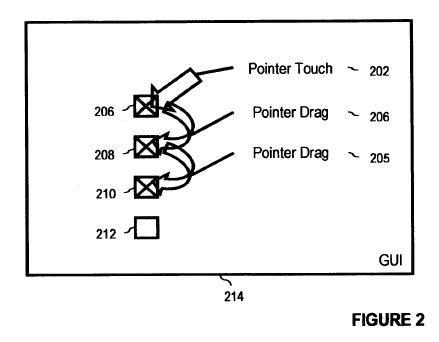
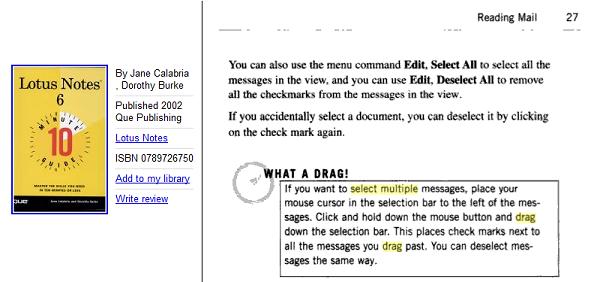
theodp writes "What do you call it when you drag a pointer over a checkbox to select or deselect it depending on its original state? Answer: US Patent 7,278,116. On Tuesday, the USPTO awarded IBM a patent for Mode Switching for Ad Hoc Checkbox Selection, aka Making an 'X'. Isn't this essentially the same concept as the older Lotus Notes selection model that IBM was recently asked to reintroduce?" -
IBM Seeks US Patents For Offshoring US Jobs
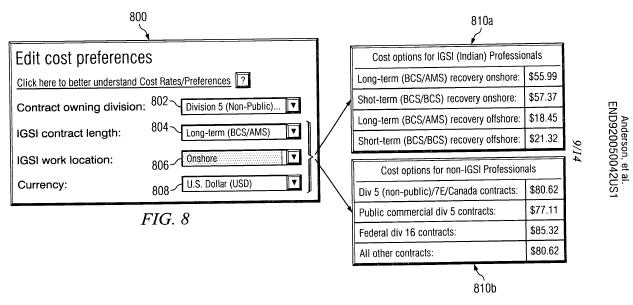
theodp writes "IBM and other corporations are seeking patents for inventions covering the offshoring of US jobs. The USPTO is considering IBM's patent application for Outsourcing of Services, a 'method for identifying human-resource work content to outsource offshore of an organization' to 'countries where cheaper labor prices and/or cheaper materials are available.' Then there's Big Blue's Electronic Marketplace for Identifying, Assessing, Reserving and Engaging Knowledge-Workers for an Assignment Using Trade-Off Analysis, which provides a handy-dandy IBM calculator that drives home the point that you'll pay less for IGS India workers, whether onshore or offshore. And with its System and Method of Using Speech Recognition at Call Centers to Improve Their Efficiency and Customer Satisfaction, IBM describes how to operate in 'low cost foreign countries' with 'support people not having good English language skills, or having an accent that makes it difficult to understand them' by exploiting technology developed for students who are deaf or hard of hearing, as well as other accent reduction techniques." -
IBM Seeks US Patents For Offshoring US Jobs
theodp writes "IBM and other corporations are seeking patents for inventions covering the offshoring of US jobs. The USPTO is considering IBM's patent application for Outsourcing of Services, a 'method for identifying human-resource work content to outsource offshore of an organization' to 'countries where cheaper labor prices and/or cheaper materials are available.' Then there's Big Blue's Electronic Marketplace for Identifying, Assessing, Reserving and Engaging Knowledge-Workers for an Assignment Using Trade-Off Analysis, which provides a handy-dandy IBM calculator that drives home the point that you'll pay less for IGS India workers, whether onshore or offshore. And with its System and Method of Using Speech Recognition at Call Centers to Improve Their Efficiency and Customer Satisfaction, IBM describes how to operate in 'low cost foreign countries' with 'support people not having good English language skills, or having an accent that makes it difficult to understand them' by exploiting technology developed for students who are deaf or hard of hearing, as well as other accent reduction techniques." -
Eclipse Makes Java Development on the Mac Easier
An anonymous reader writes "While the Java development environment is fully integrated into Mac OS X, the Eclipse developer IDE brings a fully integrated Java development environment to Mac OS X that provides a more consistent and easier to develop cross-platform experience. This article shows you how quickly you can be up and running with Eclipse and Java development on the Mac. 'Whether you're a Mac OS X Java developer working on cross-platform Java projects, a Linux developer switching to Mac OS X because of its UNIX-based core, or a general Java developer looking to develop applications targeted to Mac OS X, you'll want to look at the Eclipse IDE because it provides a solution to each of these development needs. While Mac OS X provides Xcode as its primary Java development IDE, Eclipse provides a more robust cross-platform development environment, with application frameworks for reporting, database access, communications, graphics, and more, and a rich-client platform framework for building applications.'" -
GPS Transitions to New Control System
gsfprez writes "It took us a long time, but the Air Force has finally moved off of the 1970's mainframe GPS control system and is now running on a new Unix-based Control System called AEP — Architecture Evolution Plan. It's important to remember that current GPS satellites are basically solar powered iPod shuffles with atomic clocks that simply playback whatever we upload into them at a precise rate. They don't actually have any idea where they are — its the control system at Schriever Air Force Base that does. The new system will be a lot cheaper to support and modify since Sun stocks things like SATA drives - while digging up Saturday Night Fever-era DASDs isn't simple. AEP will also allow us to be ahead of the curve: we're basically good to go to fly the new IIF birds."