Slashdot Mirror
Domain: inc.com
Stories and comments across the archive that link to inc.com.
Stories · 35
-
Is Elon Musk Serious About Building A Flying Tesla? (inc.com)
An anonymous reader quotes Inc: It's inevitable, really. Musk's two largest companies, Tesla Motors and SpaceX, make electric cars and rockets.... Musk tweeted about a "SpaceX option package" for the next Tesla Roadster in June of last year. The upgrade was described as including about "10 small rocket thrusters arranged seamlessly around car. These rocket engines dramatically improve acceleration, top speed, braking & cornering. Maybe they will even allow a Tesla to fly..."
Musk then hinted even more strongly at the possibility of a flying Tesla this week when he retweeted a GIF of a flying DeLorean from "Back to the Future," saying: "The new Roadster will actually do something like this." He then went on to describe how small SpaceX air thrusters will be used to essentially turn a Tesla Roadster into a hovercraft or perhaps... something with an even higher vertical range.
Two years ago Musk insisted flying cars were noisy and annoyed the people on the ground -- although you could argue this shows he'd been thinking about the mechanics of flying cars, and when it's an appropriate time to use rocket thrusters.
Inc's headline? "Elon Musk Has Plans For a Tesla / SpaceX Flying Car (And He's Serious. Probably.)" -
YouTube Apologizes For Tweeting Somebody Else's Video (inc.com)
YouTube's controversial year-end "Rewind" video has become "the most-loathed video in the entire history of YouTube," reports Inc., adding that with 14 million down votes, it now "might just be the most-hated video anybody ever posted anywhere."
"But then came Christmas Day, and YouTube apparently managed to top its own blunder." How? By uploading a promo video wishing viewers a Merry Christmas on Twitter. The problem: YouTube allegedly didn't own the video. Instead, it copied a YouTube user's video and reposted it as its own, without so much as offering credit....The only real difference between the version of video that YouTuber Lily Hevesh created and uploaded to YouTube, and the one that YouTube reportedly passed off as its own work in a post on Twitter is that YouTube's version on Twitter skipped the opening 20 seconds. That would be the part in which Hevesh, who describes herself as a "domino artist," shared her logo and a short clip of herself setting up the dominoes.
Hevesh caught what YouTube had apparently done about 14 hours after the post, and tweeted a response: "Very glad to see that my Christmas domino e-card is getting good use. However, I'm a bit disappointed that YouTube would take my video and re-upload it with absolutely no credit. People rip off my work everyday and it's honestly saddening to see this happen by YouTube itself...." Even if money weren't involved, YouTube's own terms of service and copyright page seem to ban exactly what it looks like was done here. It's a mess.
In the end, YouTube owned up to its mistake -- well, partway anyway. It tweeted a follow-up on the day after Christmas, acknowledging that they "forgot to credit @Hevesh5 for this video!" and linking to Hevesh's YouTube page.
The Verge points out that YouTube "does own a limited license to people's videos, so legally, the company can take Hevesh's content and upload it to its Twitter account. The problem is ethical....
"Reuploading video while stripping credit is a practice that YouTube explicitly condemns. YouTube's community guidelines and policy page specifically states that creators should only 'upload videos that you made or that you're authorized to use.'" -
YouTube Apologizes For Tweeting Somebody Else's Video (inc.com)
YouTube's controversial year-end "Rewind" video has become "the most-loathed video in the entire history of YouTube," reports Inc., adding that with 14 million down votes, it now "might just be the most-hated video anybody ever posted anywhere."
"But then came Christmas Day, and YouTube apparently managed to top its own blunder." How? By uploading a promo video wishing viewers a Merry Christmas on Twitter. The problem: YouTube allegedly didn't own the video. Instead, it copied a YouTube user's video and reposted it as its own, without so much as offering credit....The only real difference between the version of video that YouTuber Lily Hevesh created and uploaded to YouTube, and the one that YouTube reportedly passed off as its own work in a post on Twitter is that YouTube's version on Twitter skipped the opening 20 seconds. That would be the part in which Hevesh, who describes herself as a "domino artist," shared her logo and a short clip of herself setting up the dominoes.
Hevesh caught what YouTube had apparently done about 14 hours after the post, and tweeted a response: "Very glad to see that my Christmas domino e-card is getting good use. However, I'm a bit disappointed that YouTube would take my video and re-upload it with absolutely no credit. People rip off my work everyday and it's honestly saddening to see this happen by YouTube itself...." Even if money weren't involved, YouTube's own terms of service and copyright page seem to ban exactly what it looks like was done here. It's a mess.
In the end, YouTube owned up to its mistake -- well, partway anyway. It tweeted a follow-up on the day after Christmas, acknowledging that they "forgot to credit @Hevesh5 for this video!" and linking to Hevesh's YouTube page.
The Verge points out that YouTube "does own a limited license to people's videos, so legally, the company can take Hevesh's content and upload it to its Twitter account. The problem is ethical....
"Reuploading video while stripping credit is a practice that YouTube explicitly condemns. YouTube's community guidelines and policy page specifically states that creators should only 'upload videos that you made or that you're authorized to use.'" -
Study Suggests Too Much Collaboration Actually Hurts Productivity (inc.com)
An anonymous reader quotes Inc: Our attention in the workplace is a precious resource that often falls victim to tools like email, Slack, and so on, which bring a nonstop supply of things to read, things to respond to, things to file, things to loop others in on, things to follow up on, and in general, things to do. This "always on" dynamic has roots in a desire for increased workplace collaboration and productivity, but as is so often the case, it turns out there is a balance to be struck for optimal results. New research shows that groups who collaborate less often may be better at problem solving....
In a study titled "How Intermittent Breaks in Interaction Improve Collective Intelligence", the authors use a standardized problem-solving test to measure the contrast between time spent in collaboration mode against the quality and quantity of problem solving results. The group with no interaction predictably had the highest options for solutions, but those solutions were of lower overall quality. The group with high interaction had higher quality solutions, but less variety and a lower likelihood to find the optimal solution. The intermittent collaboration groups found the desirable middle ground to balance out the pros/cons of the no interaction and high interaction groups, leading them to become the most successful problem solvers.
The article warns of a "collaboration drain", suggesting managers pay closer attention to when collaboration is (and isn't) necessary. "Once upon a time in the land of business, people primarily communicated through conversations, meetings, and internally circulated printed memos. In the absence of email, Internet, cell phones, and CRMs there was a repeating cadence of connection, then disconnection, even while in the office."
"In this case, 'disconnected' really amounts to uninterrupted -- and able to focus." -
GitLab's Secret To Success? All Its 350 Employees Work Remotely (inc.com)
Inc. magazine explains a unique feature of GitLab. "Every employee of the San Francisco-based startup, which offers tools for software developers, works from home." Three years ago, that was nine people. Today, GitLab's 350 employees across 45 countries use video calls and Slack chats to stay constantly connected.... GitLab meetings and presentations are uploaded to YouTube. Its employee handbook -- over 1,000 pages long when printed -- is publicly available online as a resource, so employees can get questions answered without waking up co-workers in a different time zone.
The biggest advantage to an all-remote team is obvious: Your hiring pool is gigantic, and you don't need to convince top talent to move for you. GitLab's percentage of quality job applications is similar to other companies -- its dramatic number of recent hires is due to how many applications it receives, 13,000 in the second quarter of 2018 alone. On the other hand, maintaining a culture is really difficult. "To be honest, I was definitely a bit concerned," says Dave Munichiello, a general partner at Alphabet's venture capital arm, GV, which invested in GitLab in 2017. "What happens when the all-hands meeting isn't a bunch of folks hanging around the water cooler listening to the CEO articulate the vision and the mission?"
GitLab's leaders constantly think about it. Co-founder and CEO Sid Sijbrandij even hired away Netflix's vice president of talent, Barbie Brewer, to serve as chief people officer. Virtual coffee breaks, where employees talk about their lives outside GitLab, are built into everyone's schedules. Senior leaders hold office hours in video chat rooms that anyone can join. When GitLab meets its monthly goals, everyone gets a free dinner. "What we've learned from GitLab," Munichiello says, "is that when you have a leadership team that's as committed to remote-only as they are, and as communicative and transparent as they are, and as insistent on documentation as they are, it can work." -
America Braces For Daylight Saving Time - And Missing Medical Records (usatoday.com)
"One hundred years after Congress passed the first daylight saving legislation, more and more people are doubting the wisdom of changing the clocks," writes PBS, noting that it actually makes Americans use more electricity and consume more gasoline.
"If you can find anyone who supports this, they're probably just trolling you," writes Inc magazine's contributor editor, adding "Literally everyone hates it... It's almost impossible to find anyone who still supports this insane, anachronistic idea, which is leftover from a German coal conservation idea during World War I, and our heck-we'll-try-anything panic during the energy crisis of the 1970s." In fact, one study found that while consumer spending increases a bit at the start of daylight savings, it drops a full 3.5 percent in the wrong direction when it ends. (Which will happen tonight in most U.S. states at 2:00 a.m.)
And now USA Today points out that hospital software "still can't handle daylight saving time: Epic Systems, one of the most popular electronic health records software systems used by hospitals, can delete records or require cumbersome workarounds when clocks are set back for an hour -- prompting many hospitals to opt for paper records for part of the night shift. And it happens every year... Dr. Steven Stack, a past president of the American Medical Association, called the glitches "perplexing" and "unacceptable," considering that hospitals spend millions of dollars on these systems, and Apple and Google seem to have dealt with seasonal time changes long ago...
Carol Hawthorne-Johnson, an intensive care unit nurse in California, said her hospital doesn't shut down the Epic system during the fall time change. But she's come to expect that the vital signs she enters into the system from 1 a.m. to 2 a.m. Sunday will be deleted when the clock falls back to 1 a.m. One hour's worth of electronic record-keeping "is gone," she said. Hospital staff have learned to deal with it by taking extra chart notes by hand... Many hospitals use Cerner, another major electronic medical records company. Those hospitals plan for Cerner to be down during the time change, too. -
America Braces For Daylight Saving Time - And Missing Medical Records (usatoday.com)
"One hundred years after Congress passed the first daylight saving legislation, more and more people are doubting the wisdom of changing the clocks," writes PBS, noting that it actually makes Americans use more electricity and consume more gasoline.
"If you can find anyone who supports this, they're probably just trolling you," writes Inc magazine's contributor editor, adding "Literally everyone hates it... It's almost impossible to find anyone who still supports this insane, anachronistic idea, which is leftover from a German coal conservation idea during World War I, and our heck-we'll-try-anything panic during the energy crisis of the 1970s." In fact, one study found that while consumer spending increases a bit at the start of daylight savings, it drops a full 3.5 percent in the wrong direction when it ends. (Which will happen tonight in most U.S. states at 2:00 a.m.)
And now USA Today points out that hospital software "still can't handle daylight saving time: Epic Systems, one of the most popular electronic health records software systems used by hospitals, can delete records or require cumbersome workarounds when clocks are set back for an hour -- prompting many hospitals to opt for paper records for part of the night shift. And it happens every year... Dr. Steven Stack, a past president of the American Medical Association, called the glitches "perplexing" and "unacceptable," considering that hospitals spend millions of dollars on these systems, and Apple and Google seem to have dealt with seasonal time changes long ago...
Carol Hawthorne-Johnson, an intensive care unit nurse in California, said her hospital doesn't shut down the Epic system during the fall time change. But she's come to expect that the vital signs she enters into the system from 1 a.m. to 2 a.m. Sunday will be deleted when the clock falls back to 1 a.m. One hour's worth of electronic record-keeping "is gone," she said. Hospital staff have learned to deal with it by taking extra chart notes by hand... Many hospitals use Cerner, another major electronic medical records company. Those hospitals plan for Cerner to be down during the time change, too. -
Recruiters Are Still Complaining About No-Shows At Interviews (kyma.com)
An anonymous reader quotes CNN Money: Chandra Kill had scheduled face-to-face interviews with 21 candidates to fill some job openings at her employment screening firm. Only 11 showed up. "About half flaked out," said Kill.... "A year or two ago it wasn't like this." With the U.S. unemployment rate at its lowest in 18 years, and more job openings than there are people looking for work, candidates are bailing on scheduled interviews. In some cases, new hires are not showing up for their first day of work....
While there's nothing wrong with accepting another job offer, bailing on an employer without notice could have lasting effects. "The world is small," said Johnny Taylor, president and CEO of the Society for Human Resource Management.... He added that he's heard of a candidate being flown out for a job interview only to skip that part of the trip. "I expect that if I send you a plane ticket and block off two hours to meet with you, you will show up." As a result, he said some companies are having candidates agree to reimburse for travel costs if they take the trip but flake on the interview.
In an effort to curb the problem, recruiters have been changing their tactics and moving through the hiring process faster. If they have a qualified candidate that seems like a good fit, they work to get them in for an interview the next day.
Inc. magazine once blamed the problem of no-shows on the low unemployment rate and "the effects technology have had on the communication style of younger generations." But leave your own thoughts in the comments.
And have you ever been a no-show for a job interview? -
Why Warren Buffett Is Poorer Than Mark Zuckerberg (inc.com)
Facebook's soaring stock price isn't the only reason 34-year-old Mark Zuckerberg is now richer than 87-year-old Warren Buffett. An anonymous reader quotes Inc: There's another, more important reason that Zuckerberg is now worth more: Buffett has been doing a great job of giving his money away, something that he, Zuckerberg, Gates, and most of the world's most well-known billionaires have pledged to do.
Buffett has given Berkshire Hathaway stock now worth more than $50 billion to the Bill & Melinda Gates Foundation alone. When it comes to giving, Zuckerberg and his wife Priscilla Chan have a lot of catching up to do. They appear to have devoted well under $10 billion so far to philanthropy... On the other hand, Zuckerberg, is more than 50 years younger than Buffett, so they likely have a lot more time in which to do their giving.
Three years ago the couple pledged to give away 99% of their net worth within their lifetimes. -
Ask Slashdot: Have You Ever 'Ghosted' an Employer? (linkedin.com)
"Suddenly, calls and texts went unreturned," writes LinkedIn's editor at large, describing a recruiter who suddenly discovered the candidate she'd wanted to hire failed to respond to 12 messages, including emails like "Please let me know that you have not been kidnapped by aliens. I'm worried about you," and even a snail-mailed greeting card. Recruiters complain that prospective employees are now borrowing a practice from dating -- and "ghosting" recruiters and employers to let them know that they're not interested.
"Candidates agree to job interviews and fail to show up, never saying more. Some accept jobs, only to not appear for the first day of work, no reason given, of course. Instead of formally quitting, enduring a potentially awkward conversation with a manager, some employees leave and never return. Bosses realize they've quit only after a series of unsuccessful attempts to reach them.... Meredith Jones, an Indianapolis-based director of human resources for a national restaurant operator, now overbooks interviews, knowing up to 50 percent of candidates for entry-level roles likely won't show up."
Long-time Slashdot reader NormalVisual writes, "It'd be interesting to hear Slashdotters' experience with this." Have you ever ghosted a potential employer, or perhaps more relevant, have you ever been ghosted by a potential employer during the hiring process? Do you feel it's unprofessional, or simple justice for the behavior of some companies when the balance of power was more on their side?
Inc. magazine blames the low unemployment rate and "the effects technology have had on the communication style of younger generations." But leave your own thoughts in the comments.
Does ghosting show a lack of professionalism, or is it simple payback for the way corporations treated job-seekers in the past? And have you ever "ghosted" an employer? -
The College Board Pushes To Make Computer Science a High School Graduation Requirement
theodp writes: Education Week reports that the College Board wants high schools to make it mandatory for students to take computer science before they graduate. The call came as the College Board touted the astonishing growth in its Advanced Placement (AP) computer science courses, which was attributed to the success of its new AP Computer Science Principles (AP CSP) class, a "lite" alternative to the Java-based AP CS A course. "The College Board is willing to invest serious resources in making this viable -- much more so than is in our economic interest to do so," said College Board President David Coleman. "To governors, legislators, to others -- if you will help us make this part of the life of schools, we will help fund it."
Just two days before Coleman's funds-for-compulsory-CS offer, Education Week cast a skeptical eye at the tech sector's role in creating a tremendous surge of enthusiasm for K-12 CS education. Last spring, The College Board struck a partnership with the Chan Zuckerberg Initiative with a goal of making AP CSP available in every U.S. school district. Also contributing to the success of the College Board's high school AP CS programs over the years has been tech-bankrolled Code.org, as well as tech giants Microsoft and Google. The idea of a national computer programming language requirement for high school students was prominently floated in a Google-curated Q&A session with President Obama (video) following the 2013 State of the Union address. -
Trump Administration Tightens Scrutiny of Skilled Worker Visa Applicants (inc.com)
wyattstorch516 writes: The Trump administration is tightening the scrutiny on the H-1B visa program (Warning: paywalled; alternative source). Changes would undo actions by the Obama administration. There are two big regulatory changes looming that would undo actions by the Obama administration. "The first change allowed spouses of H-1B workers the right to work. That regulation is being challenged in court and the Trump administration is expected to eliminate the provision rather than defend it," reports WSJ. "The second change affects the Optional Practical Training program, which allows foreign graduates from U.S. colleges in science and technology an extra two years of work authorization, giving them time to win an H-1B visa. The Trump administration could kill that benefit or reduce the two-year window, according to people familiar with the discussions." The Journal highlights a "series of more modest changes that have added scrutiny to visa processing":
- "USCIS directed last month that adjudicators no longer pay 'deference' to past determinations for renewal applications. This means an applicant's past approval won't carry any weight if he or she applies for a renewal.
- The agency is conducting more applicant interviews, which critics say slows the system. The agency spokesman says this process will ramp up over several years and is needed to detect fraud and make accurate decisions.
- In the spring, the agency suspended premium processing, which allowed for fast-track consideration to those who paid an extra fee. This option wasn't resumed until October, meaning many workers who qualified for a coveted H-1B visa had to wait months for a decision.
- State Department officials have been told to consider that Mr. Trump's 'Buy American, Hire American' executive order directs visa programs must 'protect the interests of United States workers.' And the Foreign Affairs Manual now instructs officers to scrutinize applications of students to ensure they plan to return to their home countries. A State Department official said the official rules haven't changed but said a 'comprehensive' review is under way." -
Tech Companies Try Apprenticeships To Fill The Tech Skills Gap (thehill.com)
Slashdot reader jonyen writes: For generations, apprenticeships have been the way of working life; master craftsmen taking apprentices under their wing, teaching them the tools of the trade. This declined during the Industrial Revolution as the advent of the assembly line enabled mass employment for unskilled laborers. The master-apprentice model went further out of focus as higher education and formal training became increasingly more valuable.
Fast forward to the 21st century, where employers are turning back the page to apprenticeships in an effort to fill a growing skills gap in the labor force in the digital age. Code.org estimates there will be a million unfulfilled tech jobs by 2020.
jonyen shared this article by IBM's Vice President of Talent:IBM is committed to addressing this shortage and recently launched an apprenticeship program registered with the US Department of Labor, with a plan to have 100 apprentices in 2018. ... Other firms have taken up the apprenticeship challenge as well. Salesforce CEO Marc Benioff, for example, has called for creating 5 million American apprentices in the next five years.
An apprenticeship offers the chance for Americans to get the formal education they need, whether through a traditional university, a community college or a trade school, while getting something else: On-the-job experience and an income... Right now, there are more than 6 million jobs in the U.S. that are going unfilled because employers can't find candidates with the right skills, according to the Labor Department.
IBM says their apprentices "are on their way to becoming software developers in our Cloud business and mainframe administrators for technologies like Blockchain, and we will add new apprenticeships in data analytics and cybersecurity as we replicate the program across the U.S."
"Ninety-one percent of apprentices in the U.S. find employment after completing their program, and their average starting wage is above $60,000." -
Do Code Bootcamps Work? (inc.com)
"Computer programming is highly specialized work; it can't be effectively taught in an intensive program," writes Inc. magazine's contributing editor: Last month, two of the country's largest and most well-regarded coding bootcamps closed. While there are still over 90 such camps in the U.S. and Canada, these for-profit intensive software engineering schools aren't successfully preparing their students for programming jobs. According to a recent Bloomberg article, the Silicon Valley recruiter Mark Dinan characterized the bootcamps as "a freaking joke," while representatives of Google and Autodesk said respectively that "most graduates from these programs are not quite prepared" and "coding schools haven't been much of a focus for [us]."
In one sense, the failure of coding bootcamps reflects the near-universal failure of for-profit universities, colleges, and charter schools to provide a usable education. In another sense, though, coding bootcamps represent a profound misunderstanding of what computer programming is all about... Coding at the professional level is highly specialized and requires years of practice to master... the idea of a bootcamp for coding is just as practical as the idea of a bootcamp for surgery. -
Google May Be In Trouble For Firing James Damore (inc.com)
Google fired engineer James Damore after he wrote a 10-page document about "Google's Ideological Echo Chamber." taustin writes from a report via Inc. about the potential legal trouble the company may face from firing the "anti-diversity" engineer: Whether Demore is right or wrong, whether one agrees with him or not, Google may have legal trouble for firing him. Employees are protected by federal law when they discuss working conditions with other employees (and this was an internal memo). His memo could be considered whistleblowing, which is also protected (and it is very clear that he was fired as retribution). And, in California, political opinions are protected in the work place as well. Just because one side is wrong doesn't mean the other side is right. -
Google's Other Ugly Secret: Some Managers Keep Blacklists (inc.com)
Last week a controversial internal memo written by a concerned Google employee was going viral within the company. The memo, titled "PC Considered Harmful" and since dubbed "the Google manifesto" on social media, argued two points: First, that Google has become an ideological echo chamber where anyone with centrist or right-of-center views fears to speak their mind. Second, that part of the tech industry's gender gap can be attributed to biological differences between men and women. The person who wrote the memo has since been fired, but the internal tussle has revealed one more thing. The Inc reports: The contentious internal discussion revived a concern dating back to 2015: An unknown number of Google managers maintain blacklists of fellow employees, evidently refusing to work with those people. The blacklists are based on personal experiences of others' behavior, including views expressed on politics, social justice issues, and Google's diversity efforts. Inc. reviewed screenshots documenting several managers attesting to this practice, both in the past and currently, explicitly using the term "blacklist." The screenshots were shared by a Google employee who requested anonymity due to having signed an NDA. In additional screenshots, one Google employee declared his intent to quit if Damore were not fired, and another said that he would refuse to work with Damore in any capacity. A Google spokesperson told Inc. that the practice of keeping blacklists is not condoned by upper management, and that Google employees who discriminate against members of protected classes will be terminated. It's not clear whether that principle applies in Damore's case. Although political affiliation is a protected class according to California labor law, the views expressed in the manifesto and echoed by others who oppose political correctness do not seem to merit legal protection. -
Drupal Developers Still Rebelling Against Drupal Leadership
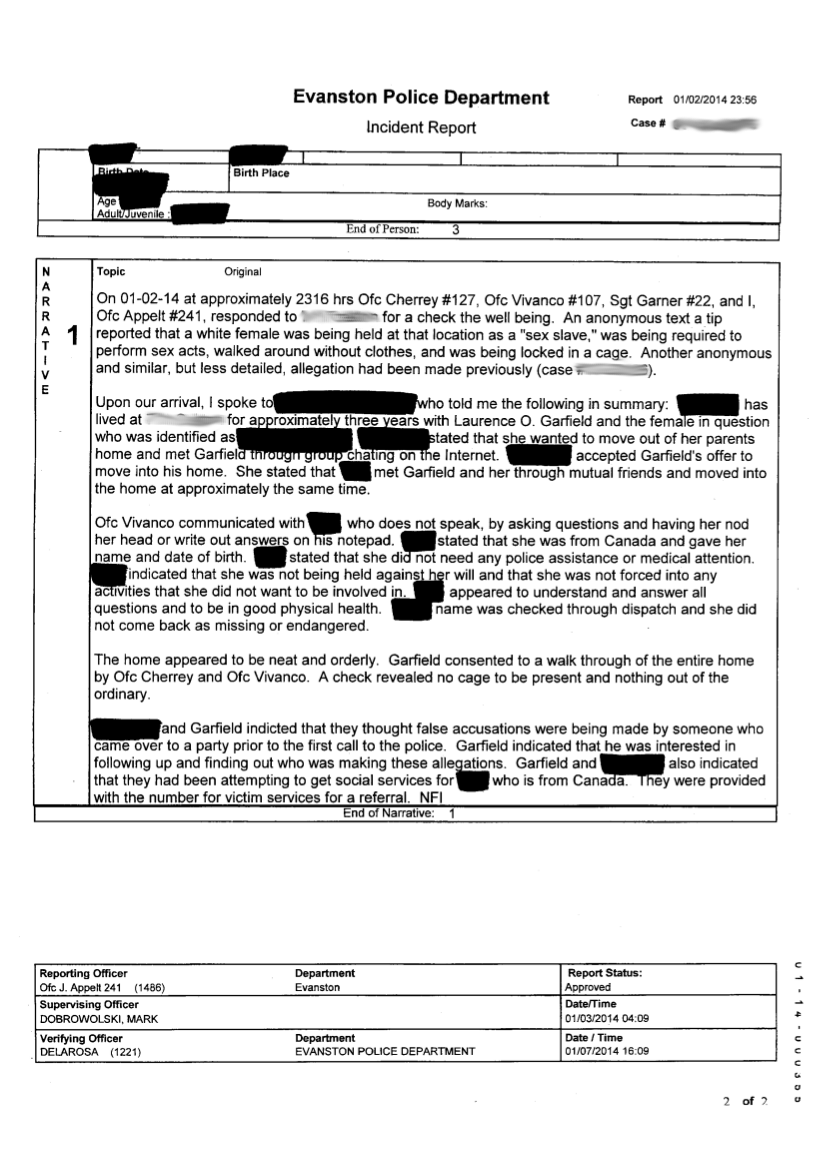
New submitter cornholed writes: In an update to previous posts on Slashdot, prominent Drupal and PHP Developer Larry Garfield is still defending his reputation against allegations by Drupal leadership against sexual misconduct. As previously reported by a variety of news organizations, Larry was exiled from the Drupal project for adherence to the Gor sci-fi lifestyle.
In the latest round of allegations, Garfield was reportedly asked to resign because an autistic "woman who attended Drupal community events ... was allowed to contribute by him". While some have accused Dries Buytart and the Drupal Association of "Autism Shaming", the leader of the Drupal project claims "this person could be vulnerable and may have been subject to exploitation", hence raising the risk of legal damage to the Drupal project. Larry refutes these allegations, saying these claims are post-hoc and has shared police reports purporting his innocence.
There is still much debate in the Drupal community around why Larry was ejected from his leadership positions. While there's much speculation over Larry's ouster, there is one thing for certain: become a leader in the OSS community and a dossier on your public statements just might be made about you. -
Nutella Used An Algorithm To Design 7 Million Unique Labels (inc.com)
An anonymous reader quotes Inc. Millions of Italians can now say they own a one-of-a-kind Nutella jar. In February, 7 million jars appeared on shelves in Italy, all of them boasting a unique label design... "An algorithm has usurped the traditional role of a designer," writes design magazine Dezeen. There are jars with polka dots. Jars with zigzags. Jars with splotchy shapes. All sorts of other patterns, too... All 7 million jars sold out within a month... Due to the sell-out success of these jars, Nutella is reportedly launching the same campaign soon in other European countries, starting with France.
The article includes a video showing some of the labels. The algorithm always kept the original logo, but then "pulled from dozens of patterns and thousands of color combination." -
Ethereum Could Be Worth More Than Bitcoin Very Soon (inc.com)
Ethereum is an open software platform based on blockchain technology that enables developers to build and deploy decentralized applications, according to Blockgeeks. It is currently the second most valuable cryptocurrency on the planet, but it could overthrow Bitcoin and become the most valuable cryptocurrency in the near future. Inc.com reports: If you aren't familiar, what Bitcoin does for payments, Ethereum does for anything involving programming and computing. While it utilizes its own version of a blockchain, it is functionally different from Bitcoin. For example, on the Ethereum platform you could host a crowdfunding campaign or any type of "smart contract." Ethereum's goal is to make a decentralized internet. And it has a very good shot at becoming "the new internet," literally. It could one day replace a lot of technology and ways that we host and execute code online. As of the time of writing, Ethereum has a market cap of over $17 billion. Bitcoin's market cap is $34 billion. This makes Ether (the name of Ethereum's token) the second most valuable cryptocurrency in the world. And that number jumped up over $3 billion just yesterday. It's making a major climb and has no end in sight, according to many. The Enterprise Ethereum Alliance is what initially spiked major interest (and shot up the price). Just the other day, 86 new companies joined the alliance. -
Ending Emails With Certain Variation Of Thank You Vastly Improves Response Rate, Study Finds (inc.com)
An anonymous reader shares an Inc article: The folks at Boomerang, a plug-in for scheduling emails, did a little study to see how the language people use to close their emails has any effect on the response rate. "We looked at closings in over 350,000 email threads," data scientist Brendan Greenley wrote on the Boomerang blog, "And found that certain email closings deliver higher response rates." But do all emails need a response? Not necessarily. That's why Boomerang ran a variation of the test that looked at threads whose initial email contained a question mark, meaning the initiator of the conversation was likely looking for a reply. The answer? Those that express gratitude. "Emails that closed with a variation of thank you got significantly more responses than emails ending with other popular closings," Greenley writes. Here are the exact numbers: Emails that ended in Thanks in advance had a 65.7% response rate. Of emails that ended in Thanks, 63.0% got responses. The third most effective closing was Thank you with a 57.9% response rate. Boomerang has shared the kind of emails it accessed and how. -
Peter Thiel Is Interested In Harvesting The Blood Of The Young (gawker.com)
Presto Vivace writes: [Gawker reports:] "Peter Thiel, the tech billionaire-turned-Trump delegate who successfully bankrupted Gawker Media, has long been obsessed with anti-aging technologies. He believes people have been conned by 'the ideology of the inevitability of the death of every individual,' and has funded startups dedicated to extending the human lifespan. According to Jeff Bercovici of Inc. magazine, Thiel is so afraid of dying that he has begun exploring a novel, and fairly unsettling, technique: Harvesting, and injecting himself with, the blood of younger people." Vampire capitalism is real. In an unpublished interview with Bercovici last year, Thiel said: "I'm looking into parabiosis stuff [...] where they [infected] the young blood into older mice and they found that had a massive rejuvenating effect. [...] I think there are a lot of these things that have been strangely under-explored." When asked if he meant parabiosis was "really interesting" as a business opportunity or a personal-health treatment, Thiel suggested the latter: "That would be one where it's more just, do we think the science works? Some of these it's not clear there's actually a great company to start around it. [...]" -
Survey: Tech Pros Ignoring Work-Life Balance Is a Myth (dice.com)
Nerval's Lobster writes: Are tech professionals really willing to live on energy drinks, and sleep on office couches, in order to get the job done? For many, the answer is "no." In response to a new Dice survey (Dice link, obviously), only 5 percent of employees at technology companies said that work-life balance wasn't a top priority for them. Contrast that with nearly 45 percent of respondents who said they wanted more of a work-life balance, even if their current position made that difficult. More than 27 percent of those surveyed also characterized work-life balance in the tech industry as a "myth." It seems that, despite all those companies talking publicly about wanting to give employees a better work-life balance (complete with on-site gyms and unlimited vacation time and... stuff...), it's not really working out for a lot of people. (And that's something that people have been calling out for some time.) -
Revisiting Why Johnny Can't Code: Have We "Made the Print Too Small"?
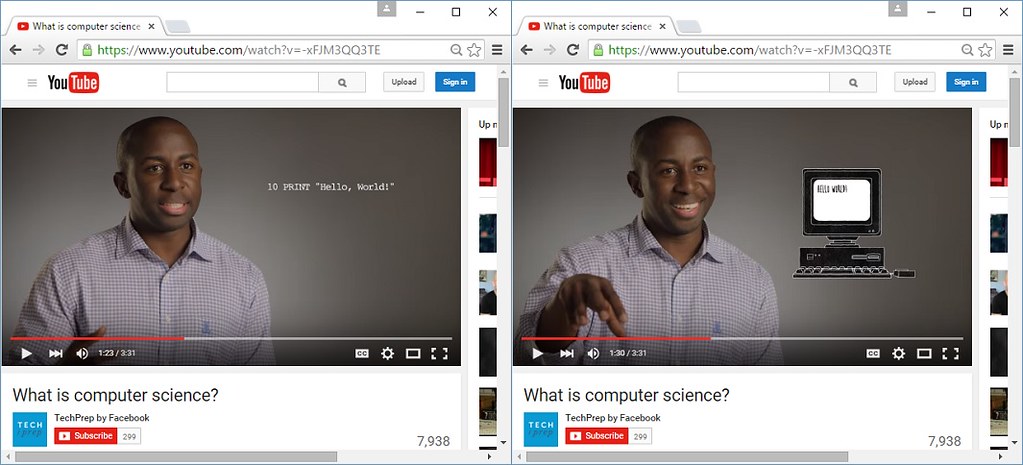
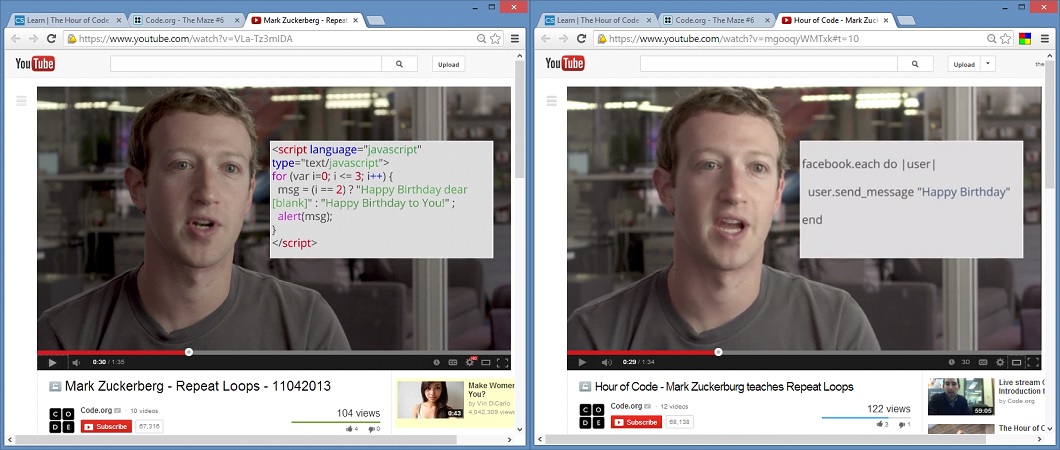
theodp writes: In What is Computer Science?, the kickoff video for Facebook's new TechPrep diversity initiative, FB product manager Adriel Frederick explains how he was hooked-on-coding after seeing the magic of a BASIC PRINT statement. His simple BASIC example is a nice contrast to the more complicated JavaScript and Ruby examples that were chosen to illustrate Mark Zuckerberg's what-is-coding video for schoolkids. In How to Teach Your Baby to Read, the authors explain, "It is safe to say that in particular very young children can read, provided that, in the beginning, you make the print very big." So, is introducing coding to schoolkids with modern programming languages instead of something like BASIC (2006) or even (gasp!) spreadsheets (2002) the coding equivalent of "making the print too small" for a child to see and understand? -
$70k Salaries Didn't 'Backfire'; Gravity Payments' Profits Have Doubled (inc.com)
AmiMoJo writes: In April, Dan Price, CEO of the credit card payment processor Gravity Payments, announced that he will eventually raise minimum pay for all employees to at least $70,000 a year. The move sparked not just a firestorm of media attention, but also a lawsuit from Price's brother and co-founder Lucas, claiming that the pay raise violated his rights as a minority shareholder. But six months later, the financial results are starting to come in: Price told Inc. Magazine that revenue is now growing at double the rate before the raises began and profits have also doubled since then. On top of that, while it lost a few customers in the kerfuffle, the company's customer retention rate rose from 91 to 95 percent, and only two employees quit. Two weeks after he made the initial announcement, the company was flooded with 4,500 resumes and new customer inquiries jumped from 30 a month to 2,000 a month. -
Girls-Only Computer Camps Formed At Behest of Top Google, Facebook Execs
theodp writes: Reporting on Google exec Susan Wojcicki's appearance at DreamForce, Inc.'s Tess Townsend writes: "The YouTube CEO said her daughter had stated point-blank that she did not like computers, so Wojcicki enrolled her in a computer camp. The camp made her daughter dislike tech even more. Wojcicki reported her daughter came back saying, 'Everyone in the class was a boy and nobody was like me and now I hate computers even more.' So, mom called the camp and spoke to the CEO, asking that the camp be made more welcoming to girls" (video). Fortune reported last July that it was the urging of Wojcicki and Facebook COO Sheryl Sandberg that prompted iD Tech Camps — which Wojcicki's and Sandberg's kids had attended — to spin off a girls-only chain of tech camps called Alexa Cafe, which was trialed in the Bay Area in 2014 and expanded to nine locations in 2015. Earlier this month, Fortune noted that Wojcicki's daughter attended the $949-a-week Alexa Cafe summer camp at Palo Alto High, which was coincidentally hosted in the multi-million dollar Media Center (video) that was built thanks to the efforts of Wojcicki's mother Esther (a long-time Paly journalism teacher) and partially furnished and equipped by sister Anne (23andMe CEO) and ex-brother-in-law Sergey Brin's charitable foundation. -
Tim O'Reilly and the 'WTF?!' Economy (Video)
This is a conversation Tim Lord had with Tim O'Reilly at OSCON. Tim O'Reilly wrote an article titled "The WTF Economy,", which started with these words: "WTF?! In San Francisco, Uber has 3x the revenue of the entire prior taxi and limousine industry." He talks about Uber and AirbnB and how, with real-time measurement of customer demand, "The algorithm is the new shift boss." And then there is this question: "What is the future when more and more work can be done by intelligent machines instead of people, or only done by people in partnership with those machines?"
My (late) father was an engineer. Politically, you could have called him a TechnoUtopian. He believed -- along with most of his engineer, ham radio, and science fiction writer and reader friends -- that as machines took over the humdrum tasks, humans would work less and create more. O'Reilly seems to have similar beliefs, even though (unlike my father) he's seen the beginnings of an economy with self-driving cars and trucks, factory machines that don't need humans to run them, and many other changes the 1950s and 1960s futurists didn't expect to see until we had flying cars and could buy tickets on Pan Am flights to the moon. Listening to these conversations, I remember my father's dreams, but O'Reilly isn't as optimistic as a full-blown TechnoUtopian. He takes a "Something's happening here; what it is ain't exactly clear" view of how work (and pay for work) will change in the near future. Please note that Tim O'Reilly has been called "The Oracle of Silicon Valley," so he's totally worth watching -- or reading, if that's your preferred method of taking in new information.
NOTE: Today we have a "main video," plus a "bonus video" that is viewable only with Flash. But we have a transcript that covers both of them. Enjoy! -
Are We Reaching the Electric Car Tipping Point?
HughPickens.com writes: Geoff Ralston has an interesting essay explaining why it is likely that electric car penetration in the U.S. will take off at an exponential rate over the next 5-10 years rendering laughable the paltry predictions of future electric car sales being made today. Present projections assume that electric car sales will slowly increase as the technology gets marginally better, and as more and more customers choose to forsake a better product (the gasoline car) for a worse, yet "greener" version. According to Ralston this view of the future is, simply, wrong. — electric cars will take over our roads because consumers will demand them. "Electric cars will be better than any alternative, including the loud, inconvenient, gas-powered jalopy," says Ralston. "The Tesla Model S has demonstrated that a well made, well designed electric car is far superior to anything else on the road. This has changed everything."
The Tesla Model S has sold so well because, compared to old-fashioned gasoline cars it is more fun to drive, quieter, always "full" every morning, more roomy, and it continuously gets better with automatic updates and software improvements. According to Ralston the tipping point will come when gas stations, not a massively profitable business, start to go out of business as many more electric cars are sold, making gasoline powered vehicles even more inconvenient. When that happens even more gasoline car owners will be convinced to switch. Rapidly a tipping point will be reached, at which point finding a convenient gas station will be nearly impossible and owning a gasoline powered car will positively suck. "Elon Musk has ushered in the age of the electric car, and whether or not it, too, was inevitable, it has certainly begun," concludes Ralston. "The future of automotive transportation is an electric one and you can expect that future to be here soon." -
Gigaom Closes Shop
Presto Vivace writes "What a loss for the tech community," linking to this announcement at Gigaom that the site is shutting down: Gigaom recently became unable to pay its creditors in full at this time. As a result, the company is working with its creditors that have rights to all of the company's assets as their collateral. All operations have ceased. We do not know at this time what the lenders intend to do with the assets or if there will be any future operations using those assets. The company does not currently intend to file bankruptcy. We would like to take a moment and thank our readers and our community for supporting us all along. — Gigaom management Reader bizwriter adds a link to this story on the shutdown. -
GM Brings IT Dev Back In House; Self-Driving Caddy In the Works
dstates writes "Want a good job in IT? Detroit of all places may be the place to be. GM is bringing IT development back in house to speed innovation. Among other initiatives, a self driving Cadillac is planned by mid decade. Ford is also actively developing driver assist technology and is betting big on voice recognition. Ann Arbor has thousands of smart cars wirelessly connected on the road. Think about all those aging baby boomers with houses in the burbs and no desire to move as their vision and reflexes decline. The smart car is a huge market. Seriously, Detroit and SE Michigan have good jobs, great universities, cheap housing and easy access to great sports and outdoors activities." -
Facebook Is Most Hated Social Media Company
Hugh Pickens writes "Inc. reports that Facebook, the most visited site on the Internet, is also among the most hated, scoring 64 on a 100-point scale, which puts the company in the bottom five percent of private sector companies and in the same range as airlines and cable companies, 'two perennially low-scoring industries with terrible customer satisfaction,' according to the results of a survey by the American Customer Satisfaction Index. 'Customers have shown that, so far, they have been willing to suffer through a poor user experience in order to enjoy the benefits Facebook provides,' according to the report. 'For companies that provide low levels of customer satisfaction, repeat business is always a challenge unless customers lack adequate choices, as in the case of near monopolies.' Overall, social media is one of the lowest-scoring industries measured by the ACSI — only airlines, newspapers, and subscription television services score lower. However, among social media companies, Wikipedia tops the list with a score of 77." -
Why PyCon 2010's Conference Wi-Fi Didn't Melt Down
jafo writes "There's been a lot of teeth gnashing going on recently about broken wireless at conferences. We just wrapped up PyCon 2010, with around 600 (out of 1,000) attendees simultaneously accessing the volunteer-run network, and response has been fairly positive. 2.4GHz (802.11b/g) continues to be problematic, but most users were on 5.2GHz (using 802.11n) and associating at 130mbps, with a 100mbps link to the net (though after the fact we found that 35mbps would have sufficed). My PyCon 2010 wrap-up reveals all the secrets of how we did it, including pretty bandwidth and user graphs." -
Advertising of the Future, Already Here
prostoalex writes "Did Stephen Spielberg predict the future of advertising, when in Minority Report the relevant ads were delivered by retina scanner, which could then personalize any message? August issue of Inc. magazine takes a look at future of advertising and who's offering advanced technologies today. Internet search engines and helpful utilities from companies like Claria already know a lot about your shopping and browsing habits. Combine that with advanced tech from TV viewership tracker Nielsen and large nationwide databases like Experian, and the advertising messages of the future could get extremely personal." -
Kuma Runs Into Ad Controversy Promoting Iraq Game
Thanks to Inc Magazine for its article discussing Kuma Reality Games' attempts to promote its downloadable Kuma: War PC videogame. The piece explains of the previously mentioned title, which "lets players march in the boots of U.S. troops... fighting Taliban and al-Qaeda forces in Afghanistan [or] defending U.S. battlefield commanders from assassination attempts in Iraq", that polarizing forces were at work - Keith Halper of Kuma laments: "It's hard when people accuse you, on the one hand, of exploiting the military and, on the other, of working for them." It's also noted of the press campaign around the game: "Gamespot, one of the most popular websites for PC gamers, asked Kuma to alter one ad's content, which some at the site found 'disturbing,' according to RDA's media buyers. Kuma denied the request." -
P2P Contact Info Service From Napster Co-Founder
scrm writes "Plaxo is an interesting new service from Sean Parker, co-founder of Napster. It's a P2P-based add-on to Outlook that confronts the old problem of keeping contact lists up-to-date. Mozilla mail support is on the cards, and yes, the company does 'take privacy very seriously'. Check the press here(1), here(2) and here(3). You can also access your contact list over the web." -
Building Better Spam
henbane writes "Cringely is plugging a new method of advertising from Dr. Jim Kowalick and Mario Fantoni. Their book entitled 'E-Mailing Your Way to Sales With the Taguchi Approach' is out in the autumn. What could be worse than a method which increases the returns on spam?"