Slashdot Mirror
Domain: lurkertech.com
Stories and comments across the archive that link to lurkertech.com.
Comments · 8
-
Helping a faded legend find a sense of purpose?
Microsoft was never a legend, despite how billg would like to rewrite history.
Microsoft Litigation -
Right..
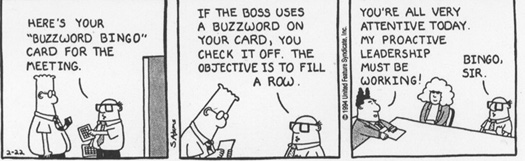
Does everybody have their bingo cards ready?
-
Re:Even worse in TFA.
-
Safe area
Wikipedia says the Nexus One phone's display is 800x480 (not 800x400) pixels when rotated to landscape, just like the display of the Pandora PDA. In a 720x480 pixel widescreen video following industry standards for SDTV and EDTV, the center 704x480 pixels (not counting the Nominal Analog Blanking area) have a 16:9 display aspect ratio, which implies a 40:33 pixel aspect ratio. To restore square pixels, the player ideally stretches the center 660 pixels of this image to cover the 800-pixel width of the screen. This cuts off 22 pixels (27 square pixels) from each side, but SDTV and EDTV are framed in a safe area: displays are allowed to cut off a bit of the edge.
-
Re:Amazing how much gets lost or forgotten
Can you give some examples?
The Wirtz pump was invented in 1746, lost, then rediscovered in 1972 and successfully patented in 1976.
Check out http://lurkertech.com/water/pump/belcher/fish/ (scroll down for history). -
Re:Well, there's your problem!
Actually, code reviews are a best practice in software development because they can have very good defect discovery rates in the late stages of development compared to other defect discovery strategies.
Bingo, sir. -
Re:Grow up.
Man, I don't even remember the website it came from but it was a pretty funny one.
Bill Gates as a Borg was a ripoff from a cover of Boardwatch magazine (May 1996, according to this page).
-
GStreamer summarizedI think gstreamer is a cute hack, but it is also *exactly* what Chris Pirazzi warned against in his "Video I/O on Linux: Lessons Learned from SGI".
One can build fancy mechanisms which have network transparency, compression/decompression, format conversion, graph-based dataflow management, etc. on top of a well-designed video I/O API, and such mechanisms might be useful for some applications. But SGI's big mistake--one which hampered development of useful audio/video applications for years--was to try to build and offer those fancier mechanisms to developers instead of offering a simple API that worked on multiple video devices.
Substitute audio for video when necessary.