Slashdot Mirror
Domain: majid.info
Stories and comments across the archive that link to majid.info.
Comments · 6
-
Re:stop the jpegs!
They're compressing the data to get this file size, though, probably using a lossy 'quantization' approach followed by a conventional lossless compression algorithm:
http://www.majid.info/mylos/weblog/2004/05/02-1.ht ml -
Re:Wow.
I keep mine in my wallet with my money.
-
Prosecutions are prohibitively expensiveThe Register had an article that explained why a bounty system won't change much - the cost of investigating and prosecuting is too high. When hunting terrorists, it's a small price to pay, but law enforcement and prosecutors have finite resources and they have to prioritize. That's why the techniques used to nab terrorists aren't going to be applied to hunting spammers anytime soon.
There is an alternative, however, that could make anti-spam enforcement much more effective, and nip the problem in the bud. Visa/MC would give the FTC and their European counterparts "poisoned" credit card numbers to use on spammer sites. Any merchant account that attempts a transaction using such a number would be immediately frozen and its balance forfeited. A portion of the proceeds could be set aside to pay for Visa/MC's costs, giving them an incentive to participate.
You could even imagine a next step - since the spammers' clients would be known, you could fine them, since they are the ones who keep spammers in business in the first place.
-
300D/D70 fallacies
A comparison by of a hacked 300D/Rebel with D70 dpreview link
--
some fallacies from the above threads:
noise performance : 300D/Rebel wins
the only major advantage of the D70 is its CF write speed/buffer, ie: in raw mode, it can shoot at 1fps continuous until your cf card fills up. so is this advantage worth the extra money?
flaw: D70 NEF/RAW mode is NOT lossless, it is visually lossless, but its just 9.4bits vs canon raw at 12 bits.
[quote] The decoding curve is embedded in the NEF file (and could thus be changed by a firmware upgrade without having to change NEF converters), I used a D70 NEF file made available by Uwe Steinmuller of Digital Outback Photo.
The quantization is a lossy operation, and converts 12 bits into 9.4 bits' worth of resolution (dynamic range is unchanged). This is a fairly common technique - digital telephony encodes 12 bits' worth of dynamic range in 8 bits using the so-alled A-law and mu-law codecs. I modified the program to output the data for the decoding curve (Excel-compatible CSV format), and plotted the curve (PDF) using linear and log-log scales, along with a quadratic regression fit (courtesy of R). The curve is a gamma correction curve, linear for values up to 215, then quadratic.
In conclusion, Thom is right - there is some loss of data, mostly in the form of lowered resolution in the highlights. [/quote]
-
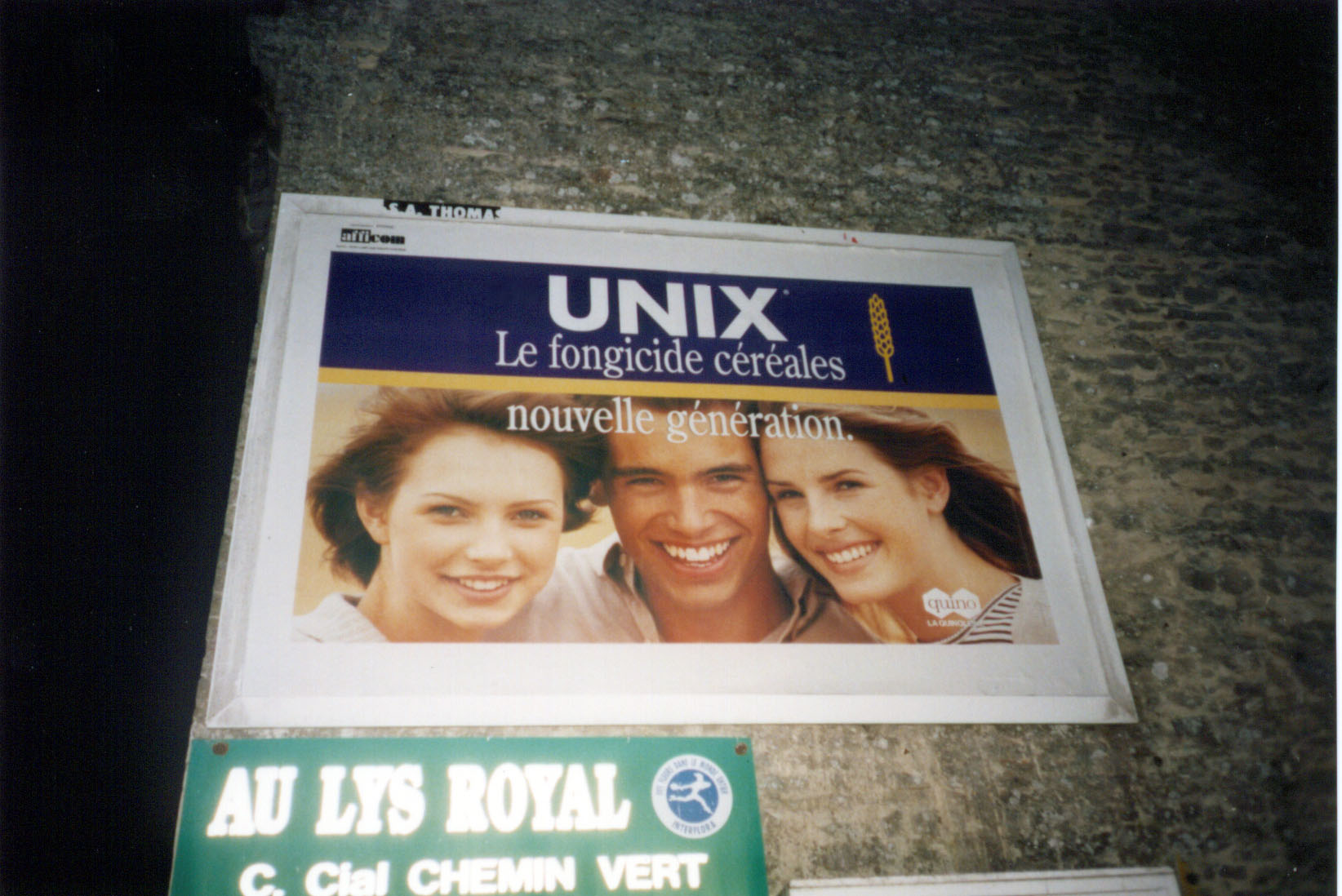
Re:THANK You.I was tickled as well, as I am credited on the page (for the "UNIX - the next generation cereal fungicide" photo, no less...).
A small nit to pick: Ken Thompson is the father of Unix. Dennis Ritchie is "merely" the father of C (although he did code a significant chunk of the original Unix, of course).
-
Information retrieval and human factorsPart of the reason this problem is so hard is that it has been approached mostly from a technological perspective, rather than finding out how humans think and organizing the system around that.
There is a significant body of knowledge around this subject that was developed by librarians. See this article for an introduction.
Another example: Jef Raskin's Canon Cat information appliance eschewed files completely. You located a document by typing words that are in it, in efect making the whole document its own filename.
The approach I find most powerful is set-oriented. I use an app called IMatch to manage my digital photos. Its sophisticated set-oriented category system makes it very easy to locate an image. That is what Microsoft is attempting with Longhorn's unified data store, or in more forward-looking projects like MyLifeBits.