Slashdot Mirror
Domain: malwarebytes.com
Stories and comments across the archive that link to malwarebytes.com.
Stories · 9
-
Google Play Apps With Over 4.3 Million Downloads Stole Pics, Pushed Porn Ads (arstechnica.com)
Google has banned dozens of Android apps downloaded millions of times from the official Play Store after researchers discovered they were being used to display phishing and scam ads or perform other malicious acts. Ars Technica reports: A blog post published by security firm Trend Micro listed 29 camera- or photo-related apps, with the top 11 of them fetching 100,000 to 1 million downloads each. One crop of apps caused browsers to display full-screen ads when users unlocked their devices. Clicking the pop-up ads in some cases caused a paid online pornography player to be downloaded, although it was incapable of playing content. The apps were carefully designed to conceal their malicious capabilities. The apps also hid their icons from the Android app list. That made it hard for users to uninstall the apps, since there was no icon to drag and delete. The apps also used compression archives known as packers to make it harder for researchers -- or presumably, tools Google might use to weed out malicious apps -- from analyzing the wares.
Trend Micro researchers discovered another batch of apps that falsely promised to allow users to "beautify" their pictures by uploading them to a designated server. Instead of delivering an edited photo, however, the server provided a picture with a fake update prompt in nine different languages. The apps made it possible for the developers to collect the uploaded photos, possibly for use in fake profile pics or for other malicious purposes. The developers took pains to prevent users from detecting what was happening. "The remote server used by these apps is encoded with BASE64 twice in the code," Wu wrote. "In addition, several of these apps can also hide themselves via the same hidden technique mentioned above." -
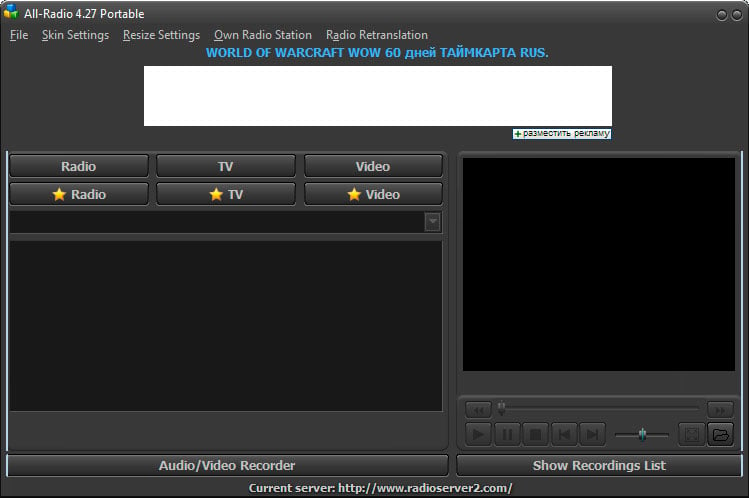
All-Radio 4.27 Portable Can't Be Removed? Then Your PC Is Severely Infected (bleepingcomputer.com)
CaptainDork shares a report from Bleeping Computer: Starting yesterday, there have been numerous reports of people's Windows computers being infected with something called "All-Radio 4.27 Portable." After researching this heavily today, it has been determined that seeing this program is a symptom of a much bigger problem on your computer. If your computer is suddenly displaying the above program, then your computer is infected with malware that installs rootkits, miners, information-stealing Trojans, and a program that is using your computer to send send out spam.
Unfortunately, while some security programs are able to remove parts of the infection, the rootkit component needs manual removal help. Due to this, if you are infected with this malware, I strongly suggest that you create a malware removal help topic in our Virus Removal forum in order to receive one-on-one help in cleaning your computer. Some of the VirusTotal scans associated with this infection have also indicated that an information stealing Trojan could have been installed by this malware bundle as well. Therefore, it is strongly suggested that you change your passwords using a clean machine if you had logged into any accounts while infected. 6/29/18: The story has been updated to specify that this malware campaign is targeting Windows computers. -
State Department Seemingly Buys $15,000 iPhone Cracking Tech GrayKey (vice.com)
An anonymous reader quotes a report from Motherboard: Grayshift, a company that offers to unlock modern iPhones for as little as $50 each, has caused a buzz across law enforcement agencies, with local police already putting down cash for the much sought-after tech. Now, it appears a section of the U.S. State Department has also purchased the iPhone cracking tool, judging by procurement records reviewed by Motherboard. Grayshift's iPhone product, dubbed GrayKey, can unlock devices running versions of Apple's latest mobile operating system iOS 11, according to marketing material obtained by Forbes. An online version of GrayKey which allows 300 unlocks costs $15,000 (which boils down to $50 per device), and an offline capability with unlimited uses is $30,000. According to a recent post from cybersecurity firm Malwarebytes, which obtained leaked details on GrayKey, the product itself is a small, four inch by four inch box, and two iPhones can be connected at once via lightning cables. Malwarebytes adds that the time it takes to unlock a device varies depending on the strength of the user's passcode: it may be hours or days. Notably, Grayshift includes an ex-Apple engineer on its staff, Forbes reported.
On March 6, the State Department ordered an item from Grayshift for just over $15,000, according to a purchase order listing available on the U.S. government's public federal procurement data system. The listing is sparse on details, putting the order under the generic label of "computer and computer peripheral equipment." But Motherboard confirmed that the Grayshift in the State Department listing is the same as the one selling iPhone cracking tech: the phone number of the vendor in both the purchase order and documents Motherboard previously obtained detailing a GrayKey purchase by Indiana State Police is the same. The "funding office" for the Grayshift purchase was the Bureau of Diplomatic Security, according to the procurement records. The Bureau acts as the law enforcement and security arm of the State Department, bearing "the core responsibility for providing a safe environment for the conduct of U.S. foreign policy," the State Department website reads. -
Malwarebytes Released Two Bad Web Protection Updates (csoonline.com)
Malwarebytes had a bad day Saturday, pushing out an update "that gobbled up memory and CPU resources and turned off web protection," reports CSO. The company's forums lit up with complaints that the software was hogging 90 percent or more of memory and CPU resources. One thread about RAM usage currently is 37-pages long. Aware of the problem, Malwarebytes tweeted that "all hands" were on deck to resolve the issue. Unfortunately, even though a new update package was pushed out in about an hour, it did not fix the problem. Even after rebooting their computers, some users reported that their systems locked up as soon as the Malwarebytes Service process started as it ate large amounts of RAM.
"Two bad updates later, Malwarebytes released a fix," CSO reports, noting the company's blog post with steps to resolve the issue.
Long-time Slashdot reader marquis111 shares a link to an apology from Malwarebytes CEO Marcin Kleczynski, who says that he'll be "personally available" to discuss the problem on both the forums and at his personal email address. -
Malwarebytes Released Two Bad Web Protection Updates (csoonline.com)
Malwarebytes had a bad day Saturday, pushing out an update "that gobbled up memory and CPU resources and turned off web protection," reports CSO. The company's forums lit up with complaints that the software was hogging 90 percent or more of memory and CPU resources. One thread about RAM usage currently is 37-pages long. Aware of the problem, Malwarebytes tweeted that "all hands" were on deck to resolve the issue. Unfortunately, even though a new update package was pushed out in about an hour, it did not fix the problem. Even after rebooting their computers, some users reported that their systems locked up as soon as the Malwarebytes Service process started as it ate large amounts of RAM.
"Two bad updates later, Malwarebytes released a fix," CSO reports, noting the company's blog post with steps to resolve the issue.
Long-time Slashdot reader marquis111 shares a link to an apology from Malwarebytes CEO Marcin Kleczynski, who says that he'll be "personally available" to discuss the problem on both the forums and at his personal email address. -
Not Just Equifax. Rival Site Transunion Served Malware Too -- and 1,000 More Sites (arstechnica.com)
An anonymous reader quotes Ars Technica: Equifax isn't the only credit-reporting behemoth with a website redirecting visitors to fake Adobe Flash updates. A security researcher from AV provider Malwarebytes said transunioncentroamerica.com, a TransUnion site serving people in Central America, [was] also sending visitors to the fraudulent updates and other types of malicious pages... Malwarebytes security researcher Jerome Segura says he was able to repeatedly reproduce a similar chain of fraudulent redirects when he pointed his browser to the transunioncentroamerica.com site. On some occasions, the final link in the chain would push a fake Flash update. In other cases, it delivered an exploit kit that tried to infect computers with unpatched browsers or browser plugins... "This is not something users want to have," Segura told Ars...
Equifax on Thursday was quick to say that its systems were never compromised in the attacks. TransUnion said much the same thing. This is an important distinction in some respects because it means that the redirections weren't the result of attackers having access to restricted parts of either company's networks. At the same time, the incidents show that visitors to both sites remain much more vulnerable to malicious content than they should be.
Both sites hosted fireclick.js, an old script from a small web analytics company which pulls pages from sites like Akamai, SiteStats.info, and Ostats.net. "It appears that attackers have compromised the third-party library," writes BankInfoSecurity, adding that Malwarebytes estimates over a 1,000 more sites are using the same library. -
Marcus Hutchins' Code Used In Malware May Have Come From GitHub (itwire.com)
troublemaker_23 quotes ITWire: A security researcher says code has been discovered that was written by British hacker Marcus Hutchins that was apparently 'borrowed' by the creator of the banking trojan Kronos. The researcher, known as Hasherezade, posted a tweet identifying the code that had been taken from Hutchins' repository on GitHub.
Hasherezade also found a 2015 tweet where a then-20-year-old Hutchins first announces he's discovered the hooking engine he wrote for his own blog -- being used in a malware sample. ("This is why we can't have nice things," Hutchins jokes.) Hasherezade analyzed Kronos's code and concluded "the author has a prior knowledge in implementing malware solutions... The level of precision lead us to the hypothesis, that Kronos is the work of a mature developer, rather than an experimenting youngster."
Monday on Twitter Hutchins posted that "I'm still on trial, still not allowed to go home, still on house arrest; but now I am allowed online. Will get my computers back soon." -
Mysterious Mac Malware Has Infected Hundreds of Victims For Years (vice.com)
An anonymous reader shares a report: A mysterious piece of malware has been infecting hundreds of Mac computers for years -- and no one noticed until a few months ago. The malware is called "FruitFly," and one of its variants, "FruitFly 2" has infected at least 400 victims over the years. FruitFly 2 is intriguing and mysterious: its goals, who's behind it, and how it infects victims, are all unknown. Earlier this year, an ex-NSA hacker started looking into a piece of malware he described to me as "unique" and "intriguing." It was a slightly different strain of a malware discovered on four computers earlier this year by security firm Malwarebytes, known as "FruitFly." This first strain had researchers scratching their heads. On the surface, the malware seemed "simplistic." It was programmed mainly to surreptitiously monitor victims through their webcams, capture their screens, and log keystrokes. But, strangely, it went undetected since at least 2015. There was no indication of who could be behind it, and it contained "ancient" functions and "rudimentary" remote control capabilities, Malwarebytes's Thomas Reed wrote at the time. -
Malwarebytes Discovers 'First Mac Malware of 2017' (securityweek.com)
wiredmikey writes: Security researchers have a uncovered a Mac OS based espionage malware they have named "Quimitchin." The malware is what they consider to be "the first Mac malware of 2017," which appears to be a classic espionage tool. While it has some old code and appears to have existed undetected for some time, it works. It was discovered when an IT admin noticed unusual traffic coming from a particular Mac, and has been seen infecting Macs at biomedical facilities. From SecurityWeek.com: "Quimitchin comprises just two files: a .plist file that simply keeps the .client running at all times, and the .client file containing the payload. The latter is a 'minified and obfuscated' perl script that is more novel in design. It combines three components, Thomas Reed, director of Mac offerings at Malwarebytes and author of the blog post told SecurityWeek: 'a Mac binary, another perl script and a Java class tacked on at the end in the __DATA__ section of the main perl script. The script extracts these, writes them to /tmp/ and executes them.' Its primary purpose seems to be screen captures and webcam access, making it a classic espionage tool. Somewhat surprisingly the code uses antique system calls. 'These are some truly ancient functions, as far as the tech world is concerned, dating back to pre-OS X days,' he wrote in the blog post. 'In addition, the binary also includes the open source libjpeg code, which was last updated in 1998.' The script also contains Linux shell commands. Running the malware on a Linux machine, Malwarebytes 'found that -- with the exception of the Mach-O binary -- everything ran just fine.' It is possible that there is a specific Linux variant of the malware in existence -- but the researchers have not been able to find one. It did find two Windows executable files, courtesy of VirusTotal, that communicated with the same CC server. One of them even used the same libjpeg library, which hasn't been updated since 1998, as that used by Quimitchin."