Slashdot Mirror
Domain: nasa.gov
Stories and comments across the archive that link to nasa.gov.
Comments · 16,365
-
Got it. (Thanks for being honest)
In future, when I respond to your comments, I shall state explicitly that the intended audience does not include you.
With that preamble over
Down here, at the bottom of the ocean of air, distant "point sources" in the optical (or visible) and near-infrared wavebands are smeared out by what astronomers call "seeing". You notice this as the twinkling of stars in the night sky. Assuming radial symmetry*, the 1D distribution of intensity of such a seeing smeared point source looks like a Gaussian, but isn't (it's a Kolmogorov distribution, as the primary source of distortion is turbulence). Adaptive optics is a term used to describe a range of techniques to deconvolve the seeing, to recover the "beyond the atmosphere" 2D distribution of source intensity; the most ambitious of these aim to deliver diffraction limited images, using phase conjugation and laser guide beacons to "measure and compensate for turbulence-induced phase aberrations in three dimensions".
The image cited by pln2bz was taken by NaCO (NAOS-CONICA, Nasmyth Adaptive Optics System Near-Infrared Imager and Spectrograph), attached to one of the VLTs (http://www.eso.org/instruments/naco/index.html). Note the following comment: "Publications based on data obtained with the NACO instrument should quote the following reference papers: Lenzen, R. et al. 2003, SPIE 4841, 944 and Rousset, G. et al. 2003, SPIE 4839, 140." Clearly, pln2bz did not bother (perhaps he felt his SD comments did not constitute a "publication"); he's in good company, as his source was undoubtedly TPOD (or similar), which also did not bother.
Why does this matter?
Fundamentally, it goes to the issue of "evidence", which EU proponents (not only pln2bz, not only on Slashdot) get so worked up about.
As I said above, the two objects in the VLT/NACO image are statistically the same as two point sources.
One could, as pln2bz has done, claim to see something other than two point sources.
However, one could also claim that there's a face in the image (example1: http://antwrp.gsfc.nasa.gov/apod/ap070421.html; example2: http://antwrp.gsfc.nasa.gov/apod/ap990315.html), or a planet with rings (example: http://antwrp.gsfc.nasa.gov/apod/ap071023.html), or even invisible pink fairies
Amusing aside: some of you have seen this "neutrino image" of the Sun (or similar) http://antwrp.gsfc.nasa.gov/apod/ap980605.html, http://elvis.phys.lsu.edu/svoboda/superk/sun.gif. At least one prolific EU proponent interpreted this to show that neutrinos are emitted from the surface of the Sun, not its core! {insert ROFL smilies here}^
Concerning BAUT
There is a very long thread there, on the Electric Universe (nearly 2400 posts! http://www.bautforum.com/against-mainstream/28596-electric-universe-model.html), as well as instructions to all those who wish to post on the topic, and links to all other EU-related threads (http://www.bautforum.com/against-mainstream/45529-read-first-re-posting-electric-universe-ideas-here.html).
In addition, this thread may be of interest to readers of this comment: http://www.bautforum.com/about-baut/55206-reflections-year-half-s-experience-baut-s-atm-section.html.
* whic -
Resources, first pass
Icarus, "International Journal of Solar System Studies"; unfortunately it's a subscription publication (though with some ingenuity you can find at least the abstracts of many Icarus papers through ADS; papers with preprints on arXiv are, of course, free) http://icarus.cornell.edu/. This is the best, deepest, etc resource (IMHO).
ADS Abstract service, for finding papers relevant to planetary formation (click on Physics and Geophysics Search http://adsabs.harvard.edu/ads_abstracts.html)
General, diffuse website: Astronomy Picture of the Day (APOD, most have at least some good links; not specific to planet formation though http://antwrp.gsfc.nasa.gov/apod/astropix.html)
General astronomy discussion forum (LOTS of very knowledgeable and helpful people): BAUT (http://www.bautforum.com/)
General physics discussion forum (not much on planetary formation however): Physics Forums (http://physicsforums.com/index.php)
I'll suggest some of the other resources in a later comment -
Re:COLOR PHOTOS PLEASE?
From what this page says, these will be turned to color images later. They take the same picture at 10 different wavelengths then combine them to make a color image.
-
Re:COLOR PHOTOS PLEASE? (patience)
A similar hyper-color image of the Moon (that makes a nice desktop/background): http://antwrp.gsfc.nasa.gov/apod/ap060907.html
-
Copyrighted image
I'm afraid the SETI people will be quite disappointed when the first extraterrestrial communication they receive is from a copyright lawyer.
http://www.nasa.gov/mission_pages/messenger/multimedia/phone_crater.html
Dan East -
Re:Mercury = moon?
Why does it look like the moon?
- very thin atmospherewhy is it in black & white?
- these cameras typically have no filters or can only shoot one filter at a time. This gives better sensitivity and resolution at the expense of being able to make simultaneous multi-spectrum shots.Also take a look at this image - the scattering of pixels in the top left part if the picture is not dust on your monitor but actual stars as seen by the spacecraft ! I wonder if it is possible to find out from this when the shot was taken and where the camera was pointing.
-
Re:Fake photos
But really, I'm disappointed. How many millions of dollars and how much waiting just to see more photos of a vaguely spherical object with lots of cratering. This is not the 90s folks. They really need to make flashier pictures if they want to get the public interest.
This is an interesting point. The Messenger probe was sent to do science, not to get flashy pictures for NASAs' PR department. Yet, most people wouldn't give a damn without their new desktop wallpapers, and public interest is necesary to get funding. Most of those lovely fake color/composite pictures of nebulae and such are fairly useless for anything else than looking cool (and they do
Anyway, i found those pictures very interesting, and i know i'm not alone. Thing is, most people are sadly used to images from planet probing, even when those pictures involve impressive technical feats. In that sense, maybe we're a bit overdue for a manned mission to another planet (Mars?). -
Good Expense!
I had a friend try and tell me that this, and the rest of our space explorations, is a total waste of money.
Personally I'd rather keep throwing things at other planets to learn about them (like MESSENGER, Spirt & Opportunity (Mars Rovers), or New Horizons (First mission to Pluto, launched prior to being "deplanetized"), as opposed to dumping the same funds into our war campaign in the Middle East.
This kind of stuff is a lot more... lasting even though its less tangible. -
Doesn't look like a phone to me...
http://www.nasa.gov/mission_pages/messenger/multimedia/phone_crater.html
NASA says that crater looks like it has a phone shape in it. The first thing I thought was "Damnit, someone put a copyright on Mercury." -
Re:Better to find it now rather than later...
I disagree. This problem would have been obvious from the start. I simply don't understand how they got so far without addressing it. Sure, they wouldn't have known the full dynamical details of the SRB vibration, but they would know the crude resonance modes of the rocket and that the SRB kicked out vibration in these frequencies. Hence, they would have known at the very start that this was a problem. So why wait at least two years (until right after the Ares 1 supposedly passed its "system requirements review") before you start thinking about this problem? My take is that they put off discussion of it as long as they could. As I see it, the next year is critical not just to Ares 1 development, but to the entire VSE plan. If they haven't resolved the basic design problems with both the Ares 1 and the CEV (and yes, I think there are serious issues to be resolved here), then we might not see any of this survive the next administration.
-
V is for Vision
The Moon-Mars plan is referred to as the "Vision for Space Exploration."
What exactly is the vision? The founding document [large PDF warning] for the "VSE" lists goals and strategies, but no vision of what the goals and strategies are meant to accomplish. A vision involving the Moon could be "create a new civilization on the Moon that might do for the U.S. what the New World colonies did for the Old World." (you can snicker but that is an example).
"Go to the Moon and Mars" is not a vision. It's an strategy.
"Build launchers and spacecraft based on current infrastructure & technology" is an implementation of that strategy.
Again... what is the vision? -
Asteroid misions are important
They provide valuable data on contents and structure of these rocks. Moon doesn't have a chance to fall on Earth anytime, but these
zap through atmosphere everyday.
There are dozens of large asteroids which pass pretty close http://neo.jpl.nasa.gov/ca/ -
Re:Fantastic for Students and New Researchers
Does anybody else have any links to interesting open data sets?
My favorite: near-real-time medium-resolution satellite images from NASA: http://rapidfire.sci.gsfc.nasa.gov/ -
Re:Fantastic for Students and New Researchers
I will be extremely unlikely to put any dataset on google until I am certain I have extracted all of the publishable findings from it
That's so twentieth century. The scarce resource these days is not data, it is mindshare in the science community. In the 1990s, many of the SOHO instruments experimented with opening up their data sets to all comers immediately, and those instrument teams have generated about an order of magnitude more publications than their less-forward-thinking cohorts.
You should be so lucky that someone tries to get into your data and publish stuff from it. -
Re:'Spin offs'
http://ranier.hq.nasa.gov/Sensors_page/DD/HST&GLL_CCD.html
Bell Labs started development and NASA sponsored more development.
What's with the NASA griping? If you're going to complain about governmental money pits there are much bigger holes to complain about than NASA. -
Re:Dialoge?PS: If I can't ridicule the silliness of religious theology and the invariably laughable premise of 'belief' and existence, as outlined in my previous post, then I might as well go shoot myself right now. I'm sorry, but no educated adult can take that crap with a straight face. I'm not going to say you can't ridicule what you call the "silliness of religious theology", because that's your right. I am, however, going to object to your statement that "no educated adult can take that crap with a straight face" by providing several examples of high-profile members of my church (Yes, this will give it away) who were/are also notable people in the secular world:
- Henry Eyring was a noted chemist who won many awards. He was a recipient of the National Medal of Science in 1966 for developing the Absolute Rate Theory of chemical reactions. http://en.wikipedia.org/wiki/Henry_Eyring
- Ezra Taft Benson was US Secretary of Agriculture to President Eisenhower. http://en.wikipedia.org/wiki/Ezra_Taft_Benson
- James Fletcher was the administrator of NASA, twice http://history.nasa.gov/Biographies/fletcher.html
- Richard G Scott is a nuclear engineer who worked at Oak Ridge National Laboratory http://en.wikipedia.org/wiki/Richard_G._Scott
- Russell M. Nelson is a noted heart surgeon http://en.wikipedia.org/wiki/Russell_M._Nelson
- Dallin H. Oaks was a Utah Supreme Court Justice http://en.wikipedia.org/wiki/Dallin_H._Oaks
So you're saying that none of these men qualify as educated, since they were religious? - Henry Eyring was a noted chemist who won many awards. He was a recipient of the National Medal of Science in 1966 for developing the Absolute Rate Theory of chemical reactions. http://en.wikipedia.org/wiki/Henry_Eyring
-
Re:Airlocks?
Lunar dust is especially nasty - more so than your everyday grit. It is interlocking and highly abrasive. During the Apollo missions it scratched lenses, made suit joints very difficult to move, and compromised the seals. Some astronauts complained of irritation and difficulty breathing.
Lunar dust on NASA's technical reports server: http://ntrs.nasa.gov/search.jsp?N=0&Ntk=all&Ntx=mode%20matchall&Ntt=lunar%2Bdust -
Re:Better than that, what they needIs an automated drilling/mining/processing plant. There are mineral deposits up there. If we could go up there and have the materials made on site, so we only needed to set up the base, a long term moon base would be fairly cheap.
NASA's Centennial Challenges is actually funding a competition to extract oxygen from mock-regolith later this year:
http://centennialchallenges.nasa.gov/cc_challenges.htm#moonrox The MoonROx Challenge is designed to promote the development of processes to extract oxygen from lunar regolith on the scale of a pilot plant. These processes have the potential to contribute significantly to the Vision for Space Exploration and space exploration operations.
The MoonROx Challenge is a "first to demonstrate" competition. The team whose hardware can quickly extract breathable oxygen from a supply of lunar regolith simulant using a steady-state process will win the competition. -
Re:Better than that, what they need
Really? I'm glad there are people who actually looked rather than just answered. Aren't you?
Beyond that a quick set google searches suggests you can find the following redily on the moon, out of various mineral forms:
Sulfur
Iron
Oxygen
Potassium
Aluminum
Hydrogen
Calcium -
Re:Better than that, what they need
Really? I'm glad there are people who actually looked rather than just answered. Aren't you?
Beyond that a quick set google searches suggests you can find the following redily on the moon, out of various mineral forms:
Sulfur
Iron
Oxygen
Potassium
Aluminum
Hydrogen
Calcium -
Being there
I was lucky enough to be there at APL during the flyby. Let me tell you, that was a really exciting moment when the spacecraft came back into contact with the DSN after the eclipse of the MESSENGER by Mercury. This is an image retreived today from the spacecraft. It's really exciting. http://www.nasa.gov/mission_pages/messenger/main/index.html
-
Re:UKUSA Community
Perl was created by Larry Wall, who worked for NASA, not NSA. Specifically, the NASA Jet Propulsion Laboratory at Caltech.
SELinux consists of modifications to Linux operating systems to conform to certain guidelines.
But yes, the government has a history of willing participation in open source software and open standards. Today, it's even more defined. That much of the government involved in routine business and administrative operations still can't break away from the Windows paradigm isn't an indictment of open source software. -
Re:WTF are "Ultrasonic Motors?"
Thanks for the info, but I found that article to be impenetrable. So I went surfing for a more remedial explaination:
A decent explaination about how these things work.
http://www.tky.3web.ne.jp/~usrmotor/English/html/principlesandStructure.html
NASA JPL image of a robot arm assembly using a ultrasonic rotor (should help with visualizing what TFA is about)
http://www-robotics.jpl.nasa.gov/tasks/taskImage.cfm?TaskID=140&tdaID=800006&Image=319
NASA JPL article with a good illustration of the "travelling wave" phenomenon that makes these work.
http://www2.jpl.nasa.gov/technology/images_videos/iv_pages/Yosi_Ultrasonic_Motor1.html -
Re:WTF are "Ultrasonic Motors?"
Thanks for the info, but I found that article to be impenetrable. So I went surfing for a more remedial explaination:
A decent explaination about how these things work.
http://www.tky.3web.ne.jp/~usrmotor/English/html/principlesandStructure.html
NASA JPL image of a robot arm assembly using a ultrasonic rotor (should help with visualizing what TFA is about)
http://www-robotics.jpl.nasa.gov/tasks/taskImage.cfm?TaskID=140&tdaID=800006&Image=319
NASA JPL article with a good illustration of the "travelling wave" phenomenon that makes these work.
http://www2.jpl.nasa.gov/technology/images_videos/iv_pages/Yosi_Ultrasonic_Motor1.html -
Re:Peak EverythingGiven unlimited energy and resources, perhaps this is true, but we don't live in a world where there are unlimited resources. You mean like... umm... I don't know... this entire universe of resources out there? Hate to break it to you, but even the entire universe doesn't have an infinite amount of resources. The universe will eventually run out of energy. Granted you have to wait until 10^150 years, but it will happen. By definition, that means that resources are unlimited, even given a perfectly efficient extraction method, which can't exist thanks to the second law of thermodynamics.
Now that the pedantic answer is out of the way, let's move on to more practical issues, like cost-effective and time tractable extraction of these Sagans of Joules of energy. When you come up plan to strip mine Andromeda or even Epsilon Eridani let me know. What time is it where you are now?
If it is dark enough, with few clouds, you might see a giant fuckin' chunk of those resources right up there in the sky.
Its kinda hard to miss. Its big and shiny. People call it "The Moon". If the moon is so resource rich, how come we aren't mining it today? We can get there. We got there almost 40 years ago. The bookshelves are filled with how-tos on establishing a permanent presence on the moon. So why aren't we there now? How about the brutal fact that the moon doesn't have the resources we need.
Moon mining is about three things.
Making concrete We have plenty of it already. Extracting oxygen We have plenty of it already. Extracting Helium-3 Don't need it. Sure, if we had a fusion generator, then maybe, but we also already have a several rich terrestrial source of hydrogen, so why we would need to import Helium-3.
What do we need? Well right now, hydrocarbons. Can we get those from the moon? Nope. Sorry. The moon does not have a liquid center of sweet crude.
Sure. We should get off of our 19th century energy economy and move to something more sustainable and less ecologically destructive, but the sad truth is, we're still not close to doing that. Fusion is still a pipe dream. The newest fusion reactor is a whopping 8 megawatts, and can only run for 20 seconds. To call it, "not ready for primetime" would be a vast understatement. Other renewables still can't meet our energy needs, and those don't even require going to the freakin' moon.
Perhaps you should really stop and think before you say something, rather than just spouting off about your favorite 60 year old pulp scifi cliche, that was created as part of an "old west meets rocket ships" meme. You'd think the future would have moved beyond bulk extraction of non-renewable resources, but apparently not. -
Re:Huh?snopes vs scientific american. I would believe scientific american. Then you're an idiot, because Scientific American is wrong and, faced with evidence showing this to be the case, you handwave it and make an Appeal to Authority. Both Fisher and NASA confirm what Snopes says. Are NASA, Fisher, and Snopes all in on a conspiracy to make both you and Scientific American look foolish? Did Scientific American even say/I. that? You provide no links, after all...
-
God's Fart
First God gives us the finger, and then he farts our way. He must be trying to tell us something about our conduct.
-
Who still has to wonder?Are you kidding?
We're floating in a big not-so-empty void. I'm 25, and still if I look up at the skies, or feel the sun on my skin I feel frustratingly inable to "reach to touch the stars". I try to closely follow NASA's projects, my day isn't complete without the Astronomy Picture of the day filling me with childish wonder about the world and reality we live in. The universe is magnificent, at least what we get to see from it thusfar, and there's so much more to be learned and seen.
It's hard to understand there are people who never look up and think "fuck yea, that's some cool stuff" but rather get lost in the futilities of life. Why wouldn't it be worth it? It's imperative for humankind, and it can guide a whole global population to reach further. But I guess CGI and fast snappy video's and imagery are more of interest for a whole lot of people.
What did space exploration brought us? Technology, inspiration for generations to excell and do what noone has achieved before. If you argue it has been a big expense, it's created a global market of Information Technology, and has brought people closer together. Partly because of the technological competition with Russia. Some big nations should get together and play game again, opposed to using some third world people as cannon-meat. Bring some mutual innovation and boost technological development instead of these vague "scientist have found that x but there will be y years before we can even think about practical applications or bring it to the consumer market"-bs.
-
Re:Broken window fallacyYou're simply assuming individuals working together voluntarily wouldn't be able to come up with equal (or more) benefits than NASA provides.
I would offer that space exploration requires solutions to problems that wouldn't otherwise exist and/or be known - as with any untried or unimagined thing. Solving these problems has benefits here.
Sure we probably would have eventually invented: TV Satelite Dishes, Medical Imagers, Ear Thermometers, Vision Screening tests, Fire Fighter Equipment, Smoke Detectors, Sun Tiger Glasses, CAD, Invisible Braces (for teeth), Edible Toothpaste, Joystick Controllers and Advanced Plastics, and other things. But they were originally developed for the Space Program.
-
Re:If only...
Do you have any idea how easy it is to lose weight if you control overeating either by surgery or by willpower, and additionally cut out the extreme amounts of sugar in foods? Forget exercise, you can do it just by smart eating and definitely without starving yourself nor starving yourself of the foods you like to cheat with. If you did so, you could cheat every single day on whatever is your cheat-food.
Instead, go ahead, blame it on some magic inevitability, biological or otherwise, as if you neglected to realize that almost every product has 2 or 3 types of added sugar and salt, in addition to extra salt. So yeah, pour on that extra salt too, and don't forget that these small quantities that are in EVERY SINGLE THING YOU EAT tend to add up quickly. Now, if you start looking at labels, you might realize there is more to it than "oh! this serving is only 2-3 grams of sugar" because, it might be 2-3 grams. But so is every other thing you eat in a day. So if you eat 20-40 grams of sugar a day that way (which is easily passed in natural sugar, let alone the additives in foods), you can imagine where that will end up. You'll be a diabetic in 20 years. Oh wait, we already have that situation don't we, with the 6 fold increase in diabetes. That's because these additives started in the 60s right around when the diabetes increase started going crazy.
Here is what General Mills says about doing that, Verbose of their rationale of why they add sugar and salt to their foods: "Sodium is an essential ingredient and occurs naturally in many foods. It enhances flavor, improves texture and helps keep food fresh. We regularly test different sodium levels among several thousand families across the United States. Our products reflect consumer testing and contain the necessary ingredients to produce a tasty and convenient product."
So they know that you will make yourself fatter by eating multiple types of sugar, and it sells more because your body eventually gets addicted to it. Sound common? Okay maybe not fatty. How about I add some more information. Lets take a GM cereal. How about Wheaties? ingredients: wheat, salt, sugar (corn syrup), soybean oil (oil = fat), brown sugar syrup (sugar), natural flavor (can be anything from animal byproduct to more sugar), trisodium phosphate (artificial salt). Does that sound healthy to you? See the real reason why people who spend more on food at higher quality places are healthier, is the foods don't all have extra sugar added to them.
Try shopping at a Trader Joes, or a Whole Foods, and almost nothing will have added sugar, or salt. You'll notice a distinctly lower amount of sodium and salt in everything they eat, because the only salt and sugar in their products is natural. Or you can keep eating the cheap stuff, like ramen noodles, which have like double the RDA of salt.
Sound too expensive? Think again. How about buy less of the healthier stuff, since you won't be as hungry. Your body will crave less sugar, and you will eat less.
That or keep telling yourself that fat is a lifestyle decision, and I'll be the one putting the flower on your grave. -
Re:that's a lotI'll save you all the time of googling this cuz I know you wanna know too. There's 200-400 billion stars in the milky way for example but most are bigger than our sun I think. So 18 billion solar masses is A LOT of stars to suck up in one galaxy. Geeze the think probably looks like a big donut by now.
Actually, my understanding is that the most common stars in the galaxy are Red Dwarfs, and thus smaller than our sun. (Yup, NASA confirms: http://planetquest.jpl.nasa.gov/glossary/red_dwarf.html)
-
Journalists strike againOriginal article
As reported by an international team in the January 10 issue of Nature
Today is 11th of January and it is still not on the website. Obviously, the author of the article knows in advance about this publication.
What pisses me off is that he wrote about that in the past tense. Ordinary folks like myself who wanted just to read the peer-reviewed article, not their popularizing crap, are mislead to go there.
Is it that difficult to write "to be published" instead of "published"?
Rant off. -
Re:What a shame!
We could make it happen though. It's easier than you think, as easy as finding water on Mars.
-
Re:Solder!The consequences of this for long-term reliability remain to be seen.
No, they're pretty well known. The only remaining question is whether the miniscule lead reduction will offset the increased amount of electronic waste.
-
Re:Refactoring sucks
I do this all the time on decent sized projects. I am mostly working on control loops. For most things I will do informal proofs. For some very critical sections, I will go the full route and do a full proof. And yes, it does work. Spending an extra couple hours proving things is time well-spent when a full circuit compile will take me 2 hours. And yeah, if you use formal methods, except for syntax errors 90% of stuff works perfectly on the first run.
One section of code was taking up too much chip area. I used a formal method and cut the circuit size 80% with no loss in speed. So finally, formal methods do produce leaner and more bug-free code. More success stories from a simple google search http://shemesh.larc.nasa.gov/fm/fm-what.html. -
Re:To Hell with cell phones
You mean something like this:
http://ic.arc.nasa.gov/projects/psa/
(But does it make irritated beeps?) -
Re:Awesome!
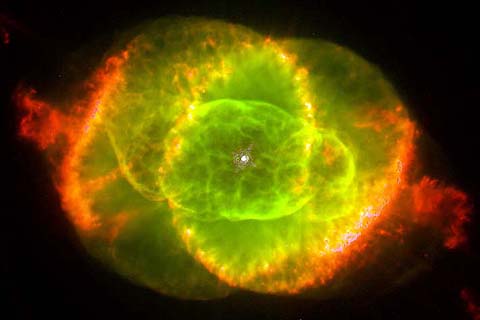
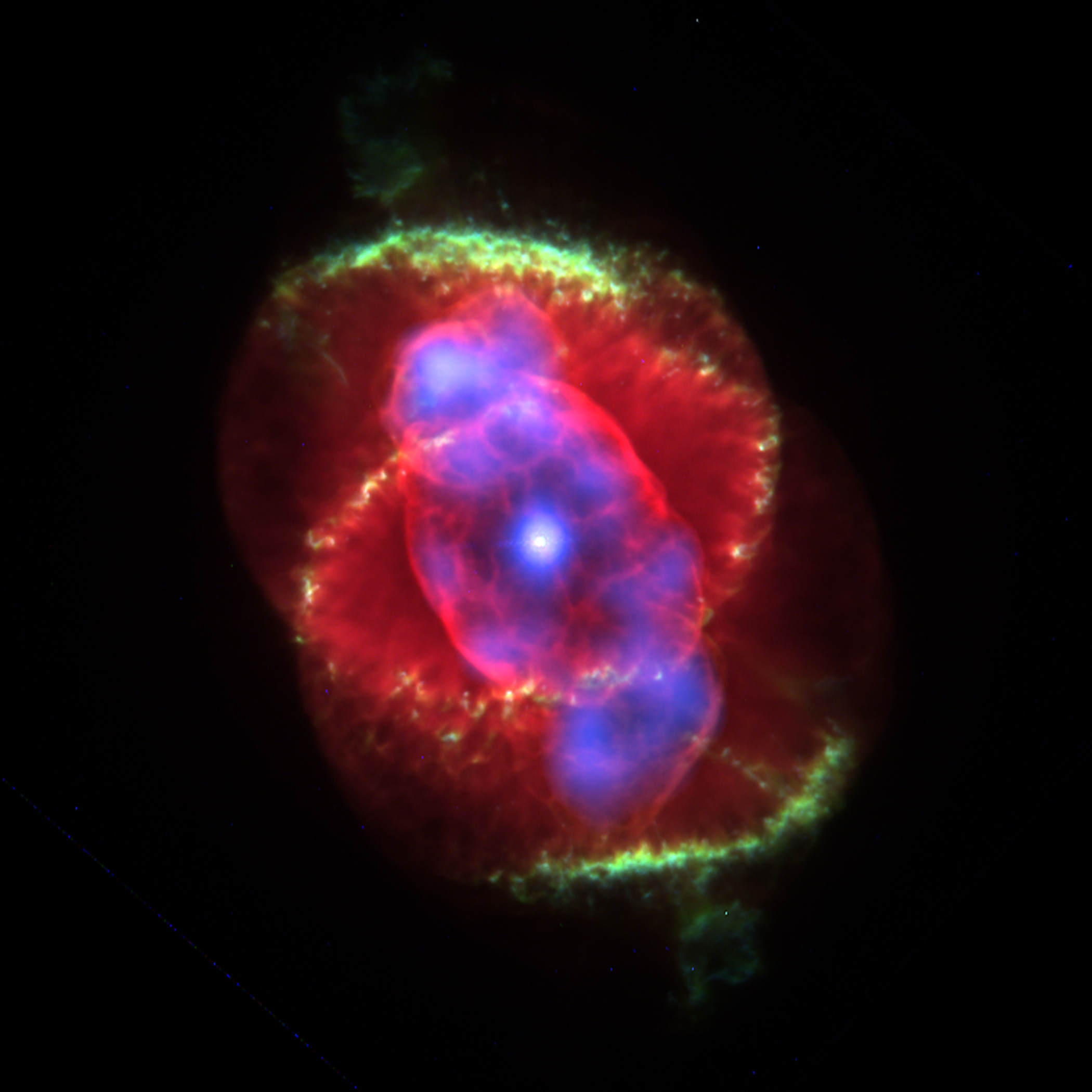
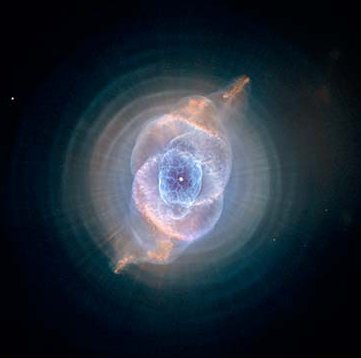
You know, almost all of those astronomical images are artificially colored and enhanced to maximize their ascetic appeal. Have a look at some of the various images of the cat's eye nebula to see. A quick Google turns up 5 different colorings:
http://www.daviddarling.info/images/Cats_Eye_Nebula.jpg
http://www.uni-sw.gwdg.de/~panders/Images/AstroImages/03_CatEyeNebula.jpg
http://www.spacetoday.org/images/Hubble/HubbleBeauty/CatsEyeNebulaNASA.jpg
http://upload.wikimedia.org/wikipedia/commons/5/5a/NGC6543.jpg
http://www.daviddarling.info/images/Cats_Eye_Nebula_2.jpg
The interpretation of the horsehead nebula is at least consistent (most of the time), but there is still plenty of artistic license being taken.
http://www.nasa.gov/images/content/52238main_MM_image_feature_89_jw4.jpg
http://www.nasa.gov/images/content/45506main_MM_Image_Feature_73_rs4.jpg
http://www.geocities.com/scott_metz/alternity/graphics/horsehead_nebula.jpg
http://www.sidewalk-astronomy-club.com/img/horsehead-nebula.jpg
http://www.fourthdimensionastroimaging.com/sitebuilder/images/horsehead-712x571.jpg
I was sort of disappointed when I found that out... -
Re:Awesome!
You know, almost all of those astronomical images are artificially colored and enhanced to maximize their ascetic appeal. Have a look at some of the various images of the cat's eye nebula to see. A quick Google turns up 5 different colorings:
http://www.daviddarling.info/images/Cats_Eye_Nebula.jpg
http://www.uni-sw.gwdg.de/~panders/Images/AstroImages/03_CatEyeNebula.jpg
http://www.spacetoday.org/images/Hubble/HubbleBeauty/CatsEyeNebulaNASA.jpg
http://upload.wikimedia.org/wikipedia/commons/5/5a/NGC6543.jpg
http://www.daviddarling.info/images/Cats_Eye_Nebula_2.jpg
The interpretation of the horsehead nebula is at least consistent (most of the time), but there is still plenty of artistic license being taken.
http://www.nasa.gov/images/content/52238main_MM_image_feature_89_jw4.jpg
http://www.nasa.gov/images/content/45506main_MM_Image_Feature_73_rs4.jpg
http://www.geocities.com/scott_metz/alternity/graphics/horsehead_nebula.jpg
http://www.sidewalk-astronomy-club.com/img/horsehead-nebula.jpg
http://www.fourthdimensionastroimaging.com/sitebuilder/images/horsehead-712x571.jpg
I was sort of disappointed when I found that out... -
Re:Of course they've never been seen.
Well, their dramatic wording is very correct - only about 45% of Mercury's surface has been imaged in detail. This was done 33 years ago by Mariner 10. So over half of the map of Mercury is still blank. It's the biggest unimaged planetary area in our solar system! Next week Messenger will image some of these never-before -seen/imaged areas of the planet (about 30% of it IIRC).
Here's a current map of Mercury.
There has been some interesting Earth-based radar observations using Arecibo's radio telescope. These observations give us an idea what to expect to see in the blank areas. Here's a map combined with radar observations. There are also various recent Earth-based optical observations using lucky-imaging techniques, but the images lack detail for accurate mapping.
So to be pedantic the Messenger will take detailed never-before-seen images of never-before-imaged-in-detail and never-before-imaged-at-all -areas of Mercury. In few weeks we'll get a new map of Mercury! -
Trail blazed by Mariner 10
> is the first NASA mission sent to orbit Mercury
Well it may be the first to technically orbit Mercury, but
Mariner 10 used a Solar orbit to swing-past Mercury three
times.
http://nssdc.gsfc.nasa.gov/nmc/masterCatalog.do?sc=1973-085A
It was also the first probe to use plentary gravity assistance,
in this case Venus, to change course. La plus ca change...
Imagery here:
http://nssdc.gsfc.nasa.gov/imgcat/html/mission_page/MC_Mariner_10_page1.html -
Trail blazed by Mariner 10
> is the first NASA mission sent to orbit Mercury
Well it may be the first to technically orbit Mercury, but
Mariner 10 used a Solar orbit to swing-past Mercury three
times.
http://nssdc.gsfc.nasa.gov/nmc/masterCatalog.do?sc=1973-085A
It was also the first probe to use plentary gravity assistance,
in this case Venus, to change course. La plus ca change...
Imagery here:
http://nssdc.gsfc.nasa.gov/imgcat/html/mission_page/MC_Mariner_10_page1.html -
NASA Shuttle Radar Topography Mission (SRTM)
They used radar to map almost the entire earth. Mission Site http://www2.jpl.nasa.gov/srtm/mission.htm
"SRTM acquired enough data during its ten days of operation to obtain the most complete near-global high-resolution database of the Earth's topography."
The data is very accurate and they released a version of the data to the public. Apparently, there is a much more accurate classified version of the data. I'm sure they could find all sorts of things with this database.
Note, they also used the ground-zero/oceans to calibrate the device on every orbit of the earth which means it doesn't penetrate into the water. -
they did this in 1992
http://www.jpl.nasa.gov/radar/sircxsar//ubar1.html
they found a biblical city called ubar in oman this way, by tracing the minute traces left by ancient caravan roads only visible by certain radars on a huge scale
no lost ark, but apparently this is where all that weird stuff called frankincense came from -
Re:discredit global warming theories? no way
I'm curious. The satellite data only goes back about thirty years, just about enough for a single datum in climate terms. It seems quite a leap to suggest this is unprecedented (my apologies if I have misunderstood you) from the data available. Can you give me a reference to the historical data on ice thickness? What is your evidence for blaming global warming on thinning ice? I thought ice accumulation was due to precipitation, which is supposed to go up with the temperature, not down, according to my understanding of AGW theory.
Something else you might be able to explain for me: looking at this NASA time-lapse film of a year in the life of the arctic, the annual variance in ice coverage is enormous - on the order of six to seven million square kilometres of the stuff appears and disappears every year. How does accumulated warming affect ice that isn't there for nearly half the year?
I'm asking in good faith. I'm not out for a fight.
Regarding the epithet "denialist", can you name any individual who actually deserves it? -
Re:So wait?
Try this article
-
Why Jan 1 1970 as the epoch?
Because it's convenient. Just as with the arbitrary number for the UNIX epoch, the Carrington rotation number, the NOAA active region numbers, and the solar cycle number are just sequential starting at an arbitrary time.
(okay, ARs cycled at 10,000 in 2002 so it's only 4 digits, but it's still a sequence) -
Re:discredit global warming theories? no way
No, scientists use the term "global climate change" because it more accurately describes what may happen in the future than "global warming." Yes, on average the surface of the earth has been getting warmer globally, but it does not mean the entire world will just experience slightly warmer summers and winters. Just a few degrees centigrade has the ability to change ocean currents, wind patterns, and other natural events that regulate our climate.
-
Re:Compression
Yes and no.
Very few things in the sky move, or if they do, they're moving very little, so there's little change with time, if you use the correct coordinate system.
However, I've talked to the folks that are designing the data systems, and they're talking storing about 30TB/day, with 65PB of images, 70PB of metadata over 10 years.
See "LSST: Preparing for the Data Avalanche through Partitioning, Parallelization, and Provenance" by Kirk Borne (abstract is on page 19 of the workshop summary, and there's a quick summary presentation)
-
Re:Compression
Yes and no.
Very few things in the sky move, or if they do, they're moving very little, so there's little change with time, if you use the correct coordinate system.
However, I've talked to the folks that are designing the data systems, and they're talking storing about 30TB/day, with 65PB of images, 70PB of metadata over 10 years.
See "LSST: Preparing for the Data Avalanche through Partitioning, Parallelization, and Provenance" by Kirk Borne (abstract is on page 19 of the workshop summary, and there's a quick summary presentation)
-
Re:Compression
Yes and no.
Very few things in the sky move, or if they do, they're moving very little, so there's little change with time, if you use the correct coordinate system.
However, I've talked to the folks that are designing the data systems, and they're talking storing about 30TB/day, with 65PB of images, 70PB of metadata over 10 years.
See "LSST: Preparing for the Data Avalanche through Partitioning, Parallelization, and Provenance" by Kirk Borne (abstract is on page 19 of the workshop summary, and there's a quick summary presentation)