Slashdot Mirror
Domain: nasa.gov
Stories and comments across the archive that link to nasa.gov.
Comments · 16,365
-
Re:Let's all hope...
LOL.
The Hawaii scope is blocked by locals. Considering that it is THEIR land, we have to work with them, not just beat them over the head.
Webb scope is on-track, except for the fact that the GOP had us in a recession. Now, that is over and the webb is again on track.
But, to equate these is a joke. Hell, NASA has OCO2 up in the sky plotting out the CO2 that is produced on this planet (with some MAJOR surprises due around Xmas; here is a preview of what is to come ).
We are about to have multiple companies that deliver humans to space, and currently have 3 separate companies that deliver goods to space.
With the next SpaceX launch to ISS, they will get a Bigelow unit, which is a further testing of the transhab/BA space modules for a new space station.
All in all, other than CONgress fucking with things, NASA is doing just fine. -
Re:Hard? No way! If you can do freshman math . . .
Have some real fun. Make your own. THEN buy one off Amazon.
-
Re:They cant control navigation.
Here you go:
http://solarscience.msfc.nasa....
http://www.dacust.com/navigati...
http://www.thenauticalalmanac....It's certainly handy to take a course with a good teacher, but if you'd like a challenge the first PDF shows you how to build a sextant out of things you'd find at home, and the second will teach you how to use it to navigate. The third one has the daily pages and sight reduction tables.
-
Re:US $40K processor
My favorite is the "vault" they constructed for the electronics on the Juno mission to Jupiter. Because that mission regularly dips into the radiation belts around the planet, even the best rad-hardened processor would not survive. Over the mission lifetime, it'll have to survive the equivalent of 100 million dental x-rays. NASA's solution: 200 kg of titanium. (Lead would have been too soft to survive launch. Other materials, such as tungsten, are relatively difficult to work with. Titanium is a well-understood.)
More details here. -
Re: Climate modeling
Funny, how you don't demand references from the other AC the one, who made the unsubstantiated statement about 2014 being "the hottest" on record.
Why would he? It's common knowledge to anyone who is paying attention.
-
Re:Prediction versus reality [Re:Climate modeling]
In 1979, carbon dioxide (annual average) was 336.8 ppm; in 2014 concentration was 398.6 ppm
No, that's an increase of 18%.
for the pedants among us, please strike the word "of" and substitute "by a factor of."
The prediction of 0.81 plus or minus 0.4
Ok, even if the Math is correct, it really, is not much of a prediction though, is it? I mean, with the "error bars" being so huge and the predicted delta — so small...
This is something that the denier community doesn't really want to acknowledge: the predictions come with large error bars. That's the way science works. A notable thing, however, is that the error bars do not extend to include zero.
So small, in fact, it is just on the border of the other "error bar" — that of the measuring apparatus...
When you look at the data, seems like the error bar in each measurement is about plus or minus about 0.1 (and the error in the trendline much lower, of course). Here's the graph: http://data.giss.nasa.gov/gist... The rise between 1980 and 2014 is well above the measurement error.
And so small, one can be forgiven for wondering, what the heck the whole brouhaha is about — especially considering the much more profound climate phenomena in Earth's recent history (like Ice Age).
I don't think anybody is worried about the 0.6. They're worried about what happens if the trendline continues to be rise for another century.
-
Prediction versus reality [Re:Climate modeling]
The truth remains — there have not been many climate-related predictions published, that came true in due time. In fact, I can't find even a single one such prediction
Actually, an interesting question. The oldest "scientific consensus" I can find that gives a number that can be used as a prediction is the 1979 National Academy of Sciences report. This predicted that the climate sensitivity was between 1.5 and 4.5C per doubling: that is, 3 plus or minus 1.5. Citation: Carbon Dioxide and Climate: A Scientific Assessment. Washington, DC: The National Academies Press, 1979. http://www.nap.edu/catalog/121... (you can go back earlier than this, but this is the first one where a panel of scientists came together to evaluate all the models available at the time, and not just a single team making a model.)
That's 36 years ago, so it's long enough to compare prediction to reality. In 1979, carbon dioxide (annual average) was 336.8 ppm; in 2014 concentration was 398.6 ppm. citation: http://co2now.org/Current-CO2/... That's an increase of 118%, log(2) of that is 0.243. So given that CO2 increase, the predicted temperature rise between 1979 and 2014, if the NAS value was correct, is 0.81 plus or minus 0.4.
Actual temperature rise, according to the GISS temp, is 0.17 above datum in 1979, 0.75 above datum in 2014, for a temperature rise of 0.58C. citation: http://data.giss.nasa.gov/gist...
The prediction of 0.81 plus or minus 0.4 is within the error bars of the actual measurement, 0.58. So I will rate this as a correct prediction.
-
Re: or
Does it help? The total amplitude of the ovens is so much higher than anything any wifi antenna should ever put out (without frying anyone standing next to it) that what the oven leaks into its surrounding band should be enough to interfere with most WiFi channels. http://mars.nasa.gov/MPF/rover...
-
Re:The law is an ass
if you don't mind me asking, where do you get your numbers from?
Here is some info on lightning NOx production.
-
Once again, you've only got half the story.
As the design change proved, it was safe by spaceflight standards... provided you kept the joint temperatures above the level at which significant erosion happened.
Well, again, that's the soundbite version - and only half the truth. In reality, the worst cases of leakage prior to the loss of Challenger occurred with launch temperatures in the eighties. In reality, the real problem wasn't temperature but a phenomena called joint rotation. That's why the redesigned joints included heavier clevis pins at the joint (to prevent the two halves from moving relative to each other) as well as heaters.
Reference Nasa's own description of the redesigned joint - there's a reason why the new heater is mentioned almost as an afterthought. -
Re:Crowd fund it
[CORRECTED LINK to ARTICLE, 150 comments]
Ask Slashdot: Best Payloads For Asteroid Diverter/Killer Mission?TheRealHocusLocus writes:
The Emergency Asteroid Defence Project has launched a crowdfunded IndieGoGo campaign to help produce a set of working blueprints for a two-stage HAIV, or Hypervelocity Asteroid Intercept Vehicle. This HAIV paper (PDF) describes the use of a leading kinetic impactor to make a crater --- a following nuclear warhead would detonate in the crater for maximum energy transfer. The plans would be available for philanthropists to bring to prototype stage, while your friendly local nuclear weapon state supplies the warhead. This may be a best-fit solution. But just ask Morgan Freeman: these strategies could fail. What --- if any --- backup strategy could be integrated into an HAIV mission as a fail-safe in case the primary fails? Here is a review of strategies (some fanciful, few deployable) if we have to divert an asteroid with very short lead time. A gentle landing on the object may not be feasible, and we must rely on things that push hard or go boom. For example: detonating nearby to ablate surface materials and create recoil in the direction we wish to nudge. Also, with multiple warheads and precise timing, would it be possible to create a "shaped" nuclear explosion in space?
-
Re:Aside from gravity and the windstorm....
Also it was the wrong color.
-
Re:NASA Cancels B612 Sentinel Agreement and Then P
NASA's Office of the Inspector General is fairly disappointed with NASA's progress in NEO detection (much less amelioration) https://oig.nasa.gov/audits/re...
Rusty Schweickart tells me there are an estimated one-million asteroids of 45-ish meters which is Tunguska size http://www.asteroidday.org/ast...
The B612 group has done a poor job of keeping the community (and apparently NASA) informed of their progress and challenges. Perhaps a more transparent effort would work - even showing lack of progress would be progress here. They have indeed struggled with engagement - they only have 600 followers on G+ for example https://plus.google.com/+B612f... -
Re:Actual proper Silly question but....
Most of them have already been available for a couple years on the Apollo Lunar Surface Journal website: http://www.hq.nasa.gov/alsj/fr...
-
Re:Are and storms that fierce on Mars?
At least the story is internally consistent: because the Hab is radiation-proof, radio waves don't go through it
Yet another Weir misunderstanding, confusing all forms of radiation as if they're the same thing. If you want to block radio waves with as little mass as possible, you use metals. If you want to block streams of charged particles with as little mass as possible (the actual goal), you use hydrogen-rich materials, ideally with a borated inner liner. Weir has a history of misunderstanding radiation and confusing all types as if they're the same thing - check out his rant about how horrificly dangerous the radiation from an RTG is
I've also seen reviewers complaining that Mark Watney oversells the dangers of the radiation inside an RTG. In the book at least he is joking around a lot and using imprecise terms such as "box full of radiation"
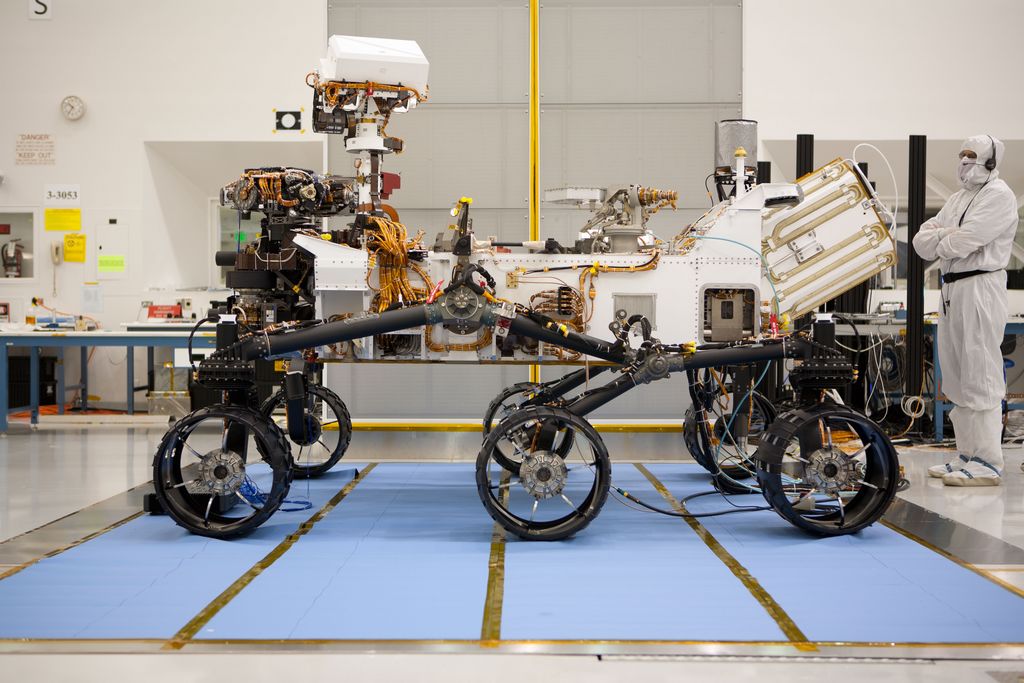
He's not "joking around", the rant is like a page and a half long, describing it as vastly more dangerous than Pu-239, with a long line of superlatives for how to describe its incredible "danger". He talks about how it gets glowing hot with radiation and extends that logic to meaning that said radiation would be a lethal threat to his protagonist should the case crack. Which is of course absurd. Alpha doesn't even penetrate the outer layer of dead skin - alpha emitters are only dangerous if ingested or inhaled, and there's no realistic way to do that with an RTG, they're designed to even withstand unshielded reentry without burning up (and have done so - ex. Apollo 13). He'd be at far more risk of burning his suit - they're designed to operate at temperatures of 1000-1100C on the inner core and can still be very hot on the cooling fins (which, by the way, are often very large - on Curiosity, they're the giant angled section in the right near the guy in this picture. That's just to dissipate the heat used to produce a mere 125 watts of electrical power.)
My explanation of how the Hab is radiation-proof: a superconducting magnetic shield.
Microwave communications are based on photons, aka chargeless particles, aka no Lorentz force, aka no deflection.
Only protects against charged particles though...wouldn't stop gamma rays. How common is random gamma radiation on the surface of Mars?
Nor neutrons. Nor very high energy particles, such as in GCR, according to studies of realistically-implementable systems. But lower energy charged particles comprise the lion's share of the radiation exposure. Also, a lot of the neutrons and gamma that one would be exposed to with conventional shielding are secondaries.
-
Re:why should I sign up for public domain pix.
asked then answered: the full resolution images are accesible in list view here arranged by mission and referenced by film cassette and frame number. Tidy.
-
Re:The benefits are huge
Mars isn't entirely inhospitable. Surface air temps in the shade can be as high as 95F, the daily temperature change can be as high as 180 degrees. Source
Er, you appear to be forgetting the fact that it doesn't have a breathable atmosphere.
The Arctic is hard to survive in, but people do live there. That's because they can breathe the air.
Mars is impossible without a lot of technological backup.
-
Re:Can we get back
The New Horizons team refers to it as a planet. New Horizons head Alan Stern is one of the leading advocates for the reversal of the IAU decision. Pluto and other large KBOs have been referred to many times as planets in peer-reviewed literature since the IAU decision. One of the NASA links in this article itself refers to Pluto as a planet ("At half the diameter of Pluto, Charon is the largest satellite relative to its planet in the solar system."). Large numbers of people in the field - I'd wager a solid majority of planetary scientists (who make up only a small minority of the IAU's membership but really should be the ones making these decisions) - think the IAU seriously screwed up here. There are literally dozens of reasons why it was a screwup - need I go into them?
-
Re:We've been to Mars already
What if for half the cost of a single person, you could instead have 500 martian probes distributed across the planet?
Besides, NASA scientists have made statements contradicting what you just said. Robots are slower, but can operate nonstop indefinitely where humans need long rest periods.Humans advocate humans; roboticists advocate robots. Film at 11.
You'd need 1,500 people on Earth working 8 hour shifts, for a much longer period of time, analyzing visual data, and saying "Hmmm... that rock that the probe passed 4 hours of analysis, and 24 minutes ago looked interesting; let's send a command now to the probe, which it will receive in 24 minutes, to go back and look at it. The elapsed time to deciding if it was 'just a shadow' should only be another time to compose command + 24 minutes + 5 hours travel + 24 minutes of transmitting back new pictures of the rock. Then we can decide what to do next, which will only take decision time + compose message time + 24 minutes transmit time + ??? doing time + 24 minutes transmitting back the result."
Do you kind of see the problem?
-
Re:We've been to Mars already
What if for half the cost of a single person, you could instead have 500 martian probes distributed across the planet?
Besides, NASA scientists have made statements contradicting what you just said. Robots are slower, but can operate nonstop indefinitely where humans need long rest periods. -
Re:The benefits are huge
Mars isn't entirely inhospitable.
Surface air temps in the shade can be as high as 95F, the daily temperature change can be as high as 180 degrees.
Source -
Re:Nothing New Here
The oldest paper I know of on the topic was presented to 4th Annual Mars Society Convention at Stanford University on August 24th, 2001 and has far more content. The pdf http://palermoproject.com/Seep... is from this page
That's a year after the Malin and Edgett paper in 2000, "Evidence for recent groundwater seepage and surface runoff on Mars", which was published in Science and got a lot of attention.
Or this one, from 2002, which suggested that the reason the water carving the gullies was liquid was due to salt content suppressing the freezing point: http://ntrs.nasa.gov/archive/n...
thank you! why has nobody else pointed this out? Even early this year there was an announcement or something about this. Im curious as to how come this has been announced multiple times.
-
Re:Nothing New Here
The oldest paper I know of on the topic was presented to 4th Annual Mars Society Convention at Stanford University on August 24th, 2001 and has far more content. The pdf http://palermoproject.com/Seep... is from this page
That's a year after the Malin and Edgett paper in 2000, "Evidence for recent groundwater seepage and surface runoff on Mars", which was published in Science and got a lot of attention. Or this one, from 2002, which suggested that the reason the water carving the gullies was liquid was due to salt content suppressing the freezing point: http://ntrs.nasa.gov/archive/n...
-
Old news!
-
Re: there is no
full-coverage satellite data shows no warming for nearly 20 years
Really? It doesn't seem to be the case, at least according to this source : http://climate.nasa.gov/vital-signs/global-temperature/. Are you saying NASA is part of a conspiracy?
Well they do get funding to build and launch satellites to track global warming. So they do have a vested interest in global warming being something important that needs to be tracked.
Look, I believe that climate change is occurring more quickly than in previous eras and that human activity is a contributing factor. However lets not pretend that federal funding is not biased. It is highly biased. Pick a field or position that is politcially out of favor and good luck getting funding for your research. And this problem is not specific to climate science. Politicians screw up science just like they screw up everything else. Al Gore becoming a spokesperson for climate change was probably the worse thing to ever happen to climate science. -
Re: there is no
full-coverage satellite data shows no warming for nearly 20 years
Really? It doesn't seem to be the case, at least according to this source : http://climate.nasa.gov/vital-signs/global-temperature/. Are you saying NASA is part of a conspiracy?
-
Re:"need"? "benefits"?
You can start by going through the list of thousands (literally) of experiences that have been run on the ISS and categorise each one individually as science vs not science
I don't have to: NASA already selected the most important scientific results and made their best argument in this book: http://www.nasa.gov/pdf/626862...
I'm saying: I'm looking at that and I don't think the $100 billion was well spent. I'm saying that I believe spending the same amount of money on 50000 additional research scientists on Earth or doubling the NSF budget would have been better. You yourself gave Hertz, Maxwell and Dirac as examples. You yourself brought up funding for theoretical physics. Those are exactly the kinds of things those $100 billion haven't been funding.
Even though you pay lip service to theoretical physics, the policy you advocate is to hand even more money to military contractors developing jets and rockets, and occasionally shutting a few people into an orbital tin can to conduct some high school science experiments. That's the kind of "practical science" your Lord Mandelson loves, and you evidently support his views wholeheartedly.
-
Re:What has the ISS done for us so far?
I'm asking, not arguing, because I don't know. Is there any consensus answer to the question: What is the greatest accomplishment of the International Space Station? Right now all I know is that from time to time I can point my finger to the sky, at a rapidly moving spot of light and say, "Yup, there it is."
Well, for one thing, a shit ton of research on the effects of micro gravity on humans and how to mitigate them. Which is pretty important for a nation with aspirations of prolonged human space flight.
But it you really want to know, the NASA website has all sorts of information on the goals of the ISS and all the research that is planned or already occurred: International Space Station.
-
Re:Should this "testing mode" be enabled by defaul
It's a tradeoff between NOx production and performance, lower CO and CO2 production, lower particulates, lower maintenance and better mileage. Volkswagen probably figured that since worldwide vehicle NOx production is several orders of magnitude below that produced by lightning, nobody would care as long as all the other numbers went in the right direction.
-
Re:What has the ISS done for us so far?
They tried to make an argument in this "book" (marketing PDF):
http://www.nasa.gov/pdf/626862...
The arguments seem to fall into three classes: (1) dual use technologies (stuff developed for the ISS that also has other uses), (2) experiments in microgravity or in orbit, and (3) experiments related to the effect of microgravity on astronauts.
Of these (1) doesn't require actually launching or paying for the ISS; you can have that more cheaply by directly financing those programs. (2) can be done far more cheaply using robotics and remote operation. And (3) is really only a "benefit" if you intend to launch more people into space.
-
Re:what if they don't find any ?
GR requires them to exist. I don't know if there are other gravity theories that are consistent with all other observations that do not.
We do see spin-down of binary neutron stars that is consistent with gravitational wave radiation, so its pretty darn clear that they do exist - we just don't have direct detection.
In the future LISA ( http://lisa.nasa.gov/ ) and other more advanced instruments may be able to to gravity wave astronomy. Ultimately we could imagine detecting gravitational radiation from the very early universe - long before any other signals are available.
-
Solar Power on Mars
So you do confirm that tiny solar panels on a tiny rover can generate about 140 watts for up to four hours per Martian day. That gives us the data (known solar panel type, surface area, power generated) to know how many and how big the solar panels would need to be for a Mars base.
The Mars Exploration Rovers were powered by 1.3 m^2 of solar cells.
http://ntrs.nasa.gov/archive/n...
If you want more power, make larger solar arrays.Solar power works on Mars. That really should not be controversial; we've been doing it since Pathfinder. If you want an alternative power source, use a nuclear reactor.
Or use both; your choice.
-
Re:Going to Mars is a bad idea
What really cemented my belief that going to Mars is impossible with current technology is this article. The biggest thing to me is just how much supplies you need to sustain yourself for the trip. 3 million pounds worth of supplies. That's 60 shuttle launches worth of supplies. Sure there's rockets that can lift more than the shuttle could, but even with those heavy lifter rockets, you're probably looking at around 30 launches just to get the gear into space. Then there's the problem of being stuck in a tin can for 9-12 months, and still being in good enough shape to do something useful once you get there.
If you want to come back, the minimum stay is 3-4 months while you wait for the planets to line up again. And there is no turn around option like with the Apollo missions. Once you are on your way, there's no way to bail out and come back quickly in the event of an emergency.
-
Technique
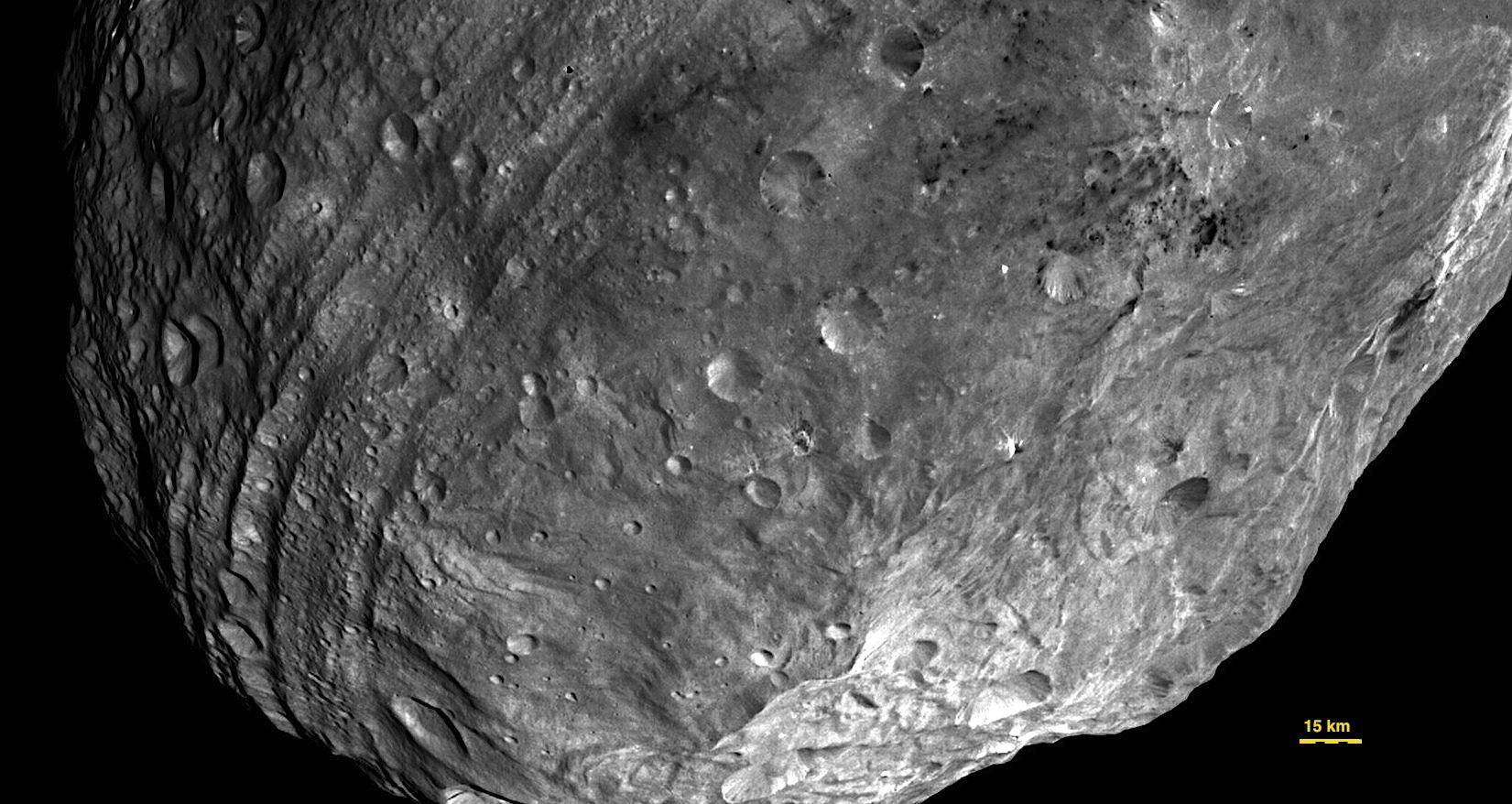
I've often wondered whether enclosing the mining location in an envelope of some sort was really the most effective way to collect material in space. Surely either giving the target a spin or taking advantage of its existing spin while melting a spot, followed by an "ice cream scoop" collector might be more efficient? Afterwards it might end up looking a little like Vesta.
-
Re:Meh.
If you're talking about the reference to the F-111 and P-51 aircraft, that's talking about the subsonic L/D, not the supersonic L/D. A bit of searching on google confirms this: http://www.hq.nasa.gov/pao/His...
I have journal access. I'd appreciate if you could give me the links to the articles you're talking about.
-
Re:Whoa! Consider the Law
That 95% figure that gets thrown around is from an *extremely* small sample size. Worth some googling to see the entire truth behind that.
NASA say 97%. And cite multiple sources.
-
Not alarmists and not wrong
So it looks like scientists have been wrong about their global warming predictions going on four decades.
Except that their criteria for a 2-3 C increase hasn't passed yet. The IPCC apparently thinks the "first doubling of atmospheric CO2" will happen by about 2050. NASA’s Goddard Institute for Space Studies thinks that global temps. have so far risen by 0.8 C since 1880. This means that the Exxon researcher's warning that "a doubling of CO2 levels in the atmosphere would increase average global temperatures by 2 to 3 degrees Celsius" could still come to pass. Several of the projections in the IPCC's figures suggest a 2C rise by ~2050 is possible, so they could still be proven right.
"Still might come to pass" in 2050 is far different than "5 to 10 years" from 1978. But keep moving the goal posts and you may eventually figure out a way to prove them right.
I can't find that purported prediction for "5 to 10 years" in either of the reports referenced. To the contrary, the reports very explicitly made no predictions for 5-10 years; it said that in that time period it would not be possible to distinguish the global warming signal from the statistical fluctuations. The only explicit numerical prediction in the 1978 Exxon report is on page 34 (the very last page, labeled "summary"). This stated "Doubling CO_2 could increase average global temperature by 1C to 3C by 2050 A.D. (10C predicted at poles)."
So I don't know what you mean about "moving the goalposts" on predictions. The goalpost in the 1978 prediction was "by 2050". This has not changed. The prediction in 1978 (based on the 1977 presentation) overlaps the IPCC's current prediction of 2C by 2050-- neither the prediction nor the "goalposts" have changed.
(The 1982 Exxon report had a slightly different timespan for doubling, stating that "We estimate doubling could occur around the year 2090 based upon fossil fuel requirements projected in Exxon's long range energy outlook". This report, however, is by a different author and dated 3 years later, so it's not unexpected that it would have a slightly different fossil fuel use model.)
The only reference to "five to ten years" in 1978 report is the statement on page 2 "Present thinking holds that man has a time window of five to ten years before the need for hard decisions regarding changes in energy strategies might become critical".
-
Re:And to Think It Might Have All Been Ruined
Hats off to the teams at NASA for the combined effort that has treated us to such stunningly great science images. Thank you. I look forward to hearing more in the future as additional insights and perhaps a few new questions surface following study.
One issue, some NASA pages are coming up black in browsers with scripting disabled. It seems there's a iPerceptions, Inc. analytics stalking layer with the actual image content hidden. (The image links don't seem to be visible even in the page source). What's described on that vendor site sounds pretty insideous from a user perspective. Some of us stay clear of commercial sites built that way. I hope that future NASA science can have the openness we've seen in the past. Tools that analyze logs ought to be sufficient to get a picture of usage patterns.
A page that's got the scripting I mentioned:
http://www.nasa.gov/feature/pl... -
Re:Alarmists - wrong on global warming since 1978!
You see a pattern mostly because you have been pressing your fingers in your eyes so hard you're just seeing stars.
No warming in 18 years? Try pulling your fingers out of your eyes and see actual data.
http://climate.nasa.gov/vital-...
And it's gotten hotter since that data was put there. But I'm sure you'll ignore that too.
-
Comparing Prediction To Data
So it looks like scientists have been wrong about their global warming predictions going on four decades. Or did I miss the great, impactful Exxon global warming crash of 1988?
I'm not sure what prediction you're saying is wrong. The Exxon 1982 report) being discussed said:
"If the earth is on a warming trend, we're not likely to detect it before 1995. This is about the earliest projection of when the temperature might rise the 0.5 needed to get beyond the range of normal temperature fluctuations."
Since they said the signal doesn't exceed the noise until 1995, they didn't even make a prediction for 1988.
The report did have a statement that the greenhouse effect would produce 1C warming "above present levels" by "the second to third quarter of the next century" (page 2 of the pdf.)
Here's the graph of actual measured data:
data.giss.nasa.gov/gistemp/graphs_v3/Fig.A.gifFitting a line through that data starting with "present levels" of 1980, I see a rise of about 0.8 between 1980 and 2014. So looks like their prediction was very close to the data.
If anytjhing, their prediction was slightly low, but since in the same report they list an uncertainty of over 50% on model predictions, their prediction matches the measured data to well within their quoted error bars.
-
Re:Alarmists - wrong on global warming since 1978!
So it looks like scientists have been wrong about their global warming predictions going on four decades.
Except that their criteria for a 2-3 C increase hasn't passed yet. The IPCC apparently thinks the "first doubling of atmospheric CO2" will happen by about 2050. NASA’s Goddard Institute for Space Studies thinks that global temps. have so far risen by 0.8 C since 1880. This means that the Exxon researcher's warning that "a doubling of CO2 levels in the atmosphere would increase average global temperatures by 2 to 3 degrees Celsius" could still come to pass. Several of the projections in the IPCC's figures suggest a 2C rise by ~2050 is possible, so they could still be proven right.
-
Re:What's up with the fake link?
Maybe they were going to fill in the URL later and forgot? It's not like the Slashdot editors are going to verify the links are working...
Anyway, there is a good bit of information about the Orion spacecraft on NASA's official page. -
Re:With the best tech that we know of
However, one must agree that most radio communications are not point sources (not even "omni" antennas) and most high gain antennas are absolutely not so.
Consider our recent communications from earth to the New Horizons mission. These are "highly-collimated" (I'm putting that in square quotes because of course at the wavelengths being emitted it's not as collimated as a laser through an optical telescope would be) beams of radio waves leaving a 70m aperture (Tidbinbilla DSN) here on earth and going in one direction. Now I don't have time right now to dust off my college optics textbook to compute the diameter of that radio beam at the edge of the solar system, and at say 10 light years, or 100 light years away, but it will NOT be a compete sphere of radio waves and it will not be dropping off in intensity as the inverse-square of the distance.
I hope you can see this and I hope others can as well.
Like I said later in the post, a directed beam would have the best chance of getting to Earth; however, despite a high gain antenna's increased directional strength, the intensity still drops off in proportion to the inverse square. This is fundamental to the radiation field. In a perfect world, you can construct phase in such a way that intensity does not drop off, but this requires an infinite aperture with infinite power (see, for instance, airy beams).
So, yes, you can increase the range of communication, but you have to know who to shoot the beam at. This is why I suggested that we search for communications along the Earth-Sun ecliptic, since another civilization is more likely, perhaps, to have discovered us along that plane (which is still a long shot).
In theory, an advanced civilization with access to an extreme amount of energy (on the order of an entire star) could send out a sustained omni-directional signal strong enough to propagate throughout the galaxy. I find this to be far less likely, considering the already slim prospects for intelligent life.
-
Re:With the best tech that we know of
"The electric field of a radio signal drops off inversely with the distance that it's traveled"
You've made a great post and a solid contribution, but this idea is *not* correct.
I think the reason for this common misconception is that there are a number of inverse square laws for fields (gravity, charge) and in high school everyone is taught that the intensity of light emanating from a point source will drop of as the inverse-square of the distance. Which is true, see below:
https://en.wikipedia.org/wiki/Inverse-square_law
However, one must agree that most radio communications are not point sources (not even "omni" antennas) and most high gain antennas are absolutely not so.
Consider our recent communications from earth to the New Horizons mission. These are "highly-collimated" (I'm putting that in square quotes because of course at the wavelengths being emitted it's not as collimated as a laser through an optical telescope would be) beams of radio waves leaving a 70m aperture (Tidbinbilla DSN) here on earth and going in one direction. Now I don't have time right now to dust off my college optics textbook to compute the diameter of that radio beam at the edge of the solar system, and at say 10 light years, or 100 light years away, but it will NOT be a compete sphere of radio waves and it will not be dropping off in intensity as the inverse-square of the distance.
I hope you can see this and I hope others can as well.
-
Plenty of NASA images show civilization
Like this one: http://apod.nasa.gov/apod/ap14...
-
About those polar maps
You're gonna tell kids the poles are melting?
What happens when they look at a map and see it's expanding?
http://www.cbc.ca/news/technol...
What happens if they go to James Bay which is solid ice now and hear it wasn't 30 years ago, check with NASA and find there's more ice now than before?
http://rs79.vrx.net/opinions/i...
What happens if they look at the south pole?
http://www.nasa.gov/content/go...
When the disconnect between readily available physical evidence and the popular media is this vast you'd hope the educational system would side with science. Odds are these facts aren't in the curriculum (somebody should check).
As you ponder America augering into the ground consider the benefits of being truthful with children. The left bought black science guy and white science guy to brainwash children and Murdoch just bought NatGeo now he's figured it out, reasoning those ads^H^H^Hfacts last 30 years in dentists and doctors offices.
I thought America was all about truth and liberty? Not commercial propaganda and oppression of free thought.
-
Re:In the USA? Seriously?
That way you can share 24x7x365 without fear of the MAFIAA.
SOLAR SYSTEM NETWORK TRACE BEGINS. That 'year'=7year time span most closely corresponds to the orbital Synodic period of near-Earth asteroid 99942 Apophis. If you were actually located on Apophis you'd be using the Siderial period for measure. Therefore I assume you're probably just co-locating on Apophis, using a server whose clock-year tied to its relative position with Earth. At its closest pass of ~23,500 miles gives a fiber ping guesstimate of ~419ms ping under best-ever conditions on April 12, 2029. But most often worse. That's pretty awful. I'll bet there are lots of unplanned outages too, at incredible distances like these the backhoe factor really adds up. I hope it's cheap.
Suggest you move your seedbox to the Netherlands.
-
Re:A pity UHD screens are only 3840 pixels wide
Except that the NASA page has this picture :
http://www.nasa.gov/sites/defa...Showing SD, HD, FullHD, and "4k 4096x2160" sizes and "4k is Four Times the resolution of Full HD", which is technically wrong (see my comment below).
-
Re:US Bill is only 4 Trillion?
It is funny that CHina is acknowledged to produce more CO2 than America has since ANY of the timeframes looked at. Yet, this guy is claiming that China's emissions are nothing.
I think that as OCO2's, and next year, OCO3's, data creeps out and ppl realize that the numbers for most of these 'studies' are not adding up, well, even things like this will be considered to be nothing but a joke. -
Who Pays The Bill for $10,000/Lbs?
Who are we going to send the bill to?
http://www.nasa.gov/centers/ma...