Slashdot Mirror
Domain: nasa.gov
Stories and comments across the archive that link to nasa.gov.
Comments · 16,365
-
Re:And the response from the right will be...
GISTEMP would like to have a word with you. Also, using local extrema to argue against (or for, for that matter) AGW is really, really stupid, don't do it. Sure, it's a sort of stupidity that'll probably get you modded up around here, and I suppose that's nice, but using arguments a drooling retard with only the most basic knowledge of climate science could poke massive holes in is really pathetic. "1998 was hotter than some of the years after, AGW disproven" is on the same level as "summer was hotter than some of the seasons after, AGW disproven".
-
Non-Duplication (and GRACE is US + German)
Like others mentioned, GOCE and GRACE use pretty different technology (and are all, at this point, experiments). Also, give Germany some credit - GRACE is a joint US-German experiment. International partnerships are a pretty good way for the US to stretch its earth-observation dollar. See: http://science.nasa.gov/missions/grace/ I don't know much about the GOCE experiment, but GRACE's gravity information has been able to show things like ice cap thinning in Greenland, and the density attributable to large (water) aquifers elsewhere.
-
Re:Little bigger than Apollo?
Apollo was actually large enough to fit 5 astronauts in a pinch, so that the crew of the skylab space station could be rescued.
-
Re:Little bigger than Apollo?
Apollo was barely big enough for 3. Something only a "little" bigger is supposed to hold 7?
Do they sit on each other's laps?Actually, they do practically sit in each others laps. Most people don't realize that beneath the couches of the Apollo command module was more-or-less open space - the crew slept down there during flight. Using this space to carry people was first planned back in the 1970's when they modified one command module into the Skylab rescue configuration.
So yes, making the capsule just a little taller and a little wider enlarges the crew compartment enough to pack in seven seats.
The previous posters are partly wrong on supply weight and volume though though: First, the majority of the supplies in the capsule were carried at the astronauts feet in the Lower Equipment Bay (the astronauts actually sat off center in the spacecraft), and you'll need almost the same amount for a station taxi. (The Apollo's configuration was to control the center of gravity, offsetting it controlled re-entry attitude and allowed the spacecraft the limited ability to 'fly' a non ballistic trajectory during re-entry. Almost certainly the station taxi will do the same.) There were also considerable supplies carried in the service module.
Supplies save less than you might think because of the increase in crew size. Both will require roughly 42 person days of supplies - 3 crew times 14 days for Apollo, 7 crew times 6 days for the new module. Yes, six days. Two days to fly to the station, two days to fly from the station to re-entry, and two days for contingencies. (No, you can't shorten the fly to or fly home portions, those are dictated by orbital mechanics.)
Considerable weight savings will also come from the the weight reduction in the electrical and electronic systems in the past forty or fifty odd years. (The Apollo guidance system, which weighed a couple of hundred pounds, would weigh less than ten today.)
But real biggie in terms of weight savings will be in the thinner heat shield (Apollo's needed to be able to stand a high velocity return from the moon, which a station taxi will not). Additional weight can be saved by using modern materials (composites, AL/Li alloys, etc.) for structural components. More weight can also be saved by shrinking the propulsion system - a station taxi has no need to brake itself into lunar orbit or blast itself free from the same. -
NASA World Wind Java Re:Google maps for trackingMight I suggest looking into the NASA Open Source application, World Wind? You can do anything you can think of.. and people have used it to track several thousand objects in real time and from a database.
You can see some of what can be done on the demos page.
What you want to do is fairly simple, and has been done before.. you can probably find enough code examples in the SDK and on the forum.
-
NASA World Wind Java Re:Google maps for trackingMight I suggest looking into the NASA Open Source application, World Wind? You can do anything you can think of.. and people have used it to track several thousand objects in real time and from a database.
You can see some of what can be done on the demos page.
What you want to do is fairly simple, and has been done before.. you can probably find enough code examples in the SDK and on the forum.
-
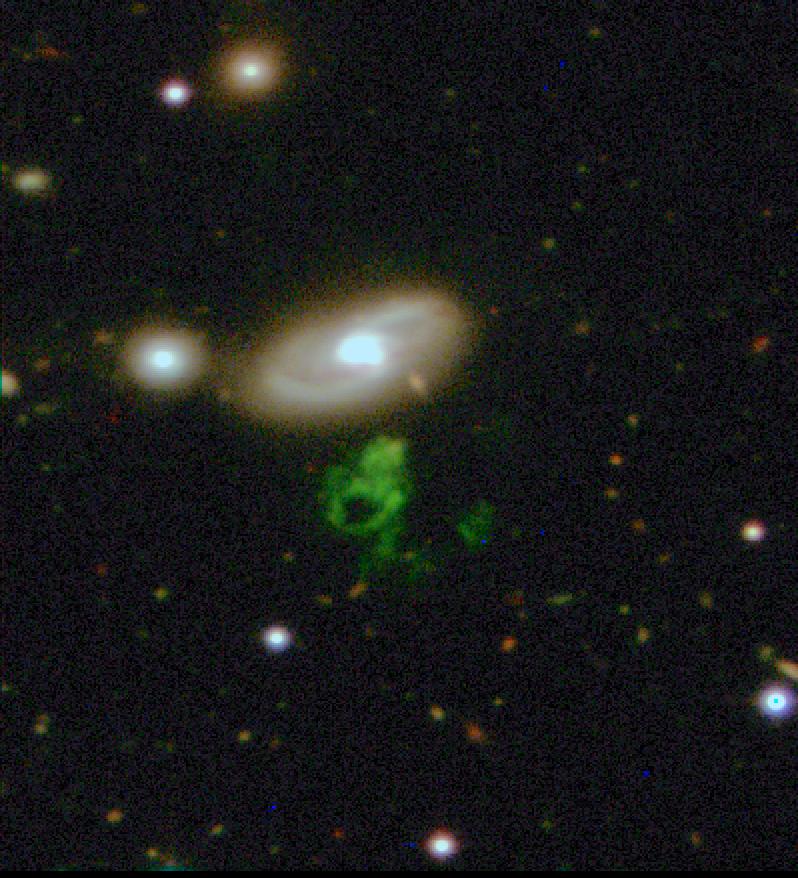
Re:What does a voorwerp look like?
http://antwrp.gsfc.nasa.gov/apod/image/0806/hannysvoorwerp_wht_big.jpg
Kermit the frog . . . is that you?
No, instead of actually dying Jim Henson is becoming a being of pure mental energy, this is his "Star Child" form his subconscious mind chose to become while in transition.
-
Re:What does a voorwerp look like?
http://antwrp.gsfc.nasa.gov/apod/image/0806/hannysvoorwerp_wht_big.jpg
Kermit the frog . . . is that you?
-
What doea a voorwerp look like?
-
Solar-powered?
Did they use solar power to create the helium? Since the helium produces the lift, to be solar-powered it would also need to produce the helium. Running a couple of propellers isn't new. Check out the Helios aircraft from NASA for a true solar-powered aircraft. http://www.nasa.gov/centers/dryden/history/pastprojects/Helios/
-
Same thing just happened to Voyager 2
http://www.jpl.nasa.gov/news/news.cfm?release=2010-151
Mission managers at NASA's Jet Propulsion Laboratory in Pasadena, Calif., had been operating the spacecraft in engineering mode since May 6. They took this action as they traced the source of the pattern shift to the flip of a single bit in the flight data system computer that packages data to transmit back to Earth.
-
Re:Too ComplicatedNo, you start with the Bernoulli principle, in a simplified form. That is, the kinetic energy plus pressure is a constant. You show them the really cool demonstrations of blowing over a piece of paper to make it go up, or the ball in the vacuum cleaner exhaust that stays in the exhaust despite perturbation. Then, you discuss why a curve ball curves. Then, you show them a simple pitot tube and put it in different velocities of air.
Then, you apply this to airfoils.
Then, you go to the NASA page and get their simulator FoilSim II.
Then, you point out that the simplifications that you made above can be improved on, but that the math gets really messy, and so we use the underlying physics equations and solve the numerically, using CFD.
-
Airfoils
If you're looking for an airfoil simulator, you might try NASA's FoilSim II. "Elementary," student, and undergraduate versions are available, and the non-applet download gives an even more complete version that allows file output. While it's not a full CFD package, it may be good enough for an introduction to airfoil analysis. And while it's not open source, it is free and in the public domain (since it was government produced).
Also, if you're generally looking for open source physics simulations, you should check out Open Source Physics at http://www.compadre.org/osp/
In particular, a brief search there yielded the Tracker Air Resistance Model - a level appropriate simulation that lets students explore the air resistance of falling coffee cups with both viscous (linear) and drag (quadratic) models.
Nearly all of the OSP items have the source code available for modification of the models.
-
Here are two great CFD packages for airfoil sim
I will be getting my PhD in Computational Engineering in August, and as a former university, high school and middle school math teacher, there are things that can be applied to teaching young students about CFD without them having all the mathematics background they need. I am the STEM outreach coordinator at the SimCenter, and I have a website http://www2.utc.edu/ which includes an Euler solver on a NACA 0012 airfoil with changeable parameters for students to study the various solutions based on mach, angle of attack, etc. It also does grid adaptation. There is a graduate student tutorial and a high school student activity. I have used it with precalc, calc, and physics students at local high schools. Please feel free to contact me at vincent-betro@utc.edu for anything else I can help with. Vince P.S. Another good (and longer running) package can be obtained from NASA Lewis and can be run on any platform: http://www.grc.nasa.gov/WWW/K-12/airplane/foil2.html. Good luck!
-
Re:Predicting Weather In Space
... solar flares will take out all communications. Except they don't.
I doubt you grasp the ferocity of the Massive solar flare of 1859.
Even more disconcerting, telegraph systems worldwide went haywire. Spark discharges shocked telegraph operators and set the telegraph paper on fire. Even when telegraphers disconnected the batteries powering the lines, aurora-induced electric currents in the wires still allowed messages to be transmitted.
The amount of energy needed to start fires and burn down telegraph wires (I remember that from another article) is massive. Inducing several Amperes of current (enough to run the telegraph) in effectively a straight wire is mind-boggling. That would absolutely disrupt the power grid via induced conductor and ground current surges and saturate the ionosphere as it did in 1921, 1960, 1972 and 1989. The main problem as I see it is that an energy flux of that magnitude could also induce huge currents inside computer and radio equipment attached to long coax or network cables, destroying those terribly thin CMOS insulation layers in every chip. Unless you've got beastly all-tube rigs, you're toast. Think of it as a natural, global Mostly Type E3 EMP-class event.
As an aside, I remember reading somewhere that the most violent Flares/CME's tend to occur on the downswing of the solar cycle.
Your choice of frequencies leads me to believe you're a Amateur Radio Operator - 73 de k4det.
-
Re:Predicting Weather In Space
... solar flares will take out all communications. Except they don't.
I doubt you grasp the ferocity of the Massive solar flare of 1859.
Even more disconcerting, telegraph systems worldwide went haywire. Spark discharges shocked telegraph operators and set the telegraph paper on fire. Even when telegraphers disconnected the batteries powering the lines, aurora-induced electric currents in the wires still allowed messages to be transmitted.
The amount of energy needed to start fires and burn down telegraph wires (I remember that from another article) is massive. Inducing several Amperes of current (enough to run the telegraph) in effectively a straight wire is mind-boggling. That would absolutely disrupt the power grid via induced conductor and ground current surges and saturate the ionosphere as it did in 1921, 1960, 1972 and 1989. The main problem as I see it is that an energy flux of that magnitude could also induce huge currents inside computer and radio equipment attached to long coax or network cables, destroying those terribly thin CMOS insulation layers in every chip. Unless you've got beastly all-tube rigs, you're toast. Think of it as a natural, global Mostly Type E3 EMP-class event.
As an aside, I remember reading somewhere that the most violent Flares/CME's tend to occur on the downswing of the solar cycle.
Your choice of frequencies leads me to believe you're a Amateur Radio Operator - 73 de k4det.
-
Re:Question:
The gulf oil spill is now larger than the state of Florida. http://www.nasa.gov/images/content/464081main_USA7_TMO_2010170_lrg_full.jpg
-
Re:Cut costs, sure.
However just like every other airframe out there, it has undergone significant change over the years to keep it state of the art.
Check out the write up in this months "Air and Space". Evolution of the Space Shuttle.Just read it. I see nothing in the article, though, which describes a significant technical upgrade or modification.
They've updated systems like main engines, electronics, and controls the fairly regularly through-out the program. Most of these modifications are incremental, but the technology has been refined over the years rather than stay static with the original 1970s designs!
-
Re:Cut costs, sure.
However just like every other airframe out there, it has undergone significant change over the years to keep it state of the art.
Check out the write up in this months "Air and Space". Evolution of the Space Shuttle.Just read it. I see nothing in the article, though, which describes a significant technical upgrade or modification.
They've updated systems like main engines, electronics, and controls the fairly regularly through-out the program. Most of these modifications are incremental, but the technology has been refined over the years rather than stay static with the original 1970s designs!
-
Re:Cut costs, sure.
However just like every other airframe out there, it has undergone significant change over the years to keep it state of the art.
Check out the write up in this months "Air and Space". Evolution of the Space Shuttle.Just read it. I see nothing in the article, though, which describes a significant technical upgrade or modification.
They've updated systems like main engines, electronics, and controls the fairly regularly through-out the program. Most of these modifications are incremental, but the technology has been refined over the years rather than stay static with the original 1970s designs!
-
Re:Again: Citation needed
A solid rocket is propellant in a tube. However the way you mix and cast the propellant is much more complex and error prone than fueling a liquid rocket. Small manufacturing errors can lead to cracks in the solid fuel which can cause the whole thing to explode. The oxidizer (e.g. ammonium perchlorate) is mixed together with the fuel (e.g. some kind of rubber). If you make one mistake during the mixing process, the whole thing can explode. Solid propellant is much more expensive per kg than liquid propellant such as LOX/Kerosene.
In a liquid fuel rocket most of the expense is in the engine, rather than the fuel. If you reuse the engine N times, you are reducing engine cost by a similar proportion.
SSME is expensive, but if you consider the fact that the engine is reused, it costs about the same as other engines in the same engine thrust class. SSME has had several revisions. The latest revision is able to do 10 or more flights between overhauls. As time went by and the SSME was upgraded, its costs kept decreasing while solid rocket costs kept increasing. You can read about that here in the Shuttle Operations funding requirement in page 23, here. The cost of External Tank+SSME is lower than Reusable Solid Rocket Motor+Solid Rocket Booster. In fact even manufacturing the expendable external tanks costs more than SSME.
-
Re:READ THIS!!!!!
Well, I guess I can do a trivial Google search. I found a couple of articles on wikipedia where it's been used as a verb without the editors fixing it, space.com seems happy to use the verb in their 2.25pm update, and I have a PDF of a letter from a guy who appears to know what he's talking about.
A google search for "will splashdown" gives a lot more hits. Even "Splashdowned" gives a few. -
Re:Riiight
NASA will release the data in its entire form eventually, and in perpetuity once they get the first paper out of it.
Just after they finish up the Capricorn One project data.
Your inane joke aside, according to this NASA statement (end of the third paragraph) the data on the currently withheld candidates will released in February 2011. By the way it is standard NASA policy is to require public release of science data within a year of collection, so the Kepler team doesn't even have to give up this much yet if they didn't want to!
-
Re:but then...
Then again, I've read too much Heinlein. *grin*
Compare the last five minutes of the Apollo 11 landing with the lunar landing sequence in Rocketship Galileo. They had similar dramas. If anything Heinlein's crew handled operations better, while Armstrong got himself into a mess by working too much of Aldrins job.
-
Re:Woooow! oh my....
If by "cancel", you mean "increase the budget of", then yes. It's only Constellation that's getting canceled. Science is getting a boost.
-
Data ArchivesHere is the notice they are releasing potential extrasolar planetary data and the press release saying that it's data on 156,000 stars. You can search the data or just download the tarfiles via anonymous FTP:
ftp archive.stsci.edu
cdIf you do a search there appears to be anywhere from half to two thirds of the data that are marked as proprietary data which their search help gives a brief explanation of:
Clicking on entries in this column will mark the entry for retrieval. To mark all entries, click one of the buttons labelled 'Mark All','Mark public', or 'Mark Proprietary'. (Unmarking all entries can be done the same way using the appropriate button.) For missions with proprietary data, the mark button element will have a yellow background and a '@' symbol to indicate data sets not yet public.
I think the majority of those that are unreleased are simply Q2 data or later since this data is just from the first 42 days of the mission. What's available as the tar file appears to be all Q0 and Q1 data so I'm not certain if the 400 that are 'censored' are included in that or not. If they are withheld it seems odd that the announcement, release notes and README file make no mention of this. Still, we're talking 12+ GB of compressed data here.
Overall and despite the reported censoring of the best candidates, I personally applaud their transparency here that surpasses anything another government related organization (or even scientific field for that matter) exhibits. Alright, maybe CERN or the LHC will be as transparent or more transparent but this is still pretty impressive. -
Re:Not surprising
Here's a couple writeups from NASA on the phenomenon, with some interesting pictures.
Of course, since it's from the government, conspiracy nuts will say it's disinformation.
-
Re:Not surprising
Here's a couple writeups from NASA on the phenomenon, with some interesting pictures.
Of course, since it's from the government, conspiracy nuts will say it's disinformation.
-
Re:maybe it's time to enlist the Japanese
Or we could wait for another martian meteorite to arrive.
-
Re:Around 2013
More likely a result of bad journalism than bad science, but I suppose it could be both.
Anyway, here's the link to spaceweather.com for anyone who wants to learn a little about the sun, sunspots, etc. http://www.spaceweather.com/
Here's a link to the latest from NASA published about two weeks ago. Their take on sunspot cycle 24 as best I can translate it? They haven't a clue and won't for several years -- after they have a decent sampling of cycle 24 sunspots to work with. Right now the cycle is late to start and may be fairly weak
-
The Earth's Magnetic Field will save the. . oh.
While silly scare stories of this nature are.., well what they are, it does raise a point.
Solar maximums do spit out a lot of radiation, and they have been known to cause power outages. My question is this, (because I can't seem to find a straight answer), we know that the Earth's magnetic field which protects us from solar wind is decreasing.
I'm not actually very concerned about this; the platitudes are well in place and I don't really have any reason to doubt them (other than I don't trust any government or large media promises ever), but whatever. In any case, it is an interesting and relevant point which you'd think SOMEBODY might have taken a moment to mention.
Here's NASA's website which has some details about the shifting magnetic field. Apparently it's picked up speed; magnetic North is moving at about 40 Km every year now.
-FL
-
the REAL article is at nasa
http://science.nasa.gov/science-news/science-at-nasa/2009/29may_noaaprediction/
this article actually predicts a QUIETER sunspot cycle than the last one.
the article at telegraph is the usual sensationalist BS.
-
Re:Related TED talk
Well the Mars Science Lab (another rover) has been in the works for a while, so that's still a go. Then, sticking to the lander-orbiter-lander-orbiter schedule, the MAVEN orbiter is next. Both are equipped to provide some detail on the methane, but now NASA actually wants to send a dedicated orbiter for that.
Also of interest, there are several mission proposals summarized here. Two of them are UAV missions, including KittyHawk (a proposal that has lost several times, first proposed for a mission in 2003 for the centennial of the Wright Brothers' first flight) and ARES (how original!).
-
Re:Scary
As long as you keep a spare car battery to recharge any bionics that require that, and provided that the outage doesn't last too long, I'd expect something like a pacemaker to be just fine.
I haven't heard of any rechargeable defibrillators/pacemakers. They usually have lithium ion or nuclear (Pu-238) batteries, don't they?
GPS and cars are mentioned because its the satellites themselves that are vulnerable. The "ipods etc" stuff in the telegraph, assuming there's any reasoning behind their inclusion in the article at all, beyond scaring telegraph readers, will be just because they need recharged regularly.
The problem is that is an unknown. An EMP from a solar storm isn't going to discharge the batteries - the potential energy is going to be there from the oxides, sulfates/sulfites, or other chemical storage type the battery is designed around. The problem is the EMP will induce current and the potential is there for it to fry integrated circuits. Check this out:
From http://oddculture.com/culture/the-solar-super-storm-of-1859/
From Rainbow Riders Trading Post:
The auroral current could be used for transmitting and receiving telegraphic dispatches. This was done between 8:30 and 11:00 in the morning, on September 2, 1859, on the wires of the American Telegraph Company between Boston and Portland, and upon the wires of the Old Colony and Fall River Railroad Company between South Braintree and Fall River, among others. The length of time during each positive wave was only, however, 15 to 60 seconds. The following account came from between Boston and Portland.
Boston operator (to Portland operator): “Please cut off your battery [power source] entirely for fifteen minutes.”
Portland operator: “Will do so. It is now disconnected.”
Boston: “Mine is disconnected, and we are working with the auroral current. How do you receive my writing?”
Portland: “Better than with our batteries on. – Current comes and goes gradually.”
Boston: “My current is very strong at times, and we can work better without the batteries, as the aurora seems to neutralize and augment our batteries alternately, making current too strong at times for our relay magnets. Suppose we work without batteries while we are affected by this trouble.”
Portland: “Very well. Shall I go ahead with business?”
Boston: “Yes. Go ahead.”At which point, the Boston operator began transcribing 19th Century Vintage erotica.
The conversation was carried on for around two hours using no battery power at all and working solely with the current induced by the aurora, and it was said that this was the first time on record that more than a word or two was transmitted in such manner.
Keep in mind that over the long distance (even if it's just Portland, ME and not Portland, OR) it requires more than a few volts to traverse the distance and run those electromagnets due to transmission losses. Any voltage+current strong enough to run the electromagnets in those telegraph stations is probably way more than enough to fry modern integrated circuits.
http://en.wikipedia.org/wiki/Solar_storm_of_1859
http://science.nasa.gov/science-news/science-at-nasa/2003/23oct_superstorm/
-
Re:The U.S. then cedes space dominance then?
All the money is now focused on things to serve the Earth (like a TV relays, spy pictures, or weather data) or serving wealthy earthlings who want to go into something almost zero gravity for a short stay. There's nobody interested in paying for Moon or Mars projects anymore it seems.
I have no idea where you pulled this from, but it's completely and utterly false. Please read through the budget and exploration plans before making idiotic comments like that:
http://www.nasa.gov/news/budget/index.html
http://www.nasa.gov/exploration/new_space_enterprise/home/workshop_home.html -
Re:The U.S. then cedes space dominance then?
All the money is now focused on things to serve the Earth (like a TV relays, spy pictures, or weather data) or serving wealthy earthlings who want to go into something almost zero gravity for a short stay. There's nobody interested in paying for Moon or Mars projects anymore it seems.
I have no idea where you pulled this from, but it's completely and utterly false. Please read through the budget and exploration plans before making idiotic comments like that:
http://www.nasa.gov/news/budget/index.html
http://www.nasa.gov/exploration/new_space_enterprise/home/workshop_home.html -
Re:Good
The only reason we were able to make it before was the greedy little piggies were willing to STFU to a point so we could beat the Ruskies.
No. The Apollo program was pig heaven. Ever wonder why NASA's manned space flight center is in Houston? Hint: Texas politicians served as vice president, speaker of the house, and chairs of the house appropriations committee and the House committee on science and astronautics.
http://crgis.ndc.nasa.gov/historic/Johnson_Space_Center
Nothing in Washington ever gets done without the piggies coming to the trough. But if you want to get something new done, you need to lay down *new* troughs.
-
NASA FAQ on new direction
To attempt to head off common misconceptions about NASA's new plans (like those in the article summary), I'll go ahead and post the contents of an FAQ straight from the source. Also, it's important to note that the new budget -increases- the amount of money for NASA.
http://www.nasa.gov/exploration/new_space_enterprise/home/faq.html
This section contains answers to frequently asked questions about NASA's exploration mission and its associated programs and projects following the 2011 Budget Rollout.
Why is the Administration proposing a new direction for Human Space Exploration?
In May of last year, the Office of Science and Technology Policy (OSTP) tasked an independent committee with reviewing U.S. human space flight plans and activities, with the goal of ensuring that our nation is pursuing the best trajectory in this arena - one that is safe, innovative, affordable, and sustainable. While the committee did determine that the Constellation Program was technically sound, they found it to be "be on an unsustainable trajectory" because it NASA was "perpetuating the perilous practice of pursuing goals that do not match allocated resources." In other words, the budget did not support the Constellation architecture.
What is better about the new approach?
The new approach proposed by the Administration focuses long term investments on the fundamental capabilities required for human space flight beyond Low Earth Orbit, but that we currently lack. The plan calls for technology development in areas like propulsion, in-orbit propellant storage, automated and autonomous rendezvous and docking, advanced closed-loop life support, and tele-robotic operations. It also increases funding in NASA's human research program, allowing us to better understand the potentially harmful effects the space environment might have on people and how we can best mitigate them. Most importantly, this approach is financially sustainable.
Does this mean that NASA has given up on returning to the moon?
Absolutely not. In fact, recent discoveries of water on the moon have made it more scientifically interesting that ever before. Our focus in the near term will be discovery through robotic missions, such as the Lunar Reconnaissance Orbiter, followed by robotic precursor missions, to scout the terrain for the eventual return of humans.
Why is turning over a portion of human spaceflight to commercial industry a good idea?
NASA has already committed a significant investment to commercially provided space flight services. Almost all of our satellites and many science missions are launched commercially. In addition, we recently contracted with commercial companies to carry cargo to the International Space Station commercially. The next natural step is for NASA to buy commercial flights for our astronauts to the ISS. This will free up NASA to pursue the greater challenges in the way of a trip to Mars.
Exploration Systems was the directorate that managed the Constellation program. What will its role be under the new plan?
Under the new plan the Exploration Systems Mission Directorate (ESMD) will be responsible for many research and development programs including exploration technology and demonstrations, heavy lift and propulsion technology, exploration precursor robotic missions, and human research. In addition, ESMD will manage the commercial crew and cargo spaceflight programs.
-
Re:Speaking of the oil spill...
True about valves being designed for 20 K psi being available.
However there are all the other aspects of the architecture of the systems down there that have to deal with 20 K psi. So many other bits of hardware have to be able to handle these pressures too.
Together they make for a very risky architecture because when something goes wrong we are at natures mercy.Lets take an look at this another way. When we design an aeroplane we design in a Safety Factor. That means that everything is over designed to whatever the "Safety Factor" requires.
The engineering safety factor is determined by the consequences of a failure. For an aeroplane we design for a safety factor 1.5 . So everything structural is designed over by 1.5 times because if the wing fails it will likely kill 300 people.
See the Nasa article about it as it shows that safety factors are commutative for all the hardware combined.
http://blogs.nasa.gov/cm/blog/waynehalesblog/posts/post_1229459081779.htmlFor an oil well we should probably have a much much safety factor than just 1. So at 20 K SI, the equipment should be designed to handle at least a safety factor of 2, and so hence be designed for a 40 K psi.
Frustratingly because the damages claimable is limited to 75 million USD; and there is a self monitoring policy that wont design the hardware properly.
For aeroplane makers, there is no statutory limit on the damages, and they are heavily monitored throughout the lifecyle of manufacturer and usage.As we are seeing the consequences of a failure of the oil well are likely to ultimately kill more than 300 people when you factor in the laws of cause and effect.
But humans that see it immediately; when an aeroplane crashes the laws of cause and effect are right in our faces, but when an oil well leaks if is less apparent to us immediately.Its a shame that the industry has been allowed to get away with this. Energy policy is screwed up. We want oil, and so we let them get away with low safety because we dont want to scare away investment.
How crazy can it get -
Re:Thank you Slashdot.
If you want to hear more stories about space missions, particularly cutting edge ones, check out some of the following sites:
Spaceflightnow.com
Space.com
The Space Fellowship
The Planetary Society
and, of course,
JAXA
NASA
JPL
There are other sites, but those are some of my favorite. -
Re:Thank you Slashdot.
If you want to hear more stories about space missions, particularly cutting edge ones, check out some of the following sites:
Spaceflightnow.com
Space.com
The Space Fellowship
The Planetary Society
and, of course,
JAXA
NASA
JPL
There are other sites, but those are some of my favorite. -
Re:Commence Whining
-
Re:Focus
Can you count?
Constellation is still listed there, as are ESA missions like XMM-Newton.
-
Re:Focus
Can you count?
-
Re:Key Points
1. They are not talking about autonomous UAVs. These UAVs are essentially remote-controlled aircraft piloted by real pilots. I think some people assume these things think for themselves but that's not the case. Now that doesn't automatically discount concerns of safety, but "skynet" is not the case here.
Well they're not really remote-controlled aircraft; instead of responding to, say, pitch, roll, and throttle commands, you tell them where to go and what to do and they figure out how to get there themselves. This has worked out very well for the military, but the FAA hasn't trusted UAVs enough to allow them to prove themselves in large-scale civil usage. For example, the military wanted to use their UAVs to help out with Katrina efforts, but since it was in civil airspace, they weren't allowed to.
2. This is not specifically for military only. Many uses for UAVs exist outside of military applications such as basic transport. Of course they'll use them for surveillance, but they already do that with aircraft. UAVs can simply linger longer because one pilot can take over during flight. Similar to how large aircraft do it now with redundant crew members.
I think initially these are going to be used to supplement/replace things like news, traffic and police aircraft/helicopters. NASA's already been using some for years to help with monitoring California wildfires.
-
No funding for satellites..
This really *is* a big deal. I've been working in a related area since 2001, and every year it seems like the NASA budget is getting worse and worse. We are funded by NASA and collect environmental data (similar to one of the satellites that "just" failed, ICESat) and have often been working on a shoestring when it comes to R&D and hardware. These satellites take years to develop and finally get into orbit. Without funding *now*, we could possibly be years without proper monitoring of our Earth. It's not all about Global Warming, but there are tons of other things that NASA looks at for a better understanding of our earth. OTOH, if a new ICESat weren't being built, that would just be more work for me.
-
Re:Maybe...
Yes because NASA never invented anything we use every single day.
We get HUGE bang for our buck in NASA. If you want to cut wasteful spending, you could cut NASA's budget several dozen times over from the military and they'd barely feel it. NASA is probably the best example we have of a government organization gone right, and all people seem to want to do is cut it because they don't understand how science works. Things like NASA exist because all of their inventions came out of necessity of the incredibly complex things they were doing. Those inventions make billions of dollars for many companies. We probably wouldn't have invented half the stuff NASA has come out with because the current stuff we had was "good enough" for life down here on Earth. -
Re:Most important launch in decades
ATK's Rockets that are used for shuttle launches are called "Reusable Solid Rocket Motors"
Kind of an oxymoron there considering they are lost into the ocean and gone forever - reusable?
See this page for pictures of NASA ships doing the impossible: towing recovered solid rocket boosters back to Kennedy Space Center.
-
Re:Russian Style
Restraint is an option anytime, anywhere...
But it seems it doesn't just "happen", people snapping suddenly.
http://www.esa.int/esaHS/ESAGO90VMOC_astronauts_0.html
http://www.nasa.gov/centers/johnson/pdf/163533main_ISS_Med_CL.pdfNow they seem to be determining how to combat the effects in a bit more isolated place.
-
Re:Limited Life of SSDs?
Reading has no wear effect on SSDs. Writing does, but it's a very high limit.
Unfortunately reading NAND flash is not "free", i.e. a cell's lifetime is reduced simply by reading *neighboring* cells. The effect is called "read disturb". I'm not an EE, but the explanation makes sense.
From a JPL/NASA document: http://trs-new.jpl.nasa.gov/dspace/bitstream/2014/40761/1/08-07.pdf
"Disturb testing is designed to study the robustness of the data storage of the flash cells when the state of a nearby cell is being changed, either through programming or reading. A disturb failure means that the initial (and expected) state of the cell has been changed (disturbed) to the opposite state as a result of programming or reading the nearby cells. Disturb failures are usually soft failures that require additional device commands to repair. Flash manufacturers acknowledge disturb failures can occur on their devices and try to provide users with guidance on how to address them."