Slashdot Mirror
Domain: ninfinger.org
Stories and comments across the archive that link to ninfinger.org.
Comments · 17
-
I'm almost fifty. Geek nostalgia to me means . . .
. . . recreating model rockets which I saw in a catalog forty years ago but could never afford.
(And sometimes even older stuff
-
I'm almost fifty. Geek nostalgia to me means . . .
. . . recreating model rockets which I saw in a catalog forty years ago but could never afford.
(And sometimes even older stuff
-
I bought my flyback booster rocket in 1971!
Actually, take your pick:
Or going way back:
von Braun Passenger Rocket (1958)
I was bitterly disappointed that the actual shuttle looked so . . . clunky.
-
I bought my flyback booster rocket in 1971!
Actually, take your pick:
Or going way back:
von Braun Passenger Rocket (1958)
I was bitterly disappointed that the actual shuttle looked so . . . clunky.
-
I bought my flyback booster rocket in 1971!
Actually, take your pick:
Or going way back:
von Braun Passenger Rocket (1958)
I was bitterly disappointed that the actual shuttle looked so . . . clunky.
-
Re:Flights in 2013; astronaut Leroy Chiao is VP
The USSR's later experiments in space-based weapons were even crazier, and looked incredibly badass when mounted on the rocket.
Fortunately, a software glitch (probably intentional) prevented the spacecraft from making orbit.
-
Re:GAO Report
For those wondering, here's what a Soyuz looks like in space, and here's what a Soyuz looks like after reentry. I had been imagining it looked like an Apollo rentry capsule or something, but it's a little bit different.
Space: http://www.ninfinger.org/~sven/models/vault/soyuz-tma2-iss-desk-1280.jpg
Reentry: http://www.radioiowa.com/gestalt/go.cfm?objectid=81911988-DF01-C3DF-FA0B5EE67C5111C9
I actually met Peggy Whitson as a young teenager when she came to my hometime to speak about astronauting. It's pretty neat to say that I've met somebody like that before. -
Take a look at this!
From the 1971 Centuri Engineering catalog, their concept Space Shuttle model.
-
Re:Not the Space Shuttle!
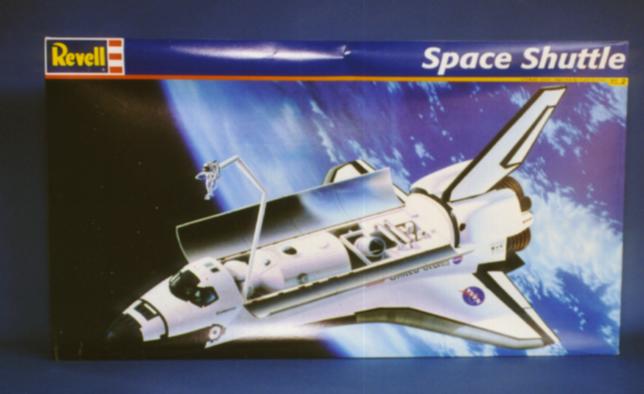
Hmmm. Now it makes sense why that young chinese couple, at my yard sale on saturday, paid $2 for a Revell space shuttle model I built in the eighties.
Excuse me, I have a phone call to make. -
I built one of these myself in the 1970s!
-
comparing an Estes rocket with the Saturn V.
Hey, Estes does make Saturn V model rockets. It was the second or third rocket I built when I was in the model rocketry club in high school.
Falcon -
Nahhh, Centuri! Re:Estes Rockets
Well, I built and flew both brands. But when it comes to cloning ancient out-of-production kits from my childhood, I build Centuri. The designs have a rakish retro charm.
Look at my recreations of an Aero-Dart, and a Hustler. These flew on honking big black-powder F motors that had to be delivered by Railway Express. I was about nine when these went out of production, and never thought I'd get 'em. As it was, I had to turn the balsa parts on a lathe and cut the decals from colored tape. (These flew on modern composite motors.)
StefanJ -
definition of 'model', 'large', 'High Power', etc.I used to be certified to fly "H" motors way before 9/11, and the testing procedures were minimal then.
Over the past few years(6-7ish?) the regs have gotten tighter because even without 9/11 happening
you can have serious accidents if you're not trained, careful and follow safe procedures.
Recently, you needed a LEUP and a class 3 pyrotechnics licence and a BATF approved storage
facility to store more than a certain amount of propellants(I forget how much.) As mentioned before,
it is hard enough to get any decent sized hobby rocket to get off the ground without any problems let
alone have it be guided to an airborne target. The worst a terrorist could do with a hobby rocket is
try to ballistcally drop something on a target and even then, without any guidance there are no guarantees
it'll go where you want it.
Here's a link to the Rocketry FAQ on rocketryonline.com, and a quick paragraph from it:
1.1 What, exactly, is a 'model rocket' versus a 'high power' rocket? Where do liquid fueled and
homemade rocket motors fit in? What about amateur rockets?
'Model', 'high power', 'advanced', and 'amateur' are all terms which have many definitions, depending
to whom you are speaking. In r.m.r., and in the FAQ documents, the definitions (if any) accepted by the NFPA,
National Association of Rocketry, and Tripoli High Power Rocketry Association are used. If these
definitions conflict the NAR definition is used.
'Model rockets' are rockets that conform to the guidelines and restrictions defined in the NFPA 1122 document. These rockets weigh less than 1500 grams, contain less than 125 grams of total fuel, have no motor with more than 62.5 grams of fuel or more than 160 NS of total impulse, use only pre-manufactured, solid propellant motors, and do not use metal body tubes, nose cones or fins. One inconsistancy with this is the CPSC definition of a model rocket motor, which by their definition must contain no more than 80NS total impulse. NFPA document 1127-94 contains the most complete definition of a model rocket and the model rocket safety code. This is the same safety code as adopted by the NAR.
'Large Model Rockets' is a term used in the FAA FAR 101 regulations. It refers to NAR/NFPA model rockets that are between 454 and 1500 grams (1 to 3.3 pounds) total liftoff weight and contain more than 113 grams but less than 125 grams of total fuel.
'High power rockets' are rockets that exceed the total weight, total propellant or single motor total impulse restrictions of model rockets, but otherwise conform to the same guidelines for construction materials and pre-manufactured, commericially made rocket motors. High power rockets also allow the use of metal structural components where such a material is necessary to insure structural integrity of the rocket. High power rockets have no total weight limits, but do have a single motor limit of no more than O power (40,960NS maximum total impulse) and have a total power limitation of 81,920NS total impulse. NFPA document 1127-1985 contains the most complete definition of a high power rocket and also the high power rocketry safety code. This safety code has been adopted by both the NAR and TRA. Metal bodied rockets are allowed by NFPA 1127 where metal is required to insure structural integrity of the rocket over all of its anticipated flight.
'Amateur' rockets covers all other non-professional rockets that do not meet the criteria for model or high power rockets. This includes metal bodied rockets, liquid or hybrid fueled rockets, and rockets with any type of homemade rocket motor.
'Experimental' rockets is an ambiguous term. In the early 1980's it was used (reportedly coined by the magazine 'California Rocketry') to describe rockets that exceeded the model rocket limit at that time (1 pound total liftoff weigh
-
ALCM models would be coolHow about adding a model ALCM on the wing pylons. Shouldn't be hard to rig a remote firing mechanism, which would look pretty realistic coming off the plan in flight.
The weight of 2.6Oz (73g) wouldn't be a big drain on the plane. A small amount of fireproofing to the blast area would help as well.
Another nice variation would be to modify this to look like the EB52 in the Dale Brown novels
-
Re:Not just a Google web search
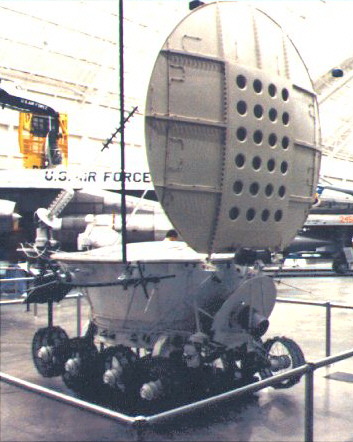
Did anyone else notice "US Air Force" in the background of this one???
http://www.ninfinger.org/~sven/models/sovietsp/lnk hd02.jpg -
Re:Estes RocketActually, Estes used to make a movie camera called the "Cineroc". You can see both of them here.
I always wanted them both, but never had the cash. By the time I had the cash, they were gone
-
NOT Popular Mechanics..... (And Encyclopedia...)
For everyone who can't/won't do a google search themselves.
Manned Orbiting Laboratory (MOL)
www.google.com/search?q =Air+Force+MOL+&num=10&lc=www
www.airspacemag.com/ ASM/Mag/Index/1998/JJ/Contents.html
www.farhills.org/s/lees/space/air force.htm
Dyna Soar
www.google.com/search?q=dynasoar&lc= www
www.google.com/search?q=dyna+soar+%2Bsmithsonian&n um=10&lc=www&btnG=Google+Search BR> www.arnold.af.mil/aedc/systems/60- 933.htm
www.nasm.edu/galle ries/gal114/SpaceRace/sec500/sec540.htm
www.hq.nasa.gov/offi ce/pao/History/Timeline/1961-4.html
Blue Gemini
www.google.com/search?q=Bl ue+Gemini&num=10&lc=www
student.uq.edu.au/~s373901/land
www.hq.nasa.gov/office/ pao/History/SP-4203/ch6-2.htm
LK Lander
www.google.com/search? q=%2BLK+%2BLander&num=10&lc=www
www.interaxs.net/pub/spacey/lk1.htm
www.ninfinger.org/~sven/mode ls/sovietsp/lk.html
Spiral
www.google.com
www.mcs.net/~rusaerog/spiral/spiral
General Spacecraft info
www.rocketry.com/mwade/spaceflt.htm Encyclopedia Astronautica