Slashdot Mirror
Domain: platohistory.org
Stories and comments across the archive that link to platohistory.org.
Stories · 9
-
Deja Vu: Microsoft's 2015 Surface Book Ad and Apple's 2014 'Your Verse' iPad Ad
theodp writes: With its sweeping vistas and narration by the late Robin Williams, Apple's 2014 'Your Verse' ad dramatically showcased the many ways iPads might help people create, from making movies to calibrating wind turbines. So it's interesting that Microsoft's first ad for its new Surface Book (YouTube) bears a striking resemblance to the earlier Apple ad (YouTubeDoubler comparison). Which is probably only fair, since Apple's soon-to-be-released iPad Pro bears more than a passing resemblance to the Microsoft Surface. Hey, good artists copy, great artists steal, right? By the way, between the release of Microsoft's Surface Pro 4, Apple's iPad Pro, and Google's Pixel C, is the keyboard+touch interface poised to be a four-decade "overnight success"? -
Facebook's Solution To 'One of Education's Biggest Problems' Is a Dashboard
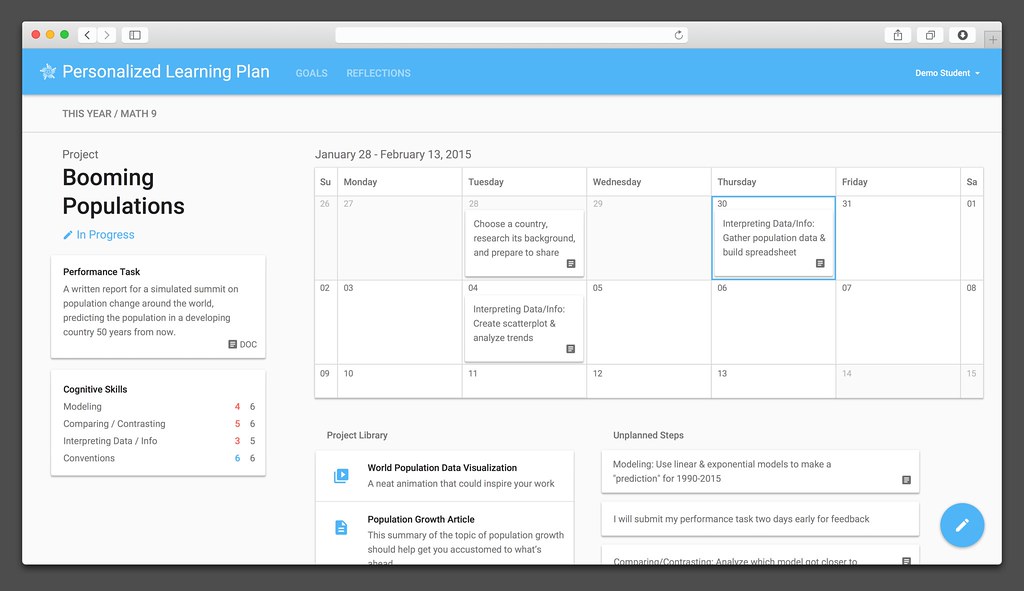
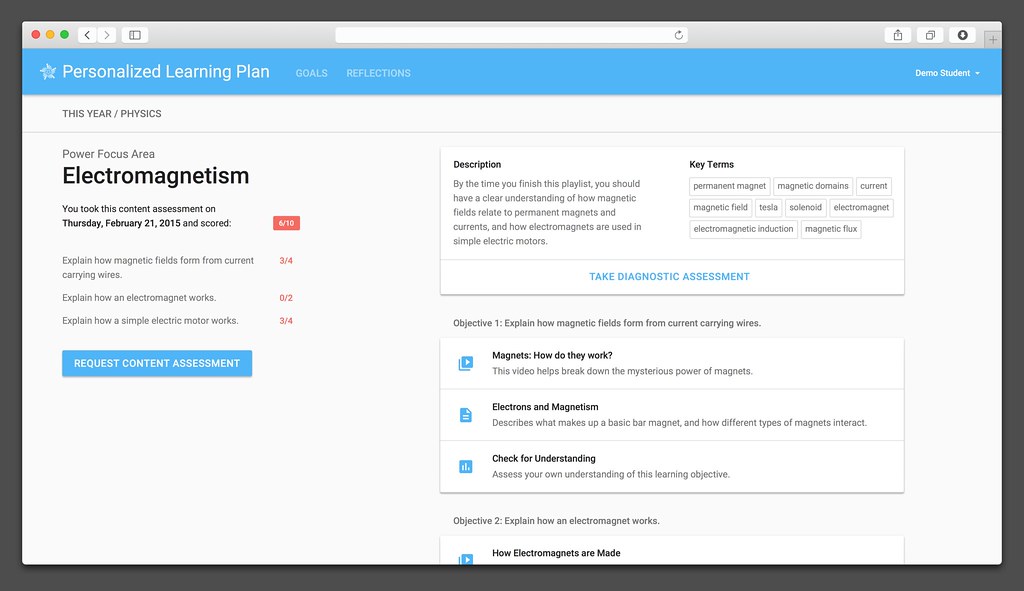
theodp writes: Gushing in July that Facebook engineers had solved one of education's biggest problems, Melinda Gates perhaps set up Segway-like expectations for Facebook's education software. And while The Verge sings the praises of what appears to be progress-tracking dashboards that connect students to mostly free 3rd-party lessons — not unlike Khan Academy or even the 50-year-old PLATO system — it's hard to get jazzed based on the screenshots (1, 2, 3) that Facebook provided in a .zip file accompanying its announcement. The "personalized learning plan" dashboards are a joint effort of Facebook and the Meg Whitman-led and backed Summit charter schools. In a nice circle-of-tech-CEO-education-reform-life twist, the first Summit high school opened in a building in Redwood City after students attending the Bill Gates-touted and backed Silicon Valley High Tech High charter there were evicted to make way, and the Gates Foundation is now spending $8M to bring HP CEO Whitman's Summit charter schools — and presumably Facebook CEO Mark Zuckerberg's personalized learning plans — to Seattle children. -
MOOC Mania
theodp writes "Online education has had a fifty-year road to 'overnight' success. MIT Technology Review calls the emergence of free online education, particularly massive open online courses (MOOCs), The Most Important Education Technology in 200 Years. 'If you were asked to name the most important innovation in transportation over the last 200 years,' writes Antonio Regalado, 'you might say the combustion engine, air travel, Henry Ford's Model-T production line, or even the bicycle. The list goes on. Now answer this one: what's been the single biggest innovation in education? Don't worry if you come up blank. You're supposed to.' Writing about MOOC Mania in the Communications of the ACM, Moshe Y. Vardi worries that 'the enormous buzz about MOOCs is not due to the technology's intrinsic educational value, but due to the seductive possibilities of lower costs.' And in MOOCs Will Eat Academia, Vivek Haldar writes, 'MOOCs will almost certainly hollow out the teaching component of universities as it stands today...But all is not lost, because the other thing universities do is research, and that is arguably as important, if not more, than teaching.' So, are MOOCs the best thing since sliced bread, or merely the second coming of 1920s Postal Course Mania?" -
Apple CEO Likens Surface To Car That Flies, Floats
theodp writes "Conceding that he hadn't actually played with one, Apple CEO Tim Cook told Wall Street that Microsoft's Surface tablet is 'a fairly compromised, confusing product' in the company's 4Q earnings call. Cook joked, 'I supposed you could design a car that flies and floats, but it wouldn't do those things very well.' In Apple's 2Q earnings call, Cook also mocked the idea of touch on a laptop or desktop, quipping, 'You can converge a toaster and a refrigerator, but those things are probably not going be pleasing to the user.' Cook added, 'We've done tons of user testing on this, and it turns out it doesn't work. Touch surfaces don't want to be vertical.' So, is Cook just pulling a page from Steve Jobs' people-don't-read-anymore playbook, or is he unaware that children happily used vertical touch screens forty years ago on UIUC's PLATO System (more PLATO History)?" -
USPTO Gives Google Patent For Doodles
theodp writes "After a 10-year struggle, the USPTO was convinced to issue Google a patent Tuesday for Systems and Methods for Enticing Users to Access a Web Site, aka Google Doodles. Among other things, Google explains that the invention of co-founder Sergey Brin covers modifying a company logo with 'a turkey for Thanksgiving' and 'a leprechaun's pot of gold for Saint Patrick's Day.' To help drive home its point, Google included an illustration showing the USPTO that hearts could be displayed on the Google home page for Valentine's, which would be deja-vu-all-over-again for the 394 lovers who used the UIUC PLATO system on Feb. 14th, 1975." -
Gates' Future of Education Straight Out of '60s
theodp writes "Bill Gates really should have talked more with ex-Microsoft CTO Ray Ozzie. While Khan Academy's new self-paced exercises, coach management options, and game mechanics (merit badges/points) prompted Gates to gush to the high-rollers at Salman Khan's TED Talk that they 'just got a glimpse of the future of education,' Ozzie's seen this movie before, having written similarly-featured PLATO courseware as a student at Illinois. In the '70s. On plasma terminals. With touch screens. Fifty years ago last Friday, 27-year-old EE PhD whiz kid Don Bitzer and partner Peter Braunfeld demonstrated the nascent PLATO system to assembled dignitaries at the 'President's Faculty Conference on Improving Our Educational Aims in the Sixties.' Hey, everything old is new again! Gates is hardly the only tech luminary who don't-know-much-about-PLATO-history — CS Prof Daniel Sleator felt compelled to school the Web's founders on PLATO in '94." -
USPTO Grants Bezos Patent On '60s-Era Chargebacks
theodp writes "Chargebacks on computing resources are certainly nothing new, dating to the '60s. But five decades later, the USPTO has deemed Amazon CEO Jeff Bezos' invention — Dynamic Pricing of Web Services Utilization — worthy of a new patent. From the patent: 'Utilization of a storage resource may be measured in terms of a quantity of data stored (e.g., bytes, megabytes (MB), gigabytes (GB), etc.) per unit of time (e.g., second, day, month, etc.). Similarly, communication bandwidth utilization may be measured in terms of a quantity of data transmitted per unit of time (e.g., megabits per second). Processing resource utilization may be measured as an aggregate number of units of processing effort (e.g., central processing unit (CPU) cycles, transactions, etc.) utilized, or as a rate of processing effort utilization per unit of time (e.g., CPU cycles or transactions per second).' Sound familiar, Greyglers? Another example of why it's not wise to grant software patents when people don't know much about computer history." -
Where Were You When PLATO Was Born?
PLATO, cradle of so many firsts, was born 50 years ago. Next week the Computer History Museum is hosting a two-day conference to celebrate the anniversary. Microsoft's Ray Ozzie, who worked on PLATO as an undergraduate, will be one of the keynote speakers. Co-producer Brian Dear has put together a list of today's technology notables and what they were doing in 1973, the year that social computing suddenly blossomed on PLATO. -
Was This the First Denial of Service Attack?
An anonymous reader writes "Way back in 1974, Dave Dennis, then aged 13, decided to try out the -ext- TUTOR command on the PLATO system at the University of Illinois, and see if he could cause all the terminals of other users to go offline. It worked. And he never got caught. Of course, the powers that be eventually caught on and fixed the -ext- command so terminals by default didn't automatically receive -ext-'s sent from other locations."