Slashdot Mirror
Domain: pocketnow.com
Stories and comments across the archive that link to pocketnow.com.
Stories · 15
-
Eight Of the World's Top 12 Smartphone Vendors Are Based In China (digidip.net)
An anonymous reader writes: How serious and dangerous is China's offensive on Korean and Western mobile hardware brands? Extremely, according to research conducted between January and March by IC Insights, which predictably positioned Samsung and Apple atop the smartphone manufacturer hierarchy, only followed by a flurry of handheld vendors based in the Middle Kingdom. In fact, eight of the ten vendors that followed the two giants are Chinese. These OEMs are, in order of their market capture, Huawei, Oppo, Xiaomi, Vivo, ZTE, Lenovo, TCL, and Meizu. -
Ringing Bells' India-Only Android Phone To Run About $4 (freedom251.com)
An anonymous reader writes: Freedom 251 is the name of a new affordable Android smartphone which is going on sale in India. It features an 4-core 1.3 Ghz Processor, with 1GB RAM and 8GB internal memory, and runs an Android Lollipop 5.1 distribution complete with civilian and government applications for Indian citizens. It is being heavily subsidized to make up for the benefits that it will bring to the people who could never afford a smartphone before. Ars Technica notes that the phone is apparently not carrier-subsidized, but as Pocket Now points out, "[t]he nation's defence minister will be at the launch event, a sign that the government has heavily subsidized the project in line with its developmental prerogatives." -
Why My LG Optimus Cellphone Is Worse Than It's Supposed To Be
Bennett Haselton writes My LG Optimus F3Q was the lowest-end phone in the T-Mobile store, but a cheap phone is supposed to suck in specific ways that make you want to upgrade to a better model. This one is plagued with software bugs that have nothing to do with the cheap hardware, and thus lower one's confidence in the whole product line. Similar to the suckiness of the Stratosphere and Stratosphere 2 that I was subjected to before this one, the phone's shortcomings actually raise more interesting questions — about why the free-market system rewards companies for pulling off miracles at the hardware level, but not for fixing software bugs that should be easy to catch. Read below to see what Bennett has to say.How long would it have taken you to find these bugs, as a beta tester?
-
The phone's auto-correct changes single-quotes to double-quotes in contractions -- for example, when you type you're, the phone auto-corrects it to you"re .
-
When you backspace over part of a word that you've typed and then type the rest of the word, auto-correct corrects based on the letters that you type after you've finished backspacing, rather than the letters in the entire word that you've just completed. For example, if you type couchsurfing and the phone auto-corrects it to concurring, then backspace over all of the letters except the initial co, and then type "uch" followed by a space to form the word "couch", the Optimus changes "uch" to "such" to form "cosuch", because it thinks it's auto-correcting just the "uch" fragment and doesn't see the entire word "couch".
-
Taking a screen capture still doesn't work, just like it didn't work on the Stratosphere 2. There are official directions on how to do it, but you can follow the steps and nothing happens.
-
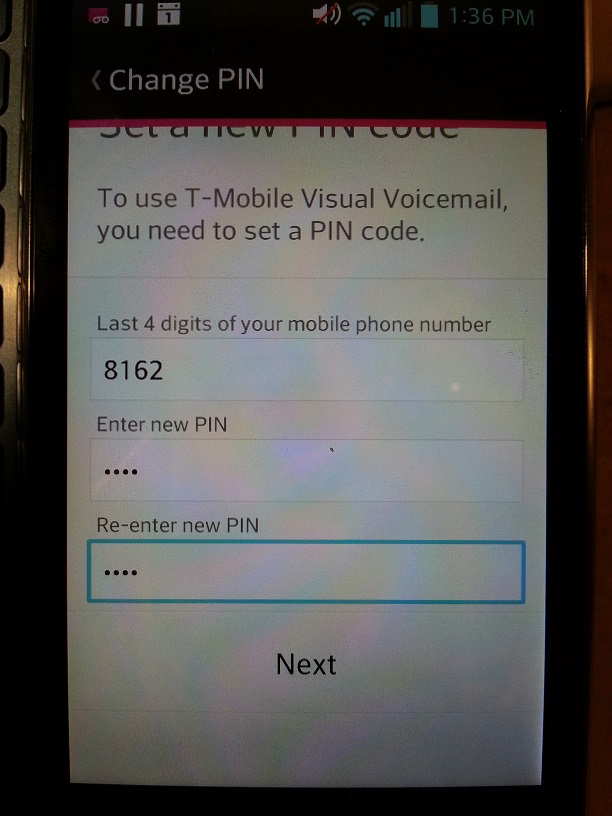
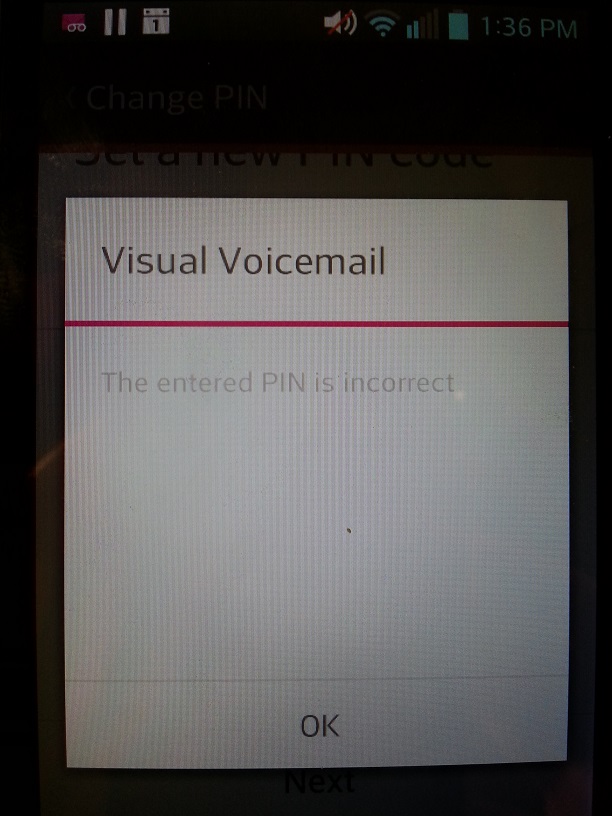
The first time I launched the voice mail application, the app prompted me to freely choose a new PIN code, and then sternly warned me, Mao-like, that my supposedly freely chosen PIN code was "incorrect". (I never got it working, and just called in to the voice mail number manually whenever I wanted to check my messages.)
-
When I bought a movie on Google Play and wanted to "pin" it to the phone -- i.e. download a static, non-streamed copy so that I could watch it offline, e.g. on a plane ride -- the phone didn't have enough internal storage left to save a copy of the movie (1.27 GB, most of it taken up in 1-2 MB increments by crapware already loaded on to the phone, so that only about 200 MB was left). So I tried saving the movie to a 32 GB SD card that I had plugged into the phone, but ran into the problem that Google Play wouldn't let me save the movie to the SD card, a problem described in Joe Levi's 2013 article "Why does Google hate your SD card?" and still not fixed almost a year later. (The comments posted on his article indicate that lots of people are pissed.)
Unlike the other bugs, this may be an example of stupidity not at the testing level but at the design specification level -- perhaps this was done in a misguided effort to prevent illegal copying. But, as Levi says of this theory, "If the DRM being used on Android is sufficient enough for content providers to accept it when media is saved internally, they should also accept it when media is saved to an SD card. Otherwise, the DRM isn't really that trustworthy, is it?" It's pointless from a copy-protection point of view, since anyone who wants to pirate a movie can just download it from various BitTorrent sites anyway; all this "feature" does is alienate people who are trying to pay for a movie legally.
-
In the Messaging (i.e. texting) app, you cannot search for messages by the name of the sender. Your conversations are listed in reverse chronological order by the date of the most recent message in each conversation, but to find a conversation with a particular person, you have to scroll down the entire list of conversations and keep your eyes peeled for the person's name.
- On certain mobile website forms (the Fandango site, for instance, and some others that I don't remember -- it's not clear why this happens on some website forms but not others), the phone won't let me type "special characters", the ones that appear in the upper-right corner of the keyboard keys (so that you can type the "@" symbol by first hitting the "Fn" key to access special characters, and then pressing the "2" key). This means that since I can't type the "@" symbol, I can't log in to any form that requires an email address as a username. (The workaround is to open the Gmail app, find an email address in an email message, copy the "@" symbol from the email address to the clipboard, and then paste it back in the browser form -- yes, I have to do every time I log in to a mobile site that has this problem.)
In my previous phone-suck article about the Samsung Stratosphere, I listed as many problems as I could think of at the time, and I completely forgot the fact that the phone recorded videos without any sound. (I know it wasn't a hardware problem with the microphone, since the phone app picked up my voice fine.) As part of my research into how to ruin Burning Man forever by telling "tourists" how to get there easily, I wanted to post a video of the quintessential Burning Man spectacle that makes all the dust and thirst and heat worthwhile -- and I had to post it with no sound recording, because Samsung's product testing is done by the same drunken bonobos that worked on the LG Optimus.
And both products raise the same question, not rhetorically, but seriously: How did this happen? More specifically, in a theoretical free market, any product improvement that costs only a small amount compared to the benefit it brings to consumers, should be implemented (and consumers will reward the company by paying additional dollars for the improvement, in proportion to the benefit it brings them). While it doesn't always work out that way in practice, it's hard to believe LG couldn't spring for a few English-language testers to point out that the phone shouldn't be correcting you're to you"re.
I think the answer in both cases is that the free market optimizes mainly for things that are easily quantifiable, like camera resolution and network speed, because those can be listed on the packaging and compared against other products. But the amount of stupid s*#t you run into while actually using the phone, is hard to define on an objective scale, so that's the first thing that companies will cut corners on, even if it's something that consumers would be willing to pay money for.
So my solution is still essentially the same as what I proposed after trashing the Stratosphere: Some Consumer-Reports-type outlet should rate phones on a Stupid S*#t Index (along with speed, reception, etc.), based on how much stupid s*#t they run into in a week of typical usage. Ideally the Stupid S*#t Index should be reduced to a number so that you can do a quick comparison between different models. If a cheap phone has a lot of stupid s*#t problems, but you don't mind because you want to save money, that's a valid choice, and if you want to pay more for a phone with less stupid s*#t, that's fine too. But people should know what they're buying.
More generally, I think people vastly overestimate the ability of the free market to meet consumer demand, in cases where the demand is for something that can't be easily quantified. I've spent a fair amount of time in "entrepreneurial" circles (while bouncing back and forth myself between entrepreneurship and regular jobs) and have heard the faithful reciting a lot of platitudes like "The market rewards the best product," or "Focus on building the best product you can make, and the customers will come." But most of them evidently didn't even believe it themselves -- they spent most of their efforts on search engine optimization, running content farms, networking with important business contacts, and other activities that didn't directly relate to the quality of their products. And who could blame them? Since their products weren't competing on qualities that were precisely quantifiable, there was no reason for any of them to try to create the "best" product, or even a particularly good one. And that strategy worked quite well for several of them.
On the other hand, when you're competing on a quantifiable metric like price, the best product or service can shoot straight to the top without wasting any time on zero-sum games like SEO or networking ass-kissery. If you're selling external hard drives on Amazon for $0.01, you'll make a lot of sales. You'll go broke, but in the meantime, the free market will connect you quite effectively with your customers.
So, make the mobile phone Stupid S*@t Index into something quantifiable, and maybe we'll have less stupid s#*t. One review body could publish the average rating from several different reviewers, or several different review bodies could publish their ratings and consumers could weight the averages themselves.
Not that it's a panacea -- I bought the LG Optimus not because it was the cheapest or because I didn't expect it to have bugs, but because it was the only offering with a slide-out keyboard, and I've become addicted to the precision of physical keys. (It is so much easier to let your fingertip feel its way to the right key first, and then actually press the key in a separate motion, rather than having to hope your fingertip lands on the right spot in the first place.) So I never returned the phone, they kept my money, and I suppose that makes me part of the problem.
-
-
Windows Phone 8 Detailed, Uses Windows 8 Kernel
MrSeb writes "Thanks to a leaked video — a video that Microsoft made for Nokia — we now have lots of details about Windows Phone 8 (WP8). From deep Windows 8, Skype, and SkyDrive integration, through to the addition of NFC 'wallet' payments and BitLocker encryption, it sounds like Windows Phone 8 will be close to iOS and Android in terms of features. The interesting stuff is under the hood, though: WP8 will have the Windows 8 kernel instead of the Windows CE kernel of its predecessors. Through the Win 8 kernel, WP8 will support native code and multi-core processors. It will also have the same network stack, security, and multimedia support as Windows 8. While Win 8 apps won't be directly compatible with Windows Phone 8, Windows Phone manager Joe Belfiore says developers will be able to 'reuse — by far — most of their code.'" -
A Car Navigation System That Takes Pictures
Brandon Miniman writes "Navman has brought to market the first in-car navigation system with a built in camera, the iCN 750. The camera lets you take pictures of places you've been. Geographical coordinates are then assigned to each picture, so that you can bring up a gallery, and choose your destination by clicking on a picture." Add to this an always-on, all-sides video camera to document that it was the minivan that strayed into your lane, and it'll be even better. -
A Car Navigation System That Takes Pictures
Brandon Miniman writes "Navman has brought to market the first in-car navigation system with a built in camera, the iCN 750. The camera lets you take pictures of places you've been. Geographical coordinates are then assigned to each picture, so that you can bring up a gallery, and choose your destination by clicking on a picture." Add to this an always-on, all-sides video camera to document that it was the minivan that strayed into your lane, and it'll be even better. -
HP's New iPAQ hx2755 Reviewed
Brandon Miniman submitted a story that discusses the whole iPAQ line of handhelds and specifically looks at the newly released iPAQ hx2755 Pocket PC. This one is unique in that it has a biometric fingerprint reader. -
HP's New iPAQ hx2755 Reviewed
Brandon Miniman submitted a story that discusses the whole iPAQ line of handhelds and specifically looks at the newly released iPAQ hx2755 Pocket PC. This one is unique in that it has a biometric fingerprint reader. -
HP Releases New iPAQs
Mike writes "HP released two new versions of its famed iPAQ line. The iPAQ rz1715 is a smaller unit to replace the 1910, and the iPAQ h6315 is the long awaited phone version that also sports wifi and bluetooth. Full reviews for both the rz1715 and the 6315 can be found at pocketnow.com." There's also a review of of the rz1715 on PDABuyer's as well. -
HP Releases New iPAQs
Mike writes "HP released two new versions of its famed iPAQ line. The iPAQ rz1715 is a smaller unit to replace the 1910, and the iPAQ h6315 is the long awaited phone version that also sports wifi and bluetooth. Full reviews for both the rz1715 and the 6315 can be found at pocketnow.com." There's also a review of of the rz1715 on PDABuyer's as well. -
HP Releases New iPAQs
Mike writes "HP released two new versions of its famed iPAQ line. The iPAQ rz1715 is a smaller unit to replace the 1910, and the iPAQ h6315 is the long awaited phone version that also sports wifi and bluetooth. Full reviews for both the rz1715 and the 6315 can be found at pocketnow.com." There's also a review of of the rz1715 on PDABuyer's as well. -
Fujitsu Announces XScale PDA
Andrew Slough writes: "Fujitsu has announced the world's first PDA based on Intel's XScale architecture, making this the fastest ARM PDA in the world! Stories also at at Infosync and The Register. Pictures at PocketNow." -
Review: The New Casio Pocket PC E-200
msolnik writes: "PocketNow has done an in-depth review of the new Casio Pocket PC E-200. It has a built in compact flash and SD slot. It has a 206mhz strong arm, reflective screen and a replacable rechargeable battery. In my opionion it looks very cool and seems like it could do some damage to the IPAQ's sales. On a side note it should run linux no problem." -
Toshiba Pocket PC e570 Review
msolnik writes: "PocketNow has a review of the new Toshiba Pocket PC e570. With an integrated CompactFlash Type I/II, Secure Digital (SD) slot, a 206Mhz StrongArm, and upto 64MB of ram the Toshiba is going to give the IPAQ a run for its money. Just FYI with some slight modifications the Handhelds.org IPAQ Linux distro should run just fine on the Toshiba." -
PalmOS Emulation On PocketPC
TimeTrav writes "Check out this review of a PalmOS emulator for the PocketPC platform. At this point, it only runs V1 and V2 roms, but work is underway for V3 and V4 rom compatibility. If this works, I may just have to fork over the cash for an iPaq. This has pretty profound implications; its like carrying two handhelds in one, if it works." This helps answer an old Ask Slashdot question as well. Now, will it be able to run Linux on PalmOS on WinCE?