Slashdot Mirror
Domain: rogerebert.com
Stories and comments across the archive that link to rogerebert.com.
Comments · 21
-
Re:Doesn't this depend on rotation?
"Ten days? Have a world-wide "End of the World" party." - Including watching the 1999 Canadian film "Last Night"... Plot: In Toronto, a group of friends and family prepare for the end of the world, expected at midnight as the result of a calamity that is not explained, but which has been expected for several months
Rogert Ebert's review
-
Re:Too Bad
Hey Kubrick! Are you ever gonna get around to writing the second half of Full Metal Jacket?
People tend to rate sex highly, until they try heroine.
Sapolsky's book from last year, Behave, has a lot of material on how our dopaminic system rescales itself to available stimulus. The book is 800 pages long, and every page so far is dense with neuroanatomy. Unbelievably good, but I'm guessing it's not sexconker's preferred Flaming Doctor Pepper bomb shot.
For the record, the first time I read Lord of the Rings (all three volumes, one weekend, age 13) I experienced intense annoyance whenever Tolkien abandoned one narrative line to rejoin some other fellowship splinter group.
By the time I got to Full Metal Jacket I had mostly outgrown this, though it still annoyed me for ten full minutes. Basically, "not now Helga, can't you see I'm still banging your sister?"
Bad, Kubrick, bad.
———
Kubrick rarely hesitates to bend time in the other direction, either.
The litmus test for true Kubrick lovers is Barry Lyndon.
John Hofsess: How I Learned To Stop Worrying And Love 'Barry Lyndon' — 1976
Like many other critics and filmgoers, I have grown so accustomed to films based on literary conventions and familiar structures, that to see a film which stretches one's awareness of what can be achieved in the medium seems prickly and puzzling.
Kubrick's films have a way—at least with some people—of working on in the mind, of passing through all the stages from irritation to exhilaration.
And curiously enough—for critics are supposed to be the most progressive an perceptive of filmgoers—it is the general public in this case, unencumbered by literary prejudices, that has done most of the leading in making 2001 and A Clockwork Orange not just films of immense popularity but of steadily growing stature.
An interview with Michel Ciment — 1982
In the scene that you're referring to, the voice-over works as an ironic counterpoint to what you see portrayed by the actors on the screen. This is only a minor sequence in the story and has to be presented with economy. Barry is tender and romantic with the girl but all he really wants is to get her into bed. The girl is lonely and Barry is attractive and attentive.
If you think about it, it isn't likely that he is the only soldier she has brought home while her husband has been away to the wars. You could have had Barry give signals to the audience, through his performance, indicating that he is really insincere and opportunistic, but this would be unreal. When we try to deceive we are as convincing as we can be, aren't we?
No wink. Blink and you miss it.
———
At this point, I also want to give a shout out to another very long film, La Belle Noiseuse (1991), with the 237-minute run time.
The film holds an approval rating of 100% on review aggregator site Rotten Tomatoes.
How does such a stupidly long movie earn a 100% approval rating? Not a single Michael Bay fan attended this movie by accident. French title, and not a single showing with a start time after 18:30.
She understands, puts it on, disrobes in front of him, and will be entirely nude for at least at hour in this film. Yes, at first we observe Emmanuelle Beart as a woman. Then we see her as a model. Slowly we come to see her as Frenhofer wants to: The woman inside, the essence, the being
-
_this_ is what needs to be explained
If you already have a copy, and then download a copy in another form, it is CONSTRUCTIVELY a format shift. It might take a good lawyer to make that stick, of course.
Life in the 100% non-constructive world is so impractical as to be almost unbearable, so we are all effectively quasi-criminals most the time, which doesn't matter until it does, and when that day comes, unfortunately, the system is rigged so that some of us can afford better justice than others.
There, I just saved you at least ten fairy tales (though you might not thank me for replacing the figurative wolves with real wolves).
Roger Ebert — 2009
Like the hero of "Willy Wonka and the Chocolate Factory," also based on one of his books, the creatures of Dahl's valley seem to know more than they're letting on; perhaps even secrets we don't much want to know.
Children, especially, will find things they don't understand, and things that scare them. Excellent. A good story for children should suggest a hidden dimension, and that dimension of course is the lifetime still ahead of them.
There's a few more lines on this theme in the original that I was too frightened to quote.
-
I'm feeling the shaft vibrations
The very first hard drive, the IBM 350 RAMAC, had fifty 24-inch platters. If we went back to that form factor, with this new technology you could pack over 130,000 TB into a single drive!
Sigh.
When you're trying to recover a spinning-rust ZFS volume, what you really care about is independent head-servos per terabyte, if you want your mean-time-to-recover to be a smaller number than your mean-time-to-cascading-failure.
Sure, you could build a viable ZFS storage system using multi-petabyte hard drives, so long as you can perform a complete drive read (semi-sequential) in under 24 hours (for a 24 PB drive, that works out to a sustained per-drive semi-sequential bandwidth of 280 GB/s).
And then you'd need a really stiff platter axle, and fluid dynamic bearings able to support a 5 kg platter assembly, spinning extremely fast, with no wobble whatsoever, unmaintained, for years and years.
On top of reports that Singleton and Jackson had many disagreements on the set, there were stories that neither of them much liked the Price screenplay, maybe because it nailed the small moments but missed the broader Shaftian strokes. (source)
-
so we meet again
Note: I wrote this without having noticed that Richard Brody was mentioned in the story submission.
For me nearly every movie with a very bad rotten tomato score (below 30%) is not worth going to the theater.
Here's my personal calibration of Tomatoes:
_5 95-100___superb
_4 90-95____great
_3 85-90____good
_2 80-85____weak
_1 60-80____meh
_0 30-60____double meh
-1 _0-30____barrel bottom
If I had to engage in a Netflix-style 1-5 rating system (triple meh), then these would be my assigned numerical scores.
Since I agree with Tomatoes about half the time, I would lump 50% of all movies with a score less than 80 on Tomatoes into my "1" bucket , which would encompass everything from beyond terrible to pleasant (but shallow) time wasters.
I have a list of 600 movies I've previously seen, and close to another 400 on deck. Around 75% of my combined lists would score 3 or better on the system above.
I know there are plenty of worthwhile movies (to my own taste) scored by Tomatoes between 40 and 70 percent. The problem is that the filtering gets way harder, and I've got no shortage of options on deck less shrouded in doubt.
Here's a piece of criticism I read recently which I thought was first rate:
The Astonishing Power of "The Master" by Richard BrodyAnd here's Brody elevating himself to such a high register, I can barely follow his argument:
"Frances Ha" and the Pursuit of HappinessThese are both movies I've watched recently, movies that don't settle into the mind easily, which is more likely to send me scurrying back to Tomatoes to plum various reviews than when I picked the movie in the first place.
Last night we finished The Reader, yet another movie packed with WFT? moments, though in The Reader these "moments" sometimes stretched into dreary 15-minute long siestas. I can usually tell what I really think by whether I read all the green splats or all the red tomatoes first (confirmation bias as dowsing rod FTW). For The Reader I read the splats first. Case closed.
Here's the very last review I read before landing upon this thread:
Roger Ebert on The FountainSo after looking at the film, I checked out IMDb's "external reviews" section and discovered that, good lord, 221 reviews had been written on "The Fountain." On other sites I discovered that its Metacritic rating was 51 (out of 100) and it scored exactly the same on the Tomatometer.
Can a typical aud member be expected to do the heavy parsing that would figure all this out? I doubt it. Most movies, you like to have them all parsed before you buy the ticket. Did I have it figured out? It didn't take me long, and here was my thinking
That said, I will concede the film is not a great success. Too many screens of blinding lights. Too many transitions for their own sake. Abrupt changes of tone.And yet I believe we have not seen the real film. When a $75 million production goes into turnaround and is made for $35 million, elements get eliminated. When a film telling three stories and spanning thousands of years has a running time of 96 minutes, scenes must have been cut out. There will someday be a Director's Cut of this movie, and that's the cut I want to see.
So, the gutted carcass of what might have been a challenging, engrossing film, which—for someone who is not a professional critic—probably requires one pass for all the complex parsing, and then another pass to imagine the movie it was really trying to be. That's a big investment. A
-
Photos can never replace a shared experience.
One thing that only people who've seen totality can understand is that almost seeing a total eclipse (99.x%) is so different from a total eclipse, they should come up with another name for it. For example the difference in ambient light between 99% and 100% is a factor of 10,000. Even 1 minute before totality you'd be tempted to say, "Meh. I've seen this before." Then you hit 100% and scream "Holy #)@* God tore the sun from the sky and replaced it with a portal to another dimension!"
So this is why my wife's trip to Minot with the UW-Green Bay astronomers on Feb 26, 1979 led to her convincing me to go to Antigua on Feb 26, 1998 (1 Saros later) where I asked her to marry me during the second diamond ring while the Montserrat volcano smoldered in the half-light. We planned our honeymoon around the 1999 total eclipse which passed through Europe (rained out in Stuttgart.) And finally planned to take our children and 21 other family members and friends from Wisconsin to the Kentucky Dam Village campground near Paducah. We scouted out the beach, dam, boat launch and considered the Golden Pond Observatory and Planetarium or one of the several other public viewings between Hopkinsville and Carbondale but decided on walking to a clearing at the south edge of the campground where oak trees would provide shade in the time between first contact and totality. We set up a few tarps in the grass (thankfully fire-ants have not yet gotten a solid foothold here but ticks have.) We set up a sun tent for the kids.
My brother-in-law is a professional photographer who brought a Sony DSLR, lens and filter and we found even better equipped astrophotographers within the park and along the dam so even though this was my 4th totality, I didn't feel any pressure to take photos. We considered flying a drone, but we were too near an airport. I considered leaving a CHDK interval timer script, android FP5Cam intervalometer and Wemos D1 mini temperature logger running but these weren't as much of a priority as enjoying it as much as I did the previous 3 totalities. There is only so much you can do in 2 minutes and 20 odd seconds.
The leaves of the oaks cast crescent shadows across the tent and everyone during the partial phases. I'd bought a pack of used cards from the Menominee casino where they had neatly cut holes to mark that the cards were no longer legal for gambling. 52 eclipse projectors for 50 cents! I handed them out to our gang and to our campground neighbors. Totality hit everyone with a wave of wonder. The hot whirring sound of cicadas was replaced with the nocturnal chirp of crickets. My niece's boyfriend asked to look through the telescope during totality. At first I explained that it's too hard to aim (I had no tracker) but then I decided to give it a try so he and I and my niece got a brief glance. I handed binoculars around to a few people.
One of the artists in our group compared it to a weird photoshop filter, a sci-fi movie. "WOW No one told me!" It reminded me of the scene in Contact where Ellie sees something indescribably beautiful that no one else will ever know. This was the most photographed total eclipse in history, drones, DSLRs, iPhones, 4k 60FPS video, VR... and yet I have not found anything that does it justice.
Imagine if sunsets were rare events that only one in every 1000 people had ever witnessed. Describing it would be like explaining the color green to a blind person. Photos of sunsets work for us because nearly everyone has witnessed a sunset but very few have witnessed totality. Ray Bradbury's All summer in a day was published in 1954, just three months before a total solar eclipse would have been visible from Northern Wisconsin, a few hours drive from his native Waukegan, Illinois. Like Ellie in Contact, Margo in this short story has witness
-
Re:The Hateful Eight
CinemaScope and other widescreen formats were designed for the viewers to see panoramic scenes like mountains and wide open country. True quality color was another obvious improvement, along with stereo sound. 70mm film has the advantage of having a higher dynamic range, resolution and colour gamut that the digital systems.
Films that used 70mm in the past include: “Star Wars” trilogy, ”Tron” (1982) and “Who Framed Roger Rabbit” [1988]) but during that period, it was employed on such classics as “White Christmas” (1954), “The Ten Commandments” (1956) and “One-Eyed Jacks” (1961).
"One director who made especially good use of it was Alfred Hitchcock, who utilized the process on “To Catch a Thief” (1955), “The Trouble with Harry” (1955), “The Man Who Knew Too Much” (1956), “Vertigo” (1958) and “North by Northwest” (1959). Of those films, “Vertigo” remains his most impressive use of the format for how it allowed him to use color as a way of further evoking the emotional and psychological journey that he put both his characters and his audience through. Throughout the film, he uses specific colors to underscore certain moods—from the blue for James Stewart’s guilt over the death in the opening scene that he feels responsible for, to the green that comes to represent Kim Novak, the focus of the eventual obsession that threatens to destroy him, to the bright reds that turn up from time to time to serve as unheeded warnings. The deep and rich depictions of these colors made possible by VistaVision are both gorgeous and terrifying to behold."
-
Re:Very little fault of Rotten TomatoesWhat critics trashed the original Star Wars? Roger Ebert gave it a rave review. http://www.rogerebert.com/revi...
Most of other majors critics did too: http://www.businessinsider.com...
-
Re:Shoot the Messenger
The thing is, they are trying really hard to emulate Roger Ebert's classic "North" review, and falling far, far, short: http://www.rogerebert.com/revi...
-
from the horse's mouth, the words of an ass
This is the first time since the beginning of time that I've come back to a thread a second time, more than a day later.
And, so far as I'm concerned, Star Trek Continues is the true heir of TOS. Excellent scripts, better acting than you'll find in the reboots. They just work so damned well, and it's unfortunate it looks like that kind of project is dead in the water now.
STC was the only one I've become invested in, and it's the main reason I'm burned up about the new "guidelines".
On this week's episode of Engage: The Official Star Trek Podcast, Jordan Hoffman welcomes John Van Citters of CBS, a lifelong Star Trek fan, to give some much needed context on the recently released Star Trek fan film guidelines issued by CBS and Paramount Pictures.
Unfortunately, this is an in-house affair, with both the host and the guest hewing to the official CBS / Paramount story line. Van Citters seems like a nice enough guy, but then the length restriction comes up, and I wanted to put a brick through my monitor.
48m40
I've heard from a lot of people and seen a lot of chatter online in recent days about the length guideline and people feeling that that is untenable and that they can't tell a Star Trek story in fifteen minutes or thirty minutes.
I think that's a bit insulting to Star Trek and to the creativity of the fans I've met and to some of the fan filmmakers I've met.
The idea that Star Trek is capable of only telling one type or length of story that that is kind of ludicrous. There are dozens of winners of the Strange New Worlds competition who would disagree
Certainly, a creative person can compose shorter works. For example, Tolstoy composed a novella by the title (in English) The Death of Ivan Ilyich. This was later adapted by Akira Kurosawa as the movie Ikiru, with a a running time of 143 minutes. Oops, perhaps that was a bad example.
Let's try again.
Nobody ever accused Mozart of not being able to compose a Divertimento. Turns out he actually composed 17 numbered Divertimenti, but the performance times seem to range around the hour mark for the ones with their own Wikipedia pages. Oops, perhaps that's another bad example.
I could go on, but I think that's enough.
What made the original Star Trek captivating for me back when I was ten years old was that the stories involved having an actual attention span. No fanfic production will recapture my childhood with a crappy fifteen minute performance length.
I saw "Ikiru" first in 1960 or 1961. I went to the movie because it was playing in a campus film series and only cost a quarter. I sat enveloped in the story of Watanabe for 2 1/2 hours, and wrote about it in a class where the essay topic was Socrates' statement, "the unexamined life is not worth living."' Over the years I have seen "Ikiru" every five years or so, and each time it has moved me, and made me think. And the older I get, the less Watanabe seems like a pathetic old man, and the more he seems like every one of us.
Did Kurosawa make it too long? You be the judge. I personally don't think you're going to pack a whole lot of "examined life" into fifteen minutes unless you're fricking Tolstoy.
I'm trying to figure out why that entire interview pussyfoots around the subject matter (I could only handle the first 50 minutes on my first pass). I started to wonder if the real problem with STC is that damn redhead, Elise McKennah, played by Michele Specht. At first I didn't like the character (or character idea), but her spunk eventually grew on me.
The thing
-
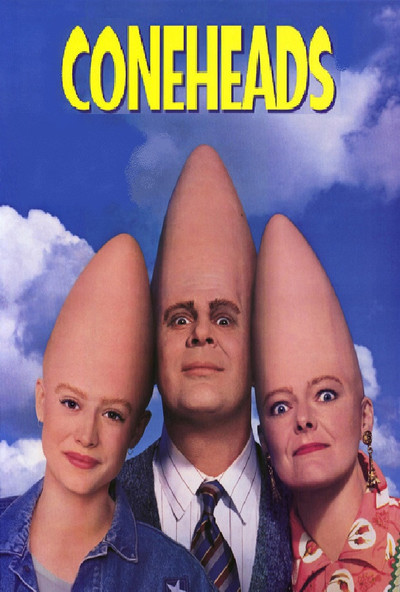
Re: "Pinheads"
Pinheads? They found this clan:
-
Re: Opportunity
That's like revenge porn without revenge or porn.
Well the revange happenes because whoever inadvertently watch it will likely hold a deep grudge.
For a good review, Roger Ebert does an excellent hatchet job:
-
Re:Highlander 2
-
Re:Same reason blu-ray didn't take off
let's focus on improving 3D technology
You can't. 3D doesn't work and it never will
-
Dredge it up, bottle it, sell it
-
Ebert Essay
Roger Ebert wrote a poignant essay on this topic about a year before his own death. In the essay, he explores just what information about someone means, divorced from actually knowing that person. Check it out; it's a keeper. Merry Christmas.
-
Re:Unless, of course, you study the author...
This is pretty much what I was going to post. This whole "critique of the military-industrial complex" view fails to take into account that the bugs were an actual threat to earth.
Also, the whole "misunderstood masterpiece" bit is absurd. What little satire exists was recognized by the most famous movie critic of all time:
Were they, though? The whole movie, from the very first frame is essentially an in-universe propaganda movie from the universe it is depicting, this is made obvious by the fact that it starts with a recruitment advertisement.
Who is to say that they are really a threat? It is very subtly hinted half-way through the movie that the humans were in fact the first aggressors in the conflict. In addition, due to the heavy nazi symbolism, it could be assumed that society depicted in the film are extremely expansionist.
Consider that the attack involved an asteroid that seemed to travel faster than the speed of light and contrast that to the technological ability of the bugs. Who is to say that the asteroid attack wasn't just a random event that the government spun into a "bug attack" in order to rally troops and increase public support and morale?
It's a critique of fascism, propaganda, the military and war. Perhaps you were quick to believe that Iraq was directly responsible for 9/11 too, after all the government and media seemed so quick to make that the narrative as well despite a shocking lack of evidence to support it.
-
Re:Unless, of course, you study the author...
This is pretty much what I was going to post. This whole "critique of the military-industrial complex" view fails to take into account that the bugs were an actual threat to earth.
Also, the whole "misunderstood masterpiece" bit is absurd. What little satire exists was recognized by the most famous movie critic of all time:
It doesn't really matter, since the Bugs aren't important except as props for the interminable action scenes, and as an enemy to justify the film's quasi-fascist militarism. Heinlein was of course a right-wing saberrattler, but a charming and intelligent one who wrote some of the best science fiction ever. "Starship Troopers'' proposes a society in which citizenship is earned through military service, and values are learned on the battlefield.
Heinlein intended his story for young boys, but wrote it more or less seriously. The one redeeming merit for director Paul Verhoeven's film is that by remaining faithful to Heinlein's material and period, it adds an element of sly satire. This is like the squarest but most technically advanced sci-fi movie of the 1950s, a film in which the sets and costumes look like a cross between Buck Rogers and the Archie comic books, and the characters look like they stepped out of Pepsodent ads.
Ebert still gave the film a paltry 2 out of 4 stars. Whether the director was trying to satirize Heinlein or not, it was still a pretty shabby movie.
-
Re:We already have reviewers
They did review animes other than Studio Ghibli. I specifically remember their review of the anime Metropolis. (Not to be confused with the 1920s sci-fi film of the same name.)
Your confusion is simply this: They reviewed (most) films that had a theatrical release in Chicago. That was the original purpose of the show. The reason they didn't review your favorite anime movies is because your favorite anime movies didn't have a theatrical release in Chicago. That's all. There's no conspiracy.
-
Video games can never be art.
It's kind of ironic Ebert was mentioned when it comes to software reviews. What Siskel and Ebert did for decades was give their opinion on works of art created in the film medium. Of course they would take into consideration the technical achievements of the film (cinematography, timing, etc), but even if a film was implemented perfectly, they would still give it a bad review if it wasn't entertaining or worthy artistically as a whole. Obviously the whole thing is quite subjective.
Ebert famously stated that "Video games can never be art", and although many disagree with him on that, he does make a point why a "Siskel and Ebert" kind of reviewing doesn't really work when it comes to software. By what criteria is software to be evaluated? Certainly the artistic side (and do utilities and the like even have an artistic side, especially if they're using the platform's standard widgets and GUI elements?) can't be a major factor, unless we're talking about games. Obviously then that depends on what you even mean by "software". Are you talking about applications? Apps designed to streamline access to a web-based service (Facebook, Twitter, etc)? Games?
For example, when evaluating the official Facebook app, do you simply compare how well it works and many features it contains compared to the web version, or do you also get into issues about Facebook more generically (like privacy, etc). Do you get into details like how many user interactions are required to accomplish certain tasks, start up times, and other technical aspects that can be objectively and directly measured?
Another problem is just pure volume. How many applications are produced in a year compared to films? So how do you decide what applications to go to the trouble of reviewing? Stick to the top 100 lists by popularity? Obviously that method would suck in a number of ways. It is easily in the realm of human possibility to watch all feature-length movies that will be shown at the average movie theater, but when it comes to apps, it's simply impossible to even try them all.
When it comes to software found in app stores, it seems to me that the simple 5 star reviews by users is working pretty well. Apps quickly accumulate 1 star reviews if they are greedy (very little free content, or it costs a fortune to unlock things individually when it they should just sell the app outright, etc), buggy (people will quickly butcher an app if it is unstable), are just simply crap. Of course the 5 star reviews can be manipulated by shills, but that can't erase the 1 star reviews. That's why it is very helpful when app stores show individual counts (how many 5 star reviews, 4 star, etc). If you see a lot of 1 star reviews and the app still has a 4+ on average, then that is a warning flag and a quick perusal of individual reviews will reveal what's going on.
-
Ebert already rated software
He declared games to be even more creatively bankrupt than movies, and came up with the Boulder Pledge. ("Under no circumstances will I ever purchase anything offered to me as the result of an unsolicited e-mail message. Nor will I forward chainletters, petitions, mass mailings, or virus warnings to large numbers of others. This is my contribution to the survival of the online community.")
The really funny thing to me is that computer games are pretty much the only sector of software with something even approaching a regular review/rating system, and they have long acknowledged that their "Roger Ebert" is either not writing reviews or hasn't been born yet. For other software you have to rely on advertisements disguised as reviews in PCMag et al.