Slashdot Mirror
Domain: sco.com
Stories and comments across the archive that link to sco.com.
Comments · 1,936
-
Re:reports of SCO's demise...
The only article I can find in their press releases that's close is their announcement to split into three companies dealing with "e-Business servers, Tarantella and Internet professional services."
-
Interesting StuffThese are some books that I found relevent. I didn't include anythin specifically about asm, since the question seemed to ask about OS design more than the language.
The FreeDOS Kernel is a book about the way the GNU FreeDOS Kernel is designed.
Of course, you can just skip the book and look at code. You can get a free Unix source license for some older stuff at SCO (not x86) or just download a Linux kernel (for the x86)
One of my favourite books about OS design: Inside the IBM PC, by Peter Norton. It's been through many, many editions, and some of the older ones are very detailed about the inner workings of DOS.
Just in general, look at used book stores or the library. You can find some very interesting old books. I seem to remember an old book put out by MS Press, Inside OS/2 or some such, that was pretty good.
-
SCO needs to Ante-up
Great, yet another distro that tosses out a barebones version so they can claim to be a Linux company, then sell the real thing with all their proprietary crap. How about a goodwill gesture, change the license to ancient versions of Unix to the GPL. Open up the ancient Unix Archive.
-
The oldies are the best
I blew my chance to moderate this topic with this post, but who cares...
There is the classic comment in the Unix V6 process switching code: "You are not expected to understand this".
Sometimes the oldies are the best.
You can get your very own copy of old Unix sources from SCO at their Ancient Unix Page. Yeah, it's a click-thru license. But let's not go there now. -
Re:While it is nice to see articles touting FreeBS
After a while they do become boring... but apparently they're needed to "sell the product" to the upper management. Whatever. I couldn't care less about things as "user base" and such. (My chosen BSD) works for me.
Now for some real news:
Did you know that you can now get access (source license) to different BSD-versions from 1BSD via 2.xBSD, 3BSD and upto 4.3BSD-Reno ?? Yes,siree!
A click through license available a here.. PUPS archives contain a lot of other material too...
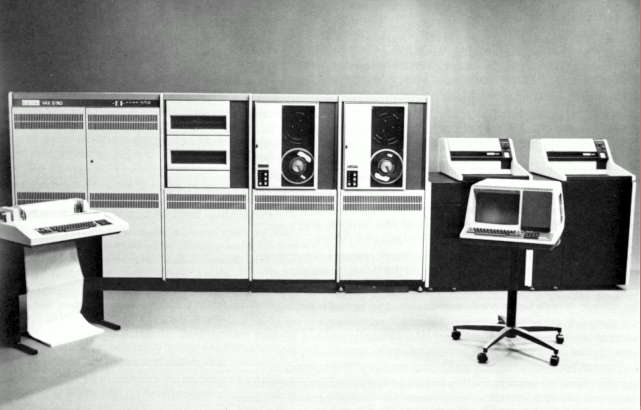
Now just dig out that VAX 11/780 from the closet and start hacking! -
Re:[Possibly OT] SCO Ancient Unix status?
It's been there for a while. I'm just browsing through 4.3BSD-Reno source. Link here.
-
Re:Do you smell what Marketing is cooking?
When you read McCrabb's comments in the context of SCO's statements in their 10K they make sense. SCO (1) sells server operating systems (2) focuses on Intel processors (3) owns the UNIX IP from AT&T (4) supports open standards such as I20, XPG-4, Spec 1170, DCE and OSF/Motif(R) POSIX(R), FIPS and Internet standards, and (5) talks about "leveraging the open source and Linux opportunity." (The "Leveraging" discussion is in SCO's 1999 annual report page 11, available in PDF on SCO's Web site.) Their basic business model is to sell proprietary based server solutions to companies who are big enough to pay the freight. Their 10K says "SCO's mission is to create, market, and support the server software that system builders choose for networked business computing." To the extent that SCO can guide Linux in a direction that favors SCO and hurts NT they will be right in there pitching. Don't count on them doing anything that will make Linux a substitute for SCO products rather than a complement. SCO also has a page on Linux which I read to say "we can help you install Linux instead of Windows and then talk to an SCO based server." SCO is not a big company. They had worldwide sales of $223 million in FY1999 and competes with UNIX/RISC server software on one hand and NT/Intel software on the other. They have an installed base and a set of third party ISPs that they are totally dependent on. I expect they see SGI's example as exactly what not to do.
-
It looks like unix is OK but UNIX is not
The Open Group's Trademark Usage Guide seems to only consider UNIX written in all caps as the trademark. So perhaps as long as it is written as either unix, or Unix, or unix.com there is no infringement.
Also, I know some cybersqauters have been allowed to register trademarks that include the
Finally, SCO has trademarks on several terms with Unix (using an initial capital U) such as UnixWare, which may also indicate that the consistent use of unix.com wouldn't violate the Open Group's trademark.
-
Re:cscope vs etags
-
Re:releasing "historically preserved UNIX"?For those who missed SCO's ancient license annoucement last year (4-29-1999), here's
the link.Slashdot may also mention the annoucement in its archive.
-
Monterey using UDI drivers...
I was told by someone at SCO that Monterey would have UDI as its sole API for drivers, but after a little searching, I found a reference on SCO's website about it -- "UDI device driver model" is listed under "Common Enabling Technologies".
-
Uniform Driver Interface
Project UDI (Uniform Driver Interface) is approaching this write-once, run-anywhere driver implementation idea in a fairly comprehensive manner.
While it's not ready yet, the architecture is impressively clean and powerful. The same UDI driver code could potentially run (with only a recompile, no code changes) on a Windows system (e.g. Win95 or NT), a Unix system (e.g. Solaris or Linux), a small multitasking system without VM (e.g. Amiga), a small singletasking system (e.g. MS-DOS), or an intelligent I/O processor (e.g. I2O)... Each of these systems would need appropriate implementations of the UDI environment, but could run the same drivers. UDI drivers are written with very few assumptions about multitasking, memory protection, etc. You could even protect the OS from buggy drivers! (At a performance cost.)
As a case in point, SCO's next-generation Monterey operating system is slated to use UDI as its sole driver API... -
SCO solves some problems very well...
It just goes to show that people who post replies here don't know dick about operating systems. I was a engineering consultant and software engineer for 3 years at SCO, so I think I can say I know a bit about the company. Well, here's the big surprise: some of their stuff sucks, and some of it works really well.
That isn't a surprise to anyone who really knows about the computer industry - companies all have problems. SCO's marketing is horrible - they can't sell their way out of a paper bag. Yet, people keep buying it. You know why? Because SCO OpenServer 5.x is one of the most stable and reliable Intel OS platforms you can buy. It just works, and it works forever.
Course, it's not the fastest, or the slickest, or the coolest. You really think the business world cares about all the nifty little features in Linux? They don't - they care about the bottom line. When you need stability, SCO can deliver.
So maybe you're thinking I'm some sort of SCO evangelizer? No. I don't use SCO products at all now that I've left the company. I use Linux and FreeBSD. Since I'm not running a bank, I am willing to sacrifice some reliability for all the cool little features you get with these OSes. Plus, FreeBSD is at least as stable as SCO OpenServer.
Finally, let me note that you can run all the Open Source goodies on SCO platforms. I was one of the developers who worked very hard to make that happen. Check out SCO Skunkware for the details.
-
Re:SCO Certification
Check out here. You have to be registered as a reseller with them, but that was pretty simple. They send you free course material, logos, marketing stuff, and when you "certify", you get a free copy of everything. They have a "free UNIX" promotion, but it's a limited license. What I got was a full-blown demo package containing a license for every piece of Open Server software.
-
SCO Certification
I'm surprised no one has commented on the SCO certification. I'm SCO Open Server Certified. I took a 50-question multiple-choice test on their web site, for FREE, and they sent me a bunch of marketing stuff and one free copy of everything they sell. Do I KNOW anything about Open Server? Yeah, some. But I know Linux a LOT better. I can't get Linux certified though because I just can't justify the cost until I have some paying customers using it.
-
Re:unofficial news
No, HP has nothing to do with Project Monterey. HP has been working with Intel on the design of Merced processor and has been doing a lot of work on the next 64-bit processor, McKinley. HP is working on a 64-bit HP-UX for Merced. More info about Monterey can be found here. More info on Intel and HP partnership here
-
Tarantella for Linux?
I think a Linux port of Tarantella is likely. Have a look at this page which says SCO will "introduce a portfolio of server products for the Linux market." at LinuxWorld Expo.
Following this link on the above page mentions Tarantella for Linux.
Interesting, they say "SCO has been working on Linux and Open Source initiatives for more than two years," but weren't they talking about how crappy Linux was not 6 months ago(as someone else pointed out)? -
Tarantella for Linux?
I think a Linux port of Tarantella is likely. Have a look at this page which says SCO will "introduce a portfolio of server products for the Linux market." at LinuxWorld Expo.
Following this link on the above page mentions Tarantella for Linux.
Interesting, they say "SCO has been working on Linux and Open Source initiatives for more than two years," but weren't they talking about how crappy Linux was not 6 months ago(as someone else pointed out)? -
Death to marketroidsThis is from their faq
What is Tarantella Enterprise II?
Tarantella Enterprise II is the flagship Tarantella product providing enterprise class features for customers demanding an extensible, scaleable solution. Tarantella Enterprise II servers can be configured as a centrally managed array, supporting thousands of users. They can also connect to hundreds of application servers providing the reliablility, availability and scaleability needed for enterprises.
What is Tarantella software? Is it middleware?
In a way it is middleware, but that term does not truly describe the full capabilities of the Tarantella product ("Tarantella"). Tarantella is middleware in that it sits between your appliation servers and client devices. But unlike most traditional middleware, Tarantella allows you to deploy existing server based applications, as well as new ones, over the network, via a web interface, without the need to rewrite anything.
Well, I'm glad we got that cleared up!
Ok, so it gets slightly more informative, but apparently the most important thing about the product is that it's fully buzzword compliant. -
Re:unofficial newsAccording to SCO's web site here, there appears to already be support for Tarantella on Linux. It seems to me they just did a "s/UnixWare 7/Linux/g"
I have the unfortunate luck to actually have to admin some OpenServer boxen. Yuck. I can't speak for UnixWare, since it won't install on my test machine at the office, but I hear it really isn't bad (of course, SCO didn't write it, they bought it from Novell...)
I hope to get a reseller/developer freebie of Tarantella for Linux to play with, now that I know this is for real.
-
Tarantella info
-
Possible ScenarioMy guess is that when the WebTV prototype didn't arrive as expected, someone in Redmond placed a call to UPS. UPS probably told them that the unit had already been delivered. After a Seinfeld-ish exchange of "It's been delivered / No it hasn't," UPS gave them the delivery address ("See, I told you we delivered it..."). This address isn't M$ headquarters in Redmond, but some place in NYC.
I can already see some manager wondering who got their hands on it -- a competitor? 2600 or LoD -- aren't they based in the east coast, possibly New York? Then thoughts shift to what this will do when management hears about this: have we just committed a "career-limiting act"?
There's probably always been a kind of siege mentality at Microsoft. I'm sure that this has only intensified with the recent finding of fact by Judge Jackson, BackOrifice 2000, the spotlight that Linux took from Windows and all the general ill will towards the company. Couple that with the human tendency to assume that something that's gone missing has been stolen (especially if that something is valuable), and you have a recipe for paranoia. Except that paranoia is the mistaken impression that people are out to get you.
In the end, they assumed theft-by-scam, for which it would have been justified to call the cops. Since it wasn't the case, it's yet more egg on Microsoft's face, and you can allow yourself a little schadenfreude and know that somewhere inside 1 Microsoft Way, someone is getting the riot act read to them.
-
Getting the One True UNIX (or something close)
(What I'd like to know is...where can I get the One True Unix all these variants are varying from?)
Here. (Go for "UNIX V7"; the APIs most modern UNIX systems share with older UNIXes largely look like those of V7, with additions, rather than V6 and the V6-ish PWB/UNIX 1.0; you might want to get PWB to get some of the stuff in the System N releases as well.)I suppose System V Release 2 or so could also be thought of as the UNIX most commercial UNIXes these days derive from, either directly or indirectly, although SVR2's APIs, as noted, largely resemble a superset of V7, with some PWBisms, and some other additions, e.g. shared memory, and some changes, e.g. a different TTY driver "ioctl" interface.
SCO's only charging USD 100 for the license, it appears - and they also may "waive the license fee for a limited number of deserving applicants", where they suggest that "deserving" may include " student, unemployed, disabled, financially challenged, etc."
The sources are, of course, to PDP-11 UNIXes, so to actually run them you'd need a PDP-11, or a PDP-11 simulator.
-
UDI Basics (Why it's NOT an evil plot...)To help counter the rampant misinformaion about UDI, I'm pointing out two links from the UDI website as particularly valuable to get an idea why UDI is a good thing and what it's all about:
Note that the first link above is a PDF file, but it contains a good overview of UDI. The second link is a simple ASCII text file, so read it first if you have trouble reading PDF files. If you can read the PDF file, the entire contents of the text file is one of the sections in that PDF file.
(Disclaimer: I'm not affiliated with Project UDI.) -
UDI Basics (Why it's NOT an evil plot...)To help counter the rampant misinformaion about UDI, I'm pointing out two links from the UDI website as particularly valuable to get an idea why UDI is a good thing and what it's all about:
Note that the first link above is a PDF file, but it contains a good overview of UDI. The second link is a simple ASCII text file, so read it first if you have trouble reading PDF files. If you can read the PDF file, the entire contents of the text file is one of the sections in that PDF file.
(Disclaimer: I'm not affiliated with Project UDI.) -
Re:SCO?
SCO is the Santa Cruz Operation. If you had read the entire article in question, you would have picked up that SCO is one of the foremost Unix makers in the world. Their address (SCO.COM) might have helped a little, but most of us who have been around for some time have come to know SCO on some level. Their Unixware 7.0 and OpenServer are some of the highest (if not THE highest) selling Unix variants on the market. They also have a lot of clout with the OpenGroup (see X.ORG).
Hope this satisfies your "first post" question. -
If SCO opened some of it's UnixWare source...
that would be great. UnixWare rocks, and some of the comments I have read in this forum are really shameful. Instead of using untrue, unpolite and sometimes plain rude comments, we should look at the strenghts of some of SCOs stuff. UnixWare supports more than Linux does today. (And Beowulf is not a viable solution for most processor-intensive applications, as the well-informed people know)
And Tarantella is another gem.
go ahead, flame... -
Re:Ironic? In more ways than one.
Certainly compared to AIX, Solaris, Irix or HP-UX, UnixWare is less scalable. But it does scale well on much more CPUs and supporting much more disks and RAM than currently, for example, Linux or *BSD. (I think SCO OpenServer is SCOs current low-end OS). Linux will be there, too, one day, butyou have to get them credit that UnixWare 7 is a helluva OS (too bad Win2000 will try to get mindshare by showing much poorer performance). OK, now go ahead and flame
-
SCO Tarantella as a commercial product choice
I'm just putting this out as a choice and am not going to give any opinions. I have not personally used it.
SCO Tarantella -
Another gun on the unified front.
This is good news; one of the things I miss most on Linux/*BSD is SAR (and SysV ps).
Two notes:
1) Regarding Doug Michels' "FUD"Ding: check out
http://www.sco.com/linux/letter.html. Not the big bad wolf you thought he is; why wasn't _this_ put up here? (yes Rob, you _do_ have a sensationalist streak
2) AFAIK Microsoft owns less than 10% of SCO, and can't make a move to grab the rest: SCO's contract with IBM says IBM've got dibs. It's also an employee-owned company (although I really don't know exactly how that's supposed to stop takeover - not an economistic bone in my body). -
3.2 is cool, but take a look at Free UnixWare 7.1
Posted by JPerlow:
Free UnixWare 7.1, 50 bucks for the media/manual kits, license is free to students, academics, home users and demo purposes.
and check out the SCO Skunkware site for open source UnixWare 7.1 tools and popular ports of Linux and FreeBSD programs, like KDE.
Deinitely worth a look if you want a rock solid, ultrascalable UNIX (this one is SVR5 with a 64-bit filesystem, RAID, SMP and clustering support, pentium and even Merced optimized, works on lots and lots of hardware, X server works on tons and tons of cards). Administration and configuration is easier than any unix out there with SCO's graphical SCOadmin.
-
Re:Why Intel is so hot about Linux.Right now, it looks like Linux would be the only OS that can actually support the 64 bit architecture of the Merced chip. I may be wrong, I don't read the trade press much, but for the life of me, I can't think of anything else other than Linux that has announced actual Merced support for the chip, when it ships.
SCO/IBM, and Sun, to name two more...
Adam -
SCO's stock price
But if you look at SCO's last quarterly report they brought in record revenue.
Stock price is nonsense, based mostly on public image. (Fergoshsakes, look at Micro$oft's stock price! Don't tell me it's a sign of their superior technology!) SCO has a history of lousy PR, and a lot of it is due to Michels being a pompous bastard -- that's nothing new. But they're still the mostly widely used commercial UNIX in the world, even with Linux eating out their market. -
gcc and other open source tools available for SCO
FYI:
gcc and egcs are available for download from SCO. It's true that many programs require some porting to compile under the SCO supplied complier, but normally it's not difficult.There is also lxrun which lets you run many linux binaries without recompiling.
Many of the tools you "go looking for" are also probably at the SCO Skunkware site for free download.
-
gcc and other open source tools available for SCO
FYI:
gcc and egcs are available for download from SCO. It's true that many programs require some porting to compile under the SCO supplied complier, but normally it's not difficult.There is also lxrun which lets you run many linux binaries without recompiling.
Many of the tools you "go looking for" are also probably at the SCO Skunkware site for free download.
-
SlackwareNo, I haven't gotten the whole thing to compile! Never have! I see all these rpm's and wonder what us (*sob*) Slackware users are to do!!! I lately haven't gotten the GTK to complile so I just stop there. But I have never gotten gnome to run just ONCE!!!! I see the snapshot screens and hear the gossip on news groups and it sounds SOOO promising!!!!!! I would LOVE to try it!!!!! JUST ONCE!!!!!!!!!
I like KDE and use KDE everyday but it reminds me TOO MUCH of windoze and very little of the object oriented OS/2 I abandoned not too long ago (IMHO the BEST desktop EVER!!! X.desktop - 2nd place!) I WANT to see what gnome has to offer. This weekend I am going to upgrade my Slackware 3.5 (libc5) to Slackware 3.6 with glibc2 updates I read about from "slackware.org" and start from scratch JUST TO TRY GNOME!!!!!!!!!! I can get KDE for SCO Unix now (for our servers)
http://ftp.sco.com/skunkwar e/osr5/vols/kde-1.0-VOLS.tar Why can't I get this for Slackware LINUX?!?!?! I use Slackware in our company for our internet router with the GREAT Sangoma WAN-Pipe card, and our web server on Stronghold for Linux (migrated from SCO Unix)... I Love Linux!!!!
Sangoma!!!Why I have to jump thru hoops to try to even attemt to get gnome to work - I dunno! But I am determined - I am a geek with power in my company! Geez - we still run OS/2 Warp 4 for customer service workstations only because of me 3 years ago! Me - Linux, however!
Enuf said! I want LINUX!!!!!Johnny O
johnod@voicefx.com