Slashdot Mirror
Domain: shlomifish.org
Stories and comments across the archive that link to shlomifish.org.
Comments · 29
-
Why I Think Maths Has Been Unpopular Among Women
First of all, congrats to Ms. Mizrakhani for her award, and it is indeed notable. That put aside, there are a few important reasons why I think Maths education is f***ed up in university which prevents more girls and women from doing it. These reasons are:
-
While learning maths, the tests are given without an open material, and often require memorising proofs of many pages. This is while a good mathematician can easily look these up and does not need to keep them in his resident mind and that a mathematician or other real scientist is more about deducting and inventive thought than about memorising.
Finishing a maths degree requires a complete buyout into the system, which risks transforming the students into Captain Nemos who are cynical, destructive, people who think they are a "nobody", which is what "Nemo" means in Latin. Also see what I wrote about it in a different context.
Now girls are by their nature, have been more unwilling to become Captain Nemos, and also realise that in this day and age, being an amateur, who are people who love (= 'aime') what they do, and/or who cut corners and disobey the rules, or are willing to produce somewhat less stellar results, is much better than being a professional, which is a mostly 20th century fad. It is well known that in many fields of endeavour some people who are underage, and/or inexperienced, and/or less professional can beat the pros at their own game: software development, music, acting and film making, martial arts and other combat fighting, modelling, writing (blogging, novelling, etc.), being a waiter/waitress/shop clerk/shop vendor/etc, cooking, even sports. And yet maths education in our f***ked-up university system believes that a mathematician should be a "Captain Nemo"-like professional than a happy, well-rounded, polymath, amateur (a.k.a a "geek").
You can also see what I wrote about amateurs and hackers (a.k.a "Action heroes" in a different ccontext.).
-
Another problem is the fallout from Euclid's reported “There is no Royal road to Geometry” adage. Thing is, when teaching maths, you can and should skip some stuff and show the cool stuff. There is no need to teach the very basics and instead one can skip stuff. I recall that we didn't learn the Jewish Bible from its beginning to its end, and we also skipped eras when studying history, and stuff like that. A lot of the material I had to learn in my Electrical Engineering degree, such as the physics of semiconductors proved of zero utility to my work as a software developer, and later on as a writer/entertainer/philosopher, which is what I am now.
There are other problems with the academic world: instead of collecting donations at the end of the lectures or otherwise getting a motivation to be popular (like philosophers did at ancient times), the so-called scientists/philosophers are getting tenured positions, and don't want or need to try to improve (which makes their students unhappy). Currently, the world's best philosophers (or in their modern name: "scientists") are the various entertainers of the world: actors, screenwriters, authors, bloggers, models, musicians, T.V. celebrities, YouTube/etc. artists, talk show hosts, etc. etc. 50 or even 20 years from now, people are more likely to remember a famous actor, directory, blogger, or even - model - than a university professor of philosophy, which I cannot name a single one, and do not care to remember any one of them. And many more people are likely to read or watch an interview with Jennifer Lawrence, E
-
-
Why I Think Maths Has Been Unpopular Among Women
First of all, congrats to Ms. Mizrakhani for her award, and it is indeed notable. That put aside, there are a few important reasons why I think Maths education is f***ed up in university which prevents more girls and women from doing it. These reasons are:
-
While learning maths, the tests are given without an open material, and often require memorising proofs of many pages. This is while a good mathematician can easily look these up and does not need to keep them in his resident mind and that a mathematician or other real scientist is more about deducting and inventive thought than about memorising.
Finishing a maths degree requires a complete buyout into the system, which risks transforming the students into Captain Nemos who are cynical, destructive, people who think they are a "nobody", which is what "Nemo" means in Latin. Also see what I wrote about it in a different context.
Now girls are by their nature, have been more unwilling to become Captain Nemos, and also realise that in this day and age, being an amateur, who are people who love (= 'aime') what they do, and/or who cut corners and disobey the rules, or are willing to produce somewhat less stellar results, is much better than being a professional, which is a mostly 20th century fad. It is well known that in many fields of endeavour some people who are underage, and/or inexperienced, and/or less professional can beat the pros at their own game: software development, music, acting and film making, martial arts and other combat fighting, modelling, writing (blogging, novelling, etc.), being a waiter/waitress/shop clerk/shop vendor/etc, cooking, even sports. And yet maths education in our f***ked-up university system believes that a mathematician should be a "Captain Nemo"-like professional than a happy, well-rounded, polymath, amateur (a.k.a a "geek").
You can also see what I wrote about amateurs and hackers (a.k.a "Action heroes" in a different ccontext.).
-
Another problem is the fallout from Euclid's reported “There is no Royal road to Geometry” adage. Thing is, when teaching maths, you can and should skip some stuff and show the cool stuff. There is no need to teach the very basics and instead one can skip stuff. I recall that we didn't learn the Jewish Bible from its beginning to its end, and we also skipped eras when studying history, and stuff like that. A lot of the material I had to learn in my Electrical Engineering degree, such as the physics of semiconductors proved of zero utility to my work as a software developer, and later on as a writer/entertainer/philosopher, which is what I am now.
There are other problems with the academic world: instead of collecting donations at the end of the lectures or otherwise getting a motivation to be popular (like philosophers did at ancient times), the so-called scientists/philosophers are getting tenured positions, and don't want or need to try to improve (which makes their students unhappy). Currently, the world's best philosophers (or in their modern name: "scientists") are the various entertainers of the world: actors, screenwriters, authors, bloggers, models, musicians, T.V. celebrities, YouTube/etc. artists, talk show hosts, etc. etc. 50 or even 20 years from now, people are more likely to remember a famous actor, directory, blogger, or even - model - than a university professor of philosophy, which I cannot name a single one, and do not care to remember any one of them. And many more people are likely to read or watch an interview with Jennifer Lawrence, E
-
-
Sounds like a stupid strategical mistake
Arresting a man for parodying a local politician on Twitter sounds incredibly stupid. I'm glad the politician in question did the right thing and resigned after that, and if I were the blogger in question, I'd stop being vindictive and make peace with the politician. Hopefully, he can later help pass a law protecting people similar to him from future abuse while remaining on good terms with his target of criticism.
As a citizen and resident of Israel, I should note that something like that seems highly unlikely to happen here. I have been a humorist, writer/blogger and amateur philosopher for a long time, and my site and other sites and mediums where I've blogged features a lot of positively blasphemous stuff (or stuff that was formerly considered blasphemous) including: jokes about the holocaust, a reflection about holocaust denial, racist or nationalist cliches, sexism, sexualism, critiques of local politicians, critiques of a lot of the constitutional foundation of Israel, an in-your-face Illuminaty/Elders of Zion pan-historical conspiracy theory, and many parodies and criticisms of Judaism (including the Old Testament, the Oral Torah and later additions). I left almost no stone unturned.
And almost nothing happened to me except some people who told me I Was being out-of-line (Often truly) or some threats from non-officials, or getting myself removed or banned from some Internet forums. The USA may wish to consider how much of a free country they are compared to other parts of the civilised world. The 2001 bombings made many Americans paranoid and paranoid people are miserable, and miserable people are insecure and unsafe. So if you want to be safe, be happy and don't be afraid. Israel now has much laxer national security, which makes us safer in the long run. And as opposed to popular belief, most of Israel since 1990 was never really a warzone, and certainly isn't now, and I believe that Jews, Palestinians and non-Jews mostly live in peace and even friendship even in the occupied territories. There's still a long way to go for close-to-100% harmony here, but we're much closer than before.
Cheers from Tel Aviv, -- Shlomi Fish (a.k.a "Rindolf").
-
Re:Influence?
It depends on how you define influential. The winner is responsible for the name used in every culture in the world for every single living thing on Earth. Most people have never heard of him but he has certainly influence quite a bit.
Even influencing Bash commands!
http://www.shlomifish.org/humo... -
Re:Logo
Logo is a horrible language to start with because it doesn't trust you with responsibility. You are stuck in a la-la-land where the only thing you can do is draw pretty pictures. Beginning programmers, and even children, want to be trusted with responsibility, and feel like they are in control of their environment. So I suggest avoiding pedagogical languages and instead opt for practical languages.
When I took a graduate-level multi-agent systems course at my university, the language we used to implement algorithms we were finding in current research paper on the topic was netlogo. You can do a lot more than draw pretty pictures, and the language is used fairly heavily in certain research fields.
-
Re:Logo
Logo is a horrible language to start with because it doesn't trust you with responsibility. You are stuck in a la-la-land where the only thing you can do is draw pretty pictures. Beginning programmers, and even children, want to be trusted with responsibility, and feel like they are in control of their environment. So I suggest avoiding pedagogical languages and instead opt for practical languages.
-
You should teach her English
Hi,
I may be dismissed as an imperialistic pig for saying that, but I've written on why it is important to avoid localised programming languages because it is becoming more and more important to learn English as soon as possible. Just for the record, English is not my mother language (I am Israeli and my mother language is Hebrew), and yet I think that learning English is an increasingly important skill, and also communicate primarily in English in my Internet interactions, and most of home-site and blogs are written in English. Whether you like it or not, I believe English has been becoming what Aramaic was in the Near East from the time of the Neo-Babylonian Empire up to Arab times.
I suggest you invest the time in teaching your daughter English first, which is of far greater utility than programming, and is also absolutely necessary for learning to program (or for most other fields of science, technology and endeavour).
-
You should teach her English
Hi,
I may be dismissed as an imperialistic pig for saying that, but I've written on why it is important to avoid localised programming languages because it is becoming more and more important to learn English as soon as possible. Just for the record, English is not my mother language (I am Israeli and my mother language is Hebrew), and yet I think that learning English is an increasingly important skill, and also communicate primarily in English in my Internet interactions, and most of home-site and blogs are written in English. Whether you like it or not, I believe English has been becoming what Aramaic was in the Near East from the time of the Neo-Babylonian Empire up to Arab times.
I suggest you invest the time in teaching your daughter English first, which is of far greater utility than programming, and is also absolutely necessary for learning to program (or for most other fields of science, technology and endeavour).
-
You should teach her English
Hi,
I may be dismissed as an imperialistic pig for saying that, but I've written on why it is important to avoid localised programming languages because it is becoming more and more important to learn English as soon as possible. Just for the record, English is not my mother language (I am Israeli and my mother language is Hebrew), and yet I think that learning English is an increasingly important skill, and also communicate primarily in English in my Internet interactions, and most of home-site and blogs are written in English. Whether you like it or not, I believe English has been becoming what Aramaic was in the Near East from the time of the Neo-Babylonian Empire up to Arab times.
I suggest you invest the time in teaching your daughter English first, which is of far greater utility than programming, and is also absolutely necessary for learning to program (or for most other fields of science, technology and endeavour).
-
Heroic people make any job they take awesome.
I'll put it on the table: I have a Bachelor of Science (B.Sc. - 4 year degree) in Electrical Engineering (more like a CE/EE/CS degree) from The Technion in their Haifa, Israel Campus, and graduated cum laude, and I have a qualified engineer certificate which theoretically allows me to write software for guiding missiles (or other flaw-free software) and give my signature that it is flaw-free. Nevertheless, right now I'm looking for part-time jobs as a seller/vendor in icecream parlours, candy/snack stores, cafés/restaurants/bars/etc. or even as a street sweeper. Lots of places in Tel Aviv, Israel are now advertising for this, and this seems like a good way to earn some money, as well as interact with other people and get inspired which will really help me with my creative writing and my essays. And I can buy an Android smartphone (nothing really better now and some people have successfully installed GNU/Linux chroots there) so I can type stuff for later incoporation into my desktop and laptop devices.
So why not work as a software developer? I don't mind getting a job as a software developer or a hardware developer or whatever, but lately employers in Tel Aviv and vicinity have become extremely picky: you go to an interview, answer most technical questions nicely, and don't get hired. Furthermore, even if they like you they are often very domineering: don't work from home, work 10-12 hours a day, only full time, don't play computer games at all (I only played some card Patience/Solitaire and Sokoban and not for long and still got flack), don't go to Facebook/Twitter/Google-Plus, we don't want you accessing imgur.com (too muchu traffic to there so let's firewall it) etc. etc. Thing is - the junior developers are kings (see the link for the Joel article), and you should leave them alone to their elements to get shit done at their own pace, and using their own resources instead of being a control freak. If, as a boss, my developer watched porn for 6 hours a day, while still being available on the forums for questions, and spent 2 hours creating great code that is functional and beautiful, I would be happy, and give him a full salary. But finding such enlightened employers is a big problem.
Software was the first field where workers were in constant demand, but now it seems that other fields are headed the same way here in Tel Aviv and other major centres of commerce worldwide: the food outlets, the music industry, photography, and soon - writing, acting/drama/film and then hopefully also modelling, and then if we can get past the normal and silly legal barriers - also more brick-and-mortar industries. Right now I've decided to make a transition from a software developer to a writer/Internet-entertainer/amateur-philosopher - a field where I feel I produce better results and also something that people will find cooler and sexier (although like I note in the article, the fact that I wrote a Freecell solver has impressed some really cute and intelligent chicks), and will have a larger influence. I still see knowing programming and other software development as an absolutely necessary means for that, just like I can no longer survive without knowing how to read and write English. Everyone should know at least HTML/XHTML/etc.
What I'm trying to say is that one should avoid Fatalism. People can improve for the better. I spent six and a half year doing my Elec. Eng. degree in the Technion and it cost me a lot of frustrations, but I'm still alive and have constantly become a better person - more competent, more able, smarter, wiser, and with a greate
-
Re:Plato had the same complaint 2300 years ago...
Heh, nice. Somewhat after Plato (at 300 B.C.) Ecclesiastes (Qoheleth) wrote Do not say, “Why were the old days better than these?” For it is not wise to ask such questions.. Being 35 years old (born on 5 May 1977), I remember that many of the children of my age group, not reading books on their own volition, and being rude and not preparing their homework, and hanging out with their friends, and being rude to their teachers, and parents, and being mischevious. Today is not different. And there were well-mannered boys and girls and naughty boys and girls and there still are today. I myself am pretty happy with a lot of the younger generations today, and many 14 years olds or so I met on IRC and elsewhere, were both more mature (and still very fun people) than I was at 14 years old as well as 10 years ago when I was 25.
Despite my age, I am quite a trendy fellow, and maintain collections of Chuck Norris/etc. facts, watch YouTube videos of either comedies, covers and original songs by independent artists, or whatever, have a lot of Gangnam Style mixes, spin-offs and covers that I enjoyed, wrote several stories and screenplays that mostly take place in the present (and often feature teens or other young people), and have an active presence in many sites across the Net. That put aside, I often draw on inspiration from a lot of ancient memes such as Aesop's fables, the Hebrew Bible, Saladin’s noble teaching and practice, the Greek mythology, various folk-tales, and many other things (so for example, whenever someone criticises someone for something silly about them, I bring up Aesop’s tale about the donkey for support). You got to combine both old and new, and realise that it's important to borrow memes from other idea systems - old and new - because "All truth is God's truth".
I promised myself that I won't grow cynical, and to never stop being an idealist and to always have a living growth, and it worked. I'm a very different idealist than I was a year ago (much less 10 years ago) but I still am idealistic and non-cynical, and am productive, energetic, and look forward to living every day. You can be too, even if you've grown cynical recently.
-
Re:Plato had the same complaint 2300 years ago...
Heh, nice. Somewhat after Plato (at 300 B.C.) Ecclesiastes (Qoheleth) wrote Do not say, “Why were the old days better than these?” For it is not wise to ask such questions.. Being 35 years old (born on 5 May 1977), I remember that many of the children of my age group, not reading books on their own volition, and being rude and not preparing their homework, and hanging out with their friends, and being rude to their teachers, and parents, and being mischevious. Today is not different. And there were well-mannered boys and girls and naughty boys and girls and there still are today. I myself am pretty happy with a lot of the younger generations today, and many 14 years olds or so I met on IRC and elsewhere, were both more mature (and still very fun people) than I was at 14 years old as well as 10 years ago when I was 25.
Despite my age, I am quite a trendy fellow, and maintain collections of Chuck Norris/etc. facts, watch YouTube videos of either comedies, covers and original songs by independent artists, or whatever, have a lot of Gangnam Style mixes, spin-offs and covers that I enjoyed, wrote several stories and screenplays that mostly take place in the present (and often feature teens or other young people), and have an active presence in many sites across the Net. That put aside, I often draw on inspiration from a lot of ancient memes such as Aesop's fables, the Hebrew Bible, Saladin’s noble teaching and practice, the Greek mythology, various folk-tales, and many other things (so for example, whenever someone criticises someone for something silly about them, I bring up Aesop’s tale about the donkey for support). You got to combine both old and new, and realise that it's important to borrow memes from other idea systems - old and new - because "All truth is God's truth".
I promised myself that I won't grow cynical, and to never stop being an idealist and to always have a living growth, and it worked. I'm a very different idealist than I was a year ago (much less 10 years ago) but I still am idealistic and non-cynical, and am productive, energetic, and look forward to living every day. You can be too, even if you've grown cynical recently.
-
Re:Plato had the same complaint 2300 years ago...
Heh, nice. Somewhat after Plato (at 300 B.C.) Ecclesiastes (Qoheleth) wrote Do not say, “Why were the old days better than these?” For it is not wise to ask such questions.. Being 35 years old (born on 5 May 1977), I remember that many of the children of my age group, not reading books on their own volition, and being rude and not preparing their homework, and hanging out with their friends, and being rude to their teachers, and parents, and being mischevious. Today is not different. And there were well-mannered boys and girls and naughty boys and girls and there still are today. I myself am pretty happy with a lot of the younger generations today, and many 14 years olds or so I met on IRC and elsewhere, were both more mature (and still very fun people) than I was at 14 years old as well as 10 years ago when I was 25.
Despite my age, I am quite a trendy fellow, and maintain collections of Chuck Norris/etc. facts, watch YouTube videos of either comedies, covers and original songs by independent artists, or whatever, have a lot of Gangnam Style mixes, spin-offs and covers that I enjoyed, wrote several stories and screenplays that mostly take place in the present (and often feature teens or other young people), and have an active presence in many sites across the Net. That put aside, I often draw on inspiration from a lot of ancient memes such as Aesop's fables, the Hebrew Bible, Saladin’s noble teaching and practice, the Greek mythology, various folk-tales, and many other things (so for example, whenever someone criticises someone for something silly about them, I bring up Aesop’s tale about the donkey for support). You got to combine both old and new, and realise that it's important to borrow memes from other idea systems - old and new - because "All truth is God's truth".
I promised myself that I won't grow cynical, and to never stop being an idealist and to always have a living growth, and it worked. I'm a very different idealist than I was a year ago (much less 10 years ago) but I still am idealistic and non-cynical, and am productive, energetic, and look forward to living every day. You can be too, even if you've grown cynical recently.
-
Re:Plato had the same complaint 2300 years ago...
Heh, nice. Somewhat after Plato (at 300 B.C.) Ecclesiastes (Qoheleth) wrote Do not say, “Why were the old days better than these?” For it is not wise to ask such questions.. Being 35 years old (born on 5 May 1977), I remember that many of the children of my age group, not reading books on their own volition, and being rude and not preparing their homework, and hanging out with their friends, and being rude to their teachers, and parents, and being mischevious. Today is not different. And there were well-mannered boys and girls and naughty boys and girls and there still are today. I myself am pretty happy with a lot of the younger generations today, and many 14 years olds or so I met on IRC and elsewhere, were both more mature (and still very fun people) than I was at 14 years old as well as 10 years ago when I was 25.
Despite my age, I am quite a trendy fellow, and maintain collections of Chuck Norris/etc. facts, watch YouTube videos of either comedies, covers and original songs by independent artists, or whatever, have a lot of Gangnam Style mixes, spin-offs and covers that I enjoyed, wrote several stories and screenplays that mostly take place in the present (and often feature teens or other young people), and have an active presence in many sites across the Net. That put aside, I often draw on inspiration from a lot of ancient memes such as Aesop's fables, the Hebrew Bible, Saladin’s noble teaching and practice, the Greek mythology, various folk-tales, and many other things (so for example, whenever someone criticises someone for something silly about them, I bring up Aesop’s tale about the donkey for support). You got to combine both old and new, and realise that it's important to borrow memes from other idea systems - old and new - because "All truth is God's truth".
I promised myself that I won't grow cynical, and to never stop being an idealist and to always have a living growth, and it worked. I'm a very different idealist than I was a year ago (much less 10 years ago) but I still am idealistic and non-cynical, and am productive, energetic, and look forward to living every day. You can be too, even if you've grown cynical recently.
-
Re:Plato had the same complaint 2300 years ago...
Heh, nice. Somewhat after Plato (at 300 B.C.) Ecclesiastes (Qoheleth) wrote Do not say, “Why were the old days better than these?” For it is not wise to ask such questions.. Being 35 years old (born on 5 May 1977), I remember that many of the children of my age group, not reading books on their own volition, and being rude and not preparing their homework, and hanging out with their friends, and being rude to their teachers, and parents, and being mischevious. Today is not different. And there were well-mannered boys and girls and naughty boys and girls and there still are today. I myself am pretty happy with a lot of the younger generations today, and many 14 years olds or so I met on IRC and elsewhere, were both more mature (and still very fun people) than I was at 14 years old as well as 10 years ago when I was 25.
Despite my age, I am quite a trendy fellow, and maintain collections of Chuck Norris/etc. facts, watch YouTube videos of either comedies, covers and original songs by independent artists, or whatever, have a lot of Gangnam Style mixes, spin-offs and covers that I enjoyed, wrote several stories and screenplays that mostly take place in the present (and often feature teens or other young people), and have an active presence in many sites across the Net. That put aside, I often draw on inspiration from a lot of ancient memes such as Aesop's fables, the Hebrew Bible, Saladin’s noble teaching and practice, the Greek mythology, various folk-tales, and many other things (so for example, whenever someone criticises someone for something silly about them, I bring up Aesop’s tale about the donkey for support). You got to combine both old and new, and realise that it's important to borrow memes from other idea systems - old and new - because "All truth is God's truth".
I promised myself that I won't grow cynical, and to never stop being an idealist and to always have a living growth, and it worked. I'm a very different idealist than I was a year ago (much less 10 years ago) but I still am idealistic and non-cynical, and am productive, energetic, and look forward to living every day. You can be too, even if you've grown cynical recently.
-
My opinion.
This is a stream of thought comment. I remember QBasic, and MS-DOS vividly (though I did not study them as much as my friends - and I had started with XT BIOS BASIC, BASIC.COM, and GWBASIC on an old PC XT machine), and the world now requires more training. I think that it is now best to start either by learning Python (which is relatively easy to learn and minimalistic and still widely useful and used), or by learning Perl 5 or Ruby (which are more pluralist, easier to express oneself, and less lock you into The One True Python Way). See what we wrote about it in the Freenode ##programming FAQ (which you are welcome to visit).
Anyway, there are few entry level jobs, and I think that you can try building a reputation by learning one or more of those languages and contributing to open source projects, chatting on IRC in order to learn and help, helping on mailing lists, web forums, Stack Overflow/etc. and even starting some blogs (blogs should be as specialised as possible). Some people tease me that at 35 (1977-born) I am now too old to be a programmer, but I feel that I have improved in most aspects, and have a more solid methodology and more discipline than I used to have (and also have some knowledge). I don't think it's ever too old to start or to continue because you should learn as if you were going to live forever. (See what I wrote in “Advice for the young (or the young at heart)".
Good luck!
-
Re:Not "Truth"++ - but "Mysticism"--
Oh, and it seems like a slow day on the Slashdot front-page, because it seems that nothing there, except this teaches us anything new about the world. See What business can learn from open source. Here's something a little better and new. Maybe you can improve it.
-
Not "Truth"++ - but "Mysticism"--
This is not a question - it's a comment. We should not strive to find “the truth” because it is a static assertion that has no basis in reality. We should strive to read ourselves of mysticism, i.e: the belief that “willed realities” can replace the actual reality outside. It's hard to instill positives, but it is easy to liquidate negatives. And mysticism exists in all domains of life: art, relationships, philosophy, language, science, computers, law, etc.
How was mysticism vanquished? I think now (and it could be stupid because I'm a little hypomanic now) that the final blows were delivered by a few 90s-2000s popular Television shows: Friends, Star Trek: The Next Generation, Star Trek: Deep Space Nine and naturally Buffy, the Vampire Slayer. Those shows were fun and entertaining, and featured many good and attractive actors and actresses, but they were subtle and direct in their undermining of mysticism. Since then all the action moved to the Internet: to email, IRC, blogs, microblogs, social networks, source sharing sites, web comics, lolcats/captioned images, video-sharing sites (YouTube), wikis, etc. etc. Now, Television may be entertaining and good, but it's no longer subversive. It no longer pushes the boundaries of knowledge.
I have called the people who have conquered mysticism from inside permanently, Qs after the Qs in Star Trek, who are omnipotent. I have written Star Trek: “We, the Living Dead” as my own fan fiction episode of Star Trek: Deep Space Nine, where it is mashed up together with Objectivism and Neo-Tech, with Judaism and Israeli culture, with all parts of history, with geek hackerdom, with some parts about love, sex and relationships, and with crazy Illuminati/Elders-of-Zion/vampires theories. It features a friendly talking vampire cat who is older than Planet Earth, and yet still likes human affection ; the still alive version of Moses who has married girls who were 40 times his junior, and testifies that they were more mature than him in most respects. “Deborah the prophetess” who had lived in the same place in Israel since before the Israelite conquest, and is now the chief ambassador of Earth at the Q continuum; and Katie Jacobson - a female software developer in her twenties, originating from Berkeley california, who is a big admirer of Jake Sisko's stories, and a graduate of the Technion in Haifa, who joins the Star Trek crew, and in a typical millenial manner finds everything she encounters to be exhilirating.
Thing is, that such shows as those featured a lot of supposedly mystical, unethical, and irrational elements (demons, vampires, lies, innocent deaths, superpowers, etc.) while still maintaining a healthy dose of rationalism, objectivism and individualism. Note that the new age (and we have entered the new age) rationalism and individualism is pluralistic: some Roman Catholics are value producers, while some Randian Objectivism fanatics are value destroyers. The pope now has a Twitter account, because back at the time, Gutenberg's Bible was so clearly inferior to the one written by Monks, that people thought the Printing Press was a fad and that it would never catch on. But it did, and changed everything in Europe. Twitter and Facebook now face similar criticisms, in part because they are very quick and have a low barrier of entry. The pope (and most other spritual leaders) don't want to stay behind the times, and instead wish to endorse change. Only Totalitarian countries such as Iran and China, try to block Facebook, Twitter, the Cheezeburger network, You
-
Not "Truth"++ - but "Mysticism"--
This is not a question - it's a comment. We should not strive to find “the truth” because it is a static assertion that has no basis in reality. We should strive to read ourselves of mysticism, i.e: the belief that “willed realities” can replace the actual reality outside. It's hard to instill positives, but it is easy to liquidate negatives. And mysticism exists in all domains of life: art, relationships, philosophy, language, science, computers, law, etc.
How was mysticism vanquished? I think now (and it could be stupid because I'm a little hypomanic now) that the final blows were delivered by a few 90s-2000s popular Television shows: Friends, Star Trek: The Next Generation, Star Trek: Deep Space Nine and naturally Buffy, the Vampire Slayer. Those shows were fun and entertaining, and featured many good and attractive actors and actresses, but they were subtle and direct in their undermining of mysticism. Since then all the action moved to the Internet: to email, IRC, blogs, microblogs, social networks, source sharing sites, web comics, lolcats/captioned images, video-sharing sites (YouTube), wikis, etc. etc. Now, Television may be entertaining and good, but it's no longer subversive. It no longer pushes the boundaries of knowledge.
I have called the people who have conquered mysticism from inside permanently, Qs after the Qs in Star Trek, who are omnipotent. I have written Star Trek: “We, the Living Dead” as my own fan fiction episode of Star Trek: Deep Space Nine, where it is mashed up together with Objectivism and Neo-Tech, with Judaism and Israeli culture, with all parts of history, with geek hackerdom, with some parts about love, sex and relationships, and with crazy Illuminati/Elders-of-Zion/vampires theories. It features a friendly talking vampire cat who is older than Planet Earth, and yet still likes human affection ; the still alive version of Moses who has married girls who were 40 times his junior, and testifies that they were more mature than him in most respects. “Deborah the prophetess” who had lived in the same place in Israel since before the Israelite conquest, and is now the chief ambassador of Earth at the Q continuum; and Katie Jacobson - a female software developer in her twenties, originating from Berkeley california, who is a big admirer of Jake Sisko's stories, and a graduate of the Technion in Haifa, who joins the Star Trek crew, and in a typical millenial manner finds everything she encounters to be exhilirating.
Thing is, that such shows as those featured a lot of supposedly mystical, unethical, and irrational elements (demons, vampires, lies, innocent deaths, superpowers, etc.) while still maintaining a healthy dose of rationalism, objectivism and individualism. Note that the new age (and we have entered the new age) rationalism and individualism is pluralistic: some Roman Catholics are value producers, while some Randian Objectivism fanatics are value destroyers. The pope now has a Twitter account, because back at the time, Gutenberg's Bible was so clearly inferior to the one written by Monks, that people thought the Printing Press was a fad and that it would never catch on. But it did, and changed everything in Europe. Twitter and Facebook now face similar criticisms, in part because they are very quick and have a low barrier of entry. The pope (and most other spritual leaders) don't want to stay behind the times, and instead wish to endorse change. Only Totalitarian countries such as Iran and China, try to block Facebook, Twitter, the Cheezeburger network, You
-
Re:What do you think of non-free, non-software wor
Hi csolisr,
Thanks for the message. Can you cite all that?
Regarding using CC-By-ND for essays of opinion - I don't think it is necessary (I'm not a lawyer naturally). For example, I've written an essay titled The Case for Drug Legalisation (and other essays) and published it under CC-by along with the DocBook/XML source, so it can be of maximal use. Even if we take it into account, I don't think someone has the artistic licence to build upon it a completely different essay (say “The Case against Drug Legalisation”) and claim that I have written it. I don't mind people doing something like that, while giving me credit and a link to the original essay, but they still need to indicate that the original essay had a different them, or else it is defamation and misappropriation.
-
Re:Wallet
Gringotts is a secure notes manager for Linux and other UNIX-like systems. I've been using it to store passwords for more than three years.
-
OpenHatch, and the "Teaching Open Source" Wiki
OpenHatch was mentioned previously, but I'll mention it again for completeness sake. I'm now getting a "500 Internal Server Error from it." (Slashdot effect). Also, there's a list of projects with mentors on the "Teaching Open Source" wiki. Furthermore, as people noted, most open source projects could use some help and you can approach those that interest you.
Finally, touting my own horn, I'd like to note that I'm willing to mentor people with their first steps in my own open source projects. Hack on!
-
Re:Another possibility...
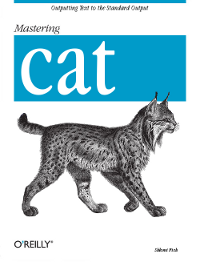
Also, from the O'Reilly book, Mastering Cat,
cat
I forget why cat is better than dd in some cases.
Most dvd's are dual layer and use about 8G each.
-
The TIOBE Index is a Bit Flawed
As Sterling Hanenkamp notes the TIOBE index is a bit flawed. It doesn't measure popularity - it measures hype, and not all of it too. That put aside, it is true that C and C++ are not used as much as they once used to, and that's because there are alternatives that are better for many uses. However, there are still many tasks for which they are still the best choice (warning - a link to my own article), and should be used. A lot of open-source code is written in ANSI C and C++, and usually for very good reasons.
While I expect the use of C and C++ to diminish, I wouldn't say they are "dying" or "losing ground". They just become more established and more "niche" languages. Another fact to note is that usually the virtual machines for higher-level languages are C-hosted - perl5, CPython, ruby, php, Tcl, the various Java VMs, Mono (and probably Microsoft's
Every programmer worth his salt, should still learn ANSI C, because not knowing it leads to lack of good understanding of computer architectures and portable programming that is bound to lead to inefficient code, and improper use of any programming language. I wouldn't recommend learning ANSI C as the first programming language (another link to an article of mine), but it's still an essential skill.
-
The TIOBE Index is a Bit Flawed
As Sterling Hanenkamp notes the TIOBE index is a bit flawed. It doesn't measure popularity - it measures hype, and not all of it too. That put aside, it is true that C and C++ are not used as much as they once used to, and that's because there are alternatives that are better for many uses. However, there are still many tasks for which they are still the best choice (warning - a link to my own article), and should be used. A lot of open-source code is written in ANSI C and C++, and usually for very good reasons.
While I expect the use of C and C++ to diminish, I wouldn't say they are "dying" or "losing ground". They just become more established and more "niche" languages. Another fact to note is that usually the virtual machines for higher-level languages are C-hosted - perl5, CPython, ruby, php, Tcl, the various Java VMs, Mono (and probably Microsoft's
Every programmer worth his salt, should still learn ANSI C, because not knowing it leads to lack of good understanding of computer architectures and portable programming that is bound to lead to inefficient code, and improper use of any programming language. I wouldn't recommend learning ANSI C as the first programming language (another link to an article of mine), but it's still an essential skill.
-
Re:LINK?
My (not the OP) contact info. I also would like to mirror them. -
Re:LINK?
So will I. Here's my contact information.
-
File Sharing should be Legal
You're right in a way - they are accusing the innocent of "stealing". As I demonstrate in my essay "The Case for File Swapping", file swapping is not a crime - it's not wrong and it should be legal. Once a work of art has been released for public consumption, one must not try to restrict its non-commercial distribution.
-
File Swapping is Ethical and Moral
My essay, "The Case for File Swapping" explains why file swapping is ethical and moral and why it should be legal. It touches on many points of the subject and is very comprehensive. The page links to other discussions and resources on the topic.