Slashdot Mirror
Domain: stsci.edu
Stories and comments across the archive that link to stsci.edu.
Comments · 335
-
Re:Once again a persons career is reduced...
I don't consider myself any kind of warrior, but how's that for evidence: http://www.stsci.edu/news/news...?
I don't follow. Evidence of what? My contention here is that it's more or less reached the point where some AC will post "liberals ate my baby" and be modded +5 informative and the inevitable "sounds like bullshit, got a link" post will get -1 troll.
-
Re:Once again a persons career is reduced...
No matter how wild a claim about "SJW" or liberals, any demand for evidence will be met with downmods.
I don't consider myself any kind of warrior, but how's that for evidence: http://www.stsci.edu/news/news...?
-
Re:L2 is dark
It's worth noting that the JWST will orbit the L2 point, not sit still in it. The orbit will be 800,000 km in radius, which is larger than the Moon's orbit around the Earth. Anybody out there good enough with geometry to say whether the JWST will be in the penumbra or not?
-
Re:Do they really mean "chaotic"?
Aren't "cycling" and "chaotic" mutually exclusive?
No. Chaotic systems cycle-- look up, say "strange attractor". Or even google "cycle AND chaos theory."
What makes it chaotic is that the phase of the cycling is predictable in the short term, unpredictable in the long term.
-
Re:Cool 3D effect...
You can get the raw data yourself, and the Hubble team even created a web-app to let people try creating color composites from the raw images themselves: Hubble Legacy Archive.
-
Constraint Satisfaction Problem similar to Hubble?
-
Constraint Satisfaction Problem similar to Hubble?
-
Noticeable difference?
Good point on asking what's the noticeable difference. Although sometimes we don't notice a difference until we go looking for it. That may require imagination first -- or it might involve taking facts previously stumbled upon and ignored and discarded and arranging them in some new way. For example. as mentioned on slashdot recently:
http://science.slashdot.org/st...
From the article linked in the story: "And here is the rub: the culturally shaped analytic/individualistic mind-sets may partly explain why Western researchers have so dramatically failed to take into account the interplay between culture and cognition. In the end, the goal of boiling down human psychology to hardwiring is not surprising given the type of mind that has been designing the studies. Taking an object (in this case the human mind) out of its context is, after all, what distinguishes the analytic reasoning style prevalent in the West. Similarly, we may have underestimated the impact of culture because the very ideas of being subject to the will of larger historical currents and of unconsciously mimicking the cognition of those around us challenges our Western conception of the self as independent and self-determined. The historical missteps of Western researchers, in other words, have been the predictable consequences of the WEIRD mind doing the thinking."Also along those lines, here is a book that discusses the systematic ignoring of observed homosexual behavior in animals by biologists for over a century:
http://en.wikipedia.org/wiki/B...
http://books.google.com/books/...It turns out that most wildlife biologists for decades recorded their data to fit the assumption of heterosexuality in their studies. How many other times have scientists not seen (or reported) things that violate assumptions or cultural taboos? For example, look what happened with cold fusion. A quarter century ago, scientists funded by hot fusion grants claimed (after very little effort) that they could not replicate "cold fusion" and so it could not exist because it conflicted with current dogma, and the topic became verboten among academics. It could not be seen by most academics. Now, decades later, other MIT scientists teach a course on cold fusion and claim to be able to reliably replicate it.
http://www.infinite-energy.com...
http://www.e-catworld.com/2014...When Google takes a long time to return a search result, is it because the Google servers are slow or because the universe simulation is deciding what the answer should be, including inventing a backstory?
Also, as a counter example, does it really make a difference (in the short term to Earthly affairs) if there is just one galaxy of billions of them? Yet it is still somehow interesting to know and discuss that. Of course, that was based on verifiable observation. But no doubt there was speculation before that...
http://amazing-space.stsci.edu...
"In the early 1900s, astronomers were debating the makeup of spiral nebulae -- cloudy, spiral-shaped objects found throughout the night sky. Were they gas clouds located within our Milky Way galaxy, or were they vast groups of stars located far beyond our galaxy?
In 1919, American astronomer Edwin Hubble tackled the question. His keen astronomical knowledge was combined with a powerful tool - the Hooker telescope with its 100-inch mirror, on top of Mount Wilson in Cal -
With a little googling...
I found links to "Science Coffee" and "Journal Club" here.
-
Re:Win win
Even more than that:
Caltech proposed the concept to NASA
Caltech had a major part in designing it
Caltech hosts the GALEX Science center
Caltech continues to staff and run it
NASA approved, funded, and launched it. Choosing Caltech wasn't just throwing a dart at the map and saying "OK, those guys get it!"
And (from their About|Basics page) "All observations made by GALEX are publicly available through the Multimission Archive at the Space Telescope institute (MAST)." -
Re:How many other bad star data?
Here is the link to find the Kepler data that has been released.
You're more than welcome to go through the reams of data and find all planet candidates that shouldn't be (or incorrectly classified) due to bad data or erroneous assumptions (as in this case - due to star brightness).
Of course, we both know you're not going to do this since you are really making a snide remark for the sake of making a snide remark.
-
Re:Weird diffraction spikes
Kind of, but more complicated... a star imaged through the JWST will look like the bottom right picture here :
http://www.stsci.edu/jwst/overview/design/OTE/images/Aperture-PSFComparison.jpg -
Re:Look at the price tag
As a professional astronomer I hoped this thing would never have happened. It costs 6 billion and at this price tag a 5% overrun is $300 million, about six times the cost of the entire SDSS project, which has undoubtedly gave us more science that James Webb ever will.
Science isn't something you can measure by how many buckets you collect. Not all buckets have the same value.
True, Hubble and JWST make great pictures, function as amazing PR machines, but most science at the end of the day comes from survey imaging and spectroscopic observations.
If you honestly believe that all Hubble and JWST are doing or will do is collect pretty pictures, you're either hopelessly ignorant or hopelessly biased. But ff you want to talk spectroscopy - consider that four of the Hubble five main instruments are dedicated to spectroscopy, and two of JWST's three main instruments are so dedicated. If you want to talk surveys... Check out Hubble's schedule from Feb 14, 2011, or January 29, 2011 for some recent survey campaigns that Hubble is participating in.
-
Re:Look at the price tag
As a professional astronomer I hoped this thing would never have happened. It costs 6 billion and at this price tag a 5% overrun is $300 million, about six times the cost of the entire SDSS project, which has undoubtedly gave us more science that James Webb ever will.
Science isn't something you can measure by how many buckets you collect. Not all buckets have the same value.
True, Hubble and JWST make great pictures, function as amazing PR machines, but most science at the end of the day comes from survey imaging and spectroscopic observations.
If you honestly believe that all Hubble and JWST are doing or will do is collect pretty pictures, you're either hopelessly ignorant or hopelessly biased. But ff you want to talk spectroscopy - consider that four of the Hubble five main instruments are dedicated to spectroscopy, and two of JWST's three main instruments are so dedicated. If you want to talk surveys... Check out Hubble's schedule from Feb 14, 2011, or January 29, 2011 for some recent survey campaigns that Hubble is participating in.
-
Re:More Info & Dashboard
No one is doubting Global Warming.
That's simply not true. There's a large contingency of folks who are outright denying even the temp rises. They're typically the mindless followers of Beck & Limbaugh.
By "solar weather theory" are you referring to the false arguments that AGW is caused by cosmic rays and/or temps are increasing on other planets? If so, no problem. Here's 34 different scientific papers that refute each aspect of them.
So, you ready to change your business model now? -
Re:More Info & Dashboard
No one is doubting Global Warming.
That's simply not true. There's a large contingency of folks who are outright denying even the temp rises. They're typically the mindless followers of Beck & Limbaugh.
By "solar weather theory" are you referring to the false arguments that AGW is caused by cosmic rays and/or temps are increasing on other planets? If so, no problem. Here's 34 different scientific papers that refute each aspect of them.
So, you ready to change your business model now? -
Re:How big a telescope do we need to see cities?
Take a look at the ATLAST concept for a telescope that could be launched in the 2025-2030 timeframe. It comes closest to what you are looking for.
-
Data ArchivesHere is the notice they are releasing potential extrasolar planetary data and the press release saying that it's data on 156,000 stars. You can search the data or just download the tarfiles via anonymous FTP:
ftp archive.stsci.edu
cdIf you do a search there appears to be anywhere from half to two thirds of the data that are marked as proprietary data which their search help gives a brief explanation of:
Clicking on entries in this column will mark the entry for retrieval. To mark all entries, click one of the buttons labelled 'Mark All','Mark public', or 'Mark Proprietary'. (Unmarking all entries can be done the same way using the appropriate button.) For missions with proprietary data, the mark button element will have a yellow background and a '@' symbol to indicate data sets not yet public.
I think the majority of those that are unreleased are simply Q2 data or later since this data is just from the first 42 days of the mission. What's available as the tar file appears to be all Q0 and Q1 data so I'm not certain if the 400 that are 'censored' are included in that or not. If they are withheld it seems odd that the announcement, release notes and README file make no mention of this. Still, we're talking 12+ GB of compressed data here.
Overall and despite the reported censoring of the best candidates, I personally applaud their transparency here that surpasses anything another government related organization (or even scientific field for that matter) exhibits. Alright, maybe CERN or the LHC will be as transparent or more transparent but this is still pretty impressive. -
Data ArchivesHere is the notice they are releasing potential extrasolar planetary data and the press release saying that it's data on 156,000 stars. You can search the data or just download the tarfiles via anonymous FTP:
ftp archive.stsci.edu
cdIf you do a search there appears to be anywhere from half to two thirds of the data that are marked as proprietary data which their search help gives a brief explanation of:
Clicking on entries in this column will mark the entry for retrieval. To mark all entries, click one of the buttons labelled 'Mark All','Mark public', or 'Mark Proprietary'. (Unmarking all entries can be done the same way using the appropriate button.) For missions with proprietary data, the mark button element will have a yellow background and a '@' symbol to indicate data sets not yet public.
I think the majority of those that are unreleased are simply Q2 data or later since this data is just from the first 42 days of the mission. What's available as the tar file appears to be all Q0 and Q1 data so I'm not certain if the 400 that are 'censored' are included in that or not. If they are withheld it seems odd that the announcement, release notes and README file make no mention of this. Still, we're talking 12+ GB of compressed data here.
Overall and despite the reported censoring of the best candidates, I personally applaud their transparency here that surpasses anything another government related organization (or even scientific field for that matter) exhibits. Alright, maybe CERN or the LHC will be as transparent or more transparent but this is still pretty impressive. -
Data ArchivesHere is the notice they are releasing potential extrasolar planetary data and the press release saying that it's data on 156,000 stars. You can search the data or just download the tarfiles via anonymous FTP:
ftp archive.stsci.edu
cdIf you do a search there appears to be anywhere from half to two thirds of the data that are marked as proprietary data which their search help gives a brief explanation of:
Clicking on entries in this column will mark the entry for retrieval. To mark all entries, click one of the buttons labelled 'Mark All','Mark public', or 'Mark Proprietary'. (Unmarking all entries can be done the same way using the appropriate button.) For missions with proprietary data, the mark button element will have a yellow background and a '@' symbol to indicate data sets not yet public.
I think the majority of those that are unreleased are simply Q2 data or later since this data is just from the first 42 days of the mission. What's available as the tar file appears to be all Q0 and Q1 data so I'm not certain if the 400 that are 'censored' are included in that or not. If they are withheld it seems odd that the announcement, release notes and README file make no mention of this. Still, we're talking 12+ GB of compressed data here.
Overall and despite the reported censoring of the best candidates, I personally applaud their transparency here that surpasses anything another government related organization (or even scientific field for that matter) exhibits. Alright, maybe CERN or the LHC will be as transparent or more transparent but this is still pretty impressive. -
End of the optical spectrum?
Seems like Hubble will be the last space telescope to operate in the visible range. One would guess theres only so much information that can be gleaned from there and further efforts will focus on the IR and X-Ray range and beyond. Still,a loss of no worries on a loss of pretty pictures as the Spitzer (also in the IR range) shows us.
Thiscould be the successor to even the James Webb. -
something else to check out.
Although it isn't actually looking at the objects with your own telescope, all of the data that the Hubble Space Telescope creates is free to the public. To use the data you will need a copy of Adobe Photoshop, but once you have that it can be great fun to create the same sort of images you see from the Hubble Heritage site. To use the data (that you get in fits format) in Photoshop, you need to download the "Fits Liberator" from the http://www.spacetelescope.org/ site (check the projects tab). You can then get the data from http://archive.stsci.edu/hst/search.php (you will have to create an account).
-
Re:Open the archive
6000 is probably about right. I expect you can get the data from here: http://archive.stsci.edu/ Now there are 6001.
-
Re:MAST Mirror Site
-
Re:Would like to see the improvement
If anyone finds a link to side-by-side images from the old and new cameras, please post it!
I'll give it a shot. (note: on some of these I'm using MAST's archive since the main NASA site seems to be down and I am not linking you to full resolution photos as well as seeming to be at different ranges)
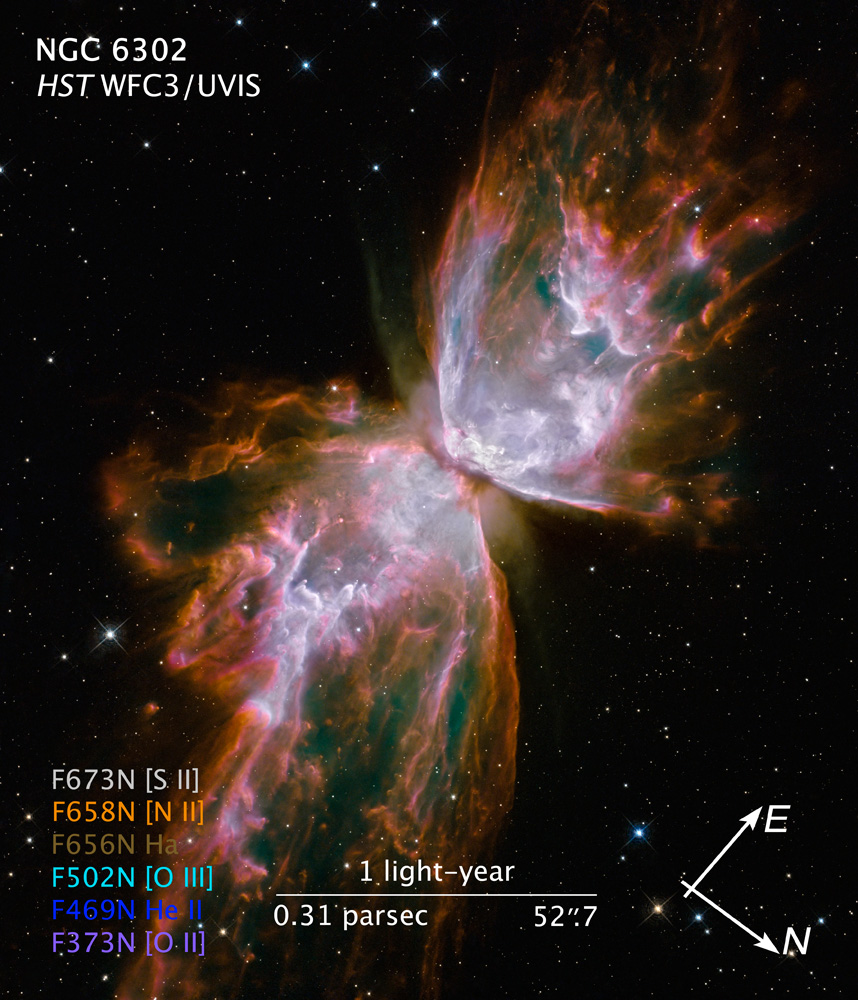
Old (2007) Image of NGC 6302 compare with new image of NGC 6302
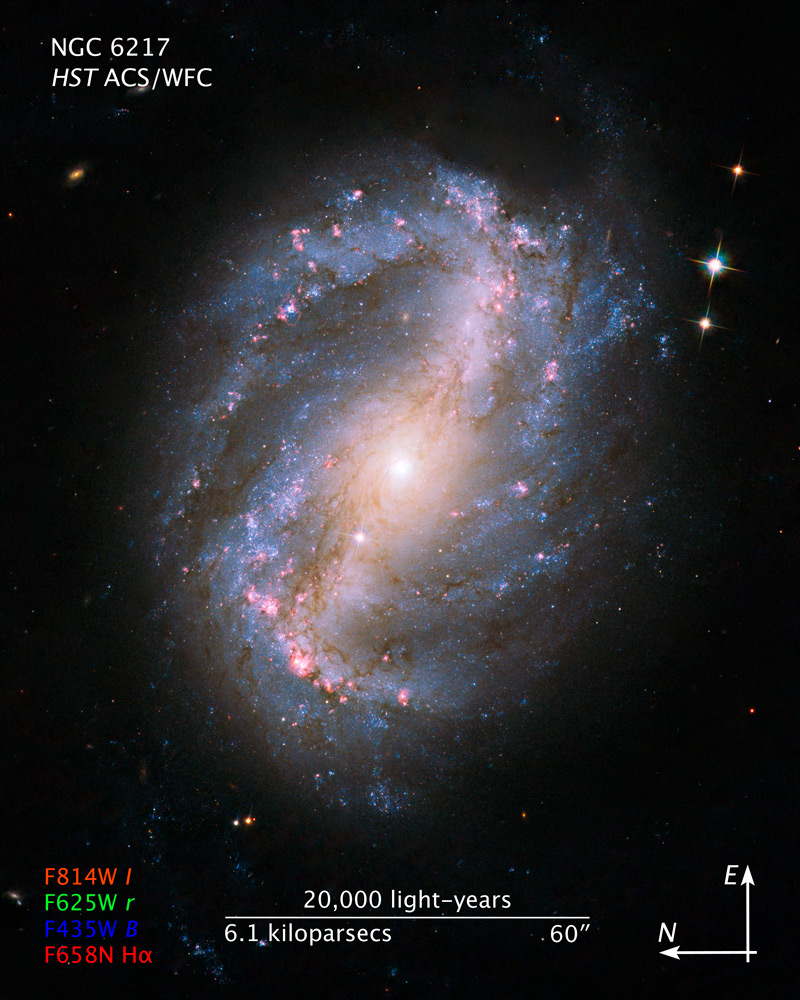
Old (2004 not HST, ground observatory can't find HST image) Image of NGC 6217 compare with new image of NGC 6217
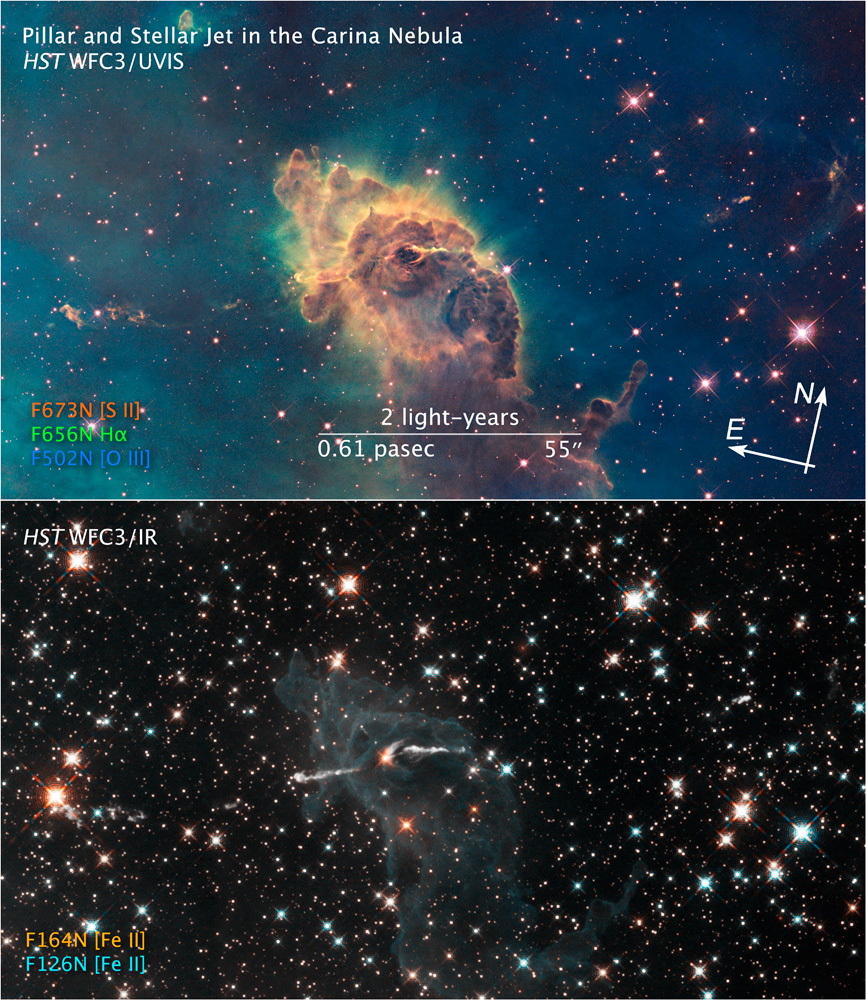
Old (2007) Image of Carina Nebula compare with new image of Carina Nebula
Old (1998 land observatory) Images (2000 HST) of Stephen's Quintet compare with new image of Stephen's Quintet
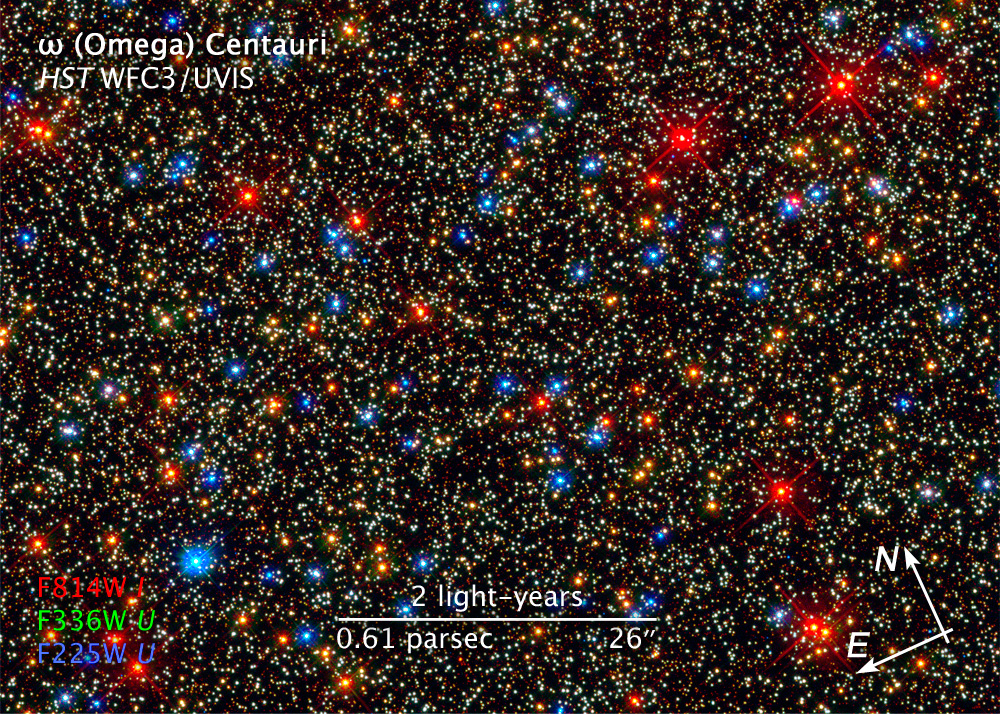
Old (2008) Omega Centauri compare with new Omega Centauri
Old (2005) Supernova Remnant LMC N132D compare with new Supernova Remnant LMC N132D
Hopefully that gives you an idea, most of those old images are Hubble but I threw in some ground based observatory ones so that you can get an idea of what Hubble's been doing for us for 15 years. -
Re:Would like to see the improvement
If anyone finds a link to side-by-side images from the old and new cameras, please post it!
I'll give it a shot. (note: on some of these I'm using MAST's archive since the main NASA site seems to be down and I am not linking you to full resolution photos as well as seeming to be at different ranges)
Old (2007) Image of NGC 6302 compare with new image of NGC 6302
Old (2004 not HST, ground observatory can't find HST image) Image of NGC 6217 compare with new image of NGC 6217
Old (2007) Image of Carina Nebula compare with new image of Carina Nebula
Old (1998 land observatory) Images (2000 HST) of Stephen's Quintet compare with new image of Stephen's Quintet
Old (2008) Omega Centauri compare with new Omega Centauri
Old (2005) Supernova Remnant LMC N132D compare with new Supernova Remnant LMC N132D
Hopefully that gives you an idea, most of those old images are Hubble but I threw in some ground based observatory ones so that you can get an idea of what Hubble's been doing for us for 15 years. -
Re:Would like to see the improvement
If anyone finds a link to side-by-side images from the old and new cameras, please post it!
I'll give it a shot. (note: on some of these I'm using MAST's archive since the main NASA site seems to be down and I am not linking you to full resolution photos as well as seeming to be at different ranges)
Old (2007) Image of NGC 6302 compare with new image of NGC 6302
Old (2004 not HST, ground observatory can't find HST image) Image of NGC 6217 compare with new image of NGC 6217
Old (2007) Image of Carina Nebula compare with new image of Carina Nebula
Old (1998 land observatory) Images (2000 HST) of Stephen's Quintet compare with new image of Stephen's Quintet
Old (2008) Omega Centauri compare with new Omega Centauri
Old (2005) Supernova Remnant LMC N132D compare with new Supernova Remnant LMC N132D
Hopefully that gives you an idea, most of those old images are Hubble but I threw in some ground based observatory ones so that you can get an idea of what Hubble's been doing for us for 15 years. -
Re:Would like to see the improvement
If anyone finds a link to side-by-side images from the old and new cameras, please post it!
I'll give it a shot. (note: on some of these I'm using MAST's archive since the main NASA site seems to be down and I am not linking you to full resolution photos as well as seeming to be at different ranges)
Old (2007) Image of NGC 6302 compare with new image of NGC 6302
Old (2004 not HST, ground observatory can't find HST image) Image of NGC 6217 compare with new image of NGC 6217
Old (2007) Image of Carina Nebula compare with new image of Carina Nebula
Old (1998 land observatory) Images (2000 HST) of Stephen's Quintet compare with new image of Stephen's Quintet
Old (2008) Omega Centauri compare with new Omega Centauri
Old (2005) Supernova Remnant LMC N132D compare with new Supernova Remnant LMC N132D
Hopefully that gives you an idea, most of those old images are Hubble but I threw in some ground based observatory ones so that you can get an idea of what Hubble's been doing for us for 15 years. -
Re:Would like to see the improvement
If anyone finds a link to side-by-side images from the old and new cameras, please post it!
I'll give it a shot. (note: on some of these I'm using MAST's archive since the main NASA site seems to be down and I am not linking you to full resolution photos as well as seeming to be at different ranges)
Old (2007) Image of NGC 6302 compare with new image of NGC 6302
Old (2004 not HST, ground observatory can't find HST image) Image of NGC 6217 compare with new image of NGC 6217
Old (2007) Image of Carina Nebula compare with new image of Carina Nebula
Old (1998 land observatory) Images (2000 HST) of Stephen's Quintet compare with new image of Stephen's Quintet
Old (2008) Omega Centauri compare with new Omega Centauri
Old (2005) Supernova Remnant LMC N132D compare with new Supernova Remnant LMC N132D
Hopefully that gives you an idea, most of those old images are Hubble but I threw in some ground based observatory ones so that you can get an idea of what Hubble's been doing for us for 15 years. -
Re:Would like to see the improvement
If anyone finds a link to side-by-side images from the old and new cameras, please post it!
I'll give it a shot. (note: on some of these I'm using MAST's archive since the main NASA site seems to be down and I am not linking you to full resolution photos as well as seeming to be at different ranges)
Old (2007) Image of NGC 6302 compare with new image of NGC 6302
Old (2004 not HST, ground observatory can't find HST image) Image of NGC 6217 compare with new image of NGC 6217
Old (2007) Image of Carina Nebula compare with new image of Carina Nebula
Old (1998 land observatory) Images (2000 HST) of Stephen's Quintet compare with new image of Stephen's Quintet
Old (2008) Omega Centauri compare with new Omega Centauri
Old (2005) Supernova Remnant LMC N132D compare with new Supernova Remnant LMC N132D
Hopefully that gives you an idea, most of those old images are Hubble but I threw in some ground based observatory ones so that you can get an idea of what Hubble's been doing for us for 15 years. -
Re:Would like to see the improvement
If anyone finds a link to side-by-side images from the old and new cameras, please post it!
I'll give it a shot. (note: on some of these I'm using MAST's archive since the main NASA site seems to be down and I am not linking you to full resolution photos as well as seeming to be at different ranges)
Old (2007) Image of NGC 6302 compare with new image of NGC 6302
Old (2004 not HST, ground observatory can't find HST image) Image of NGC 6217 compare with new image of NGC 6217
Old (2007) Image of Carina Nebula compare with new image of Carina Nebula
Old (1998 land observatory) Images (2000 HST) of Stephen's Quintet compare with new image of Stephen's Quintet
Old (2008) Omega Centauri compare with new Omega Centauri
Old (2005) Supernova Remnant LMC N132D compare with new Supernova Remnant LMC N132D
Hopefully that gives you an idea, most of those old images are Hubble but I threw in some ground based observatory ones so that you can get an idea of what Hubble's been doing for us for 15 years. -
MAST Mirror Site
thanks guys, posting this and now the hubble site is slashdotted!!! so now nobody gets to see the images until some other story (Britney Spears enrolls into MIT?) vectors the crowd away so us commoners can see hubble pictures.
I'm seeing the official NASA images just fine but MAST (Multimission Archive at STScI) put up an early mirror here if you need the full size images. These are only the press release images, I'm going to keep watching MAST for the full set but you have ftp info for these now here:
ftp archive.stsci.edu
logon as anonymous
cdArchive.org runs a really neat NASA images site that allows you to pick your favorites and make presentations or new montages with them. I'm not seeing the new images up on that yet but they will probably have them up soon.
-
Re:Hubble
Have you got any evidence for your statement that the corrective optics only recover a fraction of the light gathering capacity.
I remember reading it in a book around 10 years ago. I can't seem to find it on my bookshelf anymore. I think it might have been this one.
And what is this about getting a 'visible light replacement space telescope'? Since when has anyone planned a replacement visible light space telescope?
ATLAS, the Advanced Technology Large-Aperture Space Telescope.
-
Correction to Article Summary *
Article summary is incorrectly attributed to "Scientists working at [NIST]." Out of the 12 authors of the report, only a single author [Gerber, author no. 4] is affiliated with NIST, which issued the press release. The first author of the report is William Sparks, who is based at the Space Telescope Science Institute in Baltimore (3 authors). The remaining authors are based at
* Center for Astrophysics Research (University of Hertfordshire) (2 authors),
* Department of Astronomy (University of Maryland),
* Center of Marine Biotechnology (University of Maryland Biotechnology Institute) (4 authors),
* Canada-France-Hawaii Telescope. -
Correction to Article Summary *
Article summary is incorrectly attributed to "Scientists working at [NIST]." Out of the 12 authors of the report, only a single author [Gerber, author no. 4] is affiliated with NIST, which issued the press release. The first author of the report is William Sparks, who is based at the Space Telescope Science Institute in Baltimore (3 authors). The remaining authors are based at
* Center for Astrophysics Research (University of Hertfordshire) (2 authors),
* Department of Astronomy (University of Maryland),
* Center of Marine Biotechnology (University of Maryland Biotechnology Institute) (4 authors),
* Canada-France-Hawaii Telescope. -
Repair video available
For the interested, here is an online video of a presentation given by ken sembach, the HST project scientist, at a symposium earlier this year. In it, he describe the servicing mission (SM4) in detail, with a particular emphasis on the new instruments being installed (WFC3, COS) and those being repaired (STIS, ACS).
There some cool shots of the astronauts in the massive water tank that simulates zero-g, practicing removing all those screws with the specially designed screw-plate.
http://www.stsci.edu/ts/webcasting/ram/HubbleFellows2008/KenSembach031108Hi.ram
Runtime is 38:51
-
It says right there in TFA:From the TFA: Intriguingly, another young star in the same region called XZ Tau may have made a close pass of HL Tau about 1,600 years ago. Apparently, the pass XZ Tau made was more than just "close".
He was last seen fleeing through the constellation of Taurus at the speed of light in order to avoid paying alimony.
Apparently... HZ Tau is also already married. -
Re:Was Hubble worth it?
"That means that the Hubble over its entire lifespan cost every man, woman and child in the United States $21.67 each."
So, that works out to what? 4 Big Macs, give or take?
Yeah. you know what? The beauty of the Hubble images, seeing the glories of the Universe, revelling in the knowledge revealed.
Beats the goddamn HELL out of having a paper bag with 4 hamburgers in it. I can eat those burgers, and a day later, I'm hungry again.
The Hubble images will satisfy my soul for decades to come.
Hell, I'll happily send NASA another US$20 or so, to help pay for the servicing mission.
And to the original parent commenter, if you can't understand what Hubble has meant to the people of the US and of the Earth, you'll never understand.
"We're all of us in the gutter, but some of us look at the stars."
Enjoy your grubbing about in your gutter, I have better things to do than reply to you further.
I have stars to look at. -
Re:Lovely
...and while the astronomers fiddle with gear you and I can only dream of having access to, take your camera and a tripod outside, and with no more than a portrait lens, you can take shots like these.
Disclaimer: I have a masters in Astronomy but I've never worked in the field. I did the degree "for fun", because I never got the opportunity to study in highschool, and because I wanted to know how we know what we know about the universe. I'm very much an amateur in every respect.
Defintely worth fiddling with camera gear, but at some point if you're taking your own shots you're going to want to use a telescope. Starting with binoculars is definitely the best way. Moving to a dobsonian for viewing (but terrible for photography) is a good next step. (Don't buy anything with a small aperture unless all you're interested in is moon and planets). Next good step would be a Newtonian on EQ mount or SCT. It gets very expensive very quickly. I pretty much gave up on astrophotography. (I live in a large city and when I do get away far enough, I'm usually exhausted from the drive, and there are other priorities (family). Also a 10" scope takes up a hell of a lot of room even in a station wagon).
An alternative to the above is to get hold of sky survey data that's already available and captured by the pro images. There's a lot out there that gets released usually after a year (to give the professional scientists time to work with it). Hubble data, Chandra X-Ray data, SOHO images. It's not all pretty composite colour pictures - you often have to learn to manipulate the images with image software or with more complex data there's specialized software that's not always for the faint of heart (often free, often Linux based). "Amateurs" have done amazing things with some of the images and data. In astronomy there is an "image" (FITS) file format that is actually more than just a simple JPEG etc. You have a background in photography so while it's not strictly RAW data in the sense that it's not coming straight off a sensor, you can think of this format as containing more information the way RAW contains more than JPEG (stuff like calibration information). More information here.
http://en.wikipedia.org/wiki/FITS
http://heasarc.gsfc.nasa.gov/docs/heasarc/fits.html
Please understand I'm not trying to discourage you from backyard astronomy. I just thought you might be interested in this too. These days the guys that take the images/capture data and the guys that analyse them are not always the same. ie. you often have technicians that specialise in running the machines.
Here are some links for you:
FITS data from lots of missions/instruments
http://heasarc.gsfc.nasa.gov/docs/archive.html
Digitized Sky Survey
http://archive.eso.org/dss/dss
http://archive.stsci.edu/cgi-bin/dss_form
Hubble
http://hubblesite.org/
SOHO
http://sohowww.nascom.nasa.gov/
Chandra
http://chandra.harvard.edu/
http://chandra.harvard.edu/resources/
If you want more detail and are prepared to try to work out science speak, you can get access to draft papers on:
http://arxiv.org/
Look under astrophysics
I don't have time to go into any more. Hope you're interested. -
Re:All this stuff should be digitized and made pub
If you were a professional astronomer I'd say it sounds like you'd be better off finding a different organization to work for.
Try looking at cited sources on published papers for starters. http://arxiv.org/ will give you plenty of pre-publications. Here too http://sesame.stsci.edu/library.html
I'm well out of touch but here's what you get just from Google:
Skyview is a must. Images in any wavelength (multiple instruments)
http://skyview.gsfc.nasa.gov/
Learn about the FITS data format. Not just pretty pictures by any means.
http://fits.gsfc.nasa.gov/
Chandra data
http://cxc.harvard.edu/cda/public.html
You want Hubble data? (and software to process it)
http://archive.stsci.edu/
More software to process astro data:
http://www.stsci.edu/resources/
SOHO use to publish their images in real time and if you want data...and apparently still do.
http://sohowww.nascom.nasa.gov/data/data.html
There's lots more out there if you look at the major space instrument's web pages. I'm sure some of it is paid and a lot of it is held back for a year or so, but there's a LOT out there. -
Re:All this stuff should be digitized and made pub
If you were a professional astronomer I'd say it sounds like you'd be better off finding a different organization to work for.
Try looking at cited sources on published papers for starters. http://arxiv.org/ will give you plenty of pre-publications. Here too http://sesame.stsci.edu/library.html
I'm well out of touch but here's what you get just from Google:
Skyview is a must. Images in any wavelength (multiple instruments)
http://skyview.gsfc.nasa.gov/
Learn about the FITS data format. Not just pretty pictures by any means.
http://fits.gsfc.nasa.gov/
Chandra data
http://cxc.harvard.edu/cda/public.html
You want Hubble data? (and software to process it)
http://archive.stsci.edu/
More software to process astro data:
http://www.stsci.edu/resources/
SOHO use to publish their images in real time and if you want data...and apparently still do.
http://sohowww.nascom.nasa.gov/data/data.html
There's lots more out there if you look at the major space instrument's web pages. I'm sure some of it is paid and a lot of it is held back for a year or so, but there's a LOT out there. -
Re:All this stuff should be digitized and made pub
If you were a professional astronomer I'd say it sounds like you'd be better off finding a different organization to work for.
Try looking at cited sources on published papers for starters. http://arxiv.org/ will give you plenty of pre-publications. Here too http://sesame.stsci.edu/library.html
I'm well out of touch but here's what you get just from Google:
Skyview is a must. Images in any wavelength (multiple instruments)
http://skyview.gsfc.nasa.gov/
Learn about the FITS data format. Not just pretty pictures by any means.
http://fits.gsfc.nasa.gov/
Chandra data
http://cxc.harvard.edu/cda/public.html
You want Hubble data? (and software to process it)
http://archive.stsci.edu/
More software to process astro data:
http://www.stsci.edu/resources/
SOHO use to publish their images in real time and if you want data...and apparently still do.
http://sohowww.nascom.nasa.gov/data/data.html
There's lots more out there if you look at the major space instrument's web pages. I'm sure some of it is paid and a lot of it is held back for a year or so, but there's a LOT out there. -
Both hemispheres?
Not sure what's meant exactly by it being the "only collection to cover both hemispheres". The Digitized Sky Survey covers the whole sky and it's been online for 12 years.
-
Both hemispheres?
Not sure what's meant exactly by it being the "only collection to cover both hemispheres". The Digitized Sky Survey covers the whole sky and it's been online for 12 years.
-
Video of the orbit
Here's a video of the orbit to help you understand:
Low-res:
http://jwstsite.stsci.edu/gallery/tele_graphics/lo w_l2orbit.mov
Hi-res:
http://jwstsite.stsci.edu/gallery/tele_graphics/l2 orbit.mov -
Video of the orbit
Here's a video of the orbit to help you understand:
Low-res:
http://jwstsite.stsci.edu/gallery/tele_graphics/lo w_l2orbit.mov
Hi-res:
http://jwstsite.stsci.edu/gallery/tele_graphics/l2 orbit.mov -
Re:Keeping Hubble
It definitely need help. The main camera has not been working since June of last year. They did get one channel going in February http://www.stsci.edu/resources/acs.html.
--
Grou nd based solar power: http://mdsolar.blogspot.com/2007/01/slashdot-users -selling-solar.html -
Re:Keeping Hubble
The imaging will be near infrared with particular capability near 2 microns, but the 5 micron capability is alos of interest. There is also a smaller camera working from 5 to 27 microns. This is mid-infrared. The resolution of this instrument will not be so good because of the longer wavelength. The Keck Telescope can get better image quality. But what it will have is spectroscopic capability and much greater sensitivity. We've gotten quite alot of milage out of the much smaller Spitzer Space Telescope using it's 5--30 micron spectrograph. This new instrument should really open things up, allowing us to analyse stars in galaxies as they were when the universe was 12 billion years younger. All telescopes can be considered time machines, but this one is made to see some of the very first stars. You can read more about it here: http://www.stsci.edu/jwst/instruments/.
--
Rent solar power: http://mdsolar.blogspot.com/2007/01/slashdot-users -selling-solar.html -
Re:Keeping Hubble
JWST will provide diffraction-limited images at 2 micron. It will have imaging and spectrographic capabilities in the near and mid-IR -- everything from 6000AA out to 27micron with the mid-IR imager and spectrograph (MIRI). StSci has a JWST primer online here (pdf link).
-
Re:Looks like a lot of thingsIt is most devinitly NOT a lens artifact, look at the other stars Indeed, look at the other stars. At the edges of the photo they are all oval-shaped pointing towards the center. That implies there is something wrong with the imaging.
http://opostaff.stsci.edu/~levay/color/HandoutIIIc .pdf