Slashdot Mirror
Domain: tepco.co.jp
Stories and comments across the archive that link to tepco.co.jp.
Comments · 87
-
Great News!!!
This is some very welcome news in developments at Fukushima as the foundations of Unit 3 are damaged. Workers at Fukushima have already removed 1000 fuel rods IIRC from that reactor building due to concerns about what would happen if the building collapsed.
To get a better understanding of why its an urgent issue, a report called Nuclear Power Plant Security and Vulnerabilities explored vulnerabilities at nuclear power plants.
From that report the issue of spent fuel pool vulnerabilities warranted further study in the now declassified report Safety and Security of Commercial Spent Nuclear Fuel Storage: Public Report by the Committee on the Safety and Security of Commercial Spent Nuclear Fuel Storage within the National Research Council. It details variations of scenarios created from vulnerabilities to terrorist attacks, however the potential outcomes are similar if they are initiated by a natural disaster.
The most sobering scenarios came from analyzing what happens from loosing the cooling water from a spent fuel pool. Spent fuel rods are kept in a pool with a constant supply of water because the water not only cools them, it moderates the neutrons so that they don't become critical. One scenario examined from loosing the cooling water was a plutonium fire that creates plutonium oxide in the smoke with reactors that are MOX fueled, such as Unit 3 was. With several hundred tons of fuel it would be the largest plutonium fire we have ever faced, it would also be in open air.
You can find information about plutonium oxidization Evaluation of source-term data for plutonium aerosolization which starts at around 500 centigrade. I think that because of the proximity to the sea, plutonium chloride would also be created.
Actions to reduce the possibility of these kinds of scenarios are simple and cost effective. Mainly by dry cask storing fuel that has cooled for 5 years and separating and dispersing spent fuel recently removed from the reactor throughout the pools of reactors that are still operating. All very practical, affordable actions for reducing this risk of reactors that are still operating.
Information about the fuel removal process and the damage to the Unit 3 spent fuel pool in Tepco's Fukushima spent fuel removal plan.
There is very little point arguing about Nuclear power from an idealistic viewpoint. To idealize that nuclear power is perfect and requires no improvements means that the nuclear industry cannot evolve legal requirements for new processes. This, according to the official report into the Fukushima accident, is the main reason the disaster occurred.
So this is a great time to commend the workers and engineers at the Fukushima plant and express gratitude for their efforts to get this disaster under control. Thank you!!!!
-
References:
A report called Nuclear Power Plant Security and Vulnerabilities explored vulnerabilities at nuclear power plants.
From that the issue of spent fuel pool vulnerabilities warranted further study in the now declassified report Safety and Security of Commercial Spent Nuclear Fuel Storage: Public Report by the Committee on the Safety and Security of Commercial Spent Nuclear Fuel Storage within the National Research Council which details variation of the above scenario from a terrorist attack, as opposed to a disaster.
You can find information about plutonium oxidization Evaluation of source-term data for plutonium aerosolization which starts at around 500 centigrade.
Actions to reduce the possibility of these kinds of scenarios are simple and cost effective. Mainly by dry cask storing fuel that has cooled for 5 years and separating and dispersing spent fuel recently removed from the reactor throughout the pool. All very practical, affordable actions for reducing this risk.
Information about the fuel removal process and the damage to the Unit 3 spent fuel pool in Tepco's Fukushima spent fuel removal plan.
There is very little point arguing with people who look at Nuclear power from an idealistic viewpoint. For them Nuclear power is perfect and requires no improvements. This, according to the official report into the Fukushima accident is how it occurred.
Again I would like to express my gratitude to the workers and engineers attempting to get the Fukushima disaster under control.
-
Re:whare are all the nuclear apologists?
I can live with paying an extra half cent per kWh to cover cleaning up after the occasional disaster every 25 years, in exchange for using a completely carbon-neutral power source which boasts the fewest deaths per amount of power generated. Why exactly are you opposed to it?
The first is that information related to this subject is heavily censored. The information you have provided is from organizations who are restricted in what they are allowed to publish.
Money isn't the main consideration. The impact of a single disaster is. Fukushima was four disasters at once and considering the amount of spent fuel rods stored on the site had the potential to be an extinction level event. It still does as the removal process has stalled with 566 rods remaining in a precarious position in the heavily damaged Unit 3 spent fuel pool. Tepco itself acknowledges this as the most potent risk for a much more serious disaster than the original.
At this point though it is worthwhile to point out that Tepco has removed approximately 1000 spent fuel rods - which is an enormous effort that should be commended, with gratitude to the workers and engineers that continue to risk their lives to eliminate this risk.
-
Re:Hard Numbers
Well fuck, you figured it out. You should send them an e-mail: https://www4.tepco.co.jp/en/ot... Just make sure you tell them you thought of it first, so you get all the credit.
-
Re:Fukushima was NOT WORTH IT
Why do you think that TEPCO worked so hard to remove the fuel rods from the structure that is failing. What do you think would happen to plutonium fuel rods in a spent fuel pool without water surrounding them to moderate neutron activity had the structure collapsed?
Nothing spectacular --- MOX or no MOX.
Circumstances of Unit #4 fuel pool was the biggest money-making lecture bonanza for Arnie Gundersen and Harvey Wasserman, two disingenuous prophets of nuclear doom whose popularity peaked in 2013. I am sorry to see that your scenario is directly taken from their playbook. Wasserman it was who doubled down on TEPCO's offloading of fuel for his bread and butter, saying âoeWe are now within two months of what may be humankindâ(TM)s most dangerous moment since the Cuban Missile Crisis.â Even then the experts could see that aside from a few places where debris had fallen into the pool there was nothing even remotely resembling the dangers espoused by these two men. To make matters worse the Japanese press picked up their remarks verbatim without even attempting to verify the physics, then the wussy American press echoed the stories as if their Japanese colleagues were 'reliable sources' and also failed to interview experts. Web sites like enenews serve up this crap again every day as if it's still fresh or has an ounce of merit. That's their bread and butter.
The doomsday scenarios rely on some miraculous condition where all convection was blocked and all bundles are somehow pushed together and reach the 900C-2500C sustained temperatures required for ignition and meltdown. It is like announcing that a wildfire is likely to melt a steel building and having the newspapers pick up the story.
Leslie Corrice documented the unfounded hysteria centered on #4 In almost any other branch of science there would have been an immediate and severe blowback of ridicule, but in matters pertaining to nuclear energy the press seems to feel there is no such things as journalist 'thin ice'. Doom porn sells.
it would be, IN FACT, an extinction level event
So ease your worries. Give TEPCO a pat on the back for a successful and uneventful fuel offload. If you were so worried about this why cannot we hear the jubilation in your voice?
-
Re:Indian Point == Ticking Timb Bomb
Right, because generators the size needed to operate nuclear power plants are the sort of thing that you just pick up at any corner hardware store and "drive up and plug in"?
here's what one of those generators looks like. A nuclear power power plant may have a dozen or more in their generator building. Even replacing just one is not some sort of couple day task. These things take prep work and a lot of labour to acquire, move, install and set up. Weeks to months. That's all assuming that the generator building itself is still usable; a failure in such a large generator, or the sort of external event that can take out such a large generator, is not exactly some sort of low energy event.
Back before Fukushima people like you were all over Slashdot harping about how major nuclear disasters couldn't happen again, that it's only possible with old Soviet designs like Chernobyl that are horribly misused. Quit being so damned short sighted. Unforseen events and cascading failures do happen. You can't just act like "the list of causes of major that have already happened is the entire comprehensive list of what could cause major failures".
If you scram, lose your grid connection and lose your generators, you will likely get a Fukushima-like event. Two of the three happened here. Let's not pretend that the concept of something taking out the generator room, or otherwise preventing its power from working the pumps - generators which are only rarely tested - is such a preposterous concept. And let's not be silly and act like massive pieces of industrial equipment can just be plopped down and hooked up like a little Honda generator.
-
Not in place????
a new scan technique using muons have shown the fuel is not in its place.
Hah??? The whole point of this technology was supposed to be able to locate where the fuels debris are so they can start planning the removal. They said it themselves.
http://www.tepco.co.jp/en/pres...
But before those reactor cores can be removed, it is essential to locate where the debris has dropped inside the reactor.
So the technology didn't work. They just confirmed that the it is not in the core, which provide them with zero information to be able to move forward but they didn't say that and pretending it is some kind of achievement and not admitting the fact the they didn't achieve the prime objective of this exercise. Very typical of TEPCO. I hope they don't waste money repeating this to #2 and #3 to confirm that the fuels are not in place there either.
-
Re:Fukushima
Reactor 4 spent fuel cooling pool contains 1500 spent Mox fuel rods.
Correction, contained. It now has less than 400 as they've been removing them.
Reactor 4 spent fuel pool status
Thank you for the information, that is great news. I hadn't seen it because I see this was only reported a week ago. 400 is still a serious threat though so let's hope the process is continued until the threat is all removed.
-
Re:Fukushima
Reactor 4 spent fuel cooling pool contains 1500 spent Mox fuel rods.
Correction, contained. It now has less than 400 as they've been removing them.
-
Re:Godzilla!
Actually the Japanese are burning more LNG with some extra coal to replace some of their nuclear generating capacity. In the 12 months up to March 2013 TEPCO burned 23 million tonnes of LNG and 7 million tonnes of coal to generate electricity, in comparison in the same period ending March 2011, just after the earthquake and tsunami they burned 19.5 million tonnes of LNG and 3.5 million tonnes of coal. LNG has twice the energy of coal tonne for tonne.
http://www.tepco.co.jp/en/news...
As for coal as a long-term solution the Germans plan to be still generating at least 40% of their electricity from coal and lignite by 2050. That seems quite long-term to me. I doubt very much the US will have stopped mining coal in South Dakota and West Virginia to burn in power stations by then either. The Japanese don't have any significant amounts of native coal left to burn, no oil and no gas so they have to import it. Uranium is cheap, their nuclear generating plants are still in place ready to restart and their balance of payments are in the crapper for the 22nd month in a row mostly due to buying carbon instead.
-
Re:nuclear power means unintended geoengineering
I do believe he is referring to Chernobyl since the stories we all hear claim the engineers disabled the safety systems to see if they could shut it down manually. Obviously they didn't.
The word "sabotage" implies harmful intent. This is a case where Hanlon's razor clearly rules out sabotage in favor of incompetence.
I will also say that is some good spinning you got going on there. You are the first person on Slashdot I've seen claim 3 meltdowns at Fukushima. I haven't even heard Faux News claim such a thing and you'd think they'd be all over that!
You must be that stereotypical ill-informed American who thinks they know it all. Care to click on the first link in my previous post and scroll down to "Japan"? Or look here or here or here or here.
-
RTFA
Look, the article you're commenting about says they're going to treat the water with their Advanced Liquid Processing System prior to discharge. That will take most of the radionuclides out. I know most people can't be bothered to do even basic research before making unfounded claims, but maybe you should consider it? In cases like this, where there are real risks, unfounded fear mongering will detract from those risks in the long-run.
-
Gamma radiation 5cm from the bottom: 1 mSv/hour
-
Another relevant XKCD
As mentioned in http://www.tepco.co.jp/en/announcements/2013/1230191_5502.html (mentioned by another commenter), the high radiation was 5 cm off the bottom, and fell very quickly with height. So this seems to be almost exactly the same situation as that in the xkcd strip.
-
Re:Where were the professionals.
The same way, news medias like to make "intentional mis-interpretation" for sake of sensationalism and more eyeballs. http://www.tepco.co.jp/en/announcements/2013/1230191_5502.html
-
Re:What is the Dai-chi plant?
According to http://www.tepco.co.jp/en/nu/fukushima-np/... it's Daiichi.
I'm guessing they would know.
Yeah, because we can trust Tepco to tell the truth.
-
Re:Not true.
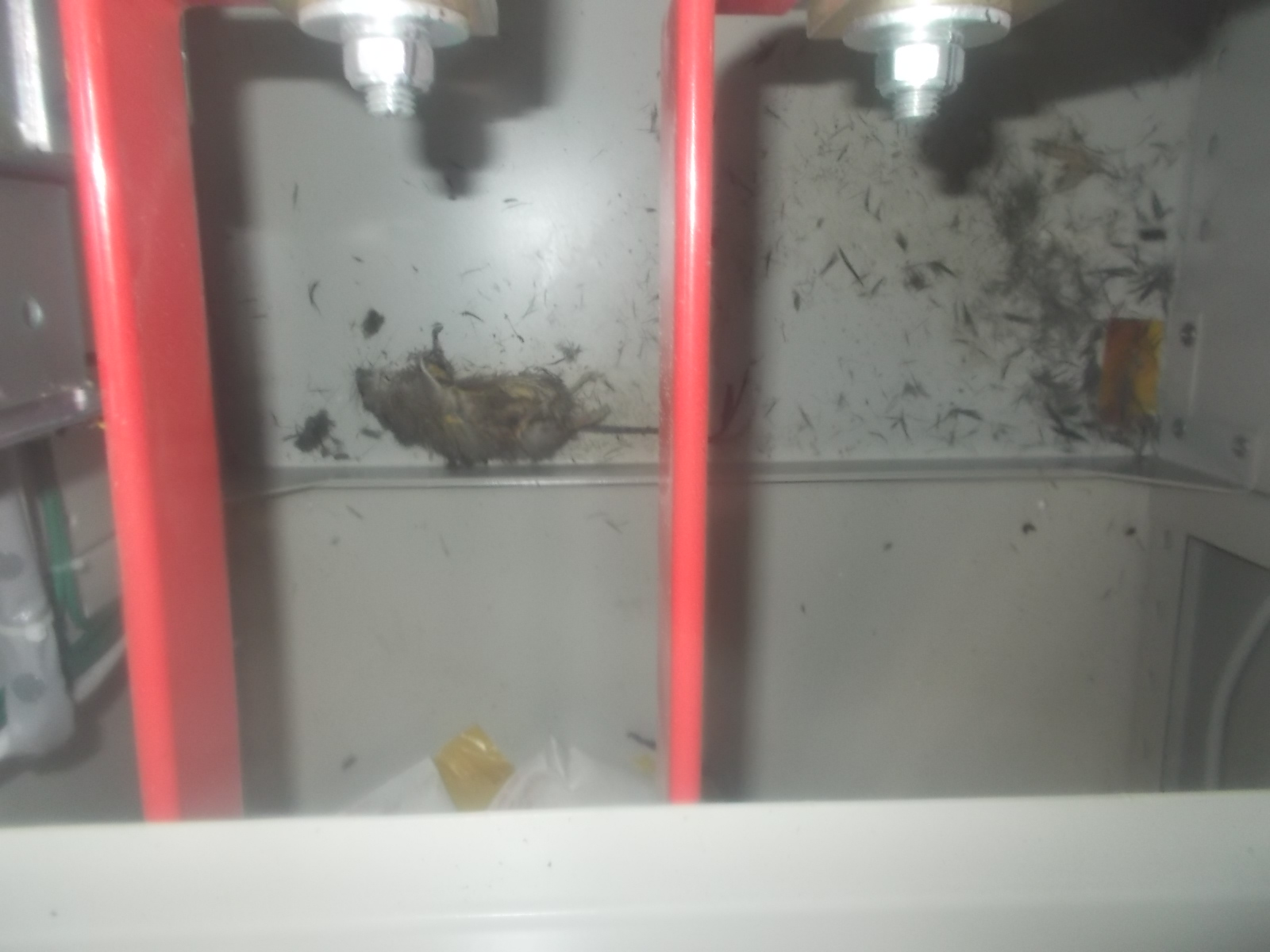
"It was a Rodent of Unusual Size"
It was either a mouse or small rat.
PS. Small animals can tolerate much higher levels of radiation verses those with larger body masses
.
-
Re: Stupid Morons
Thank you for the links. I read the english version of TEPCO's web site. My japanese, despite the nickname, is good only to the 4th of 5 levels of japanese.
I remember a press release in mid-late 2011 that they planned to expand capacity in Chiba and Yokohama, that in practical terms are part of Tokyo. That was the main source of my comment. The expansion of capacity, according to this links:
http://www.tepco.co.jp/en/torikumi/thermal/popup_02.html
http://www.tepco.co.jp/en/torikumi/thermal/popup_03.htmlcomes from the restart of an older big power plant in Yokosuka and the expansion of capacity in Chiba and other places. The bad news comes from the installation of 187 diesel units that will only provide 1,071.5 MW. This is barely above the output of the 2 smallest nuclear power generation units in Japan. Still, I think it would be foolish to try to extend the service time of the older, small nuclear units. Fukushima Daiichi could have been a far less serious accident if Unit 1 didn't got a license to continue in service. Not only because that would have been a one more unit less in service at the time of the accident, but because the explosion of Unit 1 hampered the efforts to put under control Units 2 and 3. For such small units, is not worth the risk.
Best Regards
-
Re: Stupid Morons
Thank you for the links. I read the english version of TEPCO's web site. My japanese, despite the nickname, is good only to the 4th of 5 levels of japanese.
I remember a press release in mid-late 2011 that they planned to expand capacity in Chiba and Yokohama, that in practical terms are part of Tokyo. That was the main source of my comment. The expansion of capacity, according to this links:
http://www.tepco.co.jp/en/torikumi/thermal/popup_02.html
http://www.tepco.co.jp/en/torikumi/thermal/popup_03.htmlcomes from the restart of an older big power plant in Yokosuka and the expansion of capacity in Chiba and other places. The bad news comes from the installation of 187 diesel units that will only provide 1,071.5 MW. This is barely above the output of the 2 smallest nuclear power generation units in Japan. Still, I think it would be foolish to try to extend the service time of the older, small nuclear units. Fukushima Daiichi could have been a far less serious accident if Unit 1 didn't got a license to continue in service. Not only because that would have been a one more unit less in service at the time of the accident, but because the explosion of Unit 1 hampered the efforts to put under control Units 2 and 3. For such small units, is not worth the risk.
Best Regards
-
Re: Stupid Morons
Wrong.
They are not building any new plants, and definitely not in the Tokyo Metropolitan area. They will be making some changes to improve the output of the gas-fired power plant in Chiba, located here.
Press release here: http://www.tepco.co.jp/cc/press/12010603-j.html
TEPCO has stated several times they will not be building any new thermal power plants.
http://ajw.asahi.com/article/0311disaster/fukushima/AJ201203010064
-
Re:Correct
Actually, that is wrong. TEPCO had been given approval to continue using Fukushima Daiichi Unit 1 on Feb 7th 2011 for another 10 years by NISA.
Here is the Japanese press release, feel free to Google to find English sources: http://www.tepco.co.jp/nu/f1-np/press_f1/2010/pdfdata/bi1201-j.pdf
-
Common cause failure+just 2 generators per reactor
Fukushima had nothing to do with probability theory being wrong. Ask google scholar for "common cause failure nuclear" and the oldest citation on the very first page is from 1976. This is age old stuff.
Now look at the greenish boxes on this picture:
http://www.tepco.co.jp/en/news/110311/images/110519_2_2.jpgThose are 7 of the 13 diesel generators about to be flooded. Besides those, there was just one generator in the basement of each turbine building. Only one generator survived (in reactor building #5 - providing power for decay heat removal there and for reactor #6) and this is not surprising. Put all your eggs in one basket and you're in trouble when the basket drops.
The problem was a simple matter of not having enough generators and not putting enough distance between them. Following the most stupid and simple-minded rule imaginable - that of having a distance of 50m or 100m between each emergency generator and having at least 3 generators per reactor (in Germany there are at least 4 for each reactor), you would have ended up with generators on the hills behind the reactors, because there is no room for them anywhere else.
I have no problem with having emergency generators next to the coast or in a basement. Both are potentially sheltered positions from some sort of accident - just not from a tsunami. That's why you should have a diverse set of several emergency generators, if possible based on different designs. (What if you run out of diesel or your most recent diesel delivery was spoiled?)
All the better if you have a modern reactor, like the Russian AES-92 or AES-2006 designs (from 1992 and 2006 respectively) that can remove decay heat without any active systems. (That's right, the Russians a ahead of the game, thanks to not treating research in nuclear power as a waste of money, as it is in the US and EU.)
-
Re:INSIDE THE CONTAINMENT CHAMBER
A better reference than TFA, the report from TEPCO: "Reference Result of the dose measurement in the second investigation inside of Primary Containment Vessels, Unit 2, Fukushima Daiichi Nuclear Power Plant" with the precise location of measurements and the last report (Mar 27,2012) from TEPCO regarding Unit 2 of Fukushima Daiichi:
- At 10:10 am on March 26, 2011, we started injecting freshwater to the reactor and are now injecting fresh water by a motor driven pump powered by the off-site transmission line.
- At 2:59 pm on September 14, 2011, in addition to water injection from feed water system, we started water injection from piping of core spray system to the reactor.
The current water injection amount from the reactor feed water system is approx. 2.7 m3/h and that from the core spray system is approx. 6m3/h.
- At 5:21 pm on May 31, 2011, we started cyclic cooling for the water in the spent fuel pool by an alternative cooling equipment of the Fuel Pool Cooling and Filtering System.
- At 8:06 pm on June 28, 2011, we started injecting nitrogen gas into the Primary Containment Vessel.
- At 6:00 pm on October 28, 2011, a full operation of the PCV gas control system started.
- From 9:40 am to 12:30 pm on March 26, the water level and water temperature inside the PCV of Unit 2 was investigated with the industrial endoscope. As a result, the water level was confirmed to be 60 cm from the bottom of the PCV and the water temperature was confirmed to be in the range of approx. 48.5 to 50.0 .
- At 12:10 pm on March 27, the amount of injected nitrogen into the PCV was adjusted from 0 Nm3/h to approx. 5 Nm3/h as the internal investigation of the Unit 2 PCV was finished.
- At 10:46 am on December 1, 2011, we started the nitrogen injection to the Reactor Pressure Vessel.
- At 11:50 am on January 19, 2012, we started the operation of the spent fuel pool desalting facility.TEPCO should be blamed for their negligence in not raising the height of the seawalls and leaving two big nuclear power stations at the mercy of a tsunami, the executives that didn't do it are 1 year late to jail, but after march their engineers have dealt with the nuclear emergency as good as possible.
-
Re:INSIDE THE CONTAINMENT CHAMBER
A better reference than TFA, the report from TEPCO: "Reference Result of the dose measurement in the second investigation inside of Primary Containment Vessels, Unit 2, Fukushima Daiichi Nuclear Power Plant" with the precise location of measurements and the last report (Mar 27,2012) from TEPCO regarding Unit 2 of Fukushima Daiichi:
- At 10:10 am on March 26, 2011, we started injecting freshwater to the reactor and are now injecting fresh water by a motor driven pump powered by the off-site transmission line.
- At 2:59 pm on September 14, 2011, in addition to water injection from feed water system, we started water injection from piping of core spray system to the reactor.
The current water injection amount from the reactor feed water system is approx. 2.7 m3/h and that from the core spray system is approx. 6m3/h.
- At 5:21 pm on May 31, 2011, we started cyclic cooling for the water in the spent fuel pool by an alternative cooling equipment of the Fuel Pool Cooling and Filtering System.
- At 8:06 pm on June 28, 2011, we started injecting nitrogen gas into the Primary Containment Vessel.
- At 6:00 pm on October 28, 2011, a full operation of the PCV gas control system started.
- From 9:40 am to 12:30 pm on March 26, the water level and water temperature inside the PCV of Unit 2 was investigated with the industrial endoscope. As a result, the water level was confirmed to be 60 cm from the bottom of the PCV and the water temperature was confirmed to be in the range of approx. 48.5 to 50.0 .
- At 12:10 pm on March 27, the amount of injected nitrogen into the PCV was adjusted from 0 Nm3/h to approx. 5 Nm3/h as the internal investigation of the Unit 2 PCV was finished.
- At 10:46 am on December 1, 2011, we started the nitrogen injection to the Reactor Pressure Vessel.
- At 11:50 am on January 19, 2012, we started the operation of the spent fuel pool desalting facility.TEPCO should be blamed for their negligence in not raising the height of the seawalls and leaving two big nuclear power stations at the mercy of a tsunami, the executives that didn't do it are 1 year late to jail, but after march their engineers have dealt with the nuclear emergency as good as possible.
-
"cold shutdown condition"
BMOC: Containment has almost nothing to do with cold shutdown.
According to TEPCO, it does:
TEPCO: Definition of "Cold Shutdown Condition":
(Roadmap towards Restoration from the Accident at Fukushima Daiichi Nuclear Power Station, 17 Nov 2011, Nuclear Emergency Response Headquarters, Government-TEPCO Integrated Response Office)
TEPCO *is* changing the standard definition of "cold shutdown" somewhat. Now, they have *added* a containment requirement, so they're not really loosening any standards. Of course, normally "cold shutdown" doesn't include a containment requirement because normally the reactor vessel isn't breached.
zeigerpuppy has a point in that "cold shutdown" normally implies a state of normal control. Cold shutdown typically means the reactor is stopped, doesn't need active cooling, and can be safely opened for maintenance. Fuku is still an active disaster site.
I'm not advocating panic (what's the sense in that?), but fair criticism of TEPCO is, I think, well-deserved.
-
Re:What about the tsunami?
Meanwhile, starting next week workers at Fukushima Daiichi will stop the use of face masks except in the work areas around the crippled units:
Change to the Rules of Wearing Full Face Masks at the Site of Fukushima Daiichi Nuclear Power Station
Still it didn't stop people to post stupid things in this CNNgo article: Journeys to the edge: Tourism in Fukushima makes more sense now
Being worried about radioactive iodine from Fukushima Daiichi makes the same sense of being worried about wild siberian tigers in New York City. -
Re:What could possibly go wrong?
I confirm what said AC about AC cuts.
There were some power cuts for a short period time from March after the big(gest) earthquake.
"Power cuts" should not be confused with "Power saving" that Tokyo (and most of Northern Japan) was doing and is still doing as of today.
Tepco provides a graph (in English, please) that shows where stands the power consumption, compared to previous year and previous day. -
Re:Japanese Glasnost
Hahahah! That was actually funny..
Yes, Soviet Union was really open about Chernobyl! HAHAHA!
http://www.iaea.org/newscenter/news/tsunamiupdate01.html
http://www.tepco.co.jp/en/press/corp-com/release/11090809-e.htmlYes, they are really secretive about it. HAHAHA! Seriously, your post is funny.
-
Re:Inefficient
The key thing is that this setup is actually very good for emergencies, specially in densely populated areas like urban Japan where you can't put easily a household generator like in small apartments.
From TFA:
The lithium ion batteries in a Leaf can story up to 24kWh (kilowatt hours) of electricity, which Nissan estimates is sufficient to power an average Japanese home for about two days. That means if the system was used for a few hours during the day, the car would still retain enough power to make trips.
Since supply is very tight in central and eastern Japan and they are forecasting that these zones will be facing power shortages up to the year 2014, this system is a very good fit to smooth the power demand. For example, for Tokyo Electric Company service area, the demand curve is in this link:
http://www.tepco.co.jp/en/forecast/html/index-e.html#graph1The yellow band is the time that TEPCO is requesting customers to reduce their demand to prevent blackouts. If this system becomes widely used instead of seeing their demand drop below 49% at 3 am. and getting close to 100% at 8 pm. in normal circumstances with the help of customers they could increase the demand in the midnight hours and decrease their peak demand even if customers go with their normal energy consumption, and in the process achieve something similar to a smart grid without actually building it.
-
Detailed analysis of released nucleides
It is in the attachment from this press release from TEPCO:
http://www.tepco.co.jp/en/press/corp-com/release/11060707-e.html
Improvement plan for the exact nuclide analysis at the site of Fukushima Daiichi Nuclear Power Station under instruction of NISA (Continued report 4)
The most surprising thing is that they found traces of Te-129 with an half life of 70 minutes in some samples from sea water not in the immediate vicinity of the NPS.
-
Relatively to temps enough to cause more damage
Termal camera measurements, and instrumentation show that the temps inside the reactor pressure vessels are at 270 C max, bad because that means that still is coming radioactive steam from the damaged reactors, good since that means that even if most fuel has melted, it didn't became a bloob of molten fuel damaging even more the reactor pressure vessels, meaning that as bad has is has get up to now, we are not dealing with the fuel out in the open like in the case of the Chernobyl disaster. The submission was pointing to a very short on details press article, but from the horse's mouth:
http://www.tepco.co.jp/en/press/corp-com/release/11052412-e.html
Press Release (May 24,2011)
Submission of a report on the operation of the plant based on the plant data etc. of Fukushima Daiichi Nuclear Power Station at the time of the earthquake to Nuclear and Industrial Safety Agency, Ministry of Economy, Trade and Industry
From the attached documents, we can see an english summary of the damage to the reactor cores in the best and worst case scenario, but if you can read japanese, this attachment:
http://www.tepco.co.jp/cc/press/betu11_j/images/110524a.pdfhas a far more detailed analysis with real data and scans from the operation log and charts from the instrumentation at the operation rooms. The most interesting data aside reactor status and analysis is the table at page 138 that shows seismometer data. The highest readings detected was of accelerations of up to 550 gals at 4th floor of unit 2 and 302 gal at same's unit basement; so we can make an educated guess that the different outcome of the damage at this unit from its twin, unit 3 was influenced by the stronger effect from the earthquake.
-
Relatively to temps enough to cause more damage
Termal camera measurements, and instrumentation show that the temps inside the reactor pressure vessels are at 270 C max, bad because that means that still is coming radioactive steam from the damaged reactors, good since that means that even if most fuel has melted, it didn't became a bloob of molten fuel damaging even more the reactor pressure vessels, meaning that as bad has is has get up to now, we are not dealing with the fuel out in the open like in the case of the Chernobyl disaster. The submission was pointing to a very short on details press article, but from the horse's mouth:
http://www.tepco.co.jp/en/press/corp-com/release/11052412-e.html
Press Release (May 24,2011)
Submission of a report on the operation of the plant based on the plant data etc. of Fukushima Daiichi Nuclear Power Station at the time of the earthquake to Nuclear and Industrial Safety Agency, Ministry of Economy, Trade and Industry
From the attached documents, we can see an english summary of the damage to the reactor cores in the best and worst case scenario, but if you can read japanese, this attachment:
http://www.tepco.co.jp/cc/press/betu11_j/images/110524a.pdfhas a far more detailed analysis with real data and scans from the operation log and charts from the instrumentation at the operation rooms. The most interesting data aside reactor status and analysis is the table at page 138 that shows seismometer data. The highest readings detected was of accelerations of up to 550 gals at 4th floor of unit 2 and 302 gal at same's unit basement; so we can make an educated guess that the different outcome of the damage at this unit from its twin, unit 3 was influenced by the stronger effect from the earthquake.
-
Re:Uh... summary?
If you have *airborne* plutonium, you have *huge* problems. The boiling point of plutonium is nearly 6000 degrees Fahrenheit. And even if you're getting plutonium from water, it inherently means that the zirconium cladding has melted off the rods. Arguing that that this happened in the cooling ponds isn't exactly going to win you any brownie points in the "Nuclear power is safe" front.
IANANE
Wouldn't the zirconium melting occur as part of the "meltdown" anyway?You realize you're talking about the same people who were accurately describing how serious this situation was
In all fairness, they were getting drowned out by the "nuclear is always bad" crowd.
Good info in your links though, I'll have to mull that over for a while, thanks.
I was able to find an official source supporting a leaking containment vessel.It is also expected that the leakage of radioactive substances from the primary containment vessel will be decreased by flooding the bare part of the spent fuels.
-
Re:Misleading Title As Usual
8 hours on units 2 and 3; which have a different cooling makeup.
1 may have only had 6 hours.Also, it may have been a sensor issue.
http://www.tepco.co.jp/en/press/corp-com/release/betu11_e/images/110515e10.pdf
-
Measurements of contamination on site
http://www.tepco.co.jp/en/press/corp-com/release/betu11_e/images/110514e10.pdf
They haven't detected anything in the deep well from the power plant since 3 weeks at least. The most worrying contaminant released, cesium 137, has been detected mostly in soil northwest; and will be a cause of concern depending of how is accumulated by living beings. They have detected it in tea leaves, but still is unknown if it comes from rain/air or it was absorbed from soil
-
Why is this news?
TEPCO already has stated that they know that core was damaged, and amended their estimate after reviewing the new data in 27/April/2011, 2 weeks ago:
http://www.tepco.co.jp/en/press/corp-com/release/11042713-e.htmlAmendments to the estimate value of the core damage ratio of Unit 1 to 3 of Fukushima Daiichi Nuclear Power Station based on the measurement of the Containment Atmospheric Monitoring System
In the attachments in that link they show the revised core damage ratios for unit 1 from 55% to 70%, for unit 2 from 35% to 30%, for unit 3 from 30% to 25%. Also, since they started to inject boronated water since 13/march/2011 is almost impossible that the damaged fuel formed a radioactive lava bloob. Certainly, that damaged fuel is the cause of all the radioactive contamination coming out from the site since march 12th, and TEPCO should deal with the damage that the buildings had sustained from the fires and explosions, but they couldn't have taken a look inside the reactor unless they have removed the cover, something that is impossible to do at the moment. The leakages can be because corrosion from the salt water, cracks in building structure or damage on tubes, but still they have no direct way to know what is in the bottom of the core vessel. It was obvious from this series of reports that something was still leaking water outside:
http://www.tepco.co.jp/en/press/corp-com/release/11051211-e.htmlOut flow of fluid containing radioactive materials to the ocean from areas near intake canal of Fukushima Daiichi Nuclear Power Station Unit 2 (continued report 38)
if you see pages 3 and 4 of the attachment, is clear that they had an uncontrolled release of radioactive water from an unknown point to the sea at least since April 30th, the graphs are like a jigsaw instead of a smooth descending line like in the previous days, but it appears that in order to showcase the evident success in some of the emergency works they tried to put under the rug the new troubles that they were having.
-
Why is this news?
TEPCO already has stated that they know that core was damaged, and amended their estimate after reviewing the new data in 27/April/2011, 2 weeks ago:
http://www.tepco.co.jp/en/press/corp-com/release/11042713-e.htmlAmendments to the estimate value of the core damage ratio of Unit 1 to 3 of Fukushima Daiichi Nuclear Power Station based on the measurement of the Containment Atmospheric Monitoring System
In the attachments in that link they show the revised core damage ratios for unit 1 from 55% to 70%, for unit 2 from 35% to 30%, for unit 3 from 30% to 25%. Also, since they started to inject boronated water since 13/march/2011 is almost impossible that the damaged fuel formed a radioactive lava bloob. Certainly, that damaged fuel is the cause of all the radioactive contamination coming out from the site since march 12th, and TEPCO should deal with the damage that the buildings had sustained from the fires and explosions, but they couldn't have taken a look inside the reactor unless they have removed the cover, something that is impossible to do at the moment. The leakages can be because corrosion from the salt water, cracks in building structure or damage on tubes, but still they have no direct way to know what is in the bottom of the core vessel. It was obvious from this series of reports that something was still leaking water outside:
http://www.tepco.co.jp/en/press/corp-com/release/11051211-e.htmlOut flow of fluid containing radioactive materials to the ocean from areas near intake canal of Fukushima Daiichi Nuclear Power Station Unit 2 (continued report 38)
if you see pages 3 and 4 of the attachment, is clear that they had an uncontrolled release of radioactive water from an unknown point to the sea at least since April 30th, the graphs are like a jigsaw instead of a smooth descending line like in the previous days, but it appears that in order to showcase the evident success in some of the emergency works they tried to put under the rug the new troubles that they were having.
-
Better pictures directly from TEPCO
In their photos for press page:
http://www.tepco.co.jp/en/news/110311/index-e.htmlThe air filtering equipment:
http://www.tepco.co.jp/en/news/110311/images/110505_1.jpgAir ducts:
http://www.tepco.co.jp/en/news/110311/images/110506_2.jpgRadiation dose measurements by worker inside reactor building:
http://www.tepco.co.jp/en/news/110311/images/110506_1.jpgIf these pictures had been available sooner I would have added them to the submission.
-
Better pictures directly from TEPCO
In their photos for press page:
http://www.tepco.co.jp/en/news/110311/index-e.htmlThe air filtering equipment:
http://www.tepco.co.jp/en/news/110311/images/110505_1.jpgAir ducts:
http://www.tepco.co.jp/en/news/110311/images/110506_2.jpgRadiation dose measurements by worker inside reactor building:
http://www.tepco.co.jp/en/news/110311/images/110506_1.jpgIf these pictures had been available sooner I would have added them to the submission.
-
Better pictures directly from TEPCO
In their photos for press page:
http://www.tepco.co.jp/en/news/110311/index-e.htmlThe air filtering equipment:
http://www.tepco.co.jp/en/news/110311/images/110505_1.jpgAir ducts:
http://www.tepco.co.jp/en/news/110311/images/110506_2.jpgRadiation dose measurements by worker inside reactor building:
http://www.tepco.co.jp/en/news/110311/images/110506_1.jpgIf these pictures had been available sooner I would have added them to the submission.
-
Better pictures directly from TEPCO
In their photos for press page:
http://www.tepco.co.jp/en/news/110311/index-e.htmlThe air filtering equipment:
http://www.tepco.co.jp/en/news/110311/images/110505_1.jpgAir ducts:
http://www.tepco.co.jp/en/news/110311/images/110506_2.jpgRadiation dose measurements by worker inside reactor building:
http://www.tepco.co.jp/en/news/110311/images/110506_1.jpgIf these pictures had been available sooner I would have added them to the submission.
-
Re:Severe weather in Virginia likely the culprit
I was wrong about the power output of our emergency power plant, is 650 kW not 350 kW. Is for 100kW of computing and comms equipment and 8 HVAC. In one of the previous discussions over Fukushima there was a very good post about a conference in Caltech from an expert in nuclear safety that had a picture of the knocked out generators. Also, you can see in this link the pictures and videos of Fukushima directly from TEPCO:
http://www.tepco.co.jp/en/news/110311/index-e.htmlBest Regards
-
I don't lie and here is why
The concentration of volatile radionuclides in the air from Fukushima Daiichi is below the maximum allowable limit at the moment. See
http://www.tepco.co.jp/en/press/corp-com/release/11042405-e.html Press Release (Apr 24,2011)
The results of nuclide analyses of radioactive materials in the air at the site of Fukushima Daiichi Nuclear Power Station (30th release)
And the attached documents:
http://www.tepco.co.jp/en/press/corp-com/release/betu11_e/images/110424e4.pdf
http://www.tepco.co.jp/en/press/corp-com/release/betu11_e/images/110424e5.pdf
http://www.tepco.co.jp/en/press/corp-com/release/betu11_e/images/110424e6.pdfIn the last document, you can see that the concentration of volatile radionuclides at Fukushima Daini is almost two magnitudes below the maximum limit set by regulation. I'm not here defending TEPCO, because if their managers had been a little bit less greedy and far more intelligent that power station could be out of service but overall fine; also, I wouldn't have been forced by my death scared family to cancel my spring vacations to Japan and lose around 800-1000 USD in the process. In fact, I should be on board of one of the planes at my returning home flight at this precise time.
Best regards
-
I don't lie and here is why
The concentration of volatile radionuclides in the air from Fukushima Daiichi is below the maximum allowable limit at the moment. See
http://www.tepco.co.jp/en/press/corp-com/release/11042405-e.html Press Release (Apr 24,2011)
The results of nuclide analyses of radioactive materials in the air at the site of Fukushima Daiichi Nuclear Power Station (30th release)
And the attached documents:
http://www.tepco.co.jp/en/press/corp-com/release/betu11_e/images/110424e4.pdf
http://www.tepco.co.jp/en/press/corp-com/release/betu11_e/images/110424e5.pdf
http://www.tepco.co.jp/en/press/corp-com/release/betu11_e/images/110424e6.pdfIn the last document, you can see that the concentration of volatile radionuclides at Fukushima Daini is almost two magnitudes below the maximum limit set by regulation. I'm not here defending TEPCO, because if their managers had been a little bit less greedy and far more intelligent that power station could be out of service but overall fine; also, I wouldn't have been forced by my death scared family to cancel my spring vacations to Japan and lose around 800-1000 USD in the process. In fact, I should be on board of one of the planes at my returning home flight at this precise time.
Best regards
-
I don't lie and here is why
The concentration of volatile radionuclides in the air from Fukushima Daiichi is below the maximum allowable limit at the moment. See
http://www.tepco.co.jp/en/press/corp-com/release/11042405-e.html Press Release (Apr 24,2011)
The results of nuclide analyses of radioactive materials in the air at the site of Fukushima Daiichi Nuclear Power Station (30th release)
And the attached documents:
http://www.tepco.co.jp/en/press/corp-com/release/betu11_e/images/110424e4.pdf
http://www.tepco.co.jp/en/press/corp-com/release/betu11_e/images/110424e5.pdf
http://www.tepco.co.jp/en/press/corp-com/release/betu11_e/images/110424e6.pdfIn the last document, you can see that the concentration of volatile radionuclides at Fukushima Daini is almost two magnitudes below the maximum limit set by regulation. I'm not here defending TEPCO, because if their managers had been a little bit less greedy and far more intelligent that power station could be out of service but overall fine; also, I wouldn't have been forced by my death scared family to cancel my spring vacations to Japan and lose around 800-1000 USD in the process. In fact, I should be on board of one of the planes at my returning home flight at this precise time.
Best regards
-
I don't lie and here is why
The concentration of volatile radionuclides in the air from Fukushima Daiichi is below the maximum allowable limit at the moment. See
http://www.tepco.co.jp/en/press/corp-com/release/11042405-e.html Press Release (Apr 24,2011)
The results of nuclide analyses of radioactive materials in the air at the site of Fukushima Daiichi Nuclear Power Station (30th release)
And the attached documents:
http://www.tepco.co.jp/en/press/corp-com/release/betu11_e/images/110424e4.pdf
http://www.tepco.co.jp/en/press/corp-com/release/betu11_e/images/110424e5.pdf
http://www.tepco.co.jp/en/press/corp-com/release/betu11_e/images/110424e6.pdfIn the last document, you can see that the concentration of volatile radionuclides at Fukushima Daini is almost two magnitudes below the maximum limit set by regulation. I'm not here defending TEPCO, because if their managers had been a little bit less greedy and far more intelligent that power station could be out of service but overall fine; also, I wouldn't have been forced by my death scared family to cancel my spring vacations to Japan and lose around 800-1000 USD in the process. In fact, I should be on board of one of the planes at my returning home flight at this precise time.
Best regards
-
The actual road map ...The actual roadmap documents are available from http://www.tepco.co.jp/en/press/corp-com/release/11041707-e.html .
A few comments : (110417e12.pdf)
Prevention of hydrogen explosion inside the primary containment vessel (hereafter, PCV) (Units 1 to 3.)
ãf Cooling the reactor by injecting fresh water into the reactor increases the chance of steam condensation, leading to a concern of potentially triggering a hydrogen explosion.
â'Nitrogen gas will be injected into the PCV of each unit to keep the concentration of hydrogen and oxygen below flammability limit.Several comments I've seen and heard have said that nitrogen injection was being used to COOL the reactors. This it seems, is not the case.
(110417e13.pdf)
Current Status [7]: Walls of the building supporting the pool have been damaged.
â'Tolerance evaluation is especially needed for Unit 4.
â'A certain level of seismic tolerance has been confirmed.Why do I feel a terrible sense of impending doom when I read things like that?
(110417e13.pdf)
Current Status [11]: High likelihood of underground water around the building (sub-drainage water) to be contaminated.
Countermeasure [36]: Preparing to decontaminate sub-drainage water after being pumped up.Hmmm, hadn't heard that one mentioned in the news. Not surprising, but it's another thing to be done.
(110417e13.pdf)
Countermeasure [45]: Reuse of processed water as reactor coolant.
That makes sense. No point in using clean water to clean up shit if you've got shitty water around. At least, to start with.
(110417e13.pdf)
Countermeasure [55]: Complete installing reactor building covers (Units 1, 3, 4.)
Risk [9]: Possibility of cover being damaged by a huge typhoon.Uh oh! When does typhoon season start there? Summer / Early Autumn according to Wikipedia.
Uh oh!(110417e14.pdf)
[As an aim for the future.]Remote control of water injection
So, to control injection at the moment, someone physically has to go and turn on pumps. In the contamination zone. Yeuch!
Fancy swapping your daily commute and life in the cubicle farm for that sort of day job?Lots of work there. Good steady career.
-
The actual road map ...The actual roadmap documents are available from http://www.tepco.co.jp/en/press/corp-com/release/11041707-e.html .
A few comments : (110417e12.pdf)
Prevention of hydrogen explosion inside the primary containment vessel (hereafter, PCV) (Units 1 to 3.)
ãf Cooling the reactor by injecting fresh water into the reactor increases the chance of steam condensation, leading to a concern of potentially triggering a hydrogen explosion.
â'Nitrogen gas will be injected into the PCV of each unit to keep the concentration of hydrogen and oxygen below flammability limit.Several comments I've seen and heard have said that nitrogen injection was being used to COOL the reactors. This it seems, is not the case.
(110417e13.pdf)
Current Status [7]: Walls of the building supporting the pool have been damaged.
â'Tolerance evaluation is especially needed for Unit 4.
â'A certain level of seismic tolerance has been confirmed.Why do I feel a terrible sense of impending doom when I read things like that?
(110417e13.pdf)
Current Status [11]: High likelihood of underground water around the building (sub-drainage water) to be contaminated.
Countermeasure [36]: Preparing to decontaminate sub-drainage water after being pumped up.Hmmm, hadn't heard that one mentioned in the news. Not surprising, but it's another thing to be done.
(110417e13.pdf)
Countermeasure [45]: Reuse of processed water as reactor coolant.
That makes sense. No point in using clean water to clean up shit if you've got shitty water around. At least, to start with.
(110417e13.pdf)
Countermeasure [55]: Complete installing reactor building covers (Units 1, 3, 4.)
Risk [9]: Possibility of cover being damaged by a huge typhoon.Uh oh! When does typhoon season start there? Summer / Early Autumn according to Wikipedia.
Uh oh!(110417e14.pdf)
[As an aim for the future.]Remote control of water injection
So, to control injection at the moment, someone physically has to go and turn on pumps. In the contamination zone. Yeuch!
Fancy swapping your daily commute and life in the cubicle farm for that sort of day job?Lots of work there. Good steady career.
-
If by robots you mean automat machines...
... here are pictures of the operators of those machines:
http://english.kyodonews.jp/photos/2011/04/84830.htmland the remote control machinery at work:
http://www.tepco.co.jp/en/news/110311/images/110411_1f_system1_8.jpg
http://www.tepco.co.jp/en/news/110311/images/110411_1f_system1_7.jpg
http://www.tepco.co.jp/en/news/110311/images/110411_1f_system1_5.jpg
http://www.tepco.co.jp/en/news/110311/images/110411_1f_system1_1.jpgMaybe, just maybe, they found that the best tool for what they wanted to do is this robot made in America?
-
If by robots you mean automat machines...
... here are pictures of the operators of those machines:
http://english.kyodonews.jp/photos/2011/04/84830.htmland the remote control machinery at work:
http://www.tepco.co.jp/en/news/110311/images/110411_1f_system1_8.jpg
http://www.tepco.co.jp/en/news/110311/images/110411_1f_system1_7.jpg
http://www.tepco.co.jp/en/news/110311/images/110411_1f_system1_5.jpg
http://www.tepco.co.jp/en/news/110311/images/110411_1f_system1_1.jpgMaybe, just maybe, they found that the best tool for what they wanted to do is this robot made in America?