Slashdot Mirror
Domain: wikipedia.org
Stories and comments across the archive that link to wikipedia.org.
Stories · 7,048
-
It isn't Easy Being Green and Getting to LEO
MWTJ writes "The BBC has a story about the environmental impact of the space shuttle. One of the things that started the modern environmentalist movement were pictures of the Earth from space, so we could see the beauty of the planet as never before. We could also see environmental destruction from space. But what is the impact of the space program on our planet? The story talks about the switch to Freon-free insulation, the use of clean-burning hydrogen/LOX fuel, and other factors. What else could be done to get to space with minimal harm to the planet?" -
It isn't Easy Being Green and Getting to LEO
MWTJ writes "The BBC has a story about the environmental impact of the space shuttle. One of the things that started the modern environmentalist movement were pictures of the Earth from space, so we could see the beauty of the planet as never before. We could also see environmental destruction from space. But what is the impact of the space program on our planet? The story talks about the switch to Freon-free insulation, the use of clean-burning hydrogen/LOX fuel, and other factors. What else could be done to get to space with minimal harm to the planet?" -
Carmack's Throatless Rocket Engine
Baldrson writes "John Carmack is working a potentially disruptive technology: A throatless rocket engine. Its made from plain aluminum pipes with few machined fittings. Carmack says: "The great thing about these engines is that it only takes me two nights to machine the parts, so we can test two engines a week if necessary." It scales too: "If this line of tube engine development works out, we can make a 5,000 lbf engine with very little more effort than the test engine." This is what makes disruptive technology development work: Cheap, fast turnaround on on redesign producing technologies that scale. If this works, the NASCAR guys may really start entering space competitions like the X-Cup." -
60 Years Since Hiroshima
cryptoz writes "Today is the 6th of August, 2005, exactly 60 years after the first nuclear device was used in a war. Japan remembers what happened, as do those around the world. Elswhere, we remember where the bomb hit, as well as how it worked." From the article about Japan's observation of the anniversary: "The anniversary comes as regional powers meet in Beijing to urge North Korea to give up its nuclear programme, seen by Tokyo as a threat and one of the reasons behind rising calls in Japan to strengthen its defence and seek closer military ties with the United States. Prime Minister Junichiro Koizumi was among those attending the ceremony in Hiroshima, 690 km (430 miles) southwest of Tokyo." We've previously reported on the anniversary of the first nuclear explosion. -
60 Years Since Hiroshima
cryptoz writes "Today is the 6th of August, 2005, exactly 60 years after the first nuclear device was used in a war. Japan remembers what happened, as do those around the world. Elswhere, we remember where the bomb hit, as well as how it worked." From the article about Japan's observation of the anniversary: "The anniversary comes as regional powers meet in Beijing to urge North Korea to give up its nuclear programme, seen by Tokyo as a threat and one of the reasons behind rising calls in Japan to strengthen its defence and seek closer military ties with the United States. Prime Minister Junichiro Koizumi was among those attending the ceremony in Hiroshima, 690 km (430 miles) southwest of Tokyo." We've previously reported on the anniversary of the first nuclear explosion. -
Wikipedia Announces Tighter Editorial Control
Daedalus_ wrote to mention a Reuters article reporting from Wikimania. "Wikipedia, the Web encyclopaedia written and edited by Internet users from all over the world, plans to impose stricter editorial rules to prevent vandalism of its content, founder Jimmy Wales was quoted as saying Friday." (Update: 08/06 23:45 GMT by J : But see his response here!) Meanwhile, kyelewis writes "WikiMania, the First International WikiMedia Conference is open in Germany, but if you couldn't gather the money or the courage to fly over, you can listen online in Ogg Vorbis format, or if you miss the talks, you can download them later. The WikiMania Broadcast page has more information, and the WikiMania Programme is also available, so jump in and learn more about the mysterious technology that is the wiki." -
Power Up
cafeman writes "This was a really hard review to write. It's been a long time since I've read a book that was so fascinating on the first reading and yet raised so many questions on the second and third. Books on the history of gaming are relatively few -- Joystick Nation, High Score, Game Over, Masters of Doom and The Ultimate History of Video Games, the major works on the topic, all focus on the West. Finding out more about the history of gaming in Japan is harder. Suffice to say that if you're interested in game trivia, Japanese console gaming industry history, or the Eastern cultural drivers behind game design and communication, you owe it to yourself to get Power Up. Why was the book so frustrating? That's an interesting question, one that I've since put a lot of thought into. Much to the annoyance of my wife, I might add." Read on for the rest of cafeman's review. Power Up: How Japanese Video Games Gave the World an Extra Life author Chris Kohler pages 312 publisher Brady Games rating 8 reviewer Cafeman ISBN 0744004241 summary An overview of the influence Japanese video games have had on the global industry.
This book is packed with information. For a book of only around 300 pages, Chris Kohler does an amazing job of maintaining the information flow without making it too dense. Unfortunately, this is the book's biggest weakness -- he does such a good job of including so much interesting information, his principal thesis gets lost.
The premise of the book appears pretty simple. Chris Kohler believes that Japanese video games have had a greater influence on Western game design, game promotion, and culture than previously recognized. He asks and tries to answer three questions (in his words):- What makes video games designed in Japan so phenomenally popular all over the world?
- How did the Japanese pioneer cinematic techniques in video games, raising the medium to an art form?
- How have these ideas so completely permeated the gaming world, not to mention our mainstream psyche?
To answer these questions, Chris identifies four key factors that distinguished Japanese game development -- the use of narrative, character abstraction, cinematic sequences, and control. To demonstrate the first three, he draws on specific arcade and console examples from the late '70s and early '80s to contrast Western design against Eastern. From there, he explores the relationship between (and complexities of) control and immersion by examining hardware development and the storytelling to provide context within games. He uses Nintendo's Shigeru Miyamoto's use of industrial and game design to illustrate the importance of control in the immersive game play experience.
After establishing the core concepts of narrative, character abstraction, cinematic sequences, and control, Chris turns to the use of storytelling to create fully developed characters that stimulate emotional responses within the player. To do so, he examines the development of characters and storylines within some of the most famous Japanese RPGs over time, focusing mainly on the Dragon Quest and Final Fantasy series. He also examines music as yet another control mechanism, looking specifically at the history and development of Gitaroo-Man, Parappa the Rappa, and Dance Dance Revolution (all games based on rhythm and music).
To complete the story, Chris then turns to the practical experiences of Westerners Dylan Cuthbert and Giles Goddard in developing the hardware and games for a Japanese games company. The hardware in question was the SuperFX chip, the game Star Fox, and the company Nintendo. By drawing on specific challenges and successes within the project, he highlights the Japanese focus on fun game play and control refinement.
From here, Chris branches off into a collection of tangents describing Japanese gaming culture. He spends a chapter touring Akihabara. He also describes the mentality and business behind Japanese games collectors, ranging from government regulation about when particular games can be released through how to Japan handles games and video rentals. He also examines the perennially popular topic of game translation, including (of course) reference to AYBABTU. More interestingly, he also examines the difficulties of translating language within hardware constraints. He describes a number of case studies showing how some cultural concepts couldn't be translated, how some weren't allowed to be translated, and how some were just badly translated (with unintentional hilarity, much in the same vein as Engrish).
Chris then uses Pokémon, one of the most famous / infamous games to have come out of Japan, to revisit how Japanese games have pervaded the Western psyche. He uses Pokémon as a way of tieing together his arguments into a single example, demonstrating quite powerfully the importance the four key factors had in the creation of a game that appeals to multiple cultures. And, by doing so, he illustrates the influence some Japanese games have had on the world as well as their continuing popularity.
His final chapter forms a more speculative foray into what the future holds for Japanese game design, and by proxy, for the world. He discusses ICO, Blood Omen, and Eternal Darkness, and highlights the continued movement toward fully developed, multidimensional narrative through the use of adult subject matter and emotional connection. His epilogue then ties off the book with a recap of his main points and lays out a number of (briefly described) further research directions and thoughts, such as "How much control is too much?", "Is the Japanese games industry due for a shake-out?", and "Are East-West collaborations the answer?". And, with some reflective thoughts, he ends the book.
Enough of the synopsis; Chris Kohler clearly has a passionate interest in the subject matter. There's no doubt that he's spent lots of time researching the material or that he's highly interested in it. His love of the topic clearly shines through - regardless of whether he's talking about an interview he conducted or a random piece of trivia about the industry, his prose remains engaging, light, and most importantly, clear. His background is in writing reviews, articles, and editorial pieces for publications including Nintendo Official Magazine UK and Wired, and it shows -- he's very clearly used to writing to maintain reader interest.
His knowledge of trivia is also strong -- there are some real gems in this book. For example, I often wondered why Nintendo never marketed their Famicom Disk System outside of Japan. In exploring the challenges of extending the Nintendo's hardware lifecycle, Chris points out the importance of being able to upgrade the console through technology embedded in the cartridges. Rather than having to buy a new console, memory and processor upgrades could be packaged into the cartridge itself, effectively bundling the upgrades with the game. Nintendo realized pretty quickly after releasing the Famicom Disk System that it could offer neither, and so discontinued it at approximately the same time Super Mario 3 was released. Also interesting (but possibly controversial) was that the name "Final Fantasy" came not from Square's belief that it was their final chance at success, but because the head developer, Sakaguchi, planned on quitting Square after finishing it and going back to school. It was thus his "Final Fantasy". The book is peppered with interesting insights like this, and even ignoring his analysis, make purchasing the book worthwhile.
However, not all is roses. Chris's writing, while engaging, is also unfocussed. It's taken my writing this review to clarify exactly what I felt was his chain of logic. While that may be a commentary on my own interpretative abilities, other people who have read his book seem to agree with me. It took me three readings and copious notes to work out what the connecting threads were between chapters, and in turn, between his examples and the main elements of his thesis. Bluntly, the dots are there, but he fails to connect them effectively.
Chris also fails to completely prove the questions he asks at the start of his work. He develops a strong case for Japanese innovation during the early period of video games, but he doesn't do nearly as good a job applying that argument to the present. Despite a chapter devoted to Pokémon (and its success in Western culture), he fails to build a general case on how Japanese games have influenced Western game design, development, and psyche outside of a few specific examples. These normally involve Western developers who have moved over to Japan specifically to work with Nintendo, or games from Nintendo itself.
And that, in a nutshell, sums up where Chris appears to be coming from. His experiences and anecdotes focus around Nintendo almost exclusively, even to the extent of ignoring other Japanese gaming developments which could have further supported his thesis. Discussion of Dragon Quest I, one of the first attempts at an RPG for the Nintendo Famicom System, goes on for many pages. However, Final Fantasy VII, a Japanese game that arguably made the fantasy RPG mainstream in the West, gets only a page of high-level discussion. For the uninitiated, Dragon Quest was released on the Nintendo Famicom system, while Final Fantasy VII was released on the Sony PlayStation. The Nintendo offering gets all the focus.
In short, if it doesn't have to do with Nintendo, it apparently isn't important. Game companies such as Konami, Namco, and Sega are given cursory acknowledgements. Despite an entire chapter devoted to Japanese RPGs, Phantasy Star (another enduring Japanese RPG that introduced first person navigation on the Sega Master System) never even rates a mention, despite being released a year after the original Final Fantasy. One could argue that he largely ignored it because it was released by Sega, a company founded by an American in Japan. However, given that he spends an entire chapter devoted to two Gaijin in Japan, this seems a little inconsistent.
More problematically, his argument (as opposed to his book) only works if one ignores the rest of the world. While this isn't the time or place to fully explore this, his focus on Japan (and consoles specifically) has meant ignoring key developments. For example, he goes into great detail about character development and the use of narrative elements within Japanese RPGs, but completely ignores what was happening in the West in the years preceding them. The Bard's Tale, Wizardry, and more importantly, Ultima, are all completely ignored. While he makes quite a strong case for Japanese innovation during the early years of game development through games such as Donkey Kong and Super Mario World, he completely ignores all further development and refinement taking place in the U.S. This is especially strange when one considers that he has recently written about such games as Psychonauts and appears to have a reasonable knowledge of US and PC gaming history. While his position that Japanese game design influenced global design in the late '70s is plausible, there's a great deal of evidence to suggest that by the mid '80s the opposite was true and that the U.S. was exploring new designs in gaming in their own right, including introducing some interesting party management complexities. Strangely, while this position is actually hinted at through his quotes from Japanese developers, it is ignored. This is unfortunate, as from a historical perspective, it arguably attributes too much credit to Japanese design.
The book, overall, reads as the first book publication by a person used to writing articles of under a few thousand words -- it's punchy, interesting, and full of facts, but it wanders. That could be because of his past, or it could be because of editorial input. Chris freely admits that the book stems from the dissertation he wrote as part of his Fulbright Fellowship in Japan. It's quite possible that the first draft may have been too academic, and in trying to appeal to a more general audience, his publisher encouraged him to add additional background and "fun facts" about the industry. Either way, the book lacks focus. From an interpretative perspective, its greatest strength is also its greatest weakness -- the sheer volume of interesting information distracts from the main threads of his argument. This lack of focus is painfully obvious in the second half of the book - it reads as a collection of unrelated essays.
Despite these reservations, I really enjoyed this book. While the main thesis of the book is hard to follow, it's still an interesting read with lots of trivia, history, and context. Chris clearly has a love of Japanese culture, and there's a dearth of books on this subject matter that treat it seriously. As a reader, I'm looking forward to Chris's next literary work -- based on this book, I'm already digging up his previous works, and I'll be first in line to buy his next. Facts are one thing, but passion is another, and he's definitely got both. My wife, despite not being interested in games in the slightest, has been taking his book to read on the train to work. I know it doesn't sound like much, but in my house, that's a major compliment. If I could recommend anything for the next work, it would be to get some other like-minded people with a good sense of gaming history to assist with the editing process. It would also be interesting to focus on game design and enjoyment with the intention of integrating both East and West design developments.
Every review needs a rating, no matter how illogical or unfair. If you're looking for something that provides some history around the Japanese gaming industry, gives a lot of very interesting facts, and entertains while doing so, I'd give this book an eight, possibly even a nine out of ten. As an academic work, looking at defining and developing an argument based on logic, research, and balanced discussion, I'd have to give it four out of ten. His argument is there (regardless of whether you agree with it or not), as are the supporting facts, but they're so lost in the noise as to be hidden. On a more editorial note, his thesis, while starting strong, grows progressively weaker due to a selective focus on Japan exclusively. While I recognize that this selective focus was intentional, I feel that it undermines his arguments due the breadth of his statements about the influence of Japanese design on the West. Even so, I'd highly recommend the book, and I can guarantee I'll be pre-ordering his next when it's published.
You can purchase Power Up: How Japanese Video Games Gave the World an Extra Life from bn.com. Slashdot welcomes readers' book reviews -- to see your own review here, read the book review guidelines, then visit the submission page. -
Power Up
cafeman writes "This was a really hard review to write. It's been a long time since I've read a book that was so fascinating on the first reading and yet raised so many questions on the second and third. Books on the history of gaming are relatively few -- Joystick Nation, High Score, Game Over, Masters of Doom and The Ultimate History of Video Games, the major works on the topic, all focus on the West. Finding out more about the history of gaming in Japan is harder. Suffice to say that if you're interested in game trivia, Japanese console gaming industry history, or the Eastern cultural drivers behind game design and communication, you owe it to yourself to get Power Up. Why was the book so frustrating? That's an interesting question, one that I've since put a lot of thought into. Much to the annoyance of my wife, I might add." Read on for the rest of cafeman's review. Power Up: How Japanese Video Games Gave the World an Extra Life author Chris Kohler pages 312 publisher Brady Games rating 8 reviewer Cafeman ISBN 0744004241 summary An overview of the influence Japanese video games have had on the global industry.
This book is packed with information. For a book of only around 300 pages, Chris Kohler does an amazing job of maintaining the information flow without making it too dense. Unfortunately, this is the book's biggest weakness -- he does such a good job of including so much interesting information, his principal thesis gets lost.
The premise of the book appears pretty simple. Chris Kohler believes that Japanese video games have had a greater influence on Western game design, game promotion, and culture than previously recognized. He asks and tries to answer three questions (in his words):- What makes video games designed in Japan so phenomenally popular all over the world?
- How did the Japanese pioneer cinematic techniques in video games, raising the medium to an art form?
- How have these ideas so completely permeated the gaming world, not to mention our mainstream psyche?
To answer these questions, Chris identifies four key factors that distinguished Japanese game development -- the use of narrative, character abstraction, cinematic sequences, and control. To demonstrate the first three, he draws on specific arcade and console examples from the late '70s and early '80s to contrast Western design against Eastern. From there, he explores the relationship between (and complexities of) control and immersion by examining hardware development and the storytelling to provide context within games. He uses Nintendo's Shigeru Miyamoto's use of industrial and game design to illustrate the importance of control in the immersive game play experience.
After establishing the core concepts of narrative, character abstraction, cinematic sequences, and control, Chris turns to the use of storytelling to create fully developed characters that stimulate emotional responses within the player. To do so, he examines the development of characters and storylines within some of the most famous Japanese RPGs over time, focusing mainly on the Dragon Quest and Final Fantasy series. He also examines music as yet another control mechanism, looking specifically at the history and development of Gitaroo-Man, Parappa the Rappa, and Dance Dance Revolution (all games based on rhythm and music).
To complete the story, Chris then turns to the practical experiences of Westerners Dylan Cuthbert and Giles Goddard in developing the hardware and games for a Japanese games company. The hardware in question was the SuperFX chip, the game Star Fox, and the company Nintendo. By drawing on specific challenges and successes within the project, he highlights the Japanese focus on fun game play and control refinement.
From here, Chris branches off into a collection of tangents describing Japanese gaming culture. He spends a chapter touring Akihabara. He also describes the mentality and business behind Japanese games collectors, ranging from government regulation about when particular games can be released through how to Japan handles games and video rentals. He also examines the perennially popular topic of game translation, including (of course) reference to AYBABTU. More interestingly, he also examines the difficulties of translating language within hardware constraints. He describes a number of case studies showing how some cultural concepts couldn't be translated, how some weren't allowed to be translated, and how some were just badly translated (with unintentional hilarity, much in the same vein as Engrish).
Chris then uses Pokémon, one of the most famous / infamous games to have come out of Japan, to revisit how Japanese games have pervaded the Western psyche. He uses Pokémon as a way of tieing together his arguments into a single example, demonstrating quite powerfully the importance the four key factors had in the creation of a game that appeals to multiple cultures. And, by doing so, he illustrates the influence some Japanese games have had on the world as well as their continuing popularity.
His final chapter forms a more speculative foray into what the future holds for Japanese game design, and by proxy, for the world. He discusses ICO, Blood Omen, and Eternal Darkness, and highlights the continued movement toward fully developed, multidimensional narrative through the use of adult subject matter and emotional connection. His epilogue then ties off the book with a recap of his main points and lays out a number of (briefly described) further research directions and thoughts, such as "How much control is too much?", "Is the Japanese games industry due for a shake-out?", and "Are East-West collaborations the answer?". And, with some reflective thoughts, he ends the book.
Enough of the synopsis; Chris Kohler clearly has a passionate interest in the subject matter. There's no doubt that he's spent lots of time researching the material or that he's highly interested in it. His love of the topic clearly shines through - regardless of whether he's talking about an interview he conducted or a random piece of trivia about the industry, his prose remains engaging, light, and most importantly, clear. His background is in writing reviews, articles, and editorial pieces for publications including Nintendo Official Magazine UK and Wired, and it shows -- he's very clearly used to writing to maintain reader interest.
His knowledge of trivia is also strong -- there are some real gems in this book. For example, I often wondered why Nintendo never marketed their Famicom Disk System outside of Japan. In exploring the challenges of extending the Nintendo's hardware lifecycle, Chris points out the importance of being able to upgrade the console through technology embedded in the cartridges. Rather than having to buy a new console, memory and processor upgrades could be packaged into the cartridge itself, effectively bundling the upgrades with the game. Nintendo realized pretty quickly after releasing the Famicom Disk System that it could offer neither, and so discontinued it at approximately the same time Super Mario 3 was released. Also interesting (but possibly controversial) was that the name "Final Fantasy" came not from Square's belief that it was their final chance at success, but because the head developer, Sakaguchi, planned on quitting Square after finishing it and going back to school. It was thus his "Final Fantasy". The book is peppered with interesting insights like this, and even ignoring his analysis, make purchasing the book worthwhile.
However, not all is roses. Chris's writing, while engaging, is also unfocussed. It's taken my writing this review to clarify exactly what I felt was his chain of logic. While that may be a commentary on my own interpretative abilities, other people who have read his book seem to agree with me. It took me three readings and copious notes to work out what the connecting threads were between chapters, and in turn, between his examples and the main elements of his thesis. Bluntly, the dots are there, but he fails to connect them effectively.
Chris also fails to completely prove the questions he asks at the start of his work. He develops a strong case for Japanese innovation during the early period of video games, but he doesn't do nearly as good a job applying that argument to the present. Despite a chapter devoted to Pokémon (and its success in Western culture), he fails to build a general case on how Japanese games have influenced Western game design, development, and psyche outside of a few specific examples. These normally involve Western developers who have moved over to Japan specifically to work with Nintendo, or games from Nintendo itself.
And that, in a nutshell, sums up where Chris appears to be coming from. His experiences and anecdotes focus around Nintendo almost exclusively, even to the extent of ignoring other Japanese gaming developments which could have further supported his thesis. Discussion of Dragon Quest I, one of the first attempts at an RPG for the Nintendo Famicom System, goes on for many pages. However, Final Fantasy VII, a Japanese game that arguably made the fantasy RPG mainstream in the West, gets only a page of high-level discussion. For the uninitiated, Dragon Quest was released on the Nintendo Famicom system, while Final Fantasy VII was released on the Sony PlayStation. The Nintendo offering gets all the focus.
In short, if it doesn't have to do with Nintendo, it apparently isn't important. Game companies such as Konami, Namco, and Sega are given cursory acknowledgements. Despite an entire chapter devoted to Japanese RPGs, Phantasy Star (another enduring Japanese RPG that introduced first person navigation on the Sega Master System) never even rates a mention, despite being released a year after the original Final Fantasy. One could argue that he largely ignored it because it was released by Sega, a company founded by an American in Japan. However, given that he spends an entire chapter devoted to two Gaijin in Japan, this seems a little inconsistent.
More problematically, his argument (as opposed to his book) only works if one ignores the rest of the world. While this isn't the time or place to fully explore this, his focus on Japan (and consoles specifically) has meant ignoring key developments. For example, he goes into great detail about character development and the use of narrative elements within Japanese RPGs, but completely ignores what was happening in the West in the years preceding them. The Bard's Tale, Wizardry, and more importantly, Ultima, are all completely ignored. While he makes quite a strong case for Japanese innovation during the early years of game development through games such as Donkey Kong and Super Mario World, he completely ignores all further development and refinement taking place in the U.S. This is especially strange when one considers that he has recently written about such games as Psychonauts and appears to have a reasonable knowledge of US and PC gaming history. While his position that Japanese game design influenced global design in the late '70s is plausible, there's a great deal of evidence to suggest that by the mid '80s the opposite was true and that the U.S. was exploring new designs in gaming in their own right, including introducing some interesting party management complexities. Strangely, while this position is actually hinted at through his quotes from Japanese developers, it is ignored. This is unfortunate, as from a historical perspective, it arguably attributes too much credit to Japanese design.
The book, overall, reads as the first book publication by a person used to writing articles of under a few thousand words -- it's punchy, interesting, and full of facts, but it wanders. That could be because of his past, or it could be because of editorial input. Chris freely admits that the book stems from the dissertation he wrote as part of his Fulbright Fellowship in Japan. It's quite possible that the first draft may have been too academic, and in trying to appeal to a more general audience, his publisher encouraged him to add additional background and "fun facts" about the industry. Either way, the book lacks focus. From an interpretative perspective, its greatest strength is also its greatest weakness -- the sheer volume of interesting information distracts from the main threads of his argument. This lack of focus is painfully obvious in the second half of the book - it reads as a collection of unrelated essays.
Despite these reservations, I really enjoyed this book. While the main thesis of the book is hard to follow, it's still an interesting read with lots of trivia, history, and context. Chris clearly has a love of Japanese culture, and there's a dearth of books on this subject matter that treat it seriously. As a reader, I'm looking forward to Chris's next literary work -- based on this book, I'm already digging up his previous works, and I'll be first in line to buy his next. Facts are one thing, but passion is another, and he's definitely got both. My wife, despite not being interested in games in the slightest, has been taking his book to read on the train to work. I know it doesn't sound like much, but in my house, that's a major compliment. If I could recommend anything for the next work, it would be to get some other like-minded people with a good sense of gaming history to assist with the editing process. It would also be interesting to focus on game design and enjoyment with the intention of integrating both East and West design developments.
Every review needs a rating, no matter how illogical or unfair. If you're looking for something that provides some history around the Japanese gaming industry, gives a lot of very interesting facts, and entertains while doing so, I'd give this book an eight, possibly even a nine out of ten. As an academic work, looking at defining and developing an argument based on logic, research, and balanced discussion, I'd have to give it four out of ten. His argument is there (regardless of whether you agree with it or not), as are the supporting facts, but they're so lost in the noise as to be hidden. On a more editorial note, his thesis, while starting strong, grows progressively weaker due to a selective focus on Japan exclusively. While I recognize that this selective focus was intentional, I feel that it undermines his arguments due the breadth of his statements about the influence of Japanese design on the West. Even so, I'd highly recommend the book, and I can guarantee I'll be pre-ordering his next when it's published.
You can purchase Power Up: How Japanese Video Games Gave the World an Extra Life from bn.com. Slashdot welcomes readers' book reviews -- to see your own review here, read the book review guidelines, then visit the submission page. -
Power Up
cafeman writes "This was a really hard review to write. It's been a long time since I've read a book that was so fascinating on the first reading and yet raised so many questions on the second and third. Books on the history of gaming are relatively few -- Joystick Nation, High Score, Game Over, Masters of Doom and The Ultimate History of Video Games, the major works on the topic, all focus on the West. Finding out more about the history of gaming in Japan is harder. Suffice to say that if you're interested in game trivia, Japanese console gaming industry history, or the Eastern cultural drivers behind game design and communication, you owe it to yourself to get Power Up. Why was the book so frustrating? That's an interesting question, one that I've since put a lot of thought into. Much to the annoyance of my wife, I might add." Read on for the rest of cafeman's review. Power Up: How Japanese Video Games Gave the World an Extra Life author Chris Kohler pages 312 publisher Brady Games rating 8 reviewer Cafeman ISBN 0744004241 summary An overview of the influence Japanese video games have had on the global industry.
This book is packed with information. For a book of only around 300 pages, Chris Kohler does an amazing job of maintaining the information flow without making it too dense. Unfortunately, this is the book's biggest weakness -- he does such a good job of including so much interesting information, his principal thesis gets lost.
The premise of the book appears pretty simple. Chris Kohler believes that Japanese video games have had a greater influence on Western game design, game promotion, and culture than previously recognized. He asks and tries to answer three questions (in his words):- What makes video games designed in Japan so phenomenally popular all over the world?
- How did the Japanese pioneer cinematic techniques in video games, raising the medium to an art form?
- How have these ideas so completely permeated the gaming world, not to mention our mainstream psyche?
To answer these questions, Chris identifies four key factors that distinguished Japanese game development -- the use of narrative, character abstraction, cinematic sequences, and control. To demonstrate the first three, he draws on specific arcade and console examples from the late '70s and early '80s to contrast Western design against Eastern. From there, he explores the relationship between (and complexities of) control and immersion by examining hardware development and the storytelling to provide context within games. He uses Nintendo's Shigeru Miyamoto's use of industrial and game design to illustrate the importance of control in the immersive game play experience.
After establishing the core concepts of narrative, character abstraction, cinematic sequences, and control, Chris turns to the use of storytelling to create fully developed characters that stimulate emotional responses within the player. To do so, he examines the development of characters and storylines within some of the most famous Japanese RPGs over time, focusing mainly on the Dragon Quest and Final Fantasy series. He also examines music as yet another control mechanism, looking specifically at the history and development of Gitaroo-Man, Parappa the Rappa, and Dance Dance Revolution (all games based on rhythm and music).
To complete the story, Chris then turns to the practical experiences of Westerners Dylan Cuthbert and Giles Goddard in developing the hardware and games for a Japanese games company. The hardware in question was the SuperFX chip, the game Star Fox, and the company Nintendo. By drawing on specific challenges and successes within the project, he highlights the Japanese focus on fun game play and control refinement.
From here, Chris branches off into a collection of tangents describing Japanese gaming culture. He spends a chapter touring Akihabara. He also describes the mentality and business behind Japanese games collectors, ranging from government regulation about when particular games can be released through how to Japan handles games and video rentals. He also examines the perennially popular topic of game translation, including (of course) reference to AYBABTU. More interestingly, he also examines the difficulties of translating language within hardware constraints. He describes a number of case studies showing how some cultural concepts couldn't be translated, how some weren't allowed to be translated, and how some were just badly translated (with unintentional hilarity, much in the same vein as Engrish).
Chris then uses Pokémon, one of the most famous / infamous games to have come out of Japan, to revisit how Japanese games have pervaded the Western psyche. He uses Pokémon as a way of tieing together his arguments into a single example, demonstrating quite powerfully the importance the four key factors had in the creation of a game that appeals to multiple cultures. And, by doing so, he illustrates the influence some Japanese games have had on the world as well as their continuing popularity.
His final chapter forms a more speculative foray into what the future holds for Japanese game design, and by proxy, for the world. He discusses ICO, Blood Omen, and Eternal Darkness, and highlights the continued movement toward fully developed, multidimensional narrative through the use of adult subject matter and emotional connection. His epilogue then ties off the book with a recap of his main points and lays out a number of (briefly described) further research directions and thoughts, such as "How much control is too much?", "Is the Japanese games industry due for a shake-out?", and "Are East-West collaborations the answer?". And, with some reflective thoughts, he ends the book.
Enough of the synopsis; Chris Kohler clearly has a passionate interest in the subject matter. There's no doubt that he's spent lots of time researching the material or that he's highly interested in it. His love of the topic clearly shines through - regardless of whether he's talking about an interview he conducted or a random piece of trivia about the industry, his prose remains engaging, light, and most importantly, clear. His background is in writing reviews, articles, and editorial pieces for publications including Nintendo Official Magazine UK and Wired, and it shows -- he's very clearly used to writing to maintain reader interest.
His knowledge of trivia is also strong -- there are some real gems in this book. For example, I often wondered why Nintendo never marketed their Famicom Disk System outside of Japan. In exploring the challenges of extending the Nintendo's hardware lifecycle, Chris points out the importance of being able to upgrade the console through technology embedded in the cartridges. Rather than having to buy a new console, memory and processor upgrades could be packaged into the cartridge itself, effectively bundling the upgrades with the game. Nintendo realized pretty quickly after releasing the Famicom Disk System that it could offer neither, and so discontinued it at approximately the same time Super Mario 3 was released. Also interesting (but possibly controversial) was that the name "Final Fantasy" came not from Square's belief that it was their final chance at success, but because the head developer, Sakaguchi, planned on quitting Square after finishing it and going back to school. It was thus his "Final Fantasy". The book is peppered with interesting insights like this, and even ignoring his analysis, make purchasing the book worthwhile.
However, not all is roses. Chris's writing, while engaging, is also unfocussed. It's taken my writing this review to clarify exactly what I felt was his chain of logic. While that may be a commentary on my own interpretative abilities, other people who have read his book seem to agree with me. It took me three readings and copious notes to work out what the connecting threads were between chapters, and in turn, between his examples and the main elements of his thesis. Bluntly, the dots are there, but he fails to connect them effectively.
Chris also fails to completely prove the questions he asks at the start of his work. He develops a strong case for Japanese innovation during the early period of video games, but he doesn't do nearly as good a job applying that argument to the present. Despite a chapter devoted to Pokémon (and its success in Western culture), he fails to build a general case on how Japanese games have influenced Western game design, development, and psyche outside of a few specific examples. These normally involve Western developers who have moved over to Japan specifically to work with Nintendo, or games from Nintendo itself.
And that, in a nutshell, sums up where Chris appears to be coming from. His experiences and anecdotes focus around Nintendo almost exclusively, even to the extent of ignoring other Japanese gaming developments which could have further supported his thesis. Discussion of Dragon Quest I, one of the first attempts at an RPG for the Nintendo Famicom System, goes on for many pages. However, Final Fantasy VII, a Japanese game that arguably made the fantasy RPG mainstream in the West, gets only a page of high-level discussion. For the uninitiated, Dragon Quest was released on the Nintendo Famicom system, while Final Fantasy VII was released on the Sony PlayStation. The Nintendo offering gets all the focus.
In short, if it doesn't have to do with Nintendo, it apparently isn't important. Game companies such as Konami, Namco, and Sega are given cursory acknowledgements. Despite an entire chapter devoted to Japanese RPGs, Phantasy Star (another enduring Japanese RPG that introduced first person navigation on the Sega Master System) never even rates a mention, despite being released a year after the original Final Fantasy. One could argue that he largely ignored it because it was released by Sega, a company founded by an American in Japan. However, given that he spends an entire chapter devoted to two Gaijin in Japan, this seems a little inconsistent.
More problematically, his argument (as opposed to his book) only works if one ignores the rest of the world. While this isn't the time or place to fully explore this, his focus on Japan (and consoles specifically) has meant ignoring key developments. For example, he goes into great detail about character development and the use of narrative elements within Japanese RPGs, but completely ignores what was happening in the West in the years preceding them. The Bard's Tale, Wizardry, and more importantly, Ultima, are all completely ignored. While he makes quite a strong case for Japanese innovation during the early years of game development through games such as Donkey Kong and Super Mario World, he completely ignores all further development and refinement taking place in the U.S. This is especially strange when one considers that he has recently written about such games as Psychonauts and appears to have a reasonable knowledge of US and PC gaming history. While his position that Japanese game design influenced global design in the late '70s is plausible, there's a great deal of evidence to suggest that by the mid '80s the opposite was true and that the U.S. was exploring new designs in gaming in their own right, including introducing some interesting party management complexities. Strangely, while this position is actually hinted at through his quotes from Japanese developers, it is ignored. This is unfortunate, as from a historical perspective, it arguably attributes too much credit to Japanese design.
The book, overall, reads as the first book publication by a person used to writing articles of under a few thousand words -- it's punchy, interesting, and full of facts, but it wanders. That could be because of his past, or it could be because of editorial input. Chris freely admits that the book stems from the dissertation he wrote as part of his Fulbright Fellowship in Japan. It's quite possible that the first draft may have been too academic, and in trying to appeal to a more general audience, his publisher encouraged him to add additional background and "fun facts" about the industry. Either way, the book lacks focus. From an interpretative perspective, its greatest strength is also its greatest weakness -- the sheer volume of interesting information distracts from the main threads of his argument. This lack of focus is painfully obvious in the second half of the book - it reads as a collection of unrelated essays.
Despite these reservations, I really enjoyed this book. While the main thesis of the book is hard to follow, it's still an interesting read with lots of trivia, history, and context. Chris clearly has a love of Japanese culture, and there's a dearth of books on this subject matter that treat it seriously. As a reader, I'm looking forward to Chris's next literary work -- based on this book, I'm already digging up his previous works, and I'll be first in line to buy his next. Facts are one thing, but passion is another, and he's definitely got both. My wife, despite not being interested in games in the slightest, has been taking his book to read on the train to work. I know it doesn't sound like much, but in my house, that's a major compliment. If I could recommend anything for the next work, it would be to get some other like-minded people with a good sense of gaming history to assist with the editing process. It would also be interesting to focus on game design and enjoyment with the intention of integrating both East and West design developments.
Every review needs a rating, no matter how illogical or unfair. If you're looking for something that provides some history around the Japanese gaming industry, gives a lot of very interesting facts, and entertains while doing so, I'd give this book an eight, possibly even a nine out of ten. As an academic work, looking at defining and developing an argument based on logic, research, and balanced discussion, I'd have to give it four out of ten. His argument is there (regardless of whether you agree with it or not), as are the supporting facts, but they're so lost in the noise as to be hidden. On a more editorial note, his thesis, while starting strong, grows progressively weaker due to a selective focus on Japan exclusively. While I recognize that this selective focus was intentional, I feel that it undermines his arguments due the breadth of his statements about the influence of Japanese design on the West. Even so, I'd highly recommend the book, and I can guarantee I'll be pre-ordering his next when it's published.
You can purchase Power Up: How Japanese Video Games Gave the World an Extra Life from bn.com. Slashdot welcomes readers' book reviews -- to see your own review here, read the book review guidelines, then visit the submission page. -
Reconciling Information Privacy and Liberty?
thetan asks: "F. Scott Fitzgerald wrote that 'The test of a first-rate intelligence is the ability to hold two opposing ideas in mind at the same time and still retain the ability to function.' However, for many outsiders, it's hard to understand how cliques reconcile seemingly contrarian views. For example, many US Republicans are against abortion but in favour of the death penalty (no doubt they have their reasons). Amongst the Slashdot commentariat, one often hears that information wants to be free, almost as a catchcry of the open source, copyfight and related info-libertarian movements. OTOH, these same Slashdot readers stridently guard their privacy, so presumably information about their shopping preferences or websurfing does not 'want to be free'. How does the intelligent and functional Slashdot crowd reconcile the liberty of other people's information with the privacy of their own?" -
Equal Time For Creationism
Brian Berns writes "Many news sources reported on President Bush's recent semi-endorsement of 'intelligent design', the politically correct version of creationism that is currently in vogue among groups of conservative Christians in the U.S.. While Mr. Bush was reportedly reluctant to make news on this topic, he apparently felt it was an issue he could not duck. Most of those same news sources, however, missed the recent condemnation of Darwinian evolution by the Catholic cardinal archbishop of Vienna. This NY Times op-ed appears to mark a deliberate attempt to reverse the late Pope John Paul II's acceptance of evolution as 'more than just a hypothesis'." -
Novell To Open Source SUSE
jambarama writes "Newsforge reports Novell will be open sourcing SUSE professional under the name OpenSUSE. Is Novell following in the footsteps of Red Hat Inc., with its Fedora Core Linux distribution, or continuing its own open source policy as it has in the past as with YAST?" Note that it looks like the opensuse.org site is not yet up. -
Return to Arkham CC Comic Book
ChristopherA writes "There's a new Cthulhu Mythos comic out called "Return to Arkham". It's set in 1933, and includes beautiful, moody black & white art depicting H.P. Lovecraft's town of Arkham. In support of Lovecraft's belief in stories developed by Divers Hands, this comic has been released with a Creative Commons license, allowing anyone to create and release their own versions of the comic. This new comic is the second that online game company Skotos has released in a recent months, part of a new trend of turning games into stories. It's available for free at Skotos' website in a variety of formats." -
Bogus Security Alerts Hit National Weather Service
kobee writes "The National Weather Service is adding a confirmation dialog to their system for issuing regional EAS (Emergency Alert System) warnings, after it accidently alerted parts of Florida and Georgia to a bogus radiological emergency Wednesday. Wired News reports an NWS operator 'entered the code "RHW" instead of "RWT," keying a radiological hazard warning instead of a required weekly test.' Something similiar occured in Las Vegas the day before." -
Simple-to-use ZigBee Hardware
An anonymous reader submits "I thought this was interesting. Up till now, ZigBee was only available as a chipset or some rudimentary modules. Now regular schmucks like me that don't want to mess with a soldering iron can use ZigBee and see if it sucks or not. These radios have a range of almost a mile and cost less than $100. Not bad since nobody else seems to offer anything like this (yet). Now I can get my laptop to communicate with some of my robotics projects without an RS-232 umbilical cord." (WikiPedia's page on ZigBee a is a good way to figure out whether this is interesting to you; in short, a low-power, medium-range radio spec for all sorts of interesting uses.) -
Homebrew Underwater ROV
Blue-Footed Boobie writes "A very geeky member of TechReport has built himself a homebrew Underwater ROV to use while on vacation. For what they said was 'Version 1', I would have to say the results were great. Full build log, with videos, can be found here. Good job guys! 'Being the geeks that we are, we always come up with some sort of project to bring up to the lake and play with. This year, two weeks before vacation, we decided to build an Underwater ROV. For those not familiar, an ROV is a Remotely Operated Vehicle. Generally "real" ROVs cost anywhere from $8,000 up to Millions of dollars. We had two weeks and a $100 budget. Usually they have high-resolution camera systems and high powered thrusters to maneuver. We had two weeks and a $100 budget.'" -
U.S. Moves to Kill Leap Seconds
blacklite001 writes "Not content with merely extending Daylight Savings Time, the U.S. government now also proposes to eliminate leap seconds, according to a Wall Street Journal story. Their proposal, 'made secretly to a United Nations body,' includes adding 'a "leap hour" every 500 to 600 years.' Hey, anyone remember the last bunch of people to mess with the calendar?" -
Philips Working on LCD TV Ghosting
agentfive writes "Philips is working on a new lamp technology to eliminate ghosting. Ghosting is a problem in LCD TVs when tiny pixels creating the image take time to switch on and off and can't do it fast enough. The problem, widely recognized as the main drawback of LCD TVs, is apparent in fast moving objects such as tennis balls, but even slower moving images get fuzzy. Philips will do something similiar to a Cathode Ray Tube (CRT) by switching the fluorescent backlight on and off at a rapid pace." -
Eerie Sounds from Saturn
Mick Ohrberg writes "Scientists at NASA have now heard proof (called 'Saturn kilometric radiation') that Saturn has a phenomenon similar to the earths' Northern Lights (aurora borealis). Talking about the eerie sounding noise, Dr. Bill Kurth with the University of Iowa, says "We believe that the changing frequencies are related to tiny radio sources moving up and down along Saturn's magnetic field lines." It couldn't sound any spookier if they added a Theremin." -
Virtual Private Asterisk
Beave writes "These guys have posted an interesting article on using Virtual Private Servers to secure and even run multiple instances of Asterisk on one machine. The article has in depth instructions on how to get such a beast up and running using hardware or emulated hardware (ztdummy driver). It's like running a small telco in a box!" -
Help Solve the Mystery of the Pioneer Anomaly
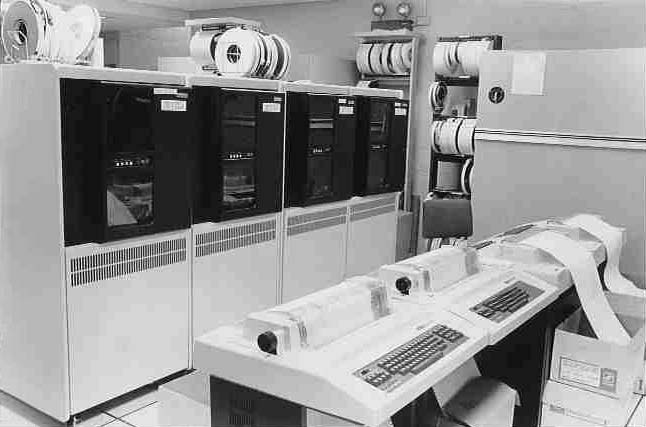
deglr6328 writes "Very soon, NASA will be dismantling and scrapping its only computer left which is able to access and process the data on its ancient 7- and 9-track magnetic tapes. "Who cares", you say? Well, the Planetary Society for one and they're hoping you might care as well. The data held on these (few hundred) tapes is no ordinary forgettable data, it is the complete archive of the first 15 years of all the data returned to Earth by the Pioneer spacecraft which were sent into interstellar space. This additional and thus far unexamined data (the data after 1988 is available and has already been examined) may hold the key to solving what is considered one of the top problems in physics today, the so called Pioneer anomaly, where the observed trajectory of these spacecraft (and a couple others) deviates noticeably from our very precise expectation. The reason for the anomaly may be as mundane as uneven radiation pressure or escaping thruster fuel or it may be as groundbreaking as a clue to completely new physics, perhaps related to dark matter or dark energy. The Planetary Society is planning on recovering this data and poring over it meticulously to look for something which may have been missed or hidden from current investigations into the phenomenon. They need money to do this, about $250,000, and are asking for donations to fund the project. You do not need to be a member to donate. There are no serious proposals to send any more spin-stabilized spacecraft on solar escape trajectories any time in the near future and this is probably the only tenable method we have to directly investigate this mystery in the interim." -
Help Solve the Mystery of the Pioneer Anomaly
deglr6328 writes "Very soon, NASA will be dismantling and scrapping its only computer left which is able to access and process the data on its ancient 7- and 9-track magnetic tapes. "Who cares", you say? Well, the Planetary Society for one and they're hoping you might care as well. The data held on these (few hundred) tapes is no ordinary forgettable data, it is the complete archive of the first 15 years of all the data returned to Earth by the Pioneer spacecraft which were sent into interstellar space. This additional and thus far unexamined data (the data after 1988 is available and has already been examined) may hold the key to solving what is considered one of the top problems in physics today, the so called Pioneer anomaly, where the observed trajectory of these spacecraft (and a couple others) deviates noticeably from our very precise expectation. The reason for the anomaly may be as mundane as uneven radiation pressure or escaping thruster fuel or it may be as groundbreaking as a clue to completely new physics, perhaps related to dark matter or dark energy. The Planetary Society is planning on recovering this data and poring over it meticulously to look for something which may have been missed or hidden from current investigations into the phenomenon. They need money to do this, about $250,000, and are asking for donations to fund the project. You do not need to be a member to donate. There are no serious proposals to send any more spin-stabilized spacecraft on solar escape trajectories any time in the near future and this is probably the only tenable method we have to directly investigate this mystery in the interim." -
Help Solve the Mystery of the Pioneer Anomaly
deglr6328 writes "Very soon, NASA will be dismantling and scrapping its only computer left which is able to access and process the data on its ancient 7- and 9-track magnetic tapes. "Who cares", you say? Well, the Planetary Society for one and they're hoping you might care as well. The data held on these (few hundred) tapes is no ordinary forgettable data, it is the complete archive of the first 15 years of all the data returned to Earth by the Pioneer spacecraft which were sent into interstellar space. This additional and thus far unexamined data (the data after 1988 is available and has already been examined) may hold the key to solving what is considered one of the top problems in physics today, the so called Pioneer anomaly, where the observed trajectory of these spacecraft (and a couple others) deviates noticeably from our very precise expectation. The reason for the anomaly may be as mundane as uneven radiation pressure or escaping thruster fuel or it may be as groundbreaking as a clue to completely new physics, perhaps related to dark matter or dark energy. The Planetary Society is planning on recovering this data and poring over it meticulously to look for something which may have been missed or hidden from current investigations into the phenomenon. They need money to do this, about $250,000, and are asking for donations to fund the project. You do not need to be a member to donate. There are no serious proposals to send any more spin-stabilized spacecraft on solar escape trajectories any time in the near future and this is probably the only tenable method we have to directly investigate this mystery in the interim." -
Utah Teens Invent Better Air Conditioner
Carl Youngblood writes "Two recent Utah high school graduates won the first-ever Ricoh Sustainable Development Award for inventing a better car air conditioner based on the Peltier effect. The peltier chips used in the device are more energy-efficient, last between 20 and 30 years, are solid-state, and don't harm the environment with ozone-depleting freon like today's car air conditioners." -
Fold 'n' Drop Window Interaction
Mints writes "Following up on recent "Desktop Innovation" stories that have left some disappointed, I thought Pierre Dragicevic's exploration of Fold 'n' Drop warranted mention. Described as "a new interaction technique for seamlessly dragging and dropping between overlapping windows", Fold 'n' Drop allows the user to interact with layered or overlapping windows in a very intuitive manner. Refreshingly, Mr. Dragicevic provides both a sample implementation, in Java, and video demos. Mr. Dragicevic is a researcher in Human-Computer Interaction at Intuilab, Toulouse." -
Open Source Geographical Profiling?
elander asks: "I've been searching for a while for anything to do with geographical profiling, specifically systems that narrow the search area in the hunt for serial criminals (burglars, robbers, rapists etc). So far, the only system I've found is Rigel, a commercial software package, only available through leasing from ECRI. I wonder, aren't there any Open Source alternatives? I'm about to (hopefully, last round of approvals is under way) build a crime scene information system for a Swedish police authority, based on Open Source, and I'd like to be able to offer something along these lines as a future extension." -
More Evidence for Tabletop Fusion
heptapod writes "Researchers at Purdue University have statistically significant evidence that their tabletop fusion experiments were successful. Yiban Xu's experiment different from an earlier Oak Ridge experiment using a different and cheaper source of neutrons than Oak Ridge's pulse neutron generator. Surpassing break-even point still eludes the grasp of science." -
Battlestar Galactica Season 2 Premiere
fanblade writes "As if slashdotters needed another reason to stay home on a Friday night, the 20-episode second season of Battlestar Galactica premieres tonight at 10/9C on the Sci Fi Channel. The series, a 're-imagining' of the original 1978 TV series by the same name, made history as the highest-rated original Sci Fi Channel program ever. The first episode of the second season, 'Scattered', won't be televised in the UK until October, but I seriously doubt that will be a problem for the show that 'killed broadcast TV'. There's also excellent coverage on Wikipedia for those eager to brush up or catch up on the first season." -
Slashback: Archives, Leak, Fanfilm
Slashback tonight brings some corrections, clarifications and updates to previous Slashdot stories, including word from the worlds of corporate patent lawsuits, secretive publishers vs. inquisitive readers in Canada, and the pitiful teachers versus the splendid kids in Pennsylvania. Read on for the details. Sir, this sentence mangling machine is Pl88^74djliivc33mq again! I posted a story earlier this week which scrambled in its summary the facts of the matter. My post, as reader Raymond Fingas points out, said that the "Internet archive ... has been sued by the firm Harding Earley Follmer & Frailey." Fingas was one of several readers (thanks to all!) to correct me on this, writing "According to the linked article that isn't the case; instead they are being sued by Healthcare Advocates, represented by the firm McCarter & English. Further, the article says that Harding Earley Follmer & Frailey is actually being sued along with the Internet Archive.."Alacritech settles litigation with MSFT and BRCM An anonymous reader writes "Alacritech, Microsoft Corporation and Broadcom Corporation today announced that they have entered into agreements that settle all outstanding disputes between Alacritech and Microsoft, as well as provide Microsoft and Broadcom access to Alacritech's patent portfolio relating to scalable networking. (Previously mentioned on Slashdot here and here.)"
Sir, you have no right to read about your rights. Hobart writes "Richard Stallman has just posted on his personal website a request for his readers to 'Don't Buy Harry Potter Books,' and offered to leak the plot - in protest of the Canadian Supreme Court ruling forbidding the purchasers from reading the books they paid for. A memorable quote in the Times article says '...There is no human right to read.'"
Don'tcha think felony is a bit strong for a few button presses? ZombyHero writes "In a follow-up to a previous story, the 13 high school students from Kutztown, PA charged with felony computer trespassing for violating district usage policy are fighting back. They've hired lawyers have begun talking with the Assistant DA. As a former student of the school, I know that the district is used to getting its way. Hopefully this will knock them down a few notches."
Starship Exeter flies again! An anonymous reader writes "There's a new episode of Starship Exeter, a fan-made feature set in the original series Star Trek universe. The new episode, The Tressaurian Intersection, follows on from The Savage Empire, which was featured on Slashdot before. This time it's better than ever... better than the original series, in fact! You can watch the entire episode online."
Treasure hunts, commence. We've posted quite a few interesting applications for Google's mapping service; now phauly writes "I created an Animated Google Map (with some gnus and mozillas attacking Microsoft office) using Google Maps API. I think it would be easy to create real playable Games on Google Maps. For sharing ideas (and implementations!) I created the Games on Google Maps wiki page. For now some ideas are: risk, freeciv, freecraft, car races on real maps! Feel free to edit the page suggesting/revising/implementing ideas."
-
Doctorow and Stross Release Latest Novels for Free
FleaPlus writes "Two prominent science fiction authors have recently released their newest novels as free downloads to coincide with their in-store releases. The first is Someone Comes to Town, Someone Leaves Town, by Cory Doctorow. This is an unconventional story about an entrepreneur (who happens to be the child of a mountain and a washing machine) who gets involved in a scheme to blanket Toronto with free wireless mesh network, among other things. The second is Accelerando, by Charles Stross, which tells the tale of three generations of the Macx family (beginning with perptually-slashdotted venture altruist Manfred Macx) in the years leading up to and beyond a technological singularity." -
Doctorow and Stross Release Latest Novels for Free
FleaPlus writes "Two prominent science fiction authors have recently released their newest novels as free downloads to coincide with their in-store releases. The first is Someone Comes to Town, Someone Leaves Town, by Cory Doctorow. This is an unconventional story about an entrepreneur (who happens to be the child of a mountain and a washing machine) who gets involved in a scheme to blanket Toronto with free wireless mesh network, among other things. The second is Accelerando, by Charles Stross, which tells the tale of three generations of the Macx family (beginning with perptually-slashdotted venture altruist Manfred Macx) in the years leading up to and beyond a technological singularity." -
Intel Developer Macs Outperform G5s
bonch writes "Developers working with the new Intel-based, developer-only Macs are impressed with the performance. The machines take as little as 10 seconds to boot from Apple logo to desktop, and apparently run Windows XP at 'blazing speeds.' Rosetta tests demonstrate the PowerPC-native build of Firefox running just as fast as it does on a high-end G5." -
Lenovo to Sell Blade Desktops
Some guy writes "Having acquired IBM's PC division, Lenovo will become the first major reseller of blade desktops. Blade desktops feature only input devices and a 'networking unit,' connecting to a blade server for computational power. Such thin client designs reduce support needs and cluttered desk space, but require complex deployments to work well." -
After 20 Years, Phrack's Final Issue Looms
akahige writes "According to BBC News, the legendary phreaking/hacker magazine is set to close up shop after the publication of its forthcoming issue, no. 63 (which will be hardbound in commemoration). The editorial staff is stepping down, and no one has expressed an interest in taking up the reins. Bruce Sterling is quoted as saying, 'I'd be surprised to see the thing stay dead. They've got no fixed address and anonymous contributors.' If you've ever wanted to helm a magazine, here's your chance!" (See this earlier story as well.) -
Body Scanners for the London Underground
Ronald Dumsfeld writes "In a report in the TimesOnline, it is alleged that those lovely see-through-your-clothes scanners are to be installed in London's Tube stations. Part of the UK's Military-industrial complex, QinetiQ stands to make £150,000 to £2 million per station ($260,000 - $3.4 million) with their Millimetre Wave Imagers." -
Total Annihilation Sequel Preview
An anonymous reader writes "Fans of much loved RTS Total Annihilation will be excited to hear that a spiritual successor is in the works under the name Supreme Commander. Information on this title has been scarce until today, when Gamespy released a preview with screenshots galore. The preview contains an overview of the game, the storyline and, coming tommorrow, an interview with Chris Taylor." -
Total Annihilation Sequel Preview
An anonymous reader writes "Fans of much loved RTS Total Annihilation will be excited to hear that a spiritual successor is in the works under the name Supreme Commander. Information on this title has been scarce until today, when Gamespy released a preview with screenshots galore. The preview contains an overview of the game, the storyline and, coming tommorrow, an interview with Chris Taylor." -
German Youth Convicted for Sasser Worm
dan dan the dna man writes "The BBC is reporting that Sven Jaschan, author of the Sasser Worm, has been found guilty of computer sabotage and illegally altering data. He received a 21 month suspended sentence, as he was tried as a minor. He was 17 years old when he wrote the worm." From the article: "Sven Jaschan avoided a jail sentence by the skin of his teeth because he was arrested within days of his 18th birthday...However, in the grand scheme of the virus world, it's the organised crime gangs, which are increasingly emerging to make stacks of money through targeted attacks, that should be dealt the harsh sentences - over and above the dumb teenagers." -
Next-Gen Game of Life
SQL31337 writes "Jecology is a life simulator created in the spirit of Conway's Game of Life. It touches on many topics such as cellular automata, ecological balance, and the food chain. There is only one type of creature in Conway's Game of Life(CGoL). They reproduce, but do not mutate or evolve. They do not have to find food, but instead simply die based on scarcity or overpopulation. Jecology encompasses these aspects of ecology with a more complex simulation, but retains much of the elegant simplicity found in CGoL. Jecology is not merely a life simulator, but an ecology simulator. It is also an example of a complex system arising from simple rules, as described in A New Kind of Science. Screenshots and info about Jecology here." -
Next-Gen Game of Life
SQL31337 writes "Jecology is a life simulator created in the spirit of Conway's Game of Life. It touches on many topics such as cellular automata, ecological balance, and the food chain. There is only one type of creature in Conway's Game of Life(CGoL). They reproduce, but do not mutate or evolve. They do not have to find food, but instead simply die based on scarcity or overpopulation. Jecology encompasses these aspects of ecology with a more complex simulation, but retains much of the elegant simplicity found in CGoL. Jecology is not merely a life simulator, but an ecology simulator. It is also an example of a complex system arising from simple rules, as described in A New Kind of Science. Screenshots and info about Jecology here." -
Next-Gen Game of Life
SQL31337 writes "Jecology is a life simulator created in the spirit of Conway's Game of Life. It touches on many topics such as cellular automata, ecological balance, and the food chain. There is only one type of creature in Conway's Game of Life(CGoL). They reproduce, but do not mutate or evolve. They do not have to find food, but instead simply die based on scarcity or overpopulation. Jecology encompasses these aspects of ecology with a more complex simulation, but retains much of the elegant simplicity found in CGoL. Jecology is not merely a life simulator, but an ecology simulator. It is also an example of a complex system arising from simple rules, as described in A New Kind of Science. Screenshots and info about Jecology here." -
Next-Gen Game of Life
SQL31337 writes "Jecology is a life simulator created in the spirit of Conway's Game of Life. It touches on many topics such as cellular automata, ecological balance, and the food chain. There is only one type of creature in Conway's Game of Life(CGoL). They reproduce, but do not mutate or evolve. They do not have to find food, but instead simply die based on scarcity or overpopulation. Jecology encompasses these aspects of ecology with a more complex simulation, but retains much of the elegant simplicity found in CGoL. Jecology is not merely a life simulator, but an ecology simulator. It is also an example of a complex system arising from simple rules, as described in A New Kind of Science. Screenshots and info about Jecology here." -
Florida Man Charged For Stealing Wi-Fi
baldass_newbie writes "The Saint Pete Times has a story about Benjamin Smith III who was arrested for stealing a wi-fi signal in Saint Petersburg, Florida, where apparently wardriving is considered a third degree felony." From the article: "...xperts believe there are scores of incidents occurring undetected, sometimes to frightening effect. People have used the cloak of wireless to traffic in child pornography, steal credit card information and send death threats, according to authorities. For as worrisome as it seems, wireless mooching is easily preventable by turning on encryption or requiring passwords. The problem, security experts say, is many people do not take the time or are unsure how to secure their wireless access from intruders. Dinon knew what to do. 'But I never did it because my neighbors are older.'" -
Ruby on Rails 0.13 Out Today with AJAX Superpowers
Robert J. Berger writes "The Ruby on Rails team announced that "After the longest gap between releases since Rails was made public and after more than 225 fixes and new features, the final major release before the 1.0 milestone has arrived." This is a major update to what is to many developers consider the new tool for developing sophisticated interactive database driven web applications. It integrates backend Model/View/Controller object-oriented model with AJAX based clients so that the developer can focus on the app and not on the details of basic mechanisms. You really can do much more with much less coding. The new release adds a completely rewritten visual effects engine, drag-and-drop capability including sortable lists, and autocompleting text fields to Rails. All building on top of an upgraded version of Prototype, the javascript foundation for Ajax in Rails ... Check out the very cool demos at script.aculo.us." -
Neanderthal Genome to be Sequenced
Aneurysm writes "A project launched by the Max-Planck Institute of Evolutionary Anthropology will sequence the genome of Neanderthal man. The sequencing project may find out important information, such as whether they cross-bred with modern humans. Previous DNA tests have tested this theory, and found it unlikely. Could this be the start of a Pleistocene park?" -
DECnet Isn't Dead
Ronald Dumsfeld writes "The odds of folks under the age of 25 on Slashdot having heard of DECnet are pretty slim. This article over at Datamation gives some insight into people who've not given up on it. Poke around and find the documentation for the OSI-compliant version, or download the Linux version of the older DECnet IV and bask in the Security Through Obscurity." -
Your Environment May Change Your Genes
An anonymous reader writes "Recent experiments indicate that your environment alters your genes. The longer identical twins live apart, the more their "epigenomes" (genetic sequences that activate or suppress other genes) differ. This possibility could cause a radical shift in the assumptions of biological inheritance (namely that, with minor exceptions, an individual's genes do not change), and indicates the possibility of return of Larmarckian inheritance which had formerly been consigned to the dustbin of biology." -
DVD-Audio's CPPM Circumvented
Bodysurf writes "After DVD-Video's CSS encryption was broken in 1999, the music industry chose a much more secure copy-protection method for DVD-Audio called Copy Protection for PreRecorded Media (CPPM). This protection scheme has remained publicly uncracked, but it was circumvented recently, providing the ability to save the unencrypted digital audio data. CDFreaks has the details." -
DVD-Audio's CPPM Circumvented
Bodysurf writes "After DVD-Video's CSS encryption was broken in 1999, the music industry chose a much more secure copy-protection method for DVD-Audio called Copy Protection for PreRecorded Media (CPPM). This protection scheme has remained publicly uncracked, but it was circumvented recently, providing the ability to save the unencrypted digital audio data. CDFreaks has the details." -
Star Wars Props Up For Auction
innocence18 writes "Auctioneers Profiles in History are set to auction off a number of Star Wars props from the original trilogy movies. Fromthe collection of Star Wars producer Gary Kurtz, the pieces on offer include Luke Skywalker and Darth Vader's lightsabers as well as various costumes and masks." While I can't imagine wanting to wear Luke's X-Wing flight suit, I think that light saber is pretty sweet. Although I bet it goes for the price of a new car.