Slashdot Mirror
Domain: xorl.org
Stories and comments across the archive that link to xorl.org.
Comments · 14
-
Re:Live by the sword, die by the sword.
Because they're not much of an innovator. This is not a troll. They've never been terribly good at inventing brand new things.
Agree with everything you said except this part. They're not a hardware innovator. If you've opened up Macbooks to repair them, you'll find the same commodity parts used by every other laptop manufacturer. Heck, they're not even made by Apple, they're made by Quanta, an ODM (original design manufacturer - like an OEM except they also design the product). You wouldn't believe the number of people I've had to argue with about that; they seem to think Macbooks contain Apple-brand fairy dust and unicorn horn powder inside It's like telling a kid Santa doesn't exist when I tell them the CPU is by Intel, the awesome-performing SSD is by hated Samsung, the memory by Micron, the screen by LG, etc. Those are the companies doing the true hardware innovation; Apple is just buying and reselling their products.
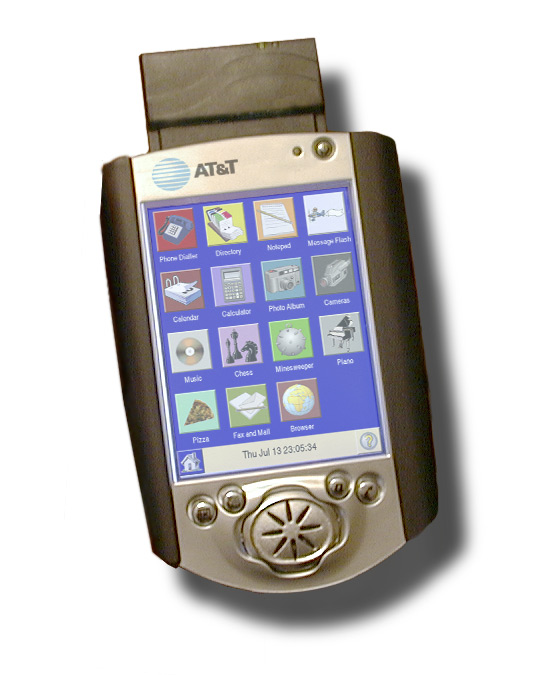
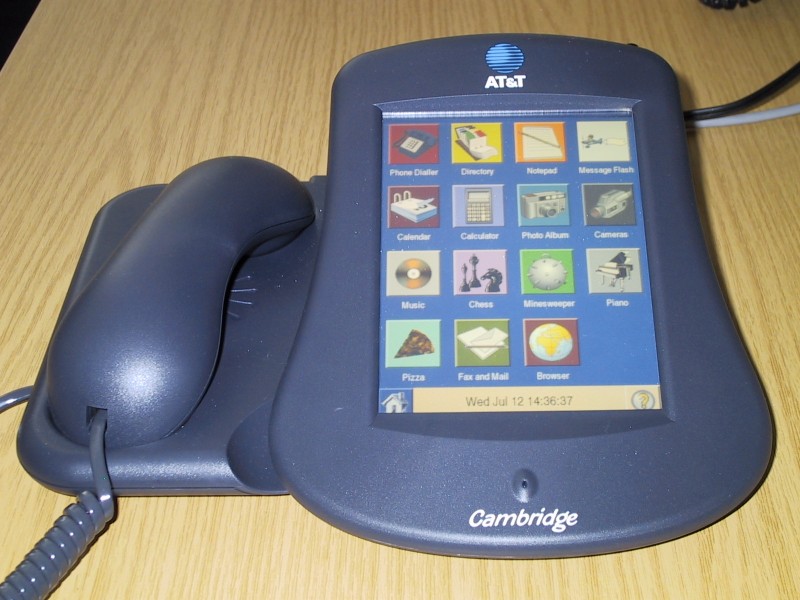
But the one area Apple is really good at and really does innovate in is software. The iPod for example was successful mostly because of its tight integration with iTunes. Before that, it was a PITA to convert the music files on your computer into playlists on your MP3 player. Most involved connecting your MP3 player to your computer and dragging and dropping the individual MP3s, converting playlist files, automatic sorting via artist names stored in the MP3 (or not stored if you ripped it yourself), alphabetical sorting which sometimes got messed up depending on upper and lower case names, songs which disappeared because they were buried in the folder structure, etc. Before iTunes became a bloated mess, Apple nailed how synchronization of your music collection across devices should work. Likewise, Time Machine is the best UI I've seen on a backup program. The Macbooks are considered to have the best trackpads not because they're physically better but because they have the best software. The software augments the usability of the hardware enough to catapult the hardware into success.Smartphones: IBM invented the concept of the toucscreen only phone in 1993. Nokia had this device https://en.wikipedia.org/wiki/... AT&T pretty much nailed the real concept of a smartphone http://www.xorl.org/people/njh... as one might recognise it with a decent UI and apps, except it needed a remote application server, too much connectivity and generally the tech wasn't up to it in 1998. Heck, they weren't even the first to put multitouch on a phone.
To add to your list, here's pinch to zoom in 1988
-
Re:Live by the sword, die by the sword.
such as the concept of an integrated app store
You mean like Cydia: the first app store for the iPhone? Fun fact it was available via a jailbreak before apple launched an app store.
I'm not sure why they bothered with superficial patents on things like the shape of the device's packaging
Because they're not much of an innovator. This is not a troll. They've never been terribly good at inventing brand new things. What they do very well, arguably better than anyone else is taking a bunch of existing but not very popular technologies and producing an implementation which doesn't massively suck before anyone else.
I don't believbe I'm doing them a disservice with that, doing such a thing is clearly very hard else they wouldn't be the first people to do it after others have tried and failed. But it's not generally protectable with patents.
In actual fact, I think claiming Apple has made innovations where they haven't is actually doing them a disservice because it detracts from what they are uniquely good at.
Look at the history of things they're well known for:
The iPod: the canonical MP3 player. Not the first, afterall we know it had no wireless and less space than the Nomad (lame!) but by far the most popular and became synonymous with MP player. Due in large part because all the ones before had horrendous interfaces and other awful misfeatures.
Smartphones: IBM invented the concept of the toucscreen only phone in 1993. Nokia had this device https://en.wikipedia.org/wiki/.... AT&T pretty much nailed the real concept of a smartphone http://www.xorl.org/people/njh... as one might recognise it with a decent UI and apps, except it needed a remote application server, too much connectivity and generally the tech wasn't up to it in 1998. Heck, they weren't even the first to put multitouch on a phone. What they did was combine all those elements in a way which didn't suck.
And so on.
-
Re:How are those kind of things patentable?
If Compaq had put a cellular radio in an iPaq, we would have had Windows Phones circa 2000, LONG before the iPhone.
AT&T did (ish, I think a wifi card and some PBX stuff actually), and they scrapped WinCE, replacing it wholesale with their oen UI.
http://www.xorl.org/people/krw...
The result looks *remarkably* like a primitive iPhone. Given the photo is from 2001, not 2007 when the iPhone launched, that's not entirely unfair. Apart from snazzier graphics on newer devices (for real???) about the only difference is that the status bar is at the bottom, not the top and is mixed together with the launcher. Note that it even has apps. On a phone!
The people who keep insisting that Apple did everything first essentially know nothing about the history of mobile devices. Apple made a well built, slick device with a UI that didn't stink---and that was unusual for the time and worthy of praise.
Doesn't mean they deserve patent protection for things they didn't invent.
The whole story about that very early phone is here:
http://www.xorl.org/people/njh...
It was all demoed to Jobs in 1999 as it happens.
-
Re:How are those kind of things patentable?
If Compaq had put a cellular radio in an iPaq, we would have had Windows Phones circa 2000, LONG before the iPhone.
AT&T did (ish, I think a wifi card and some PBX stuff actually), and they scrapped WinCE, replacing it wholesale with their oen UI.
http://www.xorl.org/people/krw...
The result looks *remarkably* like a primitive iPhone. Given the photo is from 2001, not 2007 when the iPhone launched, that's not entirely unfair. Apart from snazzier graphics on newer devices (for real???) about the only difference is that the status bar is at the bottom, not the top and is mixed together with the launcher. Note that it even has apps. On a phone!
The people who keep insisting that Apple did everything first essentially know nothing about the history of mobile devices. Apple made a well built, slick device with a UI that didn't stink---and that was unusual for the time and worthy of praise.
Doesn't mean they deserve patent protection for things they didn't invent.
The whole story about that very early phone is here:
http://www.xorl.org/people/njh...
It was all demoed to Jobs in 1999 as it happens.
-
Re:It's not about innovation
I too, have 20/20 hindsight. You also focus on the hardware design, and fail to acknowledge the blatant copying of the the IOS look and feel.
Yopur hindsignt is not 20/20. You mean that Samsung blatently copied the look and feel of the AT&T broadband phone: exactly the one that Apple also shamelessly ripped off.
If you stick this:
http://www.xorl.org/people/krw/ipaqalone.jpgNext to your "blatent copying" link then you see that the Samsung one with it's flat icons and non-rounded corners to the icons looks an awful lot like something made in the late 90's.
-
Re:Terminology
No. I owned a Palm Pilot. It was a very different device from an iPhone. There was nothing like the app store either. OTOH, all current smartphones, including Android and Windows Phone offerings, aren't very different devices from an iPhone. Even though those devices have developed several unique feature sets and UI paradigms, the basic way the whole package works is fundamentally similar to -- and can be traced back to -- the first iPhone.
Why not trace it back further?
The iPhone may have been the first phone with an "app store", but it actually came from the third parties first, not apple. An app store, i.e. curated easily installable third party programs is really traced back to Linux distros. Probably debian.
And the icon grid look with apps on a phone? That was done first by AT&T in their "boradband phone" project in the late 90's.
http://www.xorl.org/people/njh/bpstory/
This phone in particular has a quite familiar look:
http://www.xorl.org/people/krw/ipaqalone.jpg
but is much older than the iPhone. And yeah it is a phone since it can make voice calls.
The iPhone was influential and perhaps the first widely known example. The operation of modern devices has a much longer history than the iPhone, and you are doing a real disservice to the early pioneers to claim otherwise.
-
Re:Terminology
No. I owned a Palm Pilot. It was a very different device from an iPhone. There was nothing like the app store either. OTOH, all current smartphones, including Android and Windows Phone offerings, aren't very different devices from an iPhone. Even though those devices have developed several unique feature sets and UI paradigms, the basic way the whole package works is fundamentally similar to -- and can be traced back to -- the first iPhone.
Why not trace it back further?
The iPhone may have been the first phone with an "app store", but it actually came from the third parties first, not apple. An app store, i.e. curated easily installable third party programs is really traced back to Linux distros. Probably debian.
And the icon grid look with apps on a phone? That was done first by AT&T in their "boradband phone" project in the late 90's.
http://www.xorl.org/people/njh/bpstory/
This phone in particular has a quite familiar look:
http://www.xorl.org/people/krw/ipaqalone.jpg
but is much older than the iPhone. And yeah it is a phone since it can make voice calls.
The iPhone was influential and perhaps the first widely known example. The operation of modern devices has a much longer history than the iPhone, and you are doing a real disservice to the early pioneers to claim otherwise.
-
Re:Curiouser and curiouser
Apple is not much of an innovator as you claim.
What they are is very good at creating a well integrated product with a very slick user interface out of existing technologies. This is a hard skill which very few other companies have, and one that they wish to protect with lawyers. It is not, however, one you can protect with lawyers.
So they they try by sueing over bullshit patents and people like you step up to defend them. You believe that others are doing a disservice to Apple, but you are just as guilty of doing a disservice to the people who invented those things in the first place.
When it comes to swipe and multitouch gestures, it was mostly covered by academic (universities and industry) researchers im the early 80s long before the touch screen tech was anything but cumbersome, expensive and unusable out of the lab.
Oh and as for the interface, you know that the whole icon grid, touch screen and apps was not even remotely an Apple innovation, right? http://www.xorl.org/people/krw/ipaqalone.jpg
And the whole nothing but a touch screen as an interface was even older. http://en.wikipedia.org/wiki/File:IBM_Simon_Personal_Communicator.png
The point is many innovations that are associated with Apple were around before.
Apple are very good, possibly better than anyone a putting them together, but it does everyone a disservice to pretend Apple is something that it is not.
-
Re:Cell phones are usually tied to a person
Landlines are tied to a place.
With older systems, sure.
Last big place I worked, the "landlines" were all voip phones running on a virtual network (to ensure QoS) on the same network switches as the regular gig-e network. It used a standard SIP backbone and you could port the number around the place or, in fact to any computer including a cellphone with a data connection. That's not much of a problem in the UK since you can get enough data for voice calls cheaply enough (£10
Was it worth it? Probably. The voice quality was generally substantially better than skype, probably because of the decent microphone and QoS within the local network at any rate. Also, for some reason about 80% of the UK population seem to be incapable of keeping their cellphone number when changing provider (even though it's a legal requirement for the companies to let you port it) and with some people, this seems to involve changing numbers on a fairly regular basis.
In contrast, because the voip phone system was semi-sane and administered by semi-sane people, it was more common to keep a number for longer. I say semi sane because there was about a 30% chance of changing number when moving office, based mostly on the flip of a biased coin.
Office phones can also have the advantage that after a set number of rings, they go through to the local secretary, or another worker. I wouldn't want my cellphone to be forwarded to a cow orker if I didn't pick up soon enough.
TL;DR if you can't pick up office "landline" calls on a cellphone then you're comparing an ancient office phone system to a modern cellphone system which is not really a fair comparison.
Oh and fun fact:
Advanced prototype office phone systems in the late 90s had all those features, automatic porting, mobile options, apps and, of course, icon grids and touch screens.
http://www.xorl.org/people/njh/bpstory/index.html
Sadly those never came available even though they would still kick ass.
-
Re:As good a time as any other
The device is called the "broadband phone"
http://www.cl.cam.ac.uk/research/dtg/attarchive/bphone/apps.html
-
Re:I have an idea
Well, perhaps Samsung should try inventing things themselves, rather than let Apple invent everything.
Here is what all touchscreen smartphones looked like before Apple came along and showed how the world how to do it (complete link).
Apple were first people to do anything like that at all, so they should obviously have a patent.
They basically invented the entirely featureless tablet and the touch based user interface.
(for the impared: please actually look at links before flaming)
-
Re:I have an idea
Well, perhaps Samsung should try inventing things themselves, rather than let Apple invent everything.
Here is what all touchscreen smartphones looked like before Apple came along and showed how the world how to do it (complete link).
Apple were first people to do anything like that at all, so they should obviously have a patent.
They basically invented the entirely featureless tablet and the touch based user interface.
(for the impared: please actually look at links before flaming)
-
Re:I have an idea
Well, perhaps Samsung should try inventing things themselves, rather than let Apple invent everything.
Here is what all touchscreen smartphones looked like before Apple came along and showed how the world how to do it (complete link).
Apple were first people to do anything like that at all, so they should obviously have a patent.
They basically invented the entirely featureless tablet and the touch based user interface.
(for the impared: please actually look at links before flaming)
-
Why the AT&T Cambridge lab closed
This article has an unusually frank account of why the famous Cambridge lab that developed these phones got closed down. It also has an interesting discussion of the phone itself.
The article suggests that in the end it was easier for AT&T to shut the lab down than for its lawyers and those of a willing purchaser to reach an agreement on intellectual property.
Here's a history of the phone project.