Slashdot Mirror
Search
Search the archive with full-text matching across story titles, bodies,
and comments. Phrases are quoted; or, -word,
and parentheses behave as in a web search. Queries must be at least
3 characters.
Stories · 3,636
-
Yahoo Debuts End-To-End Encryption Email Plugin, Password-Free Logins
An anonymous reader writes: Yahoo has released the source code for a plugin that will enable end-to-end encryption for their email service. They're soliciting feedback from the security community to make sure it's built properly. They plan to roll it out to users by the end of the year.
Yahoo also demonstrated a new authentication system that doesn't use permanent passwords. Instead, they allow you to associate your Yahoo account with your phone, and text you a code on demand any time you need to log in. It's basically just the second step of traditional two-step authentication by itself. But Yahoo says they think it's "the first step to eliminating passwords." -
Valve's SteamVR: Solves Big Problems, Raises Bigger Questions
An anonymous reader writes: When Valve debuted its SteamVR headset recently, it came as somewhat of a surprise — it certainly hasn't gotten the same level of hype as the Oculus Rift. But people who got to try out the new headset almost universally impressed with the quality of the hardware and software. Eurogamer has an article about the device expressing both astonishment at how far the technology has come in three short years, as well as skepticism that we'll find anything revolutionary to do with it. Quoting: "R demands a paradigm shift in the thinking of game designers and artists about how they build virtual space and how players should interact with it. We're only at the very beginning of this journey now. ... but this process will likely take years, and at the end of it the games won't resemble those we're currently used to. In short, they won't be Half-Life 3."
The author thinks simulation games — driving, piloting, and space combat — will be the core of the first wave, and other genres will probably have to wait for the lessons learned making sims good. He adds, "...the practical challenges are great, too — not least in persuading players to clear enough space in their homes to use this device properly, and the potential for social stigma to attach to the goofy-looking headsets and the players' withdrawal into entirely private experiences. I still think that these present major obstacles to the widespread adoption of VR, which even more practical and commercially realistic offerings like Morpheus will struggle against." -
Russia Abandons Super-Rocket Designed To Compete With SLS
schwit1 writes Russia has decided to abandon an expensive attempt to build an SLS-like super-rocket and will instead focus on incremental development of its smaller but less costly Angara rocket. "Facing significant budgetary pressures, the Russian space agency, Roscosmos, has indefinitely postponed its ambitious effort to develop a super-heavy rocket to rival NASA's next-generation Space Launch System, SLS. Instead, Russia will focus on radical upgrades of its brand-new but smaller Angara-5 rocket which had its inaugural flight in Dec. 2014, the agency's Scientific and Technical Council, NTS, decided on Thursday, March 12." For Russia's space industry, it appears that these budgetary pressures have been a blessing in disguise. Rather than waste billions on an inefficient rocket for which there is no commercial demand — as NASA is doing with SLS (under orders from a wasteful Congress) — they will instead work on further upgrades of Angara, much like SpaceX has done with its Falcon family of rockets. This will cost far less, is very efficient, and provides them a better chance to compete for commercial launches that can help pay for it all. And best of all, it offers them the least costly path to future interplanetary missions, which means they might actually be able to make those missions happen. To quote the article again: "By switching upper stages of the existing Angara from kerosene to the more potent hydrogen fuel, engineers might be able to boost the rocket's payload from current 25 tons to 35 tons for missions to the low Earth orbit. According to Roscosmos, Angara-A5V could be used for piloted missions to the vicinity of the Moon and to its surface." In a sense, the race is now on between Angara-A5V and Falcon Heavy.
-
Google Nearline Delivers Some Serious Competition To Amazon Glacier
SpzToid writes Google is offering a new kind of data storage service – and revealing its cloud computing strategy against Amazon Web Services and Microsoft Azure. The company said on Wednesday that it would offer a service called Nearline, for non-essential data. Like an AWS product called Glacier, this storage costs just a penny a month per gigabyte. Microsoft's cheapest listed online storage is about 2.4 cents a gigabyte. While Glacier storage has a retrieval time of several hours, Google said Nearline data will be available in about three seconds. From the announcement: "Today, we're excited to introduce Google Cloud Storage Nearline, a simple, low-cost, fast-response storage service with quick data backup, retrieval and access. Many of you operate a tiered data storage and archival process, in which data moves from expensive online storage to offline cold storage. We know the value of having access to all of your data on demand, so Nearline enables you to easily backup and store limitless amounts of data at a very low cost and access it at any time in a matter of seconds."
-
Some of the Greatest Science Fiction Novels Are Fix-Ups
HughPickens.com writes: What do science fiction classics like Asimov's Foundation Trilogy, Bradbury's Martian Chronicles, Van Vogt's Voyage of the Space Beagle, Simak's City, and Sturgeon's More Than Human have in common? Each of them is a "fix-up" — a novel constructed out of short stories that were previously published on their own. "This used to be one standard way to write a science fiction novel — publish a series of stories that all take place in the same world, and then knit them together into a book," says Charlie Jane Anders. "Sometimes a great deal of revision happened, to turn the separate stories into a single narrative and make sure all the threads joined up. Sometimes, the stories remain pretty separate but there are links between them."
The Golden Age science fiction publishing market was heavily geared toward magazines and short stories. And then suddenly, there was this huge demand for tons of novels. According to Andrew Liptak, this left many science fiction authors caught in a hard place: Many had come to depend on the large number of magazines on the market that would pay them for their work, and as readership declined, so too did the places in which to publish original fiction. The result was an innovative solution: repackage a number of preexisting short stories by adding to or rewriting portions of them to work together as a single story. This has its advantages; you get more narrative "payoff" with a collection of stories that also forms a single continuous meta-story than you do with a single over-arching novel — because each story has its own conclusion, and yet the story builds towards a bigger resolution. Fix-ups are a good, representative example of the transition that the publishing industry faced at the time, and how its authors adapted. Liptak says, "It's a lesson that's well-worth looking closely at, as the entire publishing industry faces new technological challenges and disruptions from the likes of self-publishing and micro-press platforms." -
Was Linus Torvalds Right About C++ Being So Wrong?
Nerval's Lobster writes: Perhaps the most famous rant against C++ came from none other than Linus Torvalds in 2007. "C++ is a horrible language," he wrote, for starters. "It's made more horrible by the fact that a lot of substandard programmers use it, to the point where it's much much easier to generate total and utter crap with it." He's not alone: A lot of developers dislike how much C++ can do "behind the scenes" with STL and Boost, leading to potential instability and inefficiency. And yet there's still demand for C++ out there. Over at Dice, Jeff Cogswell argues that C++ doesn't deserve the hatred. "I've witnessed a lot of 'over-engineering' in my life, wherein people would write reusable classes with several layers of inheritance, even though the reusable class wasn't actually used more than once," he wrote. "But I would argue that's the exception, not the norm; when done right, generic programming and other high-level aspects of C++ can provide enormous benefits." Was Linus going overboard?
-
China's Arthur C. Clarke
HughPickens.com writes Joshua Rothman has a very interesting article in The New Yorker about Liu Cixin, China's most popular science-fiction writer. The author of thirteen books has retained his day job as a computer engineer with a State-run power plant in a remote part of Shanxi province, because it helps him to stay grounded, enabling him to "gaze at the unblemished sky" as many of his co-workers do. In China, Cixin is about as famous as William Gibson in the United States and Cixin is often compared to Arthur C. Clarke, whom he cites as an influence. Rothman writes that American science fiction draws heavily on American culture, of course—the war for independence, the Wild West, film noir, sixties psychedelia—and so humanity's imagined future often looks a lot like America's past. For an American reader, one of the pleasures of reading Liu is that his stories draw on entirely different resources.
For example, in The Wages of Humanity, visitors from space demand the redistribution of Earth's wealth, and explain that runaway capitalism almost destroyed their civilization. In Taking Care of Gods, the hyper-advanced aliens who, billions of years ago, engineered life on Earth descend from their spaceships; they turn out to be little old men with canes and long, white beards. "We hope that you will feel a sense of filial duty towards your creators and take us in," they say. "I doubt that any Western sci-fi writer has so thoroughly explored the theme of filial piety," writes Rothman. In another story, The Devourer, a character asks, "What is civilization? Civilization is devouring, ceaselessly eating, endlessly expanding." But you can't expand forever; perhaps it would be better, another character suggests, to establish a "self-sufficient, introspective civilization." "At the core of Liu's sensibility," concludes Rothamn, "is a philosophical interest in the problem of limits. How should we react to the inherent limitations of life? Should we push against them or acquiesce?" -
Quebecker Faces Jail For Not Giving Up Phone Password To Canadian Officials
wired_parrot writes Canadian customs officials have charged a 38-year old man with obstruction of justice after he refused to give up his Blackberry phone password [on arrival in Canada by plane from the Dominican Republic]. As this is a question that has not yet been litigated in Canadian courts, it may establish a legal precedent for future cases. From the article: [Law professor Rob] Currie says the issue of whether a traveller must reveal a password to an electronic device at the border hasn't been tested by a court. "This is a question that has not been litigated in Canada, whether they can actually demand you to hand over your password to allow them to unlock the device," he said. "One thing for them to inspect it, another thing for them to compel you to help them."
-
Demand For Linux Skills Rising This Year
Nerval's Lobster writes This year is shaping up as a really good one for Linux, at least on the jobs front. According to a new report (PDF) from The Linux Foundation and Dice, nearly all surveyed hiring managers want to recruit Linux professionals within the next six months, with 44 percent of them indicating they're more likely to hire a candidate with Linux certification over one who does not. Forty-two percent of hiring managers say that experience in OpenStack and CloudStack will have a major impact on their hiring decisions, while 23 percent report security is a sought-after area of expertise and 19 percent are looking for Linux-skilled people with Software-Defined Networking skills. Ninety-seven percent of hiring managers report they will bring on Linux talent relative to other skills areas in the next six months.
-
Craig Brittain (Revenge Porn King) Sues For Use of Image
retroworks writes "Washington Post reporter Caitlin Dewey leads with, "Revenge-porn impresario Craig Brittain is learning the hard way that karma is a real witch." The report states that the Federal Trade Commission has settled a complaint against Brittain, whose defunct site, "Is Anybody Down" was accused of unfair business practices. From the article: "The site paid its bills by soliciting women's nude photos on Craigslist and/or from their exes, publishing the photos without the women's permission (and often with their names and phone numbers attached), and then charging fees of $200 to $500 to take the photos down." Brittain agreed to destroy the image and never operate a revenge porn site again. However, On Feb. 9, "Brittain filed a takedown request to Google, demanding that the search engine stop linking to nearly two dozen URLs — including a number of news articles, and files on the case from the FTC — because they used photos of him and information about him without his permission." Ars Technica explains. "In this instance, fair use and general First Amendment principles are on Google's and the media's side."
-
Microsoft, Amazon, Google, Facebook Press WA For $40M For New UW CS Building
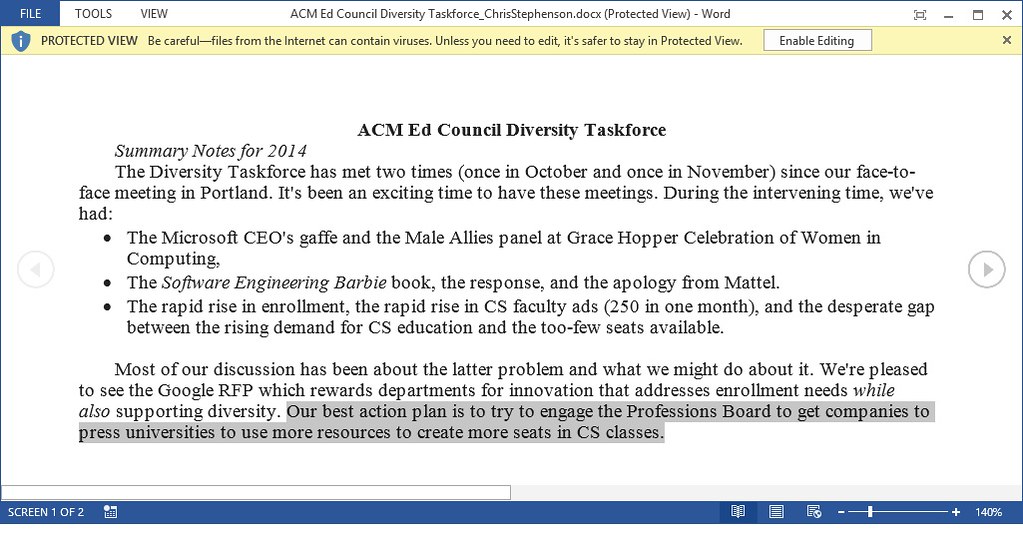
theodp (442580) writes "Nice computer industry you got there. Hate to see something bad happen to it." That's the gist of a letter sent by Microsoft, Amazon, Facebook, Google, Code.org, and other tech giants earlier this week asking the WA State Legislature to approve $40M in capital spending to help fund a new $110M University of Washington computer science building ($70M will be raised privately). "As representatives of companies and businesses that rely on a ready supply of high quality computer science graduates," wrote the letter's 23 signatories, "we believe it is critical for the State to invest in this sector in a way that ensures its vibrancy and growth. Our vision is for Washington to continue to lead the way in technology and computer science, but we must keep pace with the vast demand." The UW Dept. of Computer Science & Engineering profusely thanked tech leaders for pressing for a new building, which UW explained "will accommodate a doubling of our enrollment." Coincidentally, the corporate full-press came not long after the ACM Education Council Diversity Taskforce laid out plans "to get companies to press universities to use more resources to create more seats in CS classes" to address what it called "the desperate gap between the rising demand for CS education and the too-few seats available.
-
Teamsters Seek To Unionize More Tech Shuttle Bus Drivers In Silicon Valley
An anonymous reader writes with news about the effort to unionize shuttle drivers in Silicon Valley. "Shuttle bus drivers for five prominent tech companies will decide whether to unionize on Friday in a vote that has the potential to dramatically expand organized labor's territory in Silicon Valley and embolden others in the tech industry's burgeoning class of service workers to demand better working conditions. Drivers who ferry Yahoo, Apple, Genentech, eBay and Zynga workers -- all employed by contractor Compass Transportation -- will decide whether to join the Teamsters union in an election overseen by the National Labor Relations Board. Union leaders say they want to bring the drivers into the fold so they can negotiate better pay and benefits -- as well as relief from a split shift that has the drivers working morning and evening shifts with no pay in between. A contract the Teamsters struck over the weekend for Facebook's shuttle bus drivers, who work for Loop Transportation, offers a glimpse of what may be possible: paid sick and vacation time, full health care coverage and wages of up to $27.50 an hour."
-
Lawmakers Seek Information On Funding For Climate Change Critics
HughPickens.com writes: John Schwartz reports at the NY Times that prominent members of the U.S. House of Representatives and the Senate are demanding information from universities, companies and trade groups about funding for scientists who publicly dispute widely held views on the causes and risks of climate change. In letters sent to seven universities, Representative Raúl M. Grijalva, an Arizona Democrat who is the ranking member of the House committee on natural resources, sent detailed requests to the academic employers of scientists who had testified before Congress about climate change. "My colleagues and I cannot perform our duties if research or testimony provided to us is influenced by undisclosed financial relationships." Grijalva asked for each university's policies on financial disclosure and the amount and sources of outside funding for each scholar, "communications regarding the funding" and "all drafts" of testimony. Meanwhile Edward J. Markey of Massachusetts, Barbara Boxer of California and Sheldon Whitehouse of Rhode Island. sent 100 letters to fossil fuel companies, trade groups and other organizations asking about their funding of climate research and advocacy asking for responses by April 3. "Corporate special interests shouldn't be able to secretly peddle the best junk science money can buy," said Senator Markey, denouncing what he called "denial-for-hire operations."
The letters come after evidence emerged over the weekend that Wei-Hock Soon, known as Willie, a scientist at the Harvard-Smithsonian Center for Astrophysics, had failed to disclose the industry funding for his academic work. The documents also included correspondence between Dr. Soon and the companies who funded his work in which he referred to his papers and testimony as "deliverables." Soon accepted more than $1.2 million in money from the fossil-fuel industry over the last decade while failing to disclose that conflict of interest in most of his scientific papers. At least 11 papers he has published since 2008 omitted such a disclosure, and in at least eight of those cases, he appears to have violated ethical guidelines of the journals that published his work. "What it shows is the continuation of a long-term campaign by specific fossil-fuel companies and interests to undermine the scientific consensus on climate change," says Kert Davies. -
5 White Collar Jobs Robots Already Have Taken
bizwriter writes University of Oxford researchers Carl Benedikt Frey and Michael Osborne estimated in 2013 that 47 percent of total U.S. jobs could be automated and taken over by computers by 2033. That now includes occupations once thought safe from automation, AI, and robotics. Such positions as journalists, lawyers, doctors, marketers, and financial analysts are already being invaded by our robot overlords. From the article: "Some experts say not to worry because technology has always created new jobs while eliminating old ones, displacing but not replacing workers. But lately, as technology has become more sophisticated, the drumbeat of worry has intensified. 'What's different now?' asked Leigh Watson Healy, chief analyst at market research firm Outsell. 'The pace of technology advancements plus the big data phenomenon lead to a whole new level of machines to perform higher level cognitive tasks.' Translated: the old formula of creating more demanding jobs that need advanced training may no longer hold true. The number of people needed to oversee the machines, and to create them, is limited. Where do the many whose occupations have become obsolete go?"
-
H-1B Visas Proving Lucrative For Engineers, Dev Leads
Nerval's Lobster (2598977) writes Ever wanted to know how much H-1B holders make per year? Developer Swizec Teller, who is about to apply for an H-1B visa, took data from the U.S. Department of Labor and visualized it in a series of graphs that break down H-1B salaries on a state-by-state basis. Teller found that the average engineer with an H-1B makes $87,000 a year, a good deal higher than developers ($74,000) and programmers ($61,000) with the same visa. ("Don't call yourself a programmer," he half-joked on Twitter.) Architects, consultants, managers, administrators, and leads with H-1Bs can likewise expect six-figure annual salaries, depending on the state and company. Teller's site is well worth checking out for the interactive graphs, which he built with React and D3.js. The debate over H-1Bs is an emotional one for many tech pros, and research into the visa's true impact on the U.S. labor market wasn't helped by the U.S. Department of Labor's recent decision to destroy H-1B records after five years. "These are the only publicly available records for researchers to analyze on the demand by employers for H-1B visas with detail information on work locations," Neil Ruiz, who researches visa issues for The Brookings Institution, told Computerworld after the new policy was announced in late 2014.
-
Apple Will Let Users Test iOS Beta Versions For the First Time
9to5 Mac reports that In an effort to eliminate bugs from upcoming iOS versions ahead of their general releases, Apple plans to launch the first-ever public beta program for the iOS operating system, according to multiple people briefed on the plans. Following the successful launch of the OS X Public Beta program with OS X Yosemite last year, Apple intends to release the upcoming iOS 8.3 as a public beta via the company’s existing AppleSeed program in mid-March, according to the sources. The article goes on to say Like the early iOS 8 developers builds, the public betas will include a dedicated app that allows users to report bugs to Apple. The main goal of the iOS beta program will be a more reliable and widely tested operating system by the time of the wider consumer launch, as Apple has come under fire for lack of quality control in iOS 8. Launching public beta versions of iOS will also reduce the demand for unauthorized sales of beta downloads from developer accounts, which enabled some consumers to test-drive future iOS features.
-
The Robots That Will Put Coders Out of Work
snydeq writes Researchers warn that a glut of code is coming that will depress wages and turn coders into Uber drivers, InfoWorld reports. "The researchers — Boston University's Seth Benzell, Laurence Kotlikoff, and Guillermo LaGarda, and Columbia University's Jeffrey Sachs — aren't predicting some silly, Terminator-like robot apocalypse. What they are saying is that our economy is entering a new type of boom-and-bust cycle that accelerates the production of new products and new code so rapidly that supply outstrips demand. The solution to that shortage will be to figure out how not to need those hard-to-find human experts. In fact, it's already happening in some areas."
-
Obama Says He's 'A Strong Believer In Strong Encryption'
An anonymous reader writes: U.S. President Barack Obama spoke with Re/code recently on a variety of topics relating to technology. The talk included the president's thoughts on encryption, which has been a controversial subject in tech circles lately after government officials (including Obama himself) have publicly complained about default encryption in modern communication tools. In the interview, he says he's a "strong believer in strong encryption," adding, "I lean probably further on side of strong encryption than some in law enforcement." Obama puts it another way, more bluntly: "There's no scenario in which we don't want really strong encryption." However, the president says the public itself is driving concern for leaving law enforcement a way in: "The first time that an attack takes place in which it turns out that we had a lead and we couldn't follow up on it, the public's going to demand answers."
-
AT&T To Match Google Fiber In Kansas City, Charge More If You Want Privacy
An anonymous reader writes: When Google Fiber started bringing gigabit internet to cities around the U.S., we wondered how the incumbent ISPs would respond. Now we know: AT&T has announced they will match Google Fiber's gigabit offerings in Kansas City. Of course, there are some caveats. First, AT&T's rollout may stop as it fights the Obama administration over net neutrality. Not that it would be a nationwide rollout anyway: "AT&T does not plan to offer the ultra-fast Internet lines to every home in the market. Rather, he said the company would calculate where demand is strongest and the investment in stringing new cables promised a decent return."
There are also some interesting pricing concerns. The company plans to charge $70/month for gigabit service, but that's a subsidized price. Subsidized by what, you ask? Your privacy. AT&T says if you want to opt out of letting them track your browsing history, you'll have to pay $29 more per month. They say your information is used to serve targeted advertising, and includes any links you follow and search terms you enter. -
The Software Revolution
An anonymous reader writes: Y Combinator president Sam Altman writes about how the third great technological revolution — which he calls the software revolution — is affecting the world economy. He says, "It appears that the software revolution will do what technology usually does—create wealth but destroy jobs. Of course, we will probably find new things to do to satisfy limitless human demand. But we should stop pretending that the software revolution, by itself, is going to be good for median wages.
Trying to hold on to worthless jobs is a terrible but popular idea. Trying to find new jobs for billions of people is a good idea but obviously very hard because whatever the new jobs are, they will probably be so fundamentally different from anything that exists today that meaningful planning is almost impossible. ... The second major challenge of the software revolution is the concentration of power in small groups. ... I think the best strategy is to try to legislate sensible safeguards but work very hard to make sure the edge we get from technology on the good side is stronger than the edge that bad actors get."