 Slashdot Mirror
Build Your Own X-Ray Machine
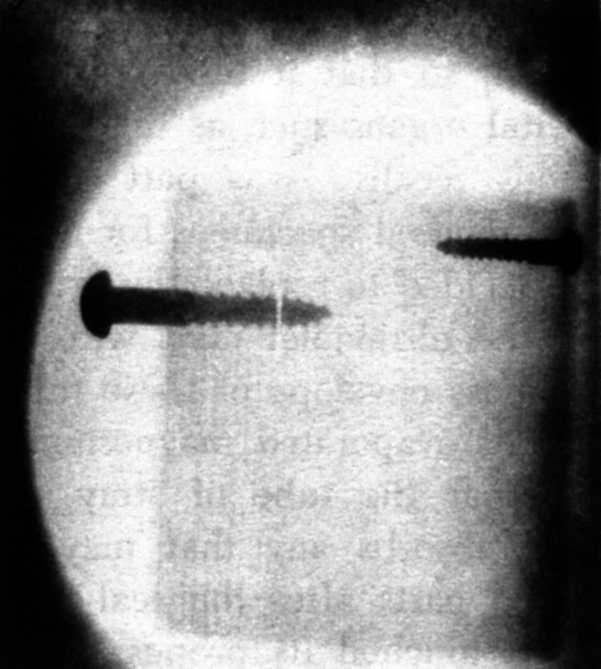
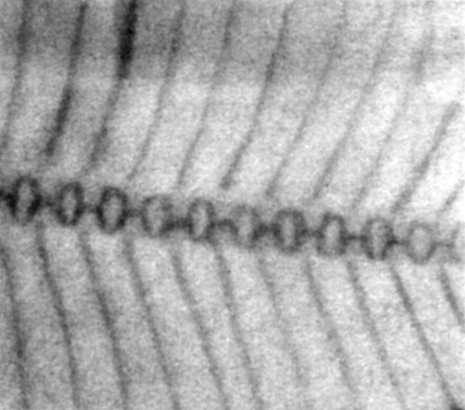
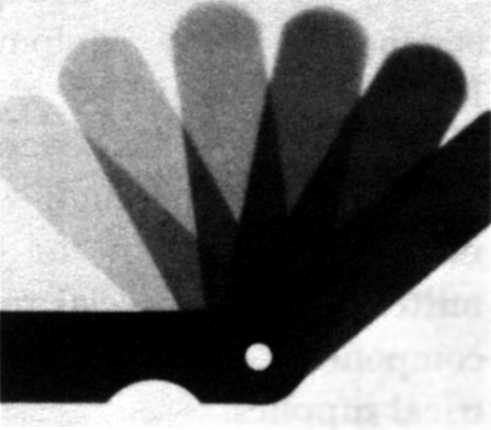
Mr. Roboto writes "This web site has information on how to build your own X-ray machine from common household parts, inculding a vacuum tube, a few thousand feet of copper and a few other parts. There are also X-rays made of wood, fish and steel. I need to dig out my stash of vacuum tubes now." Unfortunately, I don't count "vacuum tubes" among common household parts, but this would be a great science fair project.
Reading that made me wonder... where can one buy some film badges (the sort that radiology techs wear to alert them of excessive exposure) ? Anyone happen to know?
X-Rays have been proven to cause cancer even when used by professional physicians. Putting them in the hands of every-day individuals is highly irresponsible.
Our urban environments are already wrought with dangers in the form of guns and drugs. Do we really need gangs roving the streets with high-powered x-ray devices? I think the answer is obviously no, we do not.
The privacy implications are also troubling. Now, with complete lack of regard to my safety or rights, people can install x-ray machines anywhere - in parks, streets, or their homes.
I hope the government moves quickly and bans these devices, before their proliferation leads to certain harm.
- qpt
--
Domine Deus, creator coeli et terrae respice humilitatem nostram.
Yeah, theres nothing quite like the rush of knowing you've just permnently removed all of your potential contributions to the gene pool all in the name of extra-credit. =)
--
You can be an atheist and still not want to succumb to some weird cross-over sheep disease -- AC
Nice to know Slashdot is right up there at the forefront of all tech news. 1995 and 1997... Nah, I'm not complaining really. I wish they'd have set it out so it was slightly easier to follow if you were wishing to do it yourself. The way it is written in such a long essay form makes it almost impossible to extract the relevant bits of information. Yes it's nice to know why and how the various parts work, but perhaps the explanation should have come after the rough description of how to construct it.
if i can make it small enough, i can stick it in my eye and look through guys' pants!
Unless you took your Linux IPO millions and bought a LCD monitor, or live your life out of a lap top, most of the rest of us mortals sit in front of a vaccum tube based CRT and bathe in (reduced) radiation all day long.
Monitors have lead in them for a reason. And its the same reason if you plan on building an x-ray machine, you had better be damn careful...radiation is harmful. Hopefully the fact you can't just D/L this and run it will keep it out of the hands of irresponsible boobs we'll call xray kiddies.
If it was said on slashdot, it MUST be true!
Well it's a good thing I've got one of those lying around in my garage!
Slashdot Babelfish
Slashdot Babelfish
A Free Service of V/AndoverVista
For those of you who are going to try this, here are the symptoms of high frequency radiation exposure:
Headache
Stomach ache
Nausea
Unconsiousness
Death
Somewhere between Stomach ache and death comes sterility. Don't ask me why but I have a friend with silicone testicles and testosterone shots for life courtesy of radiation exposure and the US government.
If voting were effective, it would be illegal by now.
Hmmm.... First, these seem to be fairly high-powered and so require lots of electricity. I have a hard time imagining gangs roving the streets with X-ray devices and even if they did, they would probably be a bit less effective than their guns, so I don't think that the trend would last....
The privacy implications are also troubling. Now, with complete lack of regard to my safety or rights, people can install x-ray machines anywhere - in parks, streets, or their homes.
Again, this poses some serious practical problems. One would need to set up a photographic plate ahead of time, wait until you were on the target, hope you don't move while the picture is being taken, etc. THe plates do have to be quite close to the target, so the practical difficulties here are formitable.
I don't deny that the operation of these devices poses some risk. However, I think you have well overstated your case.
LedgerSMB: Open source Accounting/ERP
Whelp, it's time to drag out my lead underwear... This could be fun. I think I will be making one to find where in the hell my keys are...
political message:
Support the GPPTF Gene Pool Protection Task force
-----------
I think you need help! Tech
I Came, I Saw, I Networked, I ate KFC
One major improvement would be to eliminate the need for film (which can be extreemly expensive). One could use a phosphorus screen with a camera behind it to capture the images. I'd probably use digial as I'm uncertain what x-rays do to the magnetic films in VCR tapes.
I worked at a research center which had a setup like this. Using an automated stage, digital video, and basic image analysis (simple averaging) we were able to make some very nice movies.
Yeah, and then little Johnny (or Joany or chocci or whatever) wouldn't have to worry about funding their University education because the leukemia would get them long before their freshman year.
:wq
Is this another example of it doesn't matter (or even exist) unless it's on the web? Note at the bottom of the page where this was take from:
The preceding was taken in full from
Section IX. Optics, Heat, and Electronics;
Chapter 3. An Inexpensive X-ray Machine
The Scientific American Book of Projects for The Amateur Scientist
Library of Congress Card Catalog Number: 60-14286
© Copyright 1960 by C. L. Strong
My father got me this book in middle school (for me, the mid-60's), and I used a number of the projects as starting points for my own hardware hacks. The most notable was the simple wind tunnel that used burning cones of incense to create streamers of smoke in the tunnel chamber. It was powered by a vacuum cleaner. I spent a fair amount of time making sure that air entering the chamber was even across the plenum. Another Scientific American experiment I started with was the construction of an electrostatic motor. I built a large one from plexiglass (12 inch diameter rotor, 18 inches long). I was into electrical and electronic hobbies, and this book was great just to read what others had done. My father never let me build the X-ray machine because he was afraid I'd irradiate myself and get cancer.
I'm happy somebody found it on the Web. But the book is far better.
I was hoping against hope that the article would be about something cool like integrating an X-Ray exposure over time from plain old sunlight, perhaps with a cooled ccd and nifty software. (That's what I've been thinking about doing with starlight for a year anyway..)
Listen folks, you don't want to screw around with X-Rays unless you are heavily trained, okay? The lightest thing I can say is the article is irresponsible in light of modern technology and culture.
My grandfather (God rest his soul) always wore bandaids around his fingers. They were always coming off or getting soggy and wearing out, his fingernails were a mess (I think he missed them on one or two fingers completely), and it looked pretty painful. You see he was a dentist, I guess around when the article was written. Unfortunately they didn't know that your body is a pretty good integrator of radiation too.. so it was standard operating procedure to hold the film in a patient's mouth while beaming the X-rays into it and spraying it around his own fingers at the same time. They didn't think, 'lead aprons are for wooses', they just didn't know. Seems dumb and tragic now.
If you want to do something much more interesting than the proposed project, and maybe make a ton of money at the same time, why not work on integrating ambient radiation, whether sonic, electromagnetic, or nuclear. There was a good novel called Hollywood Dreamtime which talked about it a lot. The last thing we all need is for a young smart person excited by open source, hacking, and network effects, to start screwing around with unshielded spark coils. Odds are someone is going to get electrocuted or permanently damaged (maybe with malevolent intent).
On a lighter note, you could also learn to build a fucking powerful microwave oven with an oil drum and similar parts. That's what the Om cultists did in Japan a couple years ago, to turn their victims into ash. I'd say that's safer than building X-Ray generators and maybe leaving them plugged in over night by mistake.. X-Rays are great and 100% natural but they are too energetic to fuck around with for a household hobby.
I do have a 01A and briefly considered building the X-ray machine, but fortunately came to my senses before trying it. The trend in professional X-ray machines has been toward lower and lower emission with more sensitive film and detectors. Long-term exposure to X-rays is quite dangerous even at low levels.
Brackets contain world's first nanosig, highly magnified:[.]
Your trusty Marshall probably needs some new tubes anyway...so there you are, 4 big honkin' 12AX7s and a couple of dinky little fellows.
Just a thought...
And that's not even to get into transmitting tubes...
Brackets contain world's first nanosig, highly magnified:[.]
whelp (n.) 1. A young offspring of a mammal, such as a dog or wolf. 2.a. A child; a youth. b. An impudent young fellow. 3.a. A tooth of a sprocket wheel. b. Nautical. Any of the ridges on the barrel of a windlass or capstan.
wrought, adj. 1. Put together; created. 2. Shaped by hammering with tools. Used chiefly of metals or metalwork. 3. Made delicately or elaborately. fraught, adj. 1. Filled with a specified element or elements; charged. 2. Fully provided. 3. Marked by distress; upsetting. the poster was clever, but gets very low marks for improper word usage.
Many of the first experimenters with X-rays died due to the burns they received from the systems they built. X-rays are ionizing radiation (the worst sort of radiation hazard) and should be treated with tremendous care. Building your own X-ray machine is not a wise idea unless you are a medical physicist working on X-ray machine design.
The shielding issues, the collimation issues, and every other issue you can imagine would be problematic enough. Making it safe would be quite difficult as well.
Look out! Radioacitve Man!
"pr0n": An anagram of "porn," possibly indicating the use of pornography. - www.microsoft.com
What next, do it yourself appendectomies?
Yes. That is project #15 in the "Suit YourSelf" home surgery kit.
(Marketing thought "Suit YourSelf" was a better name than "suture self")
If it was said on slashdot, it MUST be true!
I see a Darwin Award coming out of this.
Lots of other readers have commented on the effects of x-rays, so I'll spare everyone the regurgitated diatribe. Just please be more conscientious in regards to the cutesy comments editors add when they post these stories.
A better (if not safer) science project might be "The Darwinian Effect of Do-It-Yourself X-ray Kits on Budding Geniuses Who Spend too Much Time on Slashdot".
Get off my virtual lawn, you damned virtual kids!
While I was reading the article on make your own X-Ray machine, I saw a banner ad that fit perfectly: Cluelessness: There are no stupid questions, but there are a lot of inquisitive idiots.
Except he was using highly radioactive chunks of something that crashed. He had a core dump, and it almost killed everyone on the planet, until he came up with some goop to put in the water, and cured everyone. There we go, lets have the government put some goop in our water after some idiot irradiates us all. Cool, that's a solution!
Anybody know where one might procure some appropritate X-ray sensitive film to use with this device? Exposure?
Insofar as "old" tech books go - but I can go one better:
There is a book, quite difficult to find now (in any condition - it is quite out-of-print), called "The Boy Electrician" by Alfred P. Morgan. This book was first published in 1913 (by Lothrop, Lee and Shepard Co.), and later again 1929, 1940, and 1948 (by the same publishers). A second printing was done in 1948, and third and forth in 1951, and 1952, respectively (my copy is the 1952 edition).
A wonderful book, filled with all sorts of how-to and gadgets for the beginning 1900's geek. Delightfully illustrated by the author (from what I understand, the picture of the boys in the book were based off of the author's sons), most all of the projects were aimed at boys around the ages of 8-13, as far as I can assertain (although I may be completely wrong here - today I fear kids would be dumbstruck by the sheer amount of patience and volume of reading this book requires to build devices - I sometimes wonder if kids in those days were smarter). These projects ranged from magnets and static electricity, building batteries (using real lead and sulpheric acid!), building motors and generators, alarms, radios, telephones - and yes, an X-Ray machine.
It seems that back in the day, one could easily purchase an X-Ray "tube" - a vaccumn tube designed to emit X-Rays - fairly cheaply (Morgan quotes 4 and a half dollars - which would equate to a bit of money today, but still fairly inexpensive). He then shows how to hook it up to a high voltage supply (which is built in earlier chapters using an ignition coil from a Model-T), then use a special "flourosope" to allow you to view the bones in you hand when you switch it on! It is funny in the naivete of the device, and how much damage could be done - but at the same time, such simplicity and curiosity is gone from our world, simply because of fear of danger.
Alfred P. Morgan also wrote other books aimed at young experimenters - I know one was a more advanced book on radio and TV, and another may have been on chemistry (I have the titles of the books put away somewhere) - all of the books are difficult to find, sadly.
Worldcom - Generation Duh!
Reason is the Path to God - Anon
To those really interested in generating x-rays, you can find x-ray tubes and rectifiers on a regular basis on eBay. For the power supply, you can use one of those handheld electrocution devices, which nowadays can generate 100kV-400kV.
Go to it. Before long, we'll have afforable Open Source Beowulf-powered CAT scan machines all over the place.
Depending on how powerful you try to make it.
Once upon a time, shoe stores used to have X-ray machines with which one could look at their feet through it. Eventually these were banned, because they were supposed to be used only by licenced radiologists (and how many of those work at shoe stores?) and many were faulty, giving up to 100 times the recommended dosage!
Some of you might find the idea of a shoe store having an X-ray machine as far fetched, but this is true! I know because my mother played with one a lot when she was a teenager, thinking it was good fun. According to her parents, there was a time where she used it almost every day on her way to public school in England.
She died of cancer when I was five.
Fuzzy Knights: New RPG Strips Tuesday and Friday!:
http://www.fuzzyknights.com
step into the bathroom and fire it off while your unsuspecting in-laws remain in the living room....
Naw, set it up in the guest bedroom and give them an 8 hour tan while they sleep.
Meldroc, Waster of Electrons
RMS has been butting heads with Linux people for a long time. RMS is a FREE SOFTWARE enthusiast, and not a Linux enthusiast. RMS is actually pissed off that people call the whole system Linux, when its actually the kernel that's linux, and most of the other parts that make the system work (low level stuff like compilers and basic UNIX tools) are GNU utilities, which have been around a lot longer than Linus' kernel
Inadequate X-ray equipment seems to be a source of numerous nasties (those foot X-ray machines in British shoe stores, a cluster of leukaemia cases in Germany traced to an orthopaedic surgeon with a surprisingly miscalibrated machine from the 30s..) and adding more devices to the list of 'insidously dangerous experimental equipment that nobody except the builder knows how to operate in safety' is never such a hot idea...
Additionally, I'd have to point out the obvious poor electrical design of the test setup- building projects that interface directly to the mains and involve sodding big inductors is not for little Johnny... which by no means increases my trust in the radiation safety advice of the book...
Anybody have any information on spectral characteristics of X-ray sources vs. potential for cellular damage vs. sensitivity of film and discharge dosimetry? I always wonder if there's frequencies of radiation that the standard measurement setups don't catch.. I'd love to have an expert's opinion on this. Not that many would be lurking on Slashdot....
Even more randomly, it would be interesting to see by how much the cancer death rates amongst medical personnel working in A&E environments involving emergecy X-ray work in the '50s to '70s exceed those of the general population. I suspect that they'll be higher in countries with shortages of medical staff at the time.. (dosimetry adherence in inverse proportion to dedication?)
On a totally different note, what is the extreme (monetary) value of integrating ambient radiation, whether sonic, light, or ionising radiation? I can understand it's useful for environmental studies or astronomy (background radiation measurements in particular regions of sky) but how does it become a commerciallly valuable...
Although the idea itself sounds intriguing when presented in such a throwaway comment- I'm missing the fascination here (what does total sonic/electromagnetic energy dose _tell_ you) and I'd like to know more... provided it has nothing to do with the insurance industry....
And I can't find any references to the book either- suggestions where to look...
Finally, to respond flippantly to your oil-drum cremation for crazed apocalyptic sect members comment- I'm sure the diameter of yer usual 55-gallon is a bit big for cavity resonance.... I'm also sure that's not what you meant.
I find that iZone Polaroid film works well. You can buy it all Wallgreens and K-Mart. All film is sensitive to x-rays.
Remember, the original definition for a Roentgen (unit of radiation exposure) was that amount of x-rays that caused a visible reddening of the skin (erethema).
The dose allowed to the workers that only work in the vicinity of nuclear facilities, by federal law, is 125 milliroentgen (0.125 roentgen).
Most radiation exposure accidents in the last five decades deal with industrial x-ray machinery.
An X-Ray machine is exceedingly easy to build, but very very difficult to run calibrated and collimated so it doesn't cause a problem to those in the general vicinity.
It is just like it is very easy to make nitroglycerine. But, rather difficult to make it safely.
MercTech
Mercenary Radiation Protection Technologist
NRRPT/RCT
Mr. Science: Now, timmy, stand in front of this X-ray tube while I step behind this three foot thick steel plate!
Timmy: Sure thing, Mr. Science!
BWAAAAUUUGGGHHH!!!!
Mr. Science: Uh-oh! We're gonna need another Timmy!!!
Paul Anderson
"I drank WHAT?!" -- Socrates
eBay comes through again. You can find x-ray film there too.
I used to have (possibly still have somewhere) an old book that described how to use an (off-the-shelf) X-ray tube with a fluoroscope you can make yourself - basically a thin layer of crystals that glow when hit by X-rays. So you look directly towards the X-ray tube, put e.g. your hand in the way, then the fluoroscope in front of your hand, and you can see the bones in your hand. It needs a much larger dose of X-rays than exposing a film, but that wasn't considered a problem at the time.
d Mu seum/CollectingFromPast/Devices/Devices.html
http://www.uihealthcare.com/PatientsVisitors/Me
shows a couple of fluoroscopes, and says the coating was "calcium tungstate which fluoresced more brightly than the traditional coating of barium platinocyanide". Neither of those sounds familiar, but I think it was something Health and Safety regulations would make it hard to get hold of for the home experimenter these days.
One day I might get around to building the Whimshurst machine though.
(http://www.netspace.net.au/~tphefley/ has some instructions that looks very similar, and may even be from the same book ("The Boy Electrician").
--
rant
Interesting case, isn't it: hide a "troll" (An annoying word in the first place, being a bastardization of "trawl.") under a gun control argument that's so PC even Slashdotters won't mark it a "Troll," then put in that usage error, as if to taunt us. Maybe the post was really a fiendish trap to re-ignite the troll/trawl debate. So I ask, half clever, or clever and a half?
I wrote parts of this stuff
The early twentieth century geek bit the head off chickens in a circus for a living. Later geeks displayed testicular irregularities and became eunichs. How these people became computer programers and engineers, I'll never know.
Friends don't help friends install M$ junk.
Build an X-ray machine out of an old EGA monitor. Or build a dye laser out of an old fluorescent tube and a package of Paa's Easter Egg color. Or build a pirate radio transmitter out of a microwave oven magnetron and a ballast transformer. Fun!