 Slashdot Mirror
GNOME/KDE Integration Gets A Few Boosts
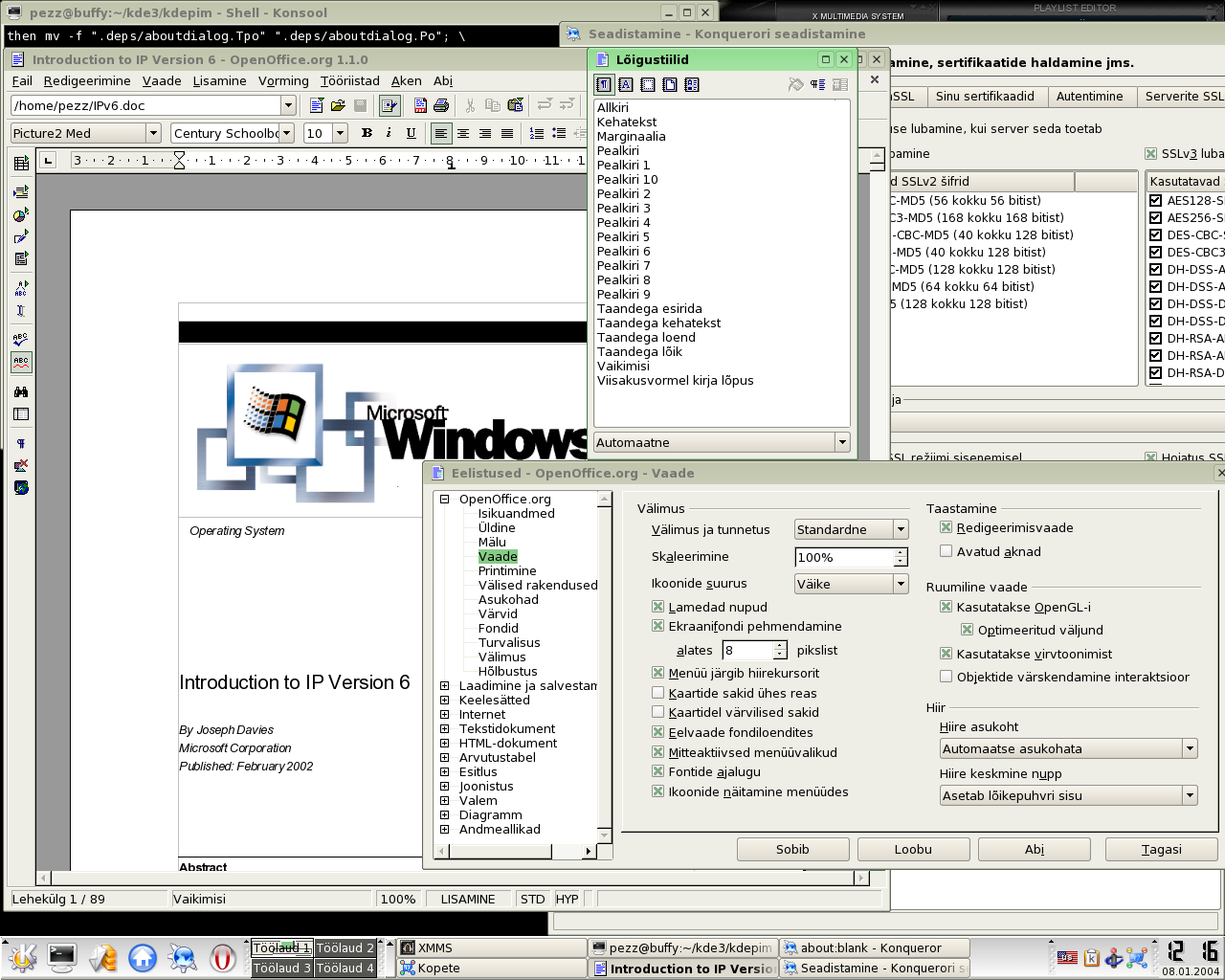
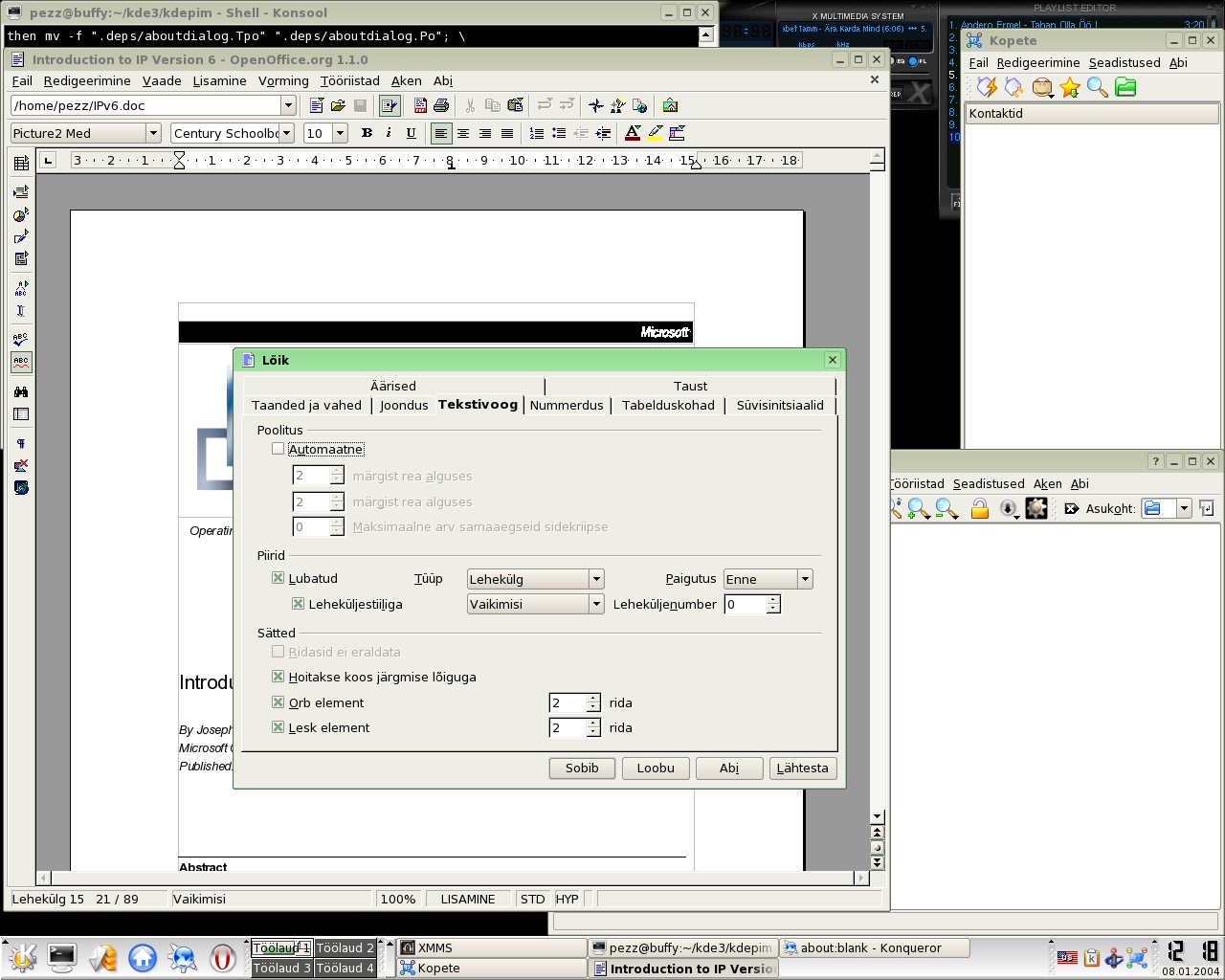
Balinares writes "Great bunch of news on the Linux desktop unification front. After the unification of GTK and Qt themes that Slashdot already reported on, it is OpenOffice's turn to get the unified look treatment (screenshot 1, screenshot 2, screenshot 3).
In related news, the recently released QtGTK library allows to merge the Qt event loop with that of GTK. In other words, this means you can now easily use KDE's DCOP, IOslaves, and, last but not least, file dialogs, from inside your GTK apps. (Screenshot of this feature used in XMMS2: 1 2). It comes with a tutorial that explains the basics.
Finally, the new fuse_kio tool now makes it possible to use KDE's IOslaves directly at the filesystem level, from any Linux app. 2004 is really beginning well for all those of us who use Linux as their primary desktop!"


That's not xmms in the screenshot, it's beep, an XMMS fork ported to GTK2 and Pango/Freetype font rendering.
It's hard to be religious when certain people are never incinerated by bolts of lightning.
That depends on what license you pick for Qt. Qt is available under a number of different licenses. For Free Software, you need to follow either the GPL or the QPL.
No, your application could be BSD, but the entire distribution of your application plus this technology would be GPL. Or, you could distribute your application as a proprietary application and require the USER to link them together, which while not completely kosher, doesn't appear to violate the letter of the GPL license.
Why do you insist on trolling every single KDE topic with this complaint though? Trolltech has every right to restrict you to the GPL (or compatible licenses) if you choose to use their software. If you don't like it, don't use it--no one is forcing you to. Or, if you absolutely have to use QT, and you absolutely cannot use the GPL, buy a commercial license.
So, in conclusion, no your application needn't be GPL, but when you distribute your application with the GPL software, you have to abide by the terms of the license.
Black and grey are both shades of white.
That document is "Introduction to IP Version 6" by Joseph Davies. You can download it here: http://www.microsoft.com/windows2000/techinfo/howi tworks/communications/nameadrmgmt/introipv6.asp
The same OO.o integration work has been done with GTK+.
It's hard to be religious when certain people are never incinerated by bolts of lightning.
The dogcow says "Moof!"
The screenshot is of Beep Media Player. Beep is a GTK2 port of xmms and is not xmms2. Xmms2 is being developed seperatly with gtk2 support and also is said to have support for winamp 3 skins and is a completly new piece of software.
Estonian isn't a part of Indo-European, or the so called "Baltic" languages. It's actually a part of the finno-ugric language family, which also includes Finnish.
Your app doesn't have to be GPL to use Qt. The GPL allows it to be BSD, MIT, etc, while the QPL just requires that it be open source.
A deep unwavering belief is a sure sign you're missing something...
You wild guess was close but not enough. It's Estonian.
Sven, one of the lead GIMP developers has stated in no uncertain terms that the GIMP is not a Gnome application and that it has nothing to do with Gnome.
> Commercial vendors have already overwhelmingly opted to use Qt instead of GTK.
Really, my commercial app vendor can beat your commercial app vendor. Let's see (copied from LinuxToday):
* Websphere (based on Eclipse which is based on a Gtk backend)
* Netscape 7 (based on Gtk)
* Real-time and embedded system vendors such as Cogent (www.cogent.ca) provide GTK integration.
* commercial apps generated from wxWindows for Unix (including use in consultancy)
* RealPlayer (via the HelixPlayer which is based on GTK)
* Several Sun tools are based on Gtk
* (other stuff omitted)
Gtk+ is more than viable in the commercial space. You just have to open your eyes.
The ability for every application to handle every possible protocol using URLs is so nice that it outweighs any disadvantage. Using the fish protocol, you can use KWord or KEdit or any KDE app to edit any file stored on any server where you have a simple ssh account. You don't have to worry about whether the server has ftp access, or down/uploading the file, or mounting any remote directories, or junk like that. You just type the URL into the save dialog, and it works. Every KDE program gets support for this protocol along with FTP, HTTP, SMB, and webdav support, plus expandability for future protocols, for free. It's a big part of what makes KDE so great.
main(c,r){for(r=32;r;) printf(++c>31?c=!r--,"\n":c<r?" ":~c&r?" `":" #");}